
Best Vacuum Mixing Tanks for Air-Free Blends
Practical guide to selecting a stainless steel mixing tank for air-free blends: compares vacuum and open-top homogenizers, explains material and hygiene considerations, highlights shear homogenization benefits, and recommends the Flip Cover Multi-function Liquid Wash Mixing Tank Blender Liquid Detergent Mixer Homogenization Stirring Tank as an adaptable, efficient solution for cosmetics, daily chemical, and food production.
- Designing for Air-Free Blends: When a Vacuum Matters
- Why air-free blending improves product stability
- Vacuum systems vs. mechanical de-aeration
- Regulatory and hygiene considerations
- Choosing Features: Shear, Homogenization, and Tank Configuration
- High-shear homogenization for uniform air-free emulsions
- Open-top vs closed-top tanks: flexibility versus vacuum performance
- Agitation patterns and impeller selection
- Practical Comparison: Tank Types, Capabilities, and Use Cases
- How to evaluate tanks for your product line
- Operational costs: vacuum systems vs. open-top homogenizers
- Real-world examples and standards
- Installation, Maintenance, and Best Practices
- Material selection and surface finish
- Cleaning, validation, and traceability
- Maintenance tips to preserve air-free performance
- Process Optimization: Recipes, Scale-Up, and Troubleshooting
- Recipe adjustments to minimize entrainment
- Scale-up considerations
- Common troubleshooting
- Frequently Asked Questions
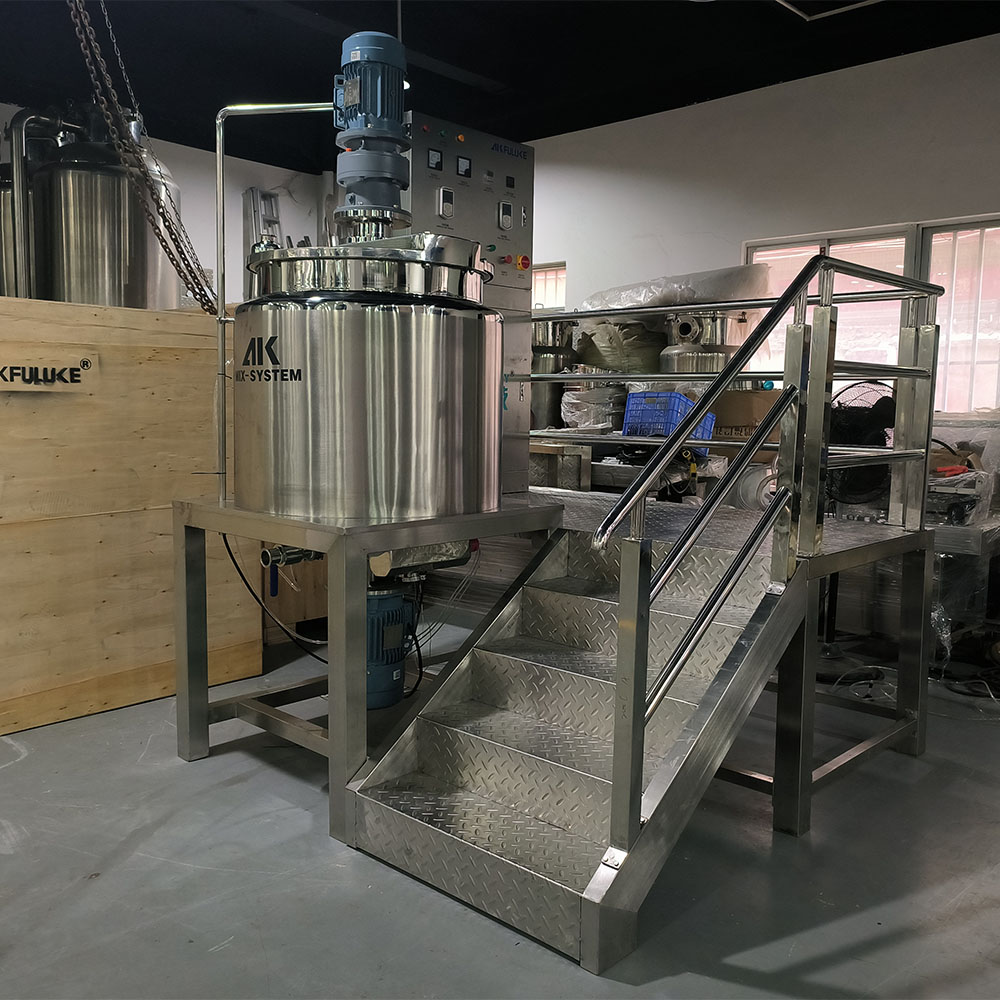
Choosing the right stainless steel mixing tank for air-free blends requires balancing material compatibility, vacuum capability, shear performance, and cleanability to meet regulatory hygiene and product stability targets in cosmetics, daily chemical, and food manufacturing.
Designing for Air-Free Blends: When a Vacuum Matters
Why air-free blending improves product stability
Air entrainment can oxidize active ingredients, destabilize emulsions, and create visible foam defects; selecting a stainless steel mixing tank with appropriate vacuum capability or shear-driven de-aeration reduces dissolved oxygen and trapped air, improving shelf life and visual quality for high-value formulations.
Vacuum systems vs. mechanical de-aeration
Vacuum jackets and sealed lids actively remove headspace gases, while high-shear mixing systems minimize entrainment by breaking droplets and collapsing micro-bubbles. For many small- to mid-scale cosmetic and detergent lines, a stainless steel mixing tank paired with a high-shear homogenizer achieves air-free blends without the complexity of full vacuum plumbing.
Regulatory and hygiene considerations
Materials and surface finish matter: a polished stainless steel mixing tank (typically 304 or 316L) supports cleanability and meets hygiene expectations cited by agencies such as the FDA and standards referenced by ISO. Proper selection reduces contamination risk during vacuum cycles and ensures effective CIP (clean-in-place) or manual cleaning routines.
Choosing Features: Shear, Homogenization, and Tank Configuration
High-shear homogenization for uniform air-free emulsions
High-shear rotors and stators rapidly micronize droplets and solids, collapsing entrained air and producing stable emulsions. When integrated with a stainless steel mixing tank, a homogenization head offers predictable particle size distribution and reduced entrainment compared with slow-speed agitators.
Open-top vs closed-top tanks: flexibility versus vacuum performance
Closed stainless steel mixing tank designs are ideal when consistent vacuum degassing is required for large-batch production. Open-top homogenizing tanks, however, offer operational flexibility for sampling and small-batch runs; modern designs can still deliver low-air blends when equipped with high-shear systems rather than full vacuum pumps.
Agitation patterns and impeller selection
Choosing impellers that promote axial flow and gentle surface turnover reduces air entrainment. For formulations needing aggressive dispersion, combine axial impellers with a high-shear homogenizer integrated into the stainless steel mixing tank to maintain both bulk mixing and micro-level de-aeration.
Practical Comparison: Tank Types, Capabilities, and Use Cases
How to evaluate tanks for your product line
Match tank geometry, surface finish, heating/cooling capability, and mixing package to your formulation’s viscosity and sensitivity to oxygen. For frequent formula changes and R&D, an open-top stainless steel mixing tank with modular homogenization can speed changeovers and sampling.
Operational costs: vacuum systems vs. open-top homogenizers
Vacuum pumps add capital and maintenance costs; they also increase piping complexity. Open-top stainless steel mixing tank systems with high-shear homogenizers often lower TCO for multi-product lines by reducing downtime and simplifying sanitation while still producing air-minimized blends for many applications.
Real-world examples and standards
Manufacturers commonly reference guidance on material safety and processing from stainless steel specifications and regulatory frameworks such as the FDA for cosmetics and consumer products. For process validation and occupational safety, consult ISO recommendations and local authority guidance.
| Feature | Closed Vacuum Homogenizer | Flip Cover Multi-function Liquid Wash Mixing Tank (Open-Top) | Standard Stainless Steel Mixing Tank |
|---|---|---|---|
| Air removal | High (vacuum-assisted) | Moderate–High (high-shear homogenization, rapid de-aeration without vacuum) | Variable (depends on homogenizer/agitator) |
| Flexibility for small batches | Lower (designed for larger sealed batches) | High (open-top, removable lid for feeding and sampling) | Moderate (depends on access and lid design) |
| Cleaning & Sampling | Challenging (sealed system requires ports) | Easy (open-top structure, removable lid simplifies cleaning and sampling) | Varies (polished stainless steel favors CIP) |
| Typical industries | Pharma, high-volume cosmetics | Cosmetics, daily chemical, food (flexible multi-batch) | All industries; ideal for CIP and regulatory compliance |
| Recommended for | Large-scale air-free emulsions | Small- to mid-scale formulators needing rapid response and high-shear micronization | General mixing where material compatibility is primary |
The Flip Cover Multi-function Liquid Wash Mixing Tank Blender Liquid Detergent Mixer Homogenization Stirring Tank is especially useful when you need a stainless steel mixing tank that balances flexibility and performance. It integrates a high-shear homogenization system and a stirring mechanism into an open-top structure with a removable lid, facilitating feeding, sampling, monitoring, and cleaning. The Flip Cover Liquid Wash Mixing Homogenizing Tank is a material handling equipment designed for ease of operation and flexible adaptability, widely used in the cosmetics, daily chemical, and food industries. Its open-top structure with a removable lid facilitates feeding, sampling, material status monitoring, and post-cleaning, significantly improving process adjustment efficiency. Its core features include a high-shear homogenization system and a stirring mechanism.
The strong shear action of the rotor and stator rapidly micronizes solid particles and oil-phase materials to the micron level, achieving uniform emulsification of liquid-liquid and solid-liquid materials. Compared to closed-type equipment, the open-top homogenizer emphasizes flexibility and efficiency, requiring no vacuum system and quickly responding to small and multi-batch production needs.
Installation, Maintenance, and Best Practices
Material selection and surface finish
Choose a polished stainless steel mixing tank in 316L for aggressive chemistries or 304 for general formulations. Surface roughness (Ra) should be low to reduce microbial traps and make CIP effective; this aligns with hygiene recommendations found in industry standards referenced by ISO and guidance from regulatory bodies like the FDA.
Cleaning, validation, and traceability
Design your cleaning validation protocol around the tank geometry and homogenizer locations. Open-top stainless steel mixing tank designs with removable lids and accessible homogenizers simplify visual inspections and rinse checks, reducing validation time and water usage.
Maintenance tips to preserve air-free performance
Regularly inspect rotor-stator clearances, seals, and gaskets to maintain homogenization efficiency. For closed vacuum systems, check vacuum pump oil and seals; for open-top high-shear setups, ensure the homogenizer is properly aligned and servomotors are calibrated for consistent shear rates.
Process Optimization: Recipes, Scale-Up, and Troubleshooting
Recipe adjustments to minimize entrainment
Sequence ingredient addition to reduce air entrapment: add powders under liquid surface when possible, introduce low-viscosity phases first, and apply homogenization after bulk mixing to collapse residual bubbles. These methods work with both vacuum-equipped stainless steel mixing tank systems and open-top homogenizers.
Scale-up considerations
Maintain geometric similarity in tank dimensions and keep tip speed and shear energy consistent between lab and production. When scaling a process that used a small stainless steel mixing tank with a high-shear head, reproduce rotor-stator energy density rather than simply increasing rpm.
Common troubleshooting
If persistent foam or bubbles remain, verify degassing time, rotor-stator clearance, and whether dissolved gases in raw materials require pre-degassing. For stainless steel mixing tank setups, check weld quality and fittings for potential air inlets during vacuum cycles.
For scientific background on stainless steels and corrosion resistance, refer to Wikipedia; for regulatory processing guidance consult the FDA and for international standards consult ISO.
To discuss whether a Flip Cover Multi-function Liquid Wash Mixing Tank Blender Liquid Detergent Mixer Homogenization Stirring Tank is the best stainless steel mixing tank for your air-free formulation workflow, contact our technical team at flk09@gzflk.com.
Frequently Asked Questions
Do I always need a vacuum system to achieve air-free blends?
Not always. Many small- to mid-scale operations achieve air-minimized blends using a stainless steel mixing tank equipped with a high-shear homogenizer; vacuum systems are more critical for large sealed batches or highly oxygen-sensitive formulations.
What stainless steel grade is recommended for hygienic mixing tanks?
316L is recommended for aggressive chemistries and maximal corrosion resistance; 304 is acceptable for general formulations. Polished finishes (low Ra) are important for cleanability and CIP effectiveness.
How does the Flip Cover Multi-function Liquid Wash Mixing Tank differ from closed vacuum homogenizers?
The Flip Cover tank uses an open-top design with a removable lid and integrated high-shear homogenizer, prioritizing flexibility, rapid sampling, and easy cleaning without relying on a vacuum system, making it suitable for small and multi-batch production.
Can a high-shear homogenizer fully replace vacuum degassing?
A high-shear homogenizer can significantly reduce trapped air and dissolved gases for many formulations, but for the most oxygen-sensitive products or very large batches, vacuum degassing may still be required.
Top Agitator Types for Industrial Mixing Tanks in Cosmetics
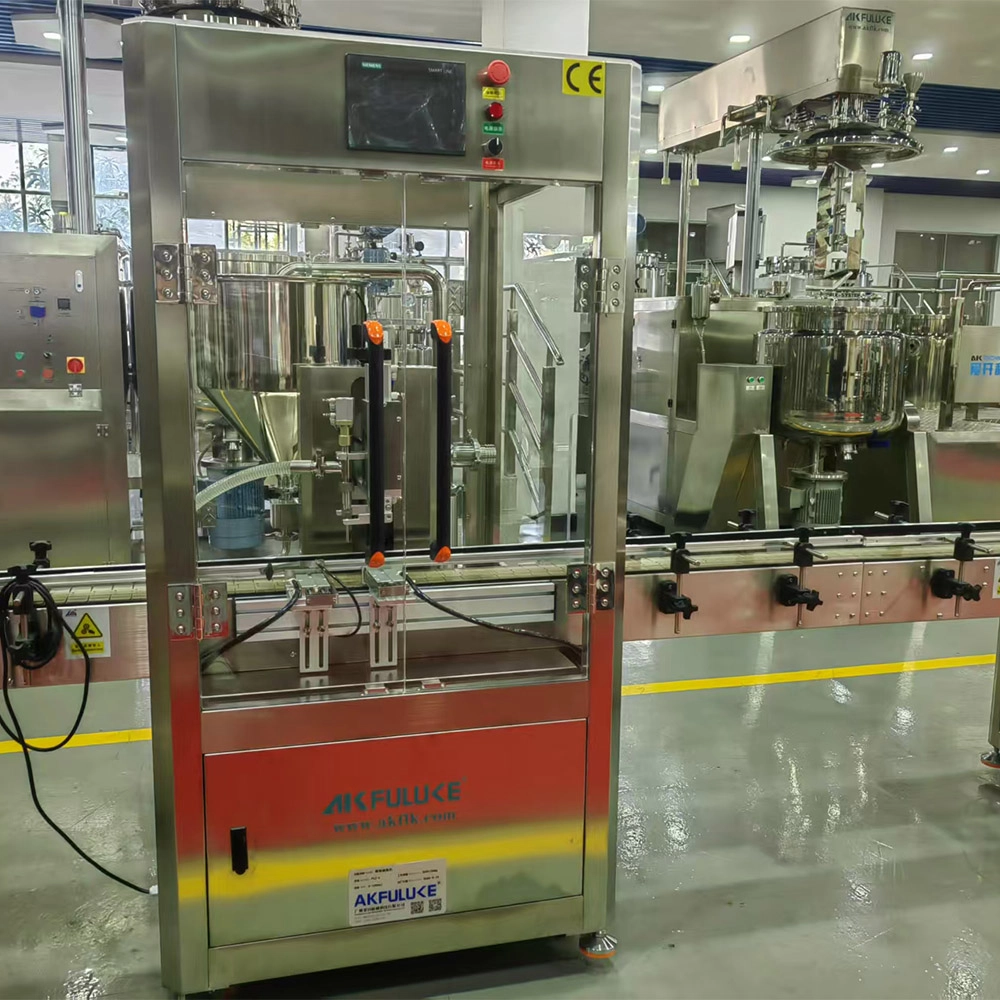
How to Ensure Repeatable Fills in Cosmetic Manufacturing
What is tank mixer? | FULUKE Ultimate Insight
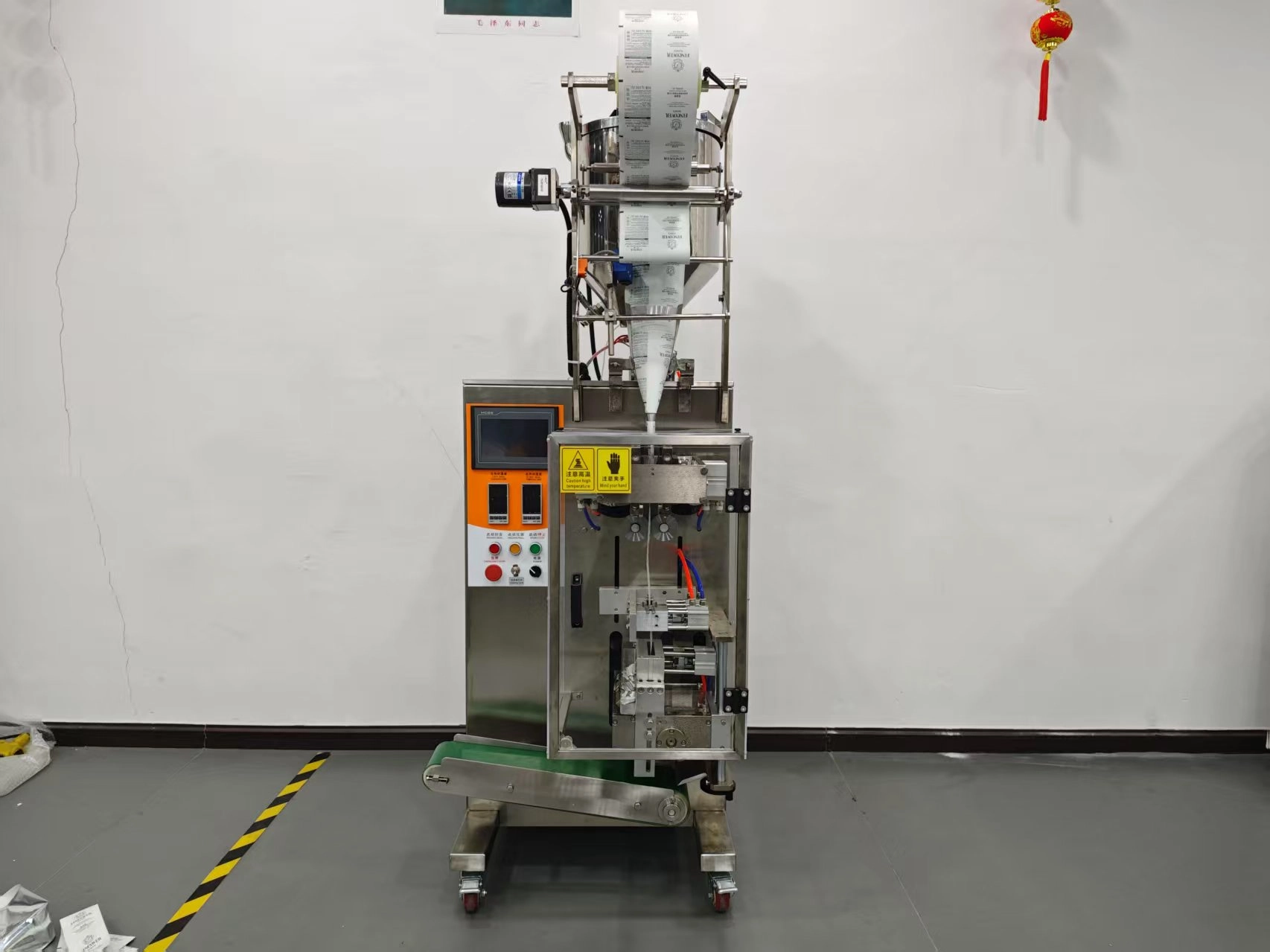
Sachet & Vertical Pouch Filling Solutions for Creams and Liquids | FULUKE
You May Also Like
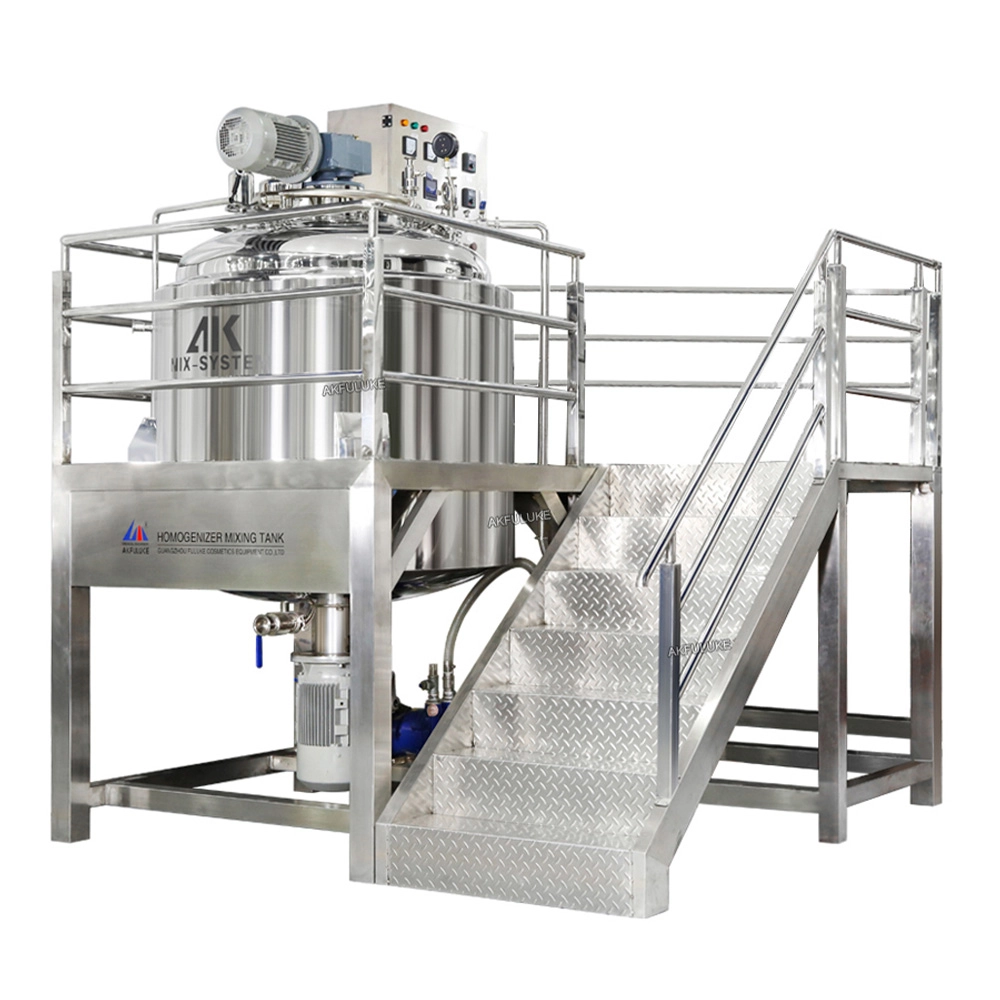
Stainless Steel Mixer Liquid Mixing tank with Agitator Homogenizing Mixing tank Vacuum Sealed Mixer Machine
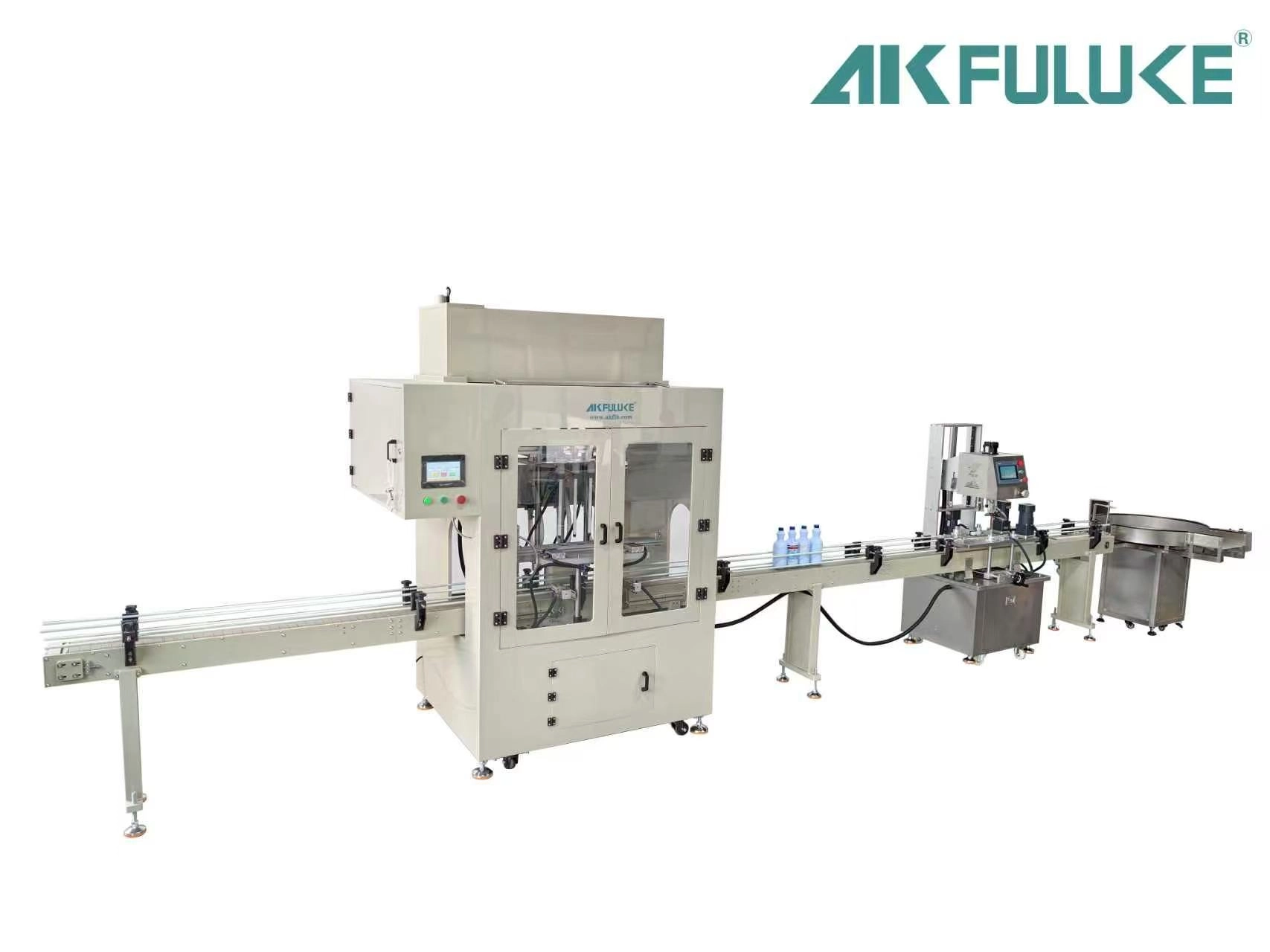
Automatic Acid Chemical Plastic Bottle Capping Anti Corrosion Bleach Filling Machine
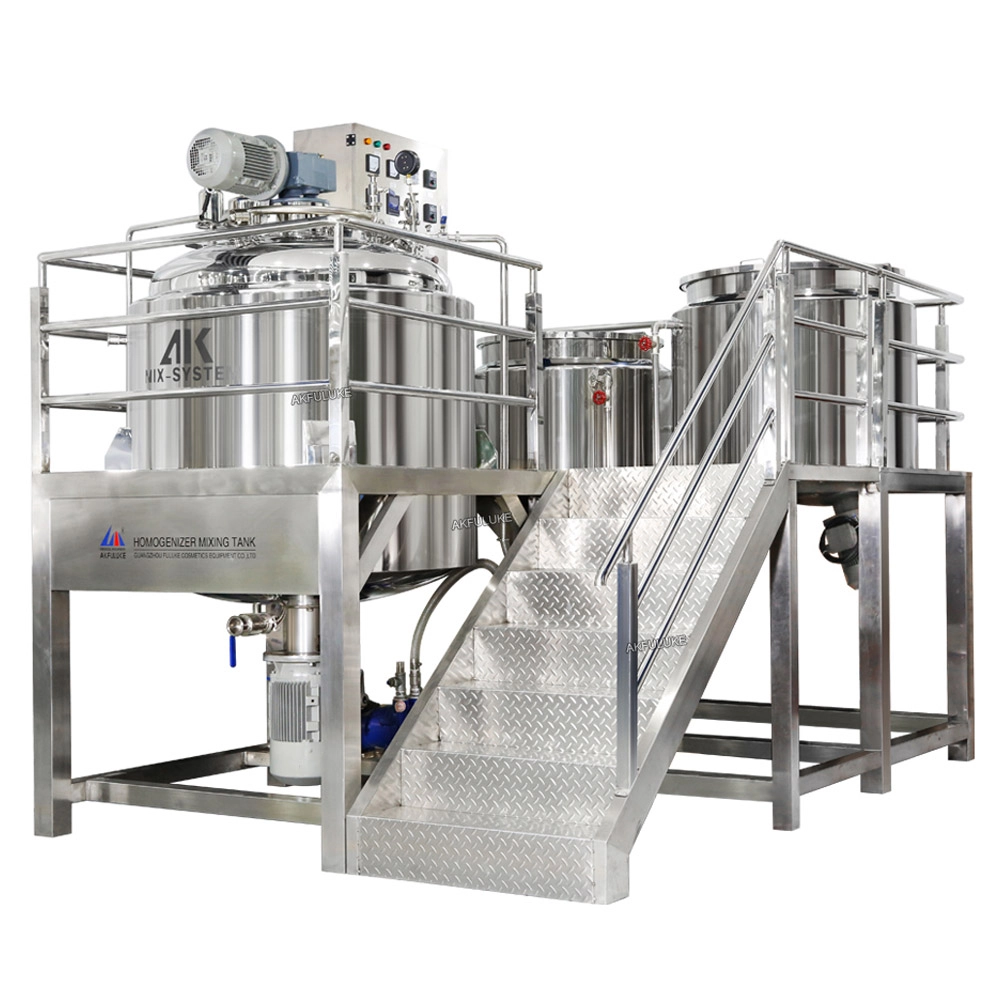
Fixed Type Vacuum Mixing Emulsifying Equipment for Cosmetic Cream Ointment Lotion Vacuum Homogenizer Mixer
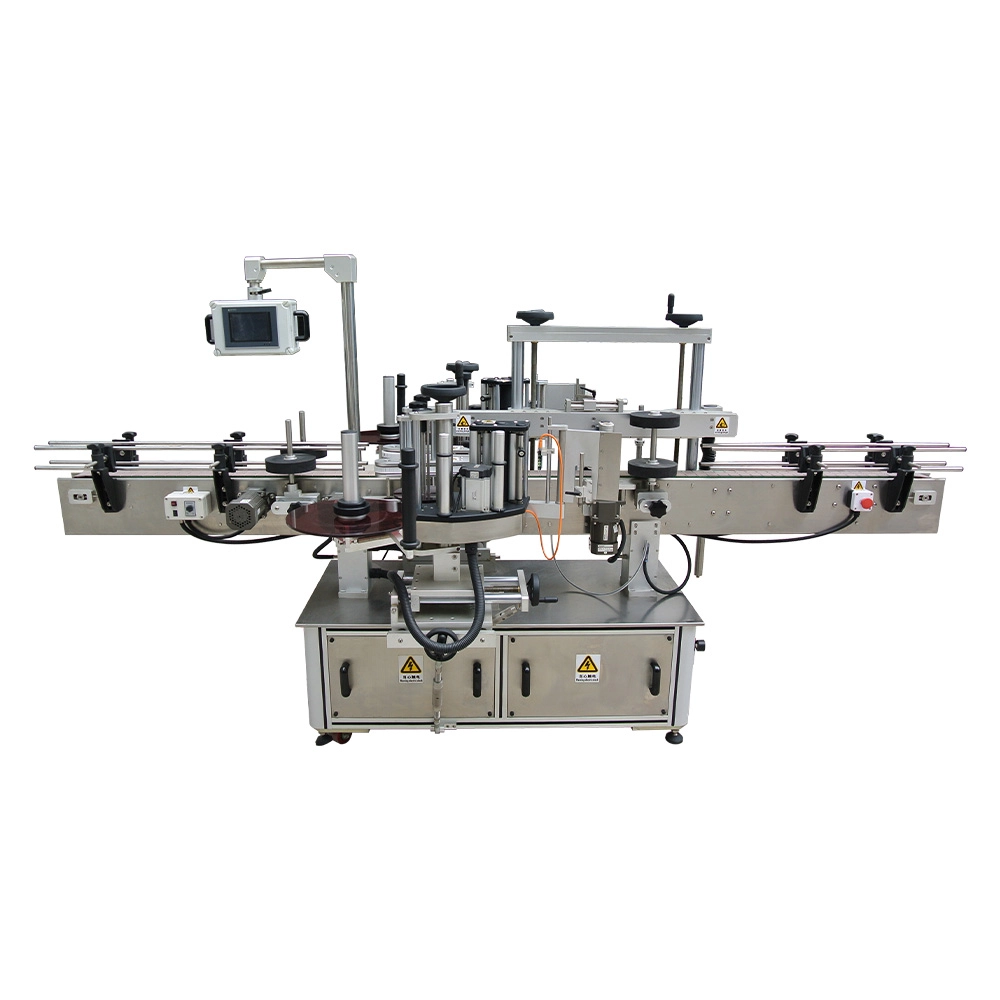
Automatic Labeling Machine Best Selling Automatic Tabletop Flat Surface Labeling Machine Round and Flat Bottle Automatic Labeler Machine
Get in touch with FULUKE
If you have any comments or good suggestions, please leave us a message, later our professional staff will contact you as soon as possible.

A leading manufacturer specializing in advanced machinery and complete production lines for the cosmetics, food, pharmaceutical, and chemical industries worldwide.
Contact FULUKE
Facebook
Instagram
YouTube