
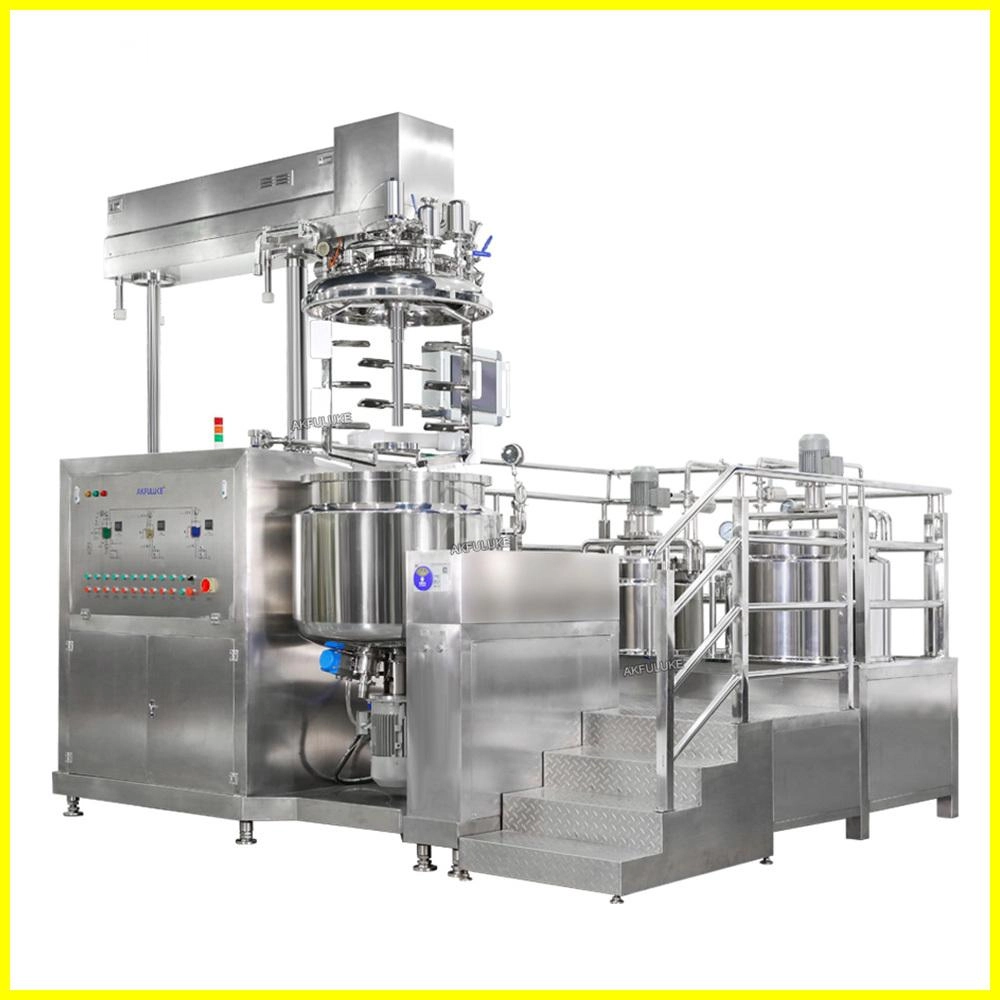
FULUKE Agitated Emulsifying Machine — Reliable High-Shear Emulsifier
FULUKE Agitated Emulsifying Machine — Efficient Mixing & Emulsifying Solution
FULUKE (Guangzhou Fuluke Cosmetic Equipment Co., Ltd.) brings 30+ years of expertise to this agitated emulsifying machine. Built for cosmetics, food and pharmaceutical makers, this vacuum emulsifying mixer combines reliable mixing, high-shear homogenization and vacuum degassing to produce stable creams, lotions and sauces with excellent texture and shelf life.
Key Features
- High-shear rotor-stator homogenizer for fine particle reduction and smooth texture.
- Vacuum system to remove air bubbles and ensure product clarity and stability.
- Stainless steel mixing tank with jacketed heating/cooling for precise temperature control.
- Agitated emulsifying mixer design for uniform dispersion and short cycle times.
- PLC touch-screen control, recipe storage and easy-to-clean GMP-compliant construction.
Advantages for Your Production
This agitated emulsifying machine improves batch consistency and reduces rework. Faster emulsification and integrated homogenization save energy and lower operating costs. The vacuum emulsifying mixer supports scale-up from pilot to full production and maintains product quality across batches.
Applications
Ideal for creams, lotions, gels, sauces, ointments and other emulsified products. Widely used in cosmetic equipment lines, food production and pharmaceutical formulations where texture, stability and hygiene matter.
Why Choose FULUKE
FULUKE provides complete systems—from mixing tanks to filling lines—and technical support from installation to maintenance. Our equipment follows GMP and ISO standards and is engineered for durability, easy cleaning, and process repeatability. With global service and customization options, we help you optimize processes and scale production efficiently.
Get Started
Contact us to discuss configurations, capacities and intelligent control upgrades. Visit https://www.fulukemix.com or email flk09@gzflk.com for quotes and technical consultation.
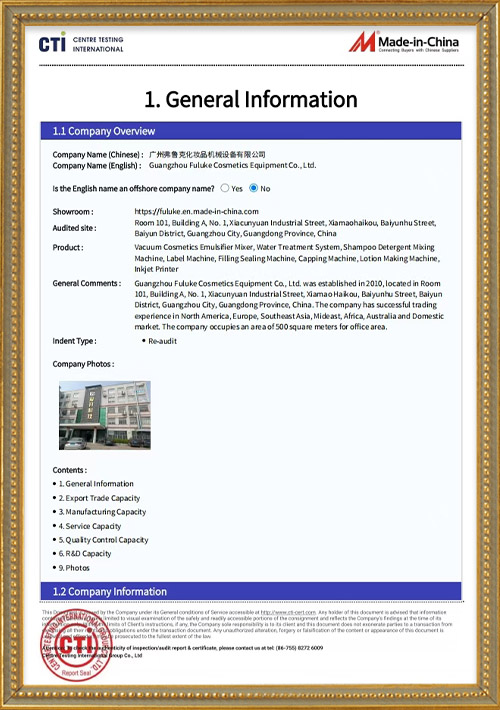
Certificate display
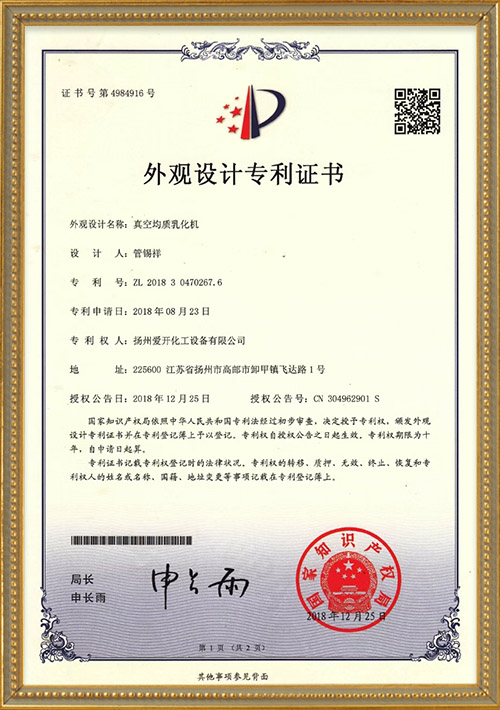
Patent certificate
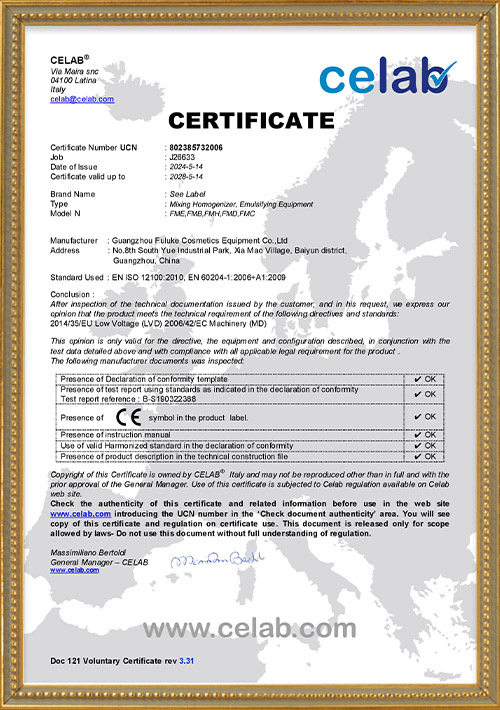
CE certificate
CTI
Frequently Asked Questions
Why does perfume require freeze filtration? Is traditional filtration an alternative?
Traditional filtration only removes visible solid impurities. Soluble organic matter, colloids, and trace microorganisms in perfume are difficult to separate at room temperature, easily leading to turbidity, precipitation, and aroma deterioration after storage. Freeze filtration uses a low-temperature environment of -5°C to -15°C (depending on the formulation) to condense these hidden impurities into solid particles. These particles are then thoroughly trapped through precision filtration, while simultaneously allowing the fragrance components to fully blend. This is a core process that ensures the stability of high-end perfumes.
Does the equipment meet the hygiene standards of the pharmaceutical/food industry? What precautions should be taken during daily cleaning?
The equipment fully complies with GMP hygiene certification. All material contact parts (drums, filling heads, and piping) are made of 316L/304 stainless steel, ensuring no unhygienic corners.
Daily cleaning precautions:
Before each material change, flush the material piping with purified water or food-grade detergent and then dry it with compressed air. Disassemble the filling heads and valves weekly to remove any residual material to prevent bacterial growth. Never use water directly on components such as the electrical control cabinet and motor. Always disconnect the power cord during cleaning to prevent short circuits.
Why are wrinkles, leaks, or uneven edges appearing after sealing? How can this be addressed?
These issues are often caused by three core factors, with corresponding solutions as follows:
Temperature mismatch: If the temperature is too low, the edge seal will not adhere well and leaks may occur; if the temperature is too high, it may burn and wrinkle. Adjust the sealing temperature using the PLC touch screen.
Insufficient pressure/time: The sealing cylinder pressure should be adjusted according to the hose material, and the sealing head pressing time should be ≥ 1.5 seconds to avoid a poor seal caused by insufficient pressure or short pressing time.
Mold wear/alignment deviation: Inspect the sealing mold for scratches and deformation. Replace if worn. If the label is misaligned with the seal, calibrate the photoelectric sensor position.
How many filling nozzles does your automatic filling machine have?
We have single-, dual-, quad-, six-, eight-, and ten-head filling machines. We can customize the number of filling nozzles to meet your needs.
About other questions pls contact me directily.
You May Also Like
Hydraulic lift Cosmetic Vacuum Homogenizer Emulsifying Mixer for Making Cream and Lotion Mayonnaise Mixing Machine
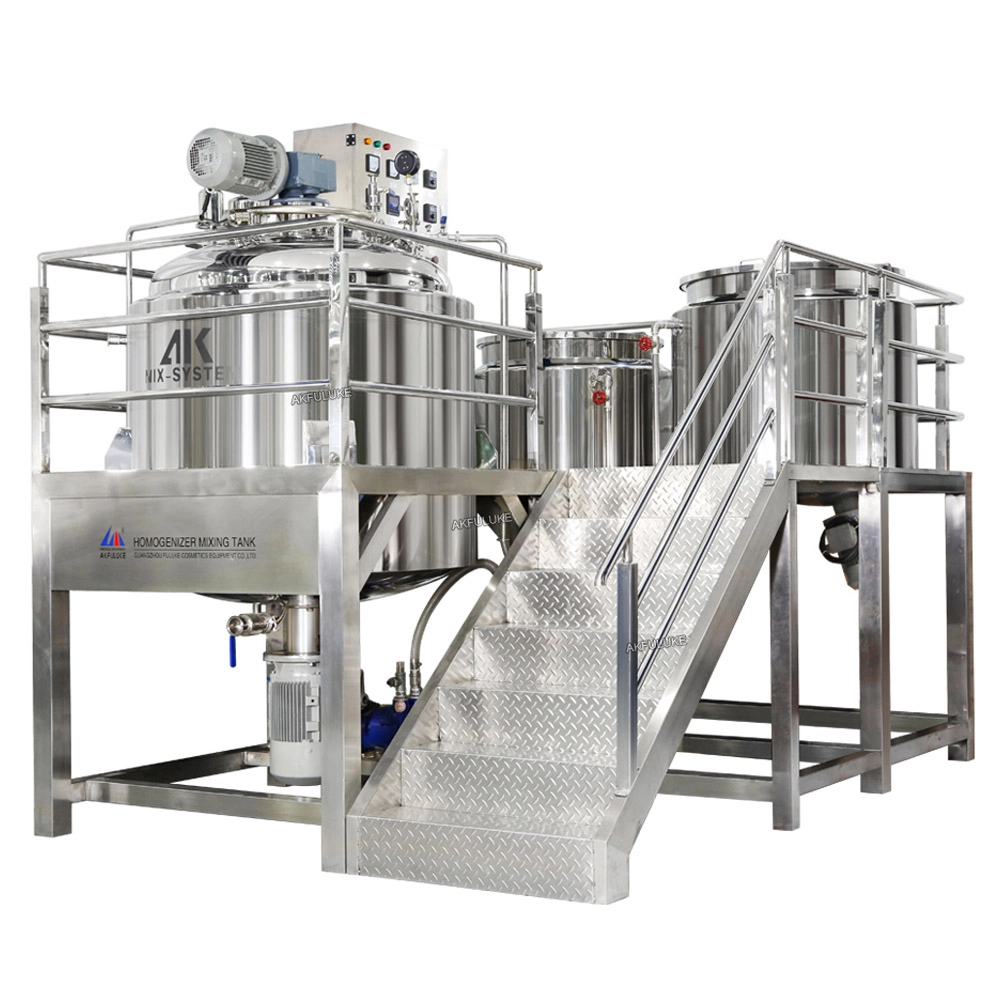
Fixed Type Vacuum Mixing Emulsifying Equipment for Cosmetic Cream Ointment Lotion Vacuum Homogenizer Mixer
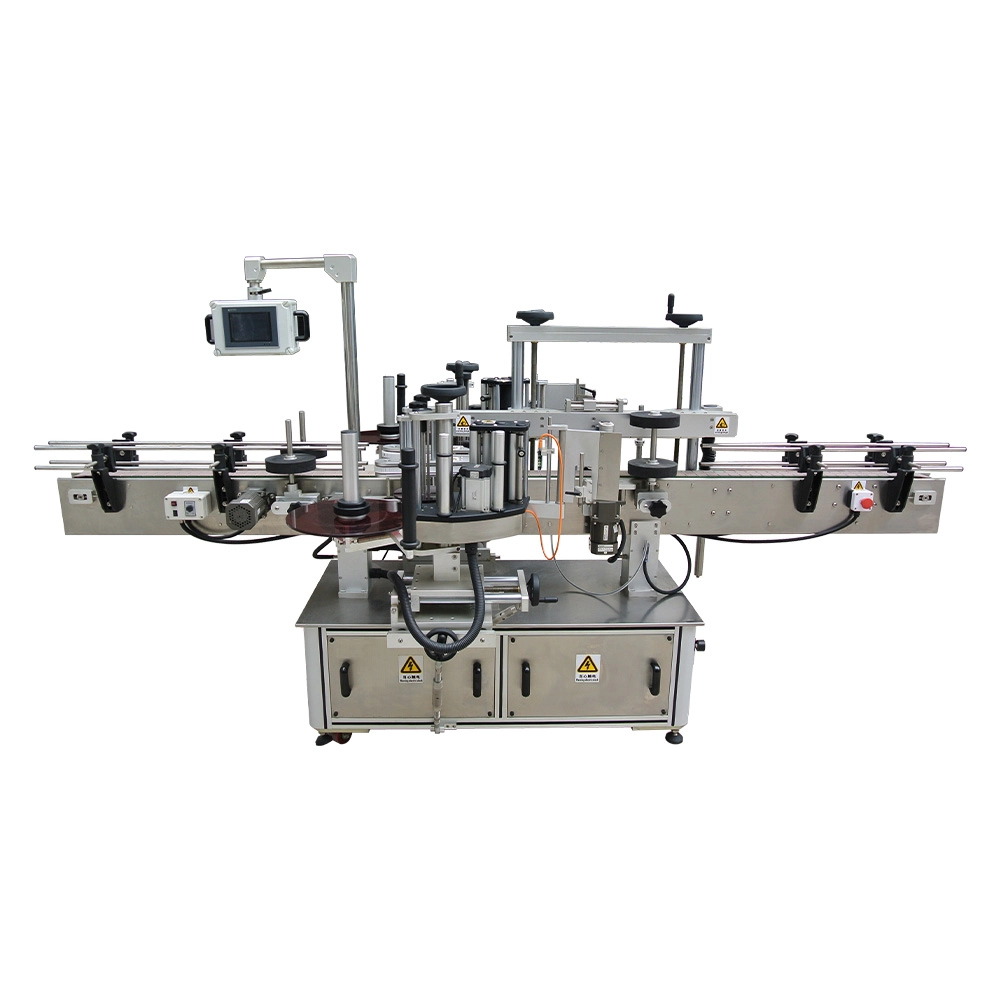
Automatic Labeling Machine Best Selling Automatic Tabletop Flat Surface Labeling Machine Round and Flat Bottle Automatic Labeler Machine
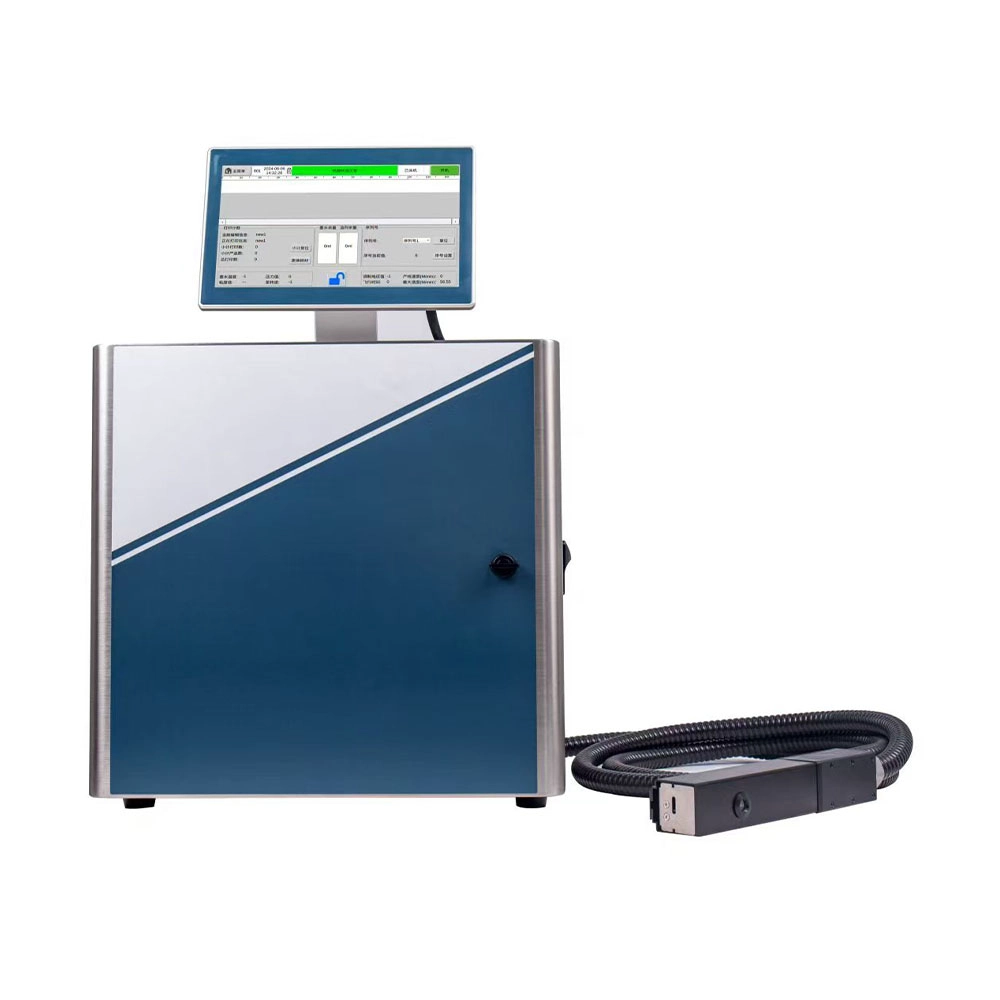
Inkjet Printing Machine Printer Expiry Date Printer Industrial Portable Inkjet Printer for Carton/Plastic/Metal/Glass

A leading manufacturer specializing in advanced machinery and complete production lines for the cosmetics, food, pharmaceutical, and chemical industries worldwide.
Contact FULUKE
Facebook
Instagram
YouTube