
Benefits of Automatic Quantitative Liquid Bottle Filling Machines
- Why automated liquid filling improves production outcomes
- Consistent quality and formulation integrity
- Speed without sacrificing precision
- Traceability and process control
- Technical advantages and precision controls
- High-precision dosing technologies
- Sanitation and GMP-aligned design
- Smart HMI and recipe management
- Operational benefits, cost impact and ROI
- Labor and efficiency gains
- Reduced scrap and improved yield
- Fast payback and scalable throughput
- Compliance, maintenance and selecting the right model
- Meeting regulatory and safety expectations
- Maintenance and lifecycle costs
- How to choose the right configuration
- Brand strengths and what sets this product apart
- Engineering built for cosmetics and sensitive formulations
- Flexible configuration and modular upgrades
- Strong after-sales and validation support
- Practical implementation: integration into existing lines
- Layout and material flow considerations
- Validation, testing and pilot runs
- Operator training and SOPs
- Frequently Asked Questions (FAQ)
- What types of products can this machine fill?
- Is the equipment compliant with GMP?
- How accurate is the filling?
- Can it handle multiple bottle sizes and SKUs?
- What maintenance is required?
- Do you provide on-site installation and training?
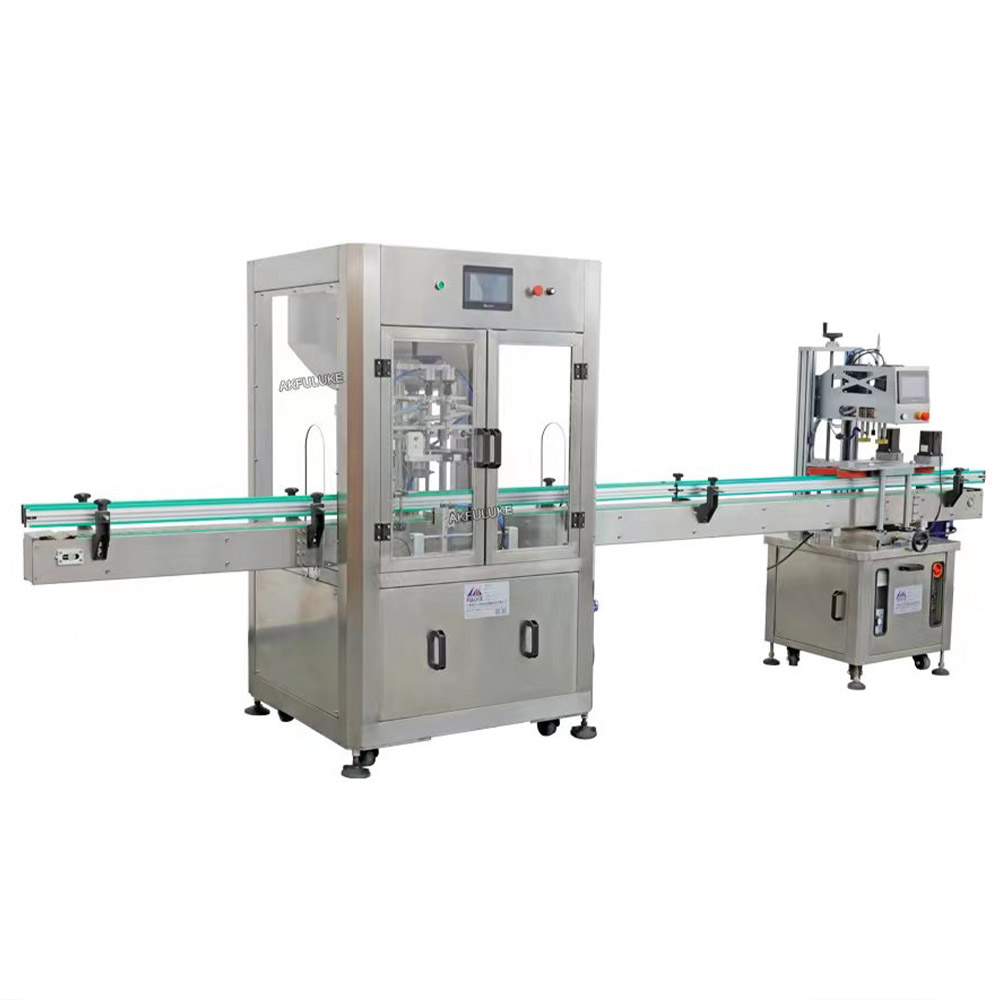
The Automatic Filling Machine Quantitative Liquid Bottle Filling Machine High-precision cream and lotion filling machine brings together automated conveying, precision metering, and intelligent control to meet the growing demand for standardized, high-speed production of creams, lotions and liquids. Built with sanitary 316L/304 stainless steel contact parts and designed to meet GMP standards, this liquid filling machine reduces human error, improves yield, and accelerates time-to-market for cosmetic and healthcare brands.
Why automated liquid filling improves production outcomes
Consistent quality and formulation integrity
Automatic filling lines use volumetric or gravimetric metering to accurately dose every container. For cosmetics such as creams and lotions, consistent fill levels and controlled shear during filling prevent phase separation and preserve product texture. Choosing a high-precision cream and lotion filling machine reduces variability between lots and helps maintain the sensory and functional attributes consumers expect.
Speed without sacrificing precision
Modern liquid filling machines employ servo-controlled piston pumps, peristaltic heads, or time/flow meters to achieve both speed and accuracy. The Automatic Filling Machine Quantitative Liquid Bottle Filling Machine High-precision cream and lotion filling machine can fill a wide range of viscosities—low-viscosity serums to heavier creams—while sustaining throughput that far outpaces manual or semi-automatic approaches.
Traceability and process control
Integrated touchscreen HMI and PLC control provide recipe storage, batch traceability, and OEE monitoring. This improves quality oversight and simplifies audits by enabling operators to recall filling parameters quickly, reduce operator intervention, and capture fill-weight records automatically.
The automatic filling machine integrates automated conveying, precision filling, and intelligent control for packaging creams, lotions, and liquids. Suitable for a variety of containers, including glass and PET bottles, it can fill liquids, emulsions, and pastes with high precision.
Constructed with 316L/304 stainless steel contact components and compliant with GMP standards, it features a touchscreen interface for quick parameter adjustment and completes the entire process without manual intervention. Widely used in the cosmetics, food, daily chemical, pharmaceutical, and chemical industries, it helps companies reduce costs, increase efficiency, and ensure product standardization.
Technical advantages and precision controls
High-precision dosing technologies
The machine supports multiple dosing technologies—servo piston fillers for paste and cream, peristaltic or gear pumps for shear-sensitive liquids, and time/flow-controlled valves for thin solutions. These options ensure the chosen filler matches product rheology and protects emulsion stability. According to industry references on filling machinery, proper selection lowers product waste and improves dosing repeatability (Filling machine — Wikipedia).
Sanitation and GMP-aligned design
All parts that contact the product are manufactured from 316L or 304 stainless steel and polished to sanitary finishes. This reduces contamination risk and simplifies cleaning-in-place (CIP). Compliance with GMP principles is essential for cosmetics and pharmaceutical production; see FDA guidance for manufacturing and quality practices for context (FDA — Drug manufacturing).
Smart HMI and recipe management
A modern touchscreen interface enables recipe storage for different bottle sizes, viscosities, and fill volumes. Switching production from one SKU to another can be done without manual recalibration—minimizing downtime and human error. Data logging supports QA by preserving fill parameters, timestamps, and batch numbers for traceability.
Operational benefits, cost impact and ROI
Labor and efficiency gains
Automating the filling stage reduces manual handling and repetitive tasks, which lowers labor costs and reduces human-related inconsistencies. For many cosmetic operations, one automated line replaces the output of multiple manual stations while enabling redeployment of staff to higher-value tasks like packing or QC.
Reduced scrap and improved yield
Precision metering reduces overfills and underfills. Overfilling increases material cost and underfilling risks regulatory non-compliance and customer complaints. A quantitative liquid bottle filling machine provides accurate dosing that minimizes product giveaway and improves yield, enhancing gross margin over time.
Fast payback and scalable throughput
While the capital expense of high-precision filling equipment is higher than manual tools, throughput improvements, reduced rework, and decreased labor overhead typically generate a rapid ROI—often within months for high-volume SKUs. Use the table below to compare manual, semi-automatic, and automatic filling performance metrics.
| Metric | Manual Filling | Semi-Automatic Filling | Automatic Quantitative Liquid Filling Machine |
|---|---|---|---|
| Throughput (bottles/hr) | 50–200 | 200–600 | 800–3000+ |
| Fill accuracy | ±5–10% | ±2–5% | ±0.5–1.5% |
| Labor requirement | High | Moderate | Low |
| Sanitation/CIP | Manual cleaning | Partial CIP | Full CIP options, easy disassembly |
| Typical industries | Small-batch, craft | Startups, small factories | Cosmetics, pharma, food, chemicals |
Compliance, maintenance and selecting the right model
Meeting regulatory and safety expectations
Choosing a liquid filling machine that conforms to GMP and local regulatory requirements reduces audit risk and market access issues. Documentation, material certificates (e.g., stainless grades), and validation support are critical. For regulatory context on cosmetics and manufacturing responsibilities, refer to the FDA cosmetics information page (FDA — Cosmetics).
Maintenance and lifecycle costs
Planned preventive maintenance on pumps, valves, seals, and sensors extends machine life and maintains fill accuracy. The Automatic Filling Machine Quantitative Liquid Bottle Filling Machine High-precision cream and lotion filling machine is designed for easy access to wear parts, reducing downtime and maintenance labor. Regular calibration ensures continued dosing precision.
How to choose the right configuration
Key selection considerations include product viscosity, desired throughput, container type (glass, PET, tube), required sanitary standards, and budget. Request a site trial or lab test run with your formula and container to verify performance before purchase. A vendor should provide references, on-site commissioning, and operator training as part of the purchase package.
Brand strengths and what sets this product apart
Engineering built for cosmetics and sensitive formulations
Our Automatic Filling Machine Quantitative Liquid Bottle Filling Machine High-precision cream and lotion filling machine is engineered to preserve formulation integrity. Options such as low-shear pumps and gentle filling valves protect emulsified products. The sanitary design—316L/304 stainless steel contact parts—supports strict hygiene needs.
Flexible configuration and modular upgrades
The machine supports a wide range of container shapes and sizes with quick-change tooling. Modular add-ons—such as capping, labeling, and vision inspection—enable a full automated line built around a single, scalable filler, reducing integration complexity.
Strong after-sales and validation support
We provide commissioning, validation documentation, spare parts kits, and operator training to meet E-E-A-T expectations for reliable performance. Customers benefit from local service partners and remote diagnostics that minimize downtime and maintain production continuity.
Practical implementation: integration into existing lines
Layout and material flow considerations
Integrating an automatic liquid filling machine requires planning for conveyor infeed/outfeed, buffering, capping, and labeling. A well-designed line balances machine speeds to prevent bottle pile-ups and maintain continuous flow—this minimizes manual intervention and maximizes throughput.
Validation, testing and pilot runs
Conduct pilot runs with real formulas and containers. Measure fill accuracy, cycle time, and inspect for spills or foaming. Validation ensures the machine meets specification and supports regulatory submission when required. Documented FAT (Factory Acceptance Test) and SAT (Site Acceptance Test) procedures are recommended.
Operator training and SOPs
Documented standard operating procedures (SOPs) and operator training reduce human error and ensure safe operation. Training should include routine cleaning (CIP), changeovers, basic troubleshooting, and emergency stop procedures.
Frequently Asked Questions (FAQ)
What types of products can this machine fill?
The machine fills low-viscosity liquids, emulsions, creams, lotions and some pastes. Different dosing heads (piston, peristaltic, or gear pump) are selectable based on product rheology.
Is the equipment compliant with GMP?
Yes. Contact surfaces are 316L/304 stainless steel and the design supports GMP-compliant cleaning and documentation. For industry guidance on GMP standards, refer to official regulatory sources like the FDA (FDA — Drug manufacturing).
How accurate is the filling?
Typical fill accuracy ranges from ±0.5% to ±1.5% with appropriate dosing technology and calibration, depending on product viscosity and container shape.
Can it handle multiple bottle sizes and SKUs?
Yes. The machine supports quick-change tooling and recipe storage on the HMI for rapid SKU changeovers, reducing downtime.
What maintenance is required?
Regular checks on seals, valves, and pumps, periodic calibration, and cleaning-in-place (CIP) procedures are recommended. A preventive maintenance schedule ensures long-term accuracy and uptime.
Do you provide on-site installation and training?
Yes. We offer commissioning, validation support, and operator training to ensure your production team is confident and the machine is properly integrated.
If you have more questions or would like a live demonstration, contact our sales team to schedule a test run or request a quotation:
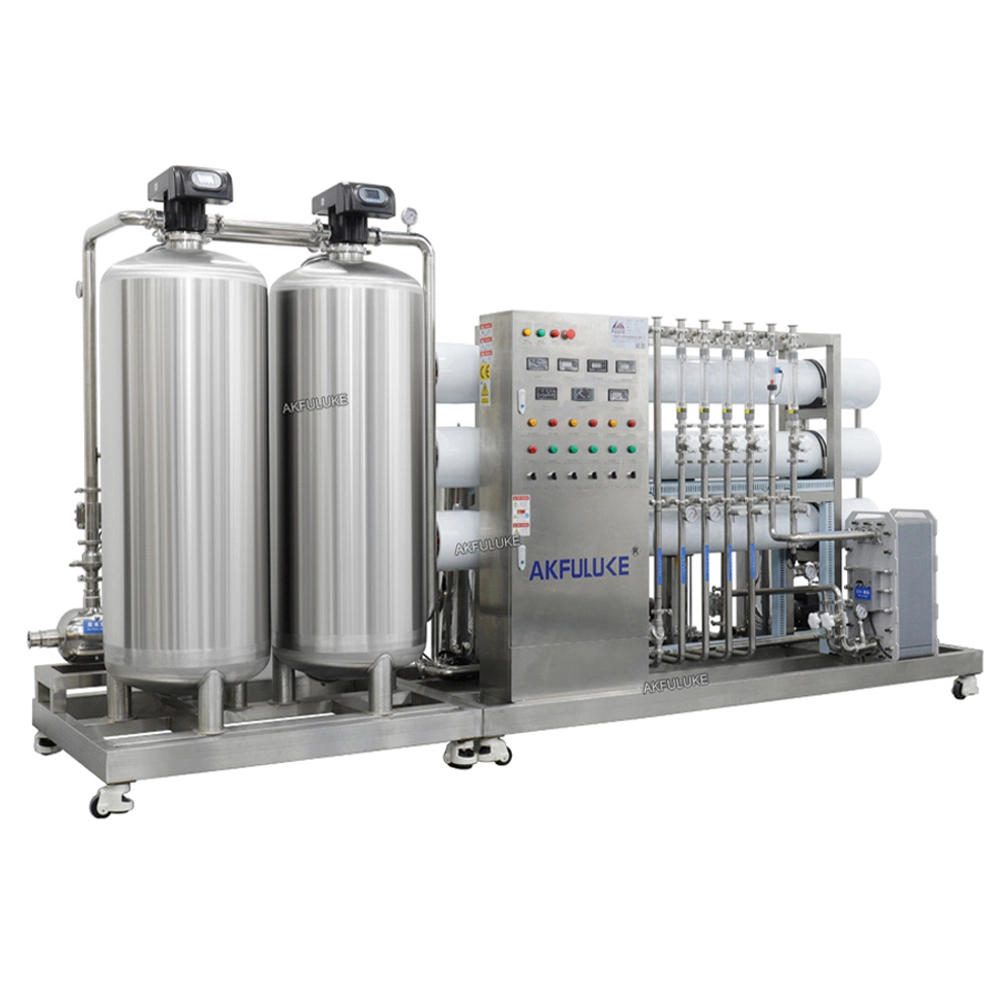
Supplier Evaluation: Warranties, Service, and Spare Parts Support
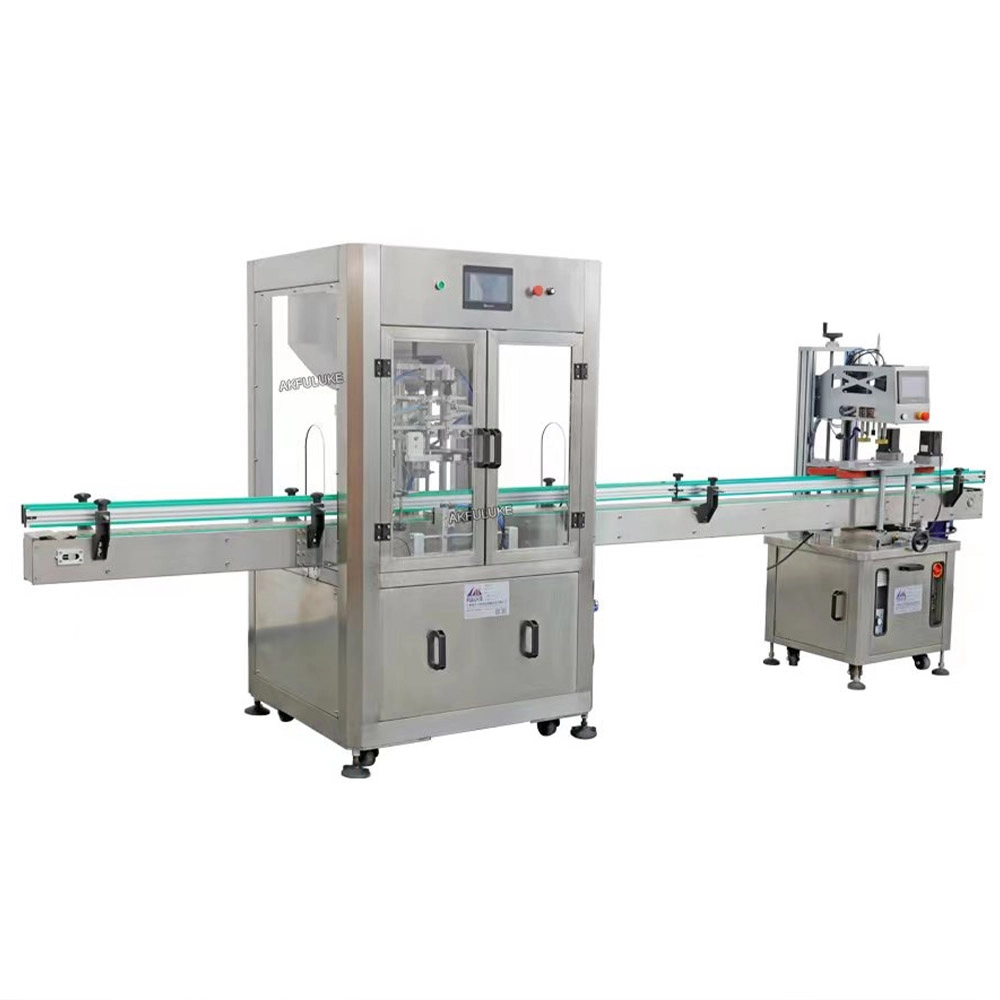
Selecting Materials and Seals for Cosmetic Filling Equipment
Top 10 filling and capping machine Manufacturers and Supplier Brands
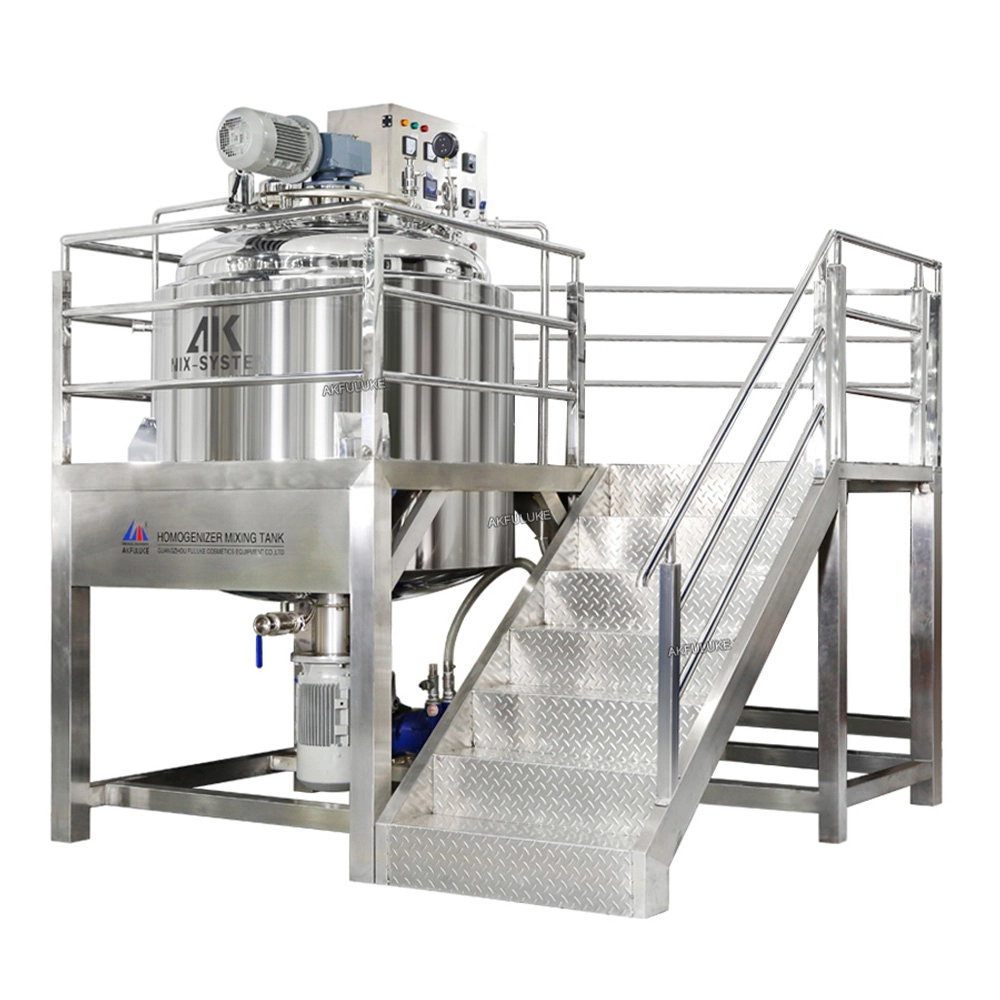
Maintenance and Sanitation Best Practices for Mixer Tanks
RO Water Treatment
Can you make a design for us?
Yes, we can, we provide not only products, but also solutions and designs.
What can you buy from us?
RO Water Treatment、Vacuum Emulsifying Machine、Homogenizer Mixing Tank、Filling and Capping、labeling Machine、Packing Machine、Storage Tank,etc.
The Flip Cover Liquid Wash Mixing Homogenizing Tank
Is it possible to not have a heating function?
Of course, if your product's production process doesn't require heating and cooling functions, then you can just make it a single-layer pot.
FAQs
Does FULUKE offer customized machinery solutions?
Storage Tank
Do special operating conditions (such as high temperature or high pressure) require special customization?
Yes. High-temperature applications require the use of heat-resistant materials and additional insulation. High-pressure applications require enhanced tank wall thickness and sealing structures. Both require individual designs according to corresponding industry standards.
You May Also Like
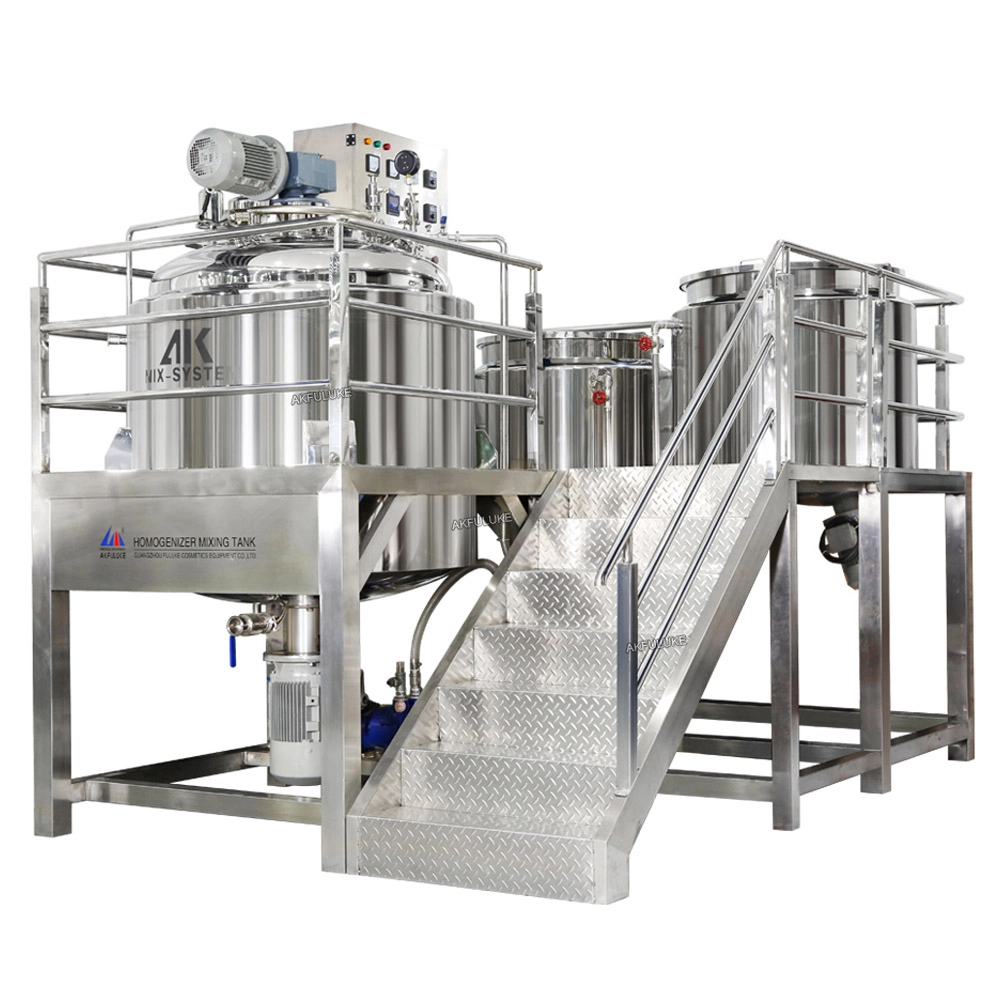
Fixed Type Vacuum Mixing Emulsifying Equipment for Cosmetic Cream Ointment Lotion Vacuum Homogenizer Mixer
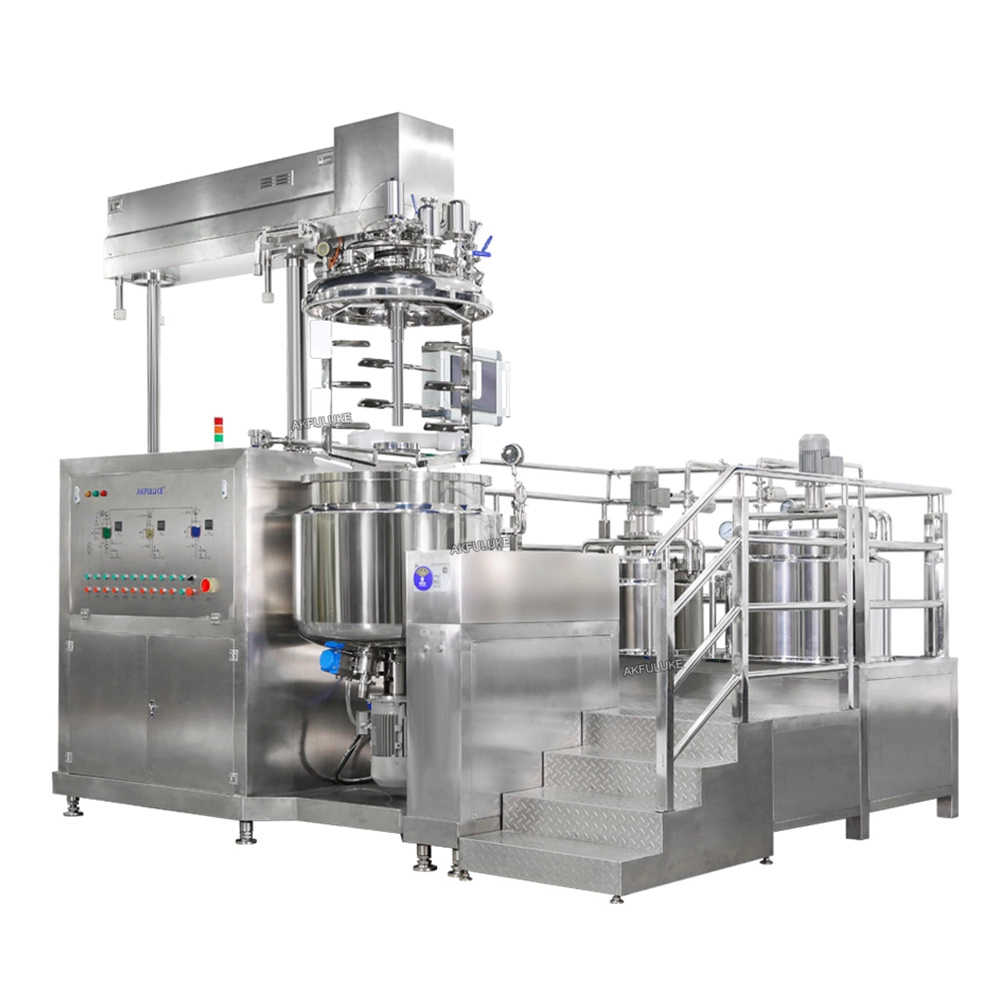
Hydraulic lift Cosmetic Vacuum Homogenizer Emulsifying Mixer for Making Cream and Lotion Mayonnaise Mixing Machine
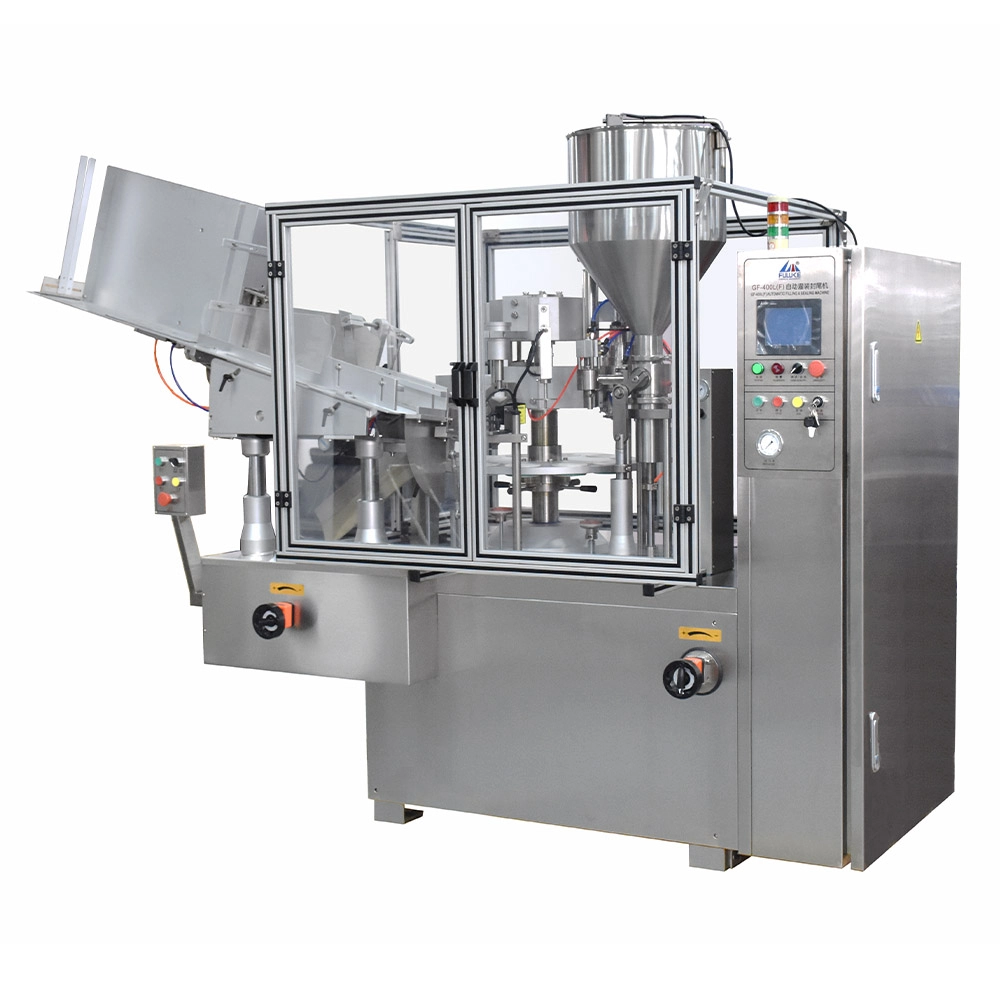
Automatic Tube Filling and Sealing Machine Toothpaste Sunscreen and Facial Cleanser Filling and Sealing Machine for Plastic and Aluminum-plastic Tube
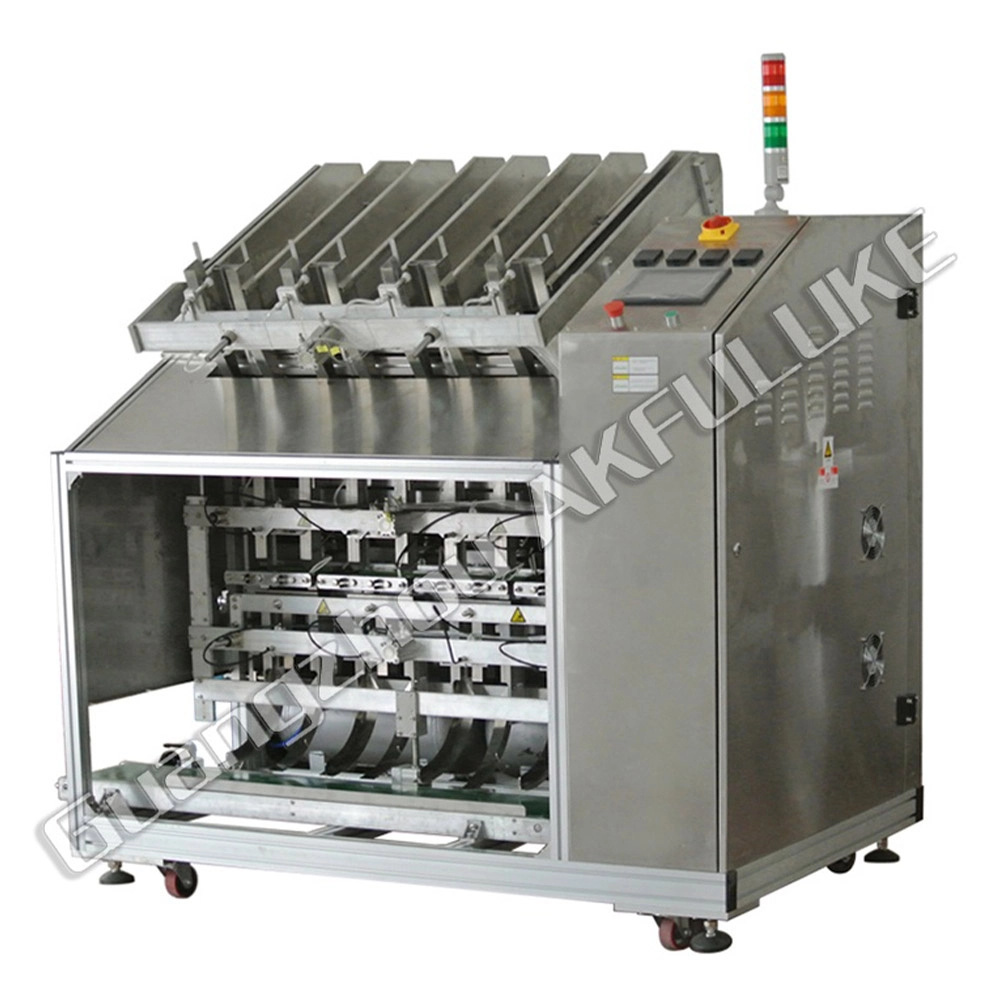
Effective Automatic Facial Mask Filling Machine 2/6/8 Heads Facial Mask Filling and Sealing Machine
Get in touch with FULUKE
If you have any comments or good suggestions, please leave us a message, later our professional staff will contact you as soon as possible.

A leading manufacturer specializing in advanced machinery and complete production lines for the cosmetics, food, pharmaceutical, and chemical industries worldwide.
Contact FULUKE
Facebook
Instagram
YouTube