
Choosing the Right Pump Type for Cream and Lotion Filling
- Key Considerations When Selecting a Pump for Creams and Lotions
- Understand product properties: viscosity, particulates, shear sensitivity
- Production requirements: accuracy, speed, container types
- Hygiene, cleaning and validation (CIP/SIP, materials)
- Pump Types Compared: Pros, Cons and Typical Use Cases
- Positive-displacement piston (servo piston) pumps
- Progressive cavity (Moineau) pumps
- Gear and lobe pumps
- Peristaltic pumps
- Diaphragm and pneumatic pumps
- Comparison table: selecting by application
- Integrating the Pump with an Automatic Liquid Filling Machine
- Controls and synchronization
- Nozzle design and anti-drip measures
- Material compatibility and sanitary design
- Practical Selection Workflow and Validation
- Step-by-step selection checklist
- Validation and regulatory references
- Maintenance, spare parts and lifecycle cost
- Frequently Asked Questions (FAQ)
- Q1: Which pump gives the best fill accuracy for creams and lotions?
- Q3: Can a peristaltic pump be used for thick creams?
- Q4: How important is sanitary design and material selection?
- Q5: What should I test during a product trial?
Choosing the correct pump type for cream and lotion filling is a critical decision for cosmetic manufacturers and contract packers. The right pump ensures accurate dosing, protects sensitive emulsions from shear and aeration, simplifies cleaning and validation, and integrates seamlessly with your liquid filling machine to meet production targets and regulatory requirements.
Key Considerations When Selecting a Pump for Creams and Lotions
Understand product properties: viscosity, particulates, shear sensitivity
Before evaluating pump architectures, measure and document your product's key properties: viscosity (cP or mPa·s) at filling temperature, presence and size of particulates (e.g., exfoliants, beads), thixotropy (does viscosity change under shear), and sensitivity to aeration or heat. Lotions and creams typically span from low-viscosity lotions (100–5,000 mPa·s) to thick creams and ointments (10,000–200,000 mPa·s). Matching pump selection to this range prevents metering errors and product degradation.
Production requirements: accuracy, speed, container types
Define required fill accuracy (e.g., ±0.5% to ±2%), cycle rate (bottles per minute), container types (glass, PET, tubes, jars) and container size range. A high-precision cream and lotion filling machine often requires a positive-displacement pump or a finely controlled servo-driven piston to deliver repeatable grams or milliliters per dose. Consider whether the machine will operate as a standalone liquid filling machine or as part of a fully integrated line with capping and labeling.
Hygiene, cleaning and validation (CIP/SIP, materials)
Cosmetic production must meet hygienic practices and often ISO 22716 (cosmetics GMP). Pumps with sanitary designs, easily removable wetted parts made of 316L/304 stainless steel, and compatibility with CIP/SIP are preferred. Check seals, dead-space, and cleanability when selecting a pump to ensure compliance with quality and traceability requirements. See ISO guidance on cosmetic GMP: ISO 22716.
Pump Types Compared: Pros, Cons and Typical Use Cases
Positive-displacement piston (servo piston) pumps
Piston pumps (also called dosing pumps when servo-controlled) offer high accuracy and repeatability, especially for fixed-volume fills. They are excellent for medium- to high-viscosity creams and lotions when shear must be controlled. Servo-driven pistons allow programmable stroke length for variable fills and integrate smoothly with PLC and touchscreen controls on automatic filling machines.
Progressive cavity (Moineau) pumps
Progressive cavity pumps are ideal for very viscous, shear-sensitive and particulate-laden products. They provide continuous, low-shear flow and maintain accuracy across a wide viscosity range. These pumps are common in cosmetics for filling thick creams and products with suspended solids. The rotor/stator geometry minimizes pulsation and protects emulsion stability.
Gear and lobe pumps
External gear and lobe pumps are robust for medium-viscosity products and offer good flow consistency. Gear pumps can handle higher pressures but may induce moderate shear; lobe pumps are gentler and easier to clean. Both can be used on larger production lines where throughput is prioritized, but check material compatibility and seal designs to meet GMP.
Peristaltic pumps
Peristaltic pumps excel for low-contamination/aseptic applications because only the tubing contacts the product. They are easy to maintain and CIP-friendly when disposable tubing is used. However, peristaltic pumps are usually limited in handling very high-viscosity creams or particulate-filled lotions and can wear tubing faster with abrasive products.
Diaphragm and pneumatic pumps
Air-operated diaphragm pumps provide good suction lift and are useful for transfer, but they can be pulsatile and may introduce aeration in emulsions. Their hygienic performance depends on construction; hygienic (sanitary) diaphragm pumps exist but are less common for final dosing in cosmetics compared to piston or progressive cavity pumps.
Comparison table: selecting by application
| Pump Type | Best For | Accuracy | CIP/SIP Friendliness | Shear on Product | Typical Viscosity Range |
|---|---|---|---|---|---|
| Piston (servo) | High precision fills, variable volumes | High (±0.2–1%) | Good (if designed hygienically) | Low–medium | 100 – 100,000 mPa·s |
| Progressive cavity | Very viscous & particulate products | High (±0.5–1.5%) | Good (removable stator/rotor helps) | Low | 1,000 – 1,000,000+ mPa·s |
| Gear / Lobe | Medium viscosity, higher throughput | Medium (±1–3%) | Medium (depends on design) | Medium | 200 – 200,000 mPa·s |
| Peristaltic | Aseptic, low-contamination, small runs | Medium (±1–3%) | Good (replace tubing) | Low | 10 – 50,000 mPa·s (limited for very thick creams) |
| Diaphragm | Transfer, abrasive slurries (non-precision) | Low–Medium | Variable | Medium–High | 100 – 200,000 mPa·s |
Integrating the Pump with an Automatic Liquid Filling Machine
Controls and synchronization
Modern automatic filling machines use PLCs and touchscreen HMIs to coordinate conveyors, indexing, pump strokes and nozzles. Servo-driven piston pumps and progressive cavity pumps can be precisely synchronized to the filler for repeatable fills. When choosing a pump, ensure it supports interface protocols or analog control signals compatible with your filling machine's control system. Many high-precision cream and lotion filling machines provide recipe management, allowing quick changeover between SKUs.
Nozzle design and anti-drip measures
Nozzle geometry is critical to avoid drooling, stringing, and surface imperfections on creams and lotions. Choose nozzles with anti-drip shut-off, shut-off valves, or vacuum return lines for low-viscosity lotions. For thick creams, a wider-bore nozzle may be necessary to avoid shearing. A well-matched nozzle reduces product waste and improves line yield.
Material compatibility and sanitary design
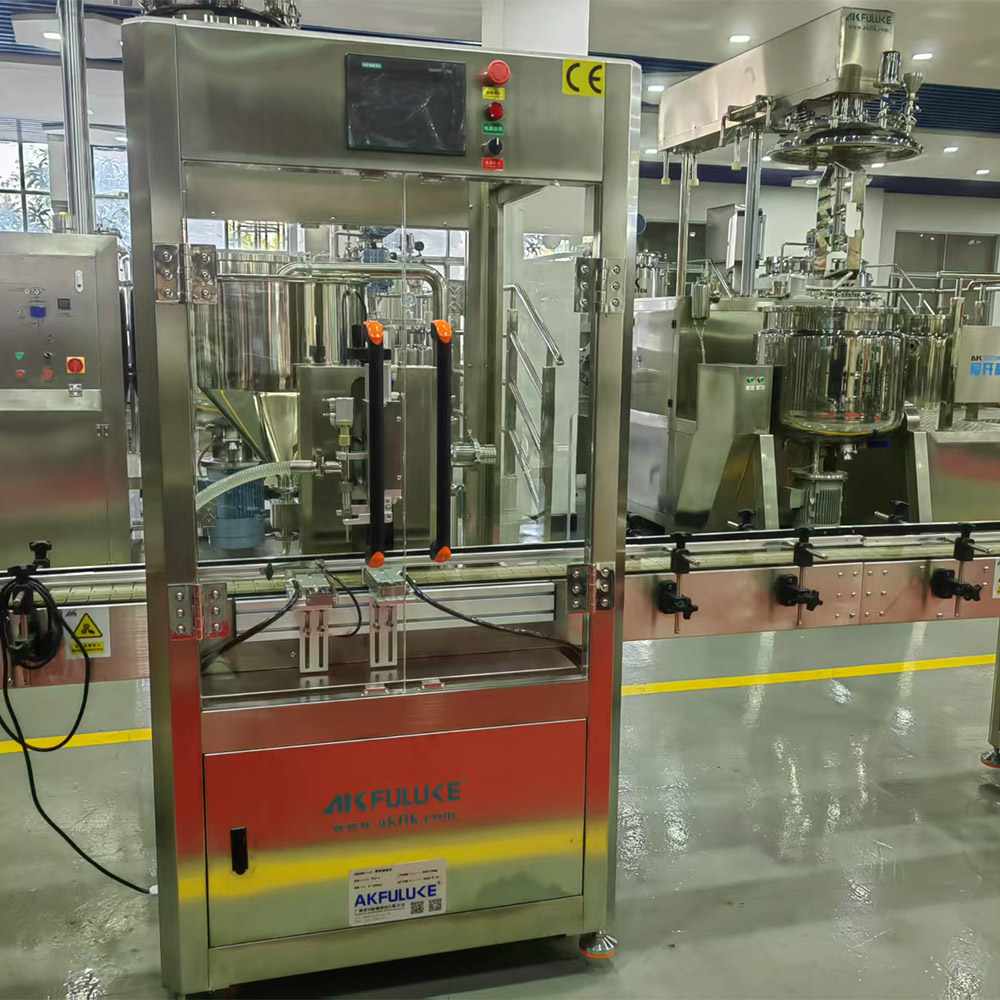
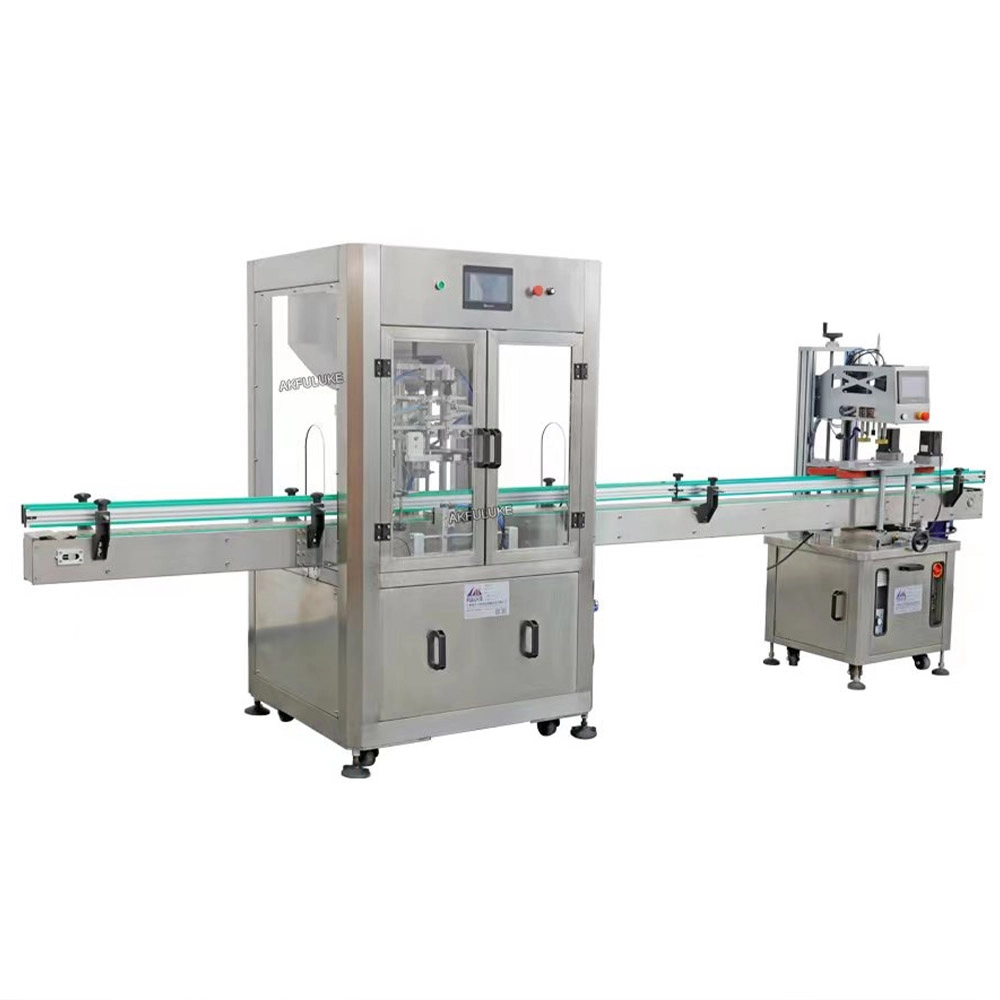
All product-contact parts should be 316L or 304 stainless steel, with FDA/USP-compliant elastomers, to avoid contamination and corrosion. A hygienic pump design with minimal dead legs simplifies cleaning and validation. Our Automatic Filling Machine Quantitative Liquid Bottle Filling Machine High-precision cream and lotion filling machine is constructed with 316L/304 stainless steel contact components and meets GMP standards for cosmetics and related industries. It includes a touchscreen interface for quick parameter adjustment and completes the filling process without manual intervention:
The automatic filling machine integrates automated conveying, precision filling, and intelligent control for packaging creams, lotions, and liquids. Suitable for a variety of containers, including glass and PET bottles, it can fill liquids, emulsions, and pastes with high precision.
Constructed with 316L/304 stainless steel contact components and compliant with GMP standards, it features a touchscreen interface for quick parameter adjustment and completes the entire process without manual intervention. Widely used in the cosmetics, food, daily chemical, pharmaceutical, and chemical industries, it helps companies reduce costs, increase efficiency, and ensure product standardization.
Practical Selection Workflow and Validation
Step-by-step selection checklist
- Document your product properties (viscosity at fill temperature, particulates, thixotropy, temperature sensitivity).
- Define production metrics: target throughput, accuracy, container types and changeover frequency.
- Shortlist pump types (piston, progressive cavity, gear, peristaltic) based on viscosity and shear needs.
- Request sample trials on candidate pumps/fillers using your actual product and containers.
- Evaluate cleanability, maintenance frequency, spare-part costs and supplier support.
- Validate fill accuracy, cycle stability and product quality (appearance, aeration, droplet size if emulsion) and document results for quality records.
Validation and regulatory references
Validation of filling accuracy, cleaning procedures and material traceability should align with cosmetic industry best practices and GMP guidance. ISO 22716 provides guidance on Good Manufacturing Practices for cosmetics: ISO 22716. For general product safety and labeling obligations in the United States, consult the FDA cosmetics pages: FDA - Cosmetics. For hygienic equipment design and sanitary pump standards, industry associations such as EHEDG and 3-A Sanitary Standards give guidance on hygienic design: EHEDG and 3-A Sanitary Standards.
Maintenance, spare parts and lifecycle cost
Evaluate lifecycle costs—not just initial capital expense. Consider parts subject to wear (seals, stators, tubing), mean time between failures (MTBF), and supplier availability of spare components. Pumps that minimize downtime and simplify cleaning can lower total cost of ownership despite higher upfront cost.
Frequently Asked Questions (FAQ)
Q1: Which pump gives the best fill accuracy for creams and lotions?
A: Servo-driven piston pumps and progressive cavity pumps typically deliver the highest fill accuracy for creams and lotions. Piston pumps are ideal for precise fixed-volume fills, while progressive cavity pumps handle very viscous or particulate-laden products with high accuracy and low shear.
Q3: Can a peristaltic pump be used for thick creams?
A: Peristaltic pumps are better suited to low- to medium-viscosity lotions and aseptic lines. For very thick creams (>50,000–100,000 mPa·s) peristaltic tubing may not provide consistent performance and will wear quickly. Progressive cavity or piston pumps are better choices for heavy creams.
Q4: How important is sanitary design and material selection?
A: Extremely important. Using 316L/304 stainless steel for product-contact parts and validated elastomers reduces contamination risk and supports cleaning and validation. Sanitary design reduces dead legs, eases CIP/SIP, and supports regulatory compliance such as ISO 22716.
Q5: What should I test during a product trial?
A: During trials, measure fill accuracy across volumes, cycle stability over production runs, product appearance (foam, air pockets), nozzle dripping, and cleaning time. Record metrics and compare against acceptance criteria for quality and throughput.
If you would like to evaluate pump options or see how our Automatic Filling Machine Quantitative Liquid Bottle Filling Machine High-precision cream and lotion filling machine performs with your formulations, contact our technical team for a sample trial and quote.
Contact Sales | View Product Details
References:
- ISO 22716 — Good Manufacturing Practices (GMP) for cosmetics: https://www.iso.org/standard/36437.
- FDA — Cosmetics overview: https://www.fda.gov/cosmetics
- EHEDG — European Hygienic Engineering & Design Group: https://www.ehedg.org/
- Peristaltic pump overview (Wikipedia): https://en.wikipedia.org/wiki/Peristaltic_pump
Selecting Materials and Seals for Cosmetic Filling Equipment
Maintenance and Sanitation Best Practices for Mixer Tanks
Top Features Buyers Need in Automatic Lotion Filling Machines
Choosing the Right Mixing Tank with Agitator for Production Lines
Inkjet Printing Machine
Can you customize the machine?
Of course, we provide customized services according to customer needs.
The printer isn't printing properly after a long period of inactivity. Is the printhead broken?
The printhead is most likely clogged due to dried ink, rather than complete damage. Prolonged inactivity is one of the main causes of inkjet printer clogs. Ink dries in the tiny nozzles, hindering ink flow. Try performing the automatic printhead cleaning procedure 2-3 times. If this doesn't work, remove the printhead, soak it in anhydrous alcohol for half an hour, then rinse (this requires professional operation; novice printers are advised to have the printer serviced). After the alcohol has completely evaporated, reinstall and test. It's recommended to perform a self-check at least once a week to prevent the printhead from drying out.
Sealed Homogenizing Mixing Tank
Who are we?
Our headquarters is located in Guangzhou, Guangdong, China, and our factory is located in Yangzhou, Jiangsu. Our products are sold all over the world. We have approximately 50 employees in our company and factory.
Lift-type Homogenizing Disperser
What precautions should be taken before and during equipment startup?
Before startup: Check that the disperser disc is securely installed, the container is clamped securely, and the lifting mechanism is flexible. Also, verify the material level (it must be submerged above the disperser disc to prevent damage from idling or material splashing).During operation: Start at a low speed and gradually increase to the target speed. Manually adjusting the lifting height during operation is prohibited; always stop the machine to avoid hand entanglement.
RO Water Treatment
Will poor raw water quality (such as high turbidity or hardness) affect the performance of RO equipment?
It can have a significant impact.
Highly turbid raw water (containing large amounts of sediment and colloids) can accelerate clogging of pre-filters (PP cotton) and activated carbon elements, shortening replacement cycles and increasing maintenance costs.Highly hard raw water (containing large amounts of calcium and magnesium ions) can easily form scale (calcium carbonate and magnesium carbonate) on the RO membrane surface, reducing filtration efficiency and even causing irreversible damage, shortening the life of the membrane.For this type of water quality, it is recommended to add a pretreatment device (such as a prefilter or softener) before the RO system to reduce the raw water's turbidity or hardness before entering the RO system.
You May Also Like
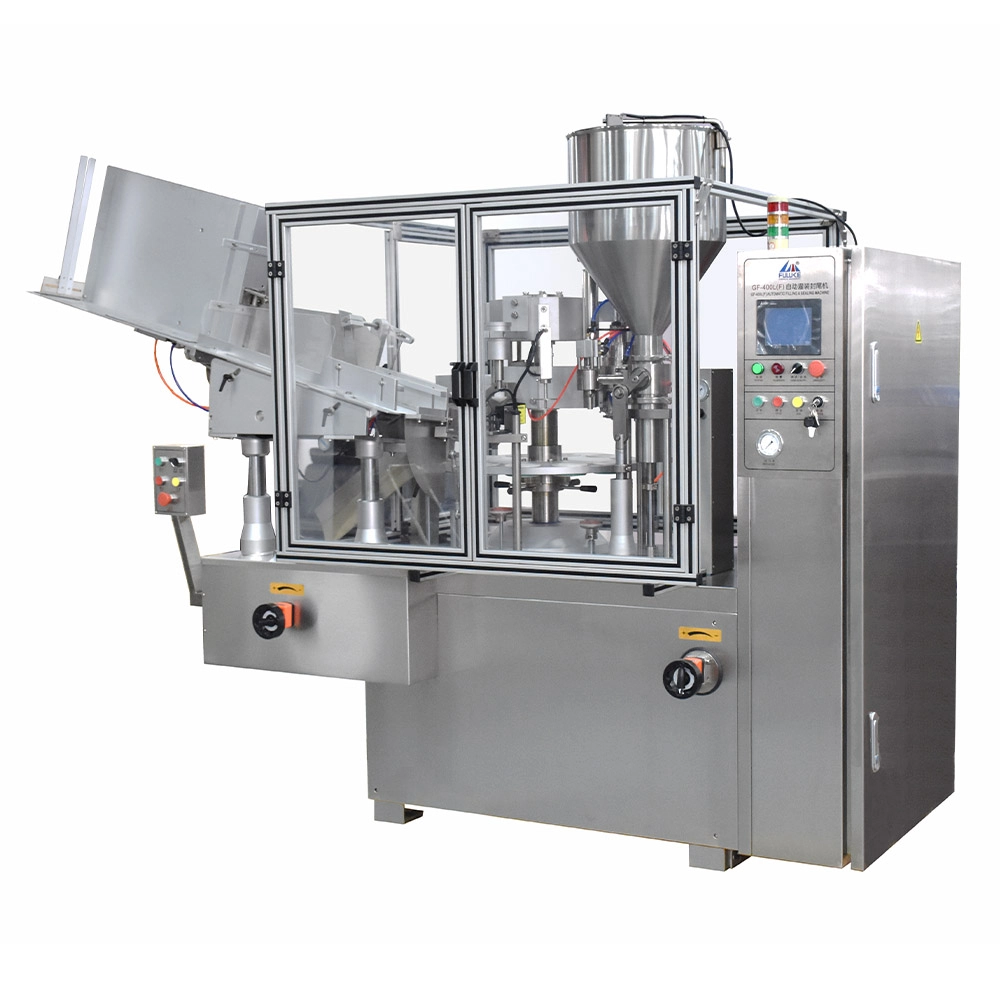
Automatic Tube Filling and Sealing Machine Toothpaste Sunscreen and Facial Cleanser Filling and Sealing Machine for Plastic and Aluminum-plastic Tube
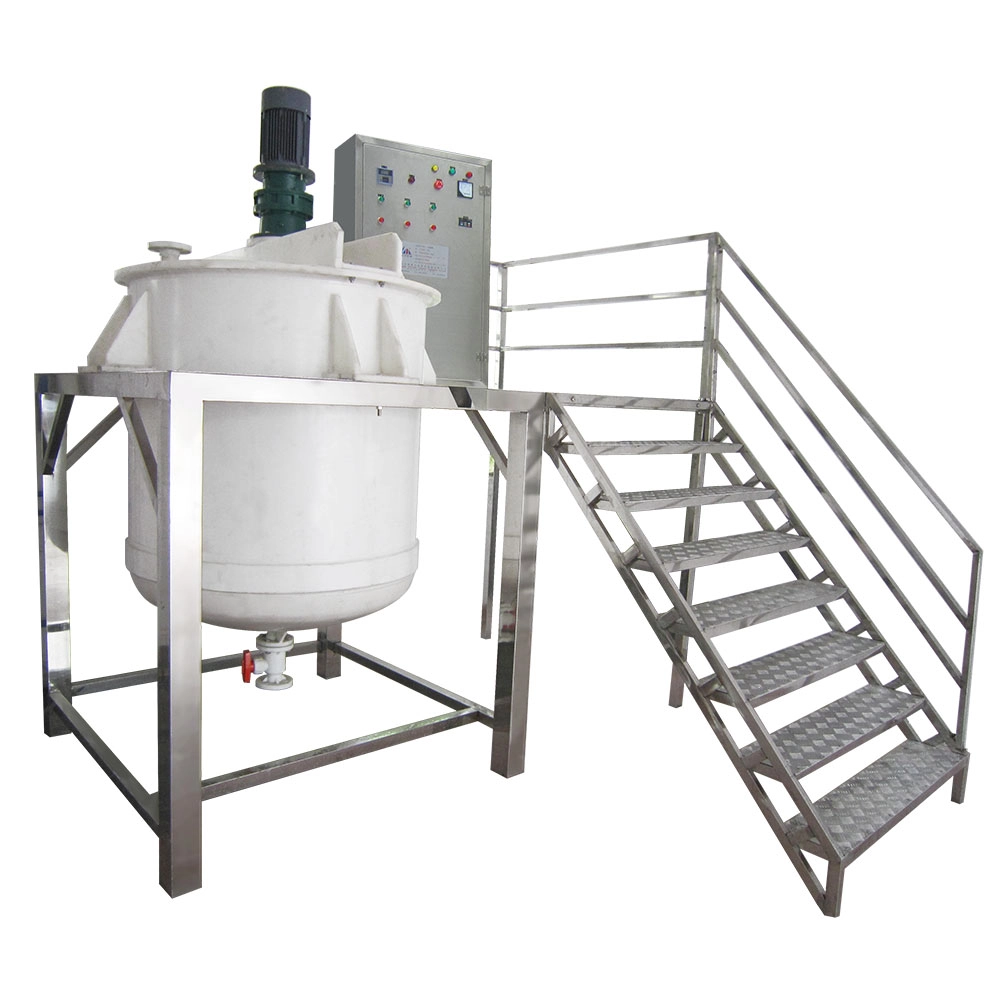
Polypropylene PP Mixing Tank Anti-Corrosion Mixer Reaction Kettle with Agitator Chemical Mixing Vessel
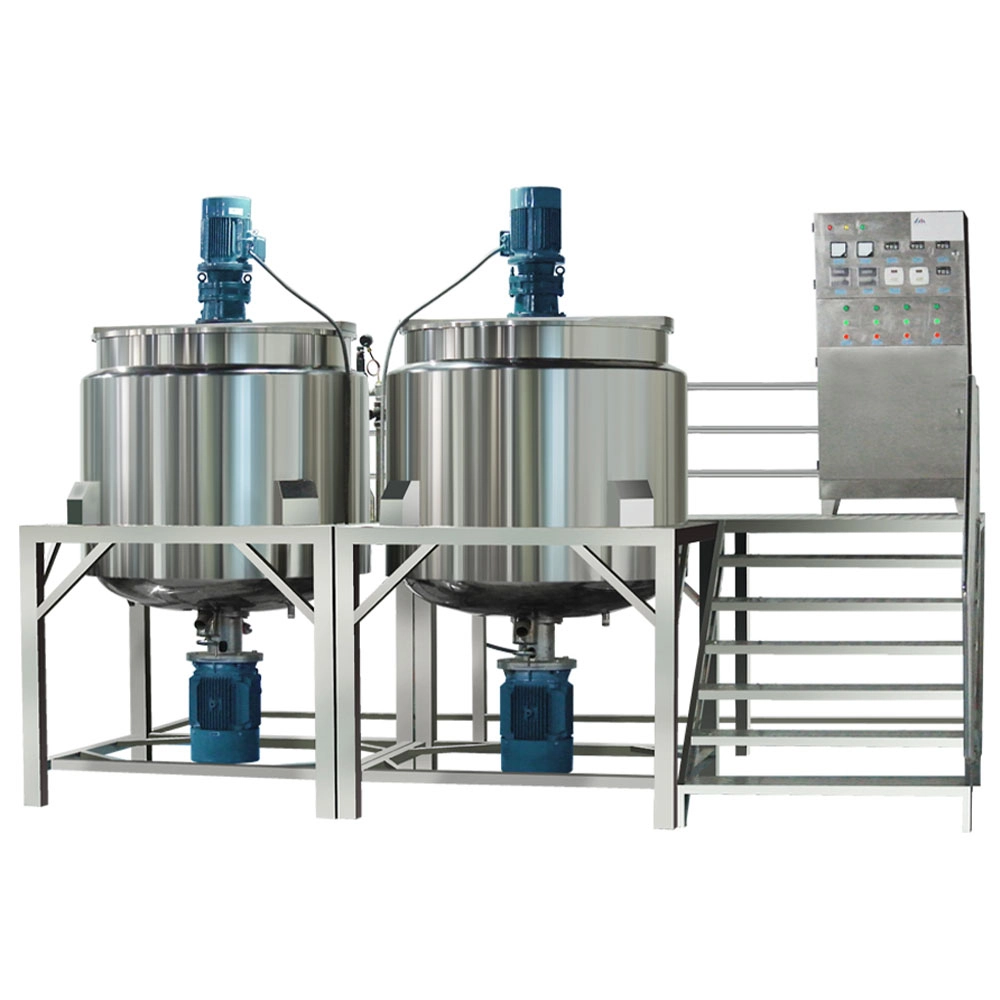
Flip Cover Multi-function Liquid Wash Mixing Tank Blender Liquid Detergent Mixer Homogenization Stirring Tank
Stainless Steel Mixer Liquid Mixing tank with Agitator Homogenizing Mixing tank Vacuum Sealed Mixer Machine
Get in touch with FULUKE
If you have any comments or good suggestions, please leave us a message, later our professional staff will contact you as soon as possible.

A leading manufacturer specializing in advanced machinery and complete production lines for the cosmetics, food, pharmaceutical, and chemical industries worldwide.
Contact FULUKE
Facebook
Instagram
YouTube