
How to Choose a Quantitative Liquid Bottle Filling Machine
- Why Choose a Quantitative Liquid Bottle Filling Machine?
- Improved accuracy and reduced waste
- Hygiene and compliance with GMP
- Typical product introduction (product summary)
- Key Technical Factors to Evaluate
- Pump and dispensing mechanism — match to viscosity
- Filling accuracy, speed and scalability
- Changeover flexibility and tooling
- Operational and Compliance Considerations
- Materials, cleanability and maintenance
- Controls, automation and data traceability
- Safety, environmental and regulatory alignment
- Purchasing, ROI and Support
- Calculating total cost of ownership (TCO)
- Vendor evaluation and service network
- Validation, IQ/OQ and startup support
- Comparative Overview: Common Filling Technologies
- Frequently Asked Questions (FAQ)
- What accuracy can I expect from a quantitative liquid bottle filling machine?
- Is stainless steel really necessary for cosmetic filling equipment?
- How do I know which pump type to choose for my lotion or cream?
- What regulatory standards should my filling line meet?
- How can I evaluate suppliers quickly?
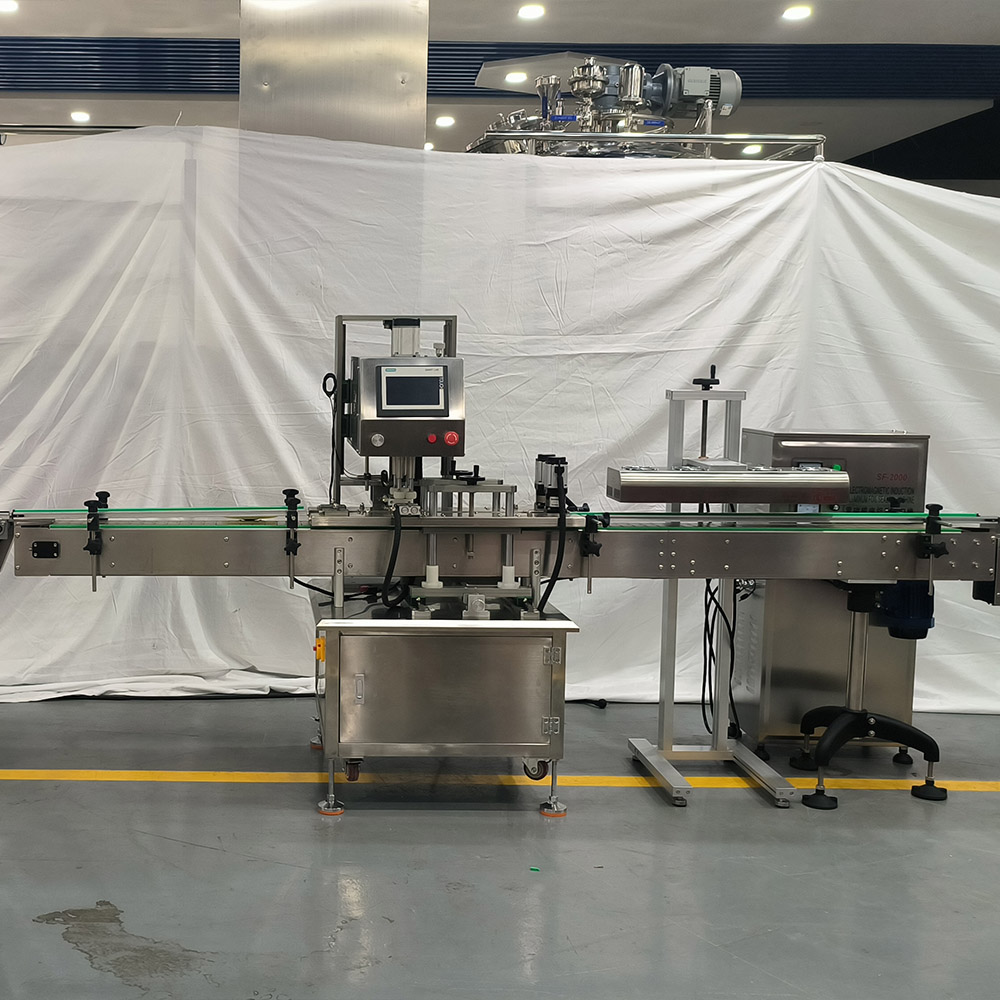
Selecting the right quantitative liquid bottle filling machine is a critical decision for cosmetics, pharmaceutical, food and daily chemical manufacturers. The correct automatic filling machine ensures accurate dosing, reduces waste, maintains hygiene standards, and scales production without compromising product quality. This guide explains the technical, operational and regulatory criteria to evaluate when choosing a high-precision cream and lotion filling machine, and shows how features like automated conveying, precision pumps and GMP-compliant materials translate into measurable business value.
Why Choose a Quantitative Liquid Bottle Filling Machine?
Improved accuracy and reduced waste
Automatic filling machines designed for quantitative liquid filling provide repeatable volumetric or gravimetric dosing that minimizes product giveaway and ensures consistent batch-to-batch quality. For creams and lotions, a high-precision cream and lotion filling machine will typically target fill accuracy within ±0.5%–±1.5% depending on pump type and viscosity control. Accurate filling reduces raw material costs and improves customer satisfaction by delivering consistent net contents.
Hygiene and compliance with GMP
When handling cosmetic creams and lotions, material contact surfaces must resist corrosion and be easy to clean. Machines constructed with 316L/304 stainless steel for all contact parts help meet hygiene requirements and ease cleaning validation. Following recognized standards such as ISO 22716 (Good Manufacturing Practices for cosmetics) supports regulatory compliance and quality assurance. For reference see ISO guidance: ISO 22716 and general regulatory context from the U.S. Food and Drug Administration: FDA Cosmetics.
Typical product introduction (product summary)
The automatic filling machine integrates automated conveying, precision filling, and intelligent control for packaging creams, lotions, and liquids. Suitable for a variety of containers, including glass and PET bottles, it can fill liquids, emulsions, and pastes with high precision.
Constructed with 316L/304 stainless steel contact components and compliant with GMP standards, it features a touchscreen interface for quick parameter adjustment and completes the entire process without manual intervention. Widely used in the cosmetics, food, daily chemical, pharmaceutical, and chemical industries, it helps companies reduce costs, increase efficiency, and ensure product standardization.
Key Technical Factors to Evaluate
Pump and dispensing mechanism — match to viscosity
Choose the dispensing technology based on the rheology of your product. Common systems include piston/positive displacement pumps, peristaltic pumps, gear pumps, and time-pressure (gravity/pressure) systems. Each has strengths and limits:
- Piston pumps: excellent for high-viscosity creams and pastes; high accuracy and minimal shear.
- Peristaltic pumps: good for shear-sensitive emulsions and easy maintenance; tubing needs regular replacement.
- Gear pumps: suitable for medium to high viscosity with steady flow; can be sensitive to particulates.
- Time-pressure/gravity: simple and cost-effective for low-viscosity liquids, less accurate with viscous products.
Matching pump type to product viscosity and particulate content is essential to maintain accuracy and reduce downtime.
Filling accuracy, speed and scalability
Evaluate declared fill accuracy, repeatability, and cycle rate. A high-precision cream and lotion filling machine should offer adjustable fill volumes with tight tolerance settings, and scalable conveyor and nozzle configurations to match production targets. Balance speed vs. accuracy: increasing speed can raise the risk of drips, foaming or inaccurate fills for high-viscosity products.
Changeover flexibility and tooling
Check how quickly the machine adapts to different bottle sizes, nozzle configurations, and fill volumes. Quick-change servo-controlled nozzles, recipe memory via an HMI touchscreen, and modular conveyor guides reduce downtime and make the automatic filling machine suitable for multiproduct facilities. A touchscreen interface enables rapid parameter adjustment and recipe recall.
Operational and Compliance Considerations
Materials, cleanability and maintenance
316L and 304 stainless steel are industry standards for contact parts, providing corrosion resistance and compliance with GMP. For cosmetics and lotions, smooth welds, sanitary fittings, and CIP (clean-in-place) or SIP (sterilize-in-place) capability are major advantages. Understand maintenance intervals for pumps, seals, and tubing—these components determine total cost of ownership and uptime.
Controls, automation and data traceability
Modern automatic filling machines integrate PLC control, touchscreen HMIs, and optional data logging for traceability. Features to evaluate include recipe management, batch tracking, alarm logs, and integration with MES/ERP systems. Traceable records support quality investigations and regulatory audits. For best practices on production quality systems, consult WHO guidance on GMP and quality management: WHO GMP.
Safety, environmental and regulatory alignment
Assess electrical and mechanical safety certifications, CE marking for European markets, and adherence to local environmental regulations (e.g., waste handling for cleaning solvents). Cosmetic manufacturers should align with recognized standards (ISO 22716) to demonstrate GMP compliance in audits.
Purchasing, ROI and Support
Calculating total cost of ownership (TCO)
Beyond purchase price, consider installation, validation, training, spare parts, maintenance, and downtime risk. A simple ROI model compares incremental savings from reduced product giveaway, labor substitution, and increased throughput against capital and operating costs. Example factors to include:
- Average product cost per liter
- Current giveaway percentage vs. projected reduction
- Labor hours replaced per shift
- Expected machine lifespan and maintenance schedule
Vendor evaluation and service network
Choose suppliers with proven experience in cosmetics and with references. A supplier who offers installation, on-site training, preventive maintenance contracts, and fast spare part delivery minimizes long-term operational risk. Look for documented validation support (IQ/OQ) and user manuals in your operating language.
Validation, IQ/OQ and startup support
For regulated or audited environments, ensure the vendor supplies Installation Qualification (IQ) and Operational Qualification (OQ) documentation. Validation support accelerates commissioning and helps your quality team meet audit requirements. Many suppliers also offer FAT (Factory Acceptance Test) and SAT (Site Acceptance Test) to confirm performance before full production.
Comparative Overview: Common Filling Technologies
| Technology | Accuracy | Viscosity Suitability | Maintenance | Best for |
|---|---|---|---|---|
| Piston (positive displacement) | High (±0.5%–1.5%) | Low to very high (including creams) | Medium (seals, seals replacement) | Thick creams, pastes, lotions |
| Peristaltic | Medium (±1%–2%) | Low to medium; shear-sensitive formulations | Higher (tubing wear) | Shear-sensitive emulsions, small batches |
| Gear Pumps | Medium–High | Medium to high | Medium (gear wear, seals) | Viscous liquids with particulates filtered |
| Time-Pressure (Gravity) | Lower (depends on viscosity) | Low viscosity | Low | Water-like liquids |
Frequently Asked Questions (FAQ)
What accuracy can I expect from a quantitative liquid bottle filling machine?
Accuracy depends on pump type and product viscosity. For creams and lotions using piston pumps, target fill tolerances are often within ±0.5%–±1.5%. Always verify vendor performance data and request an FAT with your product sample.
Is stainless steel really necessary for cosmetic filling equipment?
Yes. 316L and 304 stainless steel for product-contact parts reduces corrosion risk, eases cleaning and helps meet GMP hygiene expectations. Stainless surfaces also minimize contamination and are compatible with most cleaning agents used in CIP/SIP routines.
How do I know which pump type to choose for my lotion or cream?
Match the pump to your product's viscosity, shear sensitivity and particulate content. Piston pumps are versatile for thick creams; peristaltic pumps are gentle for shear-sensitive formulas; gear pumps suit steady flows of viscous liquids. Request a product trial and review the vendor's case studies for similar formulations.
What regulatory standards should my filling line meet?
For cosmetics, ISO 22716 provides GMP guidelines relevant to manufacturing and packaging. Additionally, follow local regulations and maintain quality records for audits. For regulatory context, consult ISO 22716: ISO 22716 and FDA cosmetics resources: FDA Cosmetics.
How can I evaluate suppliers quickly?
Ask for: (1) performance data with comparable products; (2) references from cosmetic manufacturers; (3) IQ/OQ documentation; (4) service and spare parts lead times; (5) trial or FAT options. Visiting an installed site or asking for video of the machine running your product can be decisive.
If you would like hands-on support selecting or testing a machine, contact our sales and technical team to schedule a product demo or request a quote: sales@example.com or view the product page: Automatic Filling Machine Quantitative Liquid Bottle Filling Machine High-precision cream and lotion filling machine.
For background reading on filling machines and industrial filling technology, see the general overview at Wikipedia - Filling machine and WHO GMP guidance: WHO GMP.
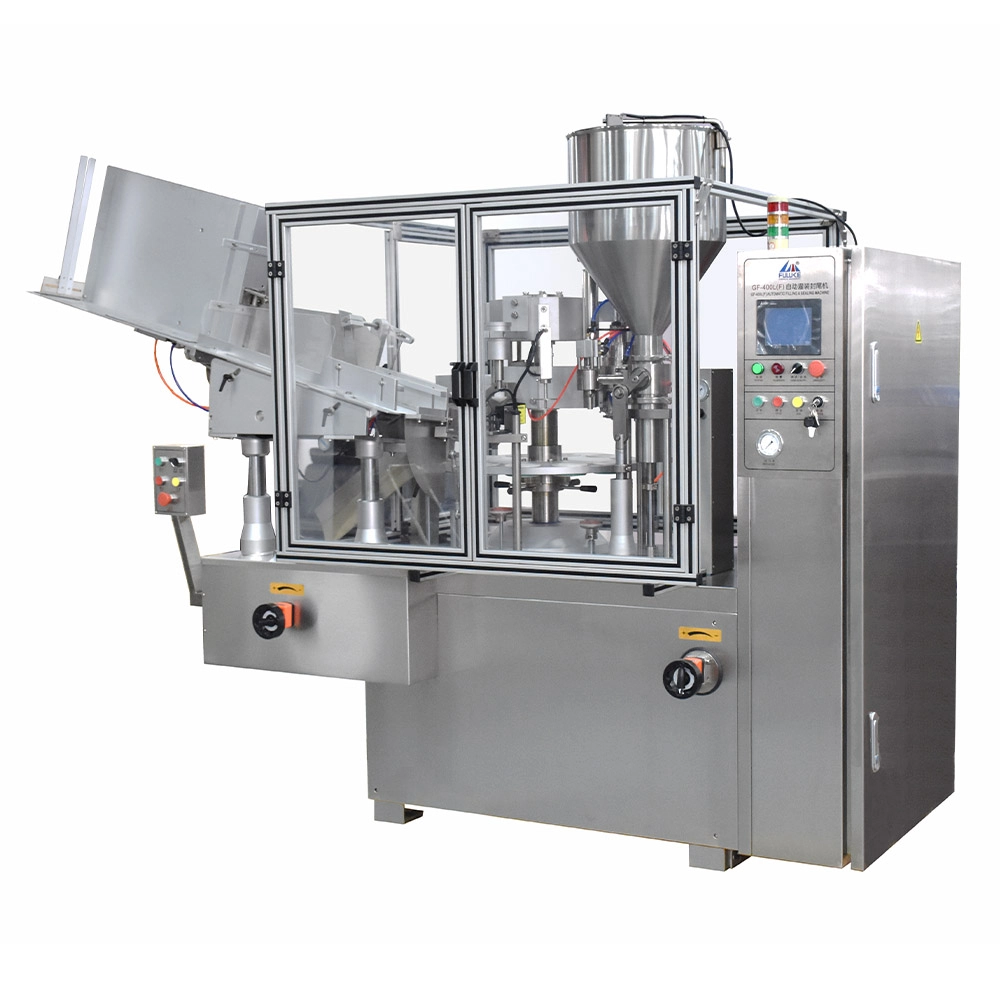
How Tube Filling & Sealing Machines Boost Production Efficiency
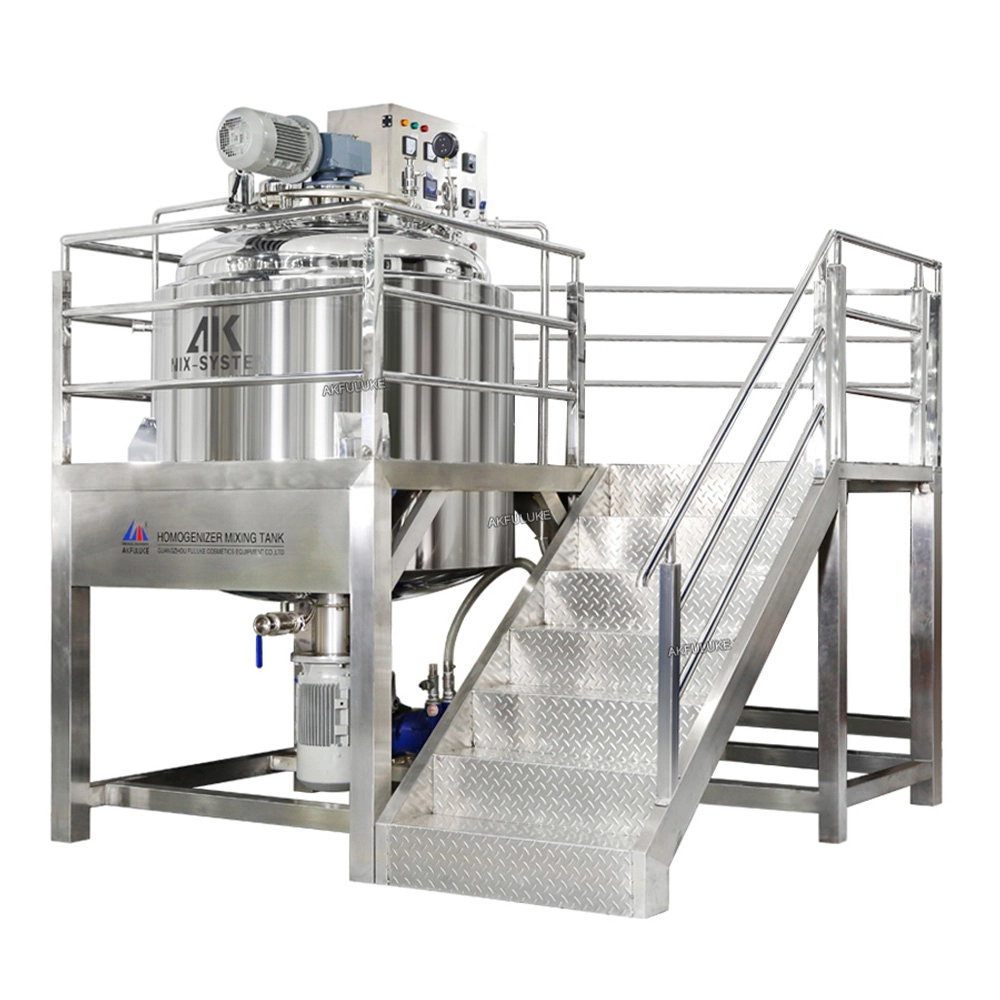
CIP and SIP Design Considerations for Industrial Mixing Tanks
Top 10 cosmetics equipment Manufacturers and Supplier Brands
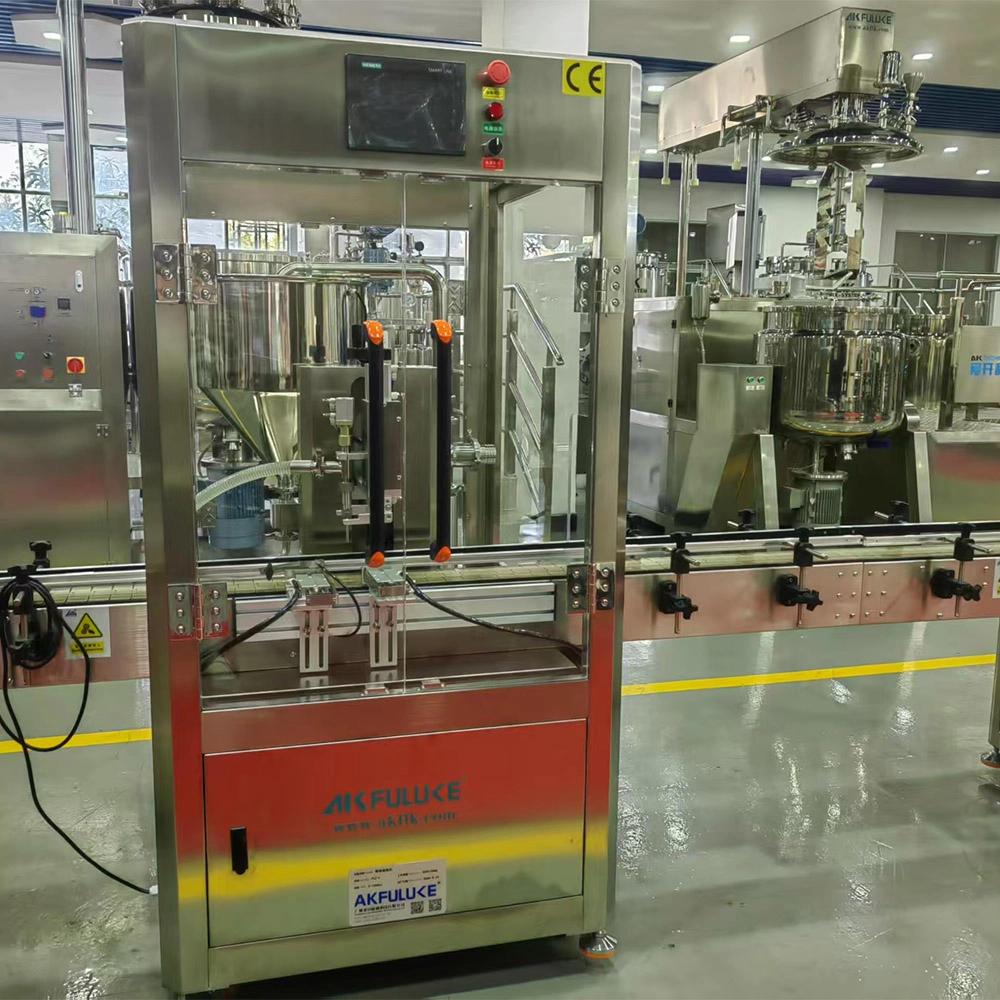
Comparing Piston and Peristaltic Liquid Filling Technologies
RO Water Treatment
What can you buy from us?
RO Water Treatment、Vacuum Emulsifying Machine、Homogenizer Mixing Tank、Filling and Capping、labeling Machine、Packing Machine、Storage Tank,etc.
Lift-type Homogenizing Disperser
What can you buy from us?
RO Water Treatment、Vacuum Emulsifying Machine、Homogenizer Mixing Tank、Filling and Capping、labeling Machine、Packing Machine、Storage Tank,etc.
Sealed Homogenizing Mixing Tank
Is it possible to not have a heating function?
Of course, if your product's production process doesn't require heating and cooling functions, then you can just make it a single-layer pot.
Can you make a design for us?
Yes, we can, we provide not only products, but also solutions and designs.
Inkjet Printing Machine
What products can inkjet printers be used for?
It can be used for products such as carton, plastic, metal, boarding, pipe, stone, cable, glass, electronic components, auto parts, industrial chemical packaging, and medical/food/gift boxes.
You May Also Like
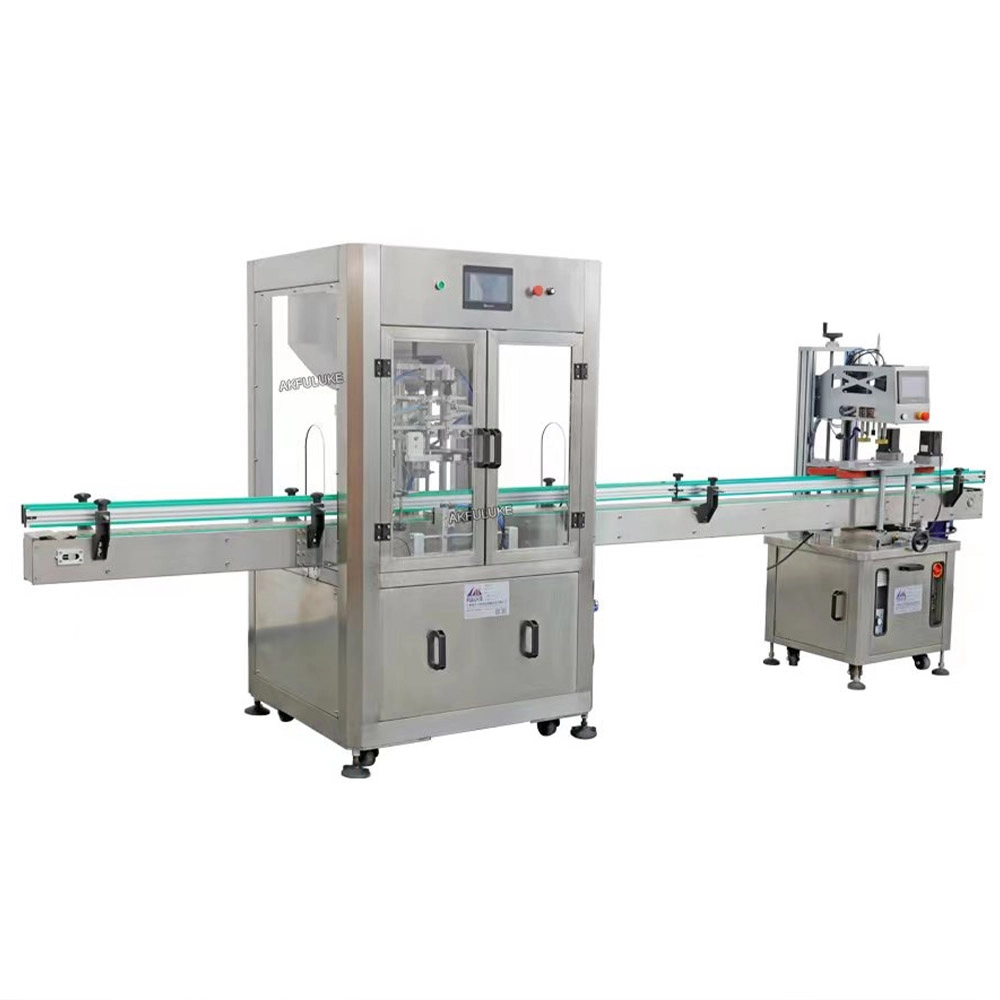
Automatic Filling Machine Quantitative Liquid Bottle Filling Machine High-precision cream and lotion filling machine
Automatic Tube Filling and Sealing Machine Toothpaste Sunscreen and Facial Cleanser Filling and Sealing Machine for Plastic and Aluminum-plastic Tube
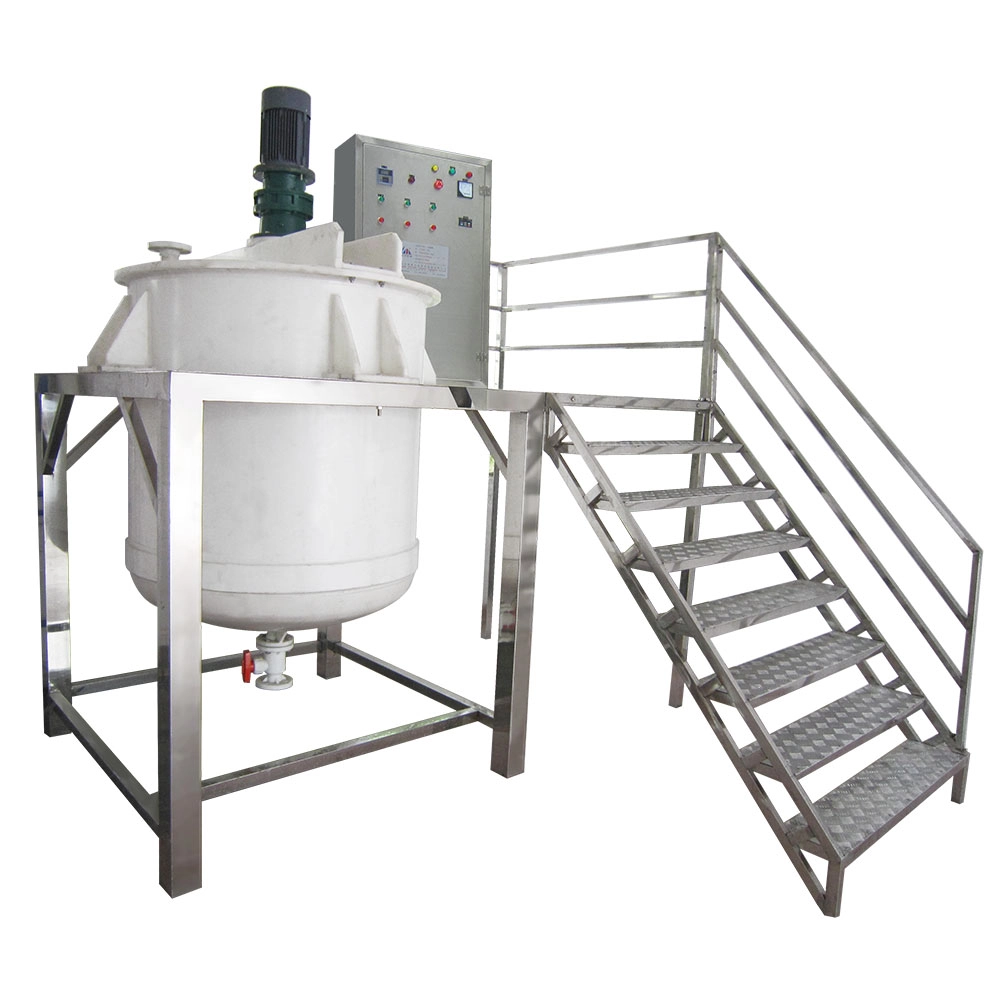
Polypropylene PP Mixing Tank Anti-Corrosion Mixer Reaction Kettle with Agitator Chemical Mixing Vessel
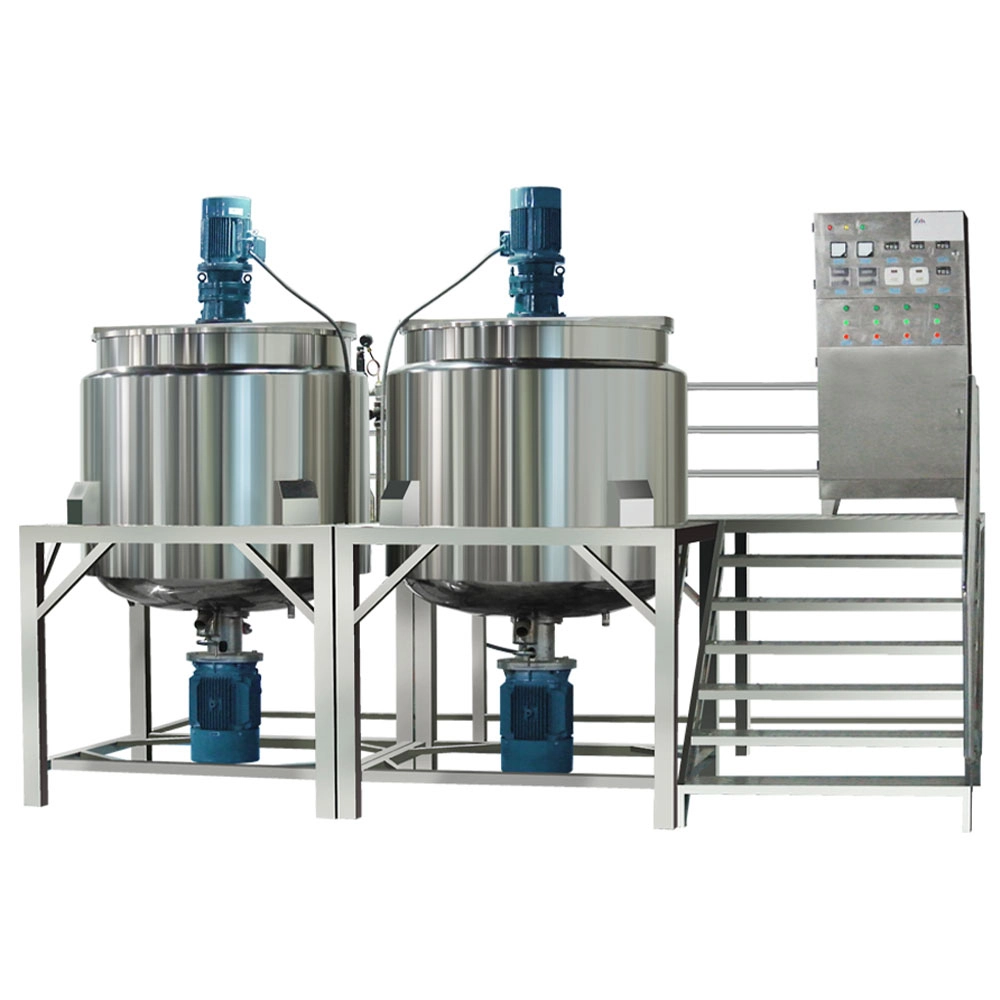
Flip Cover Multi-function Liquid Wash Mixing Tank Blender Liquid Detergent Mixer Homogenization Stirring Tank
Get in touch with FULUKE
If you have any comments or good suggestions, please leave us a message, later our professional staff will contact you as soon as possible.

A leading manufacturer specializing in advanced machinery and complete production lines for the cosmetics, food, pharmaceutical, and chemical industries worldwide.
Contact FULUKE
Facebook
Instagram
YouTube