
Choosing the Right Mixing Tank with Agitator for Production Lines
- Choosing the Right Mixing Tank with Agitator for Production Lines
- Introduction: Why the right mixing tank with agitator matters
- Product overview: Stainless Steel Mixer Liquid Mixing tank with Agitator Homogenizing Mixing tank Vacuum Sealed Mixer Machine
- Understanding core functions: What to expect from a mixing tank with agitator
- Homogenization and high shear
- Vacuum degassing / sealed mixing
- Precise temperature control
- Key selection factors for a mixing tank with agitator
- 1) Process requirements: product type and viscosity
- 2) Mixing technology: agitator types and homogenizers
- Agitator comparison (quick reference)
- 3) Vessel material and hygienic design
- 4) Heating, cooling and heat transfer efficiency
- 5) Cleaning and maintenance: allow for CIP and access
- 6) Sealing, vacuum and pressure capabilities
- 7) Scale-up and production volume
- 8) Control, automation and traceability
- 9) Energy efficiency and operating cost
- How to match a mixing tank with your formulation: a practical checklist
- Example selection flow
- Comparisons and practical trade-offs
- When to choose a vacuum-sealed homogenizing mixing tank
- Brand advantage and what to look for in a supplier
- Installation, validation and maintenance best practices
- Installation and commissioning
- Process validation and documentation
- Routine maintenance
- FAQ — Frequently Asked Questions about mixing tanks with agitators
- Q: What is the difference between a homogenizer and a high-shear mixer?
- Q: Do I always need vacuum on my mixing tank?
- Q: What seal type is best for sanitary applications?
- Q: How do I scale up a mixing process reliably?
- Q: What documentation should the supplier provide?
- Contact us / View product
- Authoritative references and further reading
- FAQ — Additional technical details
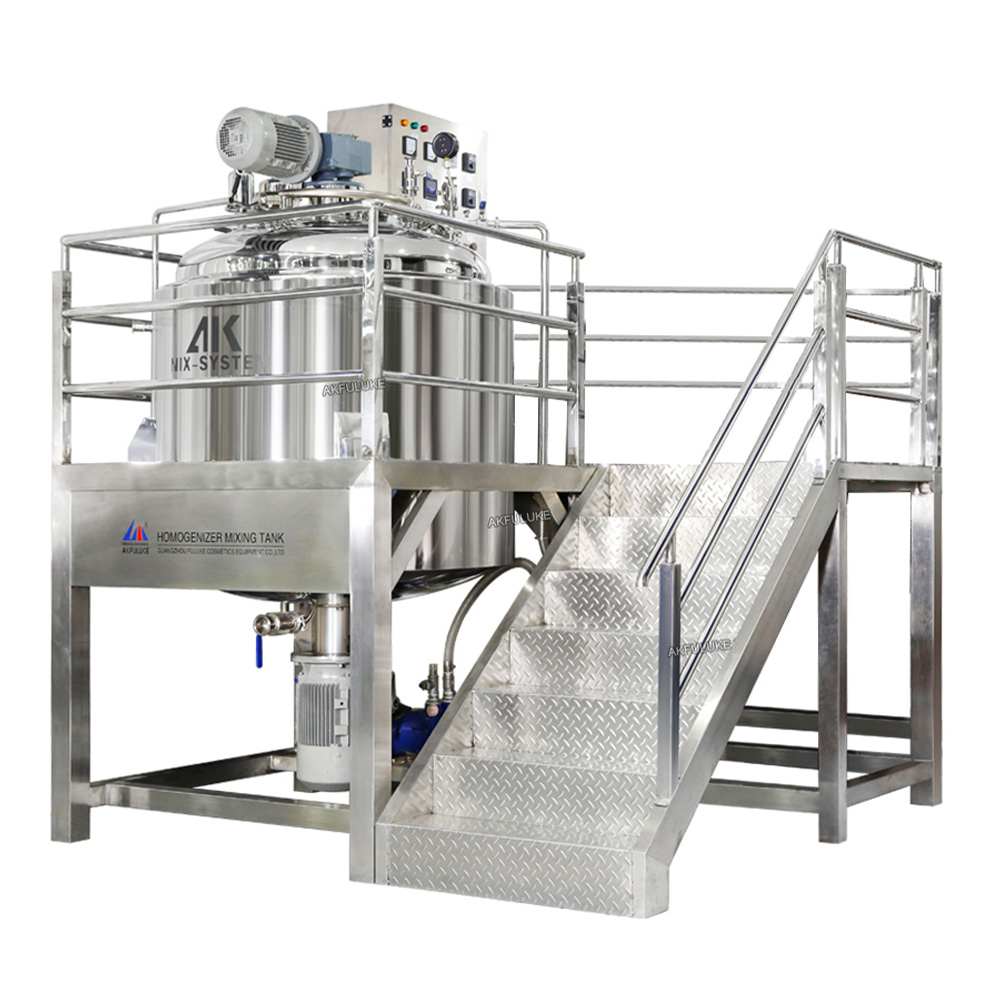
Choosing the Right Mixing Tank with Agitator for Production Lines
Introduction: Why the right mixing tank with agitator matters
Selecting the proper mixing tank with agitator is a foundational decision for any production line that handles creams, lotions, gels, sauces, pharmaceuticals or specialty chemicals. The right equipment ensures consistent product quality, scalable production, efficient cleaning, regulatory compliance and lower operating costs. Poor choices can cause long mixing times, inconsistent batches, trapped air, contamination risks and costly downtime. Once manufacturers understand the fundamentals of choosing the right mixing tank with agitator for production lines, material selection becomes a priority—making it essential to evaluate the stainless steel mixer benefits for liquid processing procurement.
Product overview: Stainless Steel Mixer Liquid Mixing tank with Agitator Homogenizing Mixing tank Vacuum Sealed Mixer Machine
The Sealed Homogenizing mixing tank is an industrial-grade material handling equipment that integrates four core functions: vacuum defoaming, high-speed homogenization, efficient stirring, and precise temperature control. It is widely used in the cosmetics, pharmaceutical, food, chemical and other industries.
It is specially designed to solve the mixing, emulsification, homogenization and degassing needs of high-viscosity, multi-phase (solid-liquid, liquid-liquid) materials. It can produce delicate, stable, bubble-free creams, lotions, gels, ointments, sauces and other products.
Understanding core functions: What to expect from a mixing tank with agitator
When you search for a mixing tank with agitator, expect four primary capabilities in modern production equipment: homogeneous mixing (distributed particle/phase dispersion), emulsification/homogenization (especially rotor-stator or high-pressure homogenizers), vacuum degassing (remove air/bubbles and improve stability) and temperature control (heating/cooling jackets or coils). Each capability directly influences product texture, stability and shelf life.
Homogenization and high shear
High-shear homogenization breaks droplets and disperses particles into a continuous phase for a stable emulsion. In cosmetics and food, rotor-stator homogenizers and high-pressure homogenizers are the usual choices. Determine whether your formulation needs low, medium or high shear—too little shear leaves phase separation; too much can damage sensitive ingredients (proteins, emulsifiers).
Vacuum degassing / sealed mixing
Vacuum-sealed mixers remove entrained air and dissolved gases during or after mixing, producing bubble-free products critical for creams, lotions and sauces. Vacuum also prevents oxidation of sensitive ingredients and improves product appearance and texture.
Precise temperature control
Integrated heating and cooling jackets (and sometimes internal coils) enable accurate temperature ramps for melting waxes, activating emulsifiers or cooling down after high-shear steps. Temperature uniformity across the batch prevents local overheating which can denature active ingredients.
Key selection factors for a mixing tank with agitator
1) Process requirements: product type and viscosity
First define your process: is it low-viscosity liquid (syrups), medium (creams), or high-viscosity paste/paste-like products? High-viscosity materials require anchor or planetary-style agitators with strong torque and slow speed, whereas low-viscosity fluids can be handled by propellers or turbines. Consider whether you need to dissolve solids or disperse powders—this may require vacuum to avoid dusting and agglomeration.
2) Mixing technology: agitator types and homogenizers
Choose the agitator type to match fluid dynamics and scale. Common options include:
- Propeller: good for low-viscosity, promotes axial flow.
- Turbine (radial or axial): versatile for medium viscosity and suspension.
- Anchor/Helical ribbon: designed for high-viscosity blending and scraping tank walls.
- Planetary mixers: useful for ultra-high-viscosity pastes and solids incorporation.
- Rotor-stator homogenizer: produces high shear and fine emulsions.
Agitator comparison (quick reference)
| Agitator Type | Best for | Shear Level | Typical Applications |
|---|---|---|---|
| Propeller | Low-viscosity liquids | Low | Syrups, aqueous solutions |
| Turbine | Medium-viscosity, suspensions | Medium | Emulsions, dispersions |
| Anchor / Ribbon | High-viscosity pastes | Low | Creams, gels, adhesives |
| Rotor-stator (inline) | High-shear emulsification | High | Fine emulsions, nanoparticle suspensions |
| Planetary | Extremely viscous systems | Low to medium | Toothpaste, thick pastes |
3) Vessel material and hygienic design
Stainless steel (especially 304 and 316L) is the industry standard due to corrosion resistance and sanitary properties. For pharmaceutical and high-purity cosmetic applications, 316L with electropolished interior and a surface finish Ra ≤ 0.8 µm is typical to prevent microbial harboring and ease cleaning. Verify weld quality, sanitary fittings and flange standards.
4) Heating, cooling and heat transfer efficiency
Consider whether you need external jacket, dimple jacket, internal coil, or direct steam injection. Dimple jackets provide good heat transfer for medium-size vessels; internal coils can help when high heat flux is required. For temperature-sensitive formulations, precise PID control and good agitation to avoid hotspots are mandatory.
5) Cleaning and maintenance: allow for CIP and access
Clean-in-place (CIP) capability reduces downtime and contamination risk. Ensure spray balls, drain angles and manways are positioned to allow full drainage and effective cleaning. Seals, bearings and motors should be specified for washdown environments if needed (IP ratings). Modular agitator seals (mechanical seal or magnetic drive) influence maintenance frequency and product contamination risk.
6) Sealing, vacuum and pressure capabilities
If your process requires vacuum degassing or sealed mixing, confirm vessel maximum vacuum rating and whether the lid sealing method is vacuum-rated. Vacuum operation may require external vacuum pumps and vacuum breakers. For processes requiring pressurization (e.g., closed reactions), verify design to ASME or equivalent safety codes.
7) Scale-up and production volume
Consider not just current batch size but future growth. Equipment that can scale modularly or be replicated across multiple lines often provides better long-term ROI. Ensure that scale-up retains similar mixing dynamics—maintaining geometric similarity and mixing intensity (tip speed, power per volume) helps preserve product characteristics.
8) Control, automation and traceability
Modern mixing tanks integrate PLC/HMI controls for recipe management, temperature profile control, vacuum cycles and mixing speeds. For regulated industries, batch recording and electronic logbooks (21 CFR Part 11 compliance for pharmaceuticals) are important. Automation reduces operator variability and improves repeatability.
9) Energy efficiency and operating cost
Consider motor efficiency, gearbox ratios (for torque needs), insulation on heating/cooling jackets, and vacuum pump sizing. Lower operating costs may justify a higher initial investment. Evaluate total cost of ownership: energy, maintenance parts, cleaning chemicals, and downtime risk.
How to match a mixing tank with your formulation: a practical checklist
Use this checklist when evaluating options for a mixing tank with agitator:
- Define product type, target viscosity and solids content.
- Decide required final texture (smoothness, particle size distribution, bubble-free).
- Choose agitator type(s) and whether inline homogenization is needed.
- Specify vessel material and interior finish (316L, electropolish if needed).
- Determine heating/cooling needs and jacket design.
- Confirm vacuum/pressure requirements and ratings.
- Check cleaning strategy (CIP/sterilization) and sanitary features.
- Plan for scale-up and automation needs (PLC, recipes, data logging).
- Ask supplier about spare parts availability and service response.
Example selection flow
For a medium-volume cosmetic cream: choose a 316L sealed mixing tank with anchor + high-shear rotor-stator homogenizer, vacuum degassing, dimple jacket for cooling, electropolished interior, CIP spray ball and PLC recipe control. This combination supports high-viscosity handling, fine emulsion quality and efficient cleaning.
Comparisons and practical trade-offs
There is rarely a single perfect mixing tank. Choices involve trade-offs: a powerful high-shear inline homogenizer improves emulsion quality but increases energy use and maintenance; a planetary mixer handles ultra-high viscosity but costs more and often requires manual loading for small batches. Evaluate operational priorities: product quality, speed, hygiene, flexibility or cost.
When to choose a vacuum-sealed homogenizing mixing tank
Choose vacuum-sealed homogenizing mixers when you need bubble-free appearance, reduced oxidation, and fine droplet sizes for stable emulsions—typical in High Quality cosmetics, topical pharmaceuticals and high-quality sauces. The integrated vacuum and homogenization steps shorten process time and increase final product consistency.
Brand advantage and what to look for in a supplier
When comparing suppliers, evaluate these strengths:
- Custom engineering capability to match agitator configuration, jacket type and controls to your process.
- Quality stainless fabrication with sanitary welding, electropolishing and traceable material certification.
- After-sales support: spare parts, service agreements, technical start-up assistance and process tuning.
- Regulatory documentation: material certificates, test reports, FAT (Factory Acceptance Test) and IQ/OQ support.
- Proven track record in your industry (cosmetics, pharma, food) and customer references.
Our Stainless Steel Mixer Liquid Mixing tank with Agitator Homogenizing Mixing tank Vacuum Sealed Mixer Machine includes many of these advantages: modular agitator options (anchor, turbine and rotor-stator), 316L stainless construction, vacuum degassing, integrated temperature control and options for CIP and PLC-controlled recipes. We provide fabrication traceability, FAT and commissioning support to ensure a fast, validated startup.
Installation, validation and maintenance best practices
Installation and commissioning
Plan for adequate floor load capacity, clearances for manways and access panels, piping for vacuum and utilities, and electrical supply for motor and heater. A thorough FAT and site acceptance test (SAT) validate performance before production.
Process validation and documentation
For regulated industries, document process parameters (mix time, temperatures, vacuum cycles, homogenizer RPM/pressure), create batch records and perform validation runs. Where applicable, follow GMP and record retention policies.
Routine maintenance
Regularly inspect seals, mechanical seals or magnetic drives, agitator bearings, vacuum pump oil and vacuum lines, and instrumentation calibration. Keep a spare parts kit for commonly replaced items (seals, bearings, spray balls) to reduce downtime.
FAQ — Frequently Asked Questions about mixing tanks with agitators
Q: What is the difference between a homogenizer and a high-shear mixer?
A: High-shear mixers (rotor-stator) create intense local shear to break droplets and disperse solids. Homogenizers often imply either rotor-stator or high-pressure devices that force the emulsion through narrow gaps to create extremely fine dispersions. Choose based on target droplet size and formulation sensitivity.
Q: Do I always need vacuum on my mixing tank?
A: Not always. Vacuum is important when you need to remove entrained air, prevent oxidation, or control dust during powder addition. For many aqueous solutions, vacuum is optional. For cosmetics and high-value emulsions, vacuum can significantly improve product quality.
Q: What seal type is best for sanitary applications?
A: Mechanical seals compatible with CIP and hygienic designs are common; magnetic drive agitators eliminate shaft seals entirely and reduce contamination risk and maintenance for some applications. The choice depends on product compatibility, temperature and pressure requirements.
Q: How do I scale up a mixing process reliably?
A: Maintain geometric similarity where possible and match critical mixing parameters—tip speed, power per volume and shear conditions. Pilot trials or scale-up testing using a representative homogenizer/agitator setup are recommended to preserve product characteristics.
Q: What documentation should the supplier provide?
A: Material certificates (e.g., SS304/316L), welding records, surface finish reports, FAT protocols, IQ/OQ documentation, and wiring/PLC documentation. For pharmaceutical use, support for 21 CFR Part 11 compliance and GMP records may be required.
Contact us / View product
If you are evaluating a mixing tank with agitator for your production line, contact our technical sales team for a process review, custom configuration options and a quotation. We offer factory acceptance testing, installation support and after-sales service to ensure your production goals are met. To view detailed specifications for our Stainless Steel Mixer Liquid Mixing tank with Agitator Homogenizing Mixing tank Vacuum Sealed Mixer Machine or request a quote, contact sales@example.com or call +1-800-XXX-XXXX.
Authoritative references and further reading
- Mixing (process engineering) — Wikipedia: https://en.wikipedia.org/wiki/Mixing_(process_engineering)
- Homogenizer (equipment) — Wikipedia: https://en.wikipedia.org/wiki/Homogenizer_(equipment)
- Stainless steel — Wikipedia: https://en.wikipedia.org/wiki/Stainless_steel
- ASME Codes & Standards — ASME: https://www.asme.org/codes-standards
- 3-A Sanitary Standards (hygienic equipment design): https://3-a.org/
- Good manufacturing practices (GMP) — World Health Organization: https://www.who.int/teams/regulation-prequalification/regulation-and-safety/quality-assurance/good-manufacturing-practice
FAQ — Additional technical details
For any additional technical questions (power calculations, heating/cooling heat load estimates, or scale-up guidance), our engineers can perform a process-mapping session and supply a recommended specification and quotation tailored to your production needs.
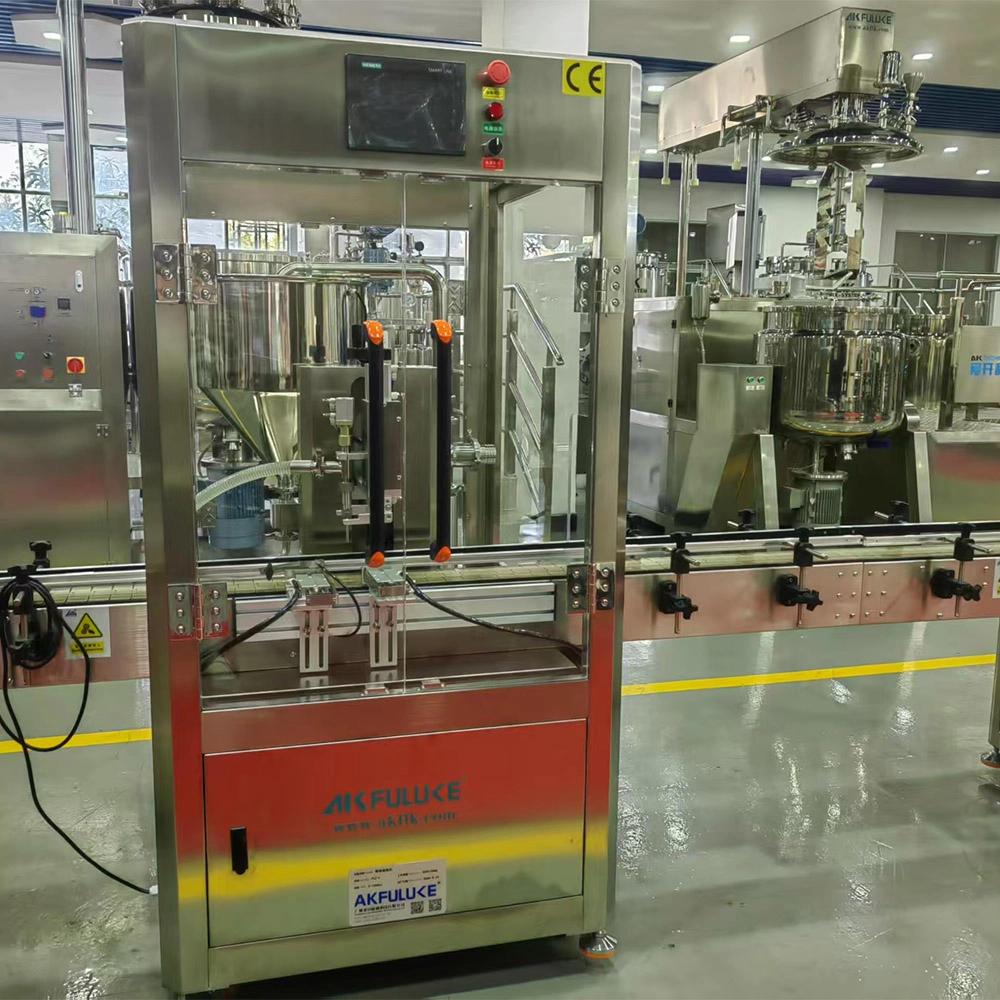
Adapting Filling Lines for Frequent SKU Changeovers
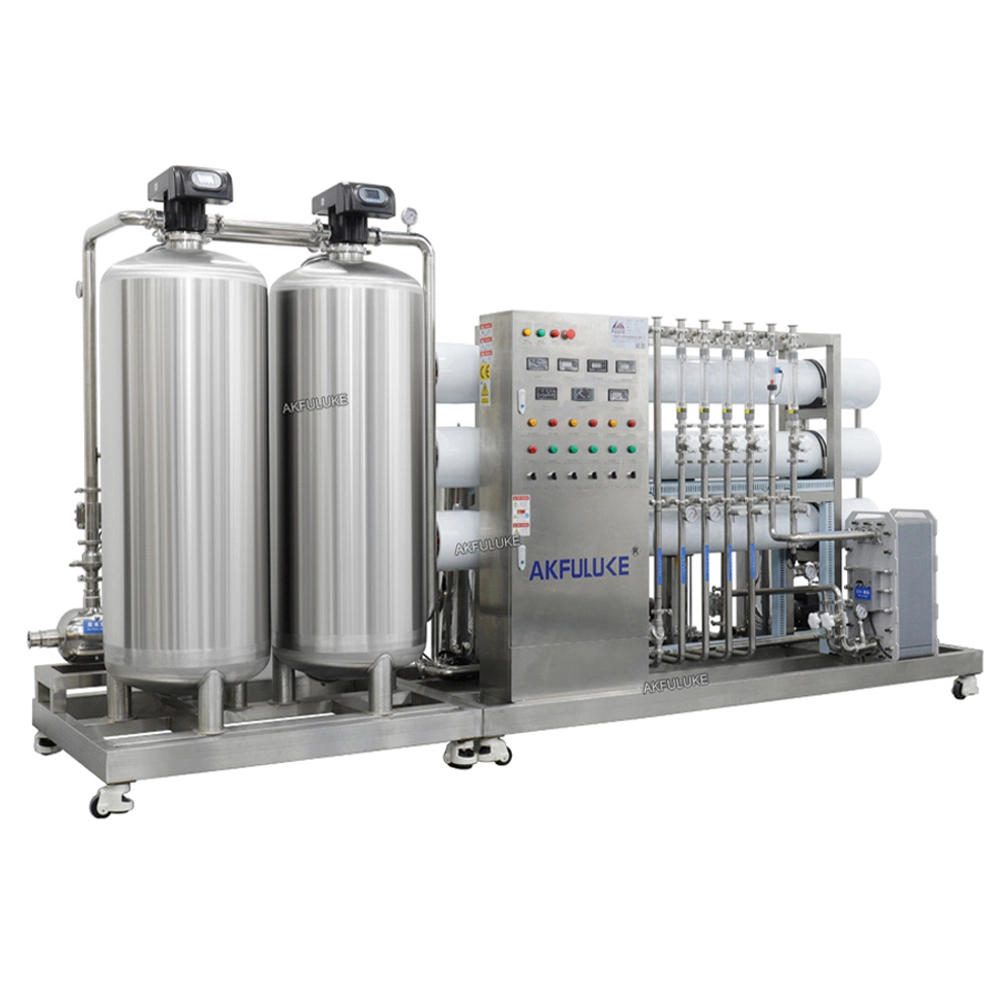
Compliance, Certifications, and Water Standards for RO Systems
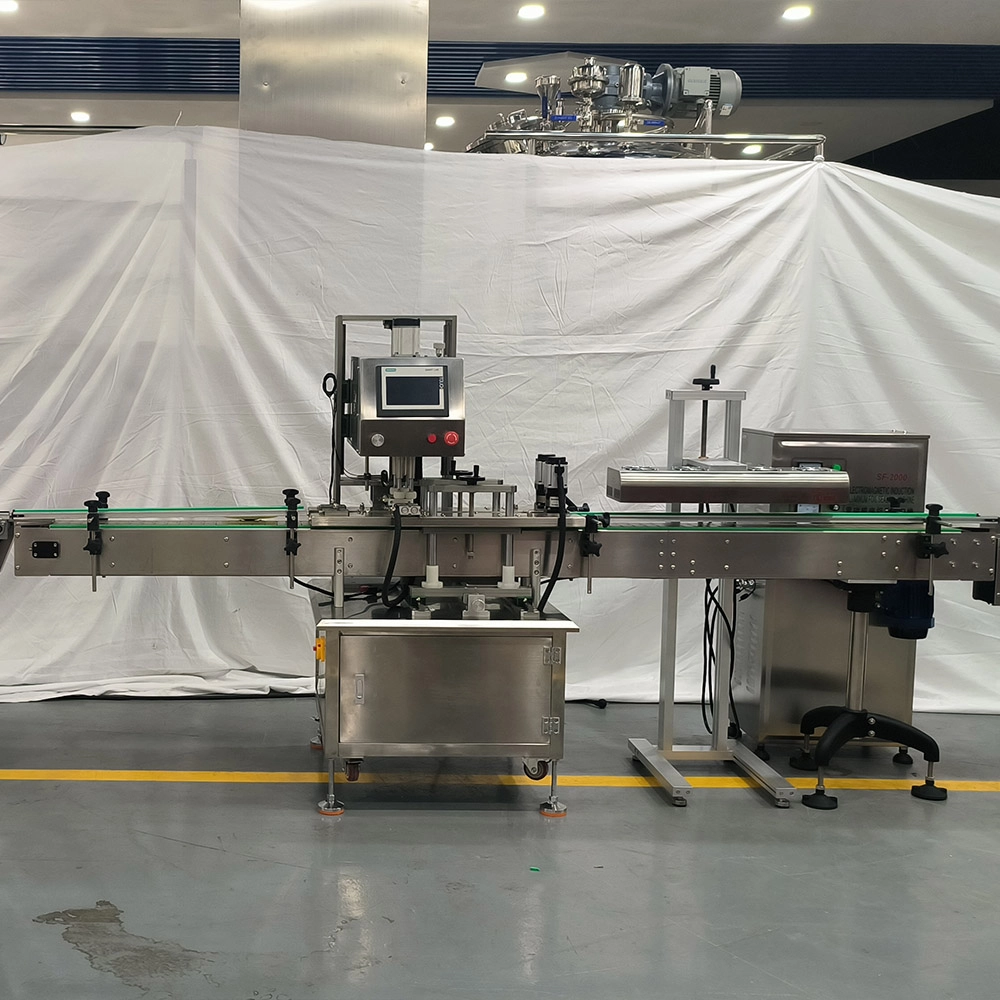
Preventing Cross-Contamination in Multi-Product Lines
Supplier Evaluation: Warranties, Service, and Spare Parts Support
Vacuum Emulsifying Machine
What industries is the vacuum emulsifier suitable for?
It is widely applicable to the production needs of creams, lotions, gels, ointments, etc. in the cosmetics, pharmaceutical, food, chemical and other industries.
Film Packaging Machine
This device suddenly shuts down and displays "Abnormal Heat Seal Temperature." What should I do?
First, check the heat seal blade heater for damage. Next, check whether the temperature sensor is in poor contact or malfunctioning. If the hardware is normal, the temperature control module parameters may be abnormal. Restart the device and reset the heat seal temperature (refer to the film material's suitable temperature: BOPP film is typically 120-160°C). If the abnormality persists, contact after-sales service to inspect the temperature control system.
Automatic Facial Mask Filling Machine
Who are we?
Our headquarters is located in Guangzhou, Guangdong, China, and our factory is located in Yangzhou, Jiangsu. Our products are sold all over the world. We have approximately 50 employees in our company and factory.
FAQs
What sets FULUKE apart from other cosmetics machinery manufacturers?
Automatic Filling Machine
Who are we?
Our headquarters is located in Guangzhou, Guangdong, China, and our factory is located in Yangzhou, Jiangsu. Our products are sold all over the world. We have approximately 50 employees in our company and factory.
You May Also Like
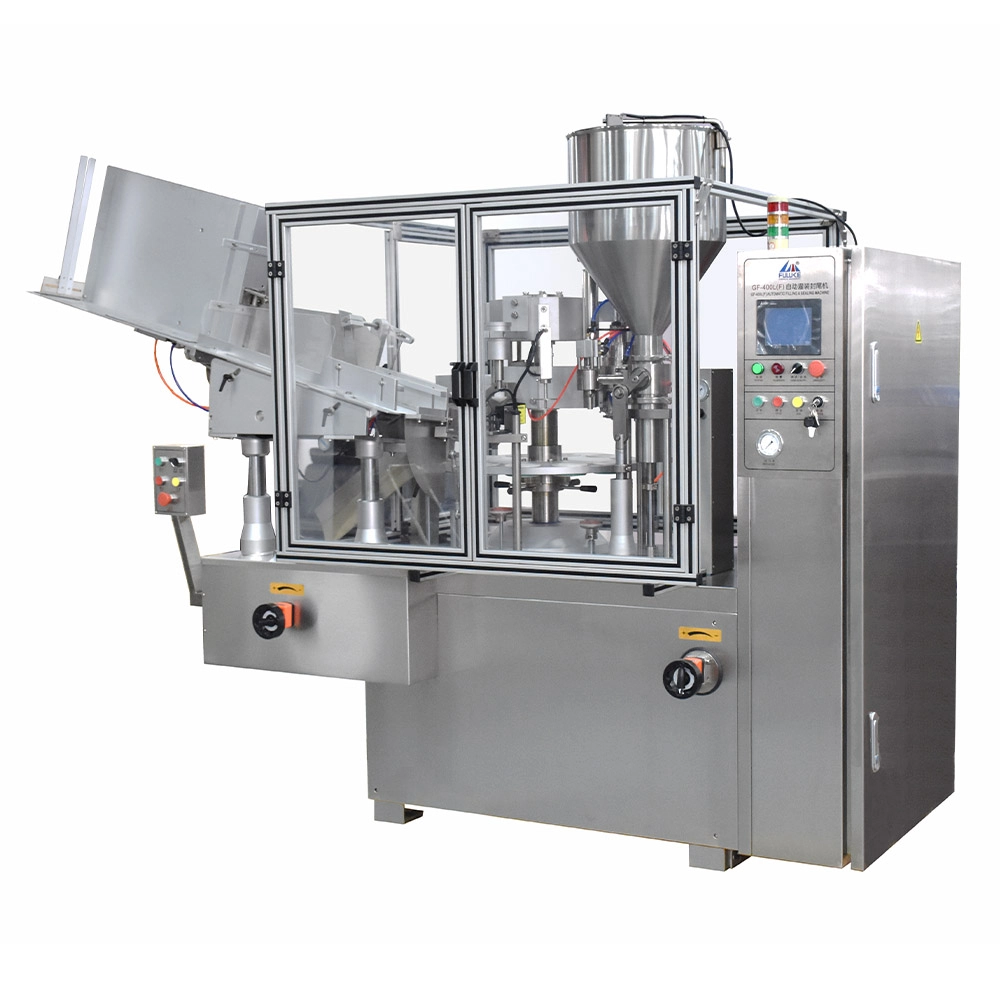
Automatic Tube Filling and Sealing Machine Toothpaste Sunscreen and Facial Cleanser Filling and Sealing Machine for Plastic and Aluminum-plastic Tube
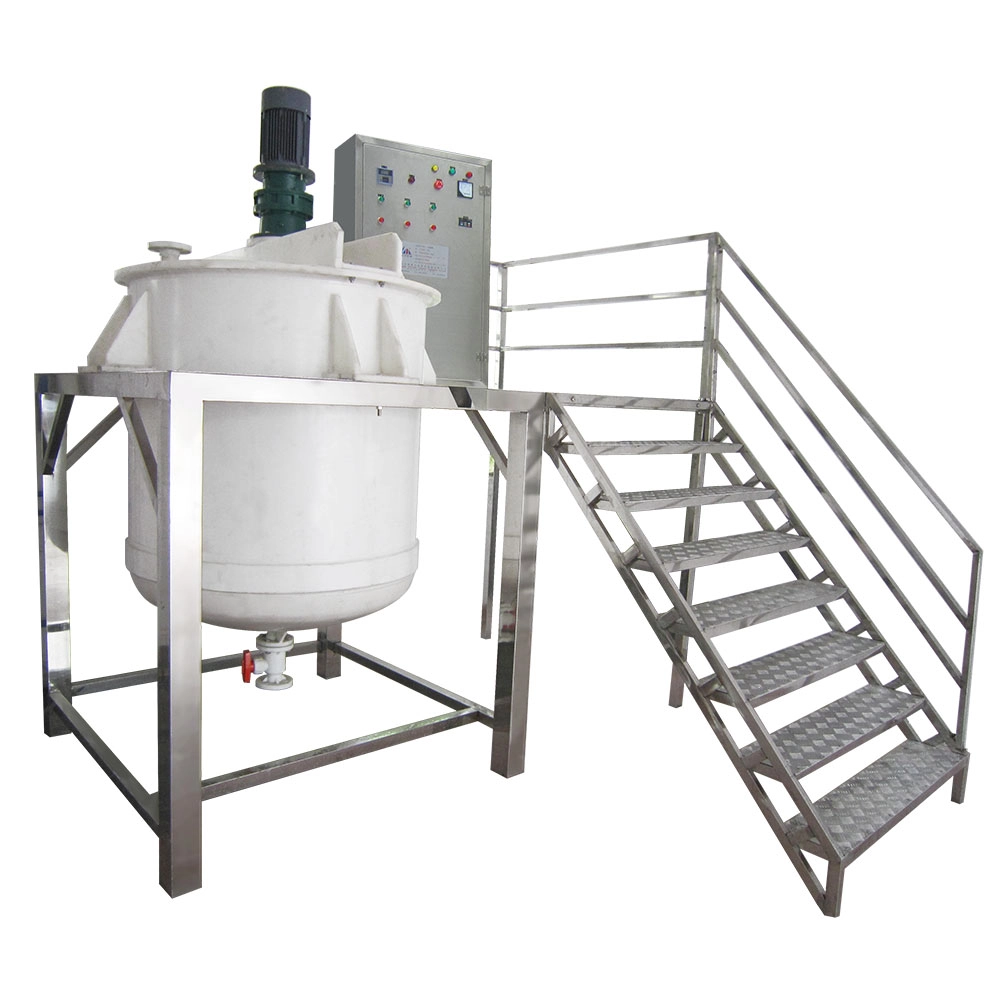
Polypropylene PP Mixing Tank Anti-Corrosion Mixer Reaction Kettle with Agitator Chemical Mixing Vessel
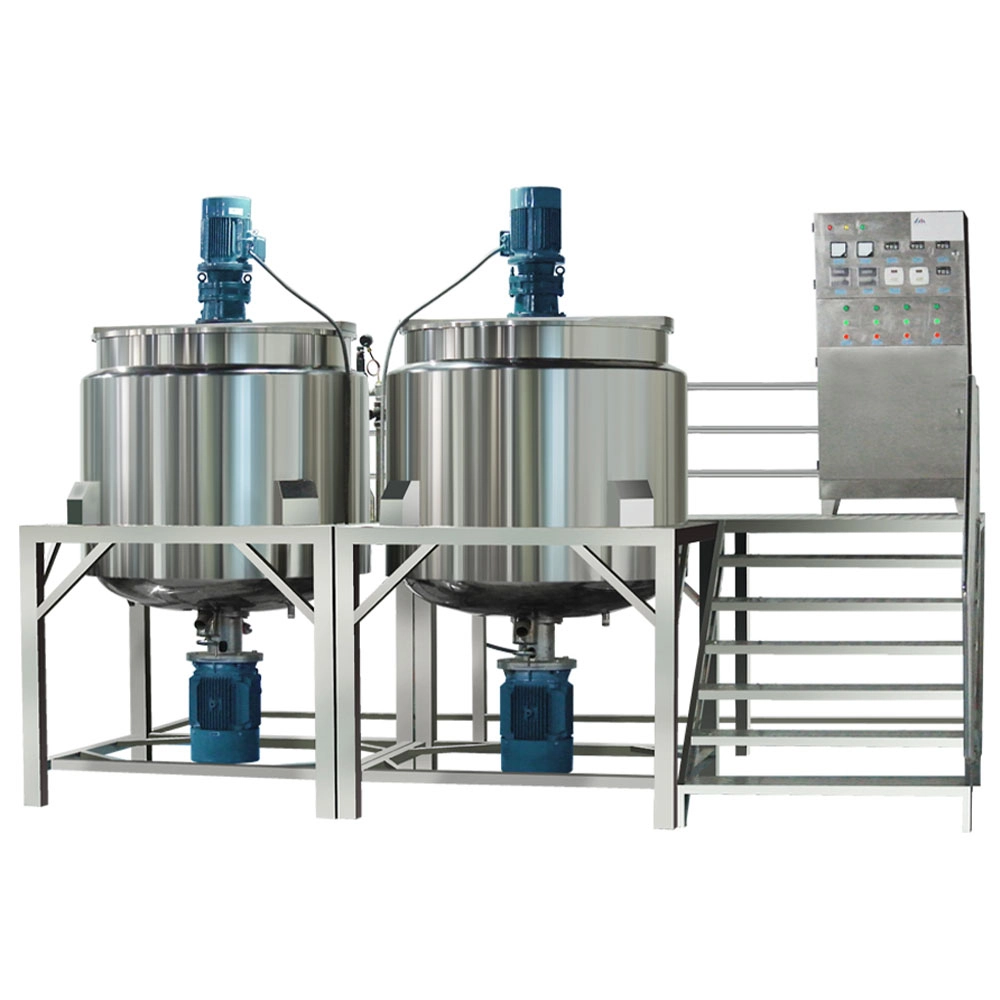
Flip Cover Multi-function Liquid Wash Mixing Tank Blender Liquid Detergent Mixer Homogenization Stirring Tank
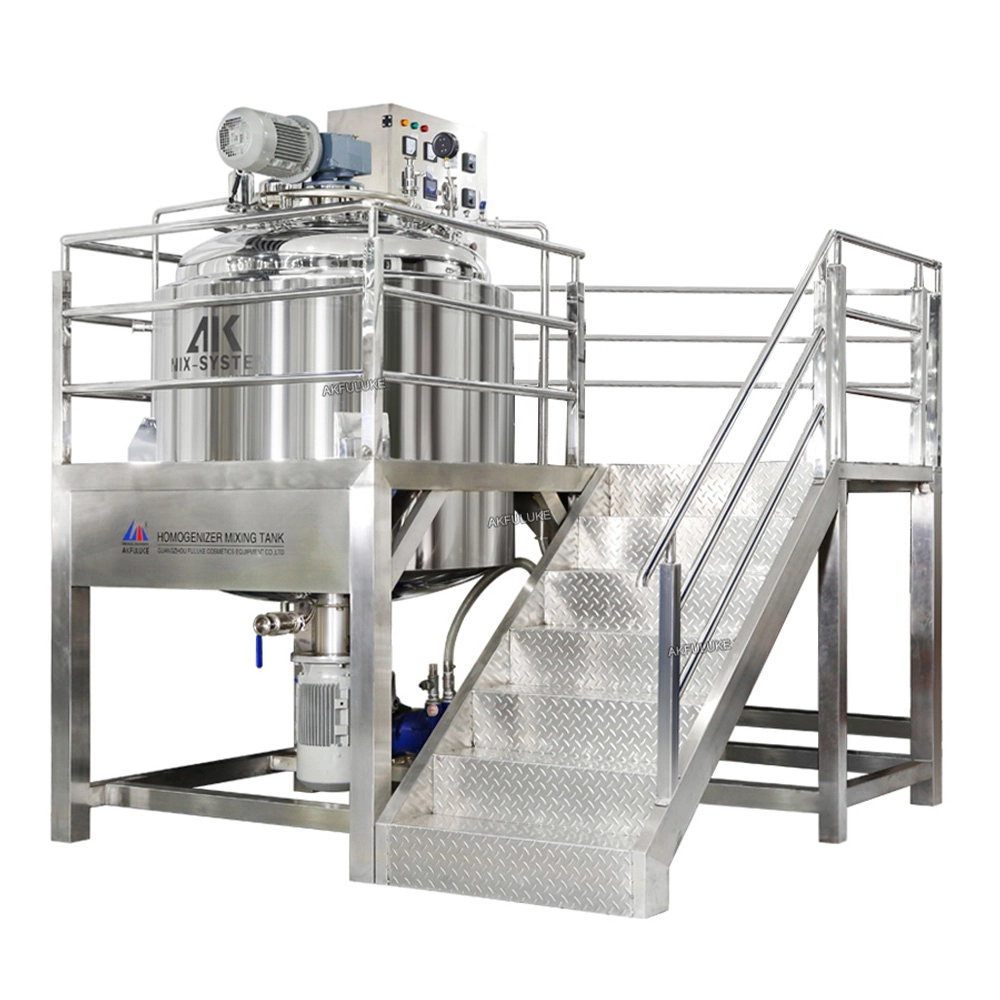
Stainless Steel Mixer Liquid Mixing tank with Agitator Homogenizing Mixing tank Vacuum Sealed Mixer Machine
Get in touch with FULUKE
If you have any comments or good suggestions, please leave us a message, later our professional staff will contact you as soon as possible.

A leading manufacturer specializing in advanced machinery and complete production lines for the cosmetics, food, pharmaceutical, and chemical industries worldwide.
Contact FULUKE
Facebook
Instagram
YouTube