
CIP and SIP Design Considerations for Industrial Mixing Tanks
- CIP and SIP Design Considerations for Industrial Mixing Tanks
- Why CIP and SIP matter for mixing tank hygiene and product safety
- Core functions to address in mixing tank CIP/SIP design
- Regulatory and hygienic design drivers for mixing tanks
- Material and surface finish considerations for CIP and SIP
- Geometry, drainability and elimination of dead legs in mixing tank design
- CIP system components and their integration with mixing tanks
- Spray devices and internal cleaning for mixing tanks
- SIP design and steam penetration for sterilizable mixing tanks
- Air removal and steam distribution strategies in mixing tanks
- Seals, agitators and homogenizers: sanitary choices for CIP/SIP
- Heating, cooling and jacket design for validated SIP cycles
- Control systems, automation and validation for mixing tank CIP/SIP
- Special considerations for high-viscosity and multi-phase formulations in mixing tanks
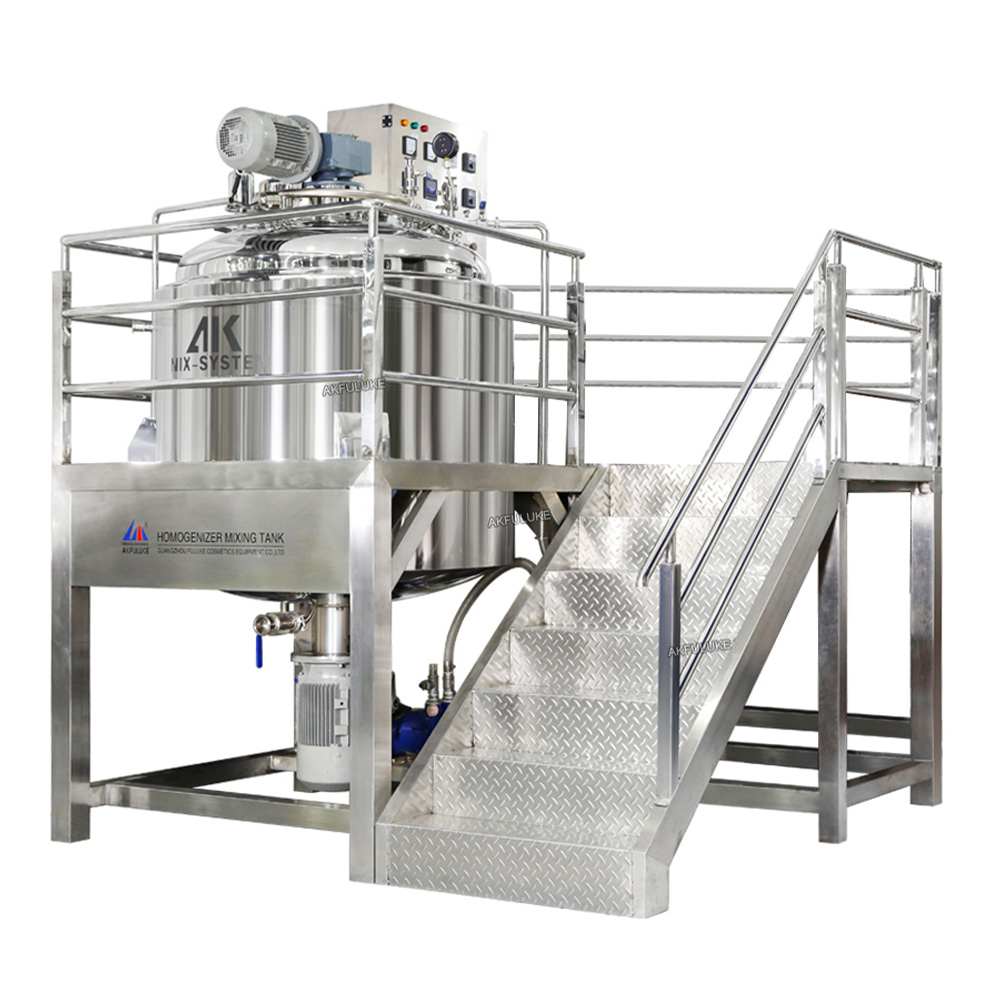
- Applying CIP and SIP design to the Stainless Steel Mixer Liquid Mixing tank with Agitator Homogenizing Mixing tank Vacuum Sealed Mixer Machine
- Comparison: CIP vs SIP design parameters for mixing tanks
- Maintenance, access and component replaceability for long-term hygiene
- Validation and routine monitoring strategies for mixing tanks
- Practical tips to optimize CIP and SIP for production realities
- Brand advantages — why choose the Stainless Steel Mixer Liquid Mixing tank with Agitator Homogenizing Mixing tank Vacuum Sealed Mixer Machine
- FAQ — Common questions about CIP and SIP for mixing tanks
- Q: Can every mixing tank be sterilized by SIP?
- Q: What surface finish is recommended for reliable CIP?
- Q: How do I validate that CIP and SIP cycles are effective?
- Q: Are magnetic drive agitators always better for hygienic tanks?
- Q: How should I handle CIP for very viscous product residues?
- Contact / View product
- Authoritative references and further reading
CIP and SIP Design Considerations for Industrial Mixing Tanks
Why CIP and SIP matter for mixing tank hygiene and product safety
For formulators and manufacturers using a mixing tank, effective Clean-in-Place (CIP) and Sterilization-in-Place (SIP) systems are essential to ensure product safety, regulatory compliance and consistent product quality. A mixing tank that cannot be reliably cleaned or sterilized risks cross-contamination, microbial growth and batch failures. That risk is amplified for high-viscosity, multi-phase formulations common in cosmetics, pharmaceuticals and specialty foods. Thus, proper CIP/SIP design must be an integral part of the mixing tank engineering process.
Core functions to address in mixing tank CIP/SIP design
When designing CIP and SIP for any mixing tank, focus on the following core functions: drainability, cleanability, sterilizability, heat transfer (for SIP), avoidance of dead legs, accessibility of seals and instrumentation, and reliable validation/data recording. These functional goals guide choices of geometry, surface finish, ports and auxiliary systems.
Regulatory and hygienic design drivers for mixing tanks
Regulatory frameworks and industry best practices shape CIP/SIP requirements for a mixing tank. In pharmaceuticals and aseptic cosmetics, regulators and auditors expect documented validation, reproducible cycles, materials compatible with cleaning chemistries, and traceable records (temperature, time, pressure logs). For food and cosmetic manufacturing, adherence to recognized hygienic standards such as EHEDG and ASME-BPE helps minimize contamination risk. Designing a mixing tank with these requirements in mind reduces rework cost and audit findings.
Material and surface finish considerations for CIP and SIP
Material selection strongly influences both cleanability and sterilizability. Common choices for mixing tanks are austenitic stainless steels—SS304 for low-corrosive environments, and SS316L for higher corrosiveness or stringent hygienic needs. For the highest hygienic performance, electropolished SS316L with a low Ra surface finish (typically ≤0.6–0.8 μm for general sanitary applications; ≤0.4 μm or electropolished surfaces for aseptic processes) is recommended. Surface finish reduces micro-crevices where soils and microbes accumulate, making CIP and SIP more effective.
Geometry, drainability and elimination of dead legs in mixing tank design
Tank geometry and internal fittings must promote complete drainage and avoid dead legs—sections where fluid stagnates and cleaning solutions cannot reach. Sloped bottoms (conical or dished) with central drains, self-draining agitator shafts or specially designed sanitary bottom fittings are effective. Piping connected to the mixing tank must be sized and routed to avoid pockets and horizontal runs that trap fluid. A mixing tank designed for CIP should allow rapid, laminar flow across all surfaces during cleaning cycles.
CIP system components and their integration with mixing tanks
A robust CIP system for a mixing tank generally includes: supply pumps, caustic and acid dosing stations, rinse water recovery, heated rinse or caustic loops, automated valve manifolds, spray devices (spray balls, rotating spray heads), return lines and instrumentation for temperature, conductivity and flow. Integration points for the tank include dedicated CIP ports, spray device mounting locations, and strategically placed sampling/validation ports. Ensure that spray devices cover the full tank interior without obstructing the agitator or homogenizer during CIP cycles.
Spray devices and internal cleaning for mixing tanks
Stationary spray balls may suffice for simple tanks, but rotating spray heads or targeted nozzle systems often give superior coverage for complex internals or baffles. For mixing tank configurations with internal agitators and homogenizers, ensure spray device placement accounts for the agitator geometry. Spray heads should be removable for maintenance and be designed to self-drain when CIP finishes, preventing pooling.
SIP design and steam penetration for sterilizable mixing tanks
SIP requires that steam or other sterilants reliably reach all internal surfaces at the required temperature and time to achieve the desired log reduction of microbial load. Key design factors include pressure-rated tank construction, sanitary steam traps, condensate drains, appropriate venting to purge air, and temperature sensors distributed to monitor sterilization zones. Vacuum-rated vessels used for degassing must be specifically engineered if SIP cycles will include positive steam pressure and must have safety-rated vacuum/pressure relief mechanisms.
Air removal and steam distribution strategies in mixing tanks
Air pockets reduce steam penetration and can prevent sterile conditions in localized areas. Use vapor-phase displacement or positive steam purging with vent valves positioned to eliminate air. Downward-angled steam ports and properly sized venting ensure full saturation. For tall or oddly shaped mixing tanks, computational fluid dynamics (CFD) or mapping runs during commissioning can help identify areas prone to air entrapment.
Seals, agitators and homogenizers: sanitary choices for CIP/SIP
Mechanical seals, stuffing boxes and bearings are common failure points for hygiene. Magnetic drive agitators eliminate shaft seals crossing the vessel wall and are preferred for aseptic or difficult-to-clean applications. If mechanical seals are needed (for high torque or high-pressure homogenizers), choose hygienic, CIP-capable seals with quench/flush ports and validated clean flush procedures. The design of the homogenizer head should allow in-place cleaning—prefer homogenizer designs with accessible ports for CIP steam or cleaning solution flow through the head.
Heating, cooling and jacket design for validated SIP cycles
Effective SIP often requires precise temperature control and rapid transitions. Jacketed mixing tanks must be designed to avoid dead zones and allow even heat transfer. Half-pipe or dimple jackets can provide uniform heating/cooling while resisting distortion under pressure. Consider process heating options: direct steam injection for rapid heating (with appropriate condensate handling), steam in a jacket for SIP, or electric heating where steam is not suitable. Temperature sensors (RTDs/thermocouples) should be placed to represent the coldest and hottest zones for validation.
Control systems, automation and validation for mixing tank CIP/SIP
Automation simplifies reproducibility of CIP/SIP cycles. A PLC or SCADA system should manage cycle sequencing, dosing, timed holds, ramp rates and interlocks (e.g., prevent product transfer until SIP completed). Data logging for cycle parameters (temperature, time, conductivity) is necessary for validation and compliance (and for industries subject to electronic records rules such as 21 CFR Part 11, electronic record controls are often required). Validation protocols should include Installation Qualification (IQ), Operational Qualification (OQ) and Performance Qualification (PQ) with documented acceptance criteria.
Special considerations for high-viscosity and multi-phase formulations in mixing tanks
High-viscosity creams, gels and multi-phase mixtures (solid-liquid or liquid-liquid) challenge CIP and SIP because soils adhere strongly and can shield microbes. For these products, design choices include: high-shear and recirculation loops to help dislodge material before CIP, larger return lines to handle viscous rinse, increased CIP temperatures and concentrated cleaning chemistries, and the ability to perform a pre-wash or scraping-in-place using product pumps and sanitary wipers. The mixing tank must allow easy removal or cleaning of seals and homogenizer heads if complete in-place cleaning cannot be confirmed.
Applying CIP and SIP design to the Stainless Steel Mixer Liquid Mixing tank with Agitator Homogenizing Mixing tank Vacuum Sealed Mixer Machine
The
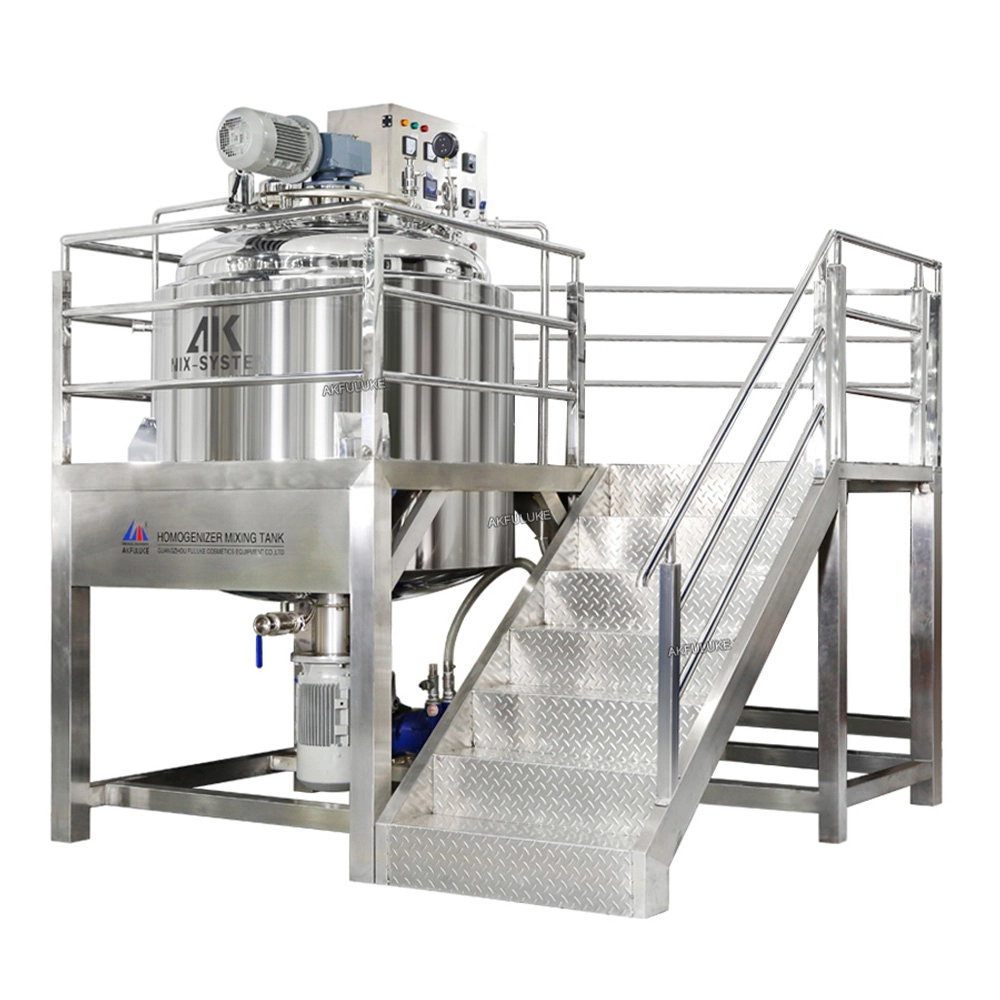
The Sealed Homogenizing mixing tank is an industrial-grade material handling equipment that integrates four core functions: vacuum defoaming, high-speed homogenization, efficient stirring, and precise temperature control. It is widely used in the cosmetics, pharmaceutical, food, chemical and other industries.
It is specially designed to solve the mixing, emulsification, homogenization and degassing needs of high-viscosity, multi-phase (solid-liquid, liquid-liquid) materials. It can produce delicate, stable, bubble-free creams, lotions, gels, ointments, sauces and other products.
containerized design is well suited for manufacturers who need both effective mixing and strict hygienic performance. Key product-specific CIP/SIP benefits and considerations include:
- Vacuum-sealed construction that enables effective degassing—ensure SIP-compatible vacuum seals and pressure ratings if steam sterilization is required.
- High-speed homogenizer and agitator—specify magnetic drive or hygienic mechanical seals with flush ports to simplify CIP and to avoid product entrapment at the shaft interface.
- Integrated temperature control—supports validated SIP cycles when paired with jacket design and distributed temperature sensors.
- Sanitary internal geometry and optional electropolish finish—improves cleanability and reduces microbial harborage.
Comparison: CIP vs SIP design parameters for mixing tanks
| Parameter | CIP Focus | SIP Focus |
|---|---|---|
| Primary purpose | Remove residues, soils and dissolved contaminants | Achieve microbial inactivation/sterility |
| Temperatures | Ambient to ~80–90°C for caustic/hot rinse | Typically steam sterilization ≥121°C for defined time |
| Pressure | Low to moderate, system flow/pressure for spray coverage | Pressure-rated vessel and steam pressure; venting needed |
| Equipment needs | Spray devices, dosing pumps, conductivity/temp sensors | Steam trap, condensate removal, venting, pressure relief |
| Validation | Conductivity/TOC/visual and microbiological verification | Biological indicators, temperature mapping, cycle documentation |
Maintenance, access and component replaceability for long-term hygiene
Design mixing tanks so that critical components (seals, homogenizer heads, spray devices, sensors) are accessible for inspection and replacement without full disassembly where possible. Quick-release sanitary clamps, hygienic manways of adequate size, and modular agitator assemblies speed maintenance and minimize downtime. Establish preventive maintenance schedules tied to CIP/SIP cycles to ensure consistent performance.
Validation and routine monitoring strategies for mixing tanks
Validation should start with risk assessment: identify failure modes that can lead to contamination. Use IQ/OQ/PQ to demonstrate that the mixing tank, CIP and SIP systems achieve performance requirements. Routine monitoring (microbiological sampling, ATP or TOC testing, conductivity checks during rinse) confirms ongoing effectiveness. Maintain a documented change control and deviation process to manage modifications to tank internals or CIP chemistry.
Practical tips to optimize CIP and SIP for production realities
- Run a pre-rinse immediately after product transfer to remove bulk soils before they harden.
- Use product-specific cycle recipes: high-fat or silicone-containing products often require different alkali/acid sequences and temperatures.
- Map worst-case points during commissioning and place sensors accordingly for repeatable validation.
- Simulate air pockets and perform purge tests for SIP on tall or complex tanks to ensure steam penetration.
- Automate as many interlocks as possible to prevent operator error (e.g., block product inlet until SIP passes).
Brand advantages — why choose the Stainless Steel Mixer Liquid Mixing tank with Agitator Homogenizing Mixing tank Vacuum Sealed Mixer Machine
When the mixing tank's hygienic performance matters, the Stainless Steel Mixer Liquid Mixing tank with Agitator Homogenizing Mixing tank Vacuum Sealed Mixer Machine offers several built-in advantages:
- Integrated functions (vacuum defoaming, high-speed homogenization, stirring, temperature control) reduce the number of transfer steps, lowering contamination risk.
- Designed for high-viscosity and multi-phase products, with sanitary geometry and options for electropolish and magnetic drives, improving CIP/SIP effectiveness.
- Modular design and accessible ports simplify maintenance, component replacement and validation activities.
- PLC-controlled automated cycles support reproducible CIP/SIP recipes, full data logging, and easier regulatory compliance.
- Engineering options for pressure/vacuum rating, jacket types and spray device configurations allow customization for specific SIP requirements.
FAQ — Common questions about CIP and SIP for mixing tanks
Q: Can every mixing tank be sterilized by SIP?
A: Not necessarily. A tank must be constructed and rated for the pressures and temperatures of steam sterilization. Vacuum-rated tanks used for degassing must be evaluated to ensure seals and structural elements tolerate positive steam pressure. If a mixing tank is not pressure-rated, alternative sterilization methods (chemical sterilants, aseptic filtration of inputs) may be needed.
Q: What surface finish is recommended for reliable CIP?
A: For most hygienic applications, an Ra ≤0.6–0.8 μm is standard; for high-risk aseptic processes, electropolished SS316L or Ra ≤0.4 μm is preferred. Electropolishing reduces roughness and micro-crevices, improving cleanability.
Q: How do I validate that CIP and SIP cycles are effective?
A: Use a combination of physical parameter records (temperature/time/pressure logs), chemical indicators (conductivity, TOC) and biological validation (biological indicators, microbiological swabs or rinse tests) as appropriate for your industry. Document IQ/OQ/PQ and maintain traceable records.
Q: Are magnetic drive agitators always better for hygienic tanks?
A: Magnetic drives eliminate shaft seals that penetrate the tank wall and are therefore preferred for aseptic and difficult-to-clean applications. However, for very high torque needs, mechanical seals may still be needed; select hygienic seals with quench/flush options in those cases.
Q: How should I handle CIP for very viscous product residues?
A: Implement a staged cleaning approach: product recovery, heated recirculation or dilution, targeted high-shear recirculation to dislodge residues, then standard CIP chemistry and final rinses. Consider in-place scraping or manual cleaning during scheduled maintenance if in-place methods are insufficient.
Contact / View product
Once cleaning and sterilization requirements are addressed, manufacturers can focus on productivity gains by integrating mixing tanks into automated production lines to improve throughput, reduce manual handling, and enhance process control.To discuss CIP/SIP design for your process or to get specification details for the Stainless Steel Mixer Liquid Mixing tank with Agitator Homogenizing Mixing tank Vacuum Sealed Mixer Machine, contact our technical sales team for a consultation, validation support and a customized quote. Email: sales@example.com | Phone: +1-800-000-0000. View product datasheet or request a drawing by contacting sales.
Authoritative references and further reading
- Clean-in-Place — Wikipedia: https://en.wikipedia.org/wiki/Clean-in-place
- Sterilization — Wikipedia: https://en.wikipedia.org/wiki/Sterilization_(microbiology)
- Agitator (equipment) — Wikipedia: https://en.wikipedia.org/wiki/Agitator_(equipment)
- European Hygienic Engineering & Design Group (EHEDG) — https://www.ehedg.org/
- ASME Bioprocessing Equipment (BPE) Standard — https://www.asme.org/codes-standards/bpe-bioprocessing-equipment
- FDA Guidance on Process Validation — https://www.fda.gov/media/71001/download
References above provide standards, best practices and background information for hygienic design, CIP and SIP. For regulatory-specific advice, consult your quality/regulatory team or an industry expert.
Assessing ROI and TCO for Industrial Reverse Osmosis Systems
Spec Checklist: Homogenizing Mixing Tank for B2B Buyers
The Definitive Guide to Automatic Labeling Machines: 2026 Performance & Buying Strategies
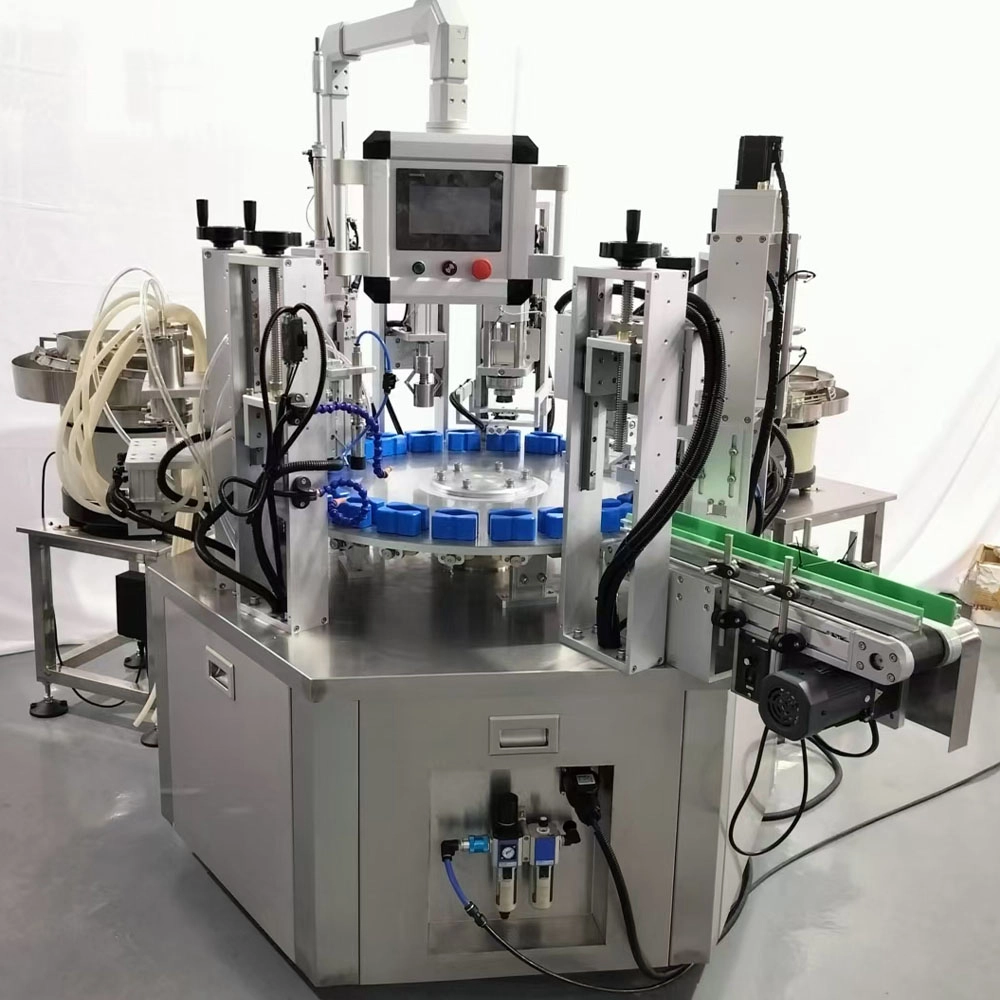
Best Perfume Rotary Vacuum Gear Pump Machines for Consistent Flow
Perfume Filling Machine
Can you customize the machine?
Of course, we provide customized services according to customer needs.
Automatic Facial Mask Filling Machine
What can you buy from us?
RO Water Treatment、Vacuum Emulsifying Machine、Homogenizer Mixing Tank、Filling and Capping、labeling Machine、Packing Machine、Storage Tank,etc.
Vacuum Emulsifying Machine
How does the vacuum homogenizer work?
The vacuum homogenizer's operating process revolves around four core steps: vacuum degassing, high-speed homogenization and emulsification, stirring and mixing, and temperature control. Through the coordinated operation of multiple systems, it achieves refined material processing. The following is its specific operating principle and process:
1. Pretreatment: Material feeding and vacuum environment establishment
Material preparation: First, add the basic materials, such as the oil phase (such as oils and waxes) and the aqueous phase (such as water and water-soluble ingredients), to their corresponding batching tanks or directly into the main emulsifier in sequence.
Evacuation: Activate the vacuum system (consisting of a vacuum pump, vacuum valve, etc.) to evacuate the interior of the emulsifier, creating a negative pressure environment (typically up to -0.09 MPa).
2. Core Process: Temperature Control (Heating/Cooling)
3. Core Process: Agitation and Mixing
Agitation Structure: Typically uses a "frame agitator + scraper" combination (for high-viscosity materials):
Through shearing, folding, and convection, the different materials are initially mixed and their stratification is broken down.
The PTFE scraper rotates closely against the pot wall, thoroughly scraping away any sticky material adhering to the pot wall, preventing localized overheating and residue, and ensuring zero dead zones.
4. Core Process: High-Speed Homogenization and Emulsification
Homogenizer Structure: A high-speed rotating homogenizer is installed at the bottom (or side) of the emulsifier, consisting of a rotor (with sharp teeth) and a stator (with fixed teeth). Working Principle: The rotor rotates at an extremely high speed, generating a strong centrifugal force that draws the material into the gap between the rotor and the stator. In this gap, the material is subjected to the triple effects of shear force, impact force, and turbulent force. The teeth of the rotor and stator quickly cut the material and generate high-frequency vibrations.
Can you make a design for us?
Yes, we can, we provide not only products, but also solutions and designs.
Storage Tank
Can you customize the machine?
Of course, we provide customized services according to customer needs.
You May Also Like
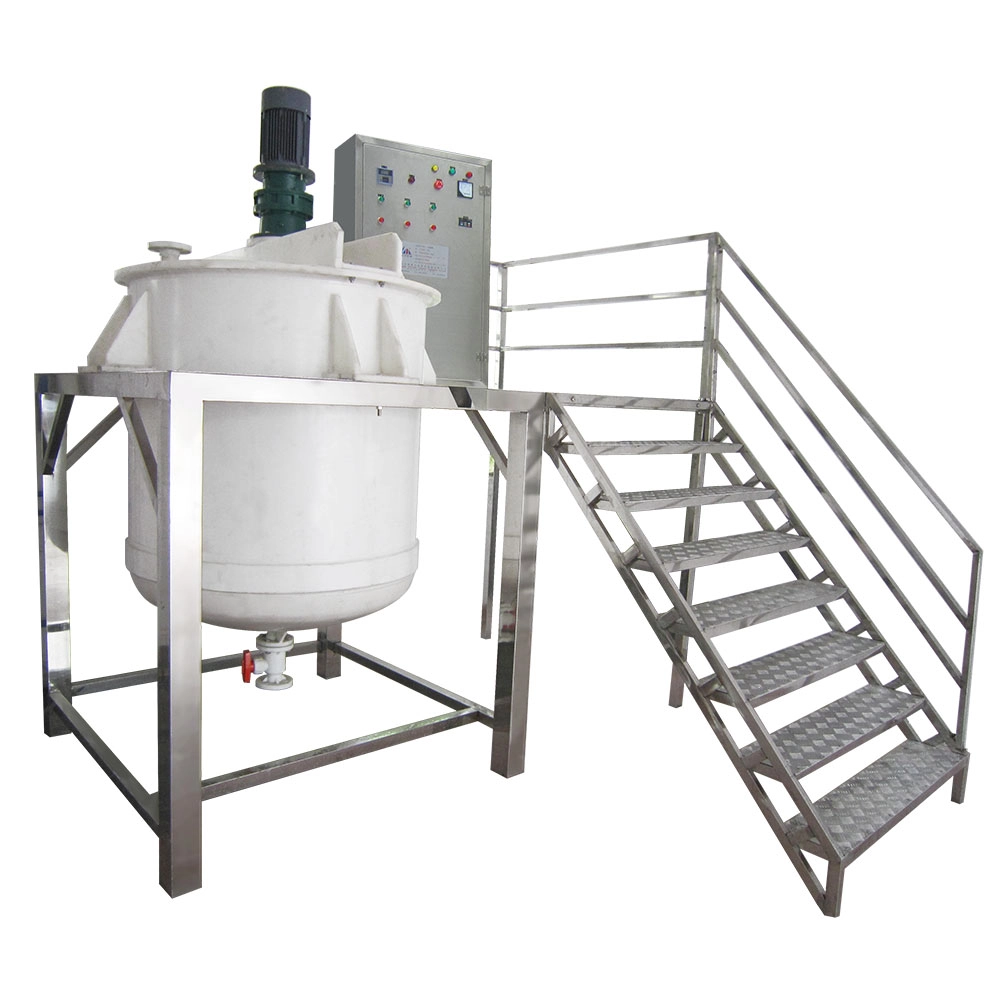
Polypropylene PP Mixing Tank Anti-Corrosion Mixer Reaction Kettle with Agitator Chemical Mixing Vessel
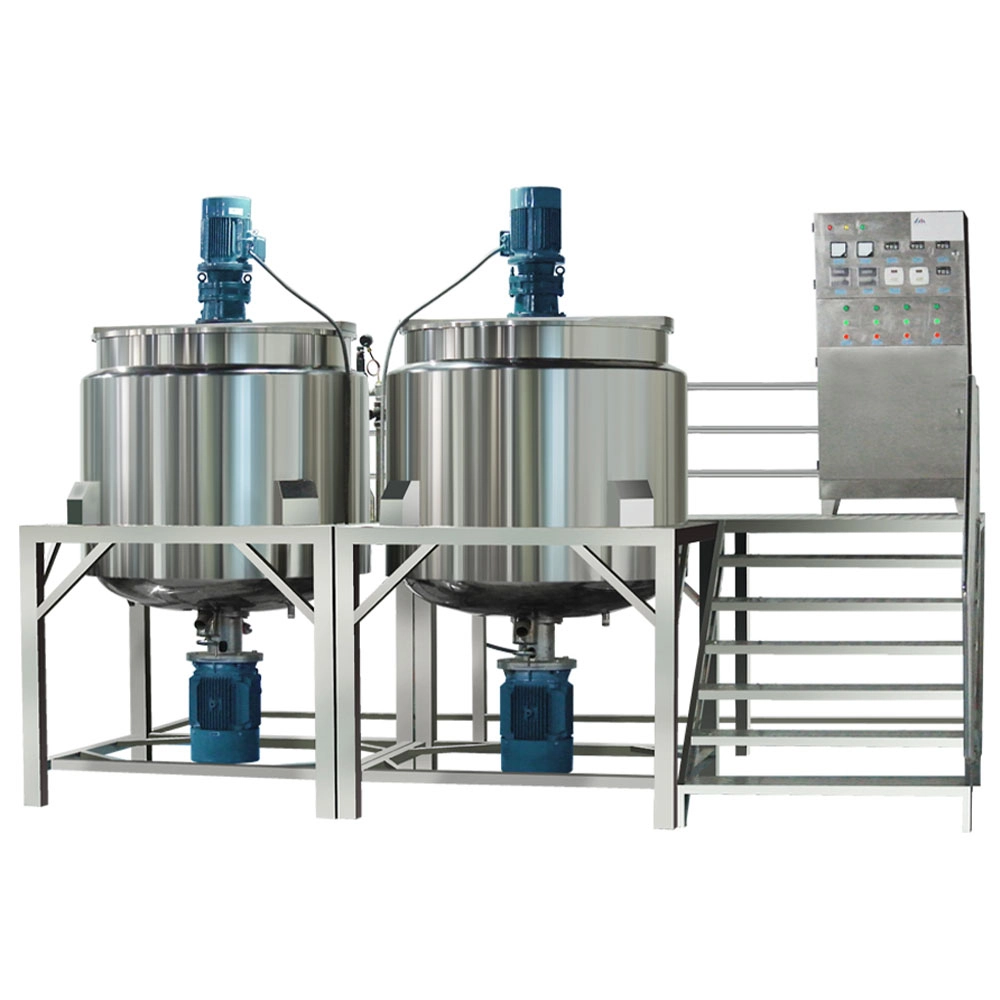
Flip Cover Multi-function Liquid Wash Mixing Tank Blender Liquid Detergent Mixer Homogenization Stirring Tank
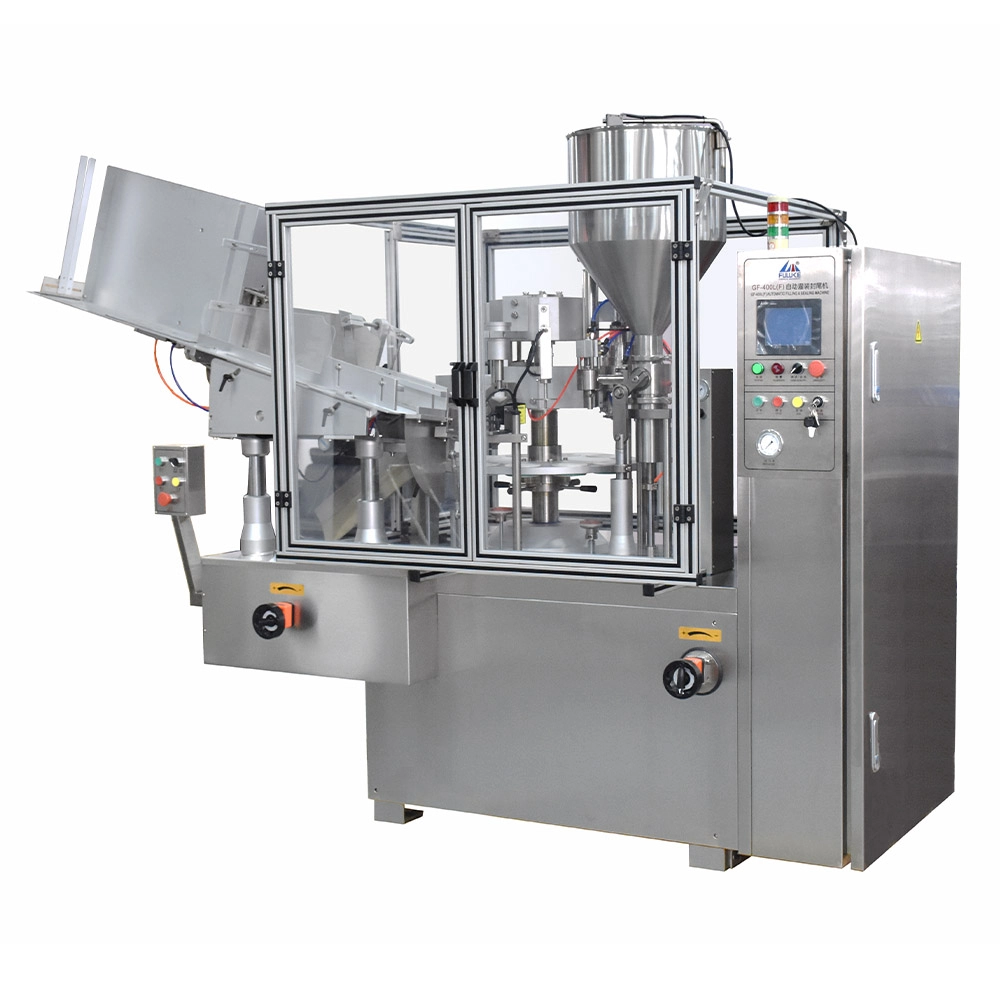
Automatic Tube Filling and Sealing Machine Toothpaste Sunscreen and Facial Cleanser Filling and Sealing Machine for Plastic and Aluminum-plastic Tube
Stainless Steel Mixer Liquid Mixing tank with Agitator Homogenizing Mixing tank Vacuum Sealed Mixer Machine
Get in touch with FULUKE
If you have any comments or good suggestions, please leave us a message, later our professional staff will contact you as soon as possible.

A leading manufacturer specializing in advanced machinery and complete production lines for the cosmetics, food, pharmaceutical, and chemical industries worldwide.
Contact FULUKE
Facebook
Instagram
YouTube