
Implementing CIP Systems with Cream Filling Machines
- Why CIP Matters for Cream Filling Operations
- Contamination risks specific to cream and lotion filling
- Regulatory and quality expectations
- Operational and economic benefits
- Designing CIP for Automatic Filling Machines
- Key CIP components and how they map to a cream filling line
- Materials, seals and design considerations for creams
- Integration with the machine’s control system
- Validation, Monitoring and Day-to-Day Operation
- Cleaning validation and acceptance criteria
- Key process parameters to monitor
- Routine operation, sampling and environmental control
- Practical Considerations, Troubleshooting and ROI
- Common CIP problems and practical fixes
- Comparing CIP strategies: a quick table
- Measuring ROI and line performance gains
- Case study highlight (hypothetical)
- References, Standards and Recommended Reading
- FAQ
- 1. Can CIP handle high-viscosity creams and pastes?
- 2. How often should a CIP cycle be run on a cosmetic filling line?
- 3. Is CIP mandatory for cosmetics under FDA rules?
- 4. How do I validate that my CIP is effective?
- 5. Can CIP be retrofitted to existing automatic filling machines?
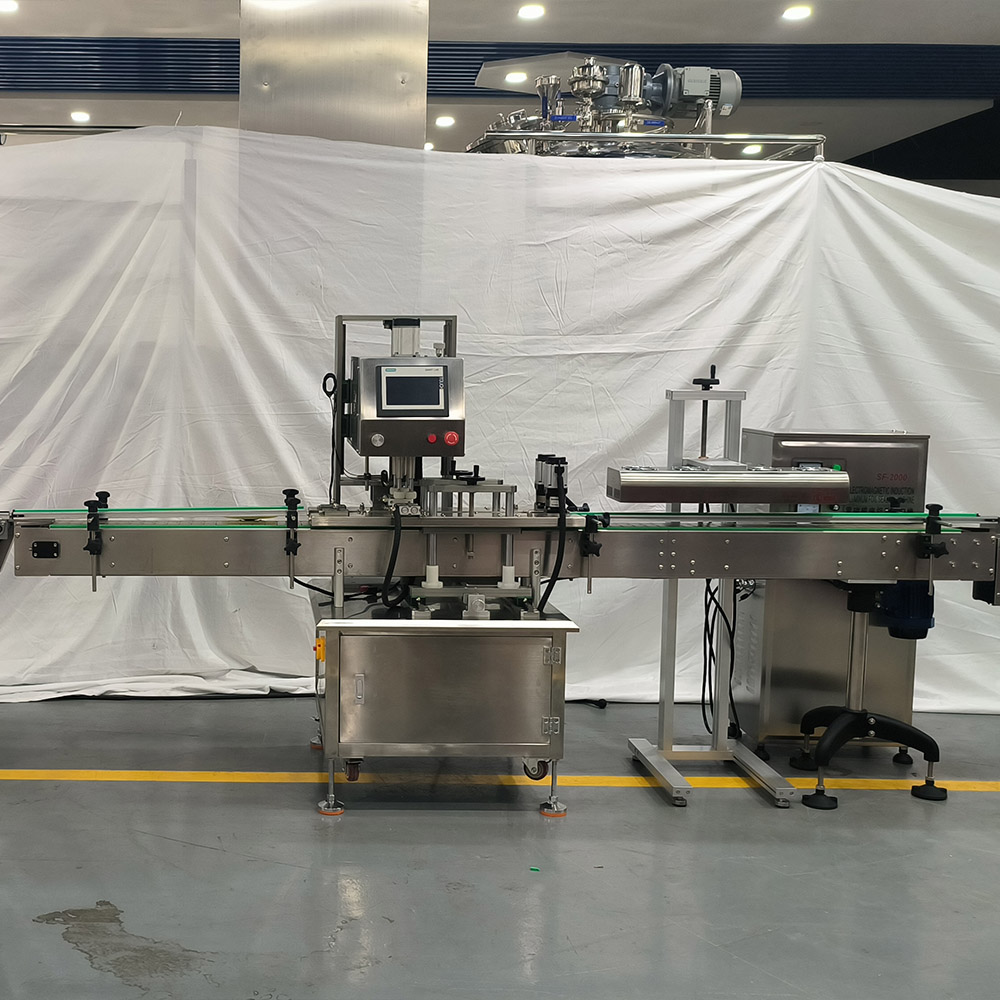
The following summary provides a concise, machine-readable overview for indexing: Implementing Clean-In-Place (CIP) systems on cream filling lines significantly reduces contamination risk, shortens changeover time, and increases throughput for cosmetic manufacturers. Integrating CIP with an automatic filling machine such as the Automatic Filling Machine Quantitative Liquid Bottle Filling Machine High-precision cream and lotion filling machine—built with 316L/304 stainless steel, GMP-compliant design, and intelligent controls—ensures repeatable cleaning cycles, improved traceability, and compliance with industry standards like ISO 22716 and regulatory guidance from agencies such as the FDA. This guide covers system components, design choices, validation protocols, monitoring strategies, and practical troubleshooting to help operations teams implement robust CIP for creams, lotions, emulsions, and pastes.
Why CIP Matters for Cream Filling Operations
Contamination risks specific to cream and lotion filling
Creams and lotions are emulsions or high-viscosity pastes that trap oils, surfactants, and particulate matter. Residual deposits after a production run can support microbial growth or lead to cross-contamination between SKUs. An appropriately designed CIP system minimizes product residues in pipes, nozzles, and tanks without the need for equipment disassembly, reducing human error and exposure during cleaning.
Regulatory and quality expectations
Cosmetic manufacturers must follow Good Manufacturing Practices (GMP) and relevant guidance to control contamination and ensure consistent product quality. ISO 22716 provides internationally recognized GMP guidelines for cosmetics manufacturing (ISO 22716), and the U.S. Food and Drug Administration (FDA) publishes cosmetic-related guidance on manufacturing and safety (FDA Cosmetics). Integrating CIP with an automatic filling machine helps meet these expectations by supporting documented, reproducible cleaning cycles and traceable records.
Operational and economic benefits
Integrating CIP reduces downtime for manual cleaning and changeovers, decreases labor costs, and improves line efficiency. For high-precision cream and lotion filling machine operations, automated CIP contributes to product standardization and helps lower the risk of rejecting entire batches due to contamination or wrong product residue.
Designing CIP for Automatic Filling Machines
Key CIP components and how they map to a cream filling line
A complete CIP system for cream filling typically includes a supply of cleaning solutions (alkaline, acid, sanitizers), hot water, pumps, automated valve arrays, sprayballs or rotary jet heads, filtration or blowdown systems, and a programmable controller (PLC). When integrating with an automatic filling machine—especially a machine that integrates automated conveying, precision filling, and intelligent control—the CIP system should be able to:
- Isolate and circulate cleaning solution through all liquid-contact components (tanks, pipes, filling heads) without dismantling the filling head;
- Operate repeatable temperature, flow, and time profiles that match validated parameters for emulsions and high-viscosity products;
- Log and export cleaning cycle data for QA review and audits;
- Coordinate with the filling machine’s HMI/touchscreen for single-panel control and quick parameter selection.
Materials, seals and design considerations for creams
Because creams and lotions often contain oils and surfactants that can be aggressive to certain elastomers, select contact materials carefully. Use 316L/304 stainless steel for wetted parts and select PTFE, EPDM, or UHMW seals compatible with product chemistries and cleaning agents. The product Automatic Filling Machine Quantitative Liquid Bottle Filling Machine High-precision cream and lotion filling machine already specifies 316L/304 stainless steel contact components and GMP-compliant construction, which simplifies material compatibility decisions.
Integration with the machine’s control system
Modern automatic filling machines include PLCs and touchscreen HMIs for quick parameter adjustment. CIP functions should be integrated into the same control environment for single-point operation and synchronized interlocks. This enables:
- Automatic interlocks to prevent filling during a CIP cycle;
- Selectable CIP recipes per SKU (e.g., viscous cream vs. thin lotion);
- Real-time alerts if flow, temperature, or conductivity parameters drift outside validated ranges.
Validation, Monitoring and Day-to-Day Operation
Cleaning validation and acceptance criteria
Cleaning validation for CIP systems must demonstrate that residues are removed to acceptable levels and that microbial control is maintained. Typical acceptance criteria include limits for total organic carbon (TOC), specific ingredient residues (e.g., preservative, active molecules), and microbiological counts. A formal validation protocol usually includes:
- Worst-case soil selection and worst-case locations (valves, deadlegs, nozzle internals);
- Defined sampling methods: swab, rinse, or direct measurement in-place;
- Analytical methods and detection limits (e.g., HPLC for actives, TOC analyzers, microbiological plate counts);
- Acceptance criteria tied to product safety and stability studies.
For reference and methodology, industry guidance and technical literature on CIP and cleaning validation provide useful frameworks (see the Clean-in-Place overview on Wikipedia for a general primer: Clean-in-place (Wikipedia)).
Key process parameters to monitor
Monitoring ensures CIP cycles are effective and repeatable. Typical parameters include:
- Flow rate and turbulence (important for dislodging viscous residues);
- Temperature (hot water or steam-assisted cycles often improve removal efficiency);
- Cleaning agent concentration (monitored via conductivity or chemical dosing control);
- Cycle time and sequence (pre-rinse, detergent circulate, intermediate rinse, acid if needed, final rinse, sanitizer);
- Data logging and traceability for audits.
Routine operation, sampling and environmental control
Routine monitoring involves periodic swab/rinse tests and more frequent TOC or conductivity spot checks. For microbiological control, environmental monitoring of the filling area and processing equipment is necessary. Keep a documented schedule for:
- Frequency of CIP cycles (after each production run, per shift, or as defined by risk assessment);
- Microbiological environmental monitoring;
- Calibration of sensors and dosing pumps;
- Periodic revalidation after major changes (new SKU, formulation, or equipment modification).
Practical Considerations, Troubleshooting and ROI
Common CIP problems and practical fixes
High-viscosity creams can cause specific challenges:
- Incomplete removal from filling nozzles or manifolds: use stepped heating, increased circulation time, and sprayball/rotary jet optimizations;
- Foaming during detergent circulation: switch to low-foaming detergent or add antifoam dosing and adjust circulation velocity;
- Deadlegs and stagnant zones: redesign piping to minimize deadlegs or add periodic flow reversals and higher turbulence;
- Seal degradation: select compatible elastomers and schedule preventive maintenance.
Comparing CIP strategies: a quick table
| Strategy | Pros | Cons | Best for |
|---|---|---|---|
| CIP with hot alkaline detergent + sanitizer | High removal efficiency for organic soils; reproducible | Higher water/energy use; needs compatible materials | High-viscosity creams, multi-shift production |
| CIP with low-temperature enzymatic cleaners | Lower energy; effective on proteinaceous soils | Slower; may need longer contact time | Delicate formulations prone to heat degradation |
| Manual disassembly & hand-cleaning | Low capital cost; good for small batches or prototypes | Higher contamination risk; labor-intensive | Small-scale labs, R&D |
Measuring ROI and line performance gains
Calculate ROI by comparing time saved on changeovers, reduced labor costs, lowered batch rejections, and increased throughput. Example metrics to monitor:
- Average changeover time before vs after CIP integration;
- Labor hours saved per shift;
- Reduction in batch rework or rejects tied to contamination;
- Throughput increase (units/hour) due to faster changeovers.
Case study highlight (hypothetical)
A mid-size cosmetic manufacturer integrated a CIP module with their automatic filling machine and reduced average changeover time from 120 minutes to 30 minutes, increasing daily throughput by 20% and reducing labor costs by 30% per shift. The company also improved traceability by linking CIP logs to batch records stored on the PLC and central ERP, aiding audit readiness.
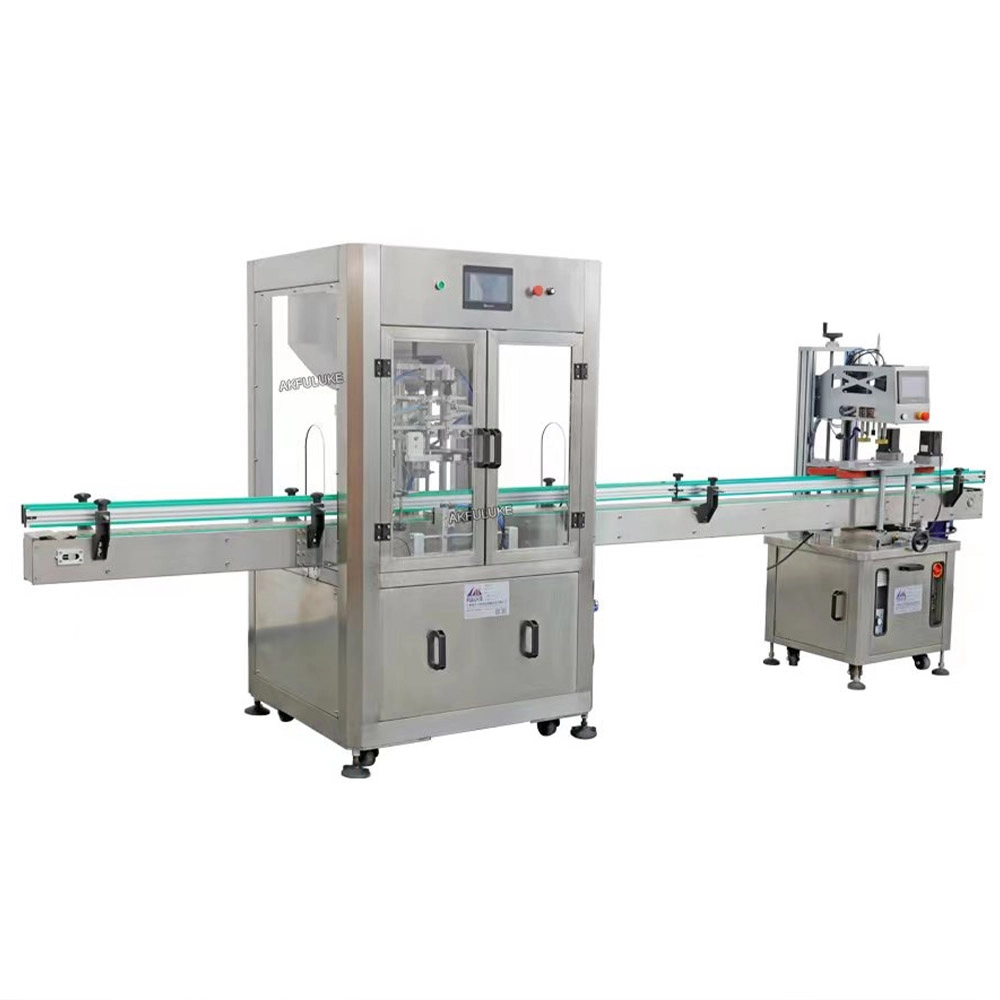
The automatic filling machine integrates automated conveying, precision filling, and intelligent control for packaging creams, lotions, and liquids. Suitable for a variety of containers, including glass and PET bottles, it can fill liquids, emulsions, and pastes with high precision.
Constructed with 316L/304 stainless steel contact components and compliant with GMP standards, it features a touchscreen interface for quick parameter adjustment and completes the entire process without manual intervention. Widely used in the cosmetics, food, daily chemical, pharmaceutical, and chemical industries, it helps companies reduce costs, increase efficiency, and ensure product standardization.
References, Standards and Recommended Reading
To support design and validation decisions, consult authoritative guidance and technical resources:
- ISO 22716 — Cosmetics — Good Manufacturing Practices: https://www.iso.org/standard/36437.
- FDA Cosmetics (manufacturing and safety information): https://www.fda.gov/cosmetics
- Clean-in-place overview (general concepts): https://en.wikipedia.org/wiki/Clean-in-place
- Cosmetics industry association resources: Cosmetics Europe
FAQ
1. Can CIP handle high-viscosity creams and pastes?
Yes. CIP strategies for high-viscosity creams typically use higher circulation velocities, elevated temperatures, extended cycle times, specialized low-foam detergents, and optimized spray devices (rotary jet heads). Validation should demonstrate removal under worst-case conditions.
2. How often should a CIP cycle be run on a cosmetic filling line?
Frequency depends on risk assessment: many operations run CIP after each SKU change or production batch. In lower-risk continuous production, cycles may be scheduled at shift intervals. Establish a documented frequency based on microbiological monitoring and product formulation.
3. Is CIP mandatory for cosmetics under FDA rules?
FDA does not mandate specific CIP systems for cosmetics but expects manufacturers to follow Good Manufacturing Practices to ensure safe products. Many quality systems reference ISO 22716 for GMP best practices. Using CIP helps meet these expectations by providing reproducible cleaning and traceability.
4. How do I validate that my CIP is effective?
Validation includes worst-case soil trials, analytical verification (TOC, HPLC, residue assays), microbiological testing, and documented acceptance criteria. Maintain records of all validation runs and periodic revalidation after changes.
5. Can CIP be retrofitted to existing automatic filling machines?
Often yes, but feasibility depends on the existing piping layout, presence of sanitary connections, available space, and control integration. A site survey by an experienced OEM or integrator will determine retrofit scope and costs.
If you’d like to learn how CIP can be integrated with your equipment or to see detailed specifications for the Automatic Filling Machine Quantitative Liquid Bottle Filling Machine High-precision cream and lotion filling machine, contact our team for a consultation and customized proposal.
Choosing the Right Mixing Tank for High-Volume Liquid Production
Top 10 filling capping machine Manufacturers and Supplier Brands in 2026
Speed vs Accuracy: Balancing Throughput in Filling Lines
Top 10 Perfume Filling Machine Manufacturers for Bulk Production
Sealed Homogenizing Mixing Tank
Can you customize the machine?
Of course, we provide customized services according to customer needs.
Lift-type Homogenizing Disperser
Can you customize the machine?
Of course, we provide customized services according to customer needs.
Inkjet Printing Machine
What can you buy from us?
RO Water Treatment、Vacuum Emulsifying Machine、Homogenizer Mixing Tank、Filling and Capping、labeling Machine、Packing Machine、Storage Tank,etc.
Automatic Capping Machine
Who are we?
Our headquarters is located in Guangzhou, Guangdong, China, and our factory is located in Yangzhou, Jiangsu. Our products are sold all over the world. We have approximately 50 employees in our company and factory.
What causes leakage or loose caps after capping?
Most likely, the capping torque parameters do not match the product characteristics. You can recalibrate the torque through the touch screen. If the problem persists, check whether the bottle clamp is too loose or whether there is any dimensional deviation in the cap.
You May Also Like
Automatic Filling Machine Quantitative Liquid Bottle Filling Machine High-precision cream and lotion filling machine
Automatic Tube Filling and Sealing Machine Toothpaste Sunscreen and Facial Cleanser Filling and Sealing Machine for Plastic and Aluminum-plastic Tube
Polypropylene PP Mixing Tank Anti-Corrosion Mixer Reaction Kettle with Agitator Chemical Mixing Vessel
Flip Cover Multi-function Liquid Wash Mixing Tank Blender Liquid Detergent Mixer Homogenization Stirring Tank
Get in touch with FULUKE
If you have any comments or good suggestions, please leave us a message, later our professional staff will contact you as soon as possible.

A leading manufacturer specializing in advanced machinery and complete production lines for the cosmetics, food, pharmaceutical, and chemical industries worldwide.
Contact FULUKE
Facebook
Instagram
YouTube