
Spec Checklist: Homogenizing Mixing Tank for B2B Buyers
- Spec Checklist: Choosing the Right Homogenizing Mixing Tank with Agitator for B2B Buyers
- Why this checklist matters for buyers of a mixing tank with agitator
- Product overview: Sealed Homogenizing mixing tank
- 1. Core capability: Homogenization and agitation performance (mixing tank with agitator)
- 2. Vacuum defoaming and sealed operation
- 3. Materials, surface finish, and sanitary design
- 4. Heating and cooling control
- 5. Capacity, footprint, and scale-up considerations
- 6. Seals, shaft drives, and mechanical reliability
- 7. Automation, controls, and data logging
- 8. Cleanability, CIP/SIP, and hygiene validation
- 9. Safety, compliance, and documentation
- 10. Energy efficiency and operational cost
- 11. Installation, utilities, and footprint planning
- 12. Vendor evaluation checklist and acceptance testing (mixing tank with agitator)
- Spec comparison table: Typical options and recommended ranges
- Case example: How a cosmetic manufacturer benefited
- Brand advantages: Why choose our Stainless Steel Mixer Liquid Mixing tank with Agitator Homogenizing Mixing tank Vacuum Sealed Mixer Machine
- FAQ — Frequently Asked Questions
- Q1: What is the difference between a homogenizer and a regular agitator?
- Q2: Can the sealed homogenizing mixing tank handle high-viscosity products like creams or gels?
- Q3: How do I validate cleaning of the tank?
- Q4: Is magnetic drive better than mechanical seals?
- Q5: What acceptance testing should I require before shipment?
- Contact us / View the product
- Authoritative references and further reading
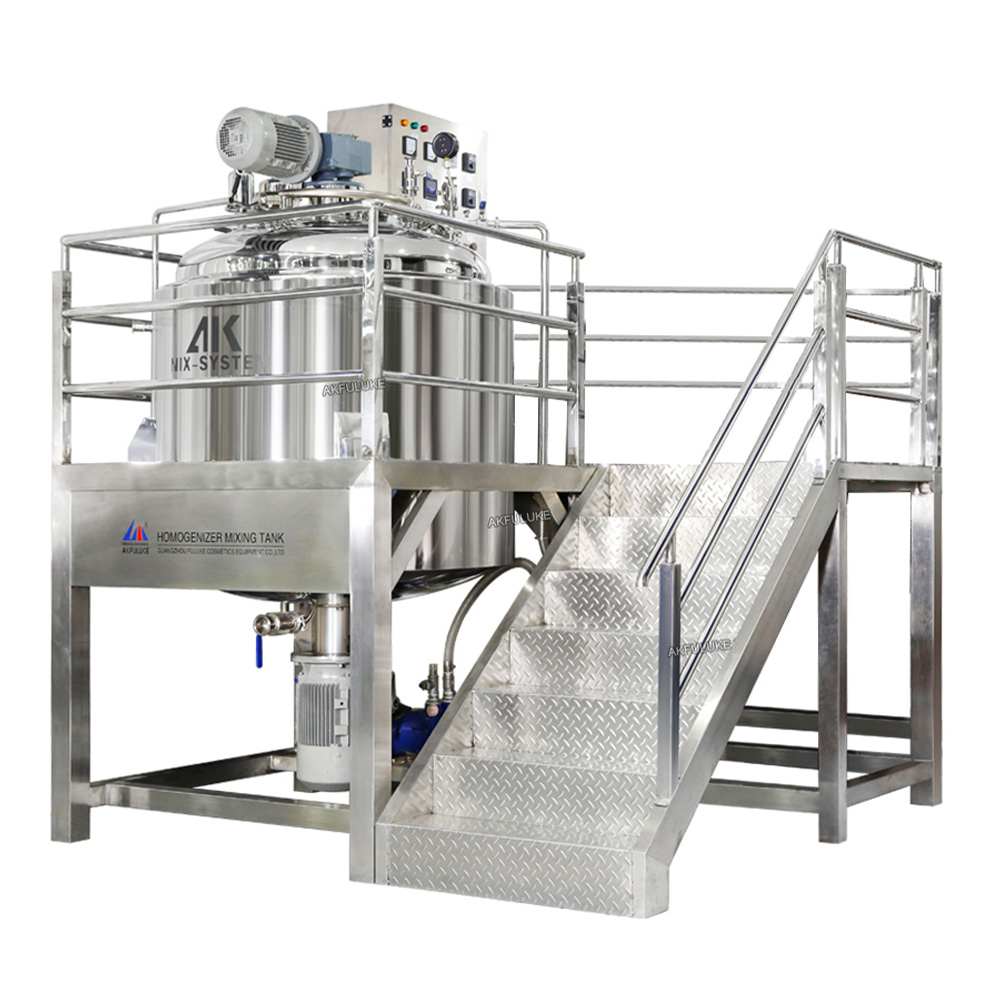
Spec Checklist: Choosing the Right Homogenizing Mixing Tank with Agitator for B2B Buyers
Why this checklist matters for buyers of a mixing tank with agitator
Purchasing industrial equipment like a Stainless Steel Mixer Liquid Mixing tank with Agitator Homogenizing Mixing tank Vacuum Sealed Mixer Machine is a critical investment for cosmetic, pharmaceutical, food, and chemical manufacturers. The right mixing tank with agitator solves challenges around high-viscosity blending, stable emulsions, bubble-free finishes, and consistent temperature control. This checklist helps procurement, R&D, and production teams compare technical specs, operational requirements, and regulatory compliance so you can make a low-risk, high-return decision. Beyond specifications, quality assurance and regulatory alignment are critical—especially when assessing a vacuum sealed mixer machine: compliance and quality control in sensitive liquid processing environments.
Product overview: Sealed Homogenizing mixing tank
The Sealed Homogenizing mixing tank is an industrial-grade material handling equipment that integrates four core functions: vacuum defoaming, high-speed homogenization, efficient stirring, and precise temperature control. It is widely used in the cosmetics, pharmaceutical, food, chemical and other industries.
It is specially designed to solve the mixing, emulsification, homogenization and degassing needs of high-viscosity, multi-phase (solid-liquid, liquid-liquid) materials. It can produce delicate, stable, bubble-free creams, lotions, gels, ointments, sauces and other products.
1. Core capability: Homogenization and agitation performance (mixing tank with agitator)
Key questions to answer: What homogenizer type is used? What are rotor-stator speeds, shear rates, and capacity range? Does the agitator deliver both gentle bulk stirring and high-shear homogenization without transferring contamination?
- Homogenizer type: rotor-stator vs. ultrasonic vs. high-pressure homogenizer — rotor-stator is common for cosmetics and food for inline or tank-top homogenization.
- Speed and torque range: Low-speed anchor or propeller for bulk mixing, high-speed rotor for emulsification. Verify RPM range and available torque at different speeds to handle high-viscosity loads.
- Shear control: Adjustable shear allows tuning droplet size and product texture. Ask for particle/droplet size results from vendor trials.
2. Vacuum defoaming and sealed operation
For many formulations, particularly creams and sauces, entrained air causes instability. A sealed mixing tank with agitator and vacuum capability reduces trapped air, producing bubble-free products.
- Vacuum rating: How deep a vacuum can the tank sustain (e.g., 0.1–0.5 bar absolute)?
- Vacuum pump type and size: Oil-sealed, dry rotary vane, or piston pumps — select based on maintenance and contamination risk.
- Sealing and feedthroughs: Ensure homogenizer and agitator shaft seals are compatible with vacuum and product media; mechanical seals vs. magnetic drive for zero leakage.
3. Materials, surface finish, and sanitary design
Material selection affects contamination risk, corrosion resistance, and regulatory compliance. For cosmetics and food, stainless steel 316L is typically preferred.
- Construction material: 316L stainless (or 304 for non-corrosive formulations). Verify certificate of materials.
- Surface finish: Internal Ra values (e.g., Ra <0.6 µm or mirror polish) minimize product hold-up and microbial niches.
- Sanitary design: Smooth welds, drainability, sloped bottoms, and CIP ports. Ask for weld radiography reports if required.
4. Heating and cooling control
Precise temperature control is necessary for phase-inversion emulsions, melting solids, or heat-sensitive actives.
- Jacket type: Double-wall jacket, half-pipe coils, or full-surface jacket — each has different heat transfer efficiency.
- Temperature control range and PID accuracy: Typical ranges from -10°C (with glycol) to 150°C, with PID control ±0.5°C depending on process needs.
- Heating media: Steam, hot oil, electric heating elements, or hot water. Cooling commonly uses chilled water or glycol.
5. Capacity, footprint, and scale-up considerations
Match tank capacity and geometry to batch sizes, residence time needs, and plant footprint constraints.
- Nominal vs. working volume: Working volume is usually 50–80% of nominal tank volume to allow headspace for mixing under vacuum.
- Aspect ratio: Taller tanks improve vertical circulation; flatter tanks aid heat transfer and vacuum degassing.
- Scale-up: Maintain similarity in shear energy per unit volume when moving from pilot to production tanks.
6. Seals, shaft drives, and mechanical reliability
The agitator drive is a primary wear point. Ask about shaft seals, bearings, and maintainability.
- Seal type: Mechanical seals, lip seals for low-shear, or magnetic drives for zero shaft penetration and no seal maintenance.
- Gearbox and motor: IEC-rated motors with VFD control and service factors suitable for intermittent high-torque mixing.
- Access for maintenance: Ease of replacing seals, bearings, and homogenizer rotor-stator sets.
7. Automation, controls, and data logging
Modern mixing tanks with agitator systems include PLC/HMI controls, recipe storage, and data logging to support consistent quality and traceability.
- Control features: Multi-speed control, homogenizer on/off, vacuum control, temperature PID, timers, and automated sequences.
- Connectivity: Ethernet/IP, OPC-UA, or industry-standard protocols for MES integration.
- Data logging and batch records: Ensure the system can store and export time-stamped process data for QA.
8. Cleanability, CIP/SIP, and hygiene validation
Cleaning protocols and the ability to CIP/SIP influence downtime and regulatory compliance.
- CIP ports and spray balls: Ensure internal geometry allows full CIP coverage; verify flow rates required for validated cleaning cycles.
- SIP capability: Are seals, gaskets, and sensors rated for steam sterilization if needed?
- Validation support: Vendors should provide cleaning validation protocols and residue test data if requested.
9. Safety, compliance, and documentation
Regulations and safety standards vary by industry and region; vendors should supply full documentation.
- Certifications: CE, ATEX (if flammable solvents used), cGMP compliance for pharma/cosmetics, and PED pressure equipment certification where applicable.
- Safety features: Emergency stops, interlocks for manways, overpressure relief valves, and explosion-proof motors if needed.
- Documentation: Material certificates, FAT/IQ/OQ documentation, mechanical drawings, and spare parts lists.
10. Energy efficiency and operational cost
Total cost of ownership includes energy for agitation, heating/cooling, vacuum pumps, and maintenance. Consider lifecycle cost, not just purchase price.
- Energy saver options: Variable frequency drives (VFDs), insulated jackets, and efficient vacuum systems.
- Maintenance intervals: Expected MTBF for critical components and availability of local service.
- Spare parts: Lead times for rotors, stators, seals, and VFDs — especially important for continuous production lines.
11. Installation, utilities, and footprint planning
Before ordering, confirm site utilities and installation constraints.
- Utility requirements: Electrical supply, compressed air, vacuum lines, chilled water/steam, and floor loading capacities.
- Rigging and access: Weight and center of gravity for crane lifting; clearances for maintenance access.
- Noise and vibration: Specify noise limits if installed near office/lab spaces.
12. Vendor evaluation checklist and acceptance testing (mixing tank with agitator)
Use a scorecard to compare vendors on technical capability, service, documentation, and price. Require factory acceptance testing (FAT) and on-site installation qualification.
- FAT and site acceptance tests: Request demonstration with representative product or a challenge test to show emulsification and degassing performance.
- Warranty and spare parts support: Minimum 12 months warranty and express parts availability.
- References: Ask for case studies in cosmetics, food, or pharma depending on your sector.
Spec comparison table: Typical options and recommended ranges
| Spec area | Typical option | Recommended for cosmetics/pharma |
|---|---|---|
| Material | SS 304 / SS 316L | SS 316L with mill certificates |
| Surface finish | Ra 0.8–1.6 µm | Ra ≤0.6 µm internal polish |
| Homogenizer | Rotor-stator 2000–6500 RPM | Adjustable rotor-stator with replaceable sets |
| Vacuum | 0.2–0.5 bar abs typical | Capable of 0.1–0.3 bar abs for degassing |
| Temperature control | Steam/chilled water | Jacketed tank + PID control ±0.5°C |
| Cleaning | Manual / CIP | CIP with validated cycles, SIP optional |
Case example: How a cosmetic manufacturer benefited
One mid-size cosmetics producer replaced a static vessel and handheld homogenizer with a Stainless Steel Mixer Liquid Mixing tank with Agitator Homogenizing Mixing tank Vacuum Sealed Mixer Machine. Results after installation: 40% reduction in batch time, consistent droplet size distribution verified by QC, and nearly zero micropore bubbles after degassing. The sealed vacuum operation also reduced oxidation-sensitive actives' degradation, increasing product shelf life.
Brand advantages: Why choose our Stainless Steel Mixer Liquid Mixing tank with Agitator Homogenizing Mixing tank Vacuum Sealed Mixer Machine
Our product combines four integrated functions — vacuum defoaming, high-speed homogenization, efficient stirring, and precise temperature control — in a single engineered unit. Key brand advantages include:
- Integrated design reduces footprint and piping complexity.
- 316L stainless construction and pharma-grade surface finishes for regulatory compliance.
- Modular rotor-stator sets to tune shear and simplify maintenance.
- Advanced PLC/HMI with recipe storage and MES connectivity.
- FAT, IQ/OQ documentation, and on-site commissioning by certified technicians.
FAQ — Frequently Asked Questions
Q1: What is the difference between a homogenizer and a regular agitator?
A homogenizer applies high shear to reduce droplet or particle size (e.g., rotor-stator or high-pressure homogenization). A regular agitator provides bulk circulation but low shear. Modern mixing tank systems combine both to achieve bulk mixing and fine emulsification in one vessel.
Q2: Can the sealed homogenizing mixing tank handle high-viscosity products like creams or gels?
Yes. Look for high-torque agitator drives, reinforced gearboxes, and rotor-stator designs rated for high-viscosity formulations. Verify vendor test data for your target viscosity range.
Q3: How do I validate cleaning of the tank?
Work with the vendor to obtain CIP flow maps and recommended cleaning cycles. Perform residue and microbial testing per your industry standards, and include these steps in your IQ/OQ protocols.
Q4: Is magnetic drive better than mechanical seals?
Magnetic drives eliminate shaft penetrations and the need for mechanical seals, reducing leakage risk and maintenance. They are preferred for aggressive chemistries or where sterility is required, but may have torque limitations for very high-viscosity mixing.
Q5: What acceptance testing should I require before shipment?
Request FAT including operational runs with water and representative product, vacuum integrity tests, temperature control verification, homogenization performance (droplet size data if possible), and full documentation (wiring, P&ID, certificates).
Contact us / View the product
To discuss specifications, arrange a factory demonstration, or request a quotation for the Stainless Steel Mixer Liquid Mixing tank with Agitator Homogenizing Mixing tank Vacuum Sealed Mixer Machine, contact our sales team. We provide product trials, FAT, and full IQ/OQ documentation to support your procurement and validation processes.
Authoritative references and further reading
- Mixing (chemical engineering): https://en.wikipedia.org/wiki/Mixing_(chemical_engineering)
- Homogenizer: https://en.wikipedia.org/wiki/Homogenizer
- Good Manufacturing Practice (FDA): https://www.fda.gov/industry/fda-basics/what-good-manufacturing-practice-gmp
- Pressure Equipment Directive (PED): https://ec.europa.eu/growth/sectors/pressure-equipment_en
- Hygienic design guidance (EHEDG): https://www.ehedg.org/
References provided to help you check regulatory and technical requirements relevant to mixing tanks and homogenizers. For customized recommendations, please provide your product formulation, target batch size, and production rate.
Agitator Homogenizing Tanks: Ensuring Consistent Product Quality
Automated vs. Semi-Automated Filling: Which Is Right?
How to Calculate ROI for an Automatic Filling Machine
Top 10 perfume making equipment Manufacturers and Supplier Brands
Perfume Freezing Filter Making Machine
How should the equipment be cleaned daily? Can it be rinsed directly with water?
Wipe the exterior with a dry cloth first. Stubborn stains can be removed with a soft cloth dampened with a neutral detergent. Never use hard objects such as steel wool to scratch the surface. Internal piping that comes into contact with materials should be rinsed with purified water and then disinfected with anhydrous ethanol. However, the entire device should not be immersed in water or rinsed with a high-pressure water jet to avoid damage to electrical components.
What can you buy from us?
RO Water Treatment、Vacuum Emulsifying Machine、Homogenizer Mixing Tank、Filling and Capping、labeling Machine、Packing Machine、Storage Tank,etc.
Film Packaging Machine
Can you customize the machine?
Of course, we provide customized services according to customer needs.
Inkjet Printing Machine
Can you customize the machine?
Of course, we provide customized services according to customer needs.
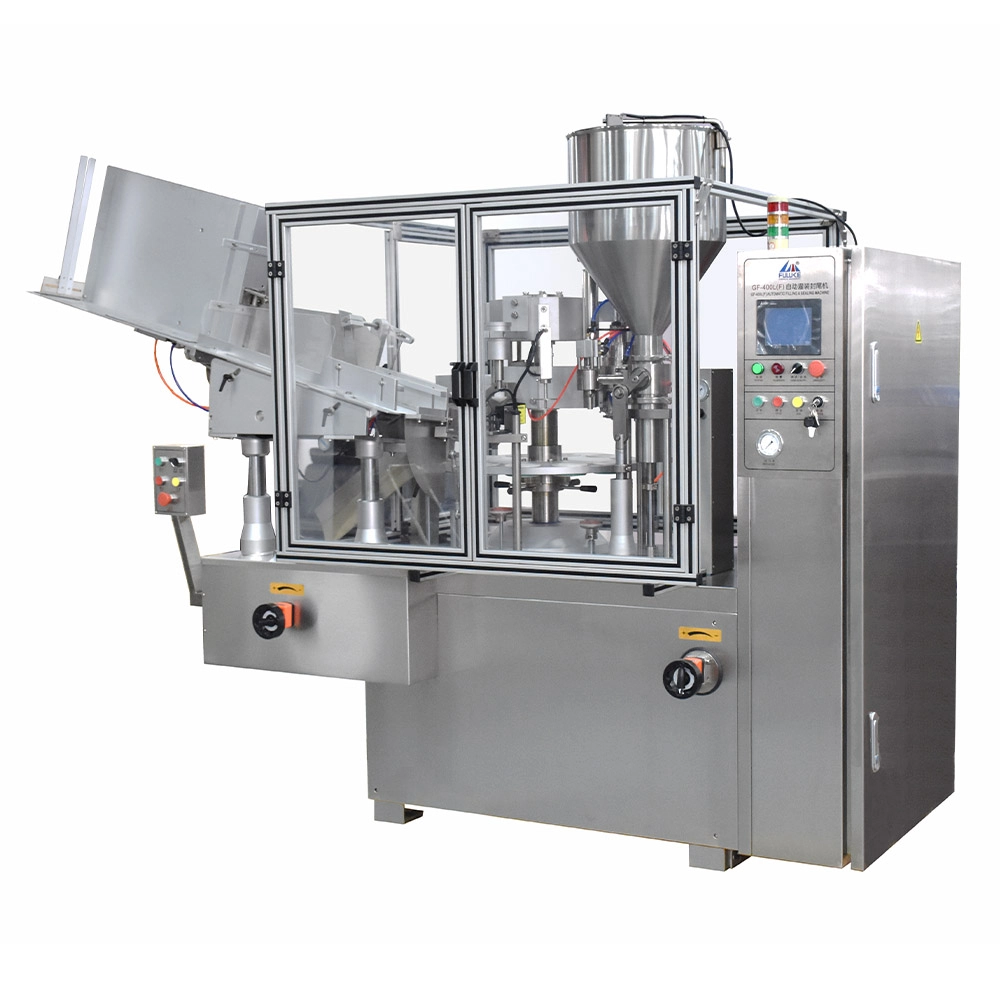
Automatic Tube Filling and Sealing Machine
Why are wrinkles, leaks, or uneven edges appearing after sealing? How can this be addressed?
These issues are often caused by three core factors, with corresponding solutions as follows:
Temperature mismatch: If the temperature is too low, the edge seal will not adhere well and leaks may occur; if the temperature is too high, it may burn and wrinkle. Adjust the sealing temperature using the PLC touch screen.
Insufficient pressure/time: The sealing cylinder pressure should be adjusted according to the hose material, and the sealing head pressing time should be ≥ 1.5 seconds to avoid a poor seal caused by insufficient pressure or short pressing time.
Mold wear/alignment deviation: Inspect the sealing mold for scratches and deformation. Replace if worn. If the label is misaligned with the seal, calibrate the photoelectric sensor position.
You May Also Like
Automatic Tube Filling and Sealing Machine Toothpaste Sunscreen and Facial Cleanser Filling and Sealing Machine for Plastic and Aluminum-plastic Tube
Polypropylene PP Mixing Tank Anti-Corrosion Mixer Reaction Kettle with Agitator Chemical Mixing Vessel
Flip Cover Multi-function Liquid Wash Mixing Tank Blender Liquid Detergent Mixer Homogenization Stirring Tank
Stainless Steel Mixer Liquid Mixing tank with Agitator Homogenizing Mixing tank Vacuum Sealed Mixer Machine
Get in touch with FULUKE
If you have any comments or good suggestions, please leave us a message, later our professional staff will contact you as soon as possible.

A leading manufacturer specializing in advanced machinery and complete production lines for the cosmetics, food, pharmaceutical, and chemical industries worldwide.
Contact FULUKE
Facebook
Instagram
YouTube