
Integration of Filling Machines with Bottle Cappers and Labelers
- Optimizing Cosmetic Production Lines with Combined Filling, Capping & Labeling Systems
- Why integration matters for cosmetic manufacturers
- Core components and roles
- Design and Technical Integration: Key Considerations
- Matching throughput and mechanical interface
- Control systems and communication
- Sanitation, materials and regulatory compliance
- Choosing the Right Liquid Filling Machine for Integration
- Filler types and their suitability
- Key performance and validation metrics
- Product excerpt and capabilities
- Practical Integration: Mechanical, Electrical and Process Steps
- Conveyor alignment and mechanical synchronization
- Electrical integration and safety
- Inspection and inline quality controls
- Comparison: Standalone vs Integrated Lines
- Brand Advantages and Implementation Roadmap
- Why choose a trusted supplier
- Typical project phases
- Evidence and resources
- FAQ — Frequently Asked Questions
- Q: Can the Automatic Filling Machine Quantitative Liquid Bottle Filling Machine High-precision cream and lotion filling machine be integrated with our existing cappers and labelers?
- Q: What level of fill accuracy can I expect for lotions and creams?
- Q: How do you ensure GMP compliance?
- Q: What is the expected ROI for integrating filler, capper and labeler?
- Q: Can the line handle multiple container sizes and SKUs?
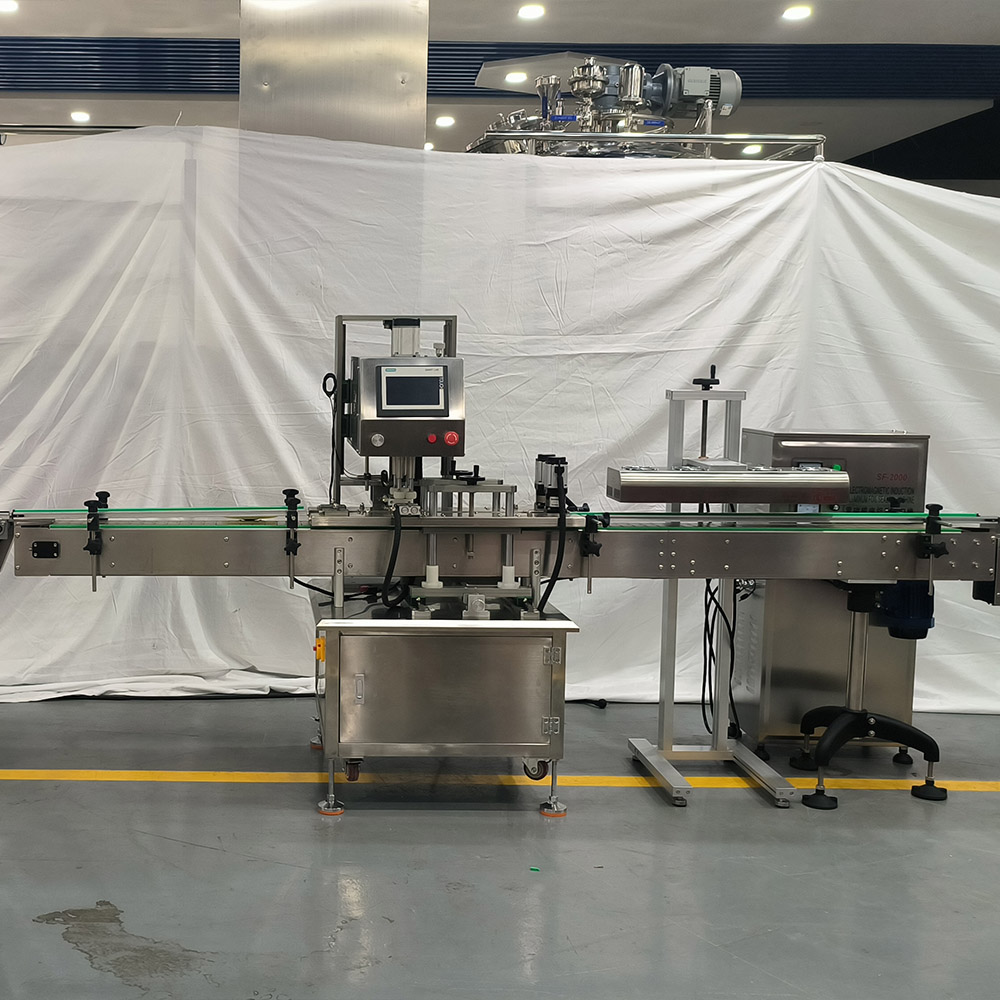
The integration of a liquid filling machine with bottle cappers and labelers creates a seamless production flow for creams, lotions and liquid cosmetics, improving throughput, consistency and regulatory compliance. This summary is optimized for search and geographic indexing to help manufacturers find solutions for automated filling, capping and labeling lines quickly. Even in well-integrated lines, unexpected issues can arise, so understanding troubleshooting common issues with liquid filling machines helps minimize downtime and protect overall equipment effectiveness.
Optimizing Cosmetic Production Lines with Combined Filling, Capping & Labeling Systems
Why integration matters for cosmetic manufacturers
Integrated lines reduce manual handling, lower contamination risk and standardize product output. A properly configured line that combines an automatic filling machine, bottle cappers and labelers reduces cycle time and labor cost while improving repeatability of fill volumes and seal quality. Modern lines use PLC control and an HMI touchscreen to coordinate conveyors, servo-driven fillers, torque-controlled cappers and precision labelers for synchronized operation.
Core components and roles
The main components in an integrated cosmetic packaging line are:
- Liquid filling machine (piston, peristaltic or servo pump types) — responsible for quantitative filling of creams, lotions, emulsions and liquids.
- Bottle cappers — apply and torque caps reliably, using chuck or spindle capping heads depending on closure design.
- Labelers — apply pressure-sensitive, wrap-around or tamper-evident labels with high accuracy.
Each module must be matched for speed (bottles per minute), container shape and process requirements — e.g., viscous creams require slower fill speeds and specific nozzle geometry to avoid stringing or air inclusion.
Design and Technical Integration: Key Considerations
Matching throughput and mechanical interface
To avoid bottlenecks, match the throughput rating of the liquid filling machine with the cappers and labelers. For example, a rotary high-speed filler designed for 200–600 bpm (bottles per minute) must be paired with a rotary capping system and a high-speed wrap-around labeler. Inline piston fillers and intermittent rotary fillers are more common for small-to-medium cosmetic producers and are easier to synchronize.
Control systems and communication
Integrated lines rely on a centralized PLC that coordinates start/stop, speed, and fault-handling across modules. A user-friendly HMI touchscreen allows quick parameter changes (fill volume, capping torque, label offset) and recipe storage for multiple SKUs. Standard industrial communication protocols (EtherNet/IP, Modbus TCP) let the automatic filling machine communicate with bottle cappers and labelers for sequence control and traceability.
Sanitation, materials and regulatory compliance
For creams and lotions, contact parts made of 316L/304 stainless steel and sanitary fittings are essential. Construction compliant with GMP reduces contamination risk and simplifies cleaning. Refer to Good Manufacturing Practice guidelines for cosmetics: Good Manufacturing Practice (GMP) and pharmaceutical manufacturing guidance from the U.S. FDA for regulatory context.
Choosing the Right Liquid Filling Machine for Integration
Filler types and their suitability
Common filler technologies and their typical use cases:
- Piston fillers — ideal for high-viscosity creams and lotions, offering accurate quantitative fills and easy CIP (clean-in-place) when designed for sanitary use.
- Servo pump (peristaltic or diaphragm) fillers — provide gentle handling for shear-sensitive emulsions and precise control for low- to medium-viscosity liquids.
- Rotary fillers — best for high-speed operations with consistent container shapes.
The product Automatic Filling Machine Quantitative Liquid Bottle Filling Machine High-precision cream and lotion filling machine is designed to handle liquids, emulsions and pastes with high precision and is compatible with various container materials including glass and PET.
Key performance and validation metrics
When integrating, focus on:
- Fill accuracy and repeatability (+/- tolerance)
- Cycle time and OEE (Overall Equipment Effectiveness)
- Changeover time between SKUs
- Cleanability and suitability for CIP/SIP
Acceptance testing should include process capability (Cp/Cpk) for fill volumes, torque profile verification for caps, and label placement accuracy testing.
Product excerpt and capabilities
The automatic filling machine integrates automated conveying, precision filling, and intelligent control for packaging creams, lotions, and liquids. Suitable for a variety of containers, including glass and PET bottles, it can fill liquids, emulsions, and pastes with high precision.
Constructed with 316L/304 stainless steel contact components and compliant with GMP standards, it features a touchscreen interface for quick parameter adjustment and completes the entire process without manual intervention. Widely used in the cosmetics, food, daily chemical, pharmaceutical, and chemical industries, it helps companies reduce costs, increase efficiency, and ensure product standardization.
Practical Integration: Mechanical, Electrical and Process Steps
Conveyor alignment and mechanical synchronization
Precise conveyor indexing and changeover parts (format plates, guide rails) are essential for reliable product transfer between the filler, capping station and labeler. Tolerance stacking must be considered — e.g., bottle height, diameter variation and cap geometry — to prevent jams. Use photoeye sensors and timing screws to maintain orientation for label application and capping chuck engagement.
Electrical integration and safety
Standard practice is to interlock module E-stops and fault signals into the central PLC. Safety light curtains, guarded access points and defined lockout/tagout procedures must be implemented. All electrical components should meet the relevant regional safety regulations (e.g., CE marking in Europe, UL in North America).
Inspection and inline quality controls
Integration often includes inline inspection systems: fill level detection, cap presence/torque verification, and label verification cameras. Reject stations must be synchronized to remove nonconforming products without stopping the entire line. Traceability can be achieved by linking batch codes and timestamps from the filler to the labeling and ERP systems.
Comparison: Standalone vs Integrated Lines
| Metric | Standalone Modules | Integrated Line |
|---|---|---|
| Throughput | Dependent on bottleneck; moderate | Optimized and balanced; higher |
| Footprint | Larger (separate spacings) | Smaller, more compact layout |
| Labor | Higher manual handling | Lower; automated transfer |
| Changeover | May require manual re-sync | Faster with recipe-based PLC |
| Initial cost | Lower per module | Higher capex but faster ROI |
Brand Advantages and Implementation Roadmap
Why choose a trusted supplier
A supplier experienced in cosmetic filling lines brings a tested product design, validated sanitary construction (316L/304 stainless steel contact parts) and integrated software for PLC and HMI control. Look for vendors that provide FAT (Factory Acceptance Testing), SAT (Site Acceptance Testing) and documented GMP-compliant build records.
Typical project phases
- Requirement analysis and SKU profiling (viscosity, container type, throughput)
- Line layout and equipment selection (filler model, capping technology, labeler type)
- Factory Acceptance Testing and FAT reports
- Installation, commissioning and process validation
- Operator training and maintenance handover
Evidence and resources
Packaging machinery principles are well described by industry guides; for general background see Packaging machine — Wikipedia. For regulatory aspects, consult GMP guidance: GMP — Wikipedia and the U.S. FDA drug manufacturing resources. These resources help frame qualification and validation expectations when commissioning an integrated line.
FAQ — Frequently Asked Questions
Q: Can the Automatic Filling Machine Quantitative Liquid Bottle Filling Machine High-precision cream and lotion filling machine be integrated with our existing cappers and labelers?
A: In most cases, yes. Integration requires assessing conveyor pitch, line speed, electrical compatibility (PLC and I/O) and mechanical interfaces. Our integration team performs a site survey and interfaces through standard protocols such as EtherNet/IP or Modbus.
Q: What level of fill accuracy can I expect for lotions and creams?
A: High-precision piston or servo pump-based liquid filling machines typically achieve fill accuracies within +/-0.5% to +/-2% depending on product viscosity and environmental variables. Process capability studies (Cp/Cpk) during FAT demonstrate achievable tolerances.
Q: How do you ensure GMP compliance?
A: Use of 316L/304 stainless steel contact parts, sanitary design, smooth surface finishes, and documented cleaning and maintenance procedures support GMP compliance. We provide material certificates and validation documentation to assist with audits.
Q: What is the expected ROI for integrating filler, capper and labeler?
A: ROI depends on current labor costs, throughput increase and waste reduction. Integrated lines typically reduce labor by 30–70% and improve yield and consistency, often delivering payback within 12–36 months for medium-volume producers. A detailed ROI model can be provided based on your line parameters.
Q: Can the line handle multiple container sizes and SKUs?
A: Yes — with quick-change format parts, recipe-driven PLCs and adaptable tooling, an integrated line can handle multiple SKUs. Changeover times vary; modular designs reduce downtime for frequent SKU changes.
If you have more questions or want a line quote, contact our sales engineers or view the product details: Automatic Filling Machine Quantitative Liquid Bottle Filling Machine High-precision cream and lotion filling machine — Product Page. For direct assistance, contact our team to schedule a site survey and consultation.
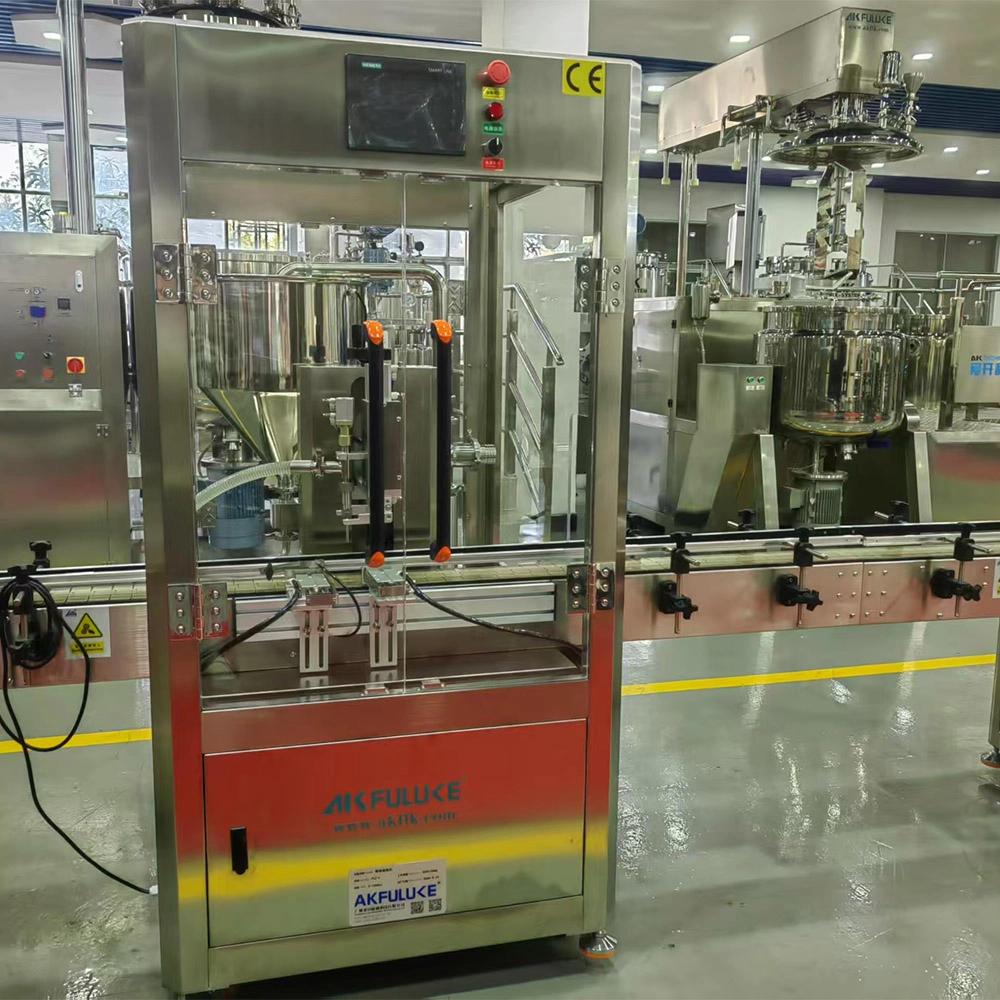
Speed vs Accuracy: Balancing Throughput in Filling Lines
Top 10 vacuum emulsifying machine Manufacturers and Supplier Brands
Top 10 reverse osmosis water treatment systems Manufacturers and Supplier Brands
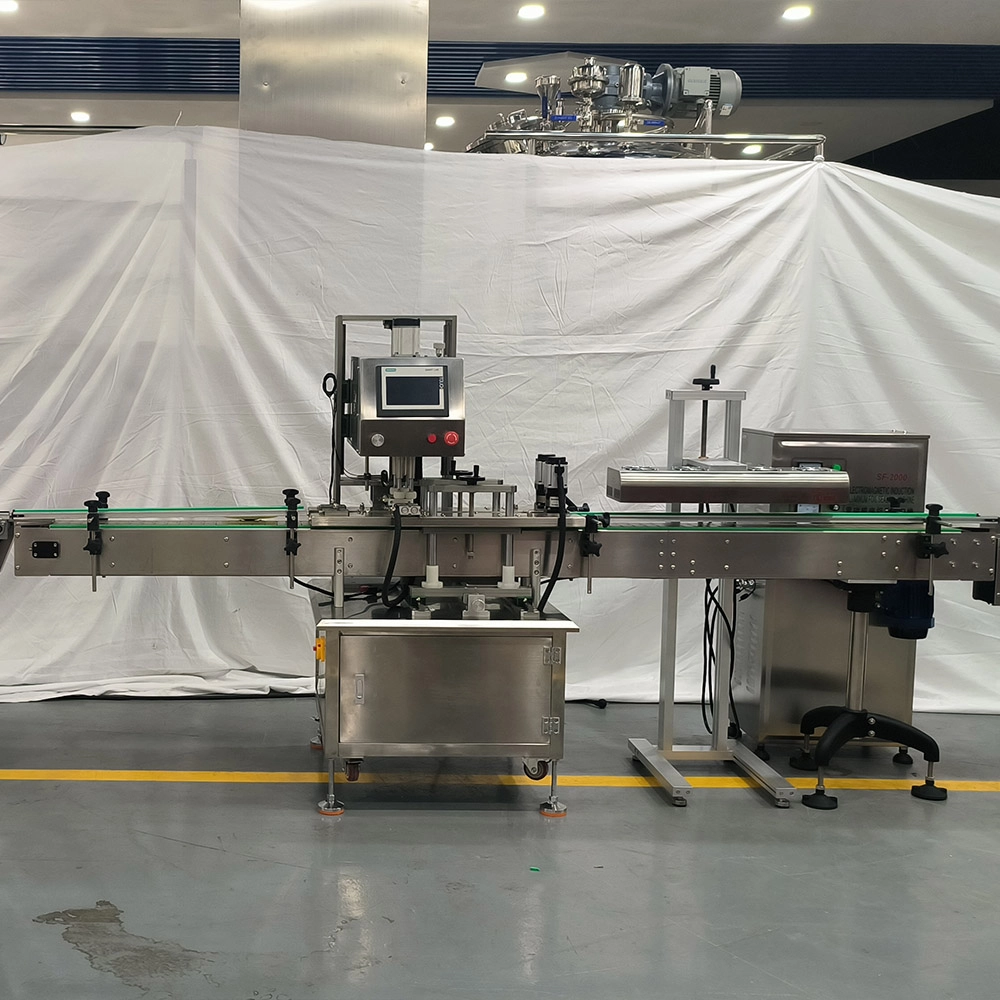
Hygienic Design Principles for Cosmetic Filling Machines
The Flip Cover Liquid Wash Mixing Homogenizing Tank
Can you make a design for us?
Yes, we can, we provide not only products, but also solutions and designs.
Who are we?
Our headquarters is located in Guangzhou, Guangdong, China, and our factory is located in Yangzhou, Jiangsu. Our products are sold all over the world. We have approximately 50 employees in our company and factory.
Perfume Freezing Filter Making Machine
If the liquid is still turbid after filtration, what could be the cause?
Common causes include: ① Insufficient freezing (low temperature or too short a freezing time); ② Clogged filter element or overly large pore size; ③ Uneven material flow leading to insufficient localized condensation. Solution: Extend the freezing time, replace the 0.1μm precision filter element, check the pipes for blockage, and optimize flow control.
Automatic Filling Machine
We want to fill products in multiple volumes (e.g., 100ml, 250ml, 500ml). Do we need to purchase multiple filling machines?
No, most automatic filling machines support multiple volume adjustments. When purchasing, please confirm the machine's "volume adjustment range" (e.g., 50ml-2000ml) to ensure it covers your desired specifications. Changing volumes simply requires modifying the fill volume parameters on the touchscreen. If the volume difference is significant (e.g., from 100ml to 1000ml), minor adjustments to the filling head height or feed rate may be necessary, without replacing the machine.
Sealed Homogenizing Mixing Tank
Can you customize the machine?
Of course, we provide customized services according to customer needs.
You May Also Like
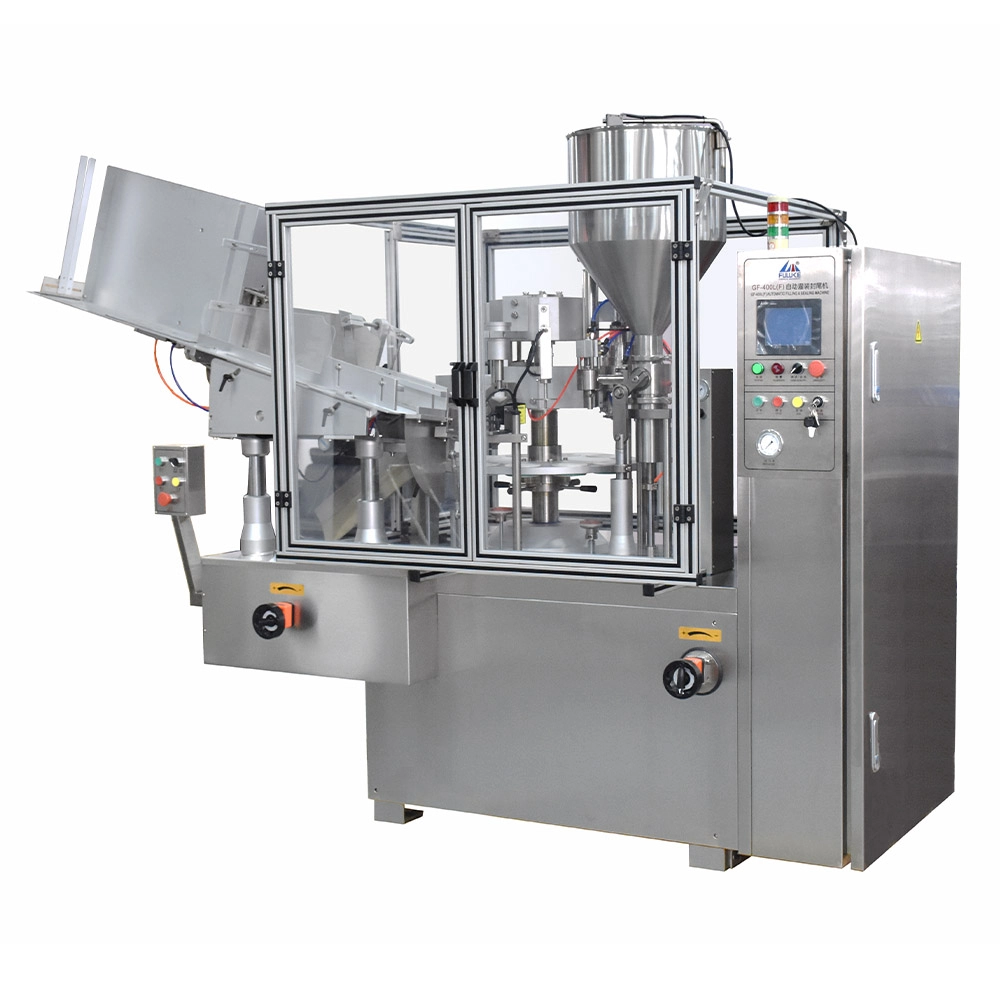
Automatic Tube Filling and Sealing Machine Toothpaste Sunscreen and Facial Cleanser Filling and Sealing Machine for Plastic and Aluminum-plastic Tube
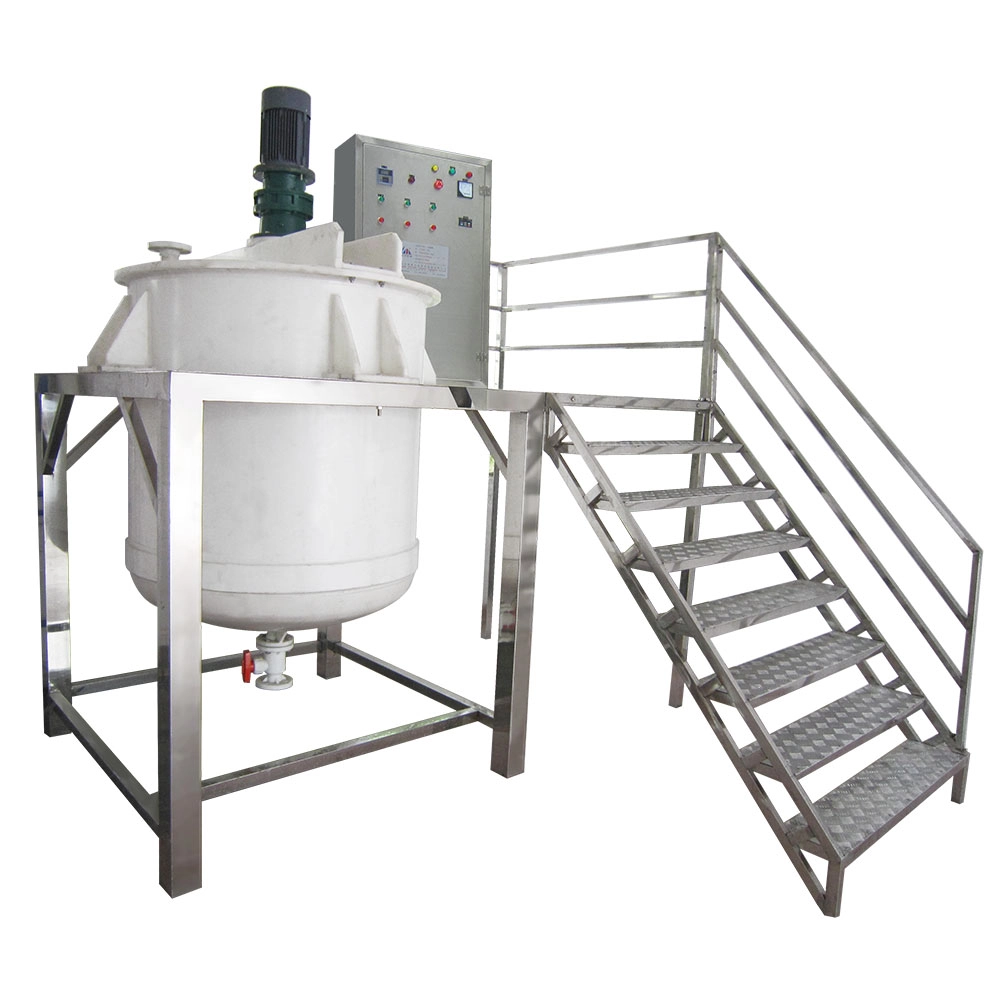
Polypropylene PP Mixing Tank Anti-Corrosion Mixer Reaction Kettle with Agitator Chemical Mixing Vessel
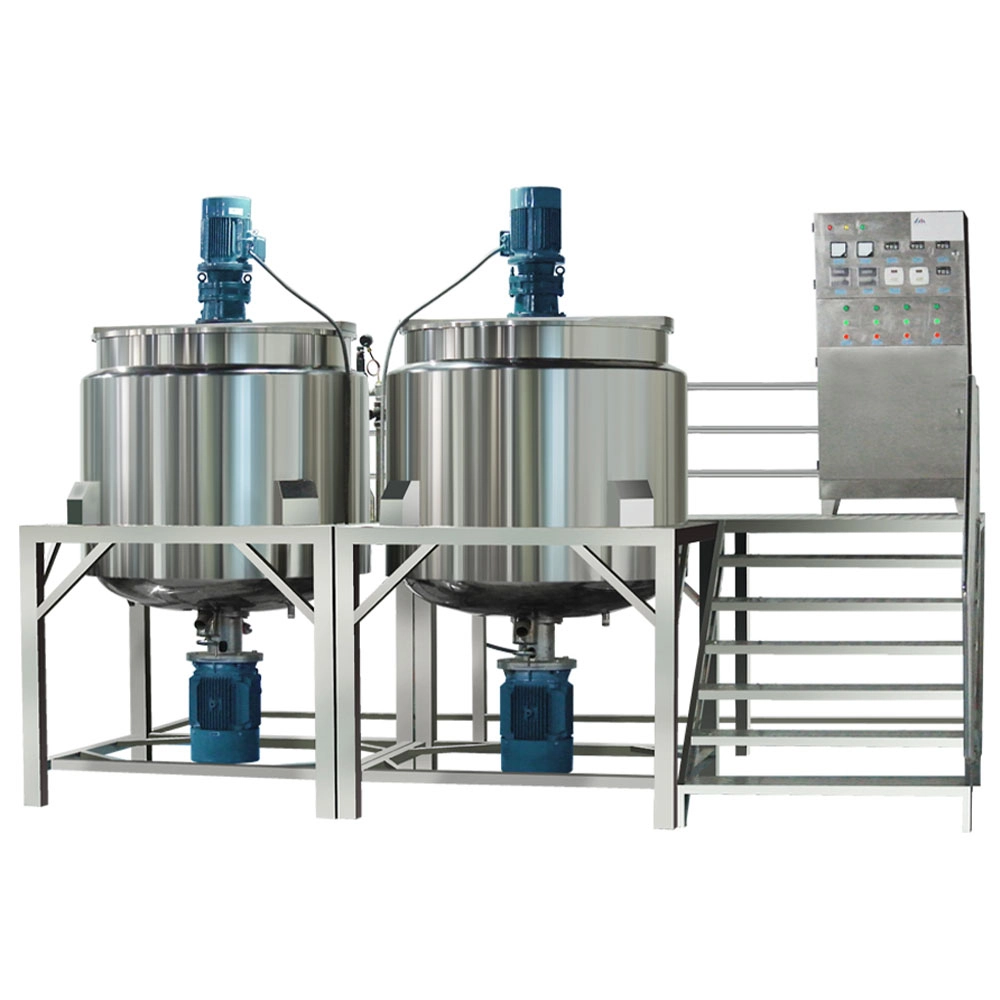
Flip Cover Multi-function Liquid Wash Mixing Tank Blender Liquid Detergent Mixer Homogenization Stirring Tank
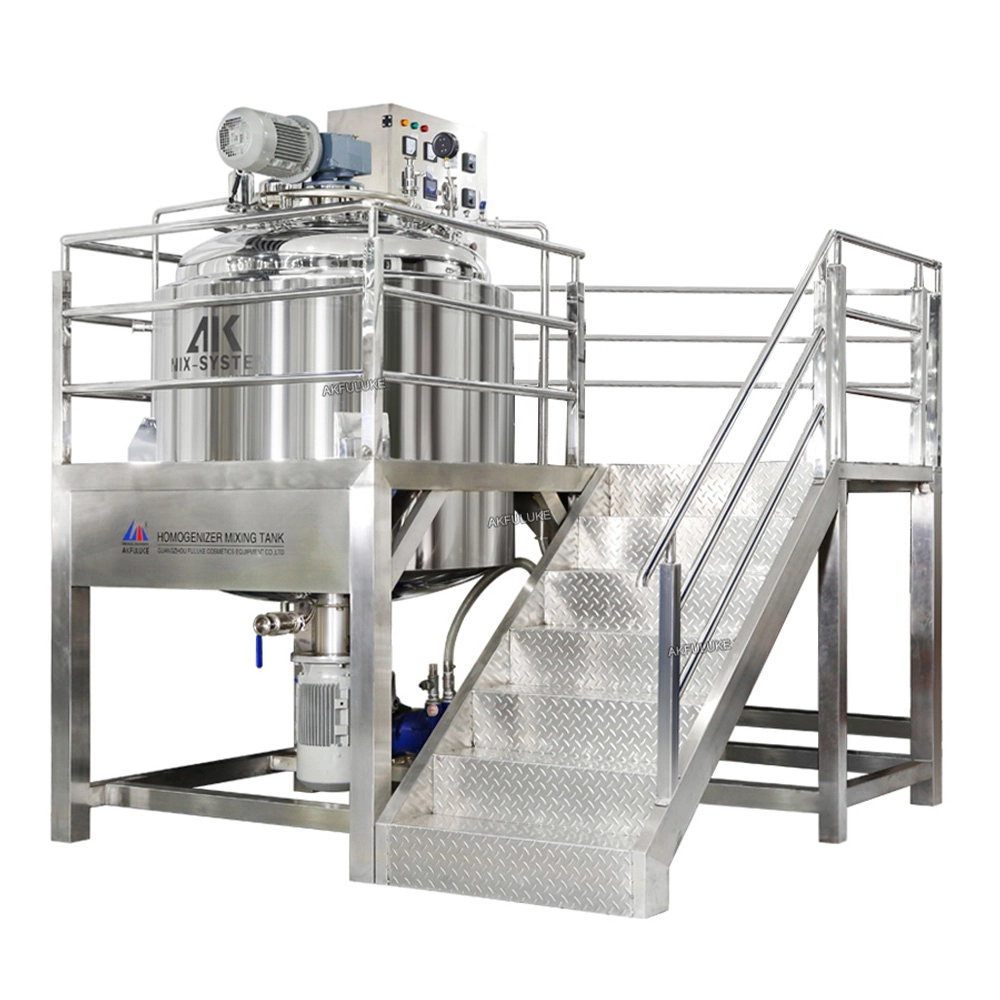
Stainless Steel Mixer Liquid Mixing tank with Agitator Homogenizing Mixing tank Vacuum Sealed Mixer Machine
Get in touch with FULUKE
If you have any comments or good suggestions, please leave us a message, later our professional staff will contact you as soon as possible.

A leading manufacturer specializing in advanced machinery and complete production lines for the cosmetics, food, pharmaceutical, and chemical industries worldwide.
Contact FULUKE
Facebook
Instagram
YouTube