
Integrating Mixing Tanks into Automated Production Lines
- Integrating Mixing Tanks into Automated Production Lines
- Why the right mixing tank matters for automated production
- Product overview: Stainless Steel Mixer Liquid Mixing tank with Agitator Homogenizing Mixing tank Vacuum Sealed Mixer Machine
- Key integration considerations for automated lines
- Mechanical and process layout: positioning the mixing tank
- Control integration: PLC, recipe management and data traceability
- Example: recipe flow for a cosmetic cream
- Sanitation, cleaning and compliance (CIP and validation)
- Hygienic design and materials: why stainless steel is the standard
- Performance attributes: homogenization, vacuum defoaming, agitation and temperature control
- Throughput and ROI: balancing capacity and flexibility
- Automation challenges and mitigation strategies
- Case study: reducing bubble defects in a cosmetic cream line
- Validation, documentation and regulatory compliance
- Cost considerations and measurable KPIs
- Brand advantages: why choose our mixing tank solution
- Implementation checklist for integrating a mixing tank
- Frequently Asked Questions (FAQ)
- Q: What is the main advantage of a vacuum-sealed homogenizing mixing tank?
- Q: Can the mixing tank handle high-viscosity formulations?
- Q: What automation protocols are supported?
- Q: How is cleaning and validation managed?
- Q: How do I choose between a central large tank and multiple smaller tanks?
- Contact us / View product
- Authoritative references and resources
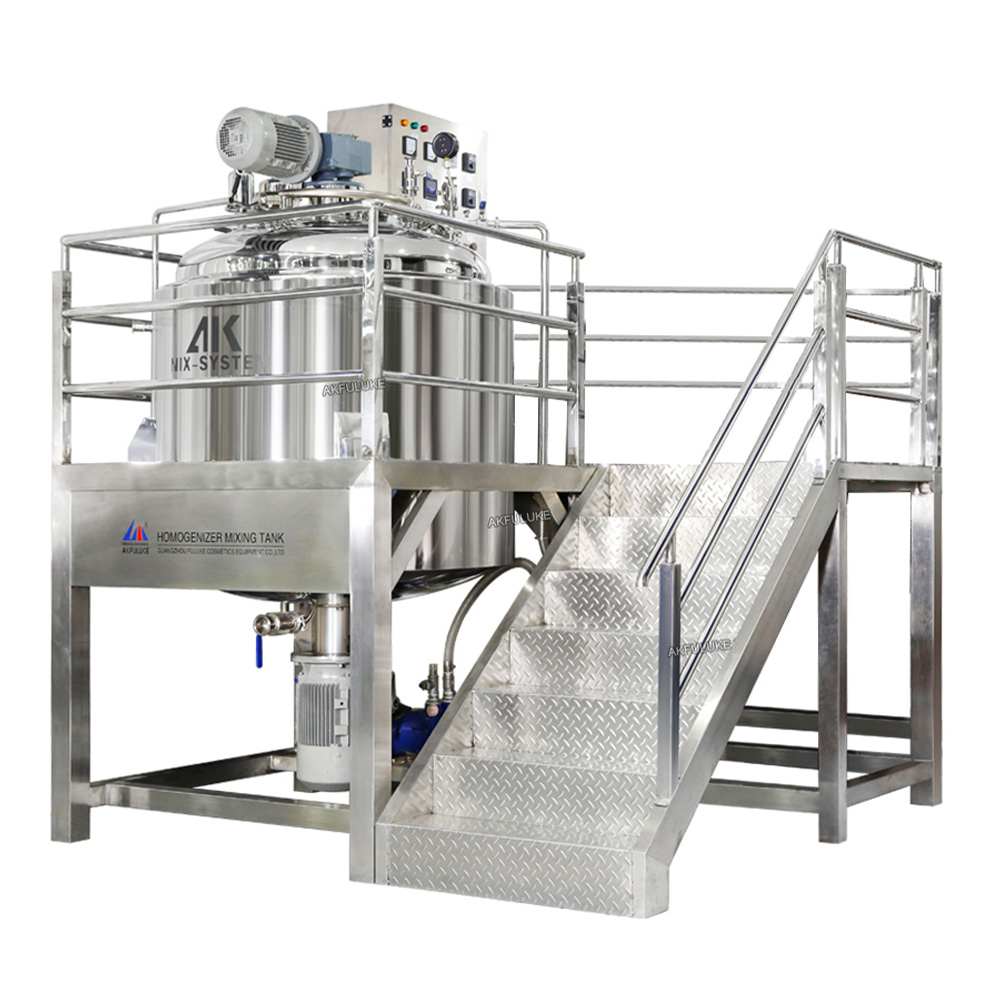
Integrating Mixing Tanks into Automated Production Lines
Why the right mixing tank matters for automated production
Integrating a high-performance mixing tank into an automated production line is not just a matter of physical placement — it affects product quality, throughput, regulatory compliance and overall production efficiency. A well-chosen mixing tank (mixing tank) that supports vacuum defoaming, homogenization, efficient stirring and precise temperature control removes variability from formulations and enables consistent, scalable output, which is essential for modern cosmetics, pharmaceutical and food manufacturers.
Product overview: Stainless Steel Mixer Liquid Mixing tank with Agitator Homogenizing Mixing tank Vacuum Sealed Mixer Machine
The Stainless Steel Mixer Liquid Mixing tank with Agitator Homogenizing Mixing tank Vacuum Sealed Mixer Machine is designed for industrial material handling and process integration. Core features include vacuum defoaming, high-speed homogenization, efficient agitation and accurate temperature control—making it suitable for producing creams, lotions, gels, ointments, sauces and other multi-phase products.
The Sealed Homogenizing mixing tank is an industrial-grade material handling equipment that integrates four core functions: vacuum defoaming, high-speed homogenization, efficient stirring, and precise temperature control. It is widely used in the cosmetics, pharmaceutical, food, chemical and other industries.
It is specially designed to solve the mixing, emulsification, homogenization and degassing needs of high-viscosity, multi-phase (solid-liquid, liquid-liquid) materials. It can produce delicate, stable, bubble-free creams, lotions, gels, ointments, sauces and other products.
Key integration considerations for automated lines
When planning integration of a mixing tank into an automated line, focus on mechanical, electrical and software interfaces. Ensure the mixing tank supports the following:
- Standardized mounting points and footprint for conveyor, filler, and transfer equipment.
- Electrical compatibility (voltage, frequency, hazardous area ratings where relevant).
- Communication protocols such as OPC-UA, Modbus, Profibus or Ethernet/IP to connect with PLCs and SCADA systems.
- Recipe control and batch traceability for quality management and regulatory compliance.
- Clean-in-place (CIP) or easy-to-integrate cleanability features to minimize downtime.
Mechanical and process layout: positioning the mixing tank
Correct physical placement reduces transfer steps and contamination risk. Typical strategies include:
- Centralized mixing hub: place one or several central mixing tanks feeding multiple downstream fillers via sterile or closed transfer lines.
- Decentralized station mixing: place smaller mixing tanks close to filling stations for rapid changeovers and shorter residence times.
- Gravity-assisted vs. pump-assisted transfer: design the tank outlet elevation and nozzle configuration based on viscosity and particle content.
When using the Stainless Steel Mixer Liquid Mixing tank with Agitator Homogenizing Mixing tank Vacuum Sealed Mixer Machine, leverage its vacuum-sealed discharge and homogenizer to reduce entrained air during transfer, which helps prevent bubbles in sensitive end-products.
Control integration: PLC, recipe management and data traceability
Modern automated lines require predictable control and digital traceability. Key control elements for the mixing tank include:
- Recipe-driven setpoints for speed, homogenization time, vacuum level, temperature profiles and agitation sequences.
- Interfaces for PLC/SCADA via OPC-UA or Modbus to allow centralized orchestration of multiple tanks and downstream equipment.
- Batch log export (CSV, XML) and audit trails for GMP compliance and QA investigations.
- Alarms and interlocks to protect product quality and operator safety (overpressure protection, motor overload, vacuum loss detection).
Deploying the mixing tank with these controls reduces human intervention, cuts errors, and accelerates batch release.
Example: recipe flow for a cosmetic cream
A typical automated recipe using the described mixing tank:
- Load water phase ingredients into tank via controlled transfer valve.
- Heat to target temperature using jacket or coil; hold until dissolved.
- Start low-shear agitation, add oil phase ingredients slowly.
- Engage high-speed homogenizer for emulsification and droplet-size reduction.
- Apply vacuum defoaming while homogenizing to eliminate bubbles.
- Cool under controlled agitation to crystallize or stabilize emulsion.
- Discharge via vacuum-sealed outlet to filler.
Sanitation, cleaning and compliance (CIP and validation)
Hygiene and cleanability are critical in cosmetics and pharma. For automated lines, choose mixing tanks that support CIP and are designed with sanitary finishes:
- Surface finish: mirror-polished internal surfaces (e.g., 2B/BA or better) reduce microbial niches.
- Sanitary fittings and tri-clamp connections allow quick disassembly where needed.
- CIP spray balls or integrated cleaning nozzles ensure coverage; design recipes for cleaning cycles (temperature, caustic concentration, time).
- Validation: document proprietary cleaning validation protocols (ATP swabs, TOC, microbiological testing) and include them in the automation for scheduled CIP cycles.
The vacuum-sealed design in the featured machine reduces contamination risk during discharge and is easier to validate for closed-system processing.
Hygienic design and materials: why stainless steel is the standard
Stainless steel (commonly 304 or 316L) is the industry standard for mixing tanks used in cosmetics, food and pharmaceuticals because it offers:
- Corrosion resistance to water and common formulation components.
- High strength and long service life under mechanical agitation.
- Polishable surfaces for hygienic cleaning and inspection.
The Stainless Steel Mixer Liquid Mixing tank with Agitator Homogenizing Mixing tank Vacuum Sealed Mixer Machine is purpose-built from stainless steel to meet these requirements and maintain product purity and regulatory compliance.
Performance attributes: homogenization, vacuum defoaming, agitation and temperature control
For multi-phase and high-viscosity products, four functions are essential:
- High-speed homogenization: reduces droplet size to stabilize emulsions and improve texture and sensory attributes.
- Efficient agitation: ensures uniform dispersion of solids and prevents localized overheating or settling.
- Vacuum defoaming: removes entrapped air to prevent bubbles that can cause visible defects or oxidation.
- Precise temperature control: controls phase transitions, viscosity and reaction rates.
Combining these in one sealed unit simplifies process control and shortens cycle times.
Throughput and ROI: balancing capacity and flexibility
When integrating mixing tanks, balance capacity against flexibility. Larger tanks increase batch size but reduce frequency and flexibility for rapid product changes. Multiple smaller mixing tanks fitted into an automated line permit parallel production and easier scale-up by replication.
| Factor | Large Central Tank | Multiple Small Tanks |
|---|---|---|
| Flexibility | Lower | High |
| Changeover Time | Long | Short |
| Capital Cost per Unit Throughput | Lower | Higher |
| Maintenance Impact | Higher risk to whole line | Localized impact |
Automation challenges and mitigation strategies
Common integration challenges and recommended mitigations:
- Inconsistent ingredient feed: use gravimetric feeders or mass-flow meters for accurate dosing.
- Communication mismatches: standardize on OPC-UA or widely supported protocols and test thoroughly in factory acceptance testing (FAT).
- Cleaning downtime: design for CIP with automated cycles scheduled into production planning.
- Scale-up unpredictability: run pilot-scale trials and match shear profiles (tip speed, energy per volume) rather than only RPM.
Case study: reducing bubble defects in a cosmetic cream line
A mid-size cosmetics manufacturer integrated the featured vacuum-sealed homogenizing mixing tank into an automated filling line. Challenges included frequent bubble-related rejects and inconsistent droplet size. After integration and recipe control of vacuum level and homogenization duration, reject rates fell by over 70% and batch-to-batch consistency improved, enabling automated in-line filling without manual deaeration.
Validation, documentation and regulatory compliance
For cosmetics and pharmaceutical production, ensure the mixing tank system provides documentation to support regulatory compliance including:
- Material certifications for wetted parts (e.g., 316L stainless steel certificates).
- Factory Acceptance Test (FAT) and Site Acceptance Test (SAT) reports demonstrating control integration and performance.
- SOPs for operation, cleaning, and maintenance; batch records and electronic logs for traceability.
Closed, vacuum-sealed homogenizing tanks simplify validation by reducing contamination vectors and enabling easier repeatability of critical process parameters.
Cost considerations and measurable KPIs
Key performance indicators to track after integration:
- Yield per batch and reduction in rework/ rejects.
- Cycle time from ingredient load to discharge.
- CIP downtime and cleaning chemical consumption.
- Energy consumption per kg of finished product.
Calculate ROI by comparing reduced rejects, labor savings from automation, faster throughput and lower cleaning times against initial capital expenditure.
Brand advantages: why choose our mixing tank solution
When selecting equipment, consider manufacturer support and design maturity. Our Stainless Steel Mixer Liquid Mixing tank with Agitator Homogenizing Mixing tank Vacuum Sealed Mixer Machine offers:
- Integrated multi-function design (vacuum defoaming, homogenization, agitation, temperature control) to reduce installation complexity.
- Sanitary stainless-steel construction suitable for cosmetics, pharma and food.
- Standardized control interfaces for smooth PLC/SCADA integration and recipe management.
- Options for CIP and hygienic fittings to simplify validation and cleaning.
- Scalable solutions and documentation (FAT/SAT, material certificates) to accelerate qualification and regulatory compliance.
Implementation checklist for integrating a mixing tank
Use this checklist to streamline integration:
- Define throughput, batch sizes and product viscosities.
- Confirm mechanical footprint, mounting and utilities (power, steam, chilled water, vacuum).
- Specify control protocols and recipe requirements (OPC-UA, Modbus, etc.).
- Plan CIP routes and cleaning validation approach.
- Schedule FAT and SAT, include traceability and documentation deliverables.
- Train operators and maintenance teams and capture SOPs in the automation system.
Frequently Asked Questions (FAQ)
Q: What is the main advantage of a vacuum-sealed homogenizing mixing tank?
A: Vacuum sealing removes entrained air during mixing and homogenization, reducing bubble defects and oxidation, improving product stability and appearance. It also enables closed transfer to fillers to limit contamination.
Q: Can the mixing tank handle high-viscosity formulations?
A: Yes. The Stainless Steel Mixer Liquid Mixing tank with Agitator Homogenizing Mixing tank Vacuum Sealed Mixer Machine is designed to handle high-viscosity and multi-phase materials through robust agitation and powerful homogenization components.
Q: What automation protocols are supported?
A: Typical options include OPC-UA, Modbus TCP, Profibus and Ethernet/IP. Confirm specific protocol support with your supplier to ensure compatibility with existing PLC/SCADA systems.
Q: How is cleaning and validation managed?
A: The tank can be equipped with CIP spray devices and sanitary fittings. Cleaning validation includes defined CIP recipes, ATP/TOC testing and microbiological monitoring as required by your regulatory environment.
Q: How do I choose between a central large tank and multiple smaller tanks?
A: Choose based on product mix, changeover frequency and risk tolerance. Multiple smaller tanks provide greater flexibility and redundancy; large tanks provide economies of scale for single high-volume SKUs.
Contact us / View product
Automation efficiency depends on equipment reliability, which makes following a maintenance checklist for stainless steel liquid mixing tanks essential to minimize downtime and extend service life.If you want to evaluate integration of the Stainless Steel Mixer Liquid Mixing tank with Agitator Homogenizing Mixing tank Vacuum Sealed Mixer Machine into your automated line, contact our sales engineering team for a consultation, FAT demonstration, and custom integration plan. Click to request a quote or schedule a technical demo — our experts will work with your automation and quality teams to deliver a validated solution.
Authoritative references and resources
For further reading and standards guidance, consult the following sources:
- Homogenizer — Wikipedia: https://en.wikipedia.org/wiki/Homogenizer
- Mixing (process engineering) — Wikipedia: https://en.wikipedia.org/wiki/Mixing_(process_engineering)
- Emulsifier — Wikipedia: https://en.wikipedia.org/wiki/Emulsifier
- Degassing — Wikipedia: https://en.wikipedia.org/wiki/Degassing
- U.S. Food & Drug Administration (FDA) — Cosmetics: https://www.fda.gov/cosmetics
- European Commission — Cosmetics: https://ec.europa.eu/growth/sectors/cosmetics_en
- Cosmetics Europe — The Personal Care Association: https://www.cosmeticseurope.eu/
- American Society of Mechanical Engineers (ASME): https://www.asme.org/
- International Organization for Standardization (ISO): https://www.iso.org/
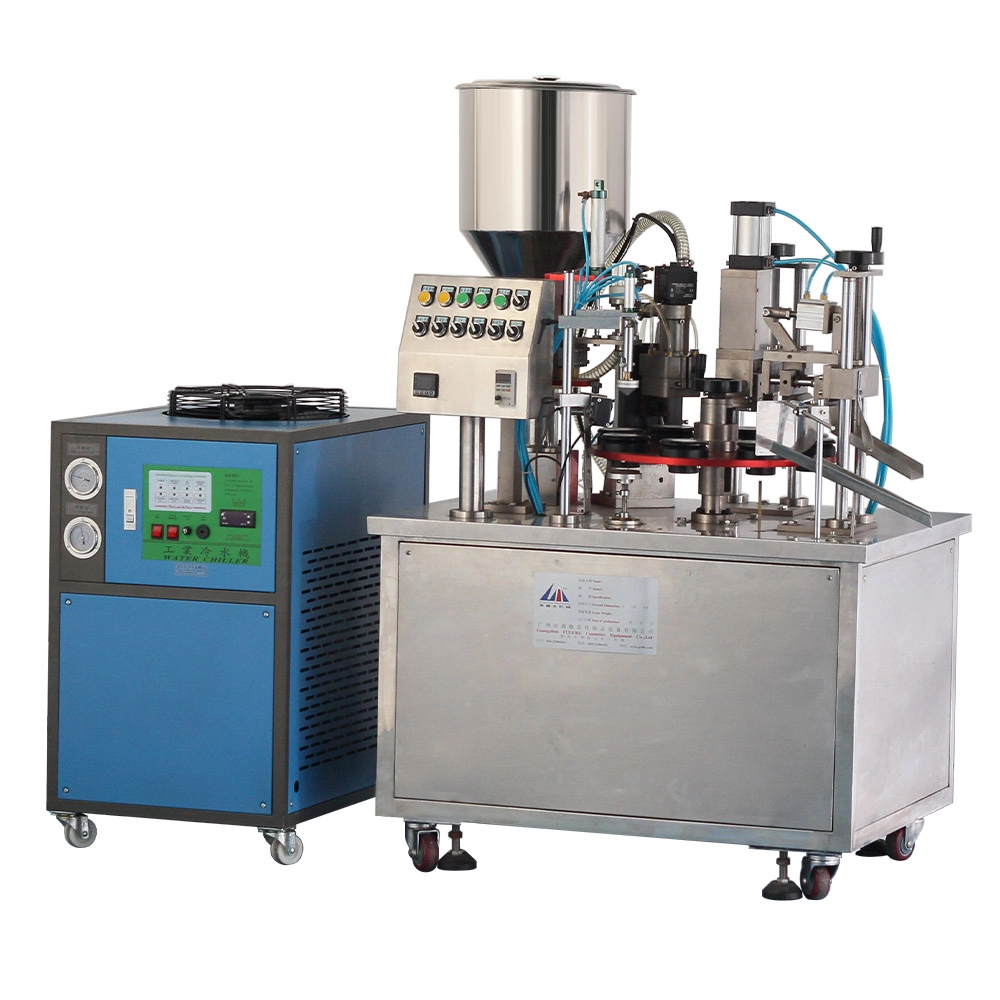
Choosing Servo vs Pneumatic Systems in Tube Filling & Sealing
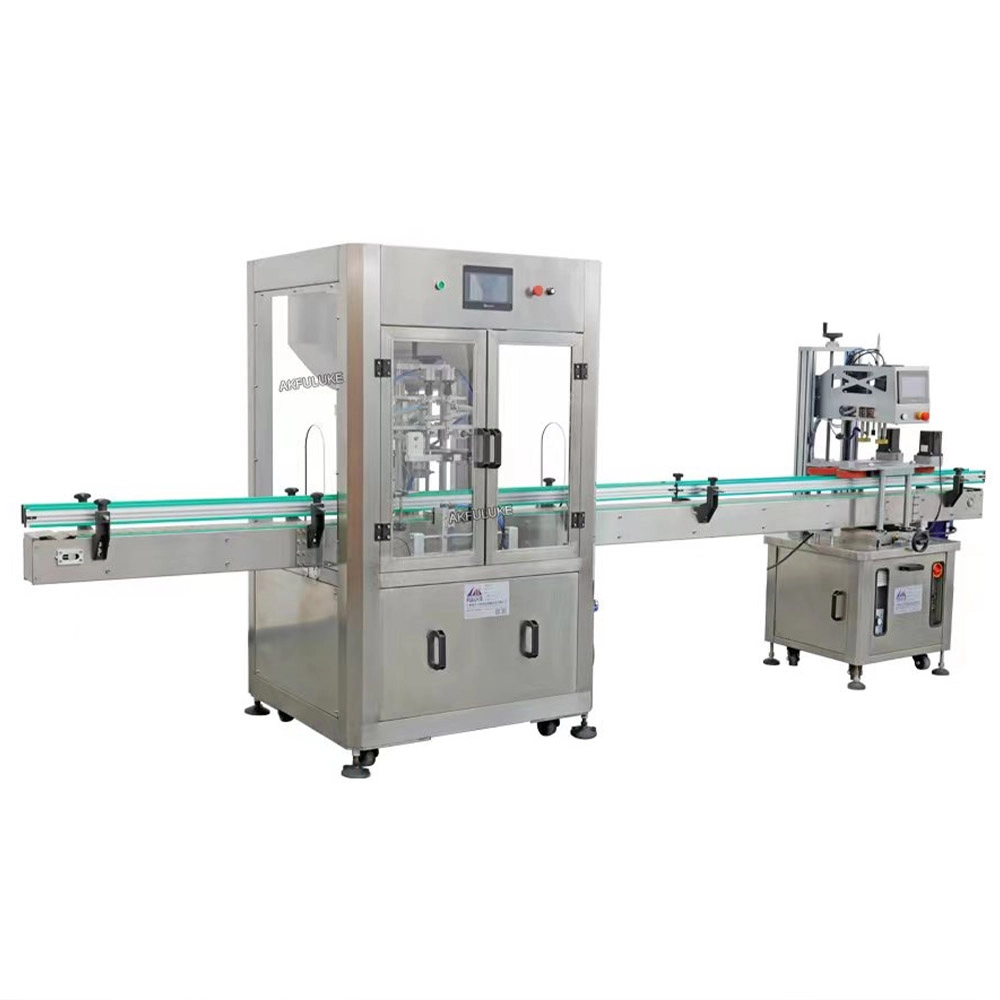
How to Manage Viscosity Variations During Production
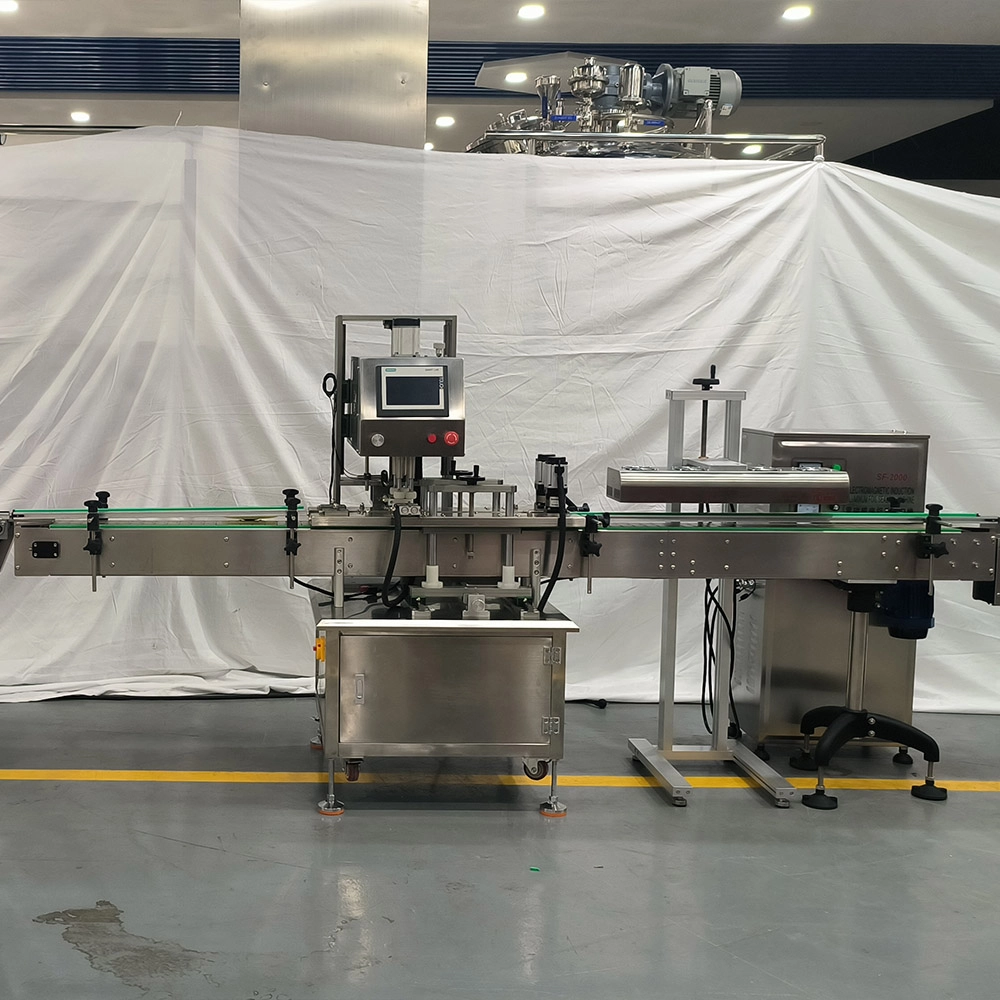
Integrating Filling Machines with Labeling and Capping
Top 10 perfume making equipment Manufacturers and Supplier Brands
Automatic Filling Machine
Can you customize the machine?
Of course, we provide customized services according to customer needs.
Polypropylene PP Mixing Tank
Which mixing pot should I choose between a PP and a stainless steel mixing pot?
When the material is corrosive, a PP mixing pot is more advantageous. Stainless steel (such as 304) has poor resistance to acids and alkalis (easily corroded by hydrochloric acid and sodium hydroxide). For corrosion protection, upgrading to 316L stainless steel is necessary, which costs 2-3 times more than PP. PP, on the other hand, can withstand low- to medium-concentration corrosive media and offers low maintenance (no rust removal required, and low scaling).
When the material is non-corrosive, a stainless steel mixing pot is more advantageous. Stainless steel offers higher temperature resistance (up to 200°C), greater strength (suitable for high-viscosity materials), and a higher hygienic grade (easy to clean aseptically), making it suitable for non-corrosive but demanding applications such as food and pharmaceuticals.
Storage Tank
Can you make a design for us?
Yes, we can, we provide not only products, but also solutions and designs.
Automatic Facial Mask Filling Machine
How many filling nozzles does your facial mask filling machine have?
We have dual-, six-, eight-, and ten-head facial mask filling machines. We can customize the number of filling nozzles to meet your needs.
Perfume Filling Machine
What can you buy from us?
RO Water Treatment、Vacuum Emulsifying Machine、Homogenizer Mixing Tank、Filling and Capping、labeling Machine、Packing Machine、Storage Tank,etc.
You May Also Like
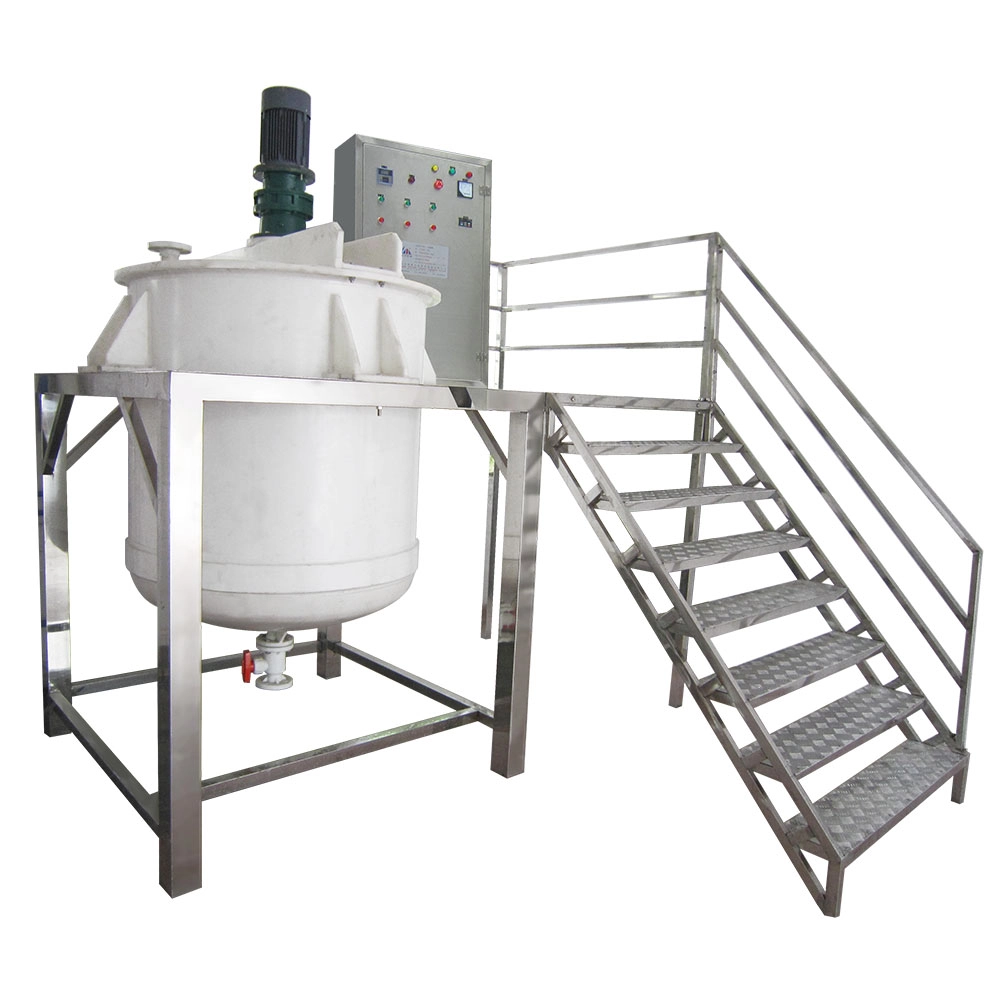
Polypropylene PP Mixing Tank Anti-Corrosion Mixer Reaction Kettle with Agitator Chemical Mixing Vessel
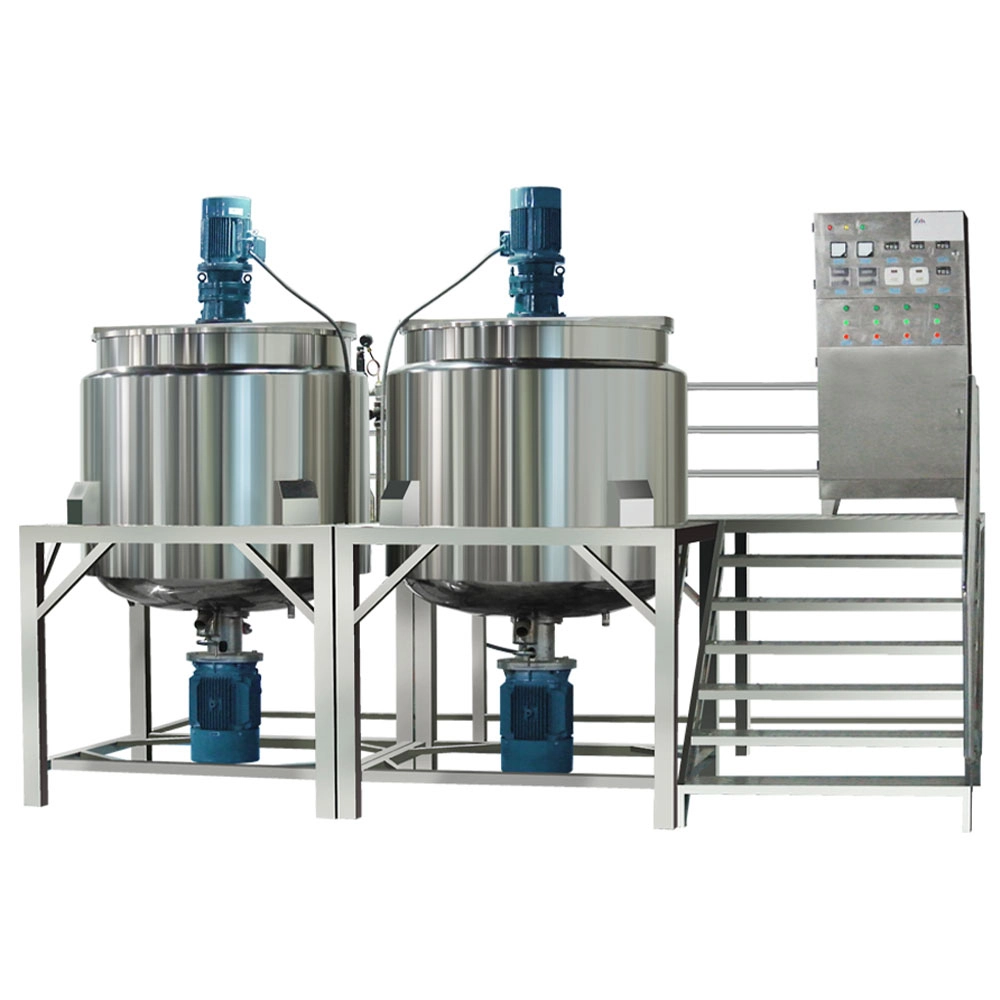
Flip Cover Multi-function Liquid Wash Mixing Tank Blender Liquid Detergent Mixer Homogenization Stirring Tank
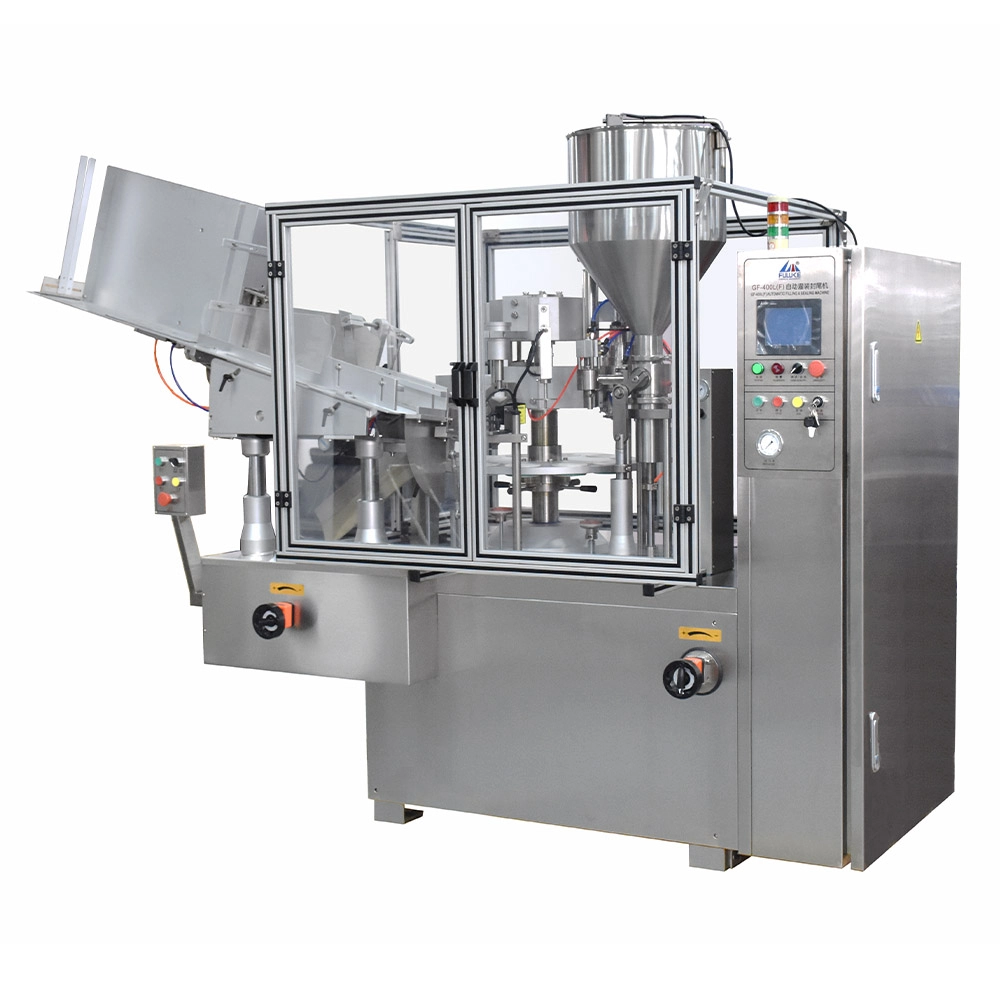
Automatic Tube Filling and Sealing Machine Toothpaste Sunscreen and Facial Cleanser Filling and Sealing Machine for Plastic and Aluminum-plastic Tube
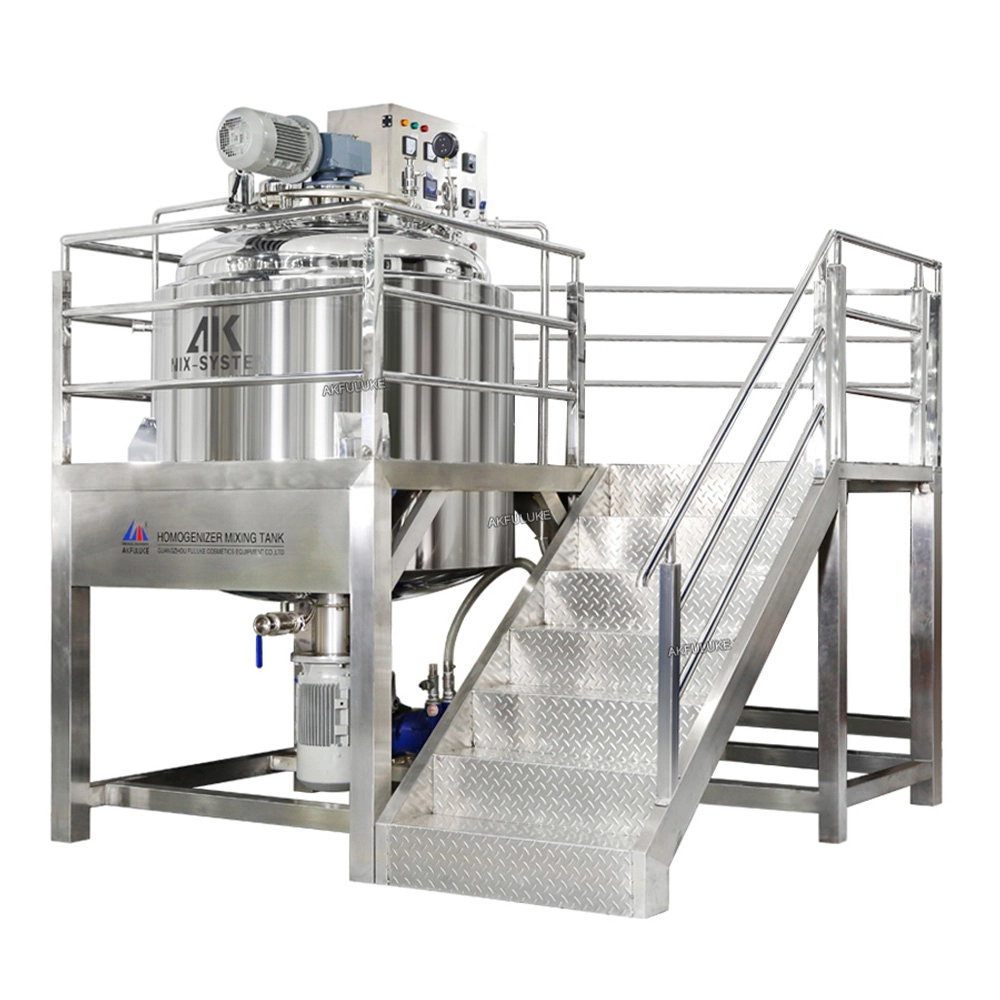
Stainless Steel Mixer Liquid Mixing tank with Agitator Homogenizing Mixing tank Vacuum Sealed Mixer Machine
Get in touch with FULUKE
If you have any comments or good suggestions, please leave us a message, later our professional staff will contact you as soon as possible.

A leading manufacturer specializing in advanced machinery and complete production lines for the cosmetics, food, pharmaceutical, and chemical industries worldwide.
Contact FULUKE
Facebook
Instagram
YouTube