
Material and Surface Finish Standards for Hygienic Mixing Tanks
- Material and Surface Finish Standards for Hygienic Mixing Tanks
- Why material and surface finish matter for a mixing tank
- Common materials for hygienic mixing tanks: stainless steel grades and why they matter
- Surface finish types and standards for mixing tank interiors
- Comparing surface finishes for mixing tank interiors
- Standards and regulatory guidance for hygienic mixing tanks
- Fabrication and welding practices to protect hygienic surfaces of a mixing tank
- Design features that complement hygienic surface finishes in a mixing tank
- Cleaning-in-place (CIP), validation and maintenance for hygienic mixing tanks
- Choosing the right mixing tank: practical guidance for buyers
- Performance expectations and target values for hygienic mixing tanks
- Maintenance considerations to preserve hygienic finishes
- FAQ — Frequently Asked Questions about mixing tank materials and finishes
- Q: What Ra value do I need for cosmetic creams?
- Q: Is electropolishing necessary for all mixing tanks?
- Q: Can I retrofit an existing mixing tank to improve hygiene?
- Q: Which stainless steel grade should I choose for a vacuum-sealed homogenizing mixing tank?
- Q: How often should surface roughness be measured?
- Conclusion and how to proceed
- Authoritative references and further reading
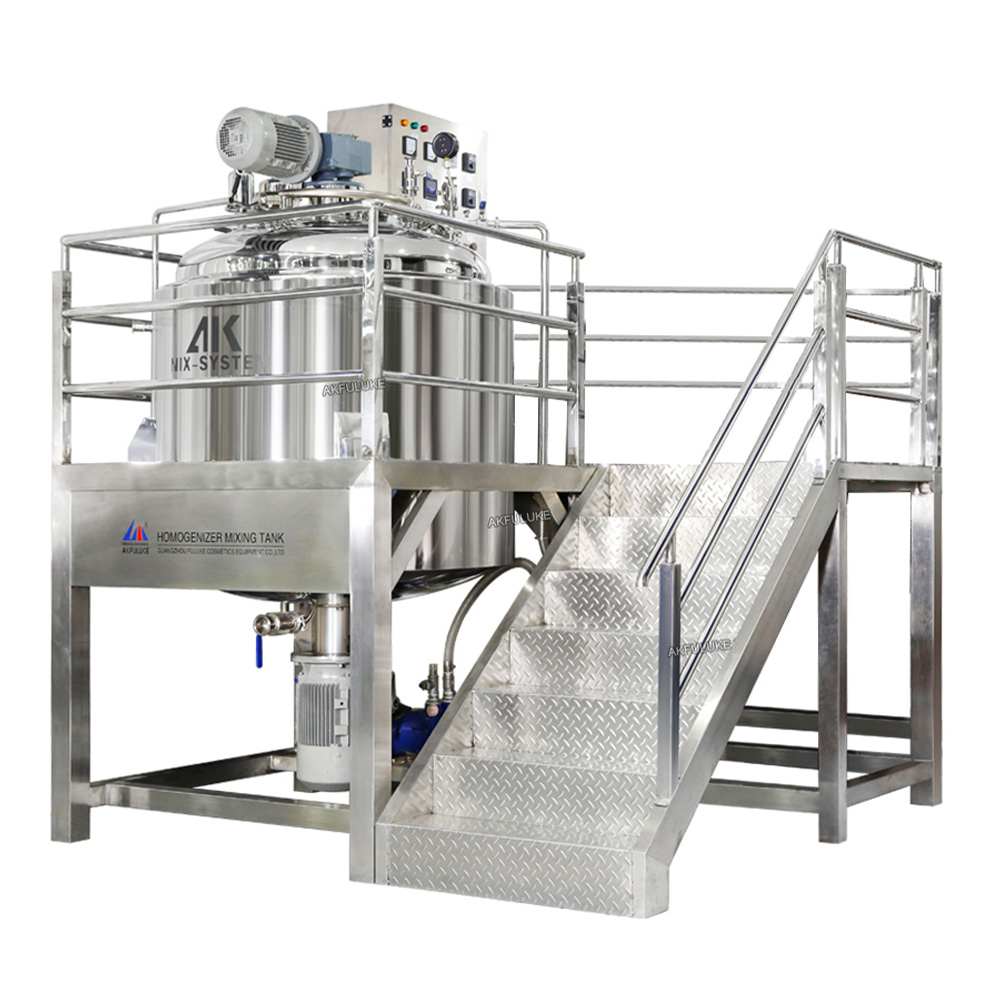
Material and Surface Finish Standards for Hygienic Mixing Tanks
Why material and surface finish matter for a mixing tank
When a mixing tank is used for cosmetics, pharmaceuticals, food or high-purity chemicals, its material and interior surface finish directly affect product quality, safety and process efficiency. A properly selected mixing tank reduces contamination risk, minimizes product loss from adhesion, simplifies cleaning and validation, and extends equipment life. For commercial systems like the Stainless Steel Mixer Liquid Mixing tank with Agitator Homogenizing Mixing tank Vacuum Sealed Mixer Machine, material and finish choices are part of the competitive advantage—delivering bubble-free, stable creams and emulsions while enabling reliable cleaning-in-place (CIP) and regulatory compliance. Once material compliance is confirmed, manufacturers should verify real-world performance through performance testing and validation of homogenizing mixers, ensuring equipment meets process and regulatory expectations.
Common materials for hygienic mixing tanks: stainless steel grades and why they matter
Stainless steel is the dominant material for hygienic mixing tanks because of its corrosion resistance, mechanical strength and cleanability. Key grades used include:
- 304/1.4301 (AISI 304): Widely used for many cosmetic and food applications. Good corrosion resistance but less resistant to chloride stress corrosion than 316.
- 316L/1.4404 (AISI 316L): Low-carbon 316L is the preferred grade for pharmaceutical, cosmetic and higher-chloride environments due to superior corrosion resistance and weldability.
- Duplex and Super Duplex: Used where greater strength and chloride resistance are required. Typically more expensive and used selectively.
For a Vacuum Sealed Mixer Machine or a high-performance homogenizing mixing tank handling acidic or saline formulations, 316L is generally recommended. Material selection should be aligned with product chemistry, cleaning agents and operating temperature.
Surface finish types and standards for mixing tank interiors
Surface finish determines how easily residues and microbes can be removed. Common finishes include:
- 2B finish: Mill finish, low cost, not recommended for sanitary interiors where product contact requires high cleanability.
- No.4 (brushed): Common on exteriors; with careful specification can be ok for some interior uses but requires thorough weld finishing.
- Electropolished: Chemically smooths and levels the surface, improving corrosion resistance and cleanability—preferred for pharmaceutical and cosmetic mixing tanks.
- #8 (mirror): High reflectivity and smoothness; useful where visual inspection is important but can be costly.
- Mechanical polishing (e.g., 0.8 µm Ra or better): Achievable with controlled polishing and often combined with passivation or electropolishing.
Industry practice measures polish using arithmetic average roughness (Ra) in µm (or µin). Typical target Ra values:
- Food/cosmetics general contact: Ra ≤ 0.8 µm (≤ 32 µin)
- Pharmaceutical sterile/aseptic contact: Ra ≤ 0.5 µm (≤ 20 µin), often electropolished
- Highly sensitive products: Ra ≤ 0.4 µm
Comparing surface finishes for mixing tank interiors
| Finish | Typical Ra (µm) | Cleanability / Microbial Risk | Typical Use | Relative Cost |
|---|---|---|---|---|
| 2B (mill) | ~1.2–2.5 | Poor — traps residues | Non-contact components, exterior | Low |
| No.4 (brushed) | ~0.6–1.2 | Moderate — needs weld smoothing | Some food/cosmetics exteriors | Medium |
| Mechanical polish (0.8 µm) | ~0.4–0.8 | Good — acceptable for many product contacts | Cosmetics, non-sterile pharma | Medium |
| Electropolished | <= 0.4 (typical) | Excellent — reduced adhesion & improved corrosion resistance | Sterile pharma, high-value cosmetics | High |
| #8 Mirror | <= 0.2 | Excellent — visual inspection friendly | Specialty applications | Very High |
Standards and regulatory guidance for hygienic mixing tanks
Several industry standards and guidance documents influence material and surface finish selection for mixing tanks:
- ASME BPE (Bioprocess Equipment): Provides material, surface finish and testing guidance for biopharmaceutical equipment, including recommended Ra targets for various product contact surfaces.
- 3-A Sanitary Standards: Focus on dairy and food contact surfaces; emphasizes cleanability and sanitary design.
- EHEDG (European Hygienic Engineering & Design Group): Guidance for hygienic design and assessment, including cleanability evaluation.
- FDA guidance and regulations: While the FDA does not publish a single 'surface finish specification', it enforces sanitary design and cleanability through product regulation and GMPs.
Manufacturers of mixing tanks like the Stainless Steel Mixer Liquid Mixing tank with Agitator Homogenizing Mixing tank Vacuum Sealed Mixer Machine should reference these standards during design, fabrication and validation.
Fabrication and welding practices to protect hygienic surfaces of a mixing tank
Material and surface selection alone are insufficient; fabrication quality determines the final hygienic performance. Best practices include:
- Orbital TIG welding for consistent, low-profile welds with minimal heat tint.
- Weld finishing such as manual or machine blending to achieve smooth transitions (feathering) and remove crevices.
- Passivation after fabrication to remove free iron and restore corrosion-resistant chromium oxide layer.
- Electropolishing for interior surfaces to reduce micro-roughness, remove embedded contaminants and improve corrosion resistance.
- Elimination of dead legs and crevices through proper nozzle placement, drain geometry (full-radius bottom) and accessible manways.
High-quality fabrication reduces bioburden retention, simplifies CIP, and supports validation of the mixing tank for regulated manufacturing.
Design features that complement hygienic surface finishes in a mixing tank
Design and finish must be considered together. Key design features for hygienic mixing tanks include:
- Sloped, self-draining bottoms (e.g., >3°) to prevent pooling.
- Full-radius welds at joints and discharge nozzles to eliminate crevices.
- Appropriate manways and sight glasses that are easily removable and cleanable.
- Seamless agitator shafts and hygienic shaft sealing to prevent ingress and avoid crevices around seals.
- CIP spray devices or fixed spray balls positioned for full coverage of the interior including under agitator blades.
- Vacuum capability and degassing ports in sealed homogenizing mixing tanks for bubble-free formulations.
For a Sealed Homogenizing mixing tank, the vacuum defoaming system, precise temperature control and high-speed homogenizer must be integrated without compromising hygienic geometry or surface integrity.
Cleaning-in-place (CIP), validation and maintenance for hygienic mixing tanks
To maintain hygiene over the equipment lifecycle, develop validated cleaning regimes that consider product residue, tank finish and process constraints. Best practices include:
- Establish validated CIP cycles with appropriate detergent concentration, temperature, flow rate and contact time.
- Regular surface roughness monitoring (profilometry) after fabrication and periodically during service to detect wear or pitting.
- Microbiological monitoring for pharmaceutical or critical cosmetic processes, supported by swab and rinse tests.
- Scheduled electropolishing or passivation if surface degradation is detected.
Documentation of CIP validation—detailing parameters, acceptance criteria and re-validation triggers—is essential for regulatory inspections and product consistency.
Choosing the right mixing tank: practical guidance for buyers
When assessing suppliers and equipment such as the Stainless Steel Mixer Liquid Mixing tank with Agitator Homogenizing Mixing tank Vacuum Sealed Mixer Machine, evaluate these factors:
- Material grade (316L recommended for most cosmetics and pharma applications).
- Interior finish (electropolished for low Ra targets and high-value products).
- Welding & fabrication records including weld procedures, orbital welding, and post-weld passivation certificates.
- Surface roughness measurements documented as-built and after any onsite finishing.
- Design for cleanability—drains, spray coverage, tank geometry and access points.
- Validation support from the vendor for CIP cycles, cleaning agents compatibility and IQ/OQ/PQ documentation.
Below is the product overview and how it aligns with these criteria:
The Sealed Homogenizing mixing tank is an industrial-grade material handling equipment that integrates four core functions: vacuum defoaming, high-speed homogenization, efficient stirring, and precise temperature control. It is widely used in the cosmetics, pharmaceutical, food, chemical and other industries.
It is specially designed to solve the mixing, emulsification, homogenization and degassing needs of high-viscosity, multi-phase (solid-liquid, liquid-liquid) materials. It can produce delicate, stable, bubble-free creams, lotions, gels, ointments, sauces and other products.
This type of Stainless Steel Mixer Liquid Mixing tank with Agitator Homogenizing Mixing tank Vacuum Sealed Mixer Machine typically uses 316L stainless steel, an electropolished interior (Ra ≤ 0.4 µm) and hygienic design features: full-radius welds, CIP/SIP compatibility, hygienic seals and vacuum ports. The result is improved product quality, reduced cleaning time, and simplified regulatory compliance.
Performance expectations and target values for hygienic mixing tanks
Set measurable acceptance criteria for new tanks and routine inspections. Common targets include:
- Interior surface roughness: Ra ≤ 0.8 µm for cosmetics/food; Ra ≤ 0.5 µm or electropolished for sterile pharma.
- Weld profile: smooth, blended, no undercuts or crevices; visual and dye-penetrant inspection where required.
- Drainability: visual verification of full drain in defined cycle time (e.g., <2 minutes for specified volume).
- CIP coverage: validated spray pattern and residue limits using rinse conductivity or TOC measurements.
Maintenance considerations to preserve hygienic finishes
Routine maintenance preserves the surface condition and extends tank service life:
- Use only compatible cleaning agents—avoid chlorides at elevated temperatures for 304; 316L is more tolerant but still requires controlled conditions.
- Inspect seals and bearings—worn seals can entrap product and damage finished surfaces.
- Schedule re-passivation or localized electropolishing if discoloration or pitting appears.
- Keep records of maintenance and surface checks to support audits and product investigations.
FAQ — Frequently Asked Questions about mixing tank materials and finishes
Q: What Ra value do I need for cosmetic creams?
A: For most cosmetics, an interior Ra ≤ 0.8 µm is acceptable. For High Quality emulsions or products sensitive to microbial contamination, aim for Ra ≤ 0.5 µm and consider electropolishing.
Q: Is electropolishing necessary for all mixing tanks?
A: Not always. Electropolishing provides measurable improvements in cleanability and corrosion resistance and is recommended for pharmaceutical and high-value cosmetic production. For lower-risk food or utility tanks, mechanical polishing to an appropriate Ra may be sufficient.
Q: Can I retrofit an existing mixing tank to improve hygiene?
A: Yes. Typical retrofit steps include weld smoothing, manual polishing, passivation and/or electropolishing. Assess structural suitability, internal geometry and cost-effectiveness before retrofitting.
Q: Which stainless steel grade should I choose for a vacuum-sealed homogenizing mixing tank?
A: 316L is the most common choice due to its corrosion resistance and weldability. For aggressive chemistries or chloride exposure, consider duplex alloys with proper validation.
Q: How often should surface roughness be measured?
A: Measure as-built during FAT/SAT and establish a periodic schedule based on process risk—annually for low-risk, more frequently for high-risk or high-abrasion applications. Also measure after any repair or major maintenance.
Conclusion and how to proceed
Selecting the right material and surface finish for your mixing tank is a balance of product requirements, regulatory expectations and lifecycle cost. For cosmetic, pharmaceutical and food manufacturing, prioritize 316L stainless steel, electropolished interiors with specified Ra targets, hygienic design features (self-draining geometry, full-radius welds), and validated CIP/SIP protocols. When evaluating suppliers, request documentation for material certificates, welding procedures, surface roughness measurements and validation support.
If you are ready to upgrade or specify a new system, consider the Stainless Steel Mixer Liquid Mixing tank with Agitator Homogenizing Mixing tank Vacuum Sealed Mixer Machine—designed for high-viscosity, multi-phase formulations, with vacuum defoaming, high-speed homogenization and hygienic finishes to meet demanding production and regulatory needs.
Contact our sales engineers to discuss specifications, request an IQ/OQ package, or schedule a factory acceptance test (FAT).
Authoritative references and further reading
- ASME BPE — ASME Bioprocessing Equipment: https://www.asme.org/codes-standards/find-codes-standards/bpe
- 3-A Sanitary Standards: https://3-a.org/
- EHEDG — European Hygienic Engineering & Design Group: https://www.ehedg.org/
- FDA — U.S. Food & Drug Administration: https://www.fda.gov/
- Wikipedia — Stainless steel: https://en.wikipedia.org/wiki/Stainless_steel
- ASTM A480 — Standard Specification for General Requirements for Flat-Rolled Stainless and Heat-Resisting Steel Plate, Sheet, and Strip: https://www.astm.org/Standards/A480.htm
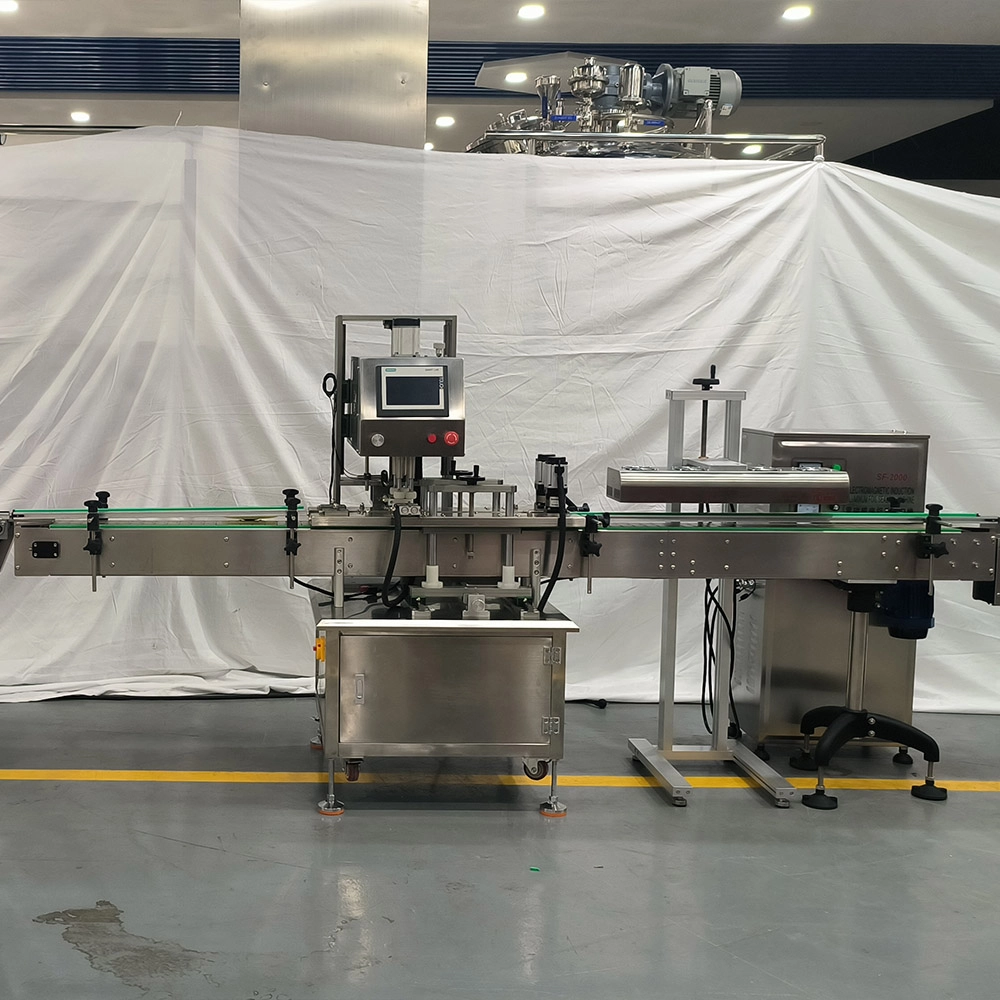
Implementing Safety Interlocks on Filling Equipment
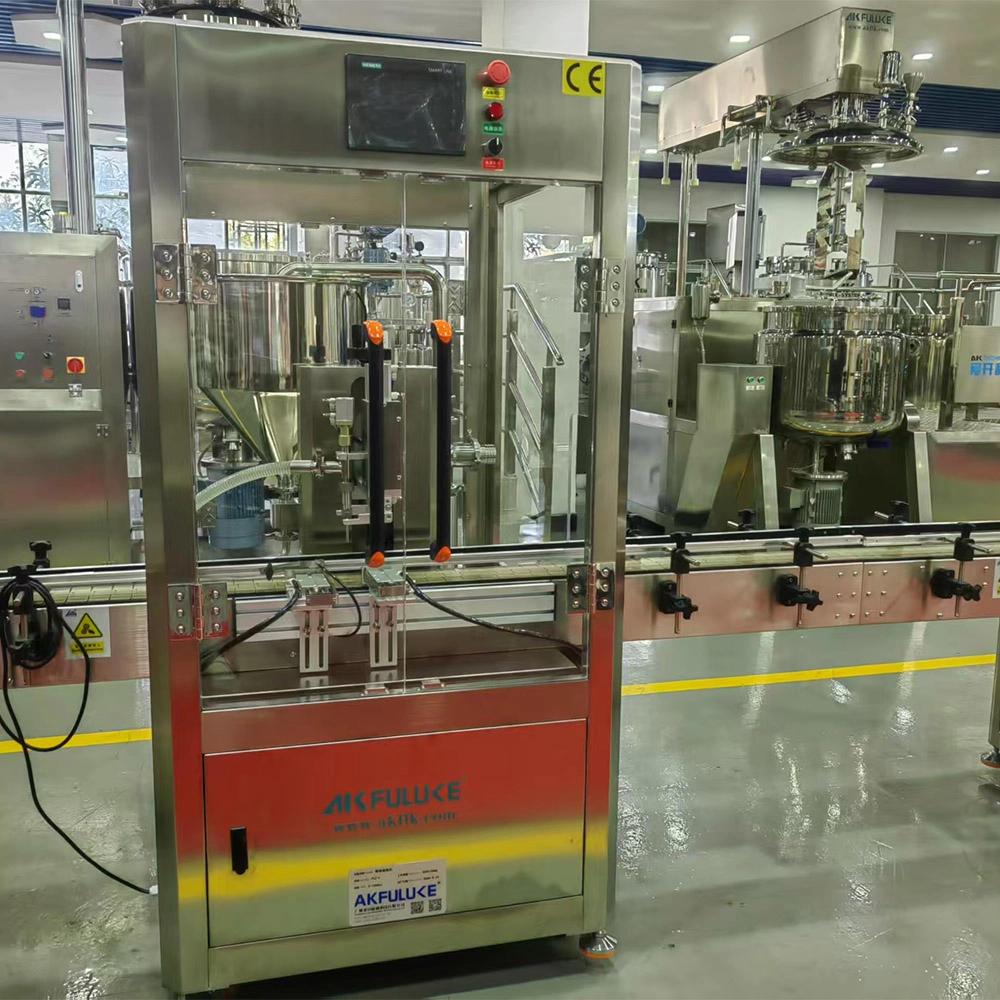
Adapting Filling Lines for Frequent SKU Changeovers
Integrating Automatic Filling Machines into Production Lines
Preventing Cross-Contamination in Multi-Product Lines
Lift-type Homogenizing Disperser
Can you make a design for us?
Yes, we can, we provide not only products, but also solutions and designs.
Automatic Facial Mask Filling Machine
How many filling nozzles does your facial mask filling machine have?
We have dual-, six-, eight-, and ten-head facial mask filling machines. We can customize the number of filling nozzles to meet your needs.
We want to fill products in multiple volumes (e.g., 5ml, 20ml, 50ml). Do we need to purchase multiple filling machines?
No, most facial mask filling machines support multiple volume adjustments. When purchasing, please confirm the machine's "volume adjustment range" (e.g., 5ml-50ml) to ensure it covers your desired specifications. Changing volumes simply requires modifying the fill volume parameters on the touchscreen.
What can you buy from us?
RO Water Treatment、Vacuum Emulsifying Machine、Homogenizer Mixing Tank、Filling and Capping、labeling Machine、Packing Machine、Storage Tank,etc.
RO Water Treatment
Can the water produced by an RO water purifier be drunk directly? Why?
The water produced by a qualified RO water purifier (i.e., "purified water") is generally drinkable directly.
This is because the high-precision filtration of the RO membrane removes harmful microorganisms (bacteria, viruses), heavy metals, pesticide residues, and other contaminants from the raw water, resulting in a water quality that meets the requirements for direct drinking. However, it is important to regularly replace the filter cartridge to ensure proper operation of the device.
You May Also Like
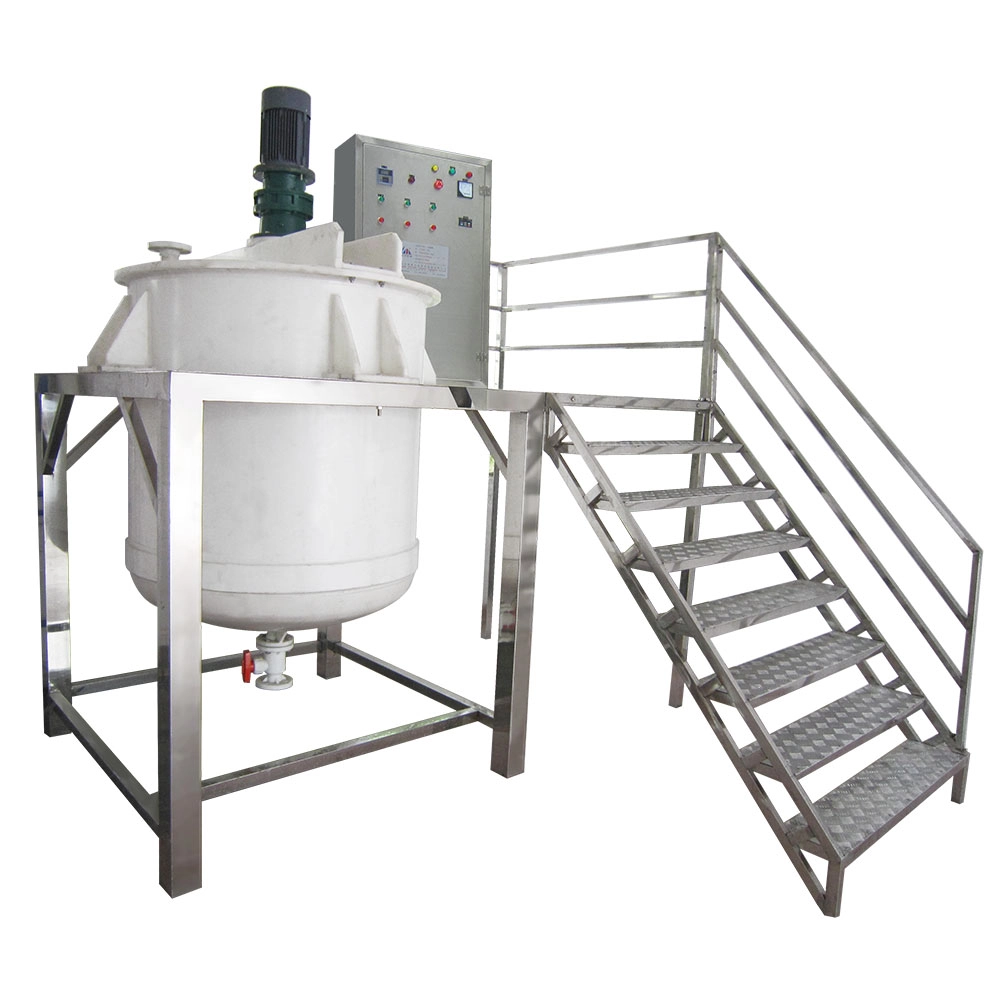
Polypropylene PP Mixing Tank Anti-Corrosion Mixer Reaction Kettle with Agitator Chemical Mixing Vessel
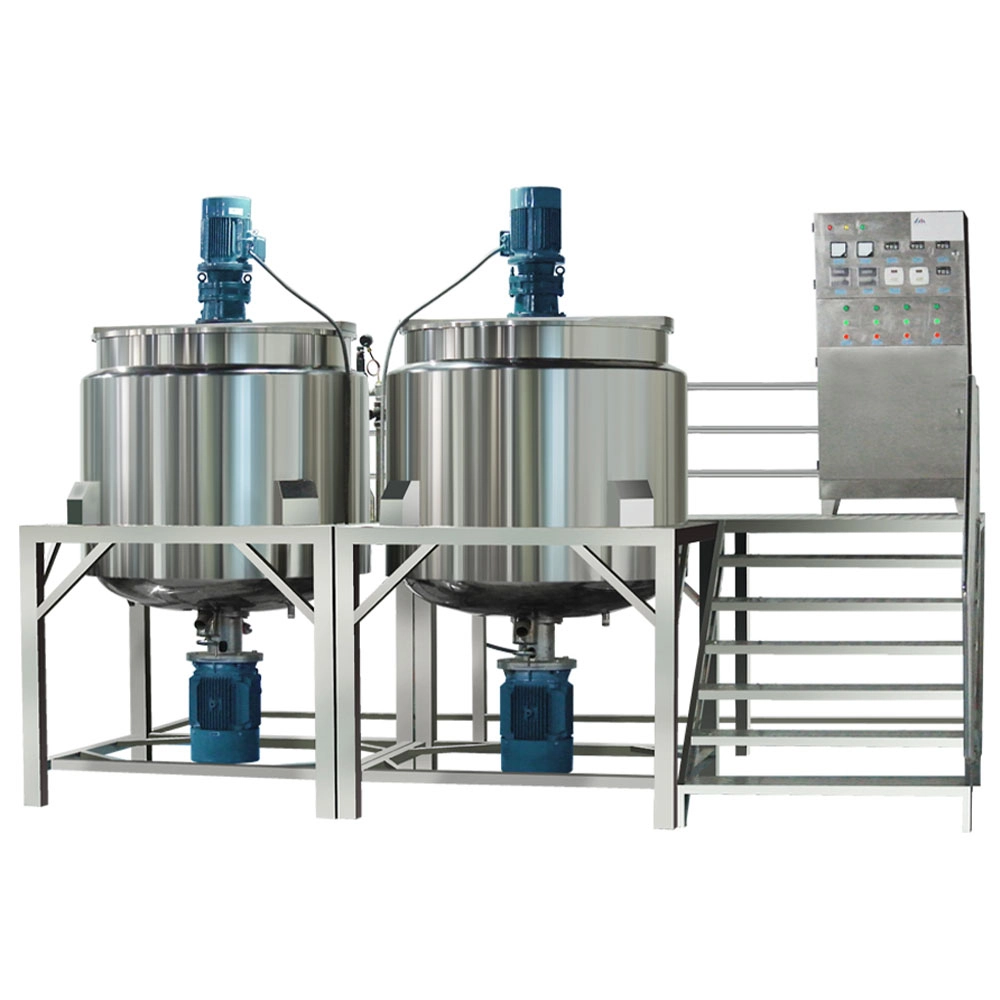
Flip Cover Multi-function Liquid Wash Mixing Tank Blender Liquid Detergent Mixer Homogenization Stirring Tank
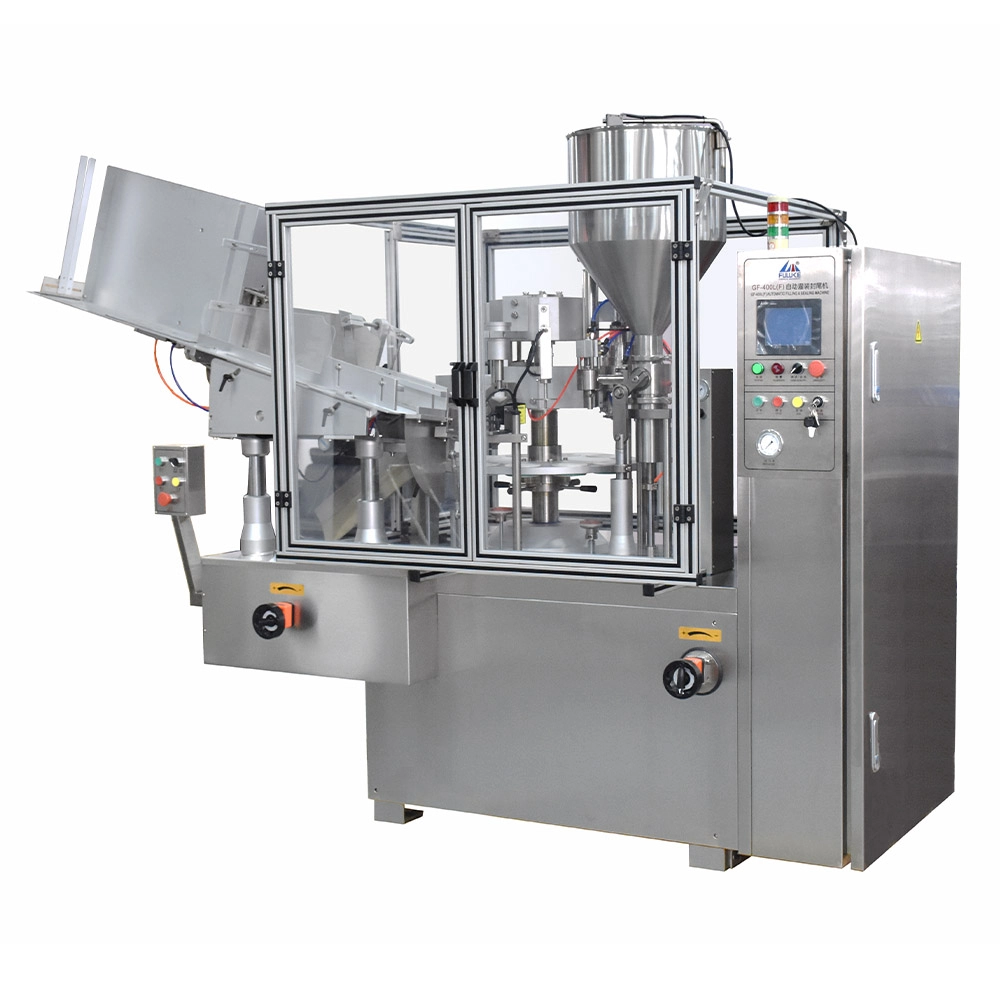
Automatic Tube Filling and Sealing Machine Toothpaste Sunscreen and Facial Cleanser Filling and Sealing Machine for Plastic and Aluminum-plastic Tube
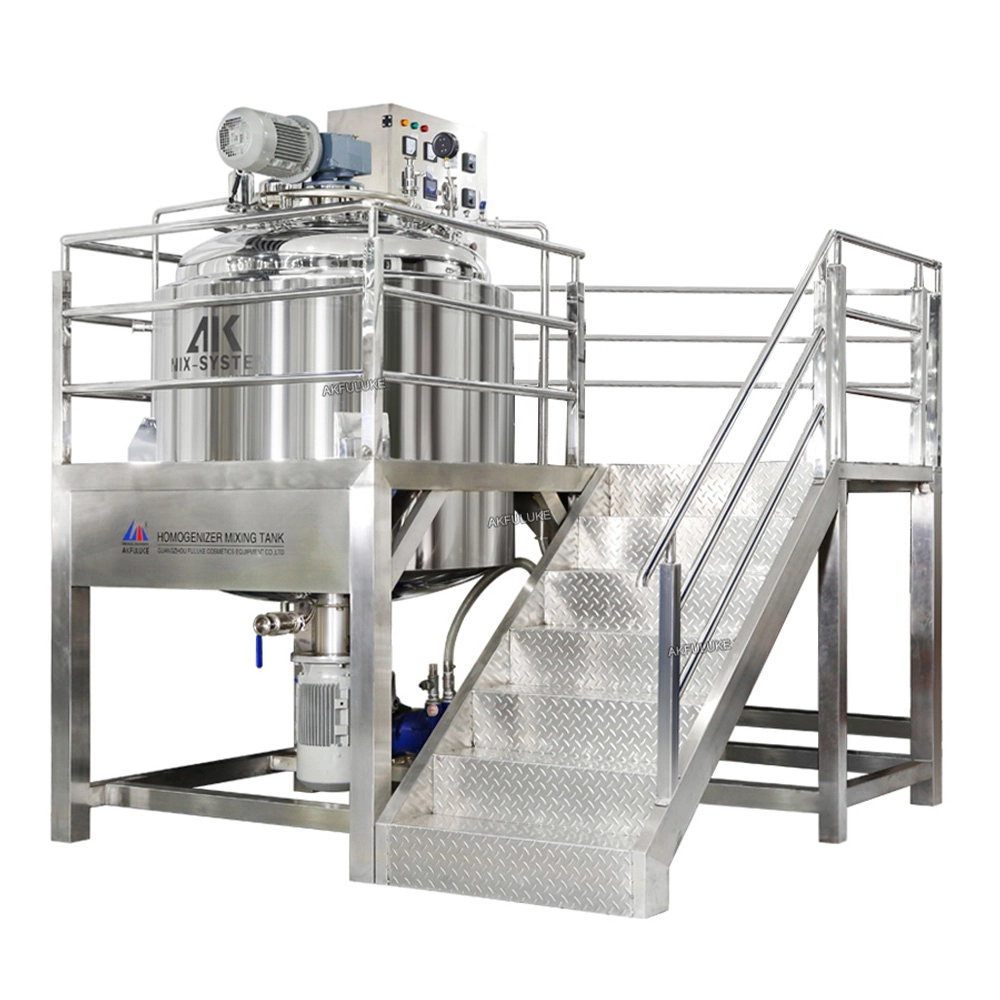
Stainless Steel Mixer Liquid Mixing tank with Agitator Homogenizing Mixing tank Vacuum Sealed Mixer Machine
Get in touch with FULUKE
If you have any comments or good suggestions, please leave us a message, later our professional staff will contact you as soon as possible.

A leading manufacturer specializing in advanced machinery and complete production lines for the cosmetics, food, pharmaceutical, and chemical industries worldwide.
Contact FULUKE
Facebook
Instagram
YouTube