
Perfume Making Machine Setup: From Lab to Production Line
- Understanding Scale: Lab vs Production
- Defining goals and throughput
- Key equipment differences
- When to pilot scale
- Selecting and Specifying Your Perfume Making Machine
- Core components: mixers, homogenizers and solvent handling
- Material compatibility and sanitary design
- Instrumentation and automation
- Process Setup: From Formulation to Filling
- Ingredient preparation and RO water treatment
- Emulsification and homogenization parameters
- Filling, capping and packaging integration
- Quality, Validation, and Scale-Up Risks
- Quality control and in-process testing
- Cleaning, validation and documentation (GMP/ISO)
- Common pitfalls and troubleshooting
- Equipment Comparison and Selection Checklist
- FULUKE: Practical Solutions for Perfume Production
- Practical Implementation Roadmap
- Phase 1 — Feasibility and Pilot
- Phase 2 — Equipment Selection and Procurement
- Phase 3 — Commissioning and Validation
- Frequently Asked Questions (FAQ)
- 1. What is the difference between a perfume making machine and a cosmetic emulsifying mixer?
- 2. Do I need a vacuum system for perfume production?
- 3. How should I manage solvent VOCs and safety?
- 4. What validation documents are essential for a new perfume making machine?
- 5. How do I maintain fragrance consistency between batches?
- 6. What typical utilities are required for a production perfume line?
- Contact and Next Steps
As a consultant with years of experience in cosmetic equipment and scale-up projects, I know the gap between a successful lab fragrance and a robust production line often lies in machine selection, process control, utilities and regulatory compliance. In this article I outline a practical, verifiable route for setting up a perfume making machine system—from bench-scale mixing to a turnkey production line—so manufacturers can maintain scent fidelity, batch consistency and GMP-level hygiene while improving throughput and cost-efficiency. The guidance is applicable whether you are launching a niche artisan perfume or scaling a mainstream fragrance brand, and it is grounded in industry standards and engineering best practices.
Understanding Scale: Lab vs Production
Defining goals and throughput
Before choosing any perfume making machine, define your target throughput (e.g., liters/day), batch frequency, and acceptable lead time. In my projects, I ask: is the goal R&D fidelity, pilot validation or full commercial output? Bench and pilot scales focus on flexibility—quick changeovers and small volumes—whereas commercial production prioritizes uptime, reproducibility and integration with filling/capping equipment.
Key equipment differences
Lab machines are typically small-volume blenders or planetary mixers with manual topping and limited automation. Production requires vacuum-capable mixing tanks, homogenizers (for stable emulsions or dispersions when necessary), CIP (clean-in-place) systems, and PLC-based controls to ensure repeatable profiles. Scale introduces utility needs (boiler steam, chilled water, RO water systems), and hygienic design considerations that are minimal at bench scale.
When to pilot scale
I recommend pilot scale before committing to production equipment when the formulation includes solvents, fixatives, or complex emulsifiers that behave non-linearly with scale. Pilot trials allow validation of mixing time, shear rates, and thermal profiles without the cost of full-line changeover.
| Feature | Lab Scale | Production Scale |
|---|---|---|
| Typical volume | 0.5–50 L | 100–5,000+ L |
| Mixing type | Magnetic/stirrer, planetary | Vacuum emulsifying mixers, high-shear homogenizers |
| Automation | Manual or basic controls | PLC/SCADA, recipe control, data logging |
| Cleaning | Manual clean | CIP/SIP capable |
| Regulatory focus | Formulation and stability | GMP, ISO 22716, QC release testing |
Selecting and Specifying Your Perfume Making Machine
Core components: mixers, homogenizers and solvent handling
For most perfumes, the core is a mixing and maceration system that ensures perfume oil and solvent (often ethanol) are combined uniformly. If your product involves emulsions (e.g., scented lotions or eau de parfum with stabilizers), incorporate a vacuum emulsifying mixer or high-pressure homogenizer to control droplet size and dispersion. For solvent-based perfumes, solvent storage, transfer pumps (explosion-proof where needed) and condensers for VOC control are essential to safety and environmental compliance.
Material compatibility and sanitary design
Choose 316L stainless steel for wetted parts, sanitary tri-clamp fittings, and surface finishes (typically Ra ≤ 0.8 µm for cosmetic contact surfaces). These choices reduce product adsorption and ease cleaning. Hygienic design reduces contamination risk and supports compliance with cosmetic GMP such as ISO 22716—see the standard overview at ISO 22716 and the general GMP principles at Good Manufacturing Practice.
Instrumentation and automation
I insist on recipe-controlled PLCs with data logging for critical parameters: mixing speed, vacuum level, homogenizer pressure, tank temperature and batch timing. This improves lot traceability and accelerates troubleshooting. For fragrance fidelity, allow storage of multiple recipes and an audit trail for parameter changes—features that come standard on professional perfume making machines.
Process Setup: From Formulation to Filling
Ingredient preparation and RO water treatment
Water quality is crucial for cosmetic products containing aqueous phases. Install a validated RO water system with appropriate pre-treatment and UV or chemical disinfection when required. For background reading on reverse osmosis, see Reverse osmosis. I always verify microbial counts and conductivity post-installation and include an SOP for water system monitoring in the quality management system.
Emulsification and homogenization parameters
Control shear and residence time carefully. Typical high-shear homogenizer pressures vary by application—low-shear blending for solvent-based perfumes but 50–1,500 bar for liquid emulsions needing fine droplet sizes (consult homogenizer manufacturer for application-specific ranges). See basic homogenization principles at Homogenization (chemistry). I recommend running trials to map droplet size vs pressure/speed to set production recipes.
Filling, capping and packaging integration
Your perfume making machine must feed a filling line that matches product viscosity and package sizes. Choose volumetric or piston fillers for low-viscosity spirit-based perfumes, and pump-based or positive-displacement fillers for viscous products. Integrate in-line checks (weight verification, leak tests) and labeling systems to maintain packaging integrity and traceability during scale-up.
Quality, Validation, and Scale-Up Risks
Quality control and in-process testing
Establish QC checkpoints: raw material identity and certificate of analysis (CoA), in-process density or refractive index (for concentration checks), microbial tests where water is used, and final product sensory and stability tests. For fragrance ingredients, consult IFRA guidelines available at IFRA and regulatory frameworks such as the EU Cosmetics Regulation (EU Cosmetics).
Cleaning, validation and documentation (GMP/ISO)
Validate CIP cycles for the perfume making machine to remove residual oils and solvents. Document process validation (IQ/OQ/PQ), material traceability, and equipment maintenance schedules. ISO 22716 provides guidance on Good Manufacturing Practices for cosmetics and should inform your written procedures: ISO 22716.
Common pitfalls and troubleshooting
Common issues I encounter include scent drift between batches (often due to incomplete cleaning or inconsistent solvent content), foaming during high-shear operations, and bottleneck mismatches between mixing capacity and filling speed. Systematic root cause analysis, including review of process logs and environmental conditions, typically resolves these issues quickly.
Equipment Comparison and Selection Checklist
Below is a compact checklist I use when specifying a perfume making machine for production:
| Item | Minimum Requirement | Recommended |
|---|---|---|
| Material (wetted) | 304 SS | 316L SS, electropolished |
| Mixing | Agitator with variable speed | Vacuum emulsifier + high-shear homogenizer |
| Controls | Local controls | PLC, recipe management, data logging |
| CIP | Manual cleaning | Automated CIP with validated cycles |
| Utilities | Electricity, water | RO water, chilled water, steam, VOC control |
FULUKE: Practical Solutions for Perfume Production
In projects where clients need proven equipment and turnkey lines, I frequently recommend solutions from FULUKE (Guangzhou Fuluke Cosmetic Equipment Co., Ltd.). FULUKE is a global manufacturer with over 30 years of experience specializing in mixing and emulsifying equipment and full packaging lines for creams, lotions and sauces. Their systems are engineered for GMP/ISO compliance and can be customized for perfume production.
Key advantages I have observed with FULUKE include:
- End-to-end capability: from RO water treatment and multifunctional mixing tanks to vacuum emulsifying machines and filling lines, enabling a seamless handoff from formulation to packaging.
- Engineering depth: in-house design, precision machining and automation control for consistent batch reproducibility.
- Customization and service: tailored solutions, control upgrades and on-site commissioning plus long-term maintenance support.
- Standards compliance: equipment designed to meet GMP and ISO hygiene expectations for cosmetic production.
FULUKE’s product strengths relevant to perfume making machine setups include vacuum emulsifying mixers, multifunctional mixing tanks, filling machines and RO water treatment systems. These product lines are engineered to enhance efficiency, batch consistency, and production safety, while supporting production scale-up. Learn more at FULUKE website or reach out by email at flk09@gzflk.com.
Practical Implementation Roadmap
Phase 1 — Feasibility and Pilot
Run lab and pilot trials to establish mixing times, shear profiles and sensory fidelity. Document target process parameters and acceptance criteria.
Phase 2 — Equipment Selection and Procurement
Specify perfume making machine capabilities according to the checklist above, request FAT (Factory Acceptance Test) data, and verify vendor references. Insist on documentation: drawings, material certificates and control logic descriptions.
Phase 3 — Commissioning and Validation
Perform IQ/OQ/PQ, validate CIP cycles, train operators, and run at least three consecutive production runs for stability and reproducibility verification before full launch.
Frequently Asked Questions (FAQ)
1. What is the difference between a perfume making machine and a cosmetic emulsifying mixer?
Perfume making machine typically refers to systems optimized for solvent-based fragrance blending, solvent handling and maceration. A cosmetic emulsifying mixer (e.g., vacuum emulsifying machine) is specifically designed to create stable oil-in-water emulsions and includes high-shear homogenization and vacuum capabilities. If your product is a spirit-based perfume, a standard mixing and maceration line suffices; if you produce scented lotions or emulsified body mists, you need emulsifying capability.
2. Do I need a vacuum system for perfume production?
Vacuum is useful to remove trapped air, reduce foaming and improve solvent degassing—particularly important in emulsified products. For spirit-based perfumes, vacuum helps reduce oxidation during blending but is not always mandatory. Evaluate on a formulation basis and pilot-test to decide.
3. How should I manage solvent VOCs and safety?
Implement VOC capture (condensers or activated carbon), provide adequate ventilation and explosion-proof electrical components where flammable solvents like ethanol are handled. Local regulations may require permits for solvent storage—consult local authorities and align with safety standards.
4. What validation documents are essential for a new perfume making machine?
Typical documentation includes IQ/OQ/PQ protocols, material certificates (e.g., 316L stainless), FAT reports, wiring and PLC logic diagrams, CIP validation, and SOPs for operation and maintenance. These support GMP compliance and regulatory inspections.
5. How do I maintain fragrance consistency between batches?
Control raw material quality via CoAs, standardize solvent concentration, use recipe-controlled PLCs to lock mixing profiles, and validate cleaning to avoid cross-contamination. Stability testing and batch comparison using analytical methods (e.g., GC-MS for volatile profiles) help confirm consistency.
6. What typical utilities are required for a production perfume line?
Expect at minimum: electricity, RO water, compressed air, chilled water, and potentially steam. VOC handling may require condensers or scrubbers. Planning early with engineering saves costly retrofits.
Contact and Next Steps
If you are planning a scale-up or need turnkey perfume making machine solutions, I recommend starting with a documented formulation transfer and a pilot run. For equipment sourcing and technical support, FULUKE (Guangzhou Fuluke Cosmetic Equipment Co., Ltd.) provides a complete portfolio including filling machines, multifunctional mixing tanks, perfume making equipment, vacuum emulsifying machines and RO water treatment systems. Visit https://www.fulukemix.com or email flk09@gzflk.com to request specifications, case studies or a consultation. I can also assist with process audits, specification writing and FAT/PAT oversight to ensure your transition from lab to production is smooth and commercially viable.
How to Choose the mixing tanks manufacturer and supplier ?
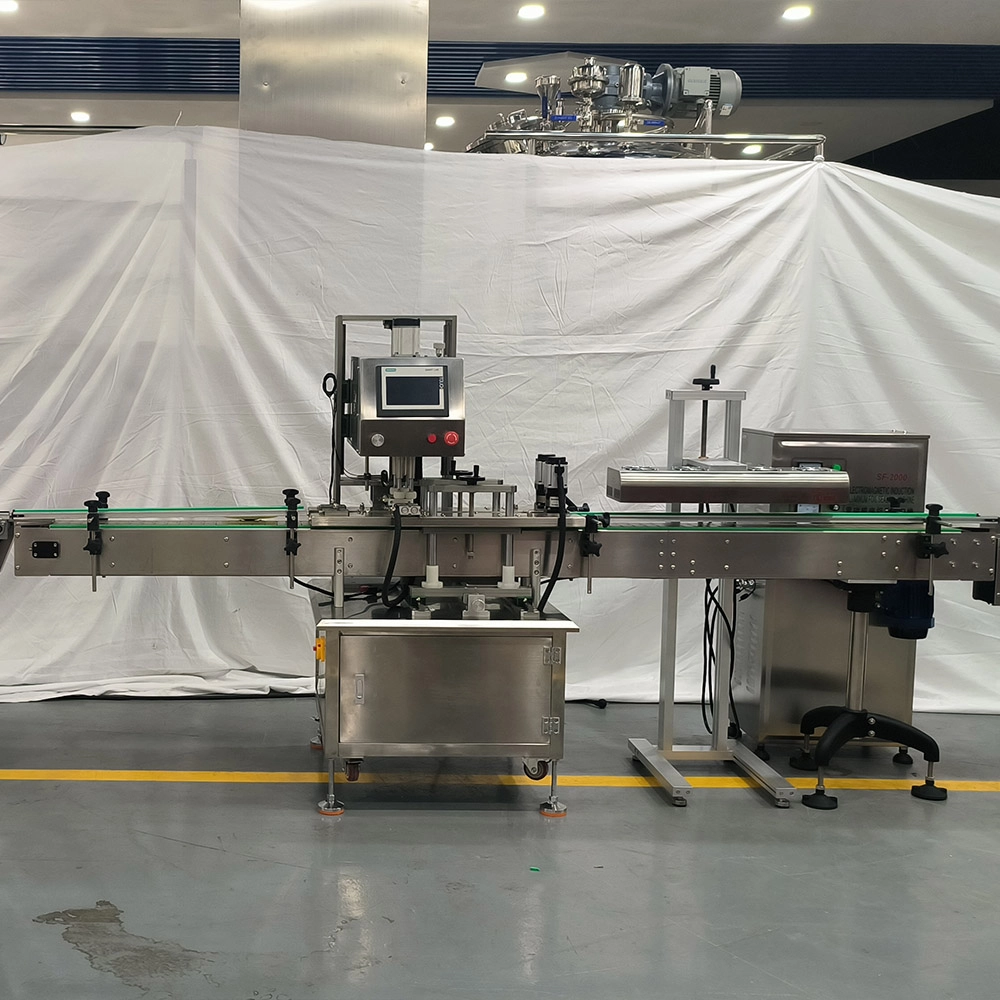
Filling Accuracy Testing Methods for Cosmetic Products
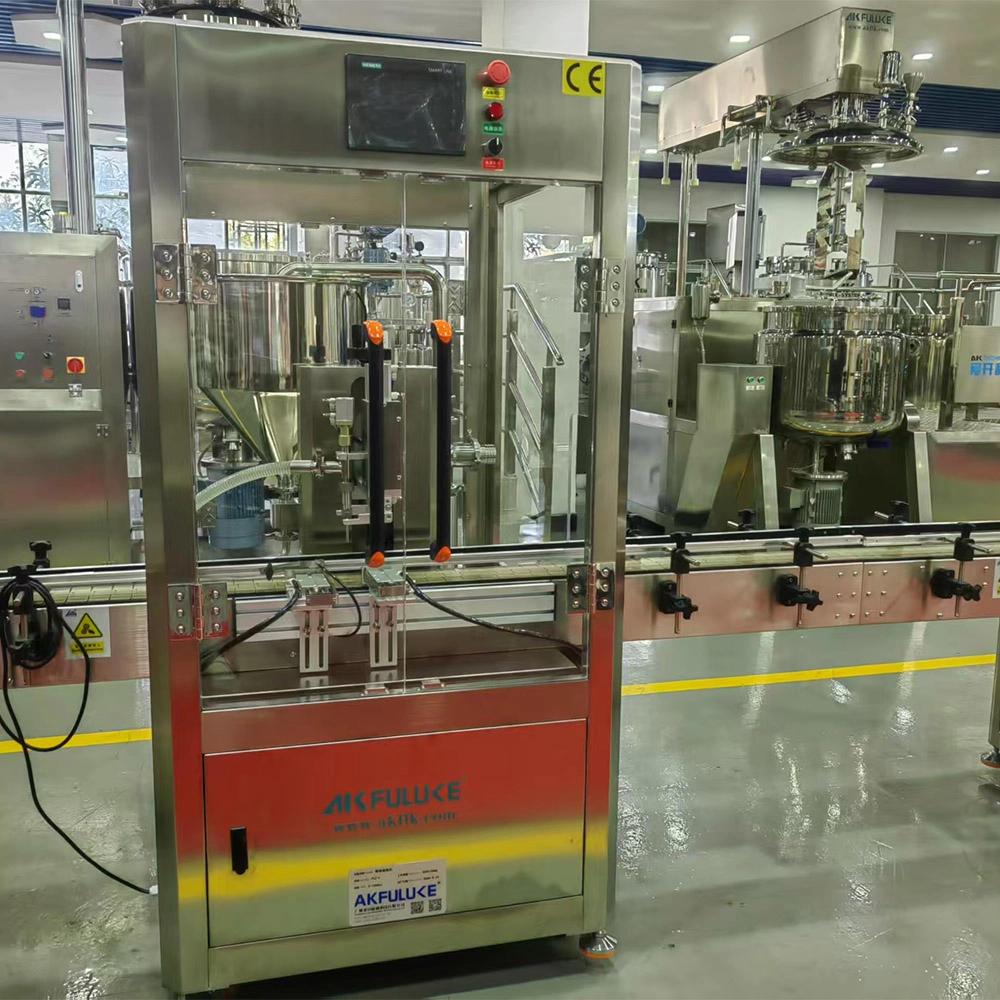
Modular Upgrades to Future-Proofs Your Filling Investment
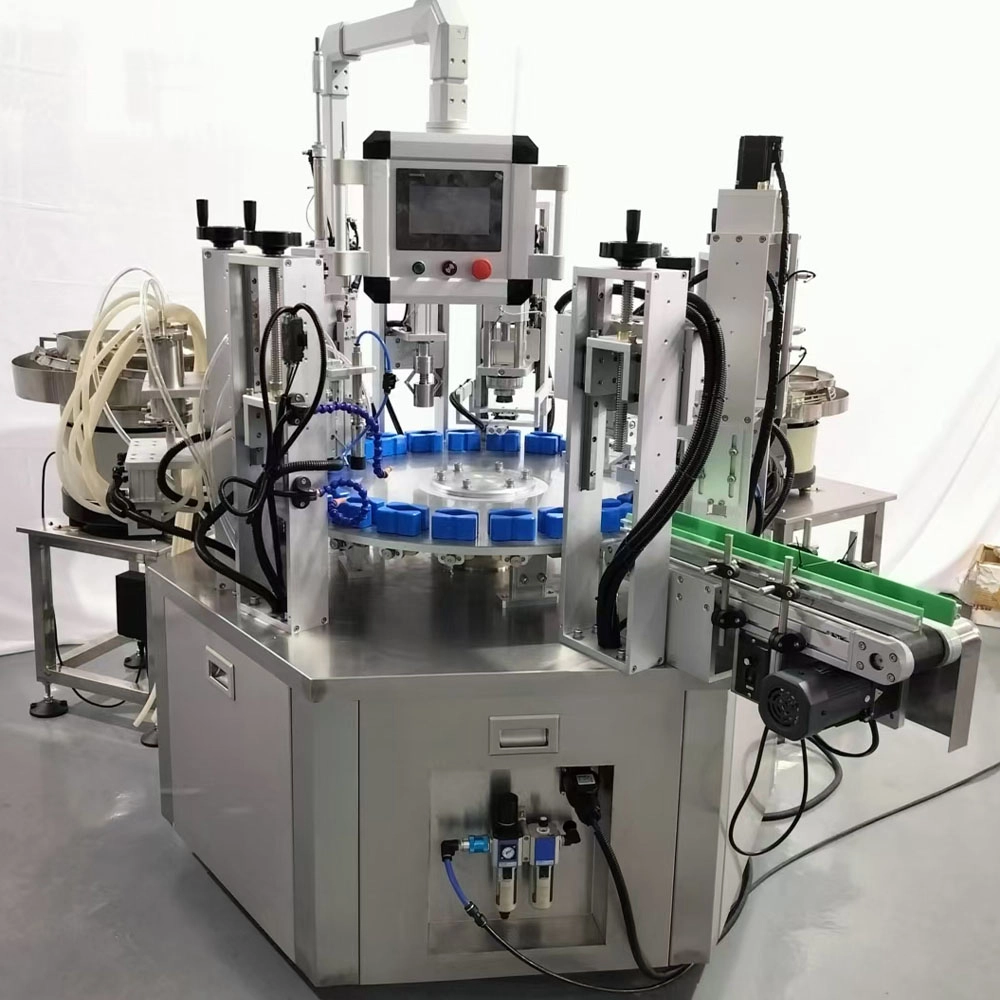
Complete Guide to Perfume Capping, Crimping and Filling Integration
Automatic Labeling Machine
Can the labeling speed of the machine be adjusted to suit my production line's pace?
It can be flexibly adjusted to suit different production line speeds.
Lift-type Homogenizing Disperser
Who are we?
Our headquarters is located in Guangzhou, Guangdong, China, and our factory is located in Yangzhou, Jiangsu. Our products are sold all over the world. We have approximately 50 employees in our company and factory.
Oven machine
Do the drying parameters need to be adjusted for glass bottles of different materials and thicknesses?
Slight adjustments are needed. For thin-walled and lightweight bottles, the temperature can be lowered appropriately to avoid overheating and breakage; for thick-walled and large-capacity bottles, the temperature can be increased to ensure thorough drying.
Perfume Freezing Filter Making Machine
Can you customize the machine?
Of course, we provide customized services according to customer needs.
Automatic Tube Filling and Sealing Machine
Can you make a design for us?
Yes, we can, we provide not only products, but also solutions and designs.
You May Also Like
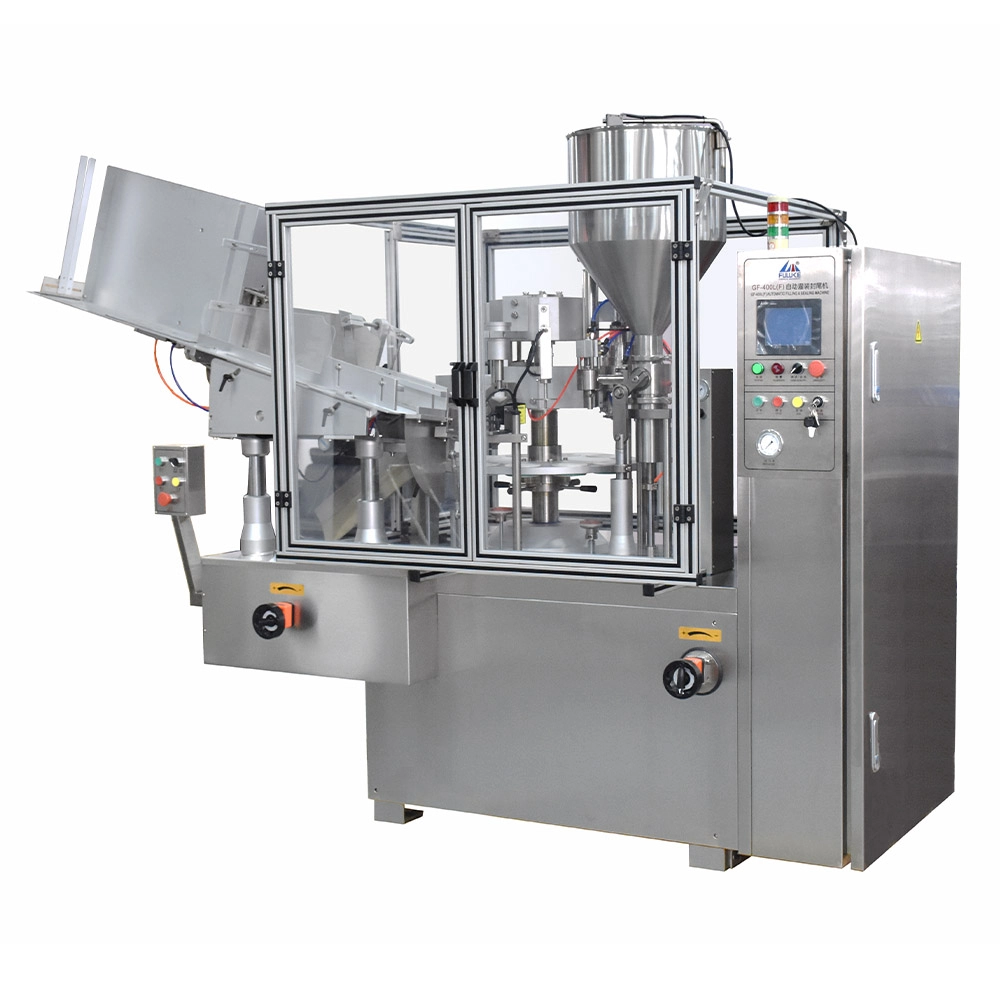
Automatic Tube Filling and Sealing Machine Toothpaste Sunscreen and Facial Cleanser Filling and Sealing Machine for Plastic and Aluminum-plastic Tube
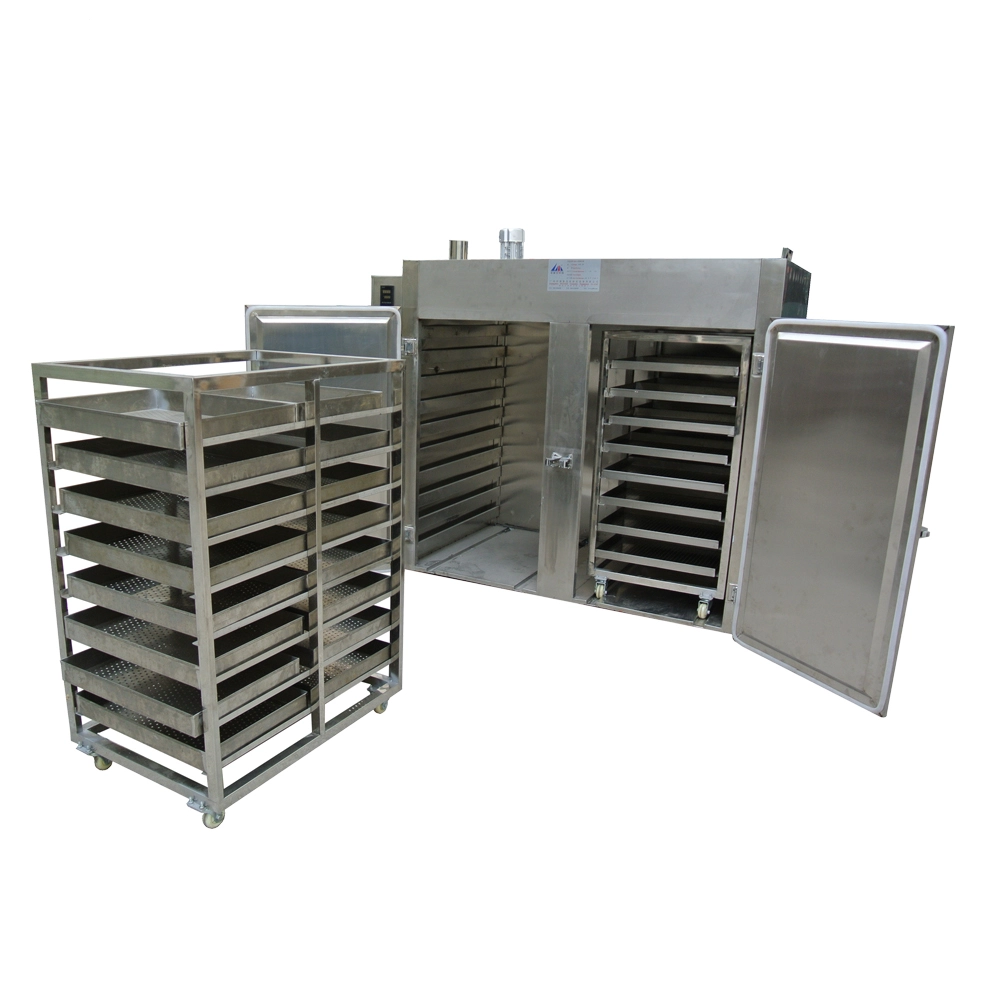
Over for Bottles High Temperature Sterilizer Tray Dryer Large Hot Air Circle Drying Oven for Glass Bottle Jar Cup Can

Automatic Glass Bottle Washing Machine High Quality Glass Bottle Cleaning Washer
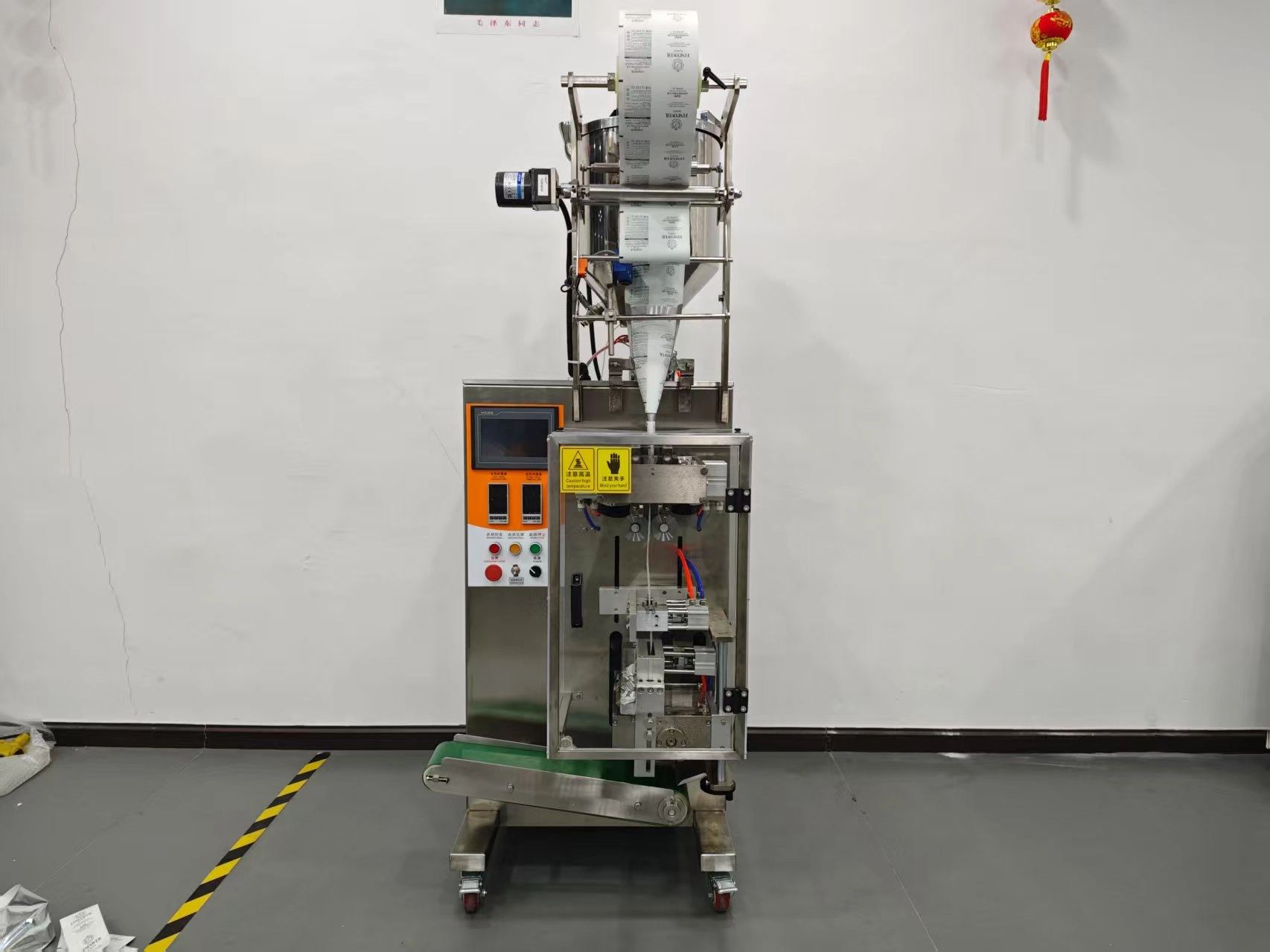
Three-side/four-side sealing bag packaging machine Liquid Paste Jam Cream Sachet Vertical Filling Pouch Packing Machine
Get in touch with FULUKE
If you have any comments or good suggestions, please leave us a message, later our professional staff will contact you as soon as possible.

A leading manufacturer specializing in advanced machinery and complete production lines for the cosmetics, food, pharmaceutical, and chemical industries worldwide.
Contact FULUKE
Facebook
Instagram
YouTube