
Selecting Filling Heads for Viscous Creams and Lotions
- Key formulation and process considerations for viscous products
- Rheology of creams and lotion emulsions
- Common filling challenges for viscous products
- Comparing filling-head technologies
- Piston and positive displacement heads
- Gear, progressive cavity and peristaltic pumps
- Time-pressure and valve-based systems
- Selection criteria and practical design features
- Material compatibility and GMP compliance
- Nozzle geometry, anti-drip, and discharge control
- Accuracy, speed trade-offs, and calibration
- Integration, testing and a brand-focused approach
- Integrating heads into an automatic filling line
- Validation, acceptance testing and scale-up
- Why choose our Automatic Filling Machine for viscous creams and lotions
- Installation, maintenance and troubleshooting tips
- Pre-installation checklist
- Routine maintenance and cleaning
- Troubleshooting common issues
- FAQ — Frequently Asked Questions
- Q: Which filling head is best for very high-viscosity creams (e.g., >100,000 cP)?
- Q: Can I use the same filling head for both lotions and thick creams?
- Q: How do I maintain fill accuracy on a liquid filling machine over long runs?
- Q: Are there sanitation or regulatory considerations for cosmetic filling heads?
- Contact and product trial
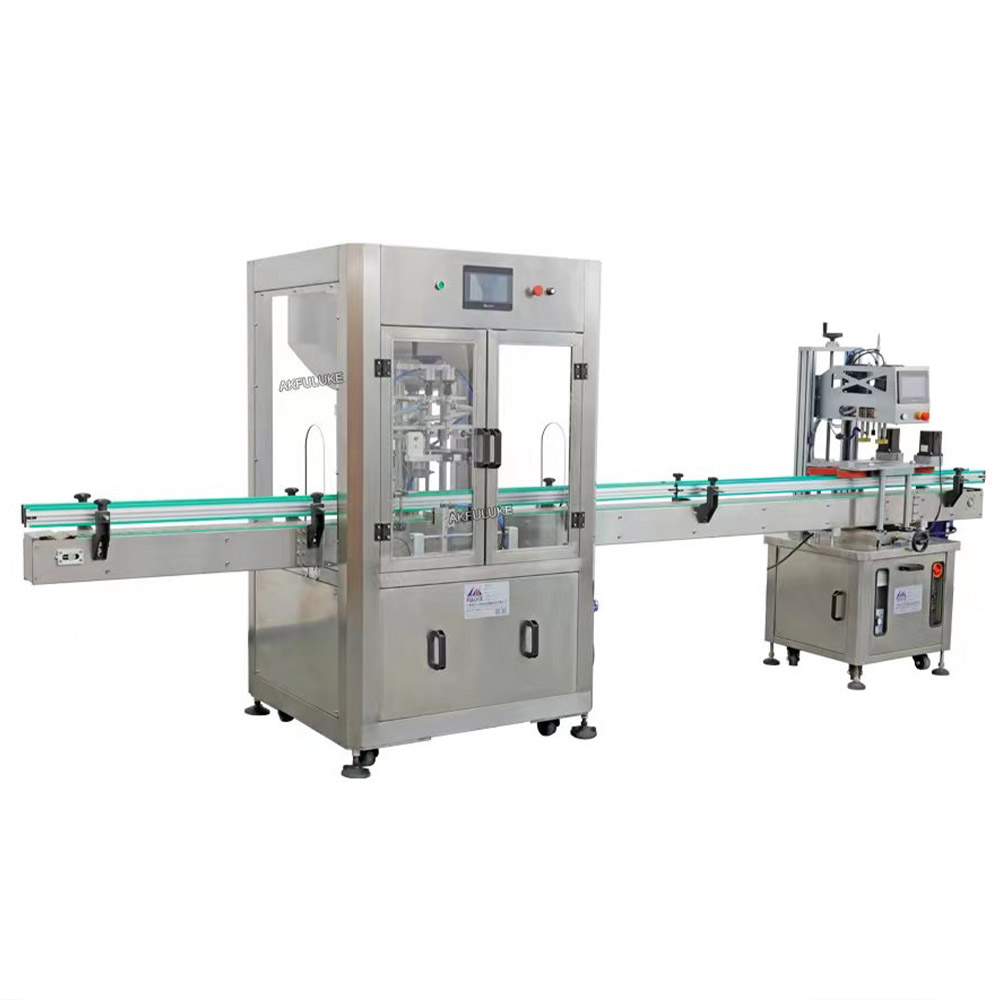
Selecting the correct filling head for viscous creams and lotions ensures reliable fill accuracy, minimizes product waste and contamination, and enables fast, repeatable production on your liquid filling machine. This article covers the physical behavior of emulsions and pastes, compares filling-head technologies (piston, pump, valve, and time-pressure systems), explains material and nozzle design requirements, and provides practical setup and validation steps for production lines handling creams, lotions and high-viscosity emulsions.
The following product integrates automated conveying, precision filling, and intelligent control to address these needs:
The automatic filling machine integrates automated conveying, precision filling, and intelligent control for packaging creams, lotions, and liquids. Suitable for a variety of containers, including glass and PET bottles, it can fill liquids, emulsions, and pastes with high precision.
Constructed with 316L/304 stainless steel contact components and compliant with GMP standards, it features a touchscreen interface for quick parameter adjustment and completes the entire process without manual intervention. Widely used in the cosmetics, food, daily chemical, pharmaceutical, and chemical industries, it helps companies reduce costs, increase efficiency, and ensure product standardization.
Key formulation and process considerations for viscous products
Rheology of creams and lotion emulsions
Viscous creams and lotions are typically non-Newtonian fluids: their apparent viscosity changes with shear. Understanding whether your formulation is shear-thinning, thixotropic or viscoelastic determines how it will behave under pump or piston shear during filling. Authoritative background on cosmetic creams and emulsions is available in the literature and general descriptions can be found on resources like Wikipedia (Cream – cosmetic). In practice, measure viscosity (e.g., Brookfield or rheometer) under the shear rates similar to filling to predict performance.
Common filling challenges for viscous products
High viscosity causes: slow flow, stringing, inconsistent fills, air entrapment, and difficulty in stopping flow cleanly from the nozzle. These problems increase cycle time and require specific head designs (low-shear pistons, wide bores, anti-drip valves) and process control (slow fill stroke, vacuum pullback) to solve. Planning for accurate dosing on a liquid filling machine reduces rework and product loss.
Comparing filling-head technologies
Piston and positive displacement heads
Piston-type filling heads are often preferred for viscous creams and pastes because they provide precise volumetric control with low shear and are suitable for a wide viscosity range. They can handle shear-sensitive emulsions and deliver repeatable, high-accuracy fills, especially important for High Quality cosmetics.
Gear, progressive cavity and peristaltic pumps
Gear pumps and progressive cavity pumps deliver continuous flow and can be suitable for medium-to-high viscosity products. Progressive cavity pumps (rotor-stator) handle particulates and higher viscosities while providing gentle handling. Peristaltic pumps isolate the product in tubing, which is useful for contamination-sensitive products, but tubing wear and limited pressure capability can be constraints on high-throughput lines.
Time-pressure and valve-based systems
Time-pressure systems are simple (pressurize a vessel and open a valve for a set period), but they are sensitive to viscosity changes and are less accurate for viscous creams. Valve-based systems (servo-actuated) with anti-drip and pull-back features can work for low-to-medium viscosity lotions but typically underperform with heavy creams.
| Head Type | Accuracy | Shear on Product | Best For | Cleaning / Maintenance |
|---|---|---|---|---|
| Piston (Positive Displacement) | High (±0.5% to ±1.5%) | Low | High-viscosity creams, shear-sensitive emulsions | Excellent (CIP/SIP adaptable) |
| Progressive Cavity Pump | Good (±1% to ±2%) | Moderate | Very viscous pastes, particulates | Moderate (rotor/stator maintenance) |
| Peristaltic | Good for low volumes | Low | Sanitary/low-contamination applications | High (tubing replacement) |
| Time-pressure / Valve | Low for high viscosity | Variable | Thin lotions, low-viscosity liquids | Low to moderate |
For an overview of filling machine categories and general principles see Filling machine (Wikipedia).
Selection criteria and practical design features
Material compatibility and GMP compliance
Choose contact materials such as 316L/304 stainless steel to avoid corrosion, leaching, or contamination—316L is widely recommended for hygienic cosmetic and pharmaceutical contact parts. Your filling head should allow cleaning-in-place (CIP) or simple disassembly for thorough cleaning. Regulatory and GMP references (for cosmetic and pharmaceutical grade manufacturing) are useful; see the WHO guidance on Good Manufacturing Practice WHO GMP. The Automatic Filling Machine Quantitative Liquid Bottle Filling Machine High-precision cream and lotion filling machine includes 316L/304 stainless steel contact components and is designed for GMP-compliant lines.
Nozzle geometry, anti-drip, and discharge control
Nozzle diameter and shape determine flow and stringing. Use larger bores or flat-wide nozzles for thick creams to reduce clogging and shear. Anti-drip valves and post-dispense vacuum pull-back will prevent strings and droplets. Consider heated nozzles if your product responds well to mild heat (<40°C) to lower viscosity during filling, but validate compatibility with active ingredients.
Accuracy, speed trade-offs, and calibration
High precision often requires slower cycle times for viscous products. When selecting a head for your liquid filling machine, validate across production speeds. Implement weight-based checks and statistical process control (SPC) to monitor fill accuracy. Routine calibration of piston stroke or pump displacement ensures consistent quantitative fills.
Integration, testing and a brand-focused approach
Integrating heads into an automatic filling line
The filling head must integrate with the rest of the line: conveyor, capping, labeling, and control systems. Modern liquid filling machine controllers (PLC/HMI) permit recipes for different products, auto-adjusting stroke or pump speeds, and storing parameters for multi-product lines. When integrating, ensure physical mountings allow quick changeover and minimal dead volume to reduce product loss and cleaning time.
Validation, acceptance testing and scale-up
Create a validation protocol: measure dosing accuracy across a run, inspect microbial/particulate cleanliness after cleaning, and test anti-drip performance over several hours. Use a design of experiments (DOE) approach to tune parameters: fill speed, piston stroke, nozzle height, and pull-back timing. For scale-up from bench to production, perform pilot lots to ensure rheology and temperature effects remain predictable at higher throughput.
Why choose our Automatic Filling Machine for viscous creams and lotions
The Automatic Filling Machine Quantitative Liquid Bottle Filling Machine High-precision cream and lotion filling machine addresses the selection criteria above by combining:
- 316L/304 stainless steel contact parts for corrosion resistance and GMP compliance (see stainless steel references).
- Multi-head piston filling options for low-shear, high-accuracy volumetric dosing suitable for creams, lotions, and emulsions.
- Touchscreen interface for quick recipe switching and parameter storage to minimize downtime during product changeovers.
- Automated conveying and intelligent control to integrate seamlessly with downstream capping and labeling.
| Feature | Benefit |
|---|---|
| 316L/304 contact parts | Meets hygienic manufacturing and corrosion resistance requirements |
| High-precision piston filling | Accurate dosing with minimal shear and repeatable fills |
| Touchscreen and recipes | Fast changeovers, simplified operator control |
| Supports glass & PET | Versatile container compatibility across product lines |
Installation, maintenance and troubleshooting tips
Pre-installation checklist
Before commissioning, verify: correct head selection for viscosity range, availability of compressed air and power, conveyor height compatibility, and accessibility for cleaning. A dry-run with water or a surrogate medium is advisable to tune timing and nozzle height.
Routine maintenance and cleaning
Establish a maintenance schedule: inspect seals, replace worn piston cups or pump rotors, and check anti-drip valves. Use validated CIP procedures or disassemble for manual cleaning where necessary. Maintain spare parts inventory for wear items—this reduces unexpected downtime.
Troubleshooting common issues
- Stringing or drips: adjust nozzle height, add vacuum pull-back, or fit an anti-drip valve. - Inconsistent fills: check air leaks, calibrate piston stroke or pump displacement, and confirm product temperature/viscosity is stable. - Clogging: increase nozzle bore, schedule frequent cleaning, or consider mild heating (validate product stability first).
FAQ — Frequently Asked Questions
Q: Which filling head is best for very high-viscosity creams (e.g., >100,000 cP)?
A: Progressive cavity pumps or large-bore piston filling heads are typically best. They provide positive displacement with low shear. Validate at production scale and consider heated feed-lines only if the product formulation tolerates heat.
Q: Can I use the same filling head for both lotions and thick creams?
A: Possibly, but you may need interchangeable nozzles and pump settings. A multi-head piston system with adjustable stroke and exchangeable bores offers the most flexibility for mixed-product lines.
Q: How do I maintain fill accuracy on a liquid filling machine over long runs?
A: Implement periodic weight checks, enable alarm thresholds in the PLC, perform scheduled maintenance on seals and pump elements, and control product temperature to keep viscosity stable.
Q: Are there sanitation or regulatory considerations for cosmetic filling heads?
A: Yes. Use hygienic materials (316L stainless), designs minimizing dead legs, and validated cleaning protocols. Follow guidance such as the WHO GMP documentation for sanitary manufacturing practices (WHO GMP).
Contact and product trial
For a demo, validation protocol, or to discuss which filling head suits your formulation and line speed, contact our sales engineers. View full product details and request a quote for the Automatic Filling Machine Quantitative Liquid Bottle Filling Machine High-precision cream and lotion filling machine on our product page: Product page. To contact customer service directly, email sales@example.com or call +1-800-555-0123.
Choosing the right filling head for viscous creams and lotions is a combination of understanding your formulation, selecting the appropriate displacement technology, ensuring hygienic materials and ease of cleaning, and validating performance on your liquid filling machine. Our solution blends precision engineering and GMP-compliant materials to deliver consistent fills, reduced waste, and simplified changeovers.
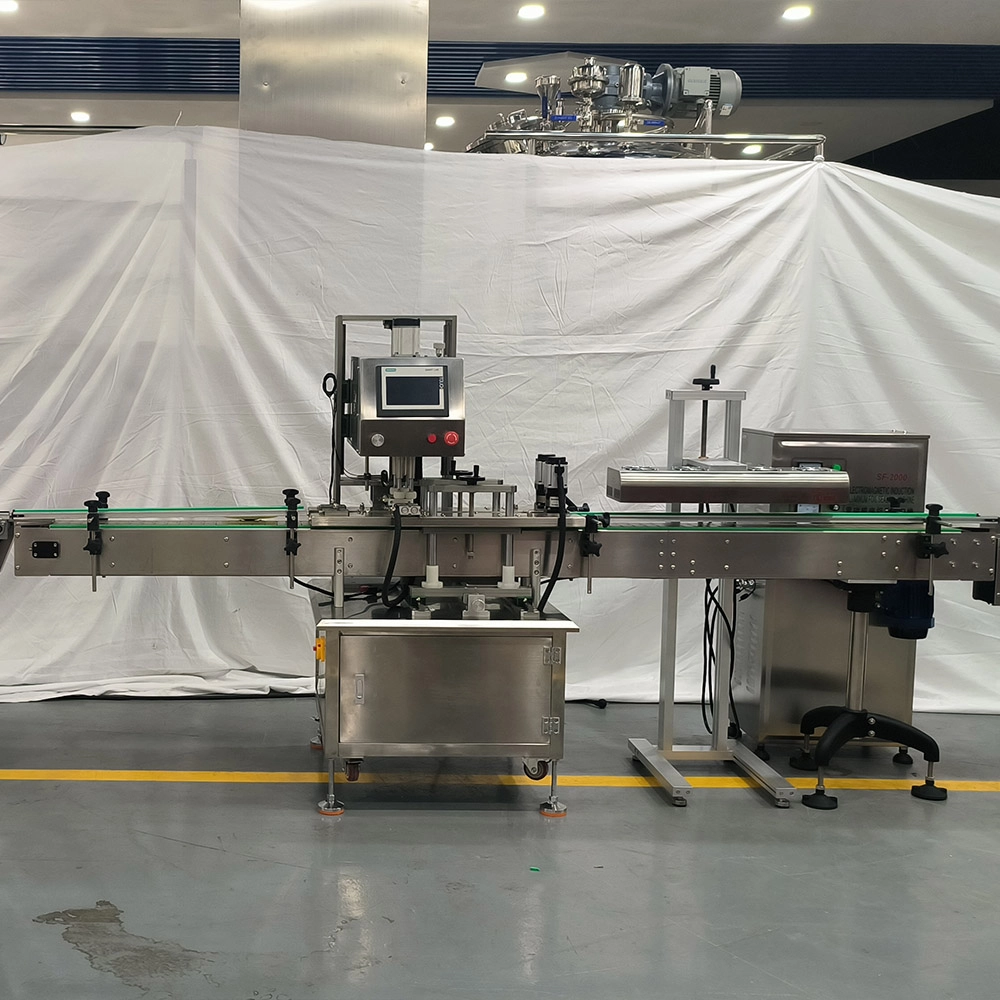
Avoiding Overfill and Underfill in Lotion Packaging
How to Customize Fill Volumes for Different Product SKUs
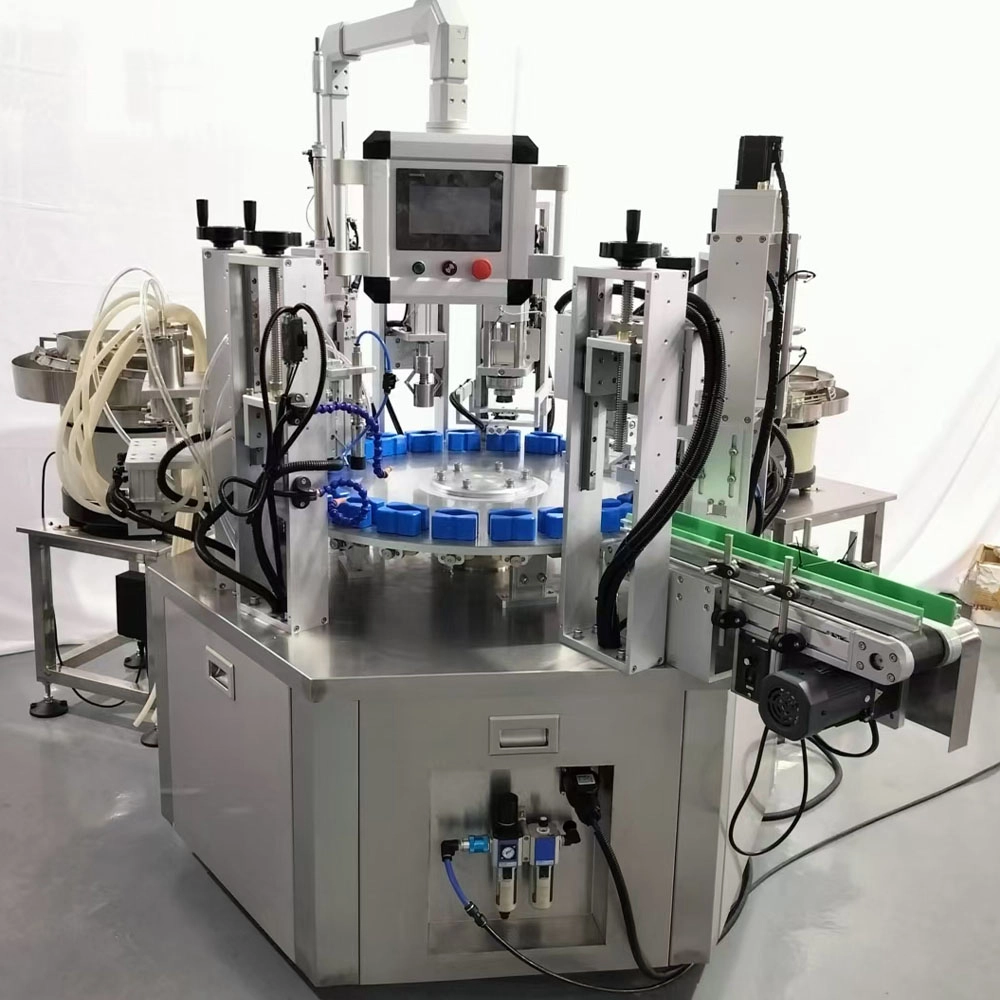
Top 10 China-Based Perfume Equipment Manufacturers for Export
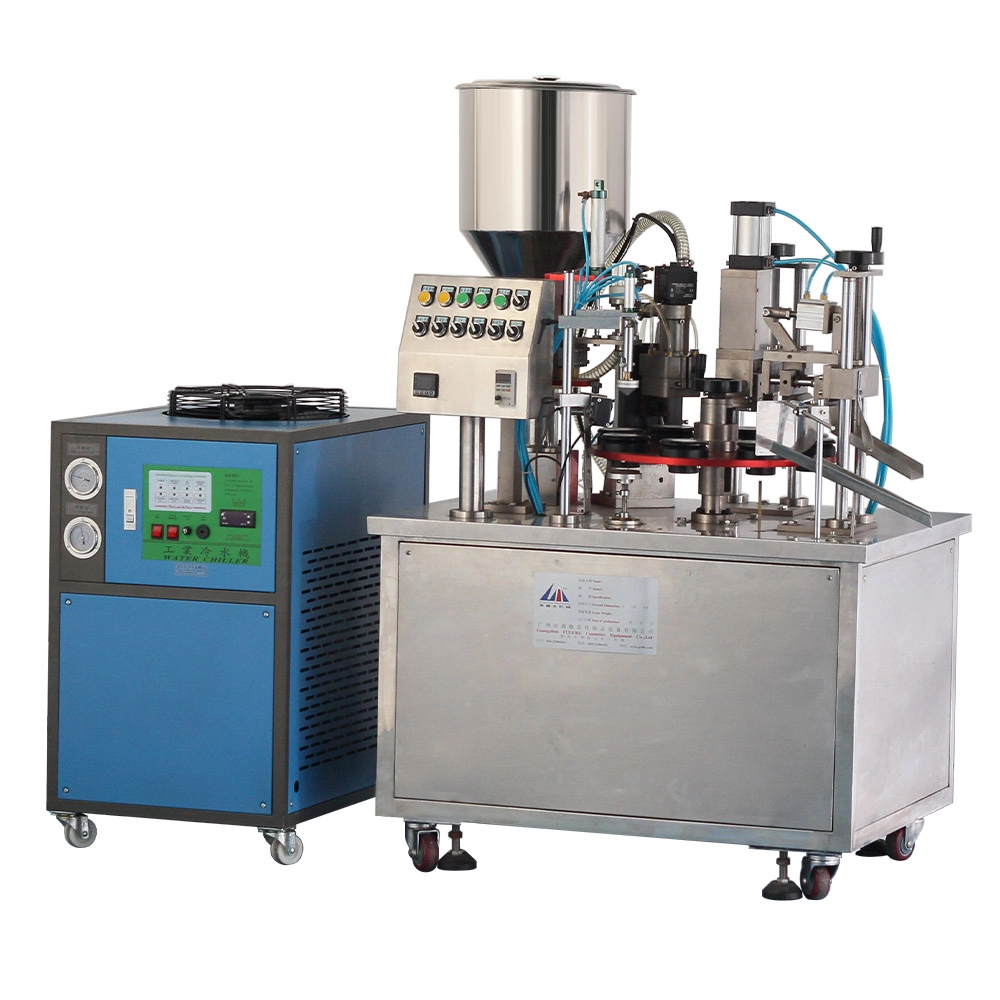
Choosing Servo vs Pneumatic Systems in Tube Filling & Sealing
Automatic Capping Machine
Can you make a design for us?
Yes, we can, we provide not only products, but also solutions and designs.
The Flip Cover Liquid Wash Mixing Homogenizing Tank
Can you customize the machine?
Of course, we provide customized services according to customer needs.
Automatic Tube Filling and Sealing Machine
Does the equipment meet the hygiene standards of the pharmaceutical/food industry? What precautions should be taken during daily cleaning?
The equipment fully complies with GMP hygiene certification. All material contact parts (drums, filling heads, and piping) are made of 316L/304 stainless steel, ensuring no unhygienic corners.
Daily cleaning precautions:
Before each material change, flush the material piping with purified water or food-grade detergent and then dry it with compressed air. Disassemble the filling heads and valves weekly to remove any residual material to prevent bacterial growth. Never use water directly on components such as the electrical control cabinet and motor. Always disconnect the power cord during cleaning to prevent short circuits.
Sealed Homogenizing Mixing Tank
Is it possible to not have a heating function?
Of course, if your product's production process doesn't require heating and cooling functions, then you can just make it a single-layer pot.
FAQs
How can customers contact FULUKE for inquiries or support?
You May Also Like
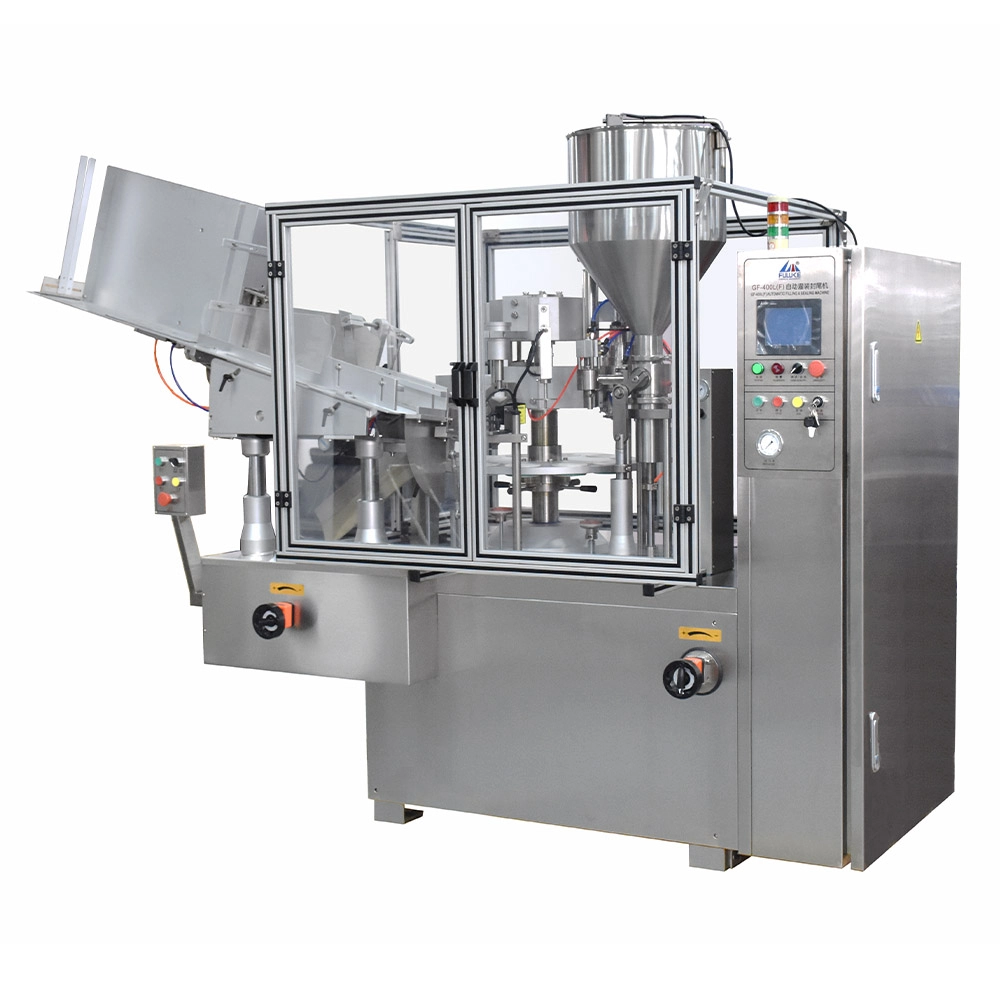
Automatic Tube Filling and Sealing Machine Toothpaste Sunscreen and Facial Cleanser Filling and Sealing Machine for Plastic and Aluminum-plastic Tube
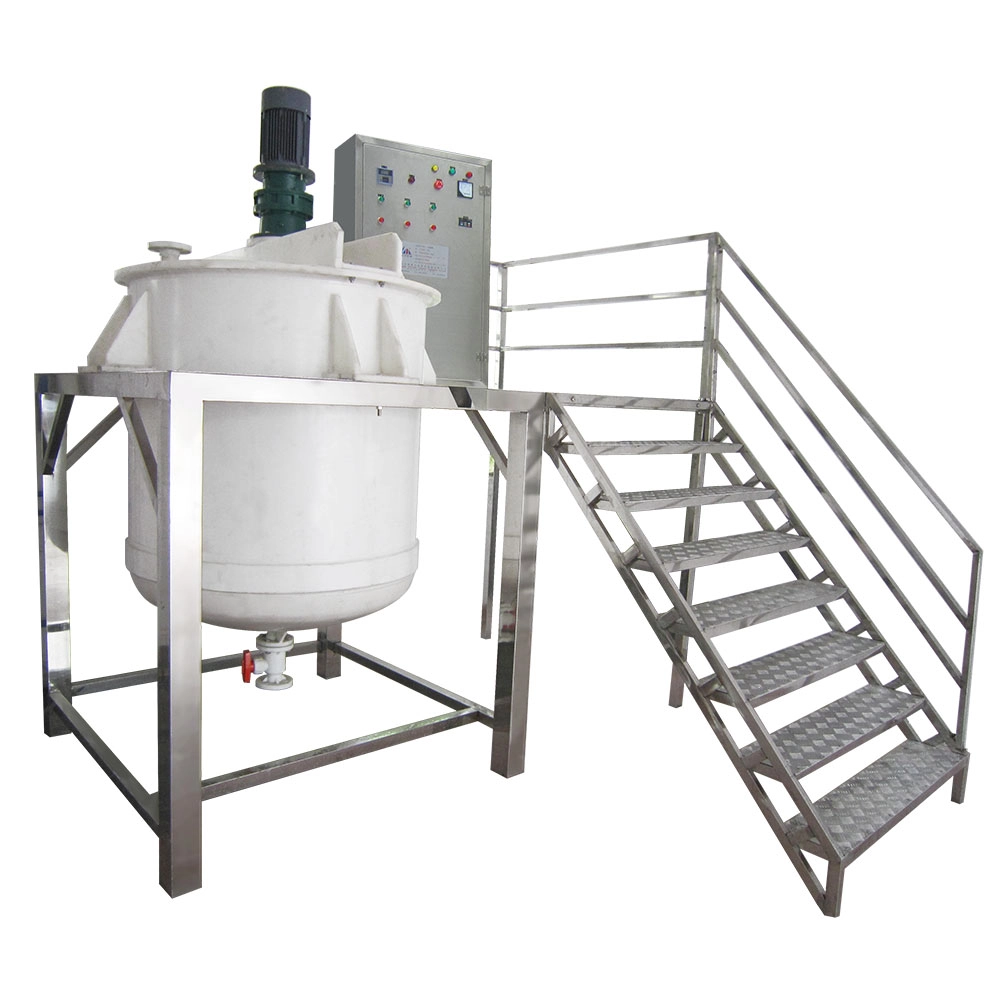
Polypropylene PP Mixing Tank Anti-Corrosion Mixer Reaction Kettle with Agitator Chemical Mixing Vessel
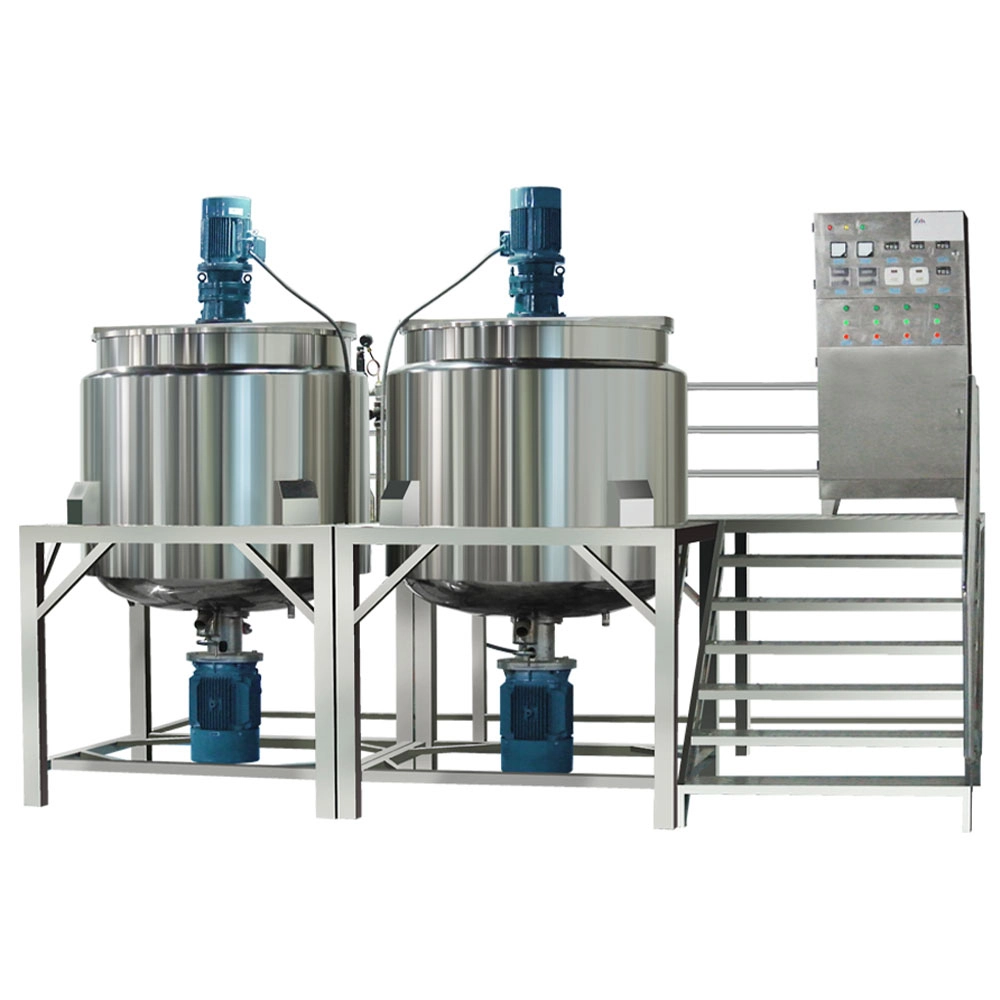
Flip Cover Multi-function Liquid Wash Mixing Tank Blender Liquid Detergent Mixer Homogenization Stirring Tank
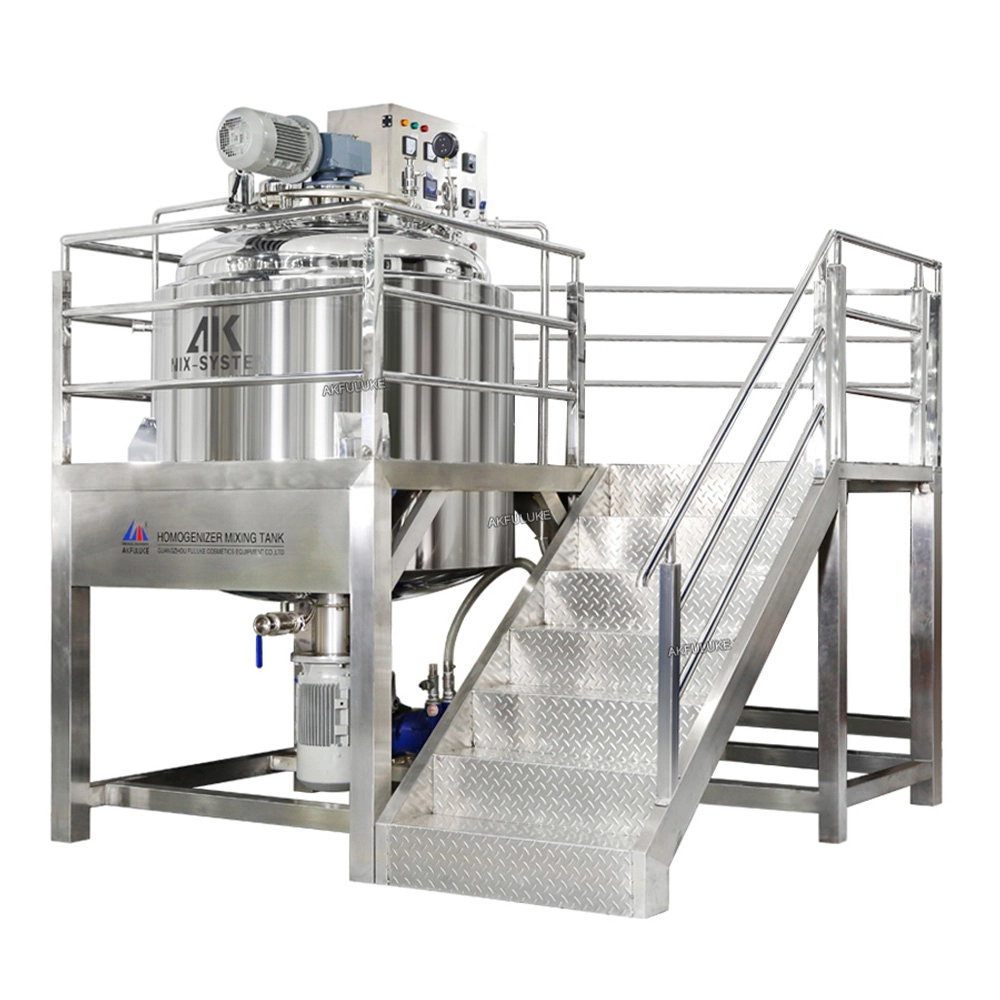
Stainless Steel Mixer Liquid Mixing tank with Agitator Homogenizing Mixing tank Vacuum Sealed Mixer Machine
Get in touch with FULUKE
If you have any comments or good suggestions, please leave us a message, later our professional staff will contact you as soon as possible.

A leading manufacturer specializing in advanced machinery and complete production lines for the cosmetics, food, pharmaceutical, and chemical industries worldwide.
Contact FULUKE
Facebook
Instagram
YouTube