
Benefits of Servo-Controlled Filling Systems for Cosmetics
- Why Servo-Controlled Filling Matters in Cosmetics
- High precision and consistent dosing
- Handling delicate formulations and variable viscosities
- Regulatory compliance and GMP alignment
- Key Technical Advantages of Servo-Controlled Filling Systems
- Closed-loop control and superior accuracy
- Reduced product waste and faster changeovers
- Integration with automation and Industry 4.0
- Operational and Business Benefits
- Improved yield and return on investment (ROI)
- Quality control, traceability, and reduced recalls
- Scalability and line throughput
- Selecting and Implementing the Right System
- Match the filling technology to your product characteristics
- Sanitary design, materials and compliance
- Validation, cleaning, and maintenance planning
- Retrofit and integration considerations
- Practical Implementation: Tips from Industry Experts
- Start with sample runs and process characterization
- Use data to continuously optimize
- Partner with suppliers that understand cosmetic formulations
- FAQ — Frequently Asked Questions
- Q: What is the main advantage of a servo-controlled filling system over a pneumatic filler?
- Q: Can servo fillers handle thick creams and paste-like cosmetics?
- Q: How do servo-controlled machines support regulatory compliance?
- Q: What maintenance is required for servo-driven liquid filling machines?
- Q: How quickly can I expect ROI after installing a servo-controlled filler?
Servo-controlled filling systems are reshaping cosmetic manufacturing by delivering the precision, flexibility, and traceability required for modern product lines. As a category of liquid filling machine, servo-driven equipment enables repeatable volumetric dosing for delicate formulations—creams, lotions, emulsions and low-to-medium viscosity liquids—while meeting regulatory expectations for Good Manufacturing Practices (GMP). Manufacturers that adopt servo-controlled systems can expect fewer rejects, faster line changeovers, and measurable cost savings across the production lifecycle.
Why Servo-Controlled Filling Matters in Cosmetics
High precision and consistent dosing
Cosmetic products demand tight fill tolerances to maintain brand quality and margin. Servo-driven actuators provide closed-loop control over piston displacement or valve timing, translating directly into consistent volumetric dosing. Compared with traditional cam-driven or purely pneumatic fillers, a servo-controlled liquid filling machine can reliably achieve fill accuracy within ±0.5% to ±1% depending on formulation and setup. This level of control minimizes giveaway and protects profit margins while ensuring customers receive consistently sized products.
Handling delicate formulations and variable viscosities
Creams and lotions are non-Newtonian and often shear-sensitive. Servo-controlled systems let you tune acceleration, speed, and dwell time so the filling motion is gentle yet fast. That reduces air entrapment, foam formation, and product degradation. The flexibility of servo control is especially useful when a facility packages multiple SKUs with different viscosities using the same filler, avoiding the need for separate machines.
Regulatory compliance and GMP alignment
Cosmetic production must follow quality and hygiene practices; ISO 22716 (cosmetics — Good Manufacturing Practices) provides internationally recognized guidance for cosmetic manufacturers (see ISO 22716). Servo-controlled filling machines designed with sanitary principles—316L/304 stainless steel contact parts, cleanable surfaces, and minimal dead space—help facilities meet GMP expectations and facilitate validation, cleaning, and inspections. For general regulatory context, see the U.S. FDA cosmetics information (FDA Cosmetics).
Key Technical Advantages of Servo-Controlled Filling Systems
Closed-loop control and superior accuracy
Servo drives operate with feedback (encoder or resolver), enabling closed-loop control that corrects for load variation and mechanical tolerance. This capability ensures that each cycle delivers the targeted mass or volume—essential when packaging High Quality skincare or therapeutic cosmetic products. Servo-based programs can be saved per SKU for instant recall, ensuring consistent set points between shifts and minimizing operator error.
Reduced product waste and faster changeovers
Fewer overfills, less product spillage, and reduced rework are direct outcomes of better control. Servo systems also enable quick recipe changes through touchscreen HMI, shortening changeover time between product runs. This is critical for cosmetics companies running multiple SKUs or seasonal collections where agility reduces time-to-shelf.
Integration with automation and Industry 4.0
Servo systems are inherently digital: they communicate easily with PLCs, vision systems, and MES/SCADA platforms for traceability, statistical process control (SPC), and remote diagnostics. When integrated into a conveyor line, a servo-controlled liquid filling machine coordinates capper, labeler, and packing processes to maintain synchronous throughput and data logging for compliance and QA.
Operational and Business Benefits
Improved yield and return on investment (ROI)
Initial capital for a servo-controlled filler may be higher than simpler machines, but operating savings accrue quickly through lower product giveaway, reduced labor, and fewer rejects. The precision reduces insurance of overfill and enables confident scaling of batch sizes. Below is a comparative table to help quantify benefits versus alternative filling technologies.
| Feature | Servo-Controlled Filling | Pneumatic/Cam-Driven Filling | Peristaltic/Gear Pump Filling |
|---|---|---|---|
| Accuracy | High (±0.5%–1%) | Moderate (±1%–3%) | Moderate; depends on pump wear |
| Flexibility (SKU change) | High — recipe-based via HMI | Low — mechanical adjustments needed | Medium — easier for liquids, harder for pastes |
| Suitable for viscous creams | Yes — adjustable motion profiles | Limited — may cause shear/foaming | Depends — some pumps struggle with particulates |
| Maintenance | Moderate — electronics + mechanical | Low — simple mechanics | High — pump tubing wear |
| Automation & data integration | High | Low | Medium |
Quality control, traceability, and reduced recalls
Built-in sensors, batch logging, and digital setpoint storage enable automated quality checks and traceability. Linking a servo-controlled filler to line vision systems or weight checks facilitates 100% in-line verification. This approach reduces the risk of underfilled or mislabeled products passing to market, a crucial factor for brand protection.
Scalability and line throughput
As demand grows, servo-driven machines scale by adding heads or synchronizing multiple units while keeping consistent fill performance. Many manufacturers design systems that handle glass and PET containers, various neck finishes, and different orientations—allowing conversion from low-to-medium volume to high-speed production lines with minimal retooling.
Selecting and Implementing the Right System
Match the filling technology to your product characteristics
When choosing a liquid filling machine, consider viscosity, particulates, foaming tendency, container type (glass, PET), and required throughput. Servo-controlled piston or integrated multi-head systems are excellent for creams and lotions, while peristaltic pumps may be preferred for aggressive chemistries or sterile applications. Work with vendors who can demonstrate performance with your specific formulations during FAT (Factory Acceptance Tests).
Sanitary design, materials and compliance
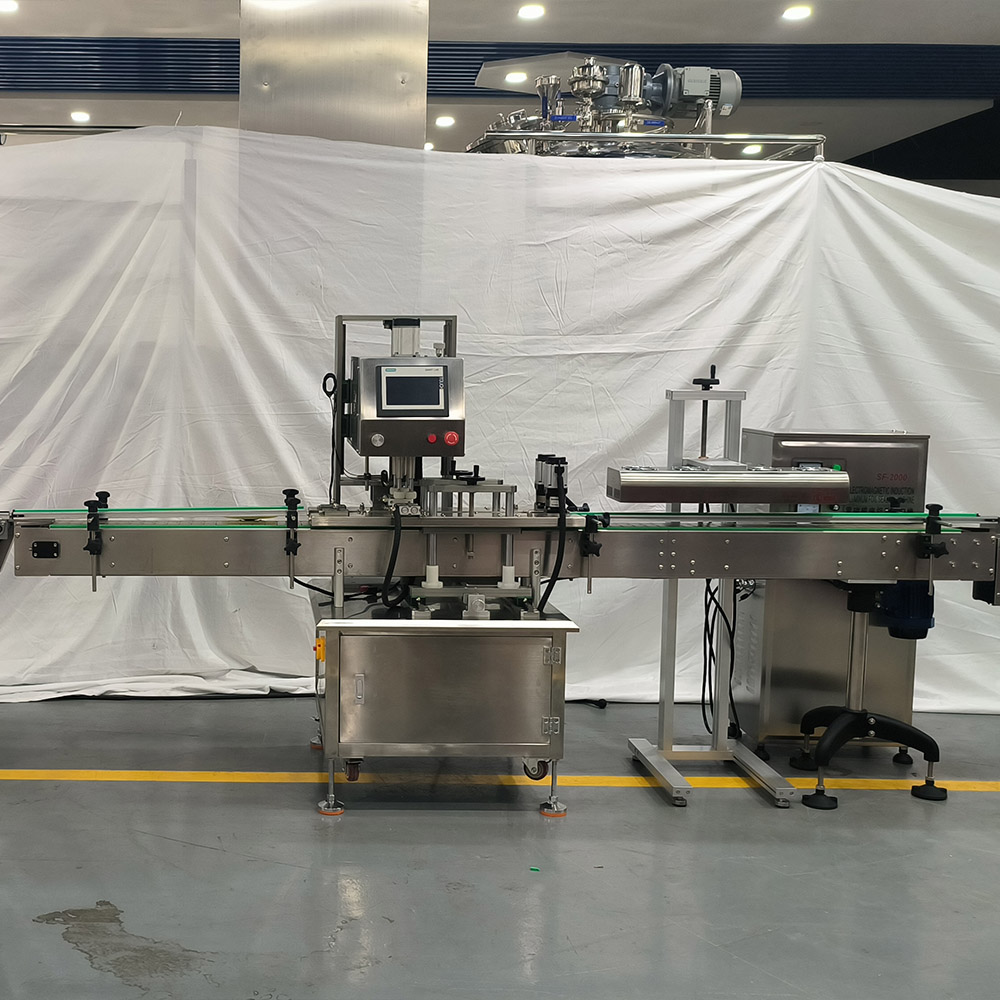
For cosmetics, contact surfaces in 316L or 304 stainless steel and hygienic fittings reduce contamination risk and simplify cleaning. Our featured product, the Automatic Filling Machine Quantitative Liquid Bottle Filling Machine High-precision cream and lotion filling machine, exemplifies this approach:
The automatic filling machine integrates automated conveying, precision filling, and intelligent control for packaging creams, lotions, and liquids. Suitable for a variety of containers, including glass and PET bottles, it can fill liquids, emulsions, and pastes with high precision.
Constructed with 316L/304 stainless steel contact components and compliant with GMP standards, it features a touchscreen interface for quick parameter adjustment and completes the entire process without manual intervention. Widely used in the cosmetics, food, daily chemical, pharmaceutical, and chemical industries, it helps companies reduce costs, increase efficiency, and ensure product standardization.
Validation, cleaning, and maintenance planning
Plan for CIP (Clean-In-Place) or easy disassembly for manual cleanings. Servo systems require both mechanical and electrical maintenance: periodic calibration of encoders, checks on seals and valves, and software backups for recipes. Keep documented SOPs and ensure staff are trained on both the mechanical and digital aspects of the filler.
Retrofit and integration considerations
If replacing an older liquid filling machine, evaluate whether a retrofit with servo drives and a modern HMI can achieve your goals. Retrofitting may be more cost-effective than full replacement if the existing mechanical structure is sound. Ensure integration with your line conveyors, capping, and labeling equipment, and include time for FAT and SAT (Site Acceptance Test) before full production.
Practical Implementation: Tips from Industry Experts
Start with sample runs and process characterization
Run representative SKUs in pilot mode to determine ideal fill profiles, head speeds, and nozzle geometries. Collect weight data and use SPC tools to set control limits. Many suppliers will perform on-site trials or lab demonstrations—use these to benchmark performance.
Use data to continuously optimize
Leverage the digital nature of servo fillers to collect production data (fill weights, cycle counts, error events). Regularly analyze trends to spot wear on components or incremental drift in calibration. This predictive approach reduces unplanned downtime and supports continuous improvement.
Partner with suppliers that understand cosmetic formulations
Choose vendors experienced with creams, lotions, and emulsions—those suppliers can recommend nozzle types, valve designs, and cleaning protocols specific to your chemistry. Reference industry practices and standards from reliable bodies such as the Filling Machine guidance and trade associations like the Personal Care Products Council when planning investments.
FAQ — Frequently Asked Questions
Q: What is the main advantage of a servo-controlled filling system over a pneumatic filler?
A: The main advantage is precise, repeatable control of fill volume and motion profiles. Servo systems provide closed-loop feedback and digital recipe storage, reducing overfill, minimizing waste, and enabling faster changeovers between SKUs.
Q: Can servo fillers handle thick creams and paste-like cosmetics?
A: Yes. Servo-controlled piston fillers and specially designed nozzles can handle medium-to-high viscosity creams and pastes by adjusting stroke speed, acceleration, and dwell times to avoid shearing or foaming.
Q: How do servo-controlled machines support regulatory compliance?
A: By enabling accurate dosing, sanitary construction (316L/304 stainless contact parts), digital batch records, and integration with QA systems. These features simplify validation and audit trails consistent with GMP expectations such as ISO 22716.
Q: What maintenance is required for servo-driven liquid filling machines?
A: Routine maintenance includes inspection of seals and valves, encoder calibration, lubrication of mechanical parts per manufacturer guidelines, software backups, and periodic verification of fill accuracy. A preventative maintenance schedule helps avoid unscheduled downtime.
Q: How quickly can I expect ROI after installing a servo-controlled filler?
A: ROI depends on throughput, product cost, and current giveaway. Typical payback periods range from 6 months to 2 years, factoring reduced product losses, lower labor costs, and improved throughput. Run a simple cost model using your product price, average overfill, and expected accuracy improvements to estimate payback.
If you would like to evaluate a servo-controlled filling solution for your production line, contact our sales team or view the product page for the Automatic Filling Machine Quantitative Liquid Bottle Filling Machine High-precision cream and lotion filling machine. Our specialists can arrange demonstrations, on-site trials, and provide ROI assessments tailored to your SKUs.
Contact us: For pricing, technical specifications, or to schedule a demo, please contact our sales team or view the product details.
Authoritative resources and further reading: ISO 22716 — Good Manufacturing Practices for Cosmetics, U.S. FDA Cosmetics Guidance, Filling Machine (Wikipedia), Servomotor (Wikipedia).
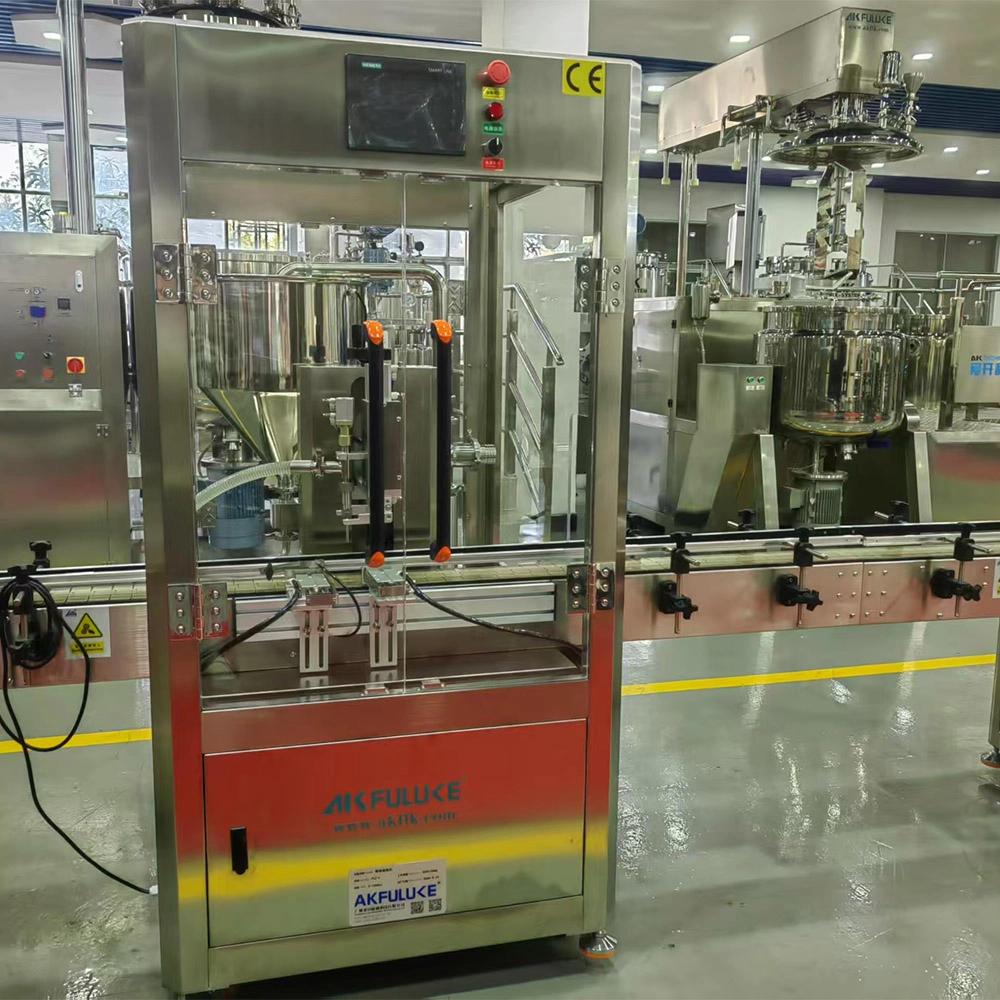
How to Implement CIP on Lotion and Cream Filling Machines
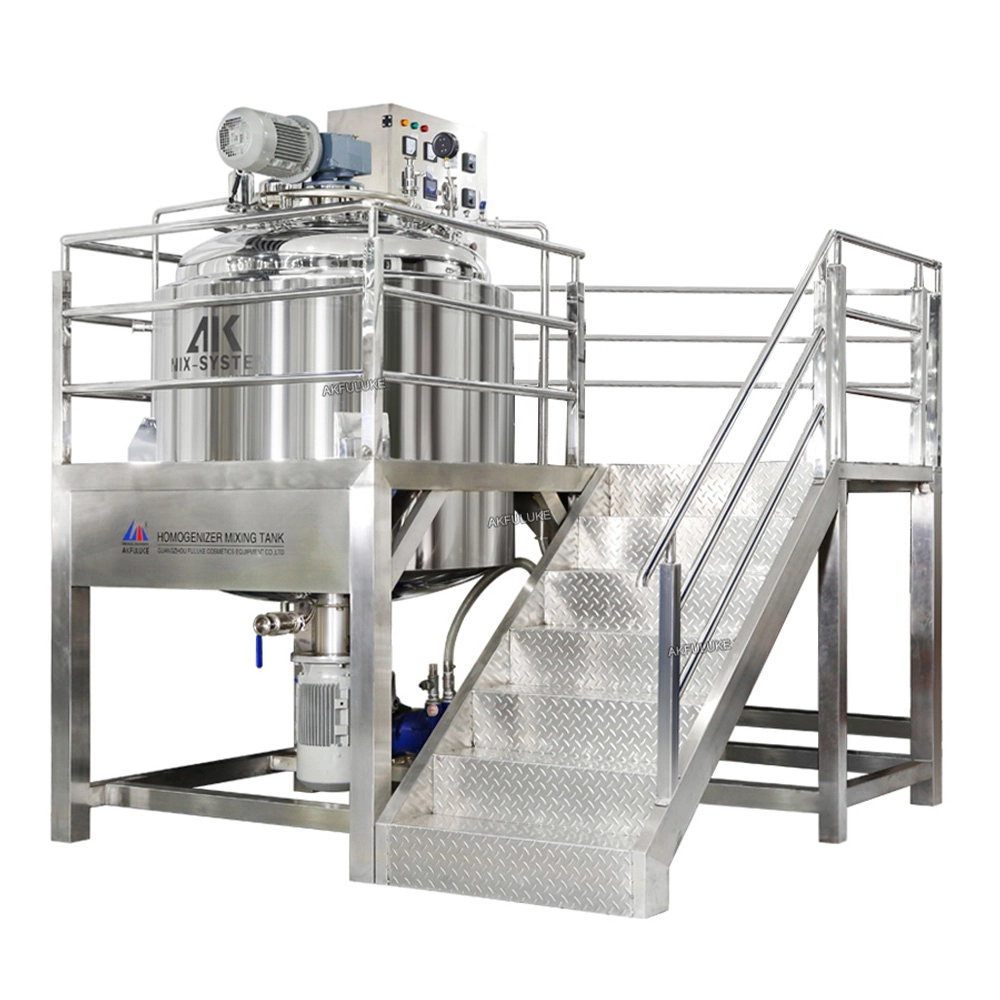
Procurement Checklist: Selecting a Reliable Mixer Manufacturer
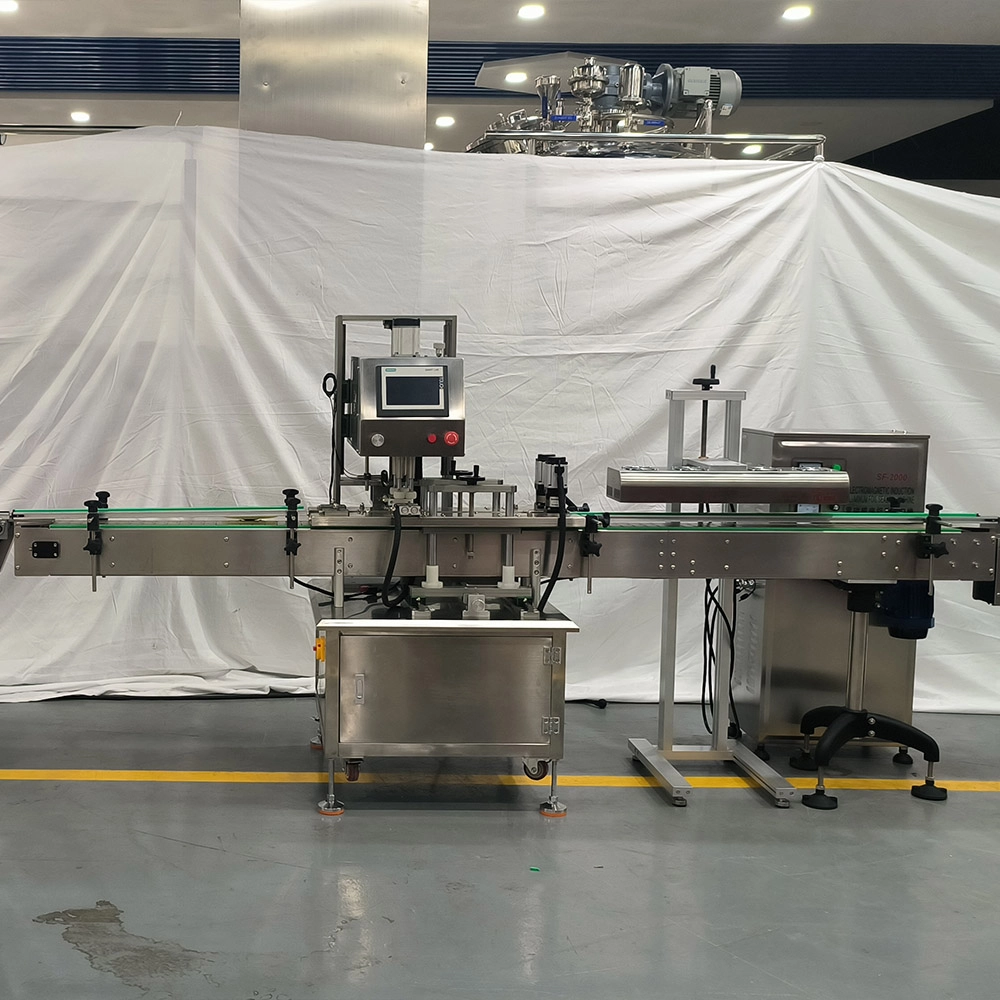
Implementing Safety Interlocks on Filling Equipment
Top 10 perfume making machine Manufacturers and Supplier Brands in 2026
FAQs
Where is FULUKE headquartered?
Perfume Filling Machine
What are the key differences between semi-automatic and fully automatic models? How should I choose?
Semi-automatic: Semi-automatic perfume filling machines only perform the core filling process and require manual assistance for bottle loading and capping. Filling speed: 10-20 bottles/minute, suitable for small-batch production. One or two people are required for assistance.
Fully automatic: Automatic perfume filling machines integrate the entire filling, capping, capping, and inspection process.
Filling speed: 30-50 bottles/minute, suitable for large-scale production. The entire process is unmanned, requiring only regular inspections.
Automatic Labeling Machine
Can you customize the machine?
Of course, we provide customized services according to customer needs.
Automatic Tube Filling and Sealing Machine
Can the device accommodate tubes of different materials and specifications?
Yes. The device supports plastic (PE, PP) and aluminum-plastic composite hoses. The compatible hose diameter range is typically Φ10-Φ60mm (customizable to user specifications), and the capacity range is 2.5ml-400ml. By replacing specialized molds (such as cylinders and filling heads), the device can be adapted to meet different filling volumes, providing flexible adaptability.
Inkjet Printing Machine
What content can an inkjet printer print?
It can print text, time, date (Julian Year), logo, shift, SN, Dynamic Barcode/OR Code, Dynamic Serial Data, and Dynamic Database (additional content can be added as required).
You May Also Like
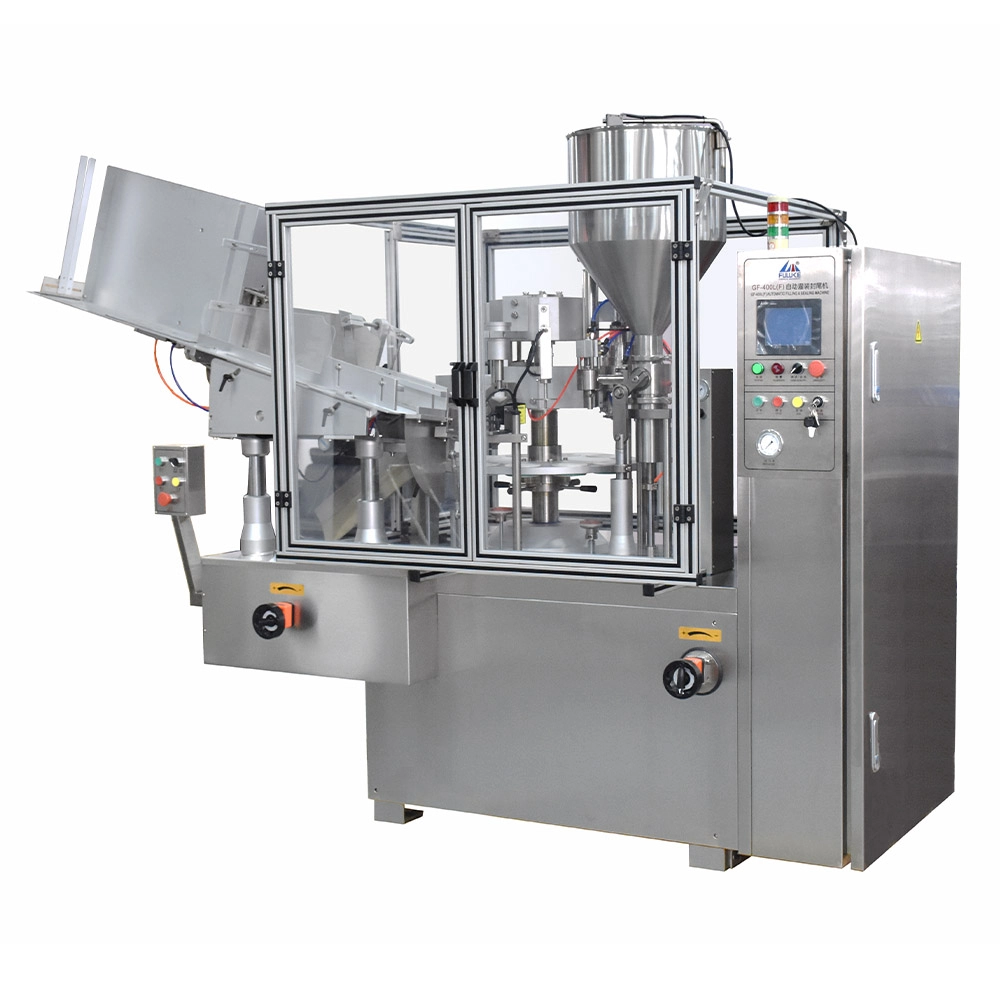
Automatic Tube Filling and Sealing Machine Toothpaste Sunscreen and Facial Cleanser Filling and Sealing Machine for Plastic and Aluminum-plastic Tube
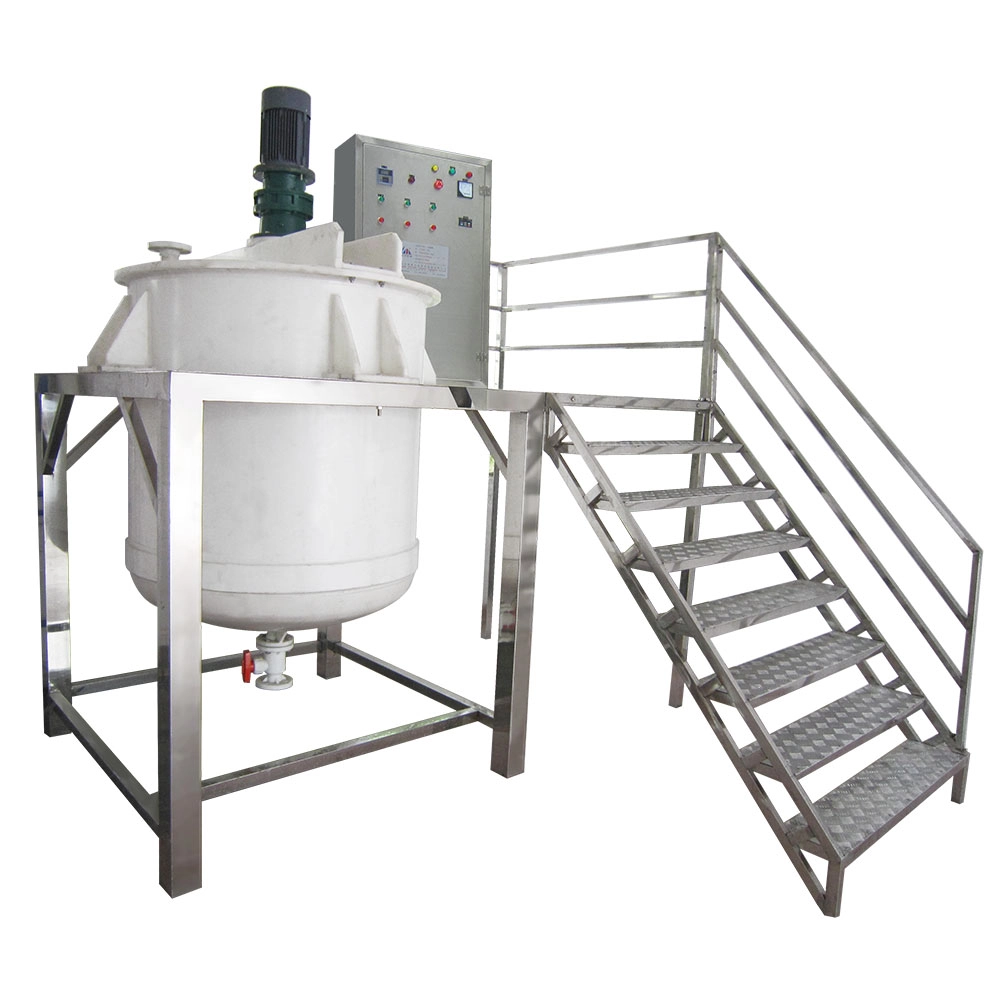
Polypropylene PP Mixing Tank Anti-Corrosion Mixer Reaction Kettle with Agitator Chemical Mixing Vessel
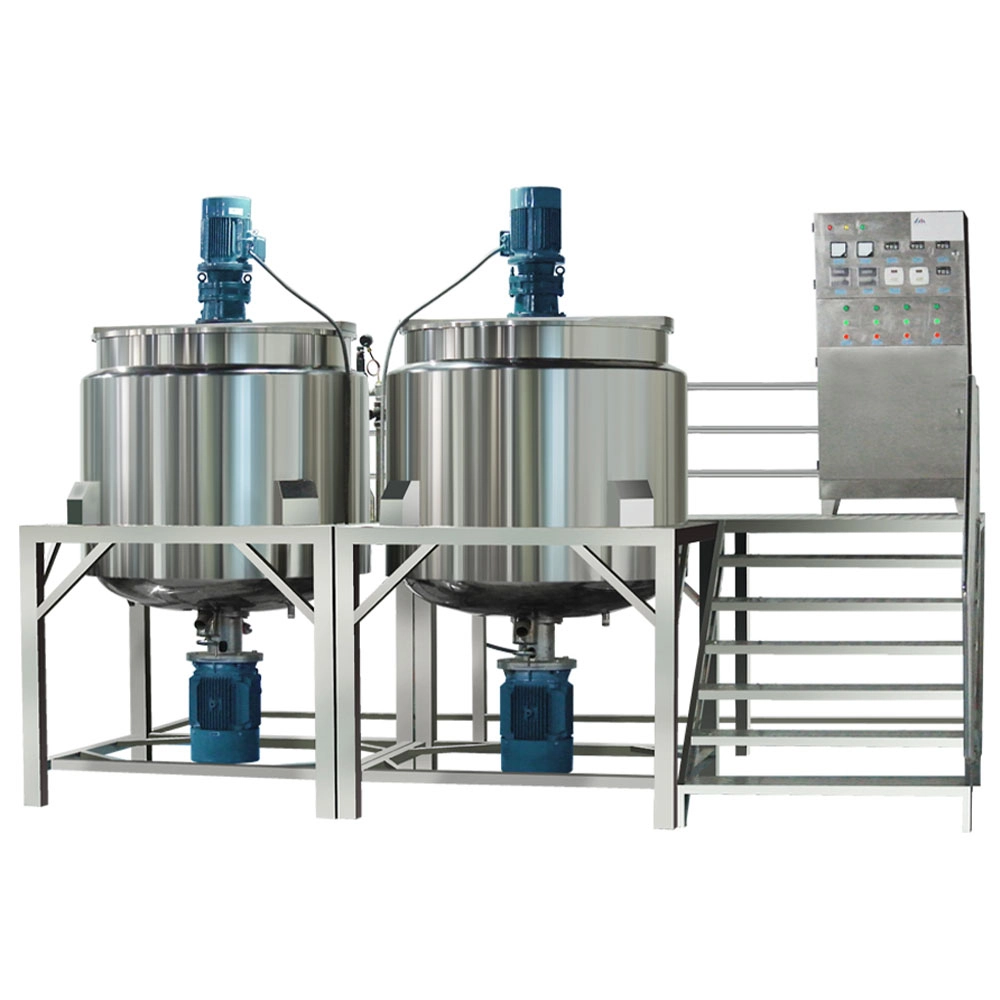
Flip Cover Multi-function Liquid Wash Mixing Tank Blender Liquid Detergent Mixer Homogenization Stirring Tank
Stainless Steel Mixer Liquid Mixing tank with Agitator Homogenizing Mixing tank Vacuum Sealed Mixer Machine
Get in touch with FULUKE
If you have any comments or good suggestions, please leave us a message, later our professional staff will contact you as soon as possible.

A leading manufacturer specializing in advanced machinery and complete production lines for the cosmetics, food, pharmaceutical, and chemical industries worldwide.
Contact FULUKE
Facebook
Instagram
YouTube