
Choosing Between Single and Multi-Head Filling Machines
- Balancing throughput, precision and compliance in modern filling operations
- Understanding machine types and how they differ
- What is a single-head liquid filling machine?
- What is a multi-head filling machine?
- When the term liquid filling machine matters
- Key factors to evaluate before selecting a filling solution
- Throughput vs. accuracy trade-offs
- Product viscosity and filling technology
- Changeover, flexibility and SKU mix
- Practical comparisons and cost considerations
- Capital expenditure, operating costs and ROI
- Maintenance, sanitation and regulatory compliance
- Footprint and line integration
- Comparison table: single-head vs multi-head (typical ranges)
- Application guidance: choose based on business needs
- When to choose a single-head liquid filling machine
- When to choose a multi-head liquid filling machine
- How the featured machine fits both worlds
- Validation, documentation and sourcing considerations
- Quality documentation and traceability
- Vendor evaluation checklist
- Third-party references and standards
- FAQ — Frequently Asked Questions
- 1. Which filling machine type gives the best accuracy for creams?
- 2. Can the automatic filling machine handle both glass and PET bottles?
- 3. How do I choose nozzle type for emulsions vs thin liquids?
- 4. What cleaning and sanitation features should I expect?
- 5. How does uptime compare between single-head and multi-head machines?
- 6. Are spare parts and service widely available?
- Next steps: evaluate fit and request a demo
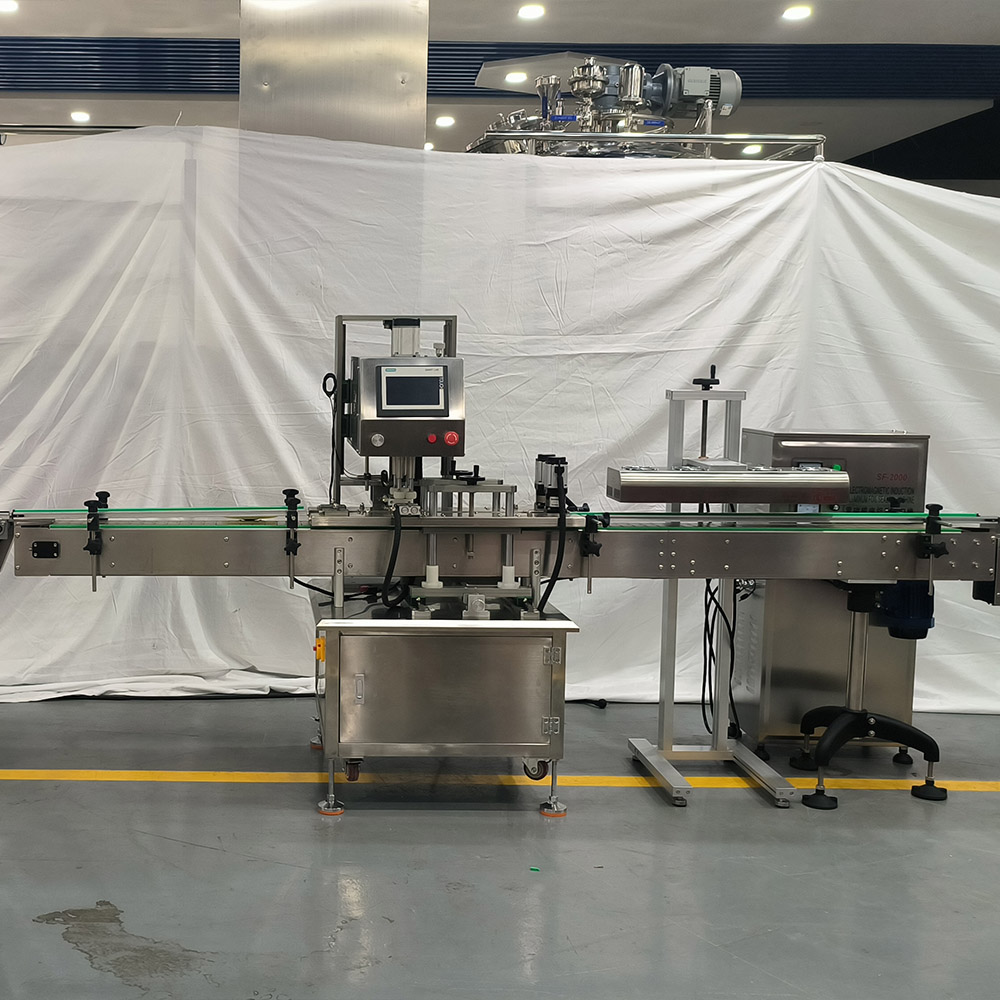
Balancing throughput, precision and compliance in modern filling operations
Choosing the right liquid filling machine is critical for cosmetics and personal care brands seeking to scale production while maintaining product quality and regulatory compliance. Whether you operate a startup line producing small batches of cream or a high-volume facility filling lotions in PET bottles, the decision between a single-head and a multi-head filling machine affects throughput, accuracy, footprint, and total cost of ownership. This article explains the technical differences, business trade-offs, and how the Automatic Filling Machine Quantitative Liquid Bottle Filling Machine High-precision cream and lotion filling machine can be a fit for many scenarios.
Understanding machine types and how they differ
What is a single-head liquid filling machine?
A single-head liquid filling machine uses one dispensing nozzle (filling head) to deposit product into containers sequentially. These machines are typically simpler, have a smaller footprint, and are easier to maintain. They are well suited for low-to-medium production volumes, frequent changeovers, and high-viscosity creams and pastes where precise control per dose is critical.
What is a multi-head filling machine?
Multi-head filling machines employ multiple nozzles working in parallel to fill several containers at once. By increasing parallelism, these machines achieve higher throughput and are common in medium-to-high volume production lines where the product and container size are stable. Multi-head machines often integrate synchronised conveying and indexing systems to align bottles under heads for simultaneous filling.
When the term liquid filling machine matters
Liquid filling machine is an umbrella term covering both single- and multi-head equipment as well as piston, peristaltic, gravity, and pump-based systems. Choosing the right drive and head configuration depends on product rheology (liquid, emulsion, paste), required filling accuracy, container type (glass, PET), and regulatory standards such as GMP.
Key factors to evaluate before selecting a filling solution
Throughput vs. accuracy trade-offs
Higher throughput generally pushes manufacturers toward multi-head systems. However, increasing the number of heads can complicate accuracy and dosing consistency if not engineered properly. For high-value cosmetics (e.g., High Quality creams), dose accuracy is essential to control product giveaway and ensure batch consistency. The Automatic Filling Machine Quantitative Liquid Bottle Filling Machine High-precision cream and lotion filling machine is designed to deliver high-precision dosing suitable for both low giveaway and hygienic handling.
Product viscosity and filling technology
Viscous creams and lotions require controlled positive displacement (piston) or pump-driven filling rather than gravity. Single-head piston fillers can provide stable stroke-by-stroke control for high-viscosity materials, while multi-head piston configurations scale that control across multiple lines. For delicate emulsions where shear must be minimized, peristaltic pumps or gentle piston mechanisms are preferable.
Changeover, flexibility and SKU mix
If your operation runs many SKUs with frequent container or fill-volume changes, single-head or modular multi-head machines with quick-change nozzles and recipe storage are advantageous. Multi-head setups can be less flexible if heads are fixed in configuration. The featured automatic filling machine includes an intuitive touchscreen for quick parameter adjustment, enabling fast changeovers and recipe recall to support varied production runs.
Practical comparisons and cost considerations
Capital expenditure, operating costs and ROI
Initial cost scales with number of heads, automation level, and support systems (conveyors, sterilization, vision inspection). Multi-head systems typically have higher upfront cost but lower labor cost per unit at scale. Single-head machines have lower CAPEX and may reach ROI faster for lower volumes or high SKU variability. Consider total cost of ownership (TCO): maintenance, spare parts, and downtime are often larger drivers of long-term expense than initial price.
Maintenance, sanitation and regulatory compliance
Stainless steel contact parts (316L/304) and adherence to GMP are non-negotiable in cosmetics and pharma-adjacent production. Machines built to GMP standards reduce contamination risk and simplify cleaning validation. The Automatic Filling Machine Quantitative Liquid Bottle Filling Machine High-precision cream and lotion filling machine is constructed with 316L/304 stainless steel contact components and meets GMP expectations, making it suitable across cosmetics, food, daily chemical, and pharmaceutical lines. For authoritative guidance on cosmetics manufacturing and GMP, refer to the FDA's cosmetics overview: FDA Cosmetics and ISO guidelines like ISO 22716 (Cosmetics — GMP).
Footprint and line integration
Physical footprint, conveyor synchronization, and upstream/downstream stations (capping, labeling, inspection) influence whether a single-head or multi-head machine is optimal. Multi-head machines may reduce parallel processing stations but require precise line control. For compact facilities or pilot lines, single-head machines are often the pragmatic choice.
Comparison table: single-head vs multi-head (typical ranges)
| Factor | Single-Head | Multi-Head |
|---|---|---|
| Typical throughput (bottles/min) | 5–80 (depends on product viscosity and cycle time) | 50–500+ (scales with number of heads and index speed) |
| Accuracy | Very high per dose; easy to calibrate | High if well-synchronised; requires balancing across heads |
| Flexibility | Excellent — fast changeovers for multiple SKUs | Good to moderate — best for stable SKUs |
| CAPEX | Lower | Higher |
| Maintenance complexity | Lower | Higher — more points of failure |
Notes: ranges depend on product rheology, container size, dosing mechanism (piston/pump), and automation level.
Application guidance: choose based on business needs
When to choose a single-head liquid filling machine
- Small to medium production volumes or frequent SKU changeovers.
- High-viscosity creams, pastes or emulsions requiring precise stroke control.
- Limited floor space or lower initial investment budget.
- Pilot production, R&D labs, contract manufacturers with many clients.
When to choose a multi-head liquid filling machine
- High-volume production with stable SKUs and container formats.
- Want to minimize labor per unit and achieve higher throughput.
- Well-controlled supply of consistent product viscosity and container feed.
- Long production runs where CAPEX can be amortized.
How the featured machine fits both worlds
The Automatic Filling Machine Quantitative Liquid Bottle Filling Machine High-precision cream and lotion filling machine integrates automated conveying, precision filling, and intelligent control for packaging creams, lotions, and liquids. Its design supports a range of containers including glass and PET bottles, and can handle liquids, emulsions, and pastes with high precision. It features GMP-compliant sanitary materials and a touchscreen interface for quick parameter adjustment, enabling low-manual operation and flexible recipe management.
The automatic filling machine integrates automated conveying, precision filling, and intelligent control for packaging creams, lotions, and liquids. Suitable for a variety of containers, including glass and PET bottles, it can fill liquids, emulsions, and pastes with high precision.
Constructed with 316L/304 stainless steel contact components and compliant with GMP standards, it features a touchscreen interface for quick parameter adjustment and completes the entire process without manual intervention. Widely used in the cosmetics, food, daily chemical, pharmaceutical, and chemical industries, it helps companies reduce costs, increase efficiency, and ensure product standardization.
Validation, documentation and sourcing considerations
Quality documentation and traceability
Look for equipment with clear documentation (IQ/OQ/PQ support), spare parts lists, and service networks. For regulated products or export markets, traceability and documented sanitation procedures align with GMP expectations. WHO and industry guidelines on GMP and quality systems can be referenced for establishing robust documentation: WHO Quality & Safety.
Vendor evaluation checklist
When evaluating vendors, assess:
- Material of contact parts (316L/304 stainless steel preferred).
- Cleaning and CIP/sterilization capability.
- Control system and HMI ease-of-use (recipe storage, error logs).
- Spare parts availability and training support.
- Third-party certifications and GMP-aligned design.
Third-party references and standards
Industry resources such as the Filling machine overview and ISO/FDA guidance provide baseline expectations for hygienic design and process control. Refer to authoritative standards when developing validation protocols and sanitation procedures.
FAQ — Frequently Asked Questions
1. Which filling machine type gives the best accuracy for creams?
Piston or pump-driven single-head systems often provide the best per-dose accuracy for viscous creams and pastes because they control the exact dispensed volume stroke-by-stroke. Multi-head piston systems can match this accuracy if each head is individually monitored and calibrated.
2. Can the automatic filling machine handle both glass and PET bottles?
Yes. The Automatic Filling Machine Quantitative Liquid Bottle Filling Machine High-precision cream and lotion filling machine is designed to accommodate a variety of containers, including glass and PET, with adjustable holders and conveyor settings for different diameters and heights.
3. How do I choose nozzle type for emulsions vs thin liquids?
Emulsions and high-viscosity products typically require larger bore, low-shear nozzles or piston filling to avoid product damage. Thin liquids can use narrower nozzles or gravity/peristaltic systems. Your fill speed, required accuracy, and product shear sensitivity dictate the best nozzle and filler type.
4. What cleaning and sanitation features should I expect?
Look for easy-disassembly nozzles, CIP-capable piping, and smooth hygienic surfaces (316L stainless steel) to prevent product traps. Validation-friendly features like documented clean cycles and drainability are important for compliance.
5. How does uptime compare between single-head and multi-head machines?
Uptime depends on maintenance practices and redundancy. Single-head machines have fewer components and can be quicker to repair; multi-head machines have more points of failure but often include redundancy and diagnostics. Regular preventive maintenance is essential for both types.
6. Are spare parts and service widely available?
Choose established suppliers who provide spare parts kits, training, and remote diagnostics. The cost and availability of spare parts should be part of your TCO calculation.
Next steps: evaluate fit and request a demo
If you need a reliable, GMP-compliant filling solution that balances precision with automation, consider the Automatic Filling Machine Quantitative Liquid Bottle Filling Machine High-precision cream and lotion filling machine for pilot runs or scale-up. For more detailed guidance, validation documentation, or a site demo, contact our sales & technical team.
Contact Sales | View Product Details
References: Filling machine overview: Wikipedia; FDA cosmetics resources: FDA; ISO 22716: ISO; WHO quality and safety guidance: WHO.
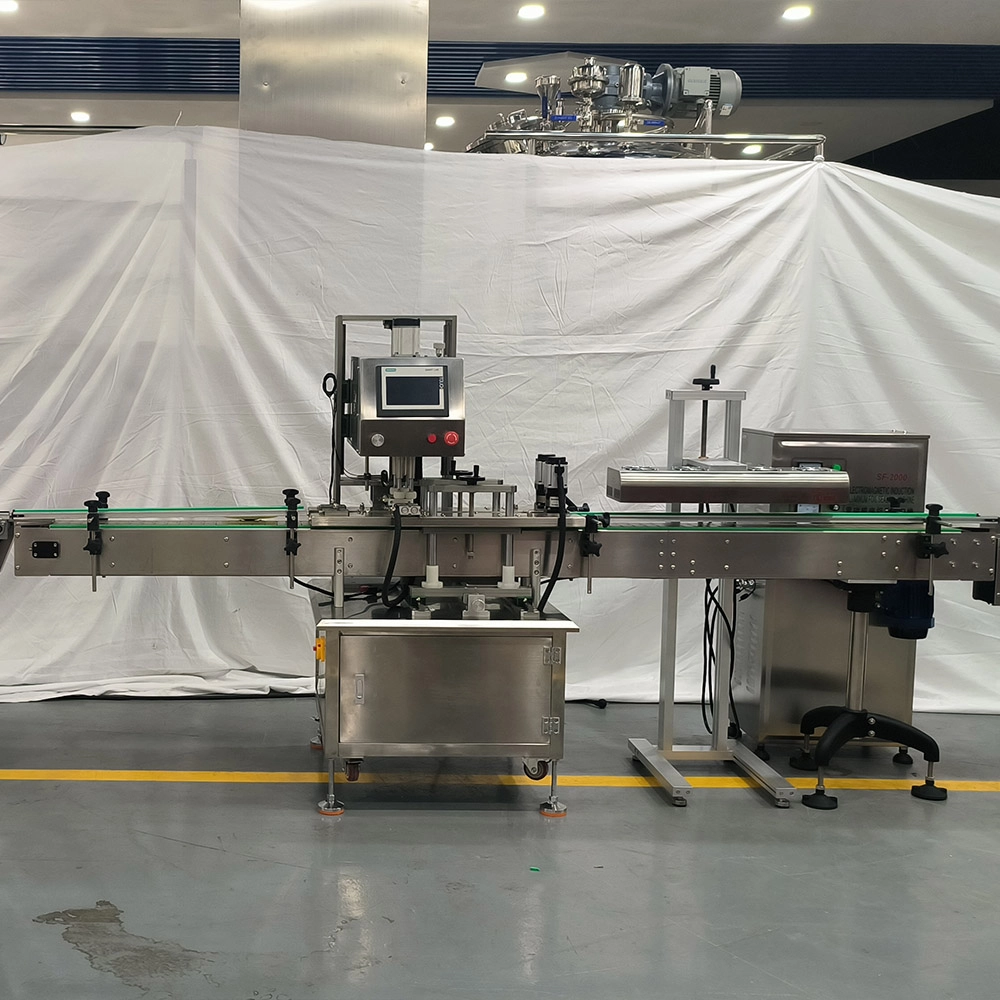
Hygienic Design Principles for Cosmetic Filling Machines
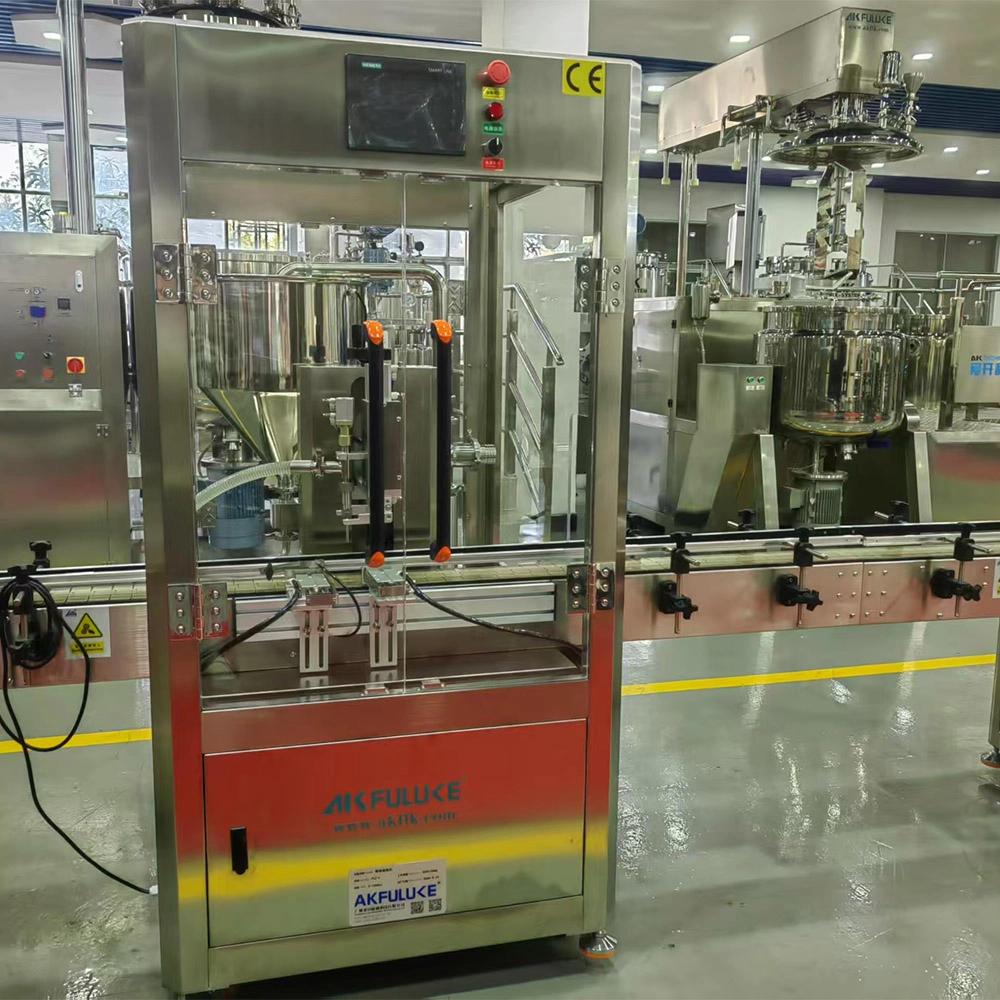
Maintenance Tips to Maximize Filling Machine Uptime
Managing Viscous Liquids: Best Practices for Cream Fillers
Compare Filling Technologies: Piston vs Peristaltic vs Pump
Perfume Freezing Filter Making Machine
Why does perfume require freeze filtration? Is traditional filtration an alternative?
Traditional filtration only removes visible solid impurities. Soluble organic matter, colloids, and trace microorganisms in perfume are difficult to separate at room temperature, easily leading to turbidity, precipitation, and aroma deterioration after storage. Freeze filtration uses a low-temperature environment of -5°C to -15°C (depending on the formulation) to condense these hidden impurities into solid particles. These particles are then thoroughly trapped through precision filtration, while simultaneously allowing the fragrance components to fully blend. This is a core process that ensures the stability of high-end perfumes.
Sealed Homogenizing Mixing Tank
What is the structure of an agitator?
The agitator usually consists of a "frame agitator (SUS316L material) + scraper (PTFE)" or an anchor agitator.
Automatic Facial Mask Filling Machine
Can you make a design for us?
Yes, we can, we provide not only products, but also solutions and designs.
Perfume Filling Machine
Who are we?
Our headquarters is located in Guangzhou, Guangdong, China, and our factory is located in Yangzhou, Jiangsu. Our products are sold all over the world. We have approximately 50 employees in our company and factory.
RO Water Treatment
What is RO water treatment? What is the core function of RO membranes?
RO water treatment, or reverse osmosis water treatment technology, utilizes the selective permeability of reverse osmosis membranes (RO membranes). Under external pressure, water molecules are forced through the membrane while impurities (such as salt, heavy metals, organic matter, and microorganisms) are retained, thereby purifying the water.The core function of RO membranes is high-precision filtration. With a pore size of only approximately 0.1 nanometers, they can effectively remove over 99% of dissolved solids (such as calcium and magnesium ions), heavy metals (such as lead and arsenic), bacteria, viruses, and organic matter from water, producing extremely pure water.
You May Also Like
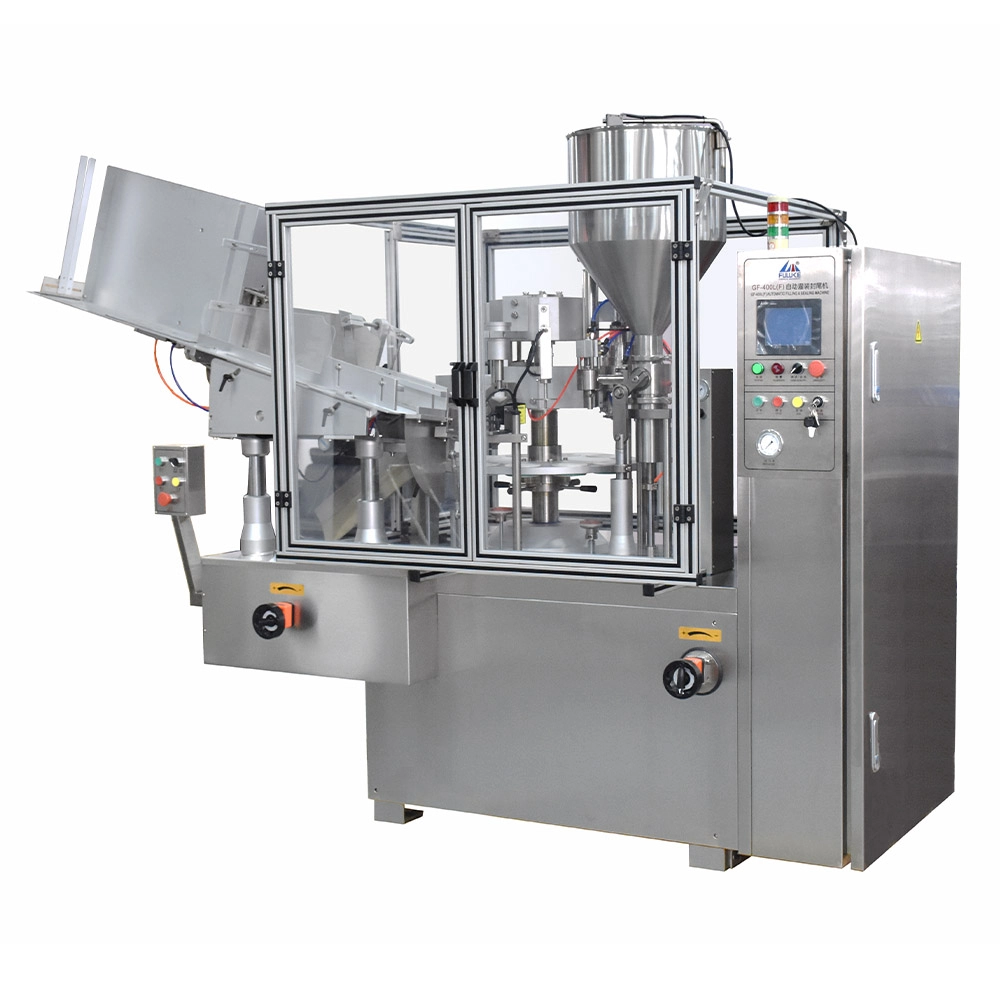
Automatic Tube Filling and Sealing Machine Toothpaste Sunscreen and Facial Cleanser Filling and Sealing Machine for Plastic and Aluminum-plastic Tube
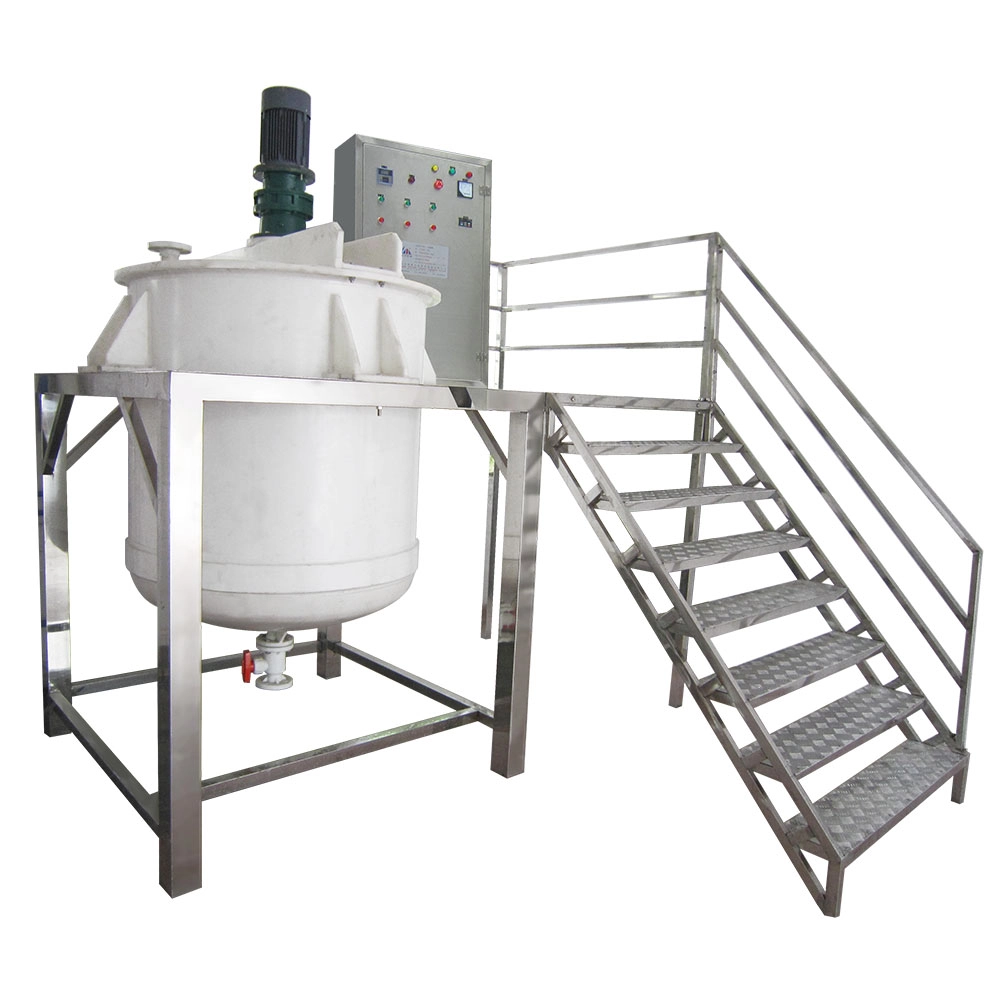
Polypropylene PP Mixing Tank Anti-Corrosion Mixer Reaction Kettle with Agitator Chemical Mixing Vessel
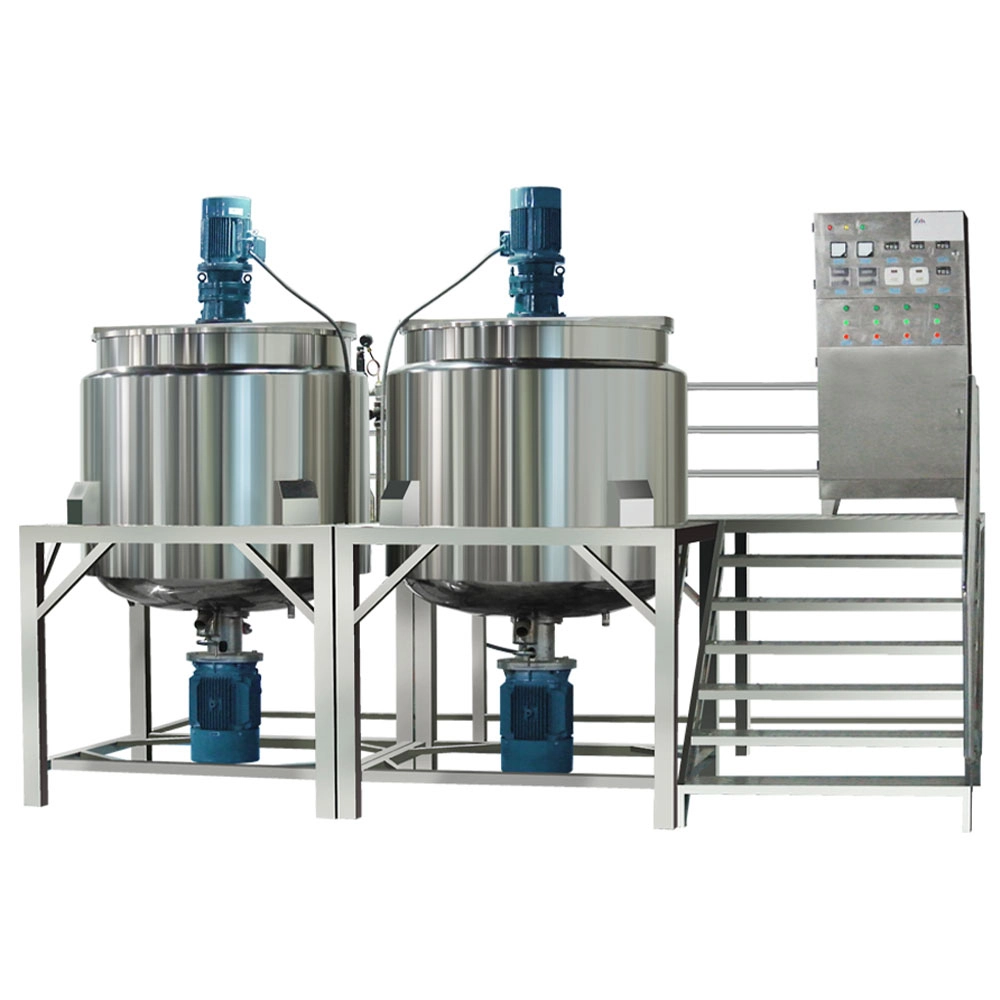
Flip Cover Multi-function Liquid Wash Mixing Tank Blender Liquid Detergent Mixer Homogenization Stirring Tank
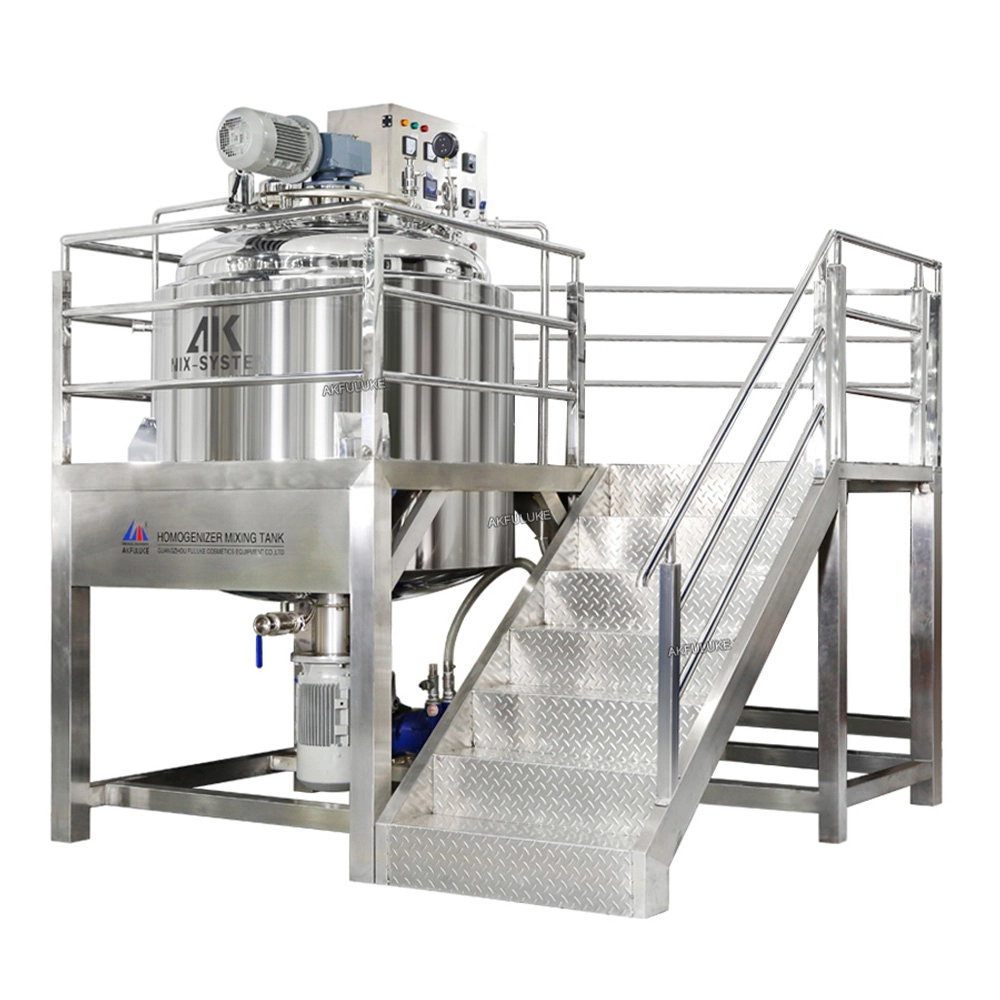
Stainless Steel Mixer Liquid Mixing tank with Agitator Homogenizing Mixing tank Vacuum Sealed Mixer Machine
Get in touch with FULUKE
If you have any comments or good suggestions, please leave us a message, later our professional staff will contact you as soon as possible.

A leading manufacturer specializing in advanced machinery and complete production lines for the cosmetics, food, pharmaceutical, and chemical industries worldwide.
Contact FULUKE
Facebook
Instagram
YouTube