
Stainless Steel Mixer Benefits for Liquid Processing Procurement
- Stainless Steel Mixer Benefits for Liquid Processing Procurement — Why a mixing tank with agitator matters
- Why procurement teams should prioritize a mixing tank with agitator
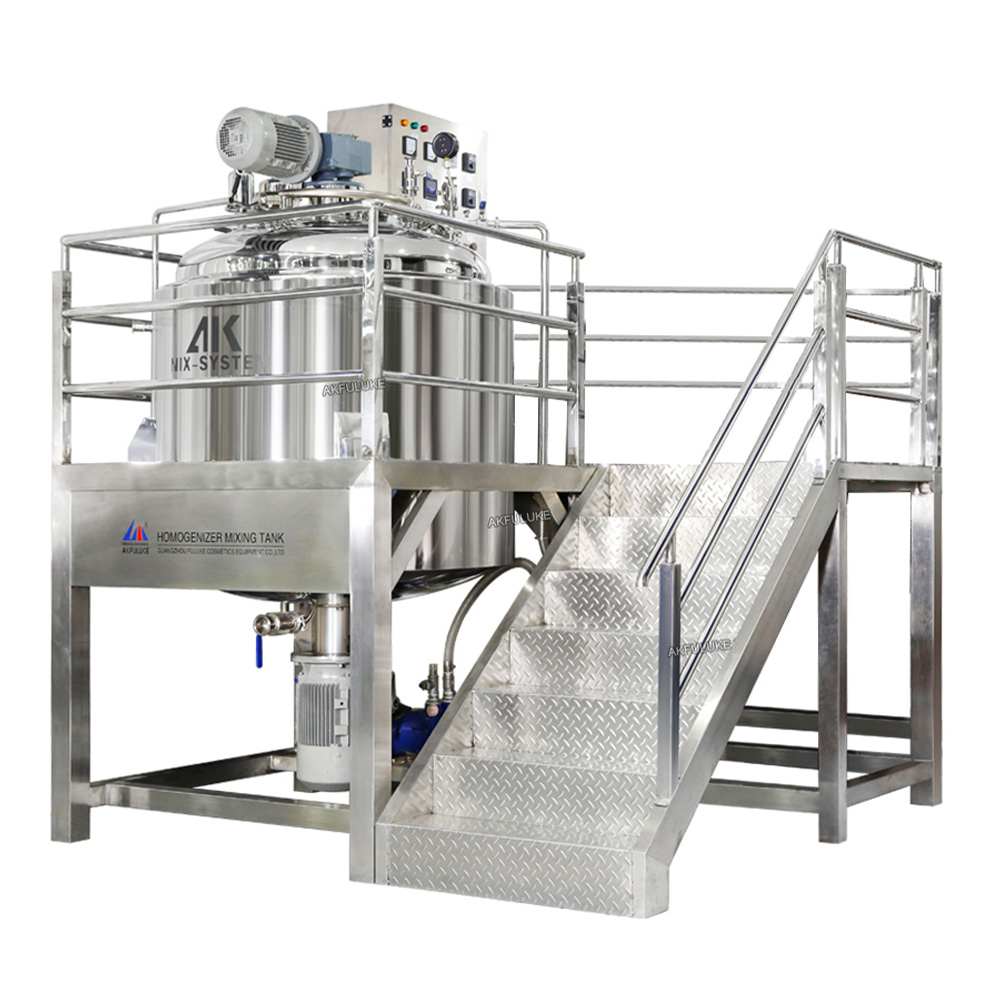
- Product overview: Stainless Steel Mixer Liquid Mixing tank with Agitator Homogenizing Mixing tank Vacuum Sealed Mixer Machine
- Key technical benefits of a mixing tank with agitator for liquid processing procurement
- Design features procurement should require in a Stainless Steel Mixer Liquid Mixing tank with Agitator Homogenizing Mixing tank Vacuum Sealed Mixer Machine
- Technical considerations: material, sizing, and compliance for procurement
- Cost-benefit comparison: mixing tank with agitator vs alternatives
- Return on investment (ROI) considerations for procurement
- Integration, installation and maintenance: what procurement should require
- Use cases: industries and product types best served by a mixing tank with agitator
- Procurement checklist: required specs for successful purchase of a mixing tank with agitator
- Brand advantages and vendor selection guidance
- FAQ — common procurement questions about mixing tank with agitator and the Sealed Homogenizing mixing tank
- Contact and CTA — view product or get a quotation
- Authoritative references and further reading
Stainless Steel Mixer Benefits for Liquid Processing Procurement — Why a mixing tank with agitator matters
Why procurement teams should prioritize a mixing tank with agitator
When evaluating equipment for liquid processing, procurement professionals must balance product quality, operational efficiency, regulatory compliance, and total cost of ownership. A mixing tank with agitator—especially a high-performance unit such as the Stainless Steel Mixer Liquid Mixing tank with Agitator Homogenizing Mixing tank Vacuum Sealed Mixer Machine—delivers a combination of features that directly address these priorities: robust stainless-steel construction, accurate temperature control, high-shear homogenization, vacuum defoaming, and reliable CIP (clean-in-place) capability.
Product overview: Stainless Steel Mixer Liquid Mixing tank with Agitator Homogenizing Mixing tank Vacuum Sealed Mixer Machine
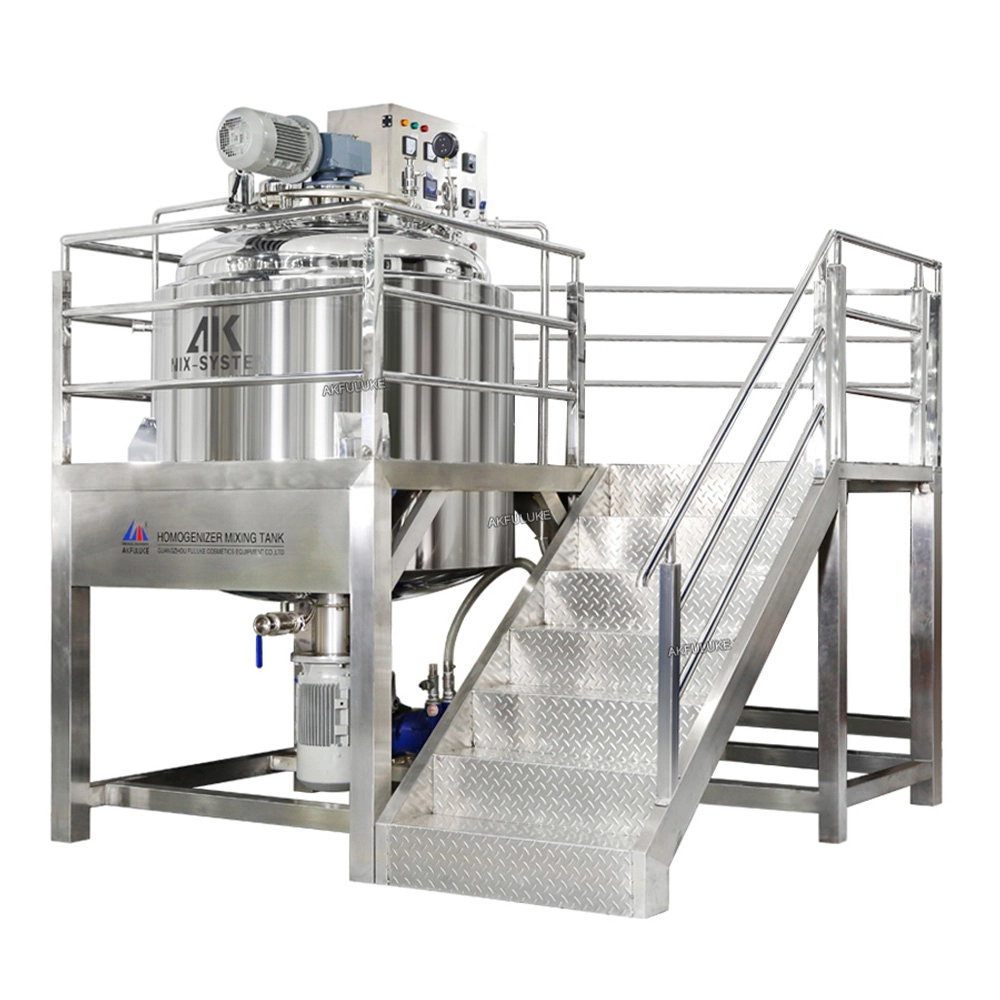
The Sealed Homogenizing mixing tank is an industrial-grade material handling equipment that integrates four core functions: vacuum defoaming, high-speed homogenization, efficient stirring, and precise temperature control. It is widely used in the cosmetics, pharmaceutical, food, chemical and other industries.
It is specially designed to solve the mixing, emulsification, homogenization and degassing needs of high-viscosity, multi-phase (solid-liquid, liquid-liquid) materials. It can produce delicate, stable, bubble-free creams, lotions, gels, ointments, sauces and other products.
For procurement, this product represents a consolidated solution: rather than buying separate agitators, homogenizers, vacuum systems and jackets, the integrated unit reduces installation complexity, simplifies validation, and shortens ramp-up time.
Key technical benefits of a mixing tank with agitator for liquid processing procurement
A mixing tank with agitator offers advantages across quality, efficiency and compliance:
- Consistent product quality: Homogenizing rotor-stator systems and controlled shear ensure tight droplet size distribution and stable emulsions — critical for shelf-life and sensory attributes in cosmetics and food.
- Bubble-free batches: Vacuum-sealed mixing and controlled degassing reduce entrained air, improving visual quality and preventing oxidation-sensitive formulations from deteriorating.
- Material compatibility and cleanliness: Stainless steel (commonly 304 or 316 grades) resists corrosion and contamination; polished internal finishes facilitate cleaning and regulatory acceptance.
- Process control: Integrated temperature control (jacketed tanks), programmable speed and homogenizer RPM allow repeatable, validated processes—valuable for regulated industries.
- Scalability and flexibility: The same mixer design can be sized for R&D up to production, preserving process knowledge and reducing scale-up risk for procurement.
Design features procurement should require in a Stainless Steel Mixer Liquid Mixing tank with Agitator Homogenizing Mixing tank Vacuum Sealed Mixer Machine
When drafting specifications or evaluating quotes, include these features and performance parameters to ensure the equipment meets operational needs:
- Stainless-steel grade (304 vs 316L) and surface finish (Ra value) for wetted parts.
- Homogenizer type and horsepower; rotor-stator geometry and max shear rate.
- Agitator design options (anchor, paddle, turbine) suited for the material viscosity and mixing profile.
- Vacuum pump capacity and measured degassing performance (mbar or torr).
- Heating/cooling jacket design, temperature range, and control precision (PID control).
- CIP/SIP readiness and access ports for validation and cleaning.
- Control system: PLC/HMI, recipe management, data logging capability for batch records.
- Safety features and certifications (pressure relief, ATEX where applicable, sanitary design).
Technical considerations: material, sizing, and compliance for procurement
Procurement teams should verify technical alignment between equipment and process goals:
- Material selection: 316L stainless is preferred for aggressive chemistries and pharmaceuticals due to its higher molybdenum content and better corrosion resistance; 304 is often adequate for cosmetics and food where exposure is less aggressive.
- Capacity and scale: Choose tank volume relative to batch size (typical fill factor 60–80% for efficient mixing). Ensure available floor space, load-bearing capability, and utility supply (power, steam, chilled water, compressed air).
- Shear and power input: High-viscosity products require more torque and specific agitator geometry. Homogenizer shear capacity should be expressed as tip speed, RPM range, and recommended viscosity limits.
- Regulatory and documentation needs: For cosmetics and pharmaceuticals, get material certificates (MTC), weld procedures (WPS), surface roughness documentation, and FAT/SAT protocols. Ensure the vendor can support IQ/OQ documentation.
Cost-benefit comparison: mixing tank with agitator vs alternatives
Below is a clear comparison of three common equipment choices procurement teams consider. The table shows key attributes and a high-level cost versus benefit view.
| Feature / Option | Basic Mixing Tank (no homogenizer) | Mixing Tank with Agitator | Sealed Homogenizing Mixing Tank (vacuum) |
|---|---|---|---|
| Typical Suitability | Low-viscosity blends, water-based | Broader range; medium viscosity | High-viscosity, emulsions, degassing needs |
| Homogenization Capability | None | Limited (depends on agitator) | High (rotor-stator homogenizer) |
| Degassing | No | Limited | Integrated vacuum defoaming |
| Cleaning / Validation | Simple | Moderate (depends on seals) | CIP / validation-ready |
| Relative Cost | Low | Medium | High (but best ROI for complex products) |
| Estimated Production Time per Batch | Longer (inefficient mixing) | Moderate | Shortest (fast homogenization & degassing) |
Return on investment (ROI) considerations for procurement
Although sealed homogenizing mixers often require a higher initial investment, procurement teams should evaluate lifecycle value:
- Reduced rejects and rework: Better homogenization and degassing reduce off-spec batches.
- Faster cycle times: High-shear homogenization shortens emulsification time, enabling more batches per shift.
- Lower downstream costs: Improved stability and shelf-life lower warranty and recall risk.
- Consolidated equipment footprint: One integrated mixing/homogenizing/vacuum unit can replace several standalone machines, saving floor space and utility tie-ins.
Integration, installation and maintenance: what procurement should require
Include these contractual and technical terms in purchasing documents to avoid hidden costs:
- Supplier-provided FAT (Factory Acceptance Test) and SAT (Site Acceptance Test).
- Detailed utility specifications (electrical, steam, chilled water, vacuum) and utility consumption estimates.
- Spare parts list and lead times for critical items (mechanical seals, homogenizer rotors/stators, vacuum pump consumables).
- Preventive maintenance schedule and training for operators and maintenance staff.
- Optional service contracts and remote monitoring capability to minimize downtime.
Use cases: industries and product types best served by a mixing tank with agitator
The Stainless Steel Mixer Liquid Mixing tank with Agitator Homogenizing Mixing tank Vacuum Sealed Mixer Machine is particularly valuable for:
- Cosmetics — creams, lotions, sun care, hair serums where texture and stability matter.
- Pharmaceutical formulations — topical gels, ointments, suspensions requiring precise control and documentation.
- Food — dressings, sauces, pastes that require smooth texture and long shelf life.
- Chemical formulations — polymers, adhesives, and specialty liquids where dispersion quality affects performance.
Procurement checklist: required specs for successful purchase of a mixing tank with agitator
Use this checklist when soliciting quotes:
- Product name and model: Stainless Steel Mixer Liquid Mixing tank with Agitator Homogenizing Mixing tank Vacuum Sealed Mixer Machine.
- Capacity and footprint, material of construction (e.g., 316L), and finish (Ra).
- Homogenizer specifications: max RPM, shear capability, rotor/stator sizes.
- Vacuum system performance, degassing curve or mbar value.
- Control system: PLC, recipe management, data logging, connectivity options (Ethernet, OPC-UA).
- Documentation: MTC, FAT/SAT, IQ/OQ protocols, cleaning validation support.
- Warranty, spare parts availability, and service-level agreements (SLAs).
Brand advantages and vendor selection guidance
When selecting a brand for the Stainless Steel Mixer Liquid Mixing tank with Agitator Homogenizing Mixing tank Vacuum Sealed Mixer Machine, procurement should look for vendors that can demonstrate:
- Proven industry experience: References and case studies in cosmetics, pharma or food demonstrating successful scale-up and long-term performance.
- Quality systems and certifications: ISO 9001 quality systems, and evidence of sanitary design practices.
- After-sales support: Local service network, training, quick access to spare parts and remote diagnostics.
- Customization capability: Ability to adapt agitator types, homogenizer specifications and automation to your process.
- Transparent documentation: Complete MTCs, weld and surface finish documentation, and validation support for regulated environments.
Choosing a supplier that combines technical know-how with strong service and documentation reduces procurement risk and shortens time to production.
FAQ — common procurement questions about mixing tank with agitator and the Sealed Homogenizing mixing tank
Q1: What is the main difference between a regular mixing tank and a mixing tank with agitator?
A: A regular tank may rely on manual or low-shear mixing; a mixing tank with agitator uses engineered impellers to provide controlled shear and flow patterns tailored to the product viscosity and mixing objective.
Q2: Can the Sealed Homogenizing mixing tank handle high-viscosity products?
A: Yes. The product is designed specifically for high-viscosity, multi-phase materials and includes a homogenizer and strong agitator options to handle shear and torque requirements.
Q3: How does vacuum sealing improve product quality?
A: Vacuum sealing removes entrained air during mixing, preventing bubbles, reducing oxidation risk, and improving product appearance and stability.
Q4: What documents should I request from the vendor?
A: Ask for MTC, FAT protocol, IQ/OQ templates, surface finish certificates, weld documentation, and maintenance manuals.
Q5: How do I size the homogenizer for my formulation?
A: Provide the vendor with target viscosity, batch size, desired droplet size or particle dispersion, and throughput goals. The vendor will recommend rotor-stator geometry and power.
Contact and CTA — view product or get a quotation
If you are ready to evaluate the Stainless Steel Mixer Liquid Mixing tank with Agitator Homogenizing Mixing tank Vacuum Sealed Mixer Machine for your facility, contact our sales team to request detailed specifications, a quotation, or to schedule a virtual FAT demonstration. Our procurement specialists can help tailor capacity, agitator type, and control options to your process requirements. After confirming material advantages, procurement teams should move into technical evaluation using a detailed spec checklist: homogenizing mixing tank for B2B buyers to ensure performance aligns with process requirements.
Contact us to request a datasheet, price estimate, or arrange a factory demonstration. Optimize your liquid processing procurement with a mixing tank with agitator designed for consistent, high-quality output.
Authoritative references and further reading
These resources provide additional background on stainless steel, homogenization, and regulatory guidance for cosmetics and pharmaceutical processing:
- Stainless steel — Wikipedia: https://en.wikipedia.org/wiki/Stainless_steel
- Homogenizer — Wikipedia: https://en.wikipedia.org/wiki/Homogenizer
- U.S. Food and Drug Administration (FDA) — Cosmetics Overview: https://www.fda.gov/cosmetics
- ISO 9001 — Quality management systems: https://www.iso.org/iso-9001-quality-management.
- Cleaning-in-place (CIP) — industry overview: https://en.wikipedia.org/wiki/Clean-in-place
For further assistance with procurement specifications or to arrange a technical consultation, please reach out via the contact link above.
Vacuum Sealed Mixer Machines: Benefits for Sensitive Formulations
Sealing Integrity: Ensuring Quality in Toothpaste and Sunscreen Tubes
Maintenance & Servicing Best Practices for Automatic Filling Machines
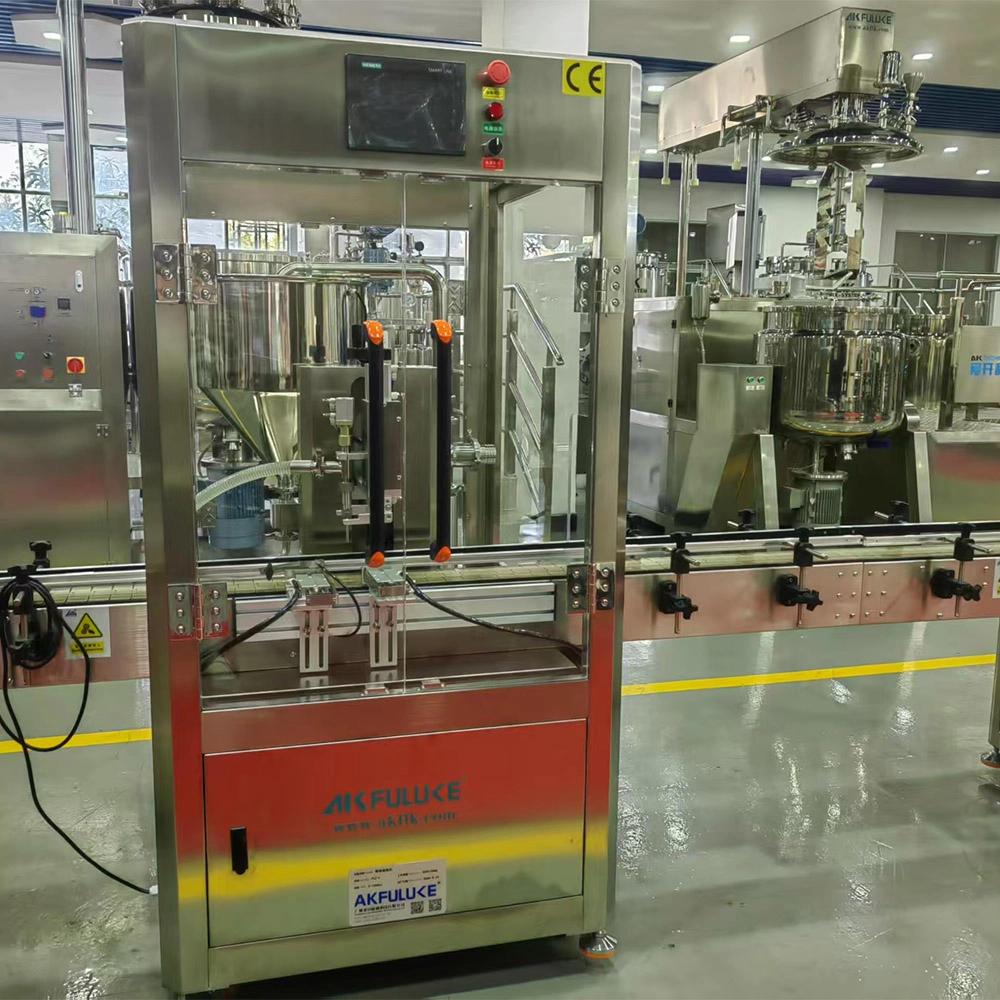
Selecting Appropriate Gaskets and Seals for Creams
Automatic Filling Machine
Can you make a design for us?
Yes, we can, we provide not only products, but also solutions and designs.
RO Water Treatment
Who are we?
Our headquarters is located in Guangzhou, Guangdong, China, and our factory is located in Yangzhou, Jiangsu. Our products are sold all over the world. We have approximately 50 employees in our company and factory.
Can you customize the machine?
Of course, we provide customized services according to customer needs.
Perfume Filling Machine
After purchasing the equipment, what after-sales services does the supplier typically provide?
General services include on-site installation and commissioning (including workshop layout planning), operator training (theoretical and practical training to ensure workers can operate independently), a one-year full machine warranty, and lifetime technical support (24-hour telephone and video troubleshooting).
Automatic Capping Machine
Who are we?
Our headquarters is located in Guangzhou, Guangdong, China, and our factory is located in Yangzhou, Jiangsu. Our products are sold all over the world. We have approximately 50 employees in our company and factory.
You May Also Like
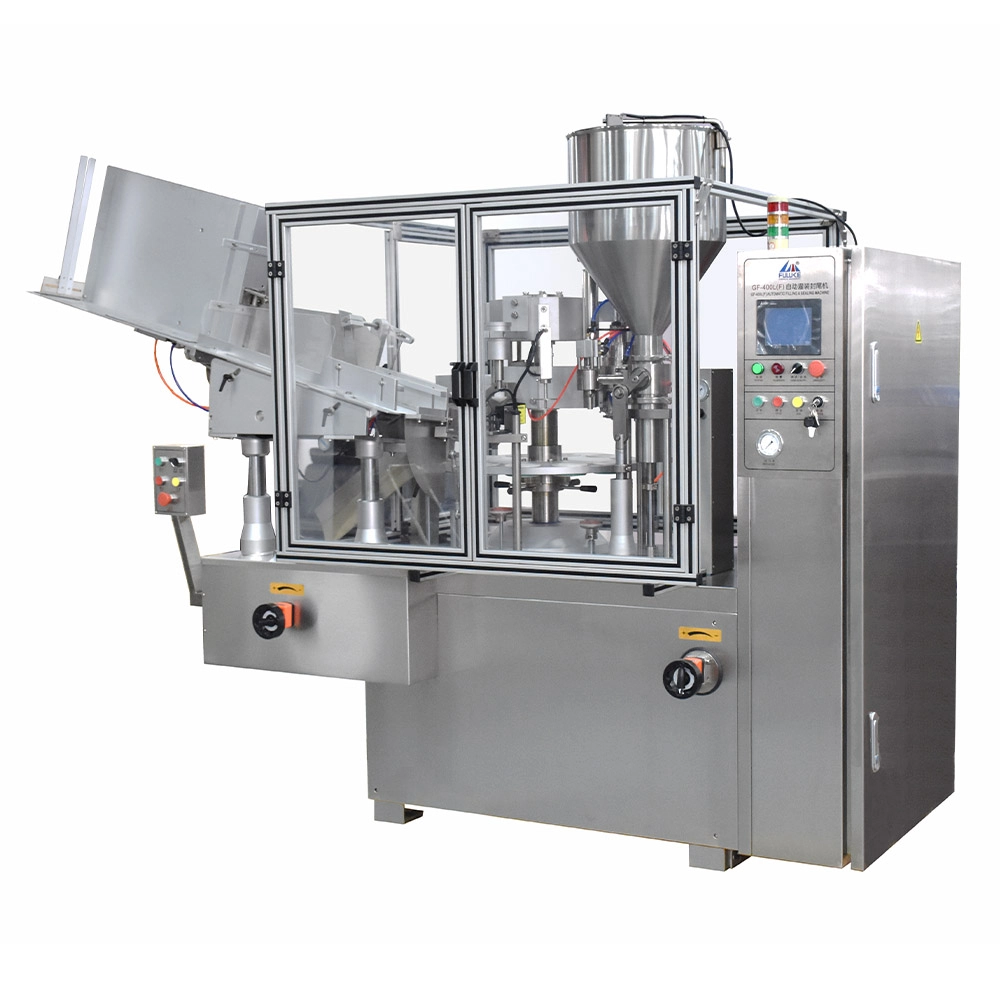
Automatic Tube Filling and Sealing Machine Toothpaste Sunscreen and Facial Cleanser Filling and Sealing Machine for Plastic and Aluminum-plastic Tube
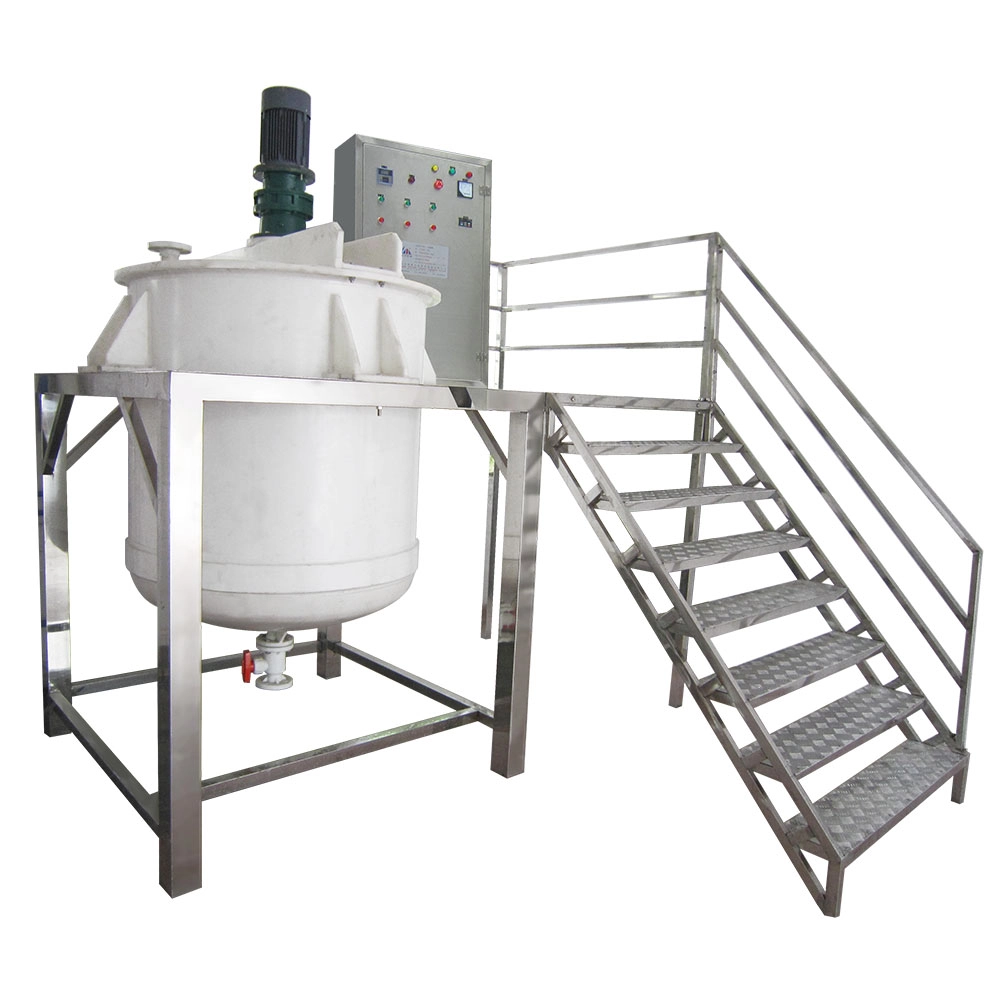
Polypropylene PP Mixing Tank Anti-Corrosion Mixer Reaction Kettle with Agitator Chemical Mixing Vessel
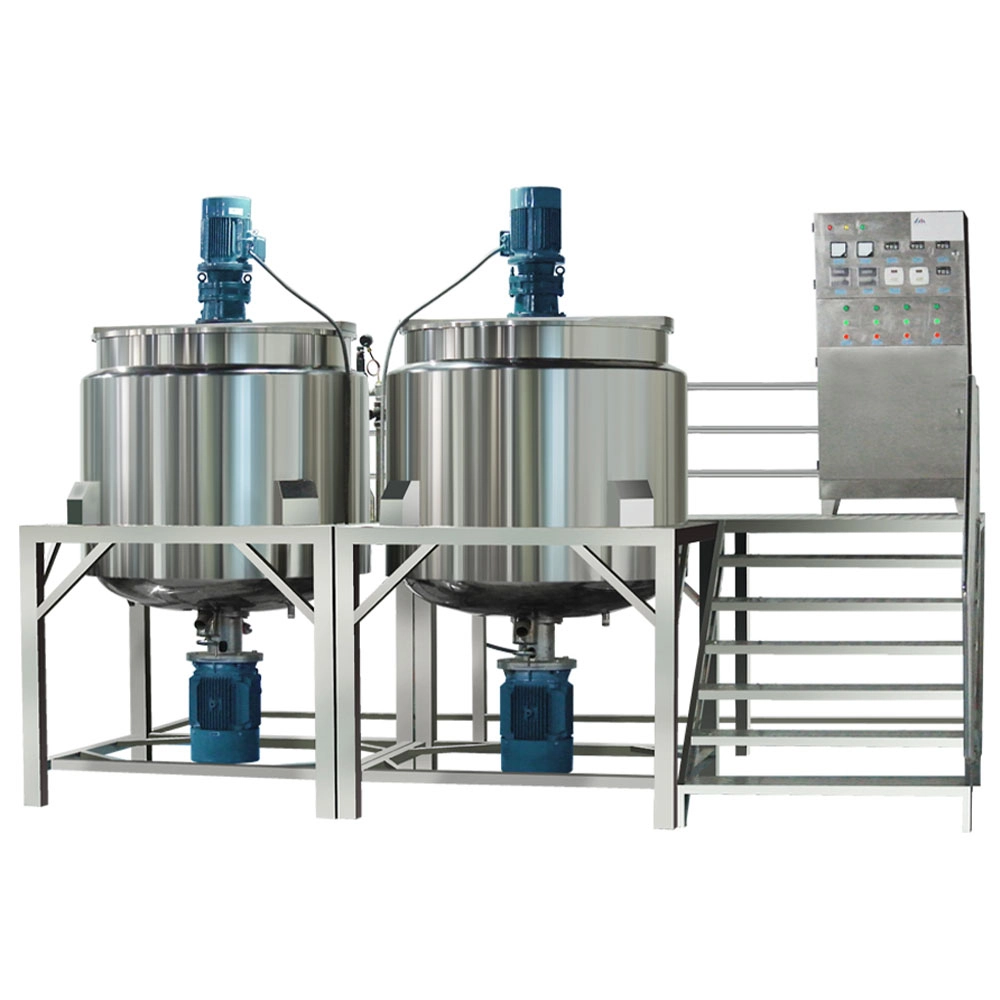
Flip Cover Multi-function Liquid Wash Mixing Tank Blender Liquid Detergent Mixer Homogenization Stirring Tank
Stainless Steel Mixer Liquid Mixing tank with Agitator Homogenizing Mixing tank Vacuum Sealed Mixer Machine
Get in touch with FULUKE
If you have any comments or good suggestions, please leave us a message, later our professional staff will contact you as soon as possible.

A leading manufacturer specializing in advanced machinery and complete production lines for the cosmetics, food, pharmaceutical, and chemical industries worldwide.
Contact FULUKE
Facebook
Instagram
YouTube