
Top Agitator Types for Industrial Mixing Tanks in Cosmetics
- Mixing fundamentals I always check before selecting an agitator
- Understand process objectives and product rheology
- Key mixing metrics I use: shear, power per volume, and tip speed
- Sanitation, scale-up and compliance
- Top agitator types and when I recommend them
- Anchor (low-shear) agitators
- Turbine (radial) and pitched-blade turbines
- Propellers and marine impellers
- High-shear and specialized agitators for emulsification and dispersion
- Rotor-stator (high-shear dispersers)
- Homogenizers and high-pressure units
- High-efficiency dispersers and in-line mixers
- Design considerations, CIP, and scale-up strategy
- Tank geometry, baffles and impeller placement
- Cleaning & validation (CIP and hygienic design)
- Scale-up rules I follow
- Comparison of common agitator types
- Case studies and practical recommendations I give to clients
- Formulating a stable lotion (emulsion)
- High-viscosity cream or balm
- Powder wetting and dispersion
- FULUKE: equipment and solutions I trust for cosmetics production
- Making the final choice: a checklist I use with clients
- Frequently Asked Questions (FAQ)
- 1. Which agitator type is best for making creams and lotions in an industrial mixing tank?
- 2. Can I use a single agitator type for all cosmetic products?
- 3. How important is vacuum for emulsification?
- 4. What should I consider for CIP compatibility in industrial mixing tanks?
- 5. How do I scale up from lab to production without losing product quality?
- 6. Are there energy or maintenance trade-offs between rotor-stator and high-pressure homogenizers?
- 7. How can FULUKE support my production upgrade?
I write from three decades of hands-on experience with industrial mixing tank design and cosmetic production lines, guiding formulators and manufacturers to select agitators that balance shear, heat transfer, cleanability, and GMP compliance. This article summarizes the top agitator types for industrial mixing tanks used in cosmetics, explains when and why to pick each, and shows how tank geometry, impeller placement, and process control determine product consistency and scalability.
Mixing fundamentals I always check before selecting an agitator
Understand process objectives and product rheology
Before choosing an agitator for an industrial mixing tank, I always start with specific process goals: are you dispersing powders, hydrating polymers, emulsifying oil and water, dissolving actives, or maintaining suspension? Cosmetic formulations range from low-viscosity toners to high-viscosity creams and gels. Knowing the target viscosity, measured in mPa·s or Pa·s, and whether the fluid is Newtonian or non-Newtonian, is fundamental to matching impeller type and power input.
Key mixing metrics I use: shear, power per volume, and tip speed
I evaluate shear requirements (low, medium, high), power input per unit volume (P/V), and impeller tip speed. High-shear unit operations such as emulsification require rotor-stator or high-speed dispersers to reach required droplet sizes, while low-shear anchor or paddle agitators preserve delicate particulates and textures. For general reference on mixing principles, see Mixing (process engineering).
Sanitation, scale-up and compliance
Cosmetic production must meet Good Manufacturing Practices (GMP) and hygienic design. I always verify that tank and agitator designs support Clean-In-Place (CIP), minimize dead zones, and use materials compatible with cosmetic ingredients (typically 316L stainless steel). International guidance like ISO 22716 (Cosmetics — GMP) and regulatory overviews such as the FDA Cosmetics pages inform equipment qualification and documentation.
Top agitator types and when I recommend them
Anchor (low-shear) agitators
Anchor agitators are ideal for very high-viscosity creams, balms, and gels where gentle bulk movement is necessary to avoid entraining air or damaging shear-sensitive ingredients. Anchors scrape the tank walls to prevent dead zones and promote uniform heating or cooling when jacketed tanks are used. I often pair anchors with a secondary high-shear stage for initial emulsification when formulating concentrated systems.
Turbine (radial) and pitched-blade turbines
Turbine and pitched-blade impellers generate strong axial or radial flow and are versatile across low- to medium-viscosity formulations. Pitched-blade turbines create a balanced axial flow that improves circulation and heat transfer, making them a common choice for lotion and cream tanks where rapid homogenization and dispersion are needed without excessive shear.
Propellers and marine impellers
Propeller-style impellers (e.g., marine propellers) provide efficient bulk flow for low-viscosity liquids like toners, aqueous phases, and perfume dilutions. They are energy-efficient and excellent for mixing large volumes quickly. When used in cosmetics, propellers are typically installed in tanks with baffles to prevent vortexing and improve vertical mixing.
High-shear and specialized agitators for emulsification and dispersion
Rotor-stator (high-shear dispersers)
Rotor-stator devices deliver intense shear via a high-speed rotor inside a stationary stator; they're the workhorse for droplet size reduction and powder wetting. I specify rotor-stator units for primary emulsification of creams and lotions when consistent droplet size distribution is critical for product stability and texture. These systems can be portable or integrated under vacuum (vacuum emulsifying mixers) to reduce air entrainment and improve product quality.
Homogenizers and high-pressure units
For ultra-fine emulsions, especially in high-performance skincare, high-pressure homogenizers deliver controlled shear and cavitation to reach sub-micron droplet sizes. They are often used after a coarse pre-emulsion made with a rotor-stator. When I recommend homogenization, I consider energy cost, maintenance, and heat generation—adequate cooling and process controls are essential.
High-efficiency dispersers and in-line mixers
In-line high-shear mixers and static mixers are excellent for continuous production or where powder incorporation needs to be highly controlled. In-line systems reduce batch variability and are easier to validate for continuous manufacturing models. For continuous lines, integration with dosing and CIP systems is critical.
Design considerations, CIP, and scale-up strategy
Tank geometry, baffles and impeller placement
Tank diameter-to-height ratio, placement of baffles, and impeller off-bottom clearance all influence mixing performance. I typically design tank baffles at four equally spaced positions to prevent vortexing and improve radial mixing. Impeller(s) should be positioned to avoid dead zones; for tall tanks, I often specify multi-level impellers (top and bottom) to ensure axial recirculation.
Cleaning & validation (CIP and hygienic design)
Hygienic design is non-negotiable. I require smooth welds, minimal crevices, and CIP-compatible spray balls or rotating jets. Equipment should be designed for easy disassembly when needed and documented for cleaning validation per GMP and ISO 22716. For regulatory context on GMP, consult ISO 22716 and applicable FDA guidance at FDA Cosmetics.
Scale-up rules I follow
Scaling from lab to production is not linear—maintaining constant tip speed, power per volume (P/V), or Reynolds number are common approaches, each with trade-offs. I choose the scale-up criterion based on dominant mixing mechanisms: keep P/V for turbulent systems and maintain tip speed for shear-sensitive processes. Pilot trials remain indispensable.
Comparison of common agitator types
| Agitator Type | Shear Level | Best For (Viscosity) | Pros | Cons |
|---|---|---|---|---|
| Anchor | Low | High (>50,000 mPa·s) | Gentle, prevents wall build-up, good heat transfer | Slow mixing, high torque required |
| Pitched-blade turbine | Medium | Medium to high (1,000–50,000 mPa·s) | Good axial flow, versatile, effective heat transfer | Moderate shear may damage delicate actives |
| Propeller | Low to medium | Low (0.5–1,000 mPa·s) | Efficient bulk flow, energy efficient | Can vortex without baffles |
| Rotor-stator | High | Low to medium (0.5–20,000 mPa·s) | Excellent dispersion/emulsification, controllable droplet size | Higher maintenance, heat generation |
| High-pressure homogenizer | Very high | Low to medium | Sub-micron droplets, improved stability | High energy use, capital cost |
Data above reflects typical industry practice and my engineering experience; for mixing theory and scaling models see mixing literature and standard process engineering texts.
Case studies and practical recommendations I give to clients
Formulating a stable lotion (emulsion)
For a standard O/W lotion: I recommend a two-stage process—pre-mix aqueous and oil phases separately with propellers, heat to target, then create a coarse emulsion with a pitched-blade turbine or rotor-stator under vacuum (if possible) to minimize air. Final homogenization (rotor-stator or high-pressure homogenizer) achieves the required droplet size and stability.
High-viscosity cream or balm
For creams >50,000 mPa·s, anchor agitators or heavy-duty toothed impellers paired with heating jackets are essential. I avoid high-shear during incorporation of sensitive actives; instead use slow, controlled mixing and occasional gentle sweep using scraper blades.
Powder wetting and dispersion
For powders (e.g., clays, thickeners), I recommend a high-efficiency disperser or a vacuum-assisted rotor-stator to prevent agglomeration and entrained air. Controlled powder dosing combined with a sweep impeller reduces clumps.
FULUKE: equipment and solutions I trust for cosmetics production
In working with manufacturers globally, I frequently specify equipment from FULUKE (Guangzhou Fuluke Cosmetic Equipment Co., Ltd.). With over 30 years of experience, FULUKE specializes in mixing and emulsifying equipment and turnkey packaging lines. They provide vacuum emulsifying mixers, multifunctional mixing tanks, filling machines, and perfume-making equipment engineered for efficiency, batch-to-batch consistency, and compliance with GMP and ISO standards.
FULUKE integrates engineering design, precision machining, automation, and strict quality management to deliver equipment that meets international hygiene standards. Their product range supports the whole process from ingredient preparation and mixing to homogenization, filling, labeling, and final packaging. For more, see their website: FULUKE or contact them at flk09@gzflk.com.
Key FULUKE products I recommend include: Vacuum emulsifying machine, Multifunctional mixing tank, Filling machine, Perfume making equipment, and RO water treatment systems. Their strengths are custom design, process optimization, intelligent control upgrades, and full technical support from installation to long-term maintenance.
Making the final choice: a checklist I use with clients
- Define the product type, target viscosity, and critical quality attributes (droplet size, texture).
- Decide whether a two-stage (coarse + fine) mixing is needed.
- Confirm CIP, material compatibility, and GMP documentation requirements.
- Evaluate energy consumption and maintenance ease for long-term operation.
- Plan pilot trials and scale-up criteria (P/V, tip speed, or Reynolds number).
Frequently Asked Questions (FAQ)
1. Which agitator type is best for making creams and lotions in an industrial mixing tank?
For creams and lotions I typically recommend a two-stage approach: a turbine or pitched-blade impeller for bulk mixing and a rotor-stator or vacuum emulsifying mixer for final droplet size control. The exact choice depends on viscosity and shear sensitivity.
2. Can I use a single agitator type for all cosmetic products?
No. Cosmetic formulations vary widely. Low-viscosity products suit propellers, medium-viscosity lotions suit pitched-blade turbines, and high-viscosity creams need anchors or scrapers. High-shear rotor-stator devices are used for emulsification or powder dispersion when required.
3. How important is vacuum for emulsification?
Vacuum reduces air entrainment, improves wetting and degassing, and often improves emulsion stability and appearance. For High Quality creams and serums, I recommend vacuum emulsifying systems when budget and process justify the benefit.
4. What should I consider for CIP compatibility in industrial mixing tanks?
Ensure smooth internal surfaces, proper spray ball coverage or rotating spray heads, minimal dead legs, hygienic seals, and appropriate drainability. Documentation for cleaning validation should align with ISO 22716 and relevant regulatory guidance.
5. How do I scale up from lab to production without losing product quality?
Use pilot trials and pick a scale-up criterion based on dominant mixing physics (power per volume for turbulent systems, tip speed for shear-sensitive processes). Validate critical quality attributes at pilot scale before committing to full production.
6. Are there energy or maintenance trade-offs between rotor-stator and high-pressure homogenizers?
Yes. Rotor-stator units are lower-cost and easier to maintain but may not achieve sub-micron droplets. High-pressure homogenizers achieve finer emulsions but consume more energy and require more maintenance. Choose based on required droplet size and operational cost tolerance.
7. How can FULUKE support my production upgrade?
FULUKE offers customized mixing and emulsifying systems, filling machines, and complete packaging lines. They provide process optimization, intelligent control upgrades, commissioning, and long-term service. Visit FULUKE or email flk09@gzflk.com to discuss tailored solutions.
If you want help selecting or specifying an industrial mixing tank and agitator configuration for your cosmetic products, I can assist with process audits, pilot testing plans, and equipment recommendations. Contact FULUKE for product inquiries and technical support: https://www.fulukemix.com or email flk09@gzflk.com.
How to Choose the storage tank manufacturer and supplier ?
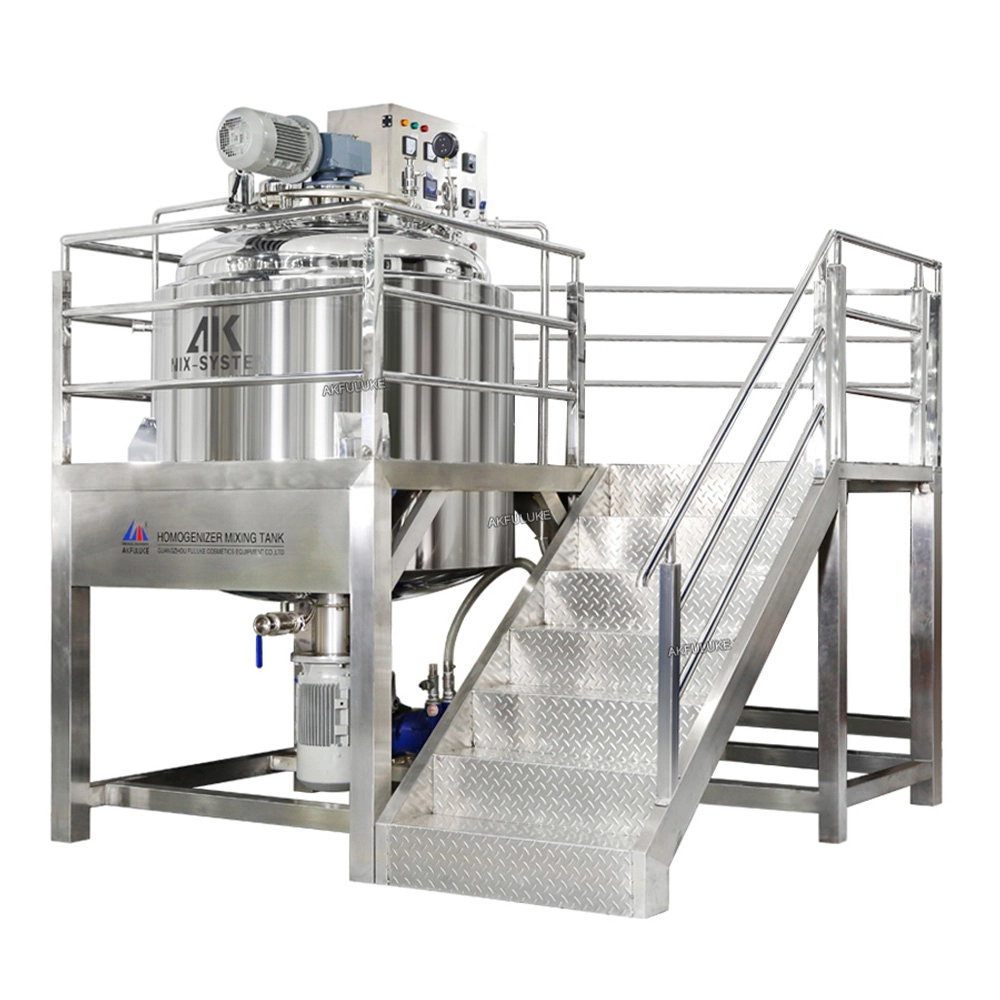
Compare Agitator Types for High-Viscosity Liquid Mixing
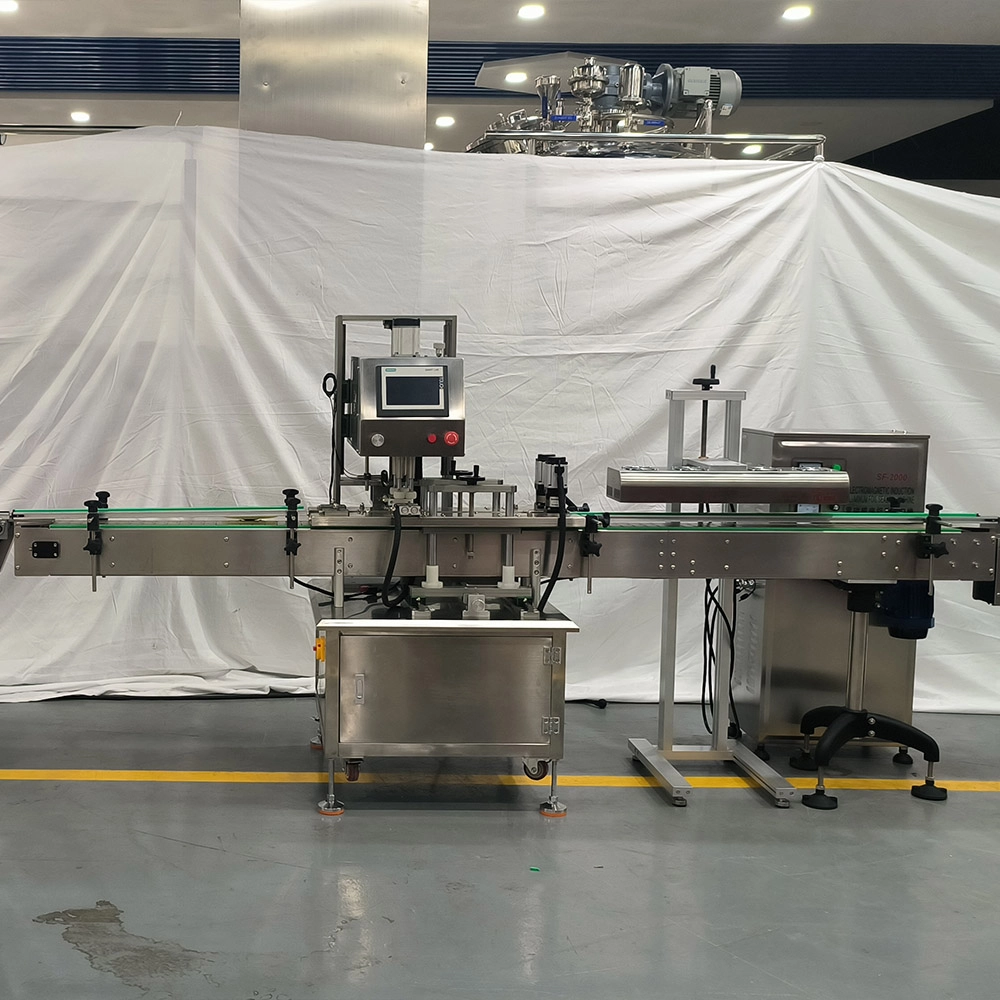
Managing Viscous Liquids: Best Practices for Cream Fillers
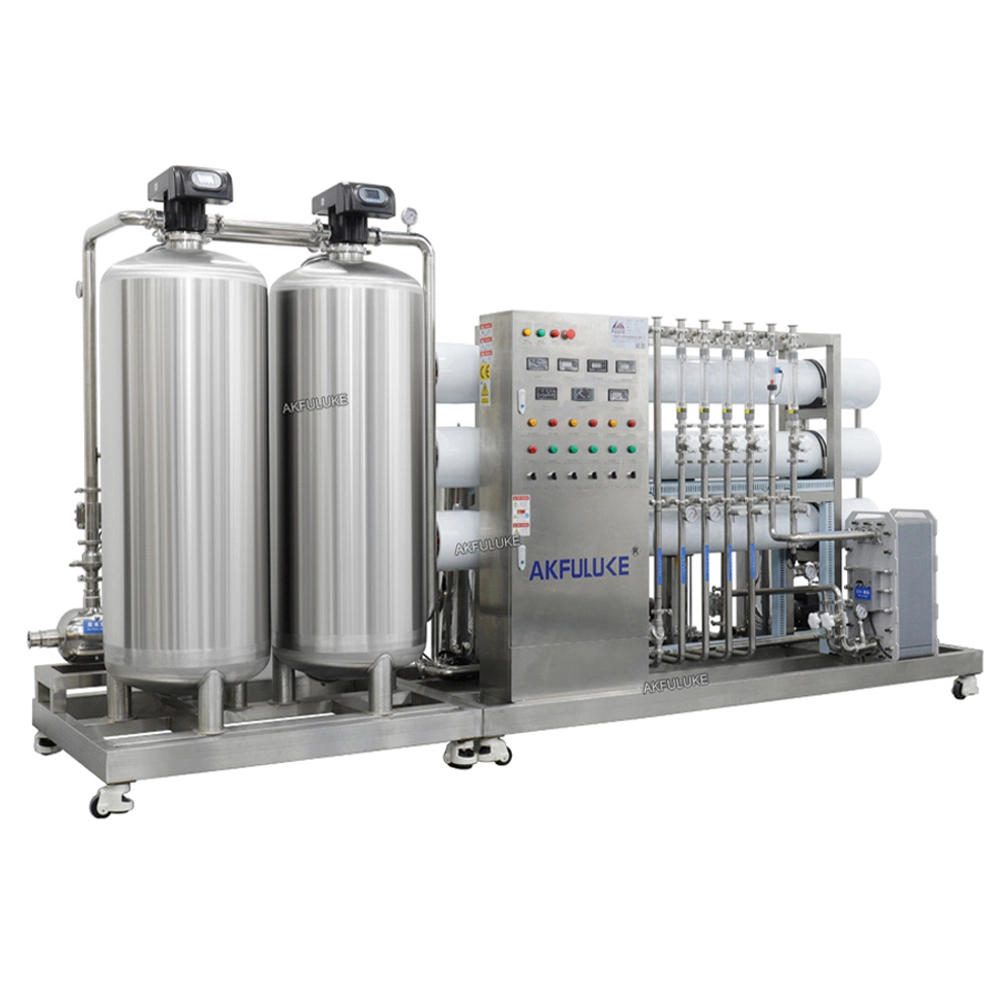
Integration: Pre-treatment and Post-treatment for RO Installations
The Flip Cover Liquid Wash Mixing Homogenizing Tank
Can you customize the machine?
Of course, we provide customized services according to customer needs.
Inkjet Printing Machine
Who are we?
Our headquarters is located in Guangzhou, Guangdong, China, and our factory is located in Yangzhou, Jiangsu. Our products are sold all over the world. We have approximately 50 employees in our company and factory.
Can you customize the machine?
Of course, we provide customized services according to customer needs.
Automatic Filling Machine
We want to fill products in multiple volumes (e.g., 100ml, 250ml, 500ml). Do we need to purchase multiple filling machines?
No, most automatic filling machines support multiple volume adjustments. When purchasing, please confirm the machine's "volume adjustment range" (e.g., 50ml-2000ml) to ensure it covers your desired specifications. Changing volumes simply requires modifying the fill volume parameters on the touchscreen. If the volume difference is significant (e.g., from 100ml to 1000ml), minor adjustments to the filling head height or feed rate may be necessary, without replacing the machine.
Sealed Homogenizing Mixing Tank
Who are we?
Our headquarters is located in Guangzhou, Guangdong, China, and our factory is located in Yangzhou, Jiangsu. Our products are sold all over the world. We have approximately 50 employees in our company and factory.
You May Also Like
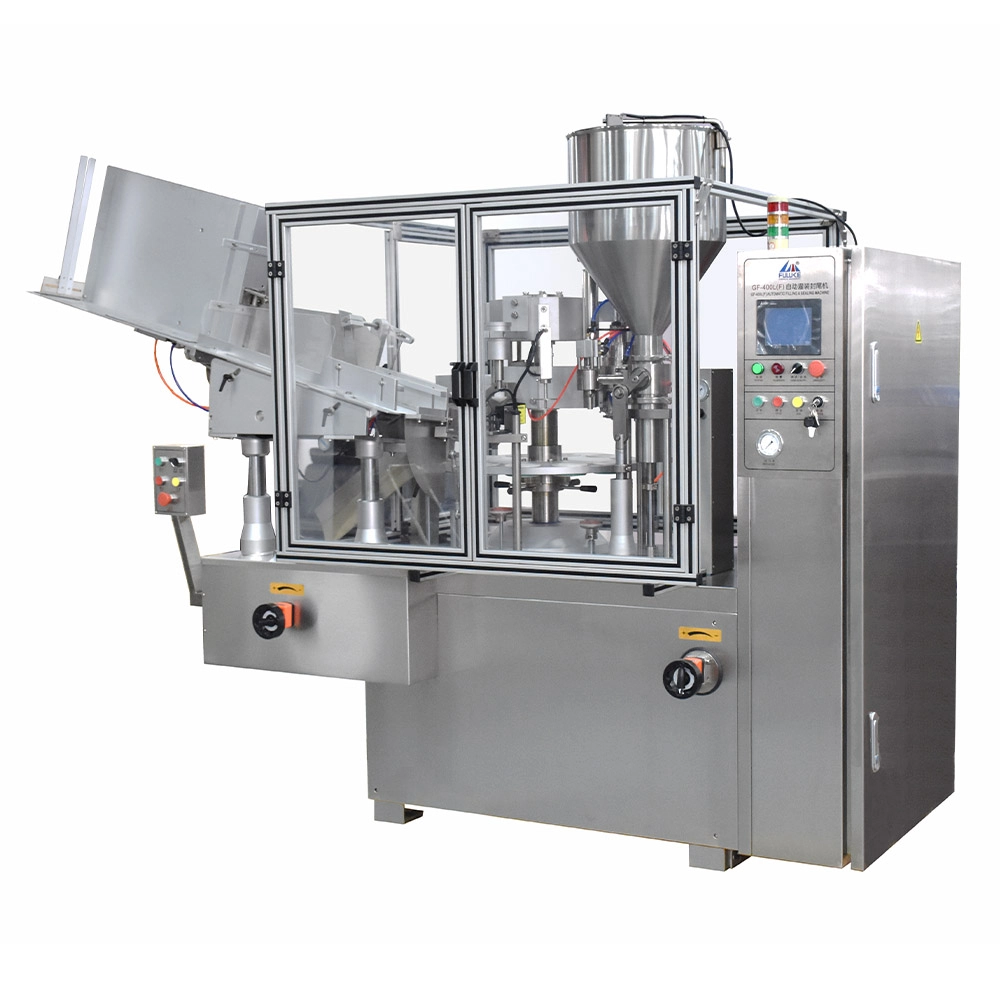
Automatic Tube Filling and Sealing Machine Toothpaste Sunscreen and Facial Cleanser Filling and Sealing Machine for Plastic and Aluminum-plastic Tube
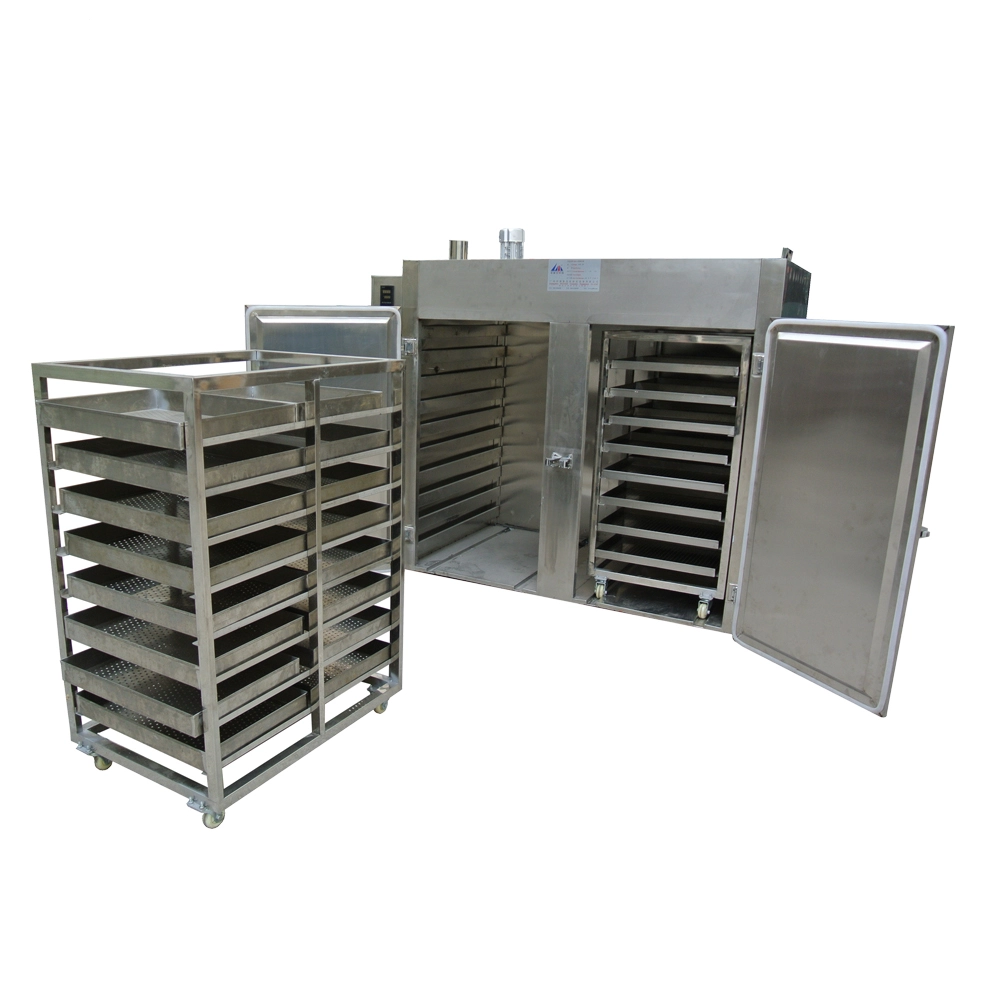
Over for Bottles High Temperature Sterilizer Tray Dryer Large Hot Air Circle Drying Oven for Glass Bottle Jar Cup Can

Automatic Glass Bottle Washing Machine High Quality Glass Bottle Cleaning Washer
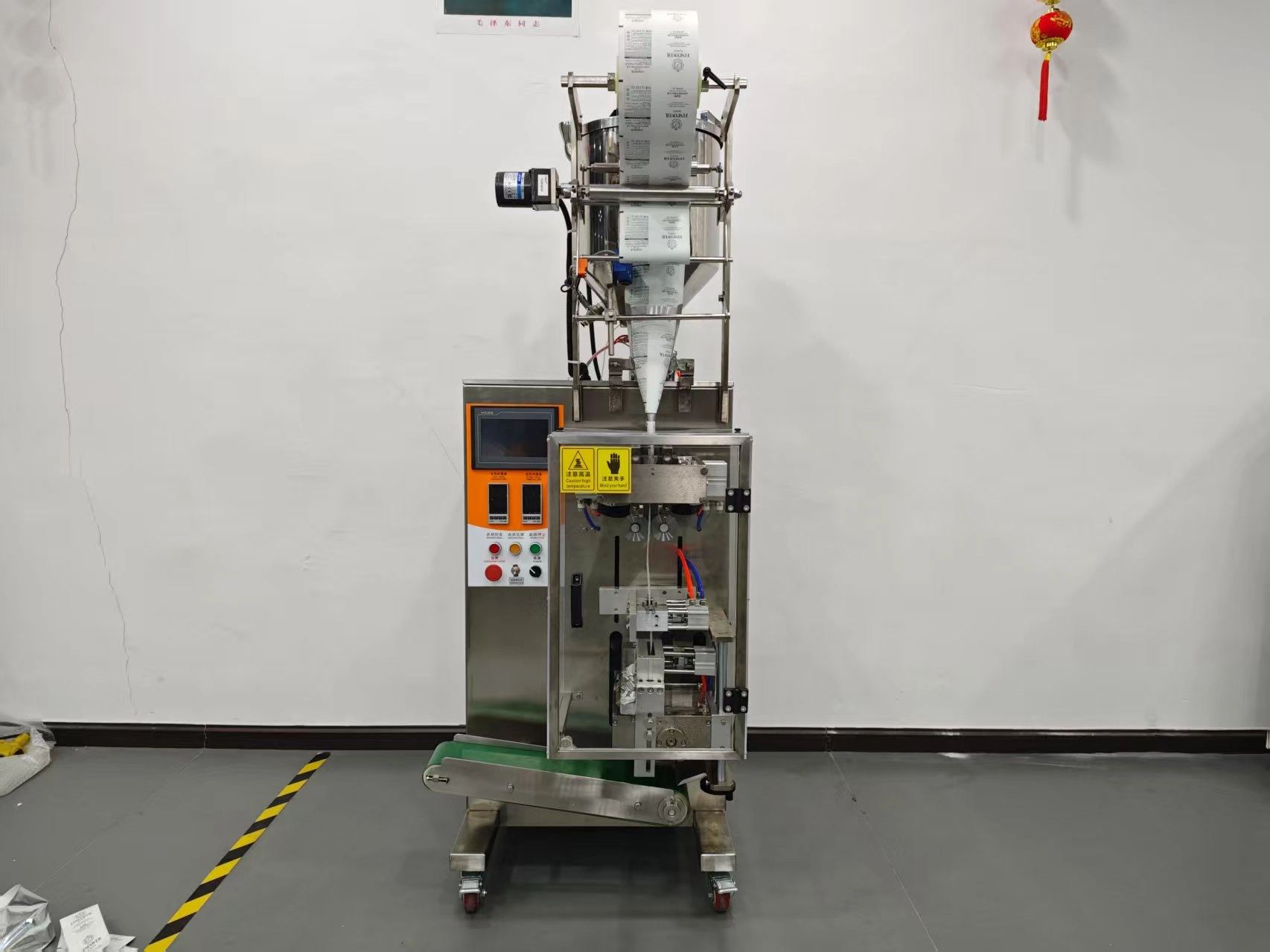
Three-side/four-side sealing bag packaging machine Liquid Paste Jam Cream Sachet Vertical Filling Pouch Packing Machine
Get in touch with FULUKE
If you have any comments or good suggestions, please leave us a message, later our professional staff will contact you as soon as possible.

A leading manufacturer specializing in advanced machinery and complete production lines for the cosmetics, food, pharmaceutical, and chemical industries worldwide.
Contact FULUKE
Facebook
Instagram
YouTube