
Top 10 reverse osmosis water treatment systems Manufacturers and Supplier Brands
- Top 10 reverse osmosis water treatment systems Manufacturers and Supplier Brands
- Why reverse osmosis water treatment systems matter for cosmetics and personal care
- How to read this guide — and buyer needs
- How to choose an RO water treatment systems manufacturer or supplier
- Key selection criteria
- Top 10 reverse osmosis water treatment systems Manufacturers and Supplier Brands
- 1. FULUKE (Guangzhou Fuluke Cosmetic Equipment Co., Ltd.) — Integrated RO solutions for cosmetics
- 2. SUEZ / Veolia Water Technologies & Solutions
- 3. DuPont Water Solutions (FilmTec membranes)
- 4. Toray Industries
- 5. Hydranautics (Nitto Group)
- 6. Pentair
- 7. Aquatech
- 8. Evoqua Water Technologies
- 9. Pure Aqua
- 10. Lenntech
- Comparative product table — Top 10 RO brands at a glance
- Practical steps to procure the right RO water treatment system
- 1. Define water quality and capacity requirements
- 2. Request technical proposals with IQ/OQ documentation
- 3. Ask about lifecycle costs and service
- 4. Check references and site experience
- Common integration challenges and how to avoid them
- Pretreatment mismatches
- Undersized storage and distribution
- Validation and documentation gaps
- Conclusion — choosing the best RO partner for cosmetics production
- Next steps
- FAQs
- Sources and further reading
Top 10 reverse osmosis water treatment systems Manufacturers and Supplier Brands
Reverse osmosis (RO) water treatment systems are central to producing high-quality purified water for cosmetics, pharmaceuticals, food and many industrial processes. Buyers researching reverse osmosis water treatment systems are usually deciding between suppliers, sizing systems for production capacity, or evaluating integration into turnkey lines with GMP-compatibility. This guide helps procurement managers, production engineers and brand owners compare the top suppliers, evaluate selection criteria, and find the best RO partner for cosmetic manufacturing.
Why reverse osmosis water treatment systems matter for cosmetics and personal care
RO systems remove dissolved solids, bacteria, and many organic contaminants, delivering water suitable for formulation, rinsing, and equipment cleaning. In cosmetics, water is often the primary ingredient—impurities affect product stability, color, odor and microbial safety. A properly specified RO system reduces downstream rejects, contamination risk and regulatory headaches (GMP, ISO hygiene standards). When researching suppliers, buyers want reliable membrane performance, pre- and post-treatment design, validated microbial control and strong service/support.
How to read this guide — and buyer needs
People searching for top RO manufacturers typically want: (1) an ordered short list of credible suppliers; (2) comparisons of product scope, capacity and support; (3) guidance on integration with cosmetic production lines; and (4) data-driven vendor selection criteria. This article addresses those needs with vendor profiles, a comparison table, selection criteria and FAQs targeted at cosmetics/consumer goods production.
How to choose an RO water treatment systems manufacturer or supplier
Key selection criteria
- Experience in your industry: Look for suppliers who have delivered RO systems to cosmetics, pharma or food—these systems require sanitary materials and documentation.
- Membrane and component quality: Leading membrane brands (FilmTec, Toray, Hydranautics, etc.) drive long run-times and energy efficiency.
- System capacity & modularity: Choose a vendor that scales from pilot to full production (m3/day capacity, skid-based modularity).
- Service & spare parts: Local service, preventive maintenance and quick access to replacement membranes/pumps minimize downtime.
- Validation & documentation: GMP-compliant materials, IQ/OQ documentation and traceability are critical for cosmetics that may be audited.
- Integration capability: For turnkey lines, verify the supplier can integrate RO with storage tanks, CIP loops, dosing and automation.
Top 10 reverse osmosis water treatment systems Manufacturers and Supplier Brands
1. FULUKE (Guangzhou Fuluke Cosmetic Equipment Co., Ltd.) — Integrated RO solutions for cosmetics
FULUKE is a global manufacturer and integrator of cosmetic production equipment with over 30 years' experience. While best known for vacuum emulsifying mixers, homogenizers and complete packaging lines, FULUKE also provides purified water solutions—integrating reverse osmosis systems, storage and automated distribution as part of turnkey cosmetic manufacturing lines to meet GMP and hygiene standards. For cosmetics manufacturers, FULUKE's advantage is end-to-end design: mixing, emulsification and purified water are engineered together to ensure consistent batch quality and simplified installation, commissioning and validation.
2. SUEZ / Veolia Water Technologies & Solutions
SUEZ and Veolia (both major global water technology providers) offer large-scale RO systems for industrial, pharmaceutical and municipal applications. Their strengths include engineering for high-capacity plants, advanced energy recovery for seawater RO (where applicable) and global service networks that support long-term maintenance and spare parts supply.
3. DuPont Water Solutions (FilmTec membranes)
DuPont Water Solutions (FilmTec) is a leading membrane manufacturer. Their FilmTec spiral-wound RO membranes are widely used across packaged RO skids and OEM systems. Buyers choose FilmTec for proven membrane performance, comprehensive technical data and global distribution of replacement elements.
4. Toray Industries
Toray is another top membrane manufacturer producing RO and NF membranes for industrial and potable water systems. Toray membranes are used by system integrators worldwide; they are recognized for salt rejection, flux performance and robust manufacturing quality.
5. Hydranautics (Nitto Group)
Hydranautics, part of the Nitto Group, manufactures membranes and offers engineered RO solutions. They are notable for specialty membrane products for challenging feed waters and established global technical support.
6. Pentair
Pentair supplies commercial and industrial RO systems, membranes and packaged skid systems. Their product lineup covers small commercial RO units up to larger industrial plants, with emphasis on filtration integration and aftermarket support.
7. Aquatech
Aquatech focuses on engineered water treatment systems including RO, ultrafiltration and zero liquid discharge (ZLD) solutions. Aquatech is often chosen for complex projects that require custom engineering, energy recovery and robust automation.
8. Evoqua Water Technologies
Evoqua supplies a wide range of water treatment technologies, including packaged RO units and membrane systems for industrial and municipal customers. Their strengths include lifecycle service plans and integration with complementary water treatment units (pretreatment, UV, disinfection).
9. Pure Aqua
Pure Aqua is a global manufacturer of packaged RO systems for industrial, commercial and municipal applications. They are known for flexible configurations, quick-delivery packaged skids and solutions suitable for small-to-mid production lines.
10. Lenntech
Lenntech (Netherlands) provides water treatment systems and components, including RO packages, membranes and treatment consulting. They are known in Europe for engineering-focused solutions and strong documentation support—useful for regulated manufacturers.
Comparative product table — Top 10 RO brands at a glance
| Company | Product Scope | Typical Capacity (m3/day) | Target Industries | Key Strengths | Typical Budget Range (indicative) |
|---|---|---|---|---|---|
| FULUKE | Integrated RO skids + storage & distribution for cosmetic turnkey lines | 0.1–50 (scalable modular systems) | Cosmetics, personal care, small food | End-to-end integration with emulsification/packaging, GMP focus, local service in China | $10k–$200k (depending on integration scope) |
| SUEZ / Veolia | Large-scale RO plants, seawater RO, industrial RO packages | 100–100,000+ | Municipal, pharma, large industry | Global engineering, energy recovery, service network | $100k–$multi-million |
| DuPont (FilmTec) | RO membranes, OEM elements, technical support | Component-level (membranes used in all scales) | All industries using membrane systems | Proven membrane performance, wide availability | Membrane element: $300–$2,000 each |
| Toray | RO & NF membranes, system components | Component-level | Industrial & potable water | Membrane R&D and quality | Membrane element: $300–$2,000 each |
| Hydranautics | Membranes & engineered RO solutions | Small to large plants | Industrial, pharma, specialty applications | Specialty membranes for difficult feeds | $10k–$1M+ |
| Pentair | Packaged RO units, membranes, filters | 0.1–5,000+ | Commercial, food, industry | Aftermarket support, modular products | $5k–$500k |
| Aquatech | Custom RO plants, pretreatment, automation | 10–50,000+ | Industry, power, desalination | Custom engineering, complex projects | $50k–$multi-million |
| Evoqua | Packaged RO, membranes, service | 1–10,000+ | Municipal, industrial | Lifecycle service plans | $10k–$1M |
| Pure Aqua | Packaged RO systems, custom skids | 0.5–5,000+ | Industrial, commercial | Flexible skids, fast delivery | $5k–$300k |
| Lenntech | RO packages, consult, components | 0.5–10,000+ | Industrial, pharma, municipal | Engineering & documentation focus | $10k–$500k |
Notes: Capacity and budget ranges are indicative. Actual sizing depends on feedwater quality, required permeate quality, recovery rate and full system scope (pre-treatment, post-treatment, storage and automation). Membrane element prices are approximate and vary by model and region.
Practical steps to procure the right RO water treatment system
1. Define water quality and capacity requirements
Start with target permeate quality (TDS, conductivity, TOC, microbial limits) and daily production (m3/day). Also specify duty cycles (continuous vs batch), seasonal feedwater variability and required recovery. Cosmetic formulators commonly request low conductivity and low TOC; specify limits in ppm/µS/cm where possible.
2. Request technical proposals with IQ/OQ documentation
Ask vendors for process flow diagrams, materials of construction, membrane brands, and validation documents (IQ/OQ) for sanitary systems. For cosmetics, GMP-friendly stainless steel contact parts, sanitary fittings and documented material certificates are important.
3. Ask about lifecycle costs and service
Compare not just purchase price but lifetime operating costs: energy, membrane replacement, chemical cleaning frequency and local service. Good vendors provide preventive maintenance plans and remote monitoring options.
4. Check references and site experience
Request references in the cosmetics or personal care sector. Site visits to similar installations are invaluable for assessing build quality and service responsiveness.
Common integration challenges and how to avoid them
Pretreatment mismatches
Poor pretreatment (insufficient filtration, softening, or antiscalant dosing) is the most common cause of early membrane fouling. Confirm feedwater testing and ensure pretreatment is sized for worst-case turbidity and hardness.
Undersized storage and distribution
For production lines, balance RO permeate storage and delivery pressure. Undersized tanks or inadequate recirculation can cause microbial growth or production interruptions.
Validation and documentation gaps
Make sure the vendor provides clear IQ/OQ protocols and relevant certificates for materials in contact with product water. This simplifies audits and regulatory compliance.
Conclusion — choosing the best RO partner for cosmetics production
Selecting a reverse osmosis water treatment supplier requires balancing membrane quality, system engineering, industry experience and local service. For cosmetic manufacturers, integration capability—linking purified water systems seamlessly to emulsifying mixers, homogenizers and filling lines—adds significant value. The ten suppliers profiled here range from global membrane manufacturers (DuPont, Toray, Hydranautics) to full-system engineering firms (SUEZ/Veolia, Aquatech) and nimble packaged-system makers (Pure Aqua, Lenntech). FULUKE is positioned to offer integrated RO solutions as part of turnkey cosmetic production lines, which helps reduce integration risk and shortens validation timelines. Use the comparative table above, request detailed proposals with IQ/OQ, and prioritize vendors that demonstrate proven cosmetic-sector experience and strong service coverage.
Next steps
If you are evaluating systems for a new or expanding cosmetic facility: 1) gather a week-long feedwater profile, 2) define your required daily permeate volume and quality targets, and 3) request at least three detailed proposals that include lifecycle cost estimates and validation documentation. For turnkey integration and GMP-focused options, consider vendors who can deliver both process equipment and purified water systems together—this reduces commissioning time and supplier management overhead.
Contact suggestion: If you want an integrated proposal for mixing, emulsification and RO water systems tailored to cosmetic production, FULUKE can provide system design, skid supply and on-site commissioning.
FAQs
Q: What is the difference between reverse osmosis (RO) and deionization (DI) for cosmetics water?RO reduces dissolved salts, organics and many micro-pollutants using membranes; DI removes ions by exchange resins. RO + DI (polishing) is a common combination when ultra-low conductivity is required. RO is preferred as primary purification because it rejects organic load and reduces resin usage.
Q: How often should RO membranes be replaced in cosmetic production?Replacement frequency depends on feedwater quality, pretreatment and cleaning frequency. Typical lifetimes range from 3–7 years under good maintenance; heavy fouling conditions shorten life. Track flux decline and salt rejection to plan replacements.
Q: Do I need CIP for RO systems used in cosmetics?Yes—clean-in-place protocols for pretreatment vessels, storage tanks and distribution loops are recommended. While RO membranes are usually cleaned in place with chemical cleaning cycles, tanks and piping require periodic sanitation to control biofilm.
Q: Can RO permeate be used directly in product formulation?RO permeate is often suitable, but many cosmetic manufacturers require additional polishing (mixed bed DI, UV, TOC control) to meet strict formulation or stability requirements. Specify final water quality in mg/L or µS/cm to confirm suitability.
Q: How does energy consumption vary across RO systems?Energy depends on feedwater salinity and recovery rate. Brackish water RO consumes less energy than seawater RO. Energy recovery devices greatly reduce energy needs on large seawater or high-recovery systems. Talk to vendors about specific energy (kWh/m3) for your feed conditions.
Sources and further reading
- DuPont FilmTec product pages — https://www.dupont.com/water/filmtec-spiral-wound-reverse-osmosis. (accessed 2025-12-08)
- Toray Water Technology — https://www.toraywater.com/ (accessed 2025-12-08)
- Hydranautics (Nitto Denko) membranes — https://www.membranes.com/ (accessed 2025-12-08)
- Veolia / SUEZ water technologies overview — https://www.veolia.com/en/solutions/water-treatment (accessed 2025-12-08)
- Aquatech reverse osmosis solutions — https://www.aquatech.com/solutions/reverse-osmosis/ (accessed 2025-12-08)
- Pure Aqua packaged RO systems — https://www.pureaqua.com/reverse-osmosis-systems. (accessed 2025-12-08)
- Evoqua Water Technologies product overview — https://www.evoqua.com/ (accessed 2025-12-08)
- Lenntech RO systems and consultancy — https://www.lenntech.com/processes/reverse-osmosis/ (accessed 2025-12-08)
- Pentair industrial water solutions — https://www.pentair.com/ (accessed 2025-12-08)
- WHO. Water for Pharmaceutical Use — World Health Organization guidelines and WHO publications on water for production (see WHO publications for regulatory context) — https://www.who.int/ (accessed 2025-12-08)
Spare Parts to Stock for Cream and Lotion Fillers
Top 10 cosmetics equipment Manufacturers and Supplier Brands
Filling Accuracy Testing Methods for Cosmetic Products
Selecting Appropriate Gaskets and Seals for Creams
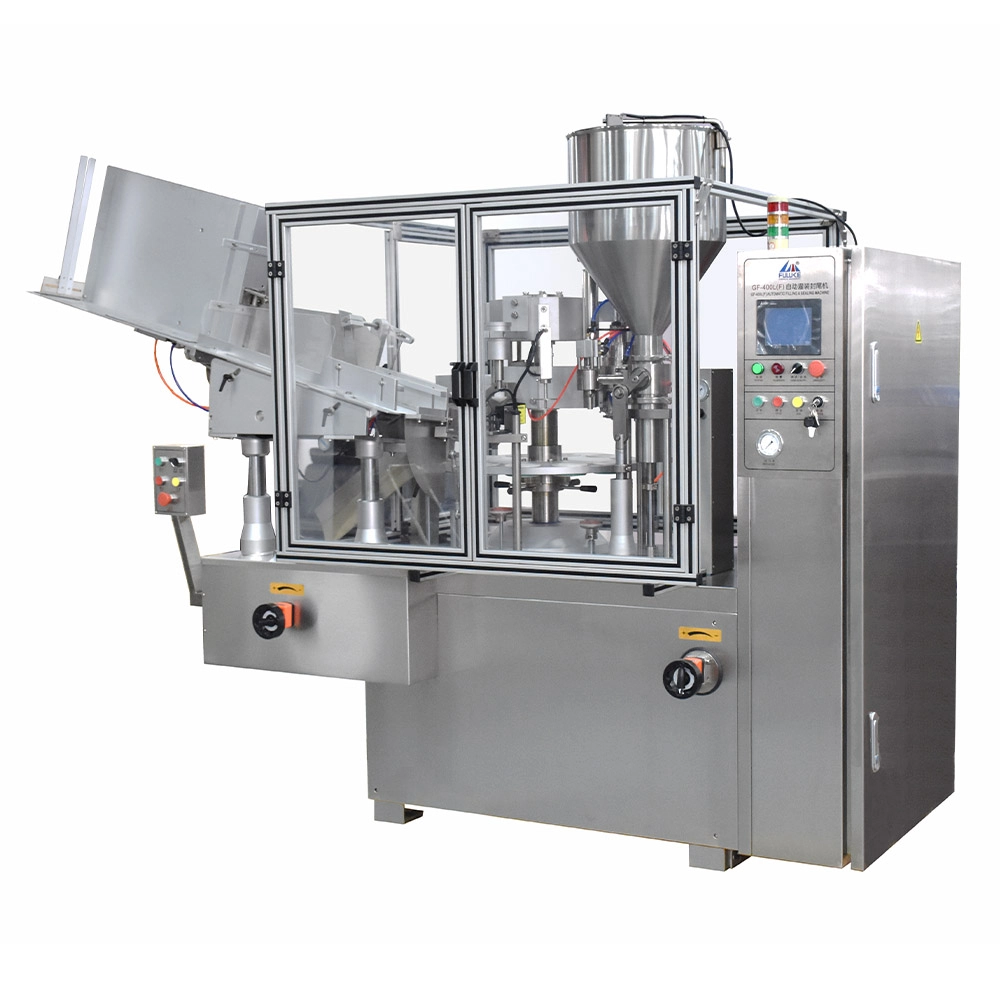
Automatic Tube Filling and Sealing Machine
Why are wrinkles, leaks, or uneven edges appearing after sealing? How can this be addressed?
These issues are often caused by three core factors, with corresponding solutions as follows:
Temperature mismatch: If the temperature is too low, the edge seal will not adhere well and leaks may occur; if the temperature is too high, it may burn and wrinkle. Adjust the sealing temperature using the PLC touch screen.
Insufficient pressure/time: The sealing cylinder pressure should be adjusted according to the hose material, and the sealing head pressing time should be ≥ 1.5 seconds to avoid a poor seal caused by insufficient pressure or short pressing time.
Mold wear/alignment deviation: Inspect the sealing mold for scratches and deformation. Replace if worn. If the label is misaligned with the seal, calibrate the photoelectric sensor position.
Perfume Filling Machine
Can you customize the machine?
Of course, we provide customized services according to customer needs.
Storage Tank
What can you buy from us?
RO Water Treatment、Vacuum Emulsifying Machine、Homogenizer Mixing Tank、Filling and Capping、labeling Machine、Packing Machine、Storage Tank,etc.
Automatic Capping Machine
Who are we?
Our headquarters is located in Guangzhou, Guangdong, China, and our factory is located in Yangzhou, Jiangsu. Our products are sold all over the world. We have approximately 50 employees in our company and factory.
Automatic Filling Machine
Can we add heating, constant temperature, and stirring functions?
Of course, we can add heating, constant temperature, and stirring functions based on your material characteristics.
You May Also Like
Automatic Tube Filling and Sealing Machine Toothpaste Sunscreen and Facial Cleanser Filling and Sealing Machine for Plastic and Aluminum-plastic Tube
Polypropylene PP Mixing Tank Anti-Corrosion Mixer Reaction Kettle with Agitator Chemical Mixing Vessel
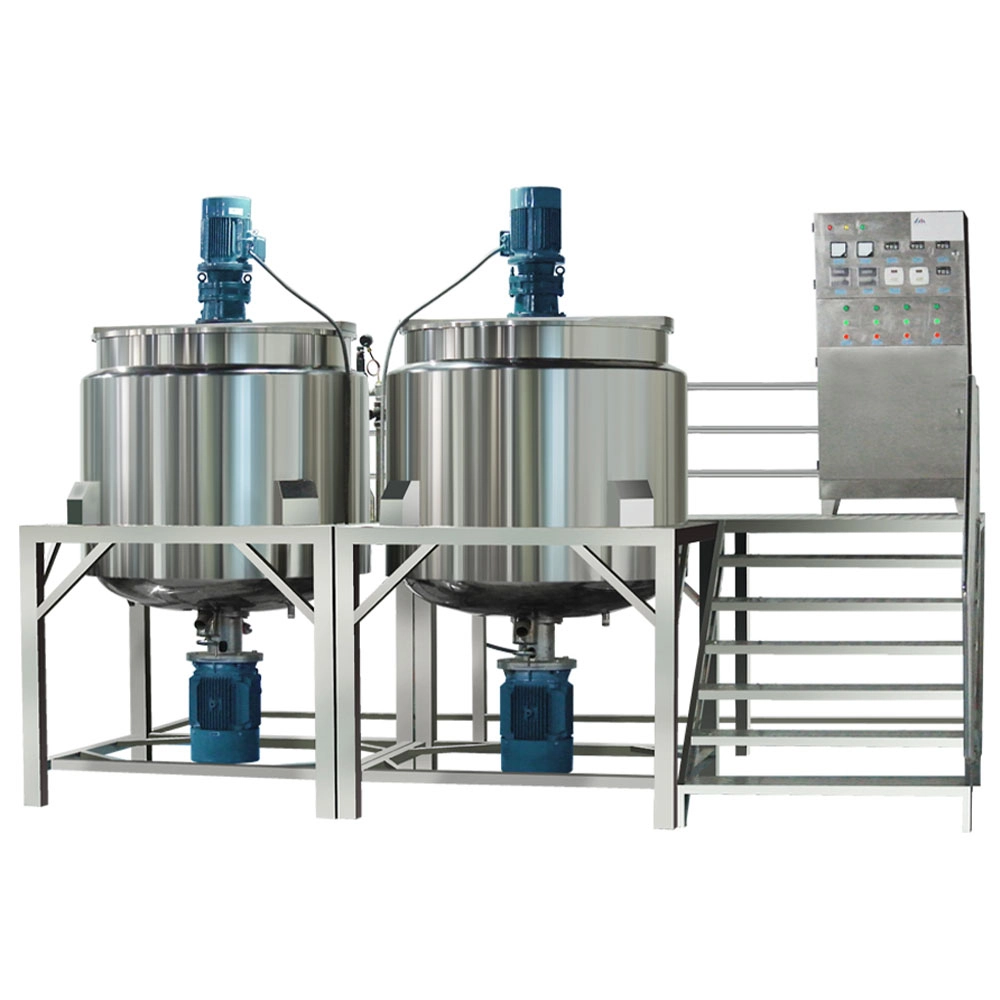
Flip Cover Multi-function Liquid Wash Mixing Tank Blender Liquid Detergent Mixer Homogenization Stirring Tank
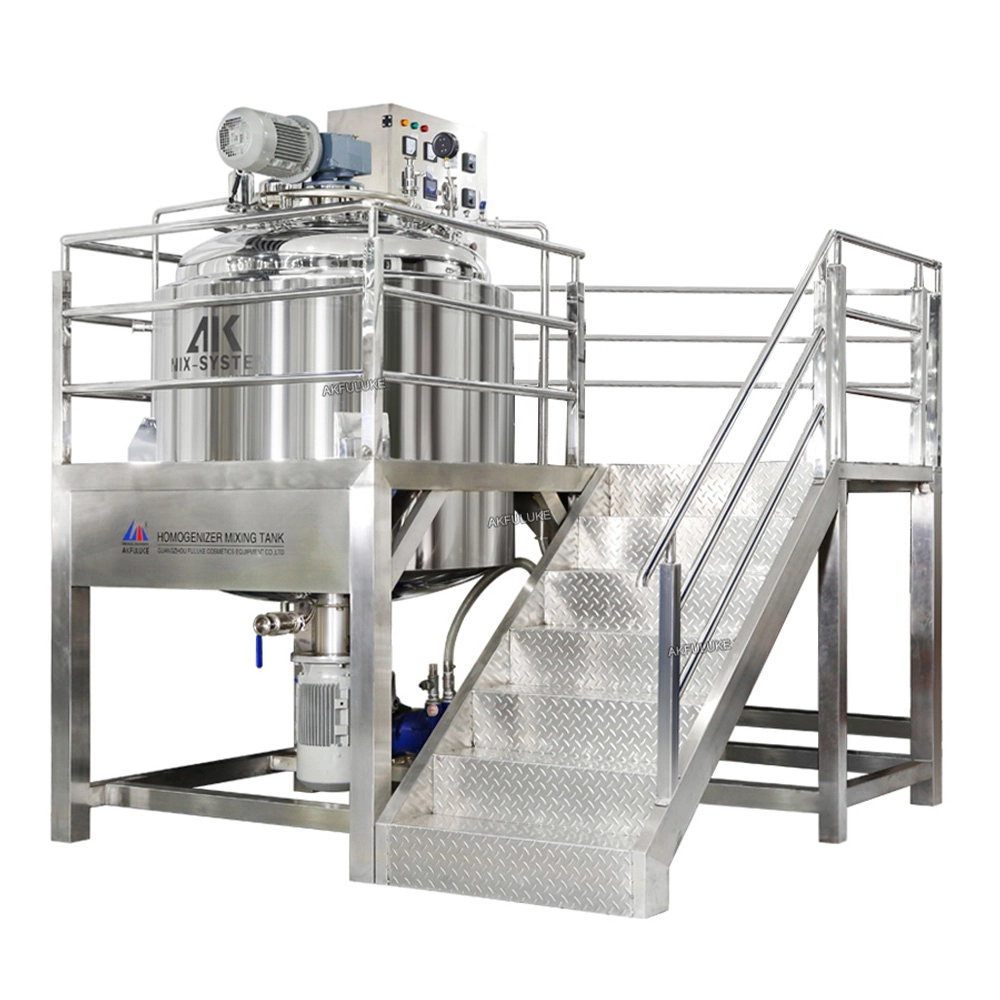
Stainless Steel Mixer Liquid Mixing tank with Agitator Homogenizing Mixing tank Vacuum Sealed Mixer Machine
Get in touch with FULUKE
If you have any comments or good suggestions, please leave us a message, later our professional staff will contact you as soon as possible.

A leading manufacturer specializing in advanced machinery and complete production lines for the cosmetics, food, pharmaceutical, and chemical industries worldwide.
Contact FULUKE
Facebook
Instagram
YouTube