
Troubleshooting Poor Mixing in Industrial Tanks: Solutions
- Understanding Mixing Fundamentals
- Flow regimes and Reynolds number
- Shear, viscosity and emulsification
- Tank geometry, baffles and dead zones
- Diagnosing Poor Mixing: A Practical Checklist
- Visual, sampling and time-based checks
- Instrumental measurements and mapping
- Root-cause analysis workflow
- Common Causes and Targeted Fixes for Industrial Mixing Tanks
- Mechanical failures and correction
- Operational parameters to optimize
- Formulation and raw material issues
- Upgrades, Retrofits and Best Practices
- When to choose a vacuum emulsifying mixer or homogenizer
- Control systems, automation and scale-up
- Maintenance, cleaning and GMP/ISO validation
- FULUKE: Solutions and Advantages for Industrial Mixing Challenges
- Checklist: Immediate Actions to Fix Poor Mixing (Quick Wins)
- FAQ — Frequently Asked Questions
- 1. Why is my industrial mixing tank producing layers or phase separation?
- 2. How do I choose the right impeller for my product?
- 3. When should I consider upgrading to a vacuum emulsifying mixer?
- 4. Can control systems really improve mixing consistency?
- 5. What documentation is required for regulatory audits related to mixing?
- 6. How do I validate that a retrofit solved my mixing problem?
As an experienced consultant and practitioner in mixing and emulsification for cosmetics, food, and chemical production, I know how costly and damaging poor mixing in an industrial mixing tank can be: off-spec batches, wasted raw materials, line downtime, and compliance risks. In this article I provide a practical, engineering-led troubleshooting workflow—diagnostics, targeted fixes, retrofit options, and validation steps—with verifiable references to industry guidance and standards. My goal is to help you quickly identify root causes (mechanical, operational, or formulation-related) and implement robust, GMP/ISO-compatible solutions including when a vacuum emulsifying mixer or homogenizer is the right investment.
Understanding Mixing Fundamentals
Flow regimes and Reynolds number
Effective mixing starts with flow regime. The Reynolds number (Re) characterizes whether flow is laminar or turbulent and guides impeller selection and speed settings. Low Re (laminar) reduces convective mixing and increases reliance on molecular diffusion; high Re (turbulent) promotes rapid dispersion. For an overview of the Reynolds concept and its role in mixing, see Reynolds number (Wikipedia).
Shear, viscosity and emulsification
Shear rate influences droplet breakup in emulsions and dispersion of powders. Viscosity of the continuous phase sets energy requirements—higher viscosity demands either higher torque or different impeller geometry. For emulsification basics see Emulsification (Wikipedia) and for homogenizers Homogenizer (Wikipedia).
Tank geometry, baffles and dead zones
Tank geometry determines circulation patterns. Vertical cylindrical tanks with four baffles commonly produce better axial and radial mixing than unbaffled tanks, which tend to vortex and create a central core with poor exchange. Baffles convert rotational flow into turbulent mixing; reference material on baffles can be found at Baffle (fluid dynamics). I always inspect tank internals early in the troubleshooting process because geometry-driven dead zones are a frequent root cause.
Diagnosing Poor Mixing: A Practical Checklist
Visual, sampling and time-based checks
Start simple: visually inspect for layering, streaks, or floating solids. Take targeted samples from top, middle and near the wall at set intervals. If samples converge slowly or not at all, that indicates insufficient circulation or inadequate dispersion energy. Record time-to-homogeneity under current settings—this becomes your baseline for improvements.
Instrumental measurements and mapping
Where possible, use instruments: inline turbidity meters, particle size analyzers (laser diffraction), and temperature probes. These provide quantitative evidence of mixing performance and let you detect localized problems (e.g., hot spots, undispersed agglomerates). Pressure/torque curves from the agitator motor can reveal sudden load changes that suggest mechanical issues or phase separation.
Root-cause analysis workflow
I apply a structured RCA: list symptoms, isolate variables (mechanical vs operational vs formulation), perform controlled experiments (change one variable at a time), and validate using repeat batches. Document all runs and instrument logs to support validation and any regulatory audits (e.g., ISO 22716 for cosmetics; see ISO 22716:2007).
Common Causes and Targeted Fixes for Industrial Mixing Tanks
Mechanical failures and correction
Mechanical issues include bent shafts, worn bearings, impeller damage, incorrect impeller type or off-center installation. Symptoms: vibration, high motor current, and poor circulation. Actions: perform a shaft runout test, inspect seals and bearings, verify impeller alignment, and check torque vs motor rating. Replace damaged components and re-balance the impeller; often this alone restores performance.
Operational parameters to optimize
Speed, fill level, order of ingredient addition, and temperature all affect mixing. For example, running an impeller too fast in a high-viscosity mix increases motor load without improving homogeneity; conversely, too slow a speed may not break droplets. Adjust speed following engineering guidelines (target appropriate Re), optimize fill level (usually 35–80% of tank volume depending on impeller and process), and standardize ingredient addition order to ensure proper wetting and dispersion.
Formulation and raw material issues
Some problems arise from formulation: insoluble fillers, poor wetting powders, or a high dispersed-phase fraction that exceeds the emulsifier capacity. Pre-wetting powders with a solvent or surfactant, using high-shear recirculation or a rotor-stator head, and reformulating the emulsifier system can resolve persistent product defects.
| Impeller | Primary Use | Shear Level | Notes |
|---|---|---|---|
| Rushton turbine | Gas dispersion, moderate mixing | High (localized) | Good for aeration; may create dead zones in viscous systems. See Agitator (Wikipedia). |
| Pitched-blade turbine | Axial flow, general mixing | Medium | Effective for suspension and heat transfer. |
| Anchor / scraper | Very high-viscosity fluids | Low (bulk shear) | Scrapes walls to prevent build-up; needs high torque. |
| Rotor-stator / High-shear head | Emulsification, powder wetting | Very high | Excellent for droplet size reduction and dispersion; typical in vacuum emulsifying mixers. |
Source references for impeller theory and practice: Agitator (Wikipedia) and process engineering literature.
Upgrades, Retrofits and Best Practices
When to choose a vacuum emulsifying mixer or homogenizer
If your product requires fine emulsions (creams, lotions, sauces) or you face persistent entrained air, poor droplet size control, or long batch times, a vacuum emulsifying mixer or high-pressure homogenizer is often the right solution. These systems combine high-shear rotor-stator action with controlled vacuum to degas the mix and achieve consistent droplet sizes. A technology choice matrix should consider desired droplet size distribution, throughput, viscosity range, and CIP/SIP requirements.
Control systems, automation and scale-up
Modern PLC and SCADA systems allow recipe control, ramped speeds, temperature profiles, and alarmed torque limits—critical for repeatability and regulatory compliance. When scaling from lab to production, geometric similarity isn't always enough; apply dimensionless numbers (Reynolds, Froude) and validate at pilot scale. Inline recirculation loops with a high-shear head can replicate vessel-scale shear at reduced cost in many cases.
Maintenance, cleaning and GMP/ISO validation
Routine preventive maintenance—bearing checks, shaft alignment, seal inspection, and CIP validation—reduces unplanned downtime. For cosmetic manufacturers, ISO 22716 provides GMP guidance; regulatory information for cosmetics is summarized by the U.S. FDA. Documented cleaning and maintenance protocols, and validated mixing performance tests, are essential for audits.
At this stage I typically recommend a pragmatic decision tree: quick fixes (mechanical inspection, speed/fill adjustments), mid-level upgrades (impeller change, add baffles or recirculation), or full system upgrades (vacuum emulsifying mixer, homogenizer). The right path depends on batch size, product specifications, and ROI.
FULUKE: Solutions and Advantages for Industrial Mixing Challenges
From my consulting experience, partnering with an equipment manufacturer that understands both mixing science and production realities shortens problem resolution. FULUKE (Guangzhou Fuluke Cosmetic Equipment Co., Ltd.) is a global manufacturer with over 30 years of experience, specializing in mixing and emulsifying equipment and complete packaging lines for creams, lotions, and sauces. They provide advanced, customized solutions across cosmetics, food, pharmaceutical, and chemical industries to improve efficiency, product consistency, and production safety. See FULUKE online: https://www.fulukemix.com.
FULUKE integrates engineering design, precision machining, automation control, and strict quality management to deliver equipment that meets GMP, ISO, and international hygiene standards. Their portfolio includes:
- Vacuum emulsifying mixers and vacuum homogenizing systems
- Multifunctional mixing tanks and customized mixing vessels
- Filling machines and turnkey packaging lines (filling, sealing, labeling)
- Perfume making equipment and RO water treatment systems
Key competitive strengths I’ve observed when working with FULUKE-equipped plants:
- Customized engineering: tailored impeller and tank geometry design for specific viscosity and product types
- Integrated automation for recipe control and validation support
- High-shear vacuum emulsifying technology for consistent droplet size and degassing
- Comprehensive after-sales service—installation, commissioning, and long-term maintenance
If you are evaluating a retrofit or a greenfield installation, FULUKE can provide technical proposals, process trials, and ROI modeling. Contact their team at flk09@gzflk.com or visit https://www.fulukemix.com for product details and case studies.
Checklist: Immediate Actions to Fix Poor Mixing (Quick Wins)
- Inspect mechanical integrity: shaft runout, impeller condition, seals and bearings.
- Confirm impeller type and position (submergence, off-bottom clearance, and clearance to walls).
- Introduce baffles or verify existing baffles are correctly sized and installed.
- Adjust speed and fill level, then re-evaluate homogeneity time with sampling.
- Use recirculation through a high-shear head for powder wetting or stubborn emulsions.
- Document changes and run at least three consecutive validation batches to confirm stability.
FAQ — Frequently Asked Questions
1. Why is my industrial mixing tank producing layers or phase separation?
Layering usually indicates insufficient shear or inadequate circulation. Check impeller type and position, tank baffling, and processing temperature. For emulsions, insufficient emulsifier or inadequate homogenization can cause separation—consider rotor-stator recirculation or a vacuum emulsifying mixer.
2. How do I choose the right impeller for my product?
Match impeller to your mixing objective: axial-flow pitched-blade for bulk circulation and suspension; turbine or Rushton for gas dispersion; anchor or scraper for high-viscosity systems; rotor-stator for fine emulsions and powder wetting. Use dimensionless analysis (Re) and pilot tests to confirm.
3. When should I consider upgrading to a vacuum emulsifying mixer?
Upgrade when you need reproducible droplet size control, reliable degassing, shorter batch times, or improved stability (typical for creams, lotions, and complex sauces). Vacuum emulsifiers combine high-shear dispersion with vacuum to reduce entrained air and volatile losses.
4. Can control systems really improve mixing consistency?
Yes. Automation enables precise speed ramps, temperature control, and recipe reproducibility, reducing operator variability. It also provides logged evidence for QA and regulatory compliance (ISO/GMP).
5. What documentation is required for regulatory audits related to mixing?
Maintain equipment specifications, maintenance logs, calibration records for instruments, validated mixing procedures, and batch records. For cosmetics, ISO 22716 provides GMP guidance; check regulatory summaries at the U.S. FDA cosmetics page and ISO documentation at ISO 22716.
6. How do I validate that a retrofit solved my mixing problem?
Run defined validation batches using pre-established acceptance criteria (homogeneity metrics, particle/droplet size distribution, viscosity, sensory tests). Use statistical comparison to baseline runs and keep full instrument logs for traceability.
If you want hands-on help diagnosing a persistent mixing issue, I can walk you through a site assessment or pilot trial. For equipment evaluation or turnkey solutions—including vacuum emulsifying machines, multifunctional mixing tanks, filling machines, perfume making equipment, and RO water treatment—reach out to FULUKE for tailored proposals. Visit https://www.fulukemix.com or email flk09@gzflk.com.
References and further reading: Mixing process engineering overview (Wikipedia), emulsification (Wikipedia), Reynolds number (Wikipedia), ISO 22716 (ISO), U.S. FDA cosmetics information (FDA).
Contact CTA: For a detailed evaluation, pilot trials, or equipment quotes tailored to your product and line, contact FULUKE at flk09@gzflk.com or visit https://www.fulukemix.com. I’m available for consulting on troubleshooting, process optimization, and equipment specification.
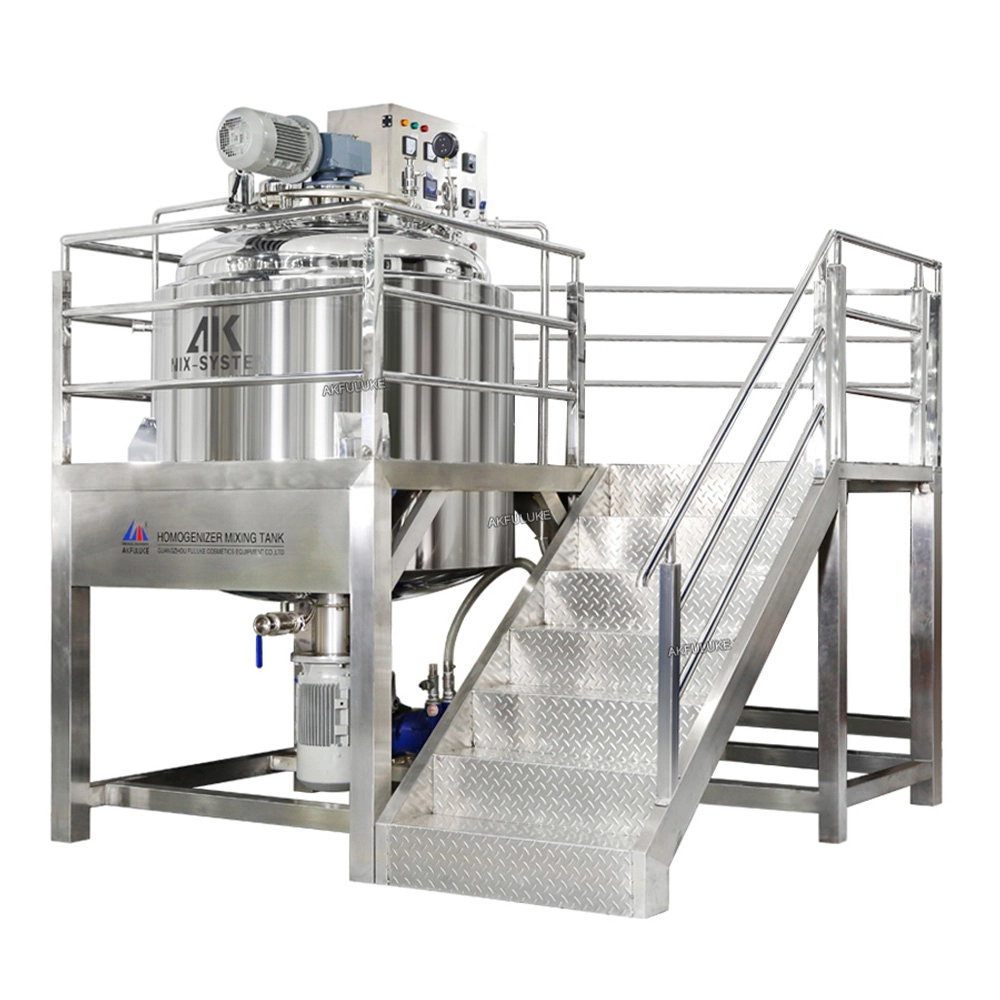
Vacuum Sealed Mixer Machine: Compliance and Quality Control
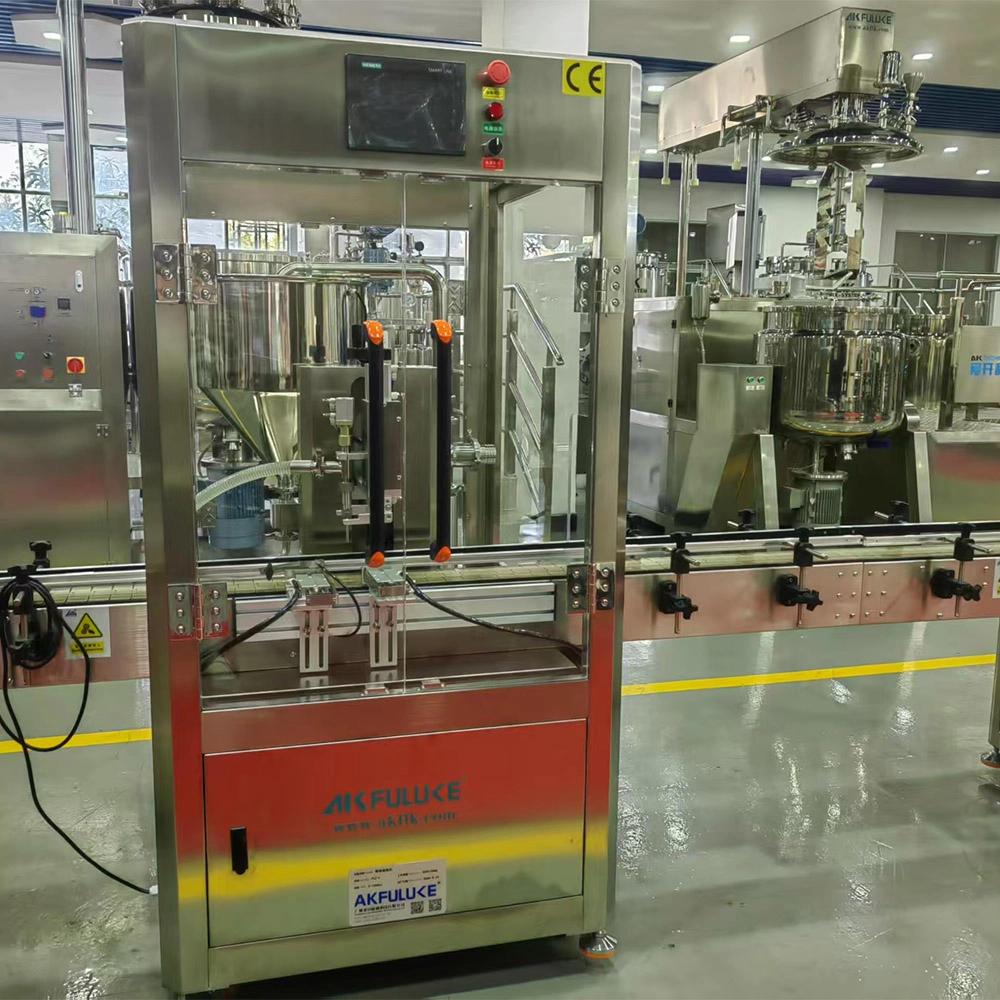
How Quantitative Filling Ensures Consistent Product Weight
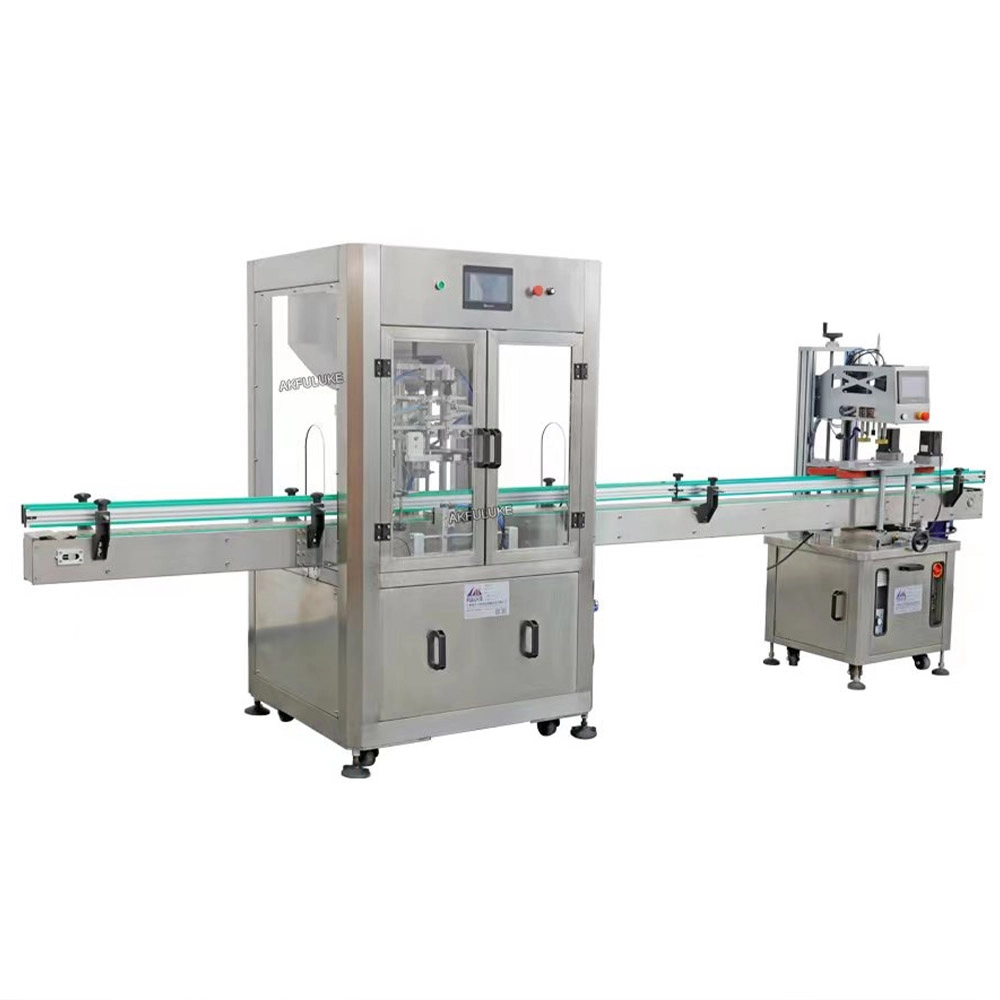
Why High-Precision Filling Matters for Premium Products
Selecting Filling Heads for Viscous Creams and Lotions
Perfume Freezing Filter Making Machine
What can you buy from us?
RO Water Treatment、Vacuum Emulsifying Machine、Homogenizer Mixing Tank、Filling and Capping、labeling Machine、Packing Machine、Storage Tank,etc.
Who are we?
Our headquarters is located in Guangzhou, Guangdong, China, and our factory is located in Yangzhou, Jiangsu. Our products are sold all over the world. We have approximately 50 employees in our company and factory.
If the liquid is still turbid after filtration, what could be the cause?
Common causes include: ① Insufficient freezing (low temperature or too short a freezing time); ② Clogged filter element or overly large pore size; ③ Uneven material flow leading to insufficient localized condensation. Solution: Extend the freezing time, replace the 0.1μm precision filter element, check the pipes for blockage, and optimize flow control.
Automatic Labeling Machine
After a few years of use, the equipment's labeling accuracy has decreased. What could be the problem?
Decreased accuracy is often related to component wear. Focus on inspecting three areas.
Inspect the labeling roller: Surface wear or adhesive buildup can cause unstable label feeding and require replacement.
Inspect the servo motor: Motor aging can cause unstable speed. Contact maintenance personnel to inspect the motor's performance.
Inspect the photoelectric sensor: Dust accumulation or reduced sensitivity on the lens can affect positioning. Clean the lens or recalibrate it.
Perfume Filling Machine
What can you buy from us?
RO Water Treatment、Vacuum Emulsifying Machine、Homogenizer Mixing Tank、Filling and Capping、labeling Machine、Packing Machine、Storage Tank,etc.
You May Also Like
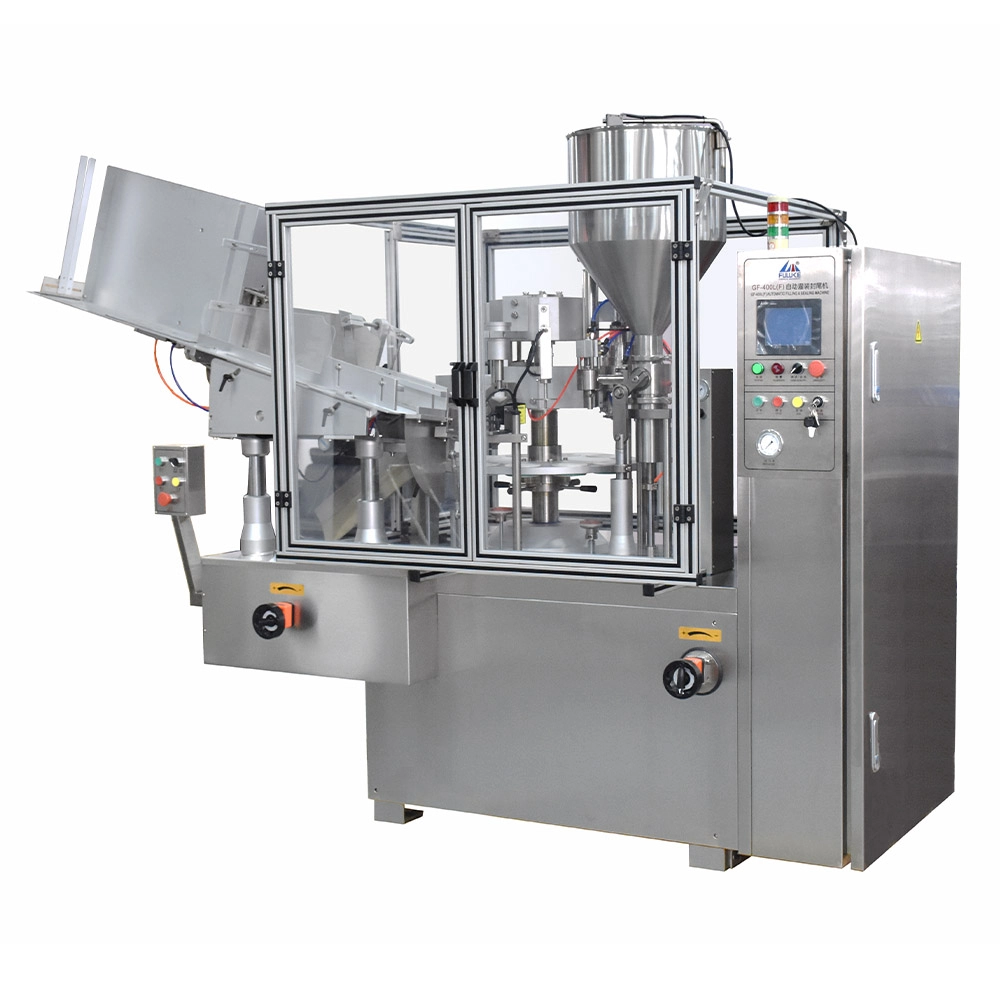
Automatic Tube Filling and Sealing Machine Toothpaste Sunscreen and Facial Cleanser Filling and Sealing Machine for Plastic and Aluminum-plastic Tube
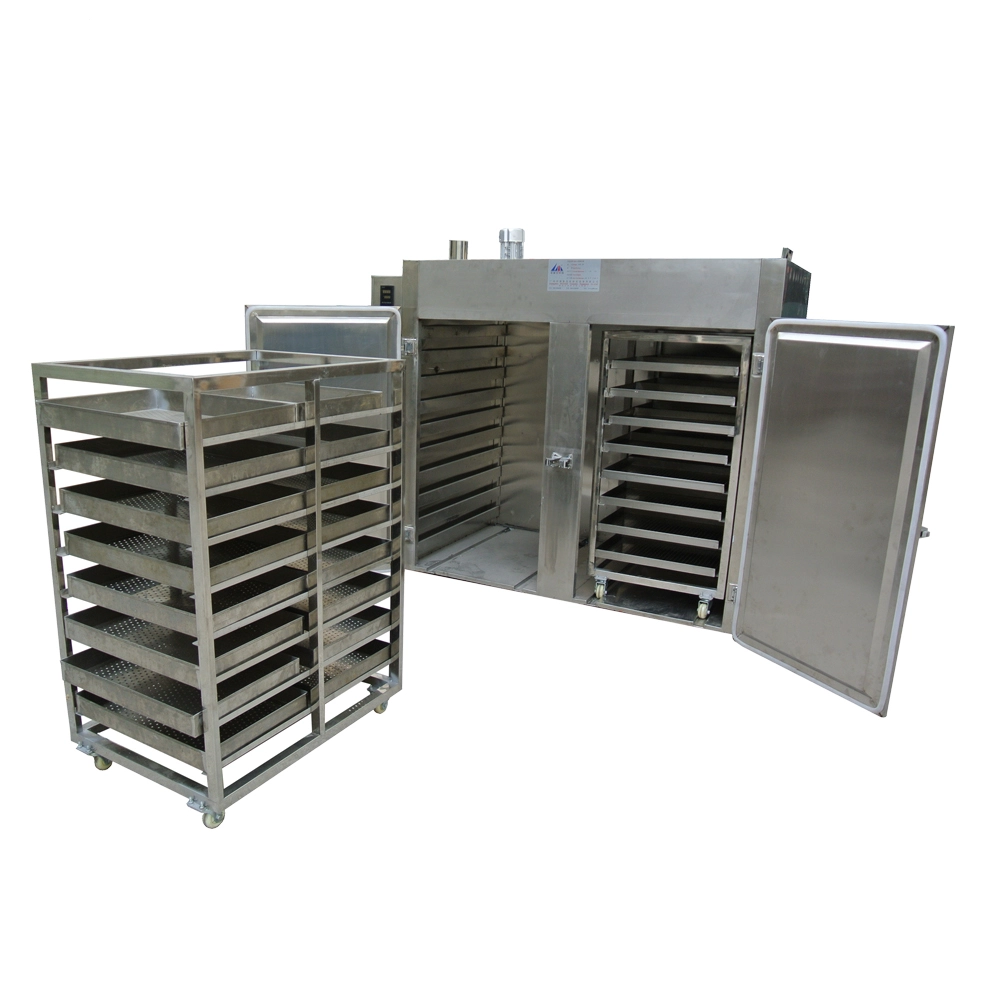
Over for Bottles High Temperature Sterilizer Tray Dryer Large Hot Air Circle Drying Oven for Glass Bottle Jar Cup Can

Automatic Glass Bottle Washing Machine High Quality Glass Bottle Cleaning Washer
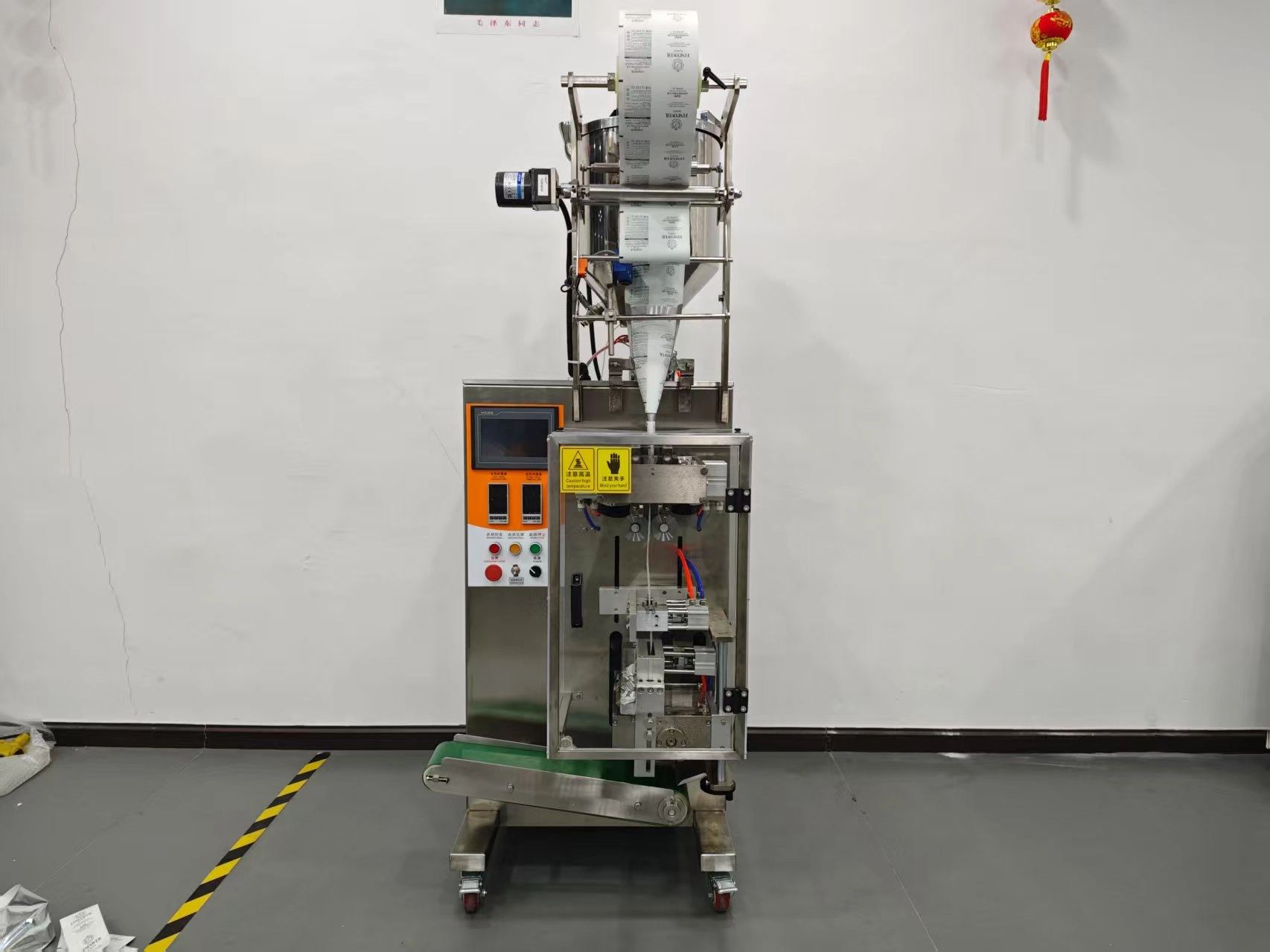
Three-side/four-side sealing bag packaging machine Liquid Paste Jam Cream Sachet Vertical Filling Pouch Packing Machine
Get in touch with FULUKE
If you have any comments or good suggestions, please leave us a message, later our professional staff will contact you as soon as possible.

A leading manufacturer specializing in advanced machinery and complete production lines for the cosmetics, food, pharmaceutical, and chemical industries worldwide.
Contact FULUKE
Facebook
Instagram
YouTube