
How Vision Systems Improve Filling Line Quality Control
- Vision-driven quality control on modern filling lines
- What machine vision brings to liquid filling machine operations
- Common inspection tasks and detection capabilities
- Why vision is superior to traditional in-line QC
- Integrating vision with automatic filling equipment
- Compatibility with automatic filling machines
- Physical and data-level integration
- Example inspection flow
- Performance, ROI and compliance benefits
- Quantifying improvements
- Regulatory and audit readiness
- Comparative performance table
- Implementation best practices and common pitfalls
- Lighting, optics, and calibration
- Recipe management and changeover
- Data handling, storage and analysis
- Real-world considerations and case examples
- Case: cream and lotion filling line
- Scalability and future-proofing
- Standards and further reading
- FAQ
- Q: Can a vision system measure fill volume accurately enough to replace weigh scales?
- Q: How does a vision system handle opaque creams or very viscous products?
- Q: Will adding vision slow down my line?
- Q: How do vision systems support regulatory compliance?
- Q: What is the expected ROI timeline?
- Q: How do I start integrating vision into an existing filling line?
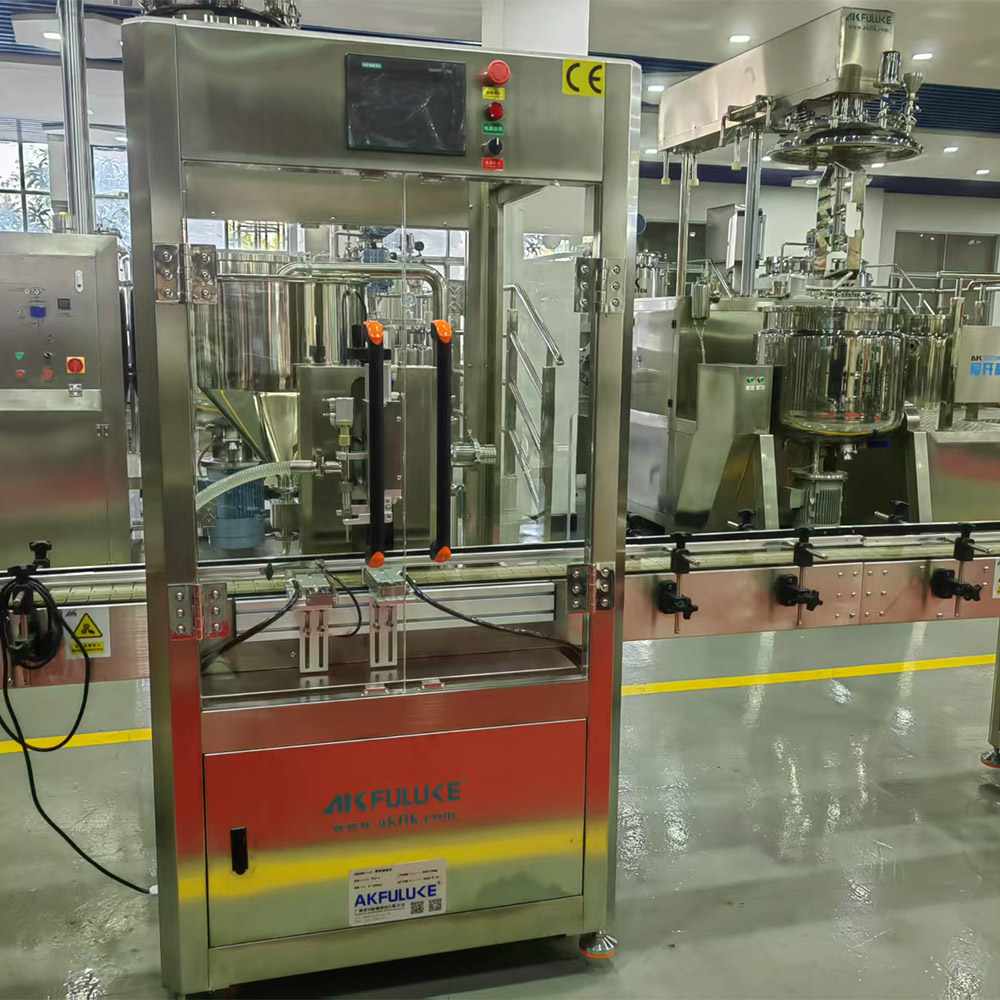
Vision systems are transforming quality control across filling lines by offering high-speed, non-contact inspection that detects defects earlier, reduces waste, and enforces product and packaging consistency. For manufacturers using a liquid filling machine, especially in cosmetics and pharmaceuticals, integrating machine vision ensures precise fill volumes, correct closures, label integrity, and cosmetic-level surface checks — all while supporting GMP compliance and automated traceability. This article explains how vision systems work on filling lines, practical integration with automatic filling machines, measurable ROI, and implementation best practices.
Vision-driven quality control on modern filling lines
What machine vision brings to liquid filling machine operations
Machine vision uses cameras, lighting, and image-processing algorithms to inspect products at production speed. On a filling line it can check fill levels, cap presence and torque, label placement, nozzle cleanliness, and even surface appearance of creams and lotions. Unlike manual inspection, vision systems provide objective, consistent criteria and logable results for each unit, which is essential for high-volume lines and regulated industries.
Common inspection tasks and detection capabilities
Typical tasks include: fill-height verification, foreign-particle detection in transparent liquids, emulsion homogeneity checks in creams, cap orientation and seal inspection, tamper-evidence verification, and code/label OCR for traceability. Combining different camera types (area, line-scan, infrared) and appropriate illumination enables reliable detection across glass and PET bottles and various product viscosities.
Why vision is superior to traditional in-line QC
Compared with manual inspection, vision offers speed (hundreds to thousands of checks per minute), repeatability (no fatigue), and data collection (images and metrics per bottle). Compared with single-point sensors such as conductivity probes or weight checks, vision systems can detect many defect types in a single pass — for example, a weight check can flag underfills but cannot detect inverted caps or mislabels.
Integrating vision with automatic filling equipment
Compatibility with automatic filling machines
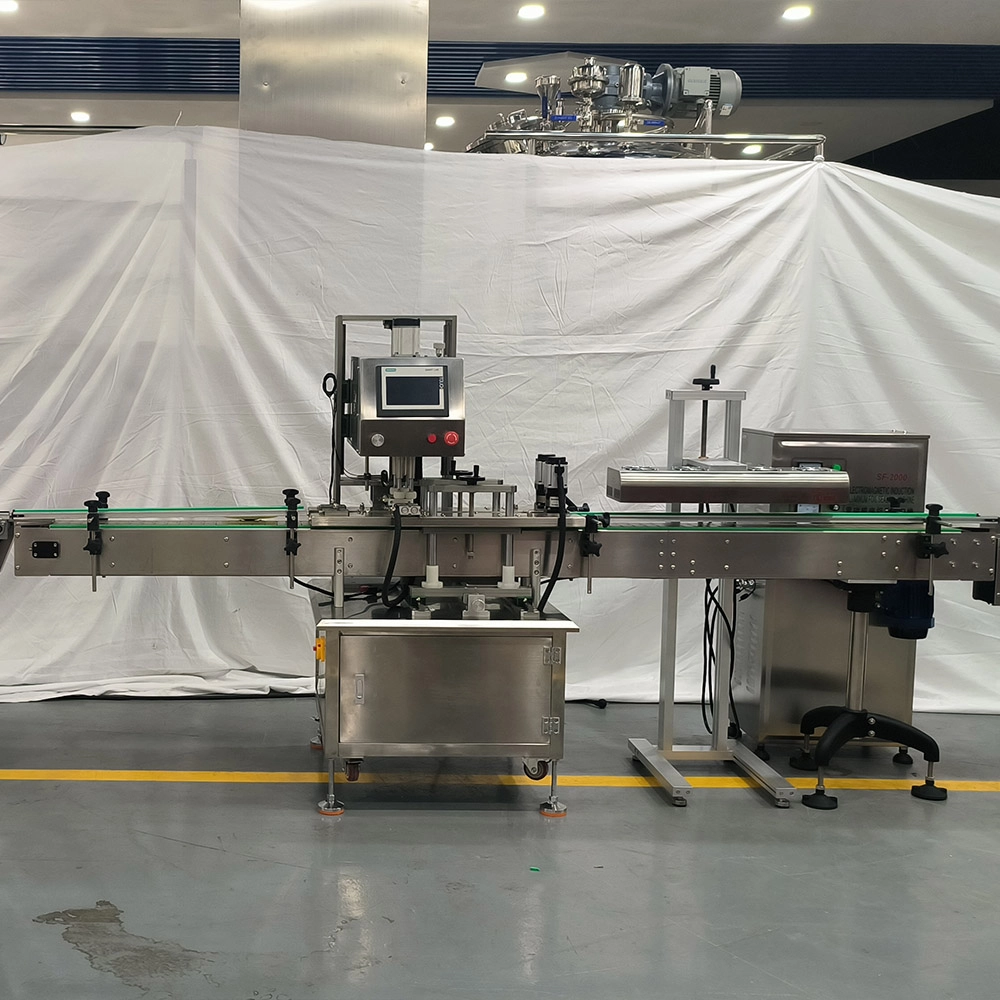
The Automatic Filling Machine Quantitative Liquid Bottle Filling Machine High-precision cream and lotion filling machine integrates automated conveying, precision filling, and intelligent control for packaging creams, lotions, and liquids. Suitable for a variety of containers, including glass and PET bottles, it can fill liquids, emulsions, and pastes with high precision. Constructed with 316L/304 stainless steel contact components and compliant with GMP standards, it features a touchscreen interface for quick parameter adjustment and completes the entire process without manual intervention. Widely used in the cosmetics, food, daily chemical, pharmaceutical, and chemical industries, it helps companies reduce costs, increase efficiency, and ensure product standardization.
Physical and data-level integration
Physically, cameras and lighting are mounted at critical stations: after the filler for fill level, after the capper for closure verification, and after labeling for label and code checks. Data integration involves connecting the vision controller to the filling machine PLC and MES so inspection results can trigger line actions (reject, stop, rework) and be recorded for compliance. Modern vision solutions support industry protocols (Ethernet/IP, Profinet, OPC-UA) to streamline integration.
Example inspection flow
- Product arrives and is identified by a barcode/vision-reading station.
- Filling occurs; an inline camera verifies fill level and looks for foam or bubbles.
- Capper station checks cap presence, orientation, and torque marker.
- Label station checks placement, print quality, and legibility of batch codes.
- Reject station removes non-conforming containers and logs images to MES for traceability.
Performance, ROI and compliance benefits
Quantifying improvements
Implementing vision systems typically reduces visible defects and customer complaints by 60-95% depending on previous controls. Improved detection reduces rework and recalls, while enabling higher line speeds without sacrificing quality. Savings come from less product giveaway (precise fill control), fewer customer returns, and reduced manual labor.
Regulatory and audit readiness
For cosmetics and pharmaceuticals, traceable inspection records are critical. Vision systems can store images and inspection metadata (timestamps, lot, operator), supporting audits and complaint investigations. Referencing recognized best practices and regulation resources such as FDA Cosmetics information and GMP frameworks like WHO GMP guidance helps align implementations with regulatory expectations.
Comparative performance table
| Inspection method | Accuracy | Speed | Detects | Typical cost |
|---|---|---|---|---|
| Manual visual inspection | Medium (variable) | Low | Cosmetic defects, some fill errors | Low equipment, high labor |
| Weight/scale check | High for gross fill | Medium | Under/overfill | Medium |
| Machine vision | Very high (image-based) | High (100s-1000s/min) | Fill level, labels, caps, particles, surface defects | Medium–High (capex), Low Opex |
| Combined vision + weight | Very high | High | All of the above | High initial |
Implementation best practices and common pitfalls
Lighting, optics, and calibration
Lighting is often the most critical factor. Diffuse, uniform lighting reduces reflections on glass and glossy labels; backlighting is effective for fill-level detection in transparent containers. Choose camera resolution and lens focal length to provide sufficient pixels-on-target; validate with sample-run images. Regular calibration routines (using test targets) maintain measurement accuracy and should be part of planned maintenance.
Recipe management and changeover
For cosmetic lines that run multiple SKUs, the vision system should support recipes: saved parameter sets for different container shapes, fill heights, label types, and speeds. A touchscreen interface on the filling machine simplifies recipe selection and reduces operator errors, ensuring consistent inspection across variants.
Data handling, storage and analysis
Define what data to retain: full images for rejected units, aggregated metrics for SPC, and event logs for audit trails. Connect vision outputs to the manufacturing execution system (MES) and long-term storage solutions so trends (e.g., drift in fill levels) can be analyzed and resolved proactively.
Real-world considerations and case examples
Case: cream and lotion filling line
On a lotion line handled by our Automatic Filling Machine Quantitative Liquid Bottle Filling Machine High-precision cream and lotion filling machine, adding a multi-camera vision cell reduced label misplacements by 88% and eliminated a common underfill issue caused by nozzle splash. The system automatically rejected affected bottles and flagged the filler for maintenance when a pattern of underfills exceeded thresholds — preventing a potential recall.
Scalability and future-proofing
Start with a modular vision deployment: add cameras and capabilities as needs grow. Modern vision platforms support machine learning-based detection models that can be trained for complex cosmetic defects (e.g., streaks in creams) improving detection without extensive reprogramming. For background on machine vision concepts, see the overview at Machine vision (Wikipedia).
Standards and further reading
For background on filler equipment and general machine types, see Filling machine (Wikipedia). For vendor resources and technical white papers on vision system deployment, manufacturers such as Cognex provide practical guidance. When aligning quality systems with recognized standards, consult regulatory resources like the FDA cosmetics page and global GMP references from WHO.
FAQ
Q: Can a vision system measure fill volume accurately enough to replace weigh scales?
A: Vision systems infer fill amounts by measuring fill height and container geometry. For many glass and PET containers with consistent shapes, this is accurate to the tolerance required for cosmetics. For absolute mass verification, combining vision with periodic or continuous in-line weighing gives the most robust solution.
Q: How does a vision system handle opaque creams or very viscous products?
A: Opaque or opaque-colored creams cannot be inspected for internal fill by optical fill-height measurement. For those products, manufacturers use volumetric filling accuracy from the filler (e.g., piston or pump calibration), combine with weight checks, and use vision to inspect cap, label, and surface defects.
Q: Will adding vision slow down my line?
A: Properly specified vision systems operate at or above line speed. The key is selecting cameras and processing hardware sized for your maximum throughput and optimizing lighting and algorithms. In most cases vision enables higher productive speeds because it replaces slower manual checks.
Q: How do vision systems support regulatory compliance?
A: Vision systems log detailed inspection data and images per unit, creating an auditable trail. Coupled with MES integration, this supports CAPA processes and audits. Ensure your implementation preserves timestamps, lot/batch IDs, and operator records.
Q: What is the expected ROI timeline?
A: ROI depends on defect rates, product value, and labor costs. Typical payback for mid-to-high complexity lines is 6-24 months, driven by reduced scrap, fewer recalls, labor savings, and increased throughput.
Q: How do I start integrating vision into an existing filling line?
A: Begin with a site audit to identify critical control points (fill, cap, label). Run pilot tests with sample SKUs to tune lighting and algorithms. Ensure PLC/MES connectivity for actioning rejects and recording data. Work with experienced integrators who understand cosmetics filling dynamics and GMP expectations.
If you want to evaluate or demo the Automatic Filling Machine Quantitative Liquid Bottle Filling Machine High-precision cream and lotion filling machine with integrated vision options, contact our sales team to schedule an on-site pilot or request a full specification sheet. View product details or request a quote: View product or Contact us.
Spare Parts to Stock for Cream and Lotion Fillers
How Tube Filling & Sealing Machines Boost Production Efficiency
Selecting Materials and Seals for Cosmetic Filling Equipment
Benefits of Servo-Controlled Filling Systems for Cosmetics
Automatic Labeling Machine
What types of bottles can this automatic labeling machine label?
It can label flat, round, and square bottles on one side, two sides, or even all around.
Automatic Facial Mask Filling Machine
We want to fill products in multiple volumes (e.g., 5ml, 20ml, 50ml). Do we need to purchase multiple filling machines?
No, most facial mask filling machines support multiple volume adjustments. When purchasing, please confirm the machine's "volume adjustment range" (e.g., 5ml-50ml) to ensure it covers your desired specifications. Changing volumes simply requires modifying the fill volume parameters on the touchscreen.
Polypropylene PP Mixing Tank
Can you make a design for us?
Yes, we can, we provide not only products, but also solutions and designs.
The Flip Cover Liquid Wash Mixing Homogenizing Tank
Flip cover homogenizing mixing tank lacks a vacuum system. How should bubbles generated during mixing be handled?
Open mixing tank certainly can't remove air through vacuum like sealed equipment. However, if bubbles are affecting product quality, the following methods can be used to improve the process:
Process Adjustment: Reduce the mixing speed to prevent excessive air from being drawn into the material by high-speed turbulence. If homogenization is required, proceed in stages to reduce bubbles generated by a single shearing operation.
Assisted Degassing: For materials that can be heated, increase the temperature appropriately to reduce viscosity and promote bubble bubbling. Alternatively, allow the material to rest for a period of time after mixing to allow bubbles to dissipate naturally before proceeding to the next step.
Suitable Applications: This equipment is more suitable for products that are not sensitive to bubbles. For precision products requiring bubble-free production, a model with a vacuum function is recommended.
Perfume Freezing Filter Making Machine
Can you customize the machine?
Of course, we provide customized services according to customer needs.
You May Also Like
Automatic Tube Filling and Sealing Machine Toothpaste Sunscreen and Facial Cleanser Filling and Sealing Machine for Plastic and Aluminum-plastic Tube
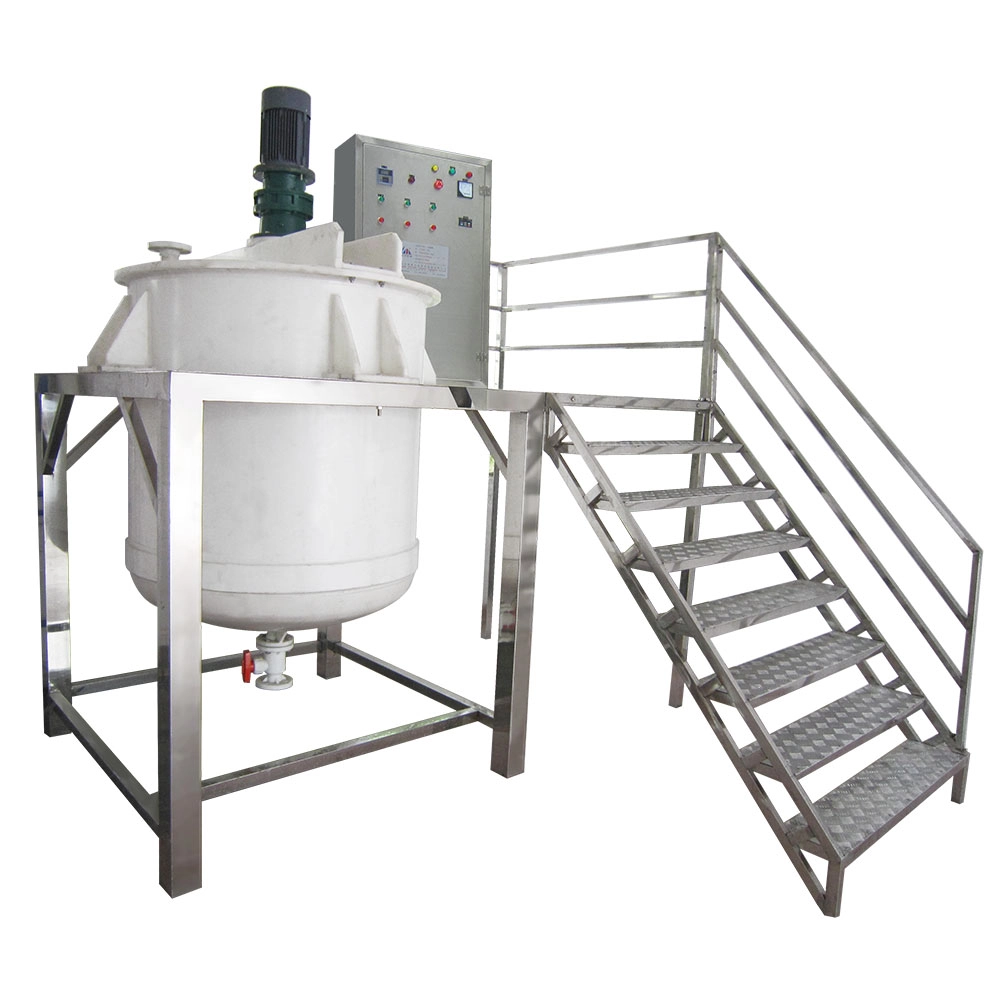
Polypropylene PP Mixing Tank Anti-Corrosion Mixer Reaction Kettle with Agitator Chemical Mixing Vessel
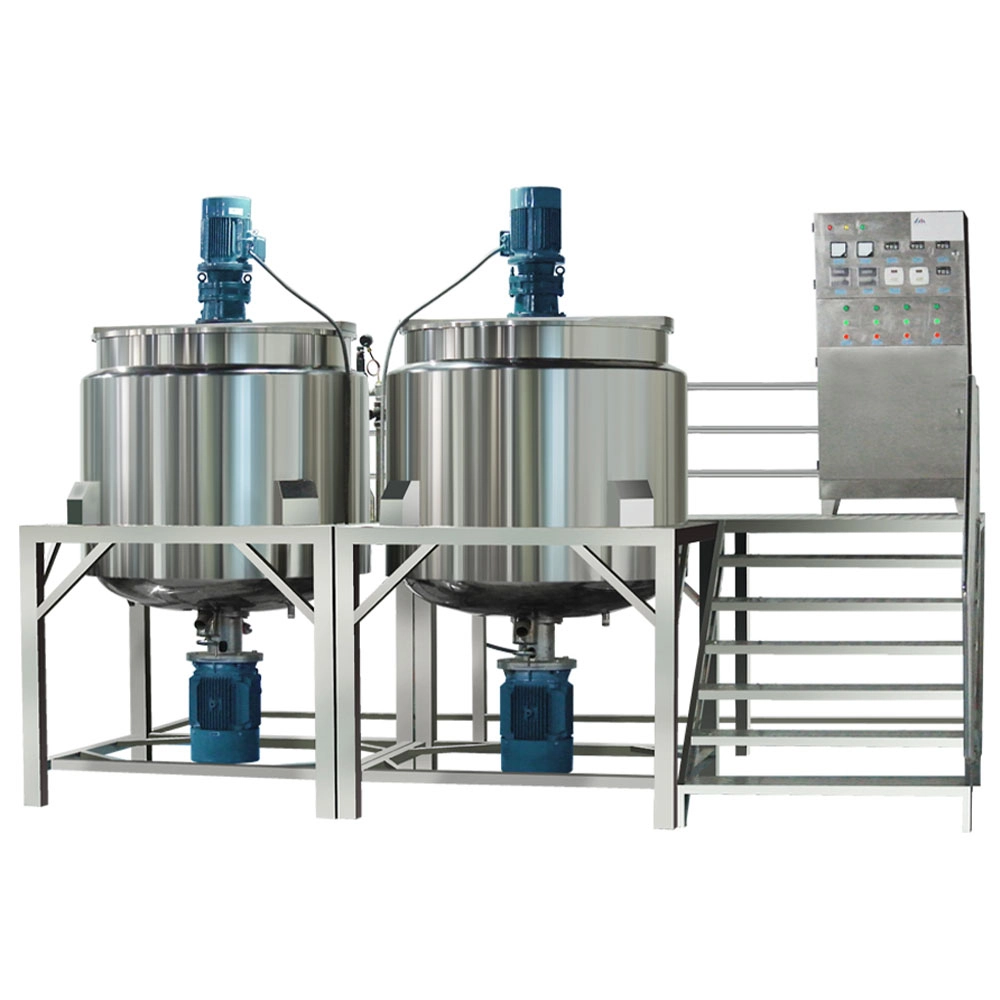
Flip Cover Multi-function Liquid Wash Mixing Tank Blender Liquid Detergent Mixer Homogenization Stirring Tank
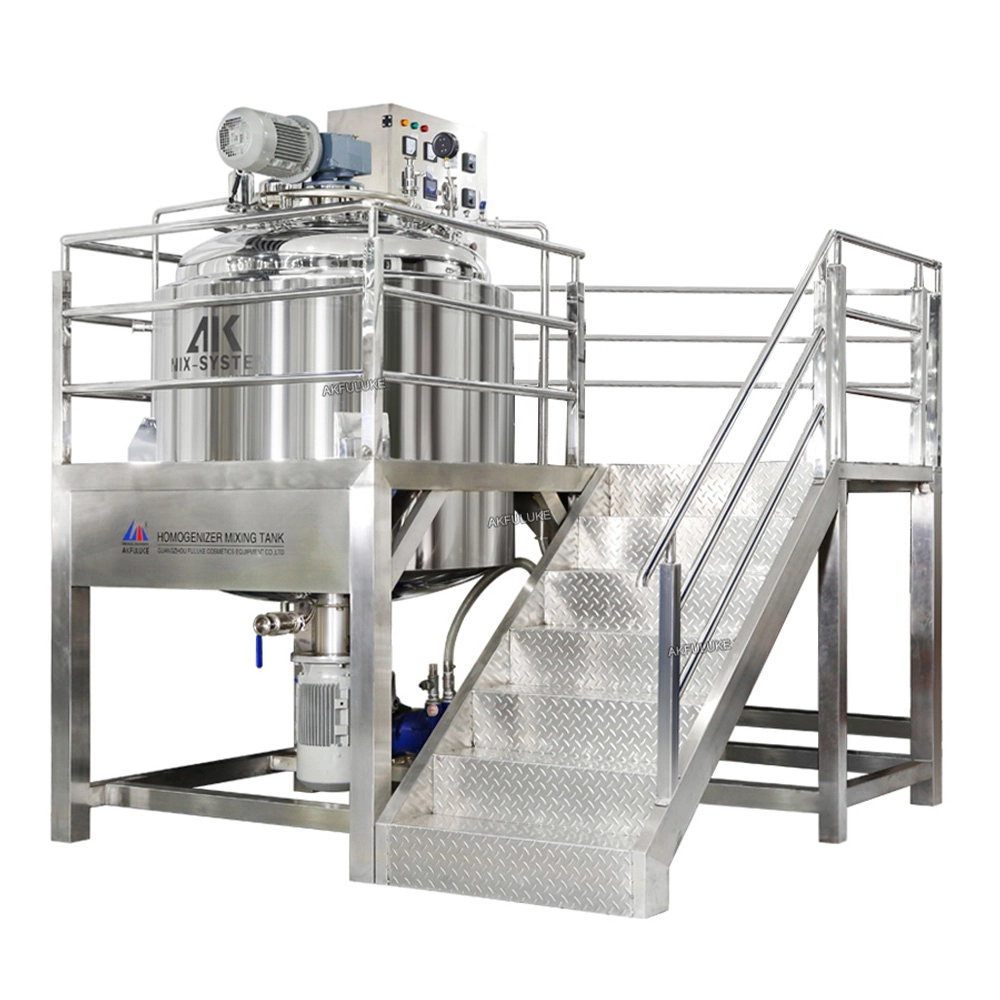
Stainless Steel Mixer Liquid Mixing tank with Agitator Homogenizing Mixing tank Vacuum Sealed Mixer Machine
Get in touch with FULUKE
If you have any comments or good suggestions, please leave us a message, later our professional staff will contact you as soon as possible.

A leading manufacturer specializing in advanced machinery and complete production lines for the cosmetics, food, pharmaceutical, and chemical industries worldwide.
Contact FULUKE
Facebook
Instagram
YouTube