
Understand the working principle of a servo gear pump filling machine!
In the food, pharmaceutical, daily chemical, and chemical industries, "precision filling" is an indispensable core requirement on production lines. From controlling errors of a few milliliters per bottle to dispensing kilogram-level quantities of sauce, reliable filling equipment is essential. Servo gear pump filling machines, with their advantages of high precision, high adaptability, and high stability, have become the preferred equipment for many companies.
Many industry professionals deal with them daily, yet may not fully understand their working logic: Why can it precisely control the dosage of each material? How exactly do the servo motor and gear pump work together? What is the key to its stable operation when dealing with viscous and foaming materials? Today, we'll break down the working principle of servo gear pump filling machines in the simplest terms, explaining everything from core components to the complete process!
- First, understand the basics: What is a servo gear pump filling machine?
- Core Disassembly: 3 Key Components Determine Its "Precision"
- Complete process: From "material feeding" to "filling completion", every step is meticulous.
- Frequently Asked Questions: Why can it adapt to a variety of materials?
- Summary: Servo Gear Pump Filling Machines – Precision Makes Them Stand Out Across Multiple Industries
Simply put, a servo gear pump filling machine is an automated filling device that combines precise volume control with stable delivery. Its core is the combination of a servo motor and a gear pump, along with auxiliary components such as a control system, filling head, and feeding system, enabling quantitative filling of liquids, pastes, and viscous materials (such as honey, sesame paste, ointments, and lubricating oil).
Compared to traditional filling equipment, its biggest advantage is its extremely high controllability—it can precisely control the flow rate through the servo motor's speed adjustment, and ensure metering accuracy through the gear pump's volumetric delivery characteristics. Even for special materials that are prone to foaming, have high viscosity, or are heat-sensitive, it can achieve waste-free and deviation-free filling. This is the core reason why it can be used in multiple industries.
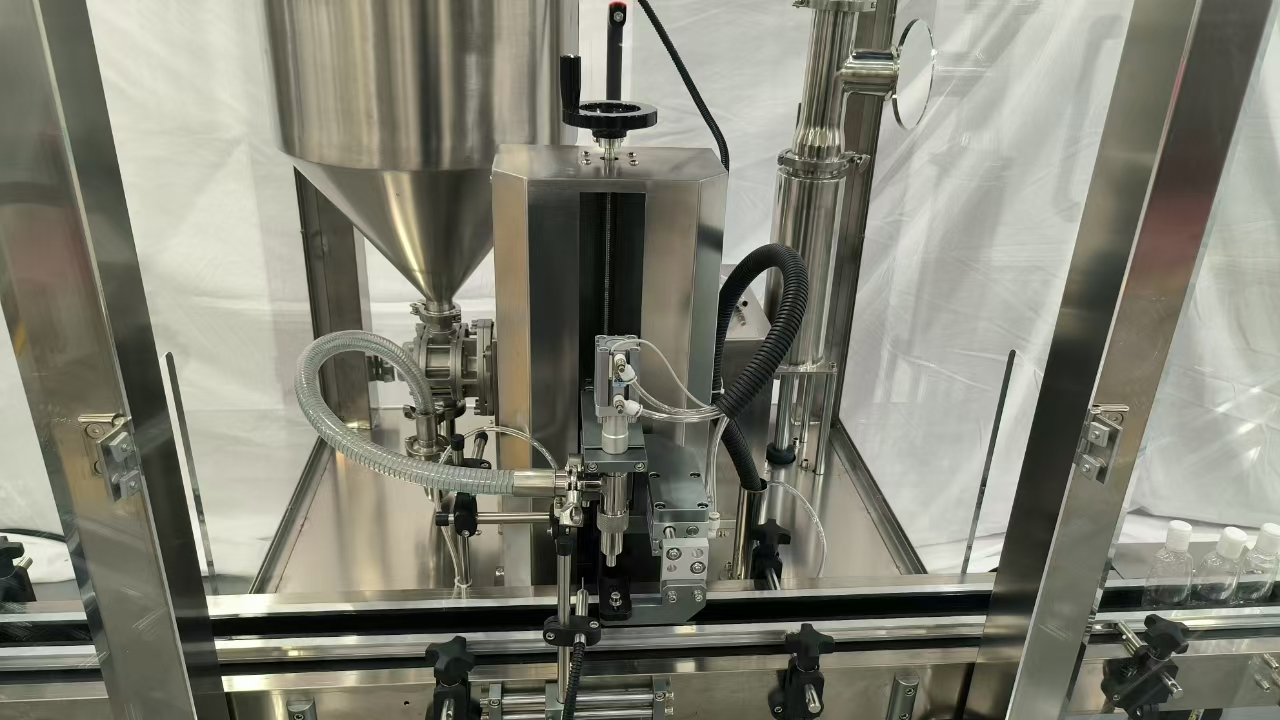
Core Disassembly: 3 Key Components Determine Its "Precision"
The working logic of a servo gear pump filling machine is essentially "component collaboration and precise linkage," with three core components being indispensable. Their coordination directly determines the filling accuracy and efficiency. Let's disassemble each component to understand its function:
1. Servo Motor: The Equipment's "Precision Brain + Power Heart"
The servo motor is the core control unit of the entire equipment, acting as its "commander." Unlike ordinary motors with their fixed speed, it enables "on-demand speed adjustment and precise positioning." Its core advantage lies in closed-loop feedback control—through a dynamic cycle of "command-feedback-comparison-adjustment," it corrects speed deviations in real time, ensuring precise controllability for every rotation.
For example, if we set the filling volume to 500ml, the servo motor will calculate the number of revolutions and speed required to drive the gear pump based on this requirement. During operation, the encoder continuously monitors the actual speed, and any slight deviation (such as speed fluctuations caused by changes in material viscosity) will be immediately adjusted to avoid filling errors. This is one of the core reasons why servo gear pump filling machines can achieve an accuracy within ±0.5%.
2. Gear Pump: The "Precision Pipeline" for Material Handling
The gear pump is the core component of material handling, acting as a "precision measuring cup." It's a positive displacement pump, its core working principle being "gear meshing and volume change." Without complex valve controls, it relies on the rotation of gears to achieve material intake and discharge, boasting a simple structure yet extremely high precision.
Internally, it contains two meshing precision gears (a driving gear and a driven gear), forming a sealed, tiny space between the gears and the pump casing. When a servo motor drives the driving gear to rotate, the driven gear rotates in the opposite direction. At this point, the gear disengages on one side, increasing the volume of the sealed space and creating a localized negative pressure, drawing material in through the inlet. As the gears continue to rotate, the material is trapped between the gear teeth and the pump casing, forcibly pushed to the gear meshing side. Here, the sealed space shrinks, and the material, compressed, is precisely discharged from the outlet, completing the material handling process.
Key highlights: With each rotation of the gear pump, the volume of material discharged is fixed (determined by the gear backlash volume and rotation speed). The flow rate is directly proportional to the rotation speed. As long as the servo motor controls the rotation speed and number of rotations, the amount of material conveyed can be precisely controlled, preventing "over- or under-delivery". Moreover, it has extremely strong adaptability, capable of conveying various materials from low viscosity (such as solvents) to high viscosity (such as asphalt and sesame paste), and even media containing fine solid particles (requiring appropriate gear backlash).
3. Control System: The Equipment's "Operational Hub"
The control system is essentially an "operation panel + command converter," commonly a touchscreen HMI. Operators can set parameters such as filling volume, filling speed, and filling frequency through the panel. After setting, the control system converts the parameters into electrical signals and sends them to the servo motor, directing the servo motor and gear pump to work together.
In addition, the control system also links with other auxiliary components (such as photoelectric switches and filling valves) to achieve automated control: for example, when a photoelectric switch detects that a container to be filled is in place, it sends a signal to the control system, which then instructs the gear pump to start and the filling head to dispense material; if no container is detected (no bottle), the system instructs the equipment to stop filling to avoid material waste—this is the "no bottle, no filling" function. Some high-end equipment also incorporates flow meters to monitor material flow in real time, further improving metering accuracy.
4. Auxiliary Components: "Little Helpers" Ensuring Stable Operation
In addition to the three core components mentioned above, there are two auxiliary components that, while seemingly insignificant, can solve many practical problems:
- Filling Head: Some equipment is equipped with a pneumatic submersible nozzle. During filling, the nozzle extends into the container to prevent material splashing and foaming, making it especially suitable for easily foaming materials (such as beverages and syrups), reducing material waste and container contamination.
Feeding/Discharging System: This includes a hopper and a U-shaped pipe. The hopper stores the material to be filled, and the U-shaped pipe connects the hopper and the gear pump, balancing pressure, stabilizing material flow, and preventing material sedimentation or blockage. Some equipment also includes a heating and stirring module, which uses PID temperature control and multi-point stirring to adjust the material temperature and reduce viscosity, solving the problem of slow filling speed and jamming at low temperatures for high-viscosity materials (such as honey). It also reduces pump wear and extends maintenance intervals.
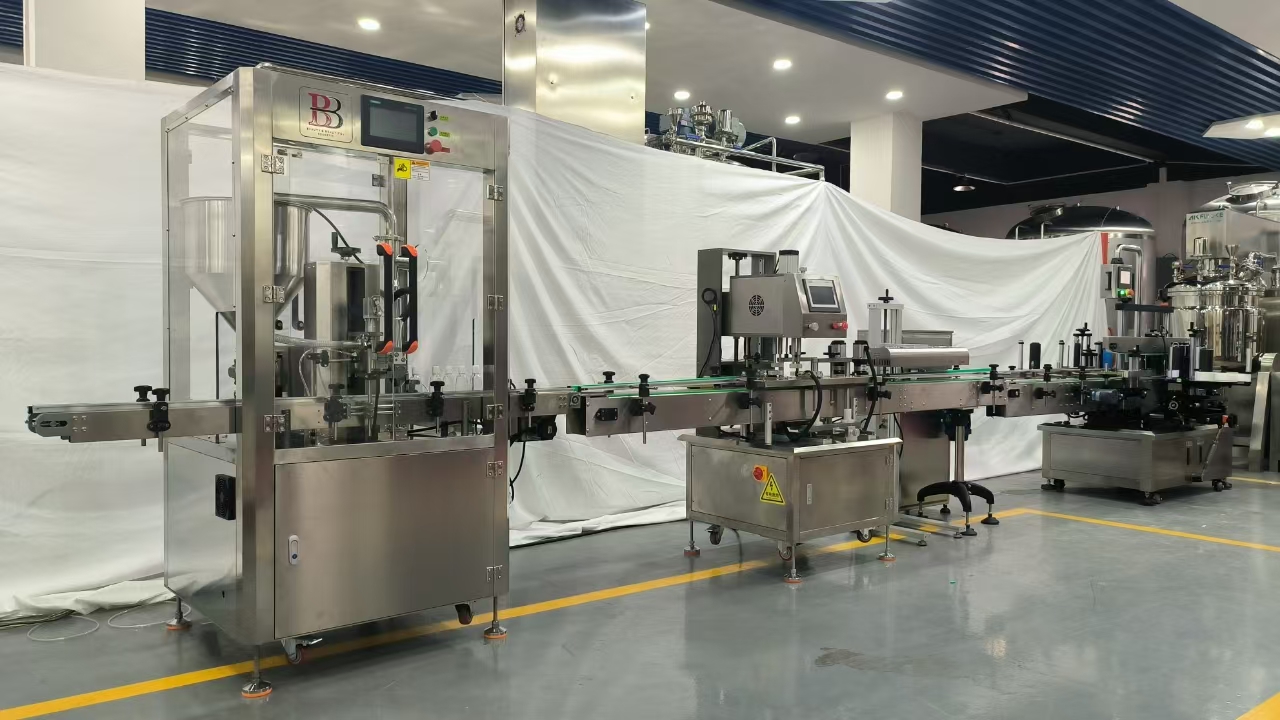
Complete process: From "material feeding" to "filling completion", every step is meticulous.
Having understood the core components, we will now outline the complete workflow, combining it with real-world production scenarios to make it easier for everyone to understand (using honey bottling in the food industry as an example):
Step 1: Preliminary preparation and parameter setting.
The operator pours the honey to be filled into the hopper. If the ambient temperature is low, the heating and stirring module is activated to adjust the honey temperature to a suitable range (around 35℃ to reduce viscosity and improve fluidity). Then, through the touch screen control system, parameters such as filling volume (e.g., 500g/bottle) and filling speed (adjusted according to container size to avoid foaming) are set. After completion, the equipment is started, and the equipment is waited for the container to be in place.
Step 2: Container positioning and filling trigger.
The empty bottle to be filled is transported to the bottom of the filling head via a conveyor belt. At this time, the photoelectric switch detects that the container is in place and immediately sends a signal to the control system. The control system instructs the conveyor belt to stop and simultaneously instructs the filling head (submersible nozzle) to descend and extend into the empty bottle (to avoid honey splashing and foaming), ready for filling.
Step 3: Servo-Driven Precision Delivery
The control system sends commands to the servo motor. Based on the set filling volume, the servo motor drives the gear pump's drive wheel to rotate precisely. The gear pump then begins operation: honey is drawn into the hopper through the inlet under negative pressure. Through gear meshing and volumetric compression, the honey is precisely delivered from the outlet to the filling head, and then injected into the empty bottles.
Throughout the delivery process, the servo motor adjusts its speed in real time via closed-loop feedback. The amount of honey delivered per revolution of the gear pump is constant, ensuring that the amount of honey injected into each empty bottle matches the set value without deviation. Simultaneously, a flow meter (if applicable) monitors the flow rate in real time, further correcting for deviations and improving accuracy.
Step 4: Filling complete, reset and standby
When the amount of honey injected reaches the set value, the control system instructs the servo motor to stop rotating, the gear pump to stop conveying materials, and at the same time the filling head closes and rises to reset; the conveyor belt restarts, transporting the filled bottles to the next process (such as capping and labeling), while the next empty bottle is transported to the bottom of the filling head, and the above process is repeated to achieve continuous automated filling.
Step 5: Post-filling cleaning and maintenance
After the filling process is completed, the operator starts the cleaning program through the control system to clean the gear pump, filling head, pipelines and other components to prevent material residue and clumping, which would affect the next use; regularly check the wear of gears and the feedback accuracy of servo motors, and replace vulnerable parts such as seals to ensure long-term stable operation of the equipment.
Frequently Asked Questions: Why can it adapt to a variety of materials?
Many people ask why a servo gear pump filling machine can fill both oral liquids (low viscosity) and sesame paste (high viscosity). The core reason is the "volumetric conveying of the gear pump + precise speed control of the servo motor." Without replacing core components, simply adjusting parameters and adding suitable auxiliary modules (such as heating and stirring) allows it to adapt to materials of different viscosities and properties, making it extremely versatile.
Summary: Servo Gear Pump Filling Machines – Precision Makes Them Stand Out Across Multiple Industries
In essence, the working principle of a servo gear pump filling machine is "precise control of every detail"—the servo motor controls the rotation speed, the gear pump controls the flow rate, the control system works in tandem, and auxiliary components ensure stability, ultimately achieving "quantitative, uniform, and waste-free" filling.
While lacking a complex structure, it solves the pain points of traditional filling equipment—low precision, poor adaptability, and low efficiency—and can be found in both small and medium-sized enterprises' mass production and large-scale automated production lines. For industries with high precision requirements, such as food, pharmaceuticals, and daily chemicals, it not only improves production efficiency and reduces material waste but also ensures product quality consistency and reduces labor costs. This is the core reason why it has become a mainstream filling equipment in the industry.
If you are troubled by problems such as "large filling deviations, excessive material waste, and high labor costs," you might want to learn about servo gear pump filling machines. Their precision and adaptability may help you solve practical problems in production.
Recommended for you

Understanding Servo Capping Machines: The Core Logic of Precise Capping – Understand the Entire Working Process in Seconds
The Future of Industrial Agitation: 5 Smart Mixing Tank Technologies Changing the Game
Gear pump filling machine vs. piston filling machine: Key differences broken down to avoid pitfalls in selection.
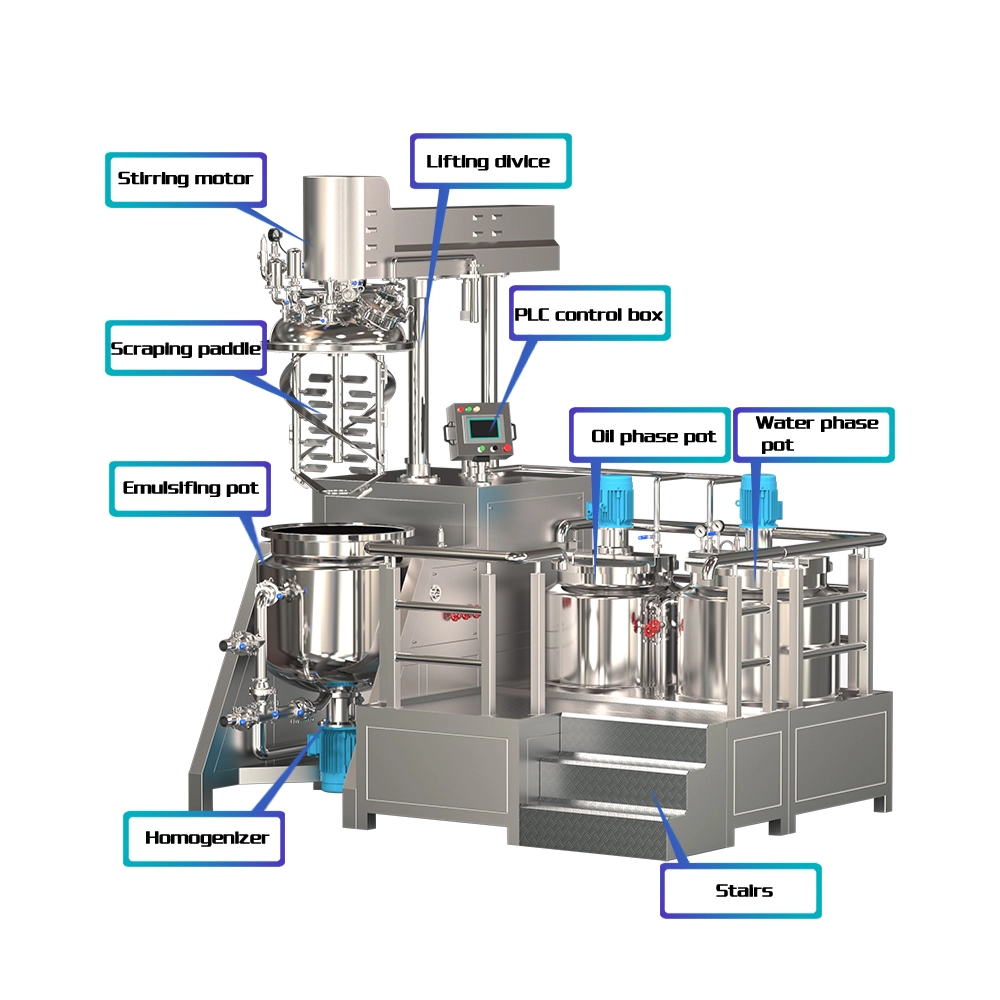
Unveiling the Working Principle of High-Shear Homogenizers: The Core Logic from "Rough Mixing" to "Fine Homogenization"
Prdoucts Categories
FAQ
Perfume Filling Machine
Can you customize the machine?
Of course, we provide customized services according to customer needs.
Automatic Capping Machine
What can you buy from us?
RO Water Treatment、Vacuum Emulsifying Machine、Homogenizer Mixing Tank、Filling and Capping、labeling Machine、Packing Machine、Storage Tank,etc.
The Flip Cover Liquid Wash Mixing Homogenizing Tank
Can you customize the machine?
Of course, we provide customized services according to customer needs.
Who are we?
Our headquarters is located in Guangzhou, Guangdong, China, and our factory is located in Yangzhou, Jiangsu. Our products are sold all over the world. We have approximately 50 employees in our company and factory.
FAQs
Does FULUKE offer customized machinery solutions?
Yes, FULUKE specializes in providing customized machinery and production line solutions tailored to meet the diverse production needs of global clients.
Get in touch with FULUKE
If you have any comments or good suggestions, please leave us a message, later our professional staff will contact you as soon as possible.
You May Also Like
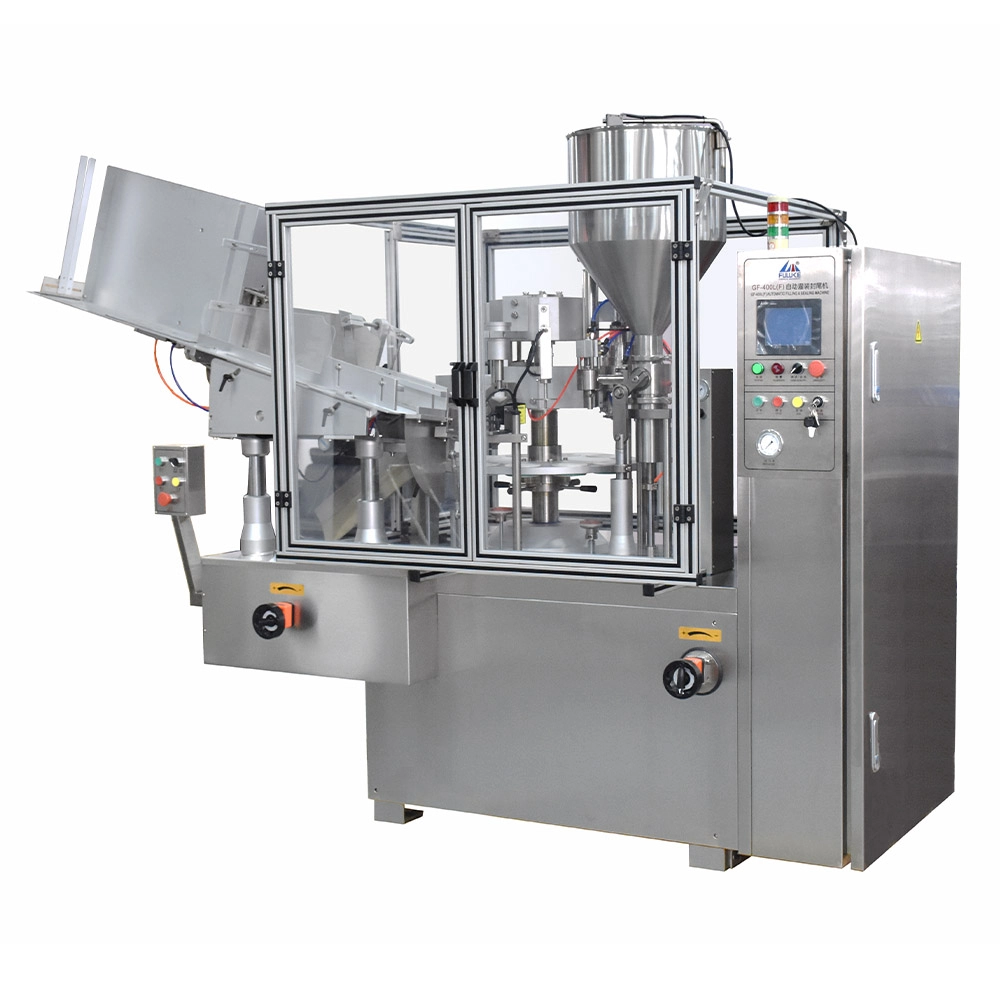
Automatic Tube Filling and Sealing Machine Toothpaste Sunscreen and Facial Cleanser Filling and Sealing Machine for Plastic and Aluminum-plastic Tube
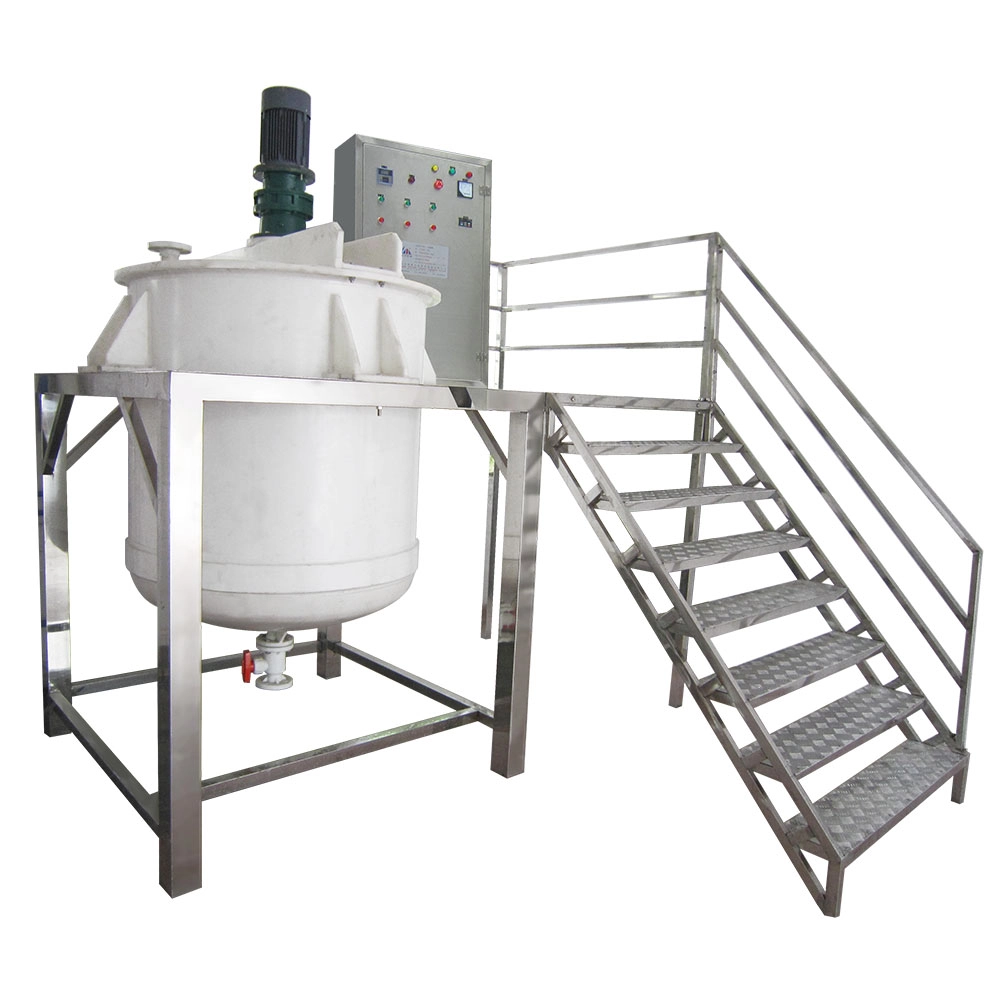
Polypropylene PP Mixing Tank Anti-Corrosion Mixer Reaction Kettle with Agitator Chemical Mixing Vessel
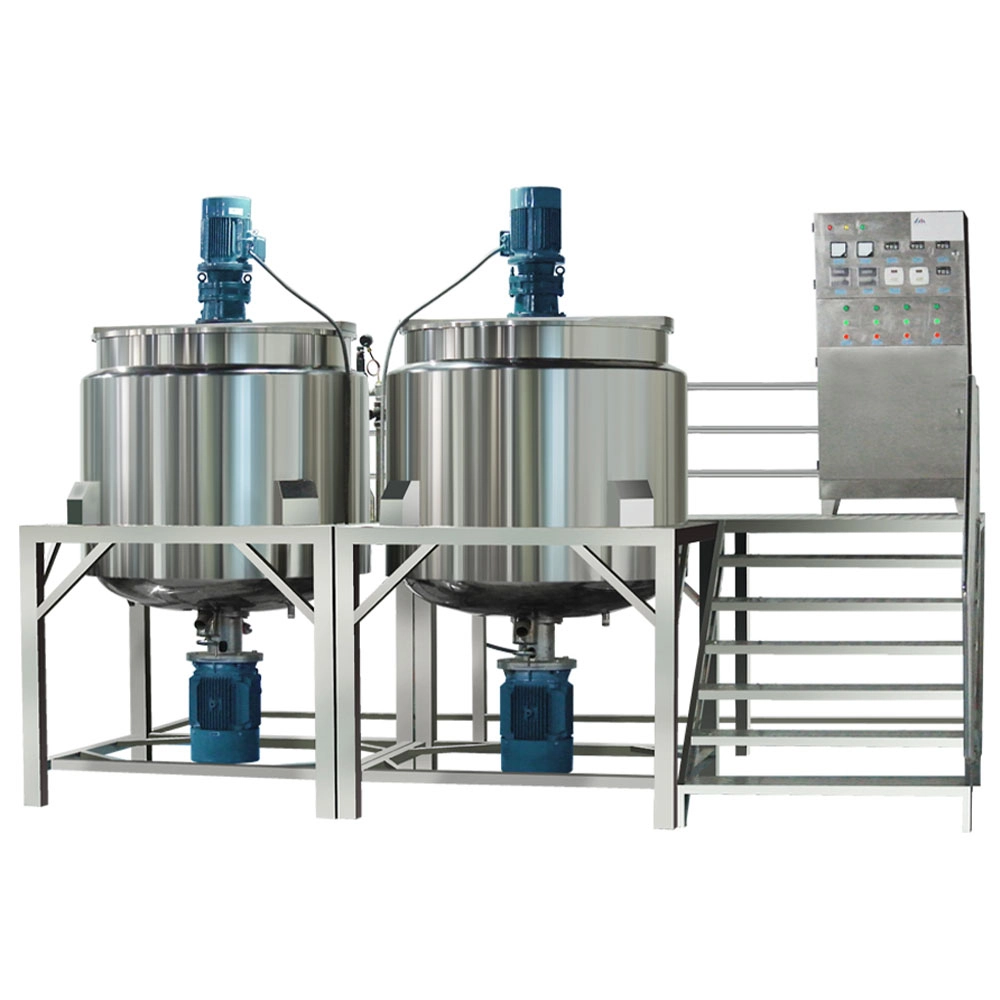
Flip Cover Multi-function Liquid Wash Mixing Tank Blender Liquid Detergent Mixer Homogenization Stirring Tank
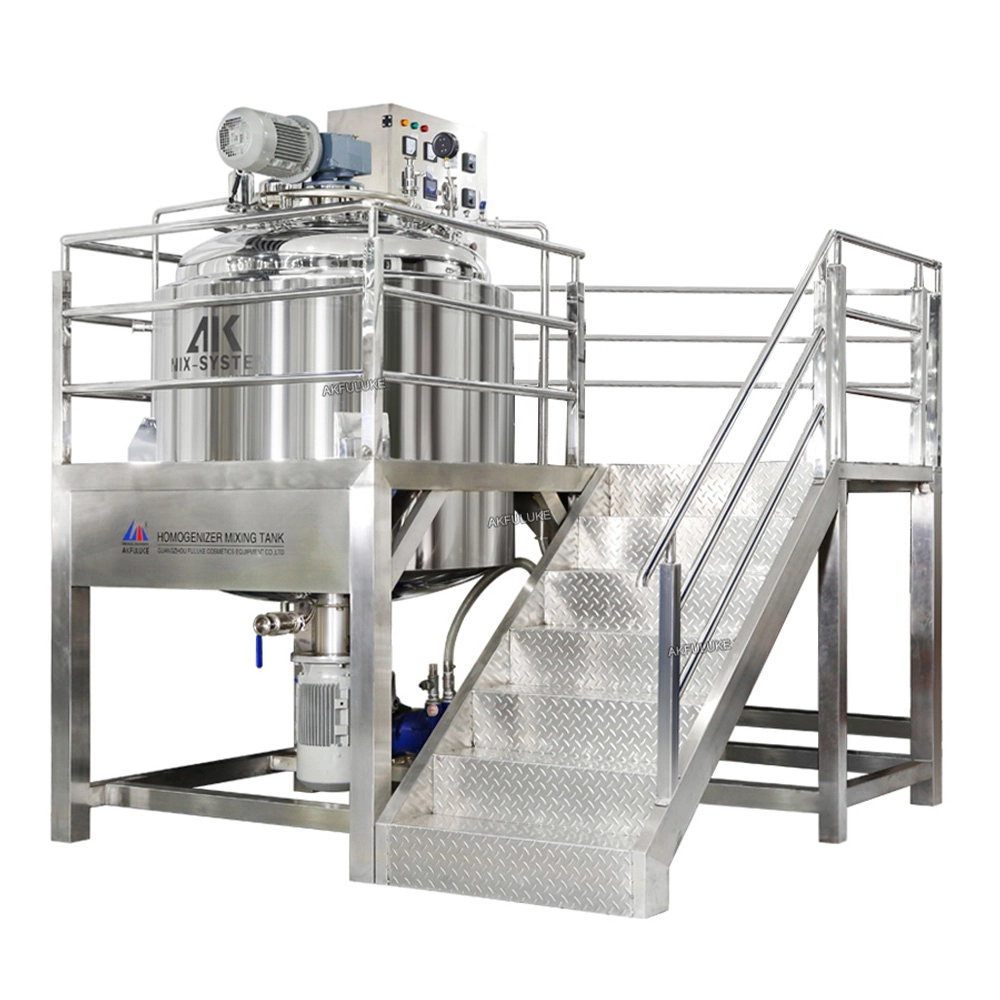
Stainless Steel Mixer Liquid Mixing tank with Agitator Homogenizing Mixing tank Vacuum Sealed Mixer Machine

A leading manufacturer specializing in advanced machinery and complete production lines for the cosmetics, food, pharmaceutical, and chemical industries worldwide.
Contact FULUKE
Contact Person: Destiny Peng
WhatsApp: +86 152 1732 8139
WhatsApp: +86 152 1732 8139
Email: flk09@gzflk.com
Email: flk09@gzflk.com
Address: No. 8, Nanyue Industrial Park, Xiamao Village, Baiyun District, Guangzhou City, Guangdong Province, China.
Facebook
Instagram
YouTube