
How to calculate production capacity needs?
- 1. How do I calculate the exact bottles/hour my filling line must deliver after accounting for changeovers, rejects and OEE?
- 2. What fill accuracy and overfill tolerance should I specify for High Quality serums to control cost and customer complaints?
- 3. How many nozzles / heads do I need and should I choose rotary or linear filling for multiple bottle sizes?
- 4. How do I factor viscosity, shear-sensitivity and foaming when choosing a filler for creams, lotions and serums?
- 5. How do I include downstream equipment (cappers, labelers, conveyors) when calculating overall line throughput?
- 6. What hidden costs should I budget for (installation, validation, spares, regulatory) beyond the machine price?
As a manufacturer or line engineer sourcing a bottle filling machine for cosmetics, you need more than marketing specs — you need exact calculations, measurable assumptions and validation-ready figures. Below are six specific, pain-point questions beginners (and many buyers) still find poorly answered online. Each answer gives formulas, examples and practical selection guidance referencing common standards (ISO 22716, CE, GMP) and industry best practice. FULUKEMIX (www.fulukemix.com) builds cosmetic filling and capping lines and uses these methods on customer projects.
1. How do I calculate the exact bottles/hour my filling line must deliver after accounting for changeovers, rejects and OEE?
Formula and steps (practical model):
- Daily demand (D): required finished bottles per day.
- Planned production hours per day (H): shifts × hours/shift (exclude scheduled breaks).
- Target OEE (E): availability × performance × quality (target a realistic 0.65–0.85 for cosmetic lines during ramp-up; mature lines often reach 0.75–0.85).
- Required machine throughput (Bph) = D / (H × E).
- Convert to bottles per minute (Bpm) = Bph / 60.
Availability example: if you plan 16 production hours but expect 1 hour total for changeovers and 0.5 hr for minor stoppages, Availability = (16 - 1 - 0.5) / 16 = 0.906.
Worked example: D = 20,000 bottles/day, H = 16 hours, realistic startup E = 0.70. Bph = 20,000 / (16 × 0.70) = 1,785 bottles/hour ≈ 29.8 Bpm. So you should specify a filling line (or modular line) with nominal capacity ≥1,900 Bph to provide margin and avoid running at 100% design speed.
Why margin matters: design speed should run at 70–85% for longevity and to allow short stops, product changeovers and quality checks. Use the OEE decomposition to drive improvements: if Quality is low (many rejects), you must either improve dosing accuracy or increase nominal machine capacity to compensate.
2. What fill accuracy and overfill tolerance should I specify for High Quality serums to control cost and customer complaints?
Key points:
- High-value cosmetics (serums, essences) usually require ±0.5% to ±1.0% fill accuracy by mass to limit giveaway while avoiding underfill complaints. For a 30 mL bottle, ±0.5% = ±0.15 mL.
- Prefer mass/gravimetric fillers (load-cell based or net-weight fillers) for highest accuracy on low-volume, high-value products. Piston fillers can also achieve ≈±0.5% for medium-viscosity products when properly calibrated.
- Regulatory and commercial risk: underfills lead to customer complaints and potential recalls; overfills increase COGS. Compute giveaway cost: Example — 30 mL bottle, 1,000,000 units/year, product cost $0.50 per mL. 1% average giveaway = 0.3 mL × 1,000,000 × $0.50 = $150,000/year.
Ask suppliers for: calibration certificates, measurement method (mass vs volumetric), typical CV (coefficient of variation) values, and in-line gravimetric check-weigher integration. Request factory acceptance test (FAT) using your product and target bottle sizes to validate accuracy and settle specification language in the purchase order.
3. How many nozzles / heads do I need and should I choose rotary or linear filling for multiple bottle sizes?
Selection logic:
- Required nominal speed (from Q1) determines nozzle count. For linear time-fill or piston machines, capacity ≈ strokes per minute × number of filler heads (nozzles). For rotary fillers, capacity ≈ pockets × rpm × bottles per pocket per revolution.
- Rule of thumb: for moderate speeds (up to ~200–300 bpm) a linear multi-head piston or time-pressure filler is cost-effective and flexible for frequent size changes. For high speeds (>300–400 bpm) a rotary filling machine (rotary piston or rotary pump filler) gives compact footprint and higher throughput.
Worked sizing example: target 1,800 Bph (30 Bpm). A linear filler with 4 nozzles running 8 strokes/minute would produce 4 × 8 = 32 Bpm — adequate. If target were 1,800 Bpm (108,000 Bph), a rotary machine with 24 pockets at 120 rpm would be appropriate (24 × 120 = 2,880 Bpm; gear down as needed).
Flexibility: prioritize servo-driven fillers with modular manifolds when you need frequent bottle-size changes—these support quick changeovers and programmable stroke/flow adjustments. For multi-size cosmetic lines, look for quick-change star wheels, interchangeable nozzles and servo flow control to reduce changeover time from hours to minutes.
4. How do I factor viscosity, shear-sensitivity and foaming when choosing a filler for creams, lotions and serums?
Match fluid properties to filler type:
- Low-viscosity, low-shear serums: time-pressure fillers, volumetric piston or gear pump with bottom-up filling reduce splashing and foaming.
- Viscous creams and gels: piston fillers (positive displacement) or progressive cavity pumps handle high viscosity and maintain dosing accuracy; piston fillers offer high accuracy for semi-solids.
- Shear-sensitive emulsions: avoid high-shear pumps; choose peristaltic or progressive cavity pumps and gentle filling methods. Temperature control (heated hopper or jacketed tanks) helps reduce viscosity for better flow while avoiding product degradation.
Foaming control: use low-filling velocity, submerged/nozzle-bottom-up filling, and vented tanks. Also specify nozzle geometry (anti-foam tips), air elimination in feed lines and vacuum deaeration where necessary.
Ask suppliers for real-world data: typical filling speed with your product at process viscosity (measure in mPa·s), recommended fill temperature, and demonstration at FAT using your product to confirm acceptability of finish and cycle time.
5. How do I include downstream equipment (cappers, labelers, conveyors) when calculating overall line throughput?
Line throughput is determined by the slowest effective module after accounting for efficiency and accumulation strategy:
- Convert each machine to a common unit (Bpm). The module with the lowest effective Bpm (after its OEE) sets the line speed unless buffers compensate.
- Include accumulation strategy: intermittent vs continuous. Accumulators provide temporary buffering during changeovers or minor stops — size buffers to absorb expected changeover time and desired uptime window. Buffer size (bottles) = downstream downtime (s) × line speed (bottles/s).
- Balance example: filler rated 300 Bpm, capper rated 280 Bpm, labeler rated 320 Bpm. If all machines operate at 90% availability, effective speeds are 270, 252, 288 Bpm — the capper limits to 252 Bpm. Either upgrade capper or add buffer/parallel capping station to meet filler speed.
Practical tips: specify star-wheel infeed/outfeed synchronization, and request single-point changeover (machine sets change together) to avoid conveyor jams. Also verify controller compatibility (Ethernet/IP, Profinet) so PLC-level line balancing and OEE data collection can be implemented.
6. What hidden costs should I budget for (installation, validation, spares, regulatory) beyond the machine price?
Typical additional budget items and rough percentages of machine price (industry norms):
- Installation & start-up: 8–20% — includes mechanical installation, utilities (compressed air, power), piping and line integration.
- Qualification & validation (IQ/OQ/PQ) for regulated claims or internal QA: 3–8% — includes test runs, documentation and sampling plans. Cosmetics GMP (ISO 22716) requires documented control of production processes.
- Spare parts and consumables (year-one): 2–6% — critical wear parts, nozzle tips, seals, and PLC spares. For piston fillers, keep extra seal cartridges and pistons in stock.
- Training and SOP development: 1–3% — operator and maintenance training, operational manuals and SOPs for cleaning and changeover.
- Utilities & civil works: variable — e.g., HVAC for temperature control, explosion protection (if alcohol-based fragrances present require ATEX/zone assessment), drainage and stainless-steel hygienic flooring.
Lifecycle view: calculate Total Cost of Ownership (TCO) over 5–7 years including preventive maintenance, spare parts, energy and expected throughput growth. Negotiate warranty terms, service contracts and guaranteed throughput tests at FAT/SAT (site acceptance test).
Final practical checklist before purchase:
- Provide supplier your daily demand profile, product viscosity at fill temperature, bottle formats, expected ramp-up schedule and target OEE.
- Request FAT with your product, and include accuracy and throughput acceptance criteria in the contract.
- Require documentation: CE declaration, material certificates (316L stainless steel wetted parts where required), traceable calibration certificates and SOPs for cleaning (CIP if needed) and preventive maintenance.
Choosing the right bottle filling machine — whether a rotary filling machine for high-speed production or a multi-head piston filler for viscous creams — reduces waste, shortens changeover time and increases line efficiency. Properly calculating capacity using OEE and realistic buffers prevents under-specification and costly retrofits.
Contact us for a tailored quote and FAT schedule: visit www.fulukemix.com or email flk09@gzflk.com.

Understanding Servo Capping Machines: The Core Logic of Precise Capping – Understand the Entire Working Process in Seconds
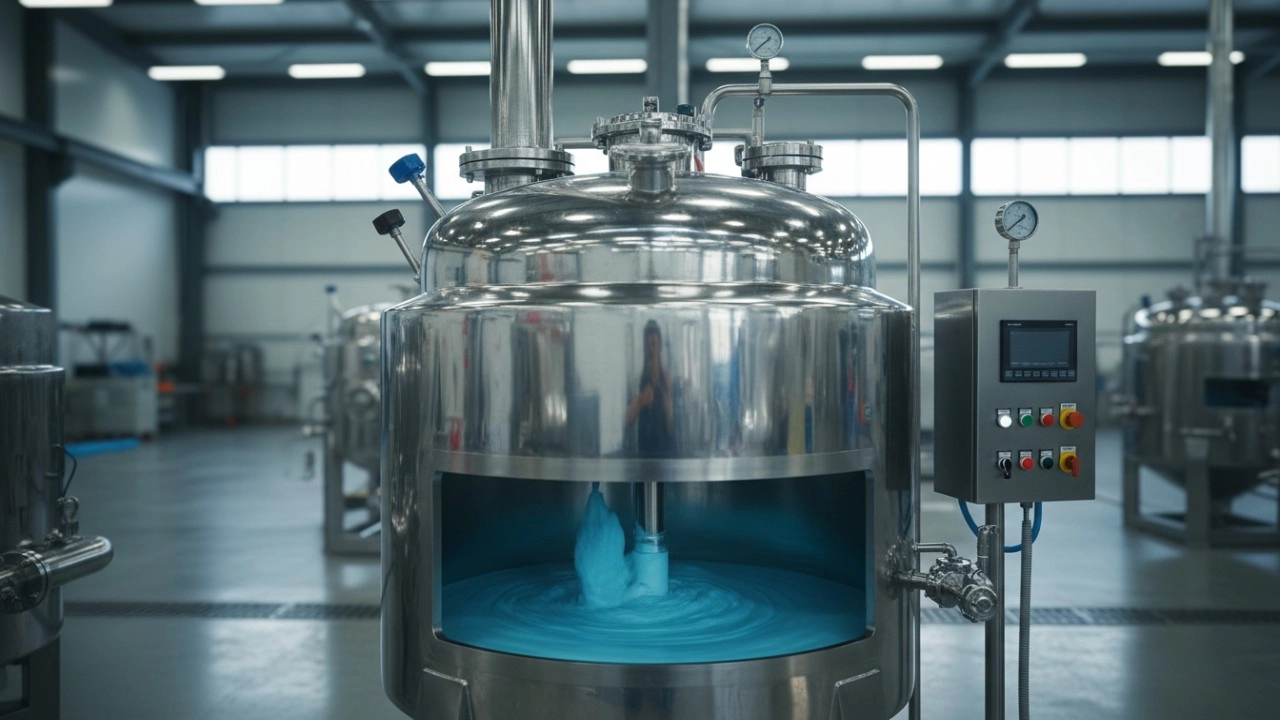
The Future of Industrial Agitation: 5 Smart Mixing Tank Technologies Changing the Game
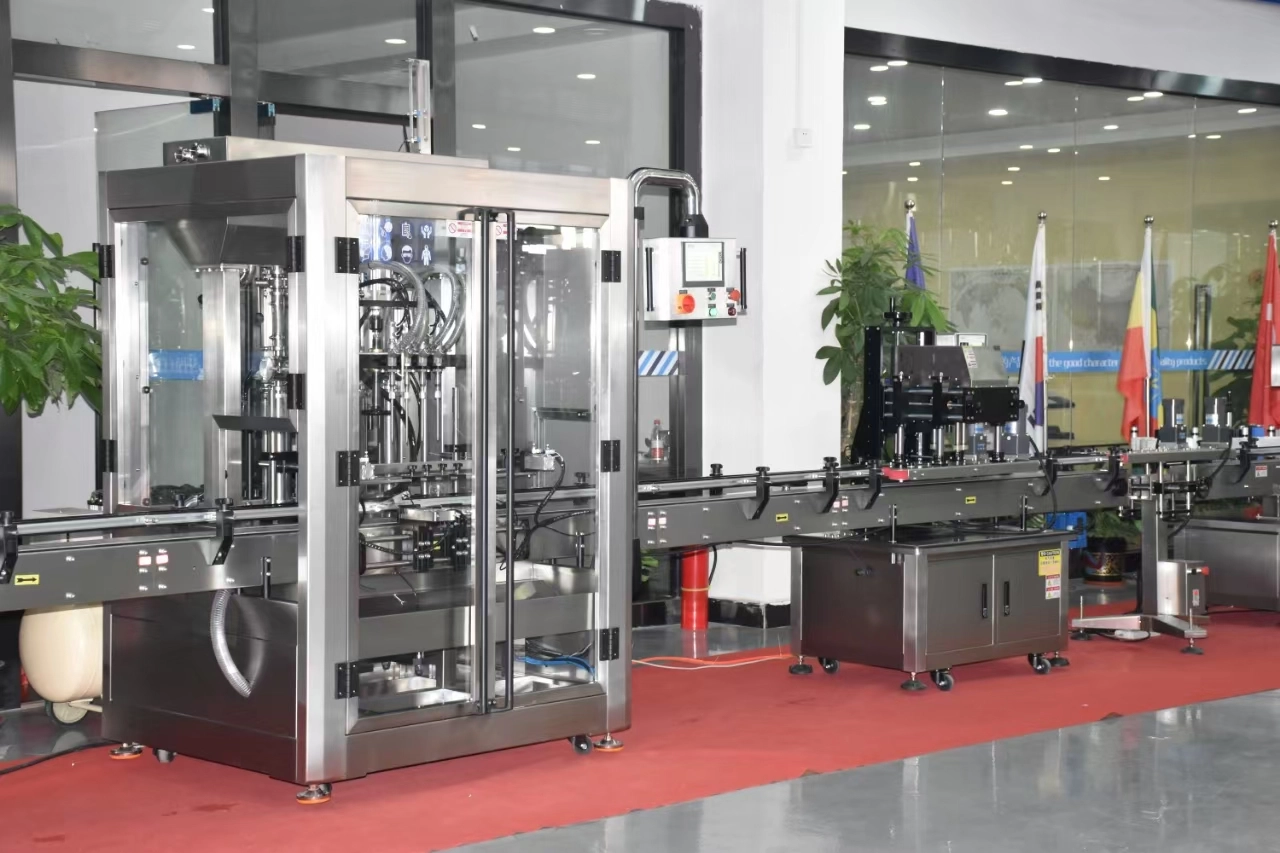
Gear pump filling machine vs. piston filling machine: Key differences broken down to avoid pitfalls in selection.
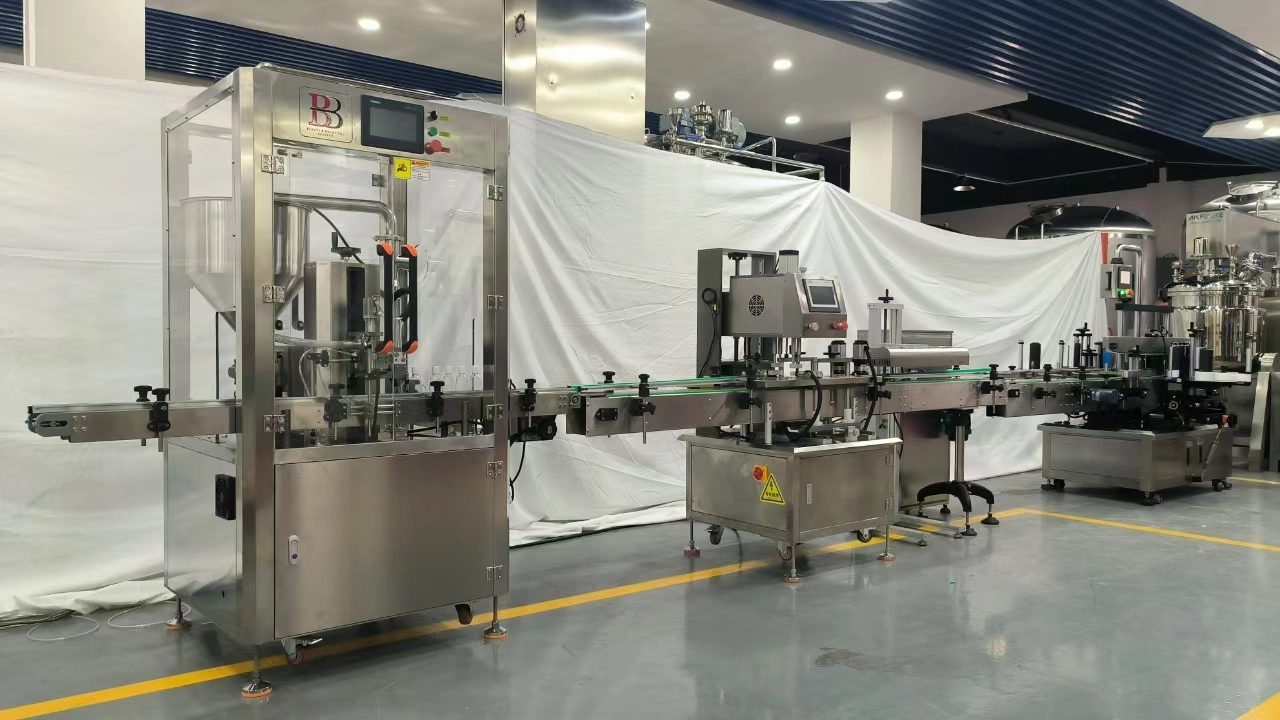
Understand the working principle of a servo gear pump filling machine!
RO Water Treatment
Can you customize the machine?
Of course, we provide customized services according to customer needs.
Storage Tank
Can you customize the machine?
Of course, we provide customized services according to customer needs.
Automatic Filling Machine
We want to fill products in multiple volumes (e.g., 100ml, 250ml, 500ml). Do we need to purchase multiple filling machines?
No, most automatic filling machines support multiple volume adjustments. When purchasing, please confirm the machine's "volume adjustment range" (e.g., 50ml-2000ml) to ensure it covers your desired specifications. Changing volumes simply requires modifying the fill volume parameters on the touchscreen. If the volume difference is significant (e.g., from 100ml to 1000ml), minor adjustments to the filling head height or feed rate may be necessary, without replacing the machine.
Sealed Homogenizing Mixing Tank
What can you buy from us?
RO Water Treatment、Vacuum Emulsifying Machine、Homogenizer Mixing Tank、Filling and Capping、labeling Machine、Packing Machine、Storage Tank,etc.
Automatic Facial Mask Filling Machine
We want to fill products in multiple volumes (e.g., 5ml, 20ml, 50ml). Do we need to purchase multiple filling machines?
No, most facial mask filling machines support multiple volume adjustments. When purchasing, please confirm the machine's "volume adjustment range" (e.g., 5ml-50ml) to ensure it covers your desired specifications. Changing volumes simply requires modifying the fill volume parameters on the touchscreen.
Get in touch with FULUKE
If you have any comments or good suggestions, please leave us a message, later our professional staff will contact you as soon as possible.
You May Also Like
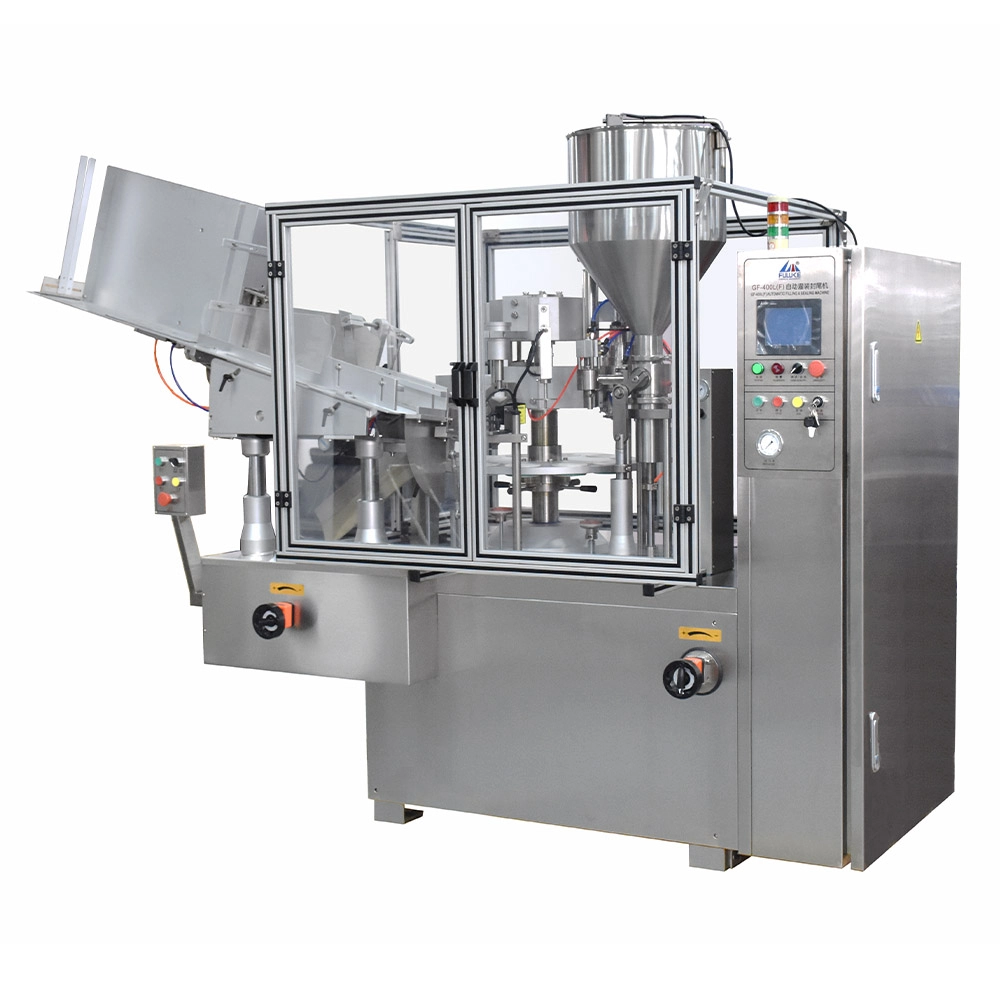
Automatic Tube Filling and Sealing Machine Toothpaste Sunscreen and Facial Cleanser Filling and Sealing Machine for Plastic and Aluminum-plastic Tube
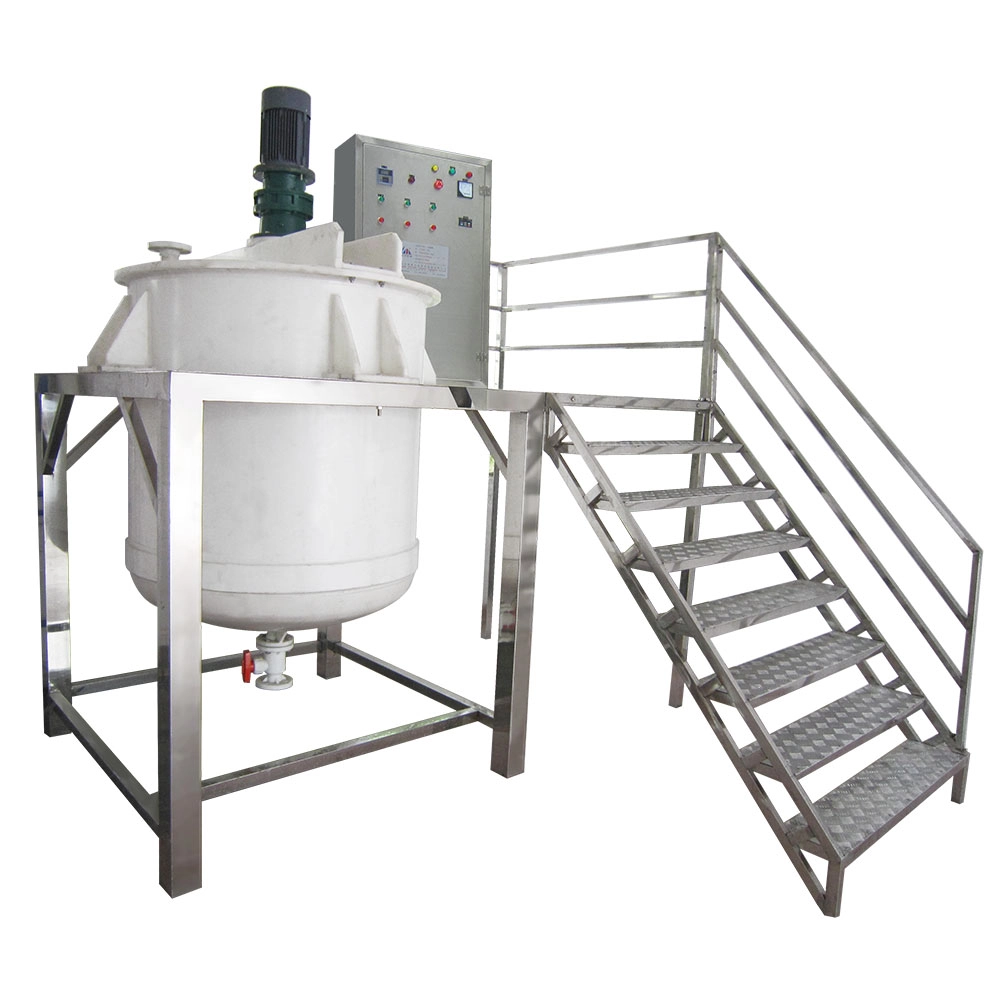
Polypropylene PP Mixing Tank Anti-Corrosion Mixer Reaction Kettle with Agitator Chemical Mixing Vessel
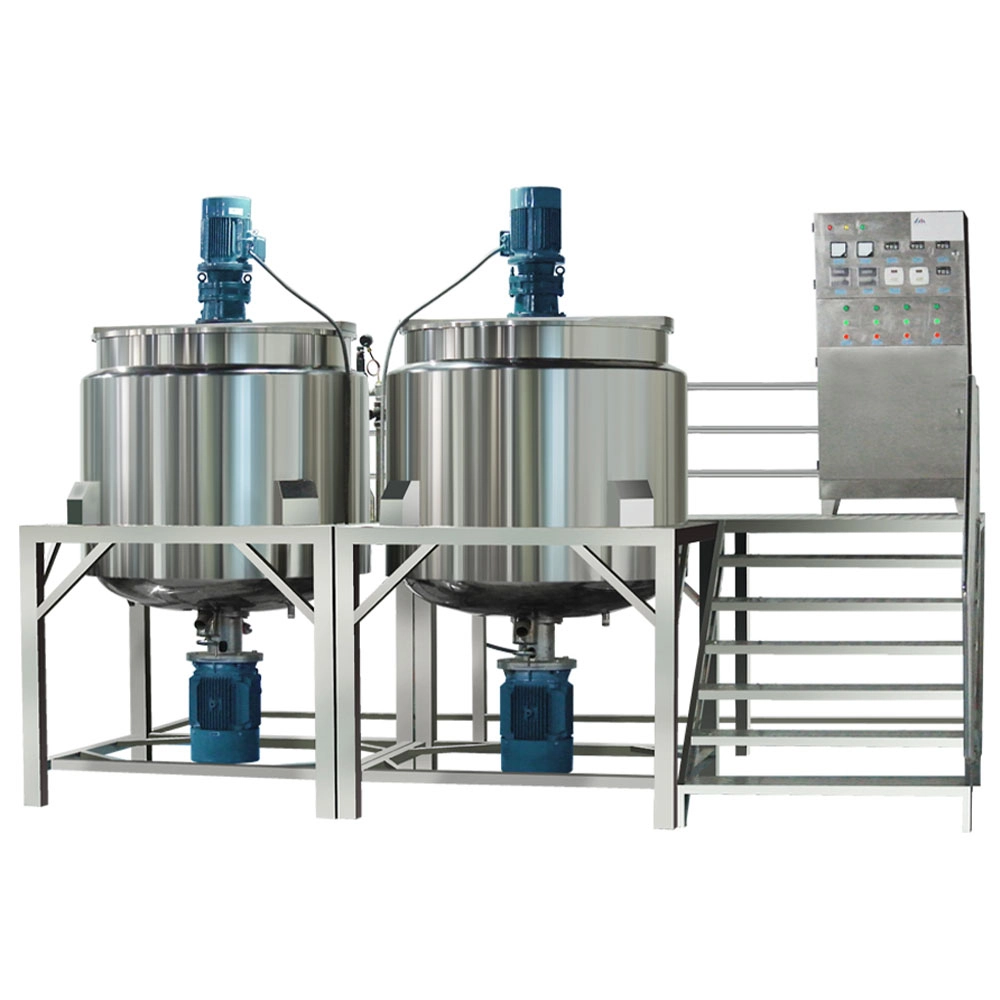
Flip Cover Multi-function Liquid Wash Mixing Tank Blender Liquid Detergent Mixer Homogenization Stirring Tank
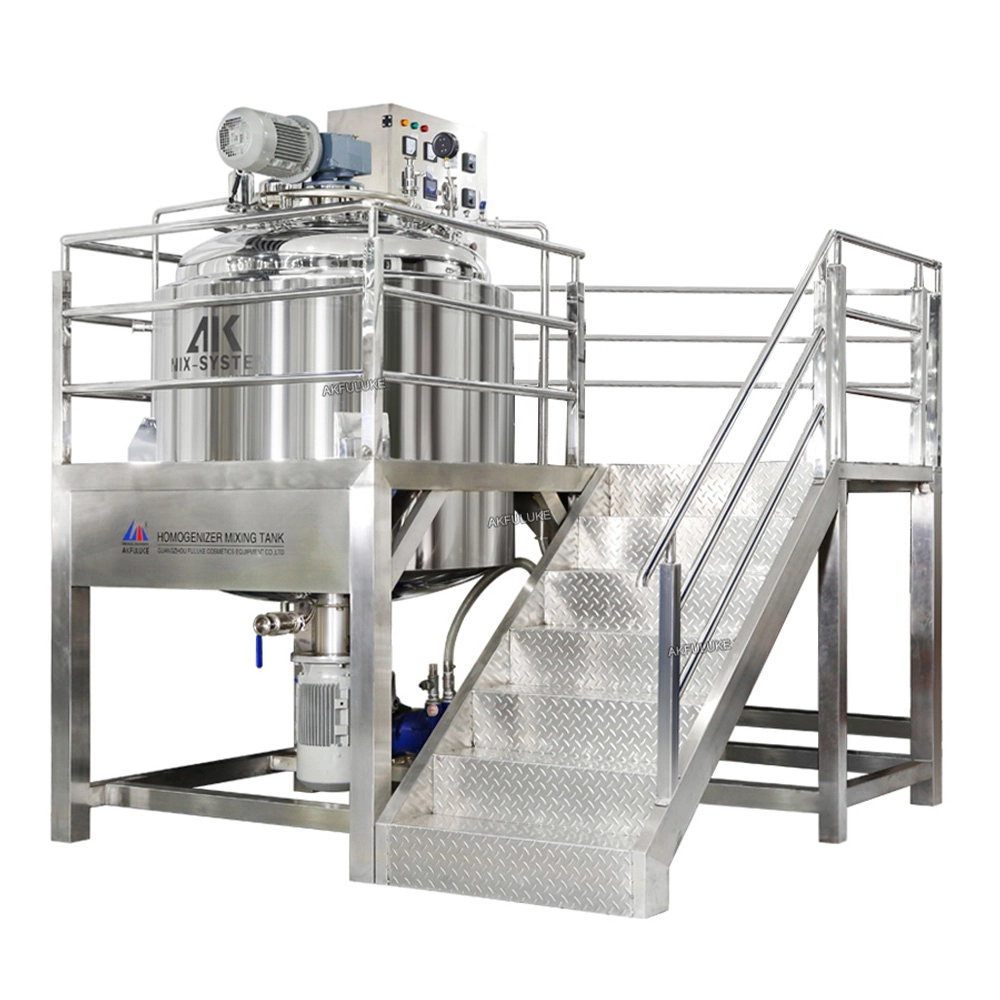
Stainless Steel Mixer Liquid Mixing tank with Agitator Homogenizing Mixing tank Vacuum Sealed Mixer Machine

A leading manufacturer specializing in advanced machinery and complete production lines for the cosmetics, food, pharmaceutical, and chemical industries worldwide.
Contact FULUKE
Facebook
Instagram
YouTube