
What changeover options reduce downtime?
- 1) How can I reduce cosmetic bottle size changeover from ~45 minutes to under 10 minutes on an existing rotary bottle filling machine without full replacement?
- 2) Which quick-change features (tool-less spindles, pneumatic clamps, color-coded kits) deliver the best ROI for low-to-medium volume cosmetic lines?
- 3) How do I integrate PLC/HMI recipe management and barcode scanning to eliminate manual dial-in during filler changeovers?
- 4) What sanitary quick-disconnect nozzle systems let me perform frequent CIP without dismantling the filler and risking product contamination?
- 5) How to design bottle handling (grippers, star wheels, guides) to enable format changeovers for fragile glass and PET cosmetic bottles within minutes?
- 6) What spare parts kitting and operator training process reduces changeover errors and downtime most effectively for multi-variant cosmetic production?
1) How can I reduce cosmetic bottle size changeover from ~45 minutes to under 10 minutes on an existing rotary bottle filling machine without full replacement?
Answer:Reducing changeover time on an installed rotary bottle filling machine is usually a combination of mechanical retrofit, control upgrades and process re-design. Key steps and components:
- Audit & measure: Time each step (remove format parts, adjust guides, change nozzles, set fill parameters, verify) and map non-value vs. value steps using SMED (Single-Minute Exchange of Die) principles. SMED aims to shift internal steps to external steps so fewer tasks stop the machine.
- Mechanical retrofits (low-cost, high-impact): install quick-change format plates (precision dowel-pin locators and captive fasteners), pneumatic or cam-assisted clamps replacing nuts/bolts, and quick-release nozzles with hygienic couplings. Aluminum or anodized format parts with repeatable locators reduce manual fitting time.
- Servo upgrades & recipe recall: add servo-actuated positioners or drives so bottle pitch, starwheel offsets and filler stroke can be changed electronically from the HMI. Store per-bottle-size recipes in the PLC/HMI so operators only recall and confirm rather than manually fine-tune.
- Pre-kitted change parts: assemble the exact set of format parts and tools for each bottle SKU in a labeled kit at the line-side. Color-code parts and label with the SKU.
- Parallelize checks and external tasks: while the machine is running on the prior SKU, prepare and stage the new nozzles, format tooling and CIP connections so only physical swap occurs during the stoppage.Realistic expectations: older designs with threaded fasteners often take 20–60 minutes. With quick-change tooling, recipes and pre-kitting, many cosmetic lines routinely reach 2–10 minute changeovers. Actual results depend on machine geometry and operator discipline.Cost/benefit: Retrofit cost varies with complexity — from modest for quick-release clamps to higher for servo and PLC upgrades. For medium-to-high SKU variety, payback is commonly achieved via higher OEE and reduced rework; evaluate using your batch sizes and frequency.
2) Which quick-change features (tool-less spindles, pneumatic clamps, color-coded kits) deliver the best ROI for low-to-medium volume cosmetic lines?
Answer:Feature ROI depends on run lengths, SKU count and labor costs. Prioritize these features based on typical cosmetic production constraints:
- Tool-less, captive fasteners and pneumatic clamps: High ROI. Eliminates time spent finding tools and reduces fallback to makeshift methods. For small teams and frequent changeovers, pneumatic clamps typically cut hardware removal time by 60–90% compared with bolts.
- Precision locating pins and kinematic mounts: High ROI for repeatability. They reduce trial-and-error alignment and verification runs, lowering scrap and sample batches.
- Color-coded, pre-assembled format kits: Very high ROI for low-to-medium volumes. Saves search time and prevents wrong-part swaps. Pack each kit with a checklist and single-line SOP.
- Quick-disconnect sanitary nozzles (tri-clamp or hygienic couplings): High ROI where CIP frequency is high or cross-contamination risk exists. Enables faster exchange and cleaning with reduced tools.
- Modular servo adjustments and recipe storage: Medium-to-high ROI for lines with frequent parameter changes across SKUs. Software costs can be lower than capital mechanical swaps if the base machine has adaptable drive systems.
- Vision-guided alignment: Useful but often lower ROI for low-volume cosmetics unless bottles are irregular or fragile. Vision systems excel where manual positioning is error-prone.Recommendation: Start with kitted format parts + pneumatic clamps + locating pins. If electronic repeatability problems persist, add servo recipe control and quick-disconnect nozzles as second-phase investments.
3) How do I integrate PLC/HMI recipe management and barcode scanning to eliminate manual dial-in during filler changeovers?
Answer:Integration of recipe management plus barcode scanning eliminates much manual dialing and reduces operator error while improving traceability. Implementation steps:
- Inventory control & master data: Build a master SKU database with fill (ml/g), fill speed, nozzle type, bottle pitch, starwheel spacing, cap type and torque settings. Ensure the PLC/HMI can store multiple recipes and that naming conventions match ERP/Scheduling.
- PLC/HMI capabilities: Choose a PLC/HMI that supports recipe storage (often called “recipe manager”), multi-user authentication and change logging. Use OPC-UA/MQTT or Ethernet/IP to connect to plant IT if needed.
- Barcode/QR integration: Add a barcode scanner at the changeover station or on the conveyor so scanning a production order or pack label automatically pulls the correct recipe into the HMI. Implement a confirmatory human-machine prompt for compliance-critical steps.
- Automated parameter application: Map recipe parameters to servo positions, fill volume, valve timing, conveyor speed and capper settings. After recipe recall, the machine should auto-move to safe positions and then allow a single-button start for verification runs.
- Safety & verification: Include a verification cycle (sample of 1–3 bottles at set speed) and compare weight/volume via an in-line checkweigher. Log the verification result with timestamp and operator ID.
- Traceability and change control: Keep an audit trail of recipe recalls, edits and overrides. Integrate with MES/ERP for lot traceability.Result: Barcode-driven recipe recall commonly reduces manual setup time to seconds, leaving only physical swaps for changeover. It also improves compliance with documented SOPs.
4) What sanitary quick-disconnect nozzle systems let me perform frequent CIP without dismantling the filler and risking product contamination?
Answer:Sanitary design is critical in cosmetics where oil-in-water emulsions, fragrances and preservatives complicate cleaning. Effective quick-disconnect systems and cleaning strategies:
- Tri-clamp and DIN hygienic couplings: Widely used for nozzles and small-diameter piping. They provide sealed, tool-free disconnection for nozzle removal and cleaning. Ensure clamps are captive or have retainer features so parts are not lost.
- Single-piece quick-change nozzles with gasket retention: Nozzles designed with captive O-rings and easy-release collars limit small-parts handling and minimize contamination risk.
- In-place (CIP/SIP) compatible valve manifolds: For fillers that cannot be easily dismantled, design valve manifolds and filling circuits to accept CIP solutions and steam-in-place (SIP) where formulation and packaging temperatures allow. Use sanitary seat valves rated for CIP.
- Quick-release spray balls and manifold ports: Allow targeted cleaning of filling heads and manifolds without disassembly. Select food- or cosmetic-grade materials (316L stainless steel, electropolished) and surface finish Ra per hygienic standards.
- Single-use liners/nozzles for critical SKUs: For high-risk formulations, consider single-use product-contact components that are swapped between batches to minimize cross-contamination risk.Operational tips:
- Validate CIP parameters (temperature, caustic concentration, contact time) for the worst-case product residue commonly used in your cosmetics.
- Balance quick-disconnect convenience with sealing robustness—avoid compromise on gasket materials compatible with solvents, fragrance oils and preservatives.
5) How to design bottle handling (grippers, star wheels, guides) to enable format changeovers for fragile glass and PET cosmetic bottles within minutes?
Answer:Bottle handling is a major pain point with fragile cosmetic containers. Designing for fast format changeover requires modularity, adjustability and gentle handling:
- Quick-adjust guides & spacer blocks: Use slotted guide rails with fast clamps and pre-machined spacer blocks keyed to each bottle SKU. Replace full-length guides with removable guide blocks to avoid repositioning the entire rail.
- Interchangeable gripper/cup modules: Design grippers or vacuum cups to be on quick-change carriers with repeatable locating pins. For glass bottles use soft-edge silicone cups sized per SKU.
- Adjustable starwheels with indexing inserts: Instead of replacing the entire starwheel, use replaceable pockets or inserts for different bottle diameters. Insert changes are quicker and cheaper than full-wheel swaps.
- Sensor-assisted alignment: Add non-contact sensors (laser or capacitive) or a vision system to confirm bottle position after changeover. The system can auto-compensate small offsets, reducing manual alignment time.
- Low-impact transport: For fragile glass, implement gentle accelerations and reduced conveyor speeds during verification runs. Use servo indexing for smooth motion profile control.
- Documented mechanical offsets: Store starwheel offsets, gripper positions and guide settings in your recipe database so recall repositions servo components automatically where applicable.By combining modular handling parts and recipe-driven electronic adjustments, format changeovers for fragile bottles can be reduced from manual minutes to controlled, repeatable minutes with minimal risk of breakage.
6) What spare parts kitting and operator training process reduces changeover errors and downtime most effectively for multi-variant cosmetic production?
Answer:Reducing human error in changeovers is as much about process design as hardware. Implement these best practices:
- SKU-specific kitting: Create a labeled, tamper-evident kit for every SKU containing all format parts, gaskets, fasteners, tools, and a printed SOP. Use color-coding and clear part numbering. Keep kits in a single accessible location.
- Shadow boards and visual cues: Use shadow boards for tools so missing items are immediately apparent. Color-coded parts and location labels speed up assembly.
- Digital SOPs with step verification: Replace long paper SOPs with short, stepwise digital SOPs on the HMI. Require the operator to acknowledge steps and barcode-scan critical components to progress.
- Training and competency checks: Use a combination of classroom, hands-on changeovers and timed competency tests. Track operator performance and re-train periodically.
- Continuous improvement & feedback loop: Log changeover times and root causes for delays. Use this data to refine kits, SOPs and mechanical changes.
- Spare parts forecasting: Maintain a minimum critical-parts inventory based on SKU complexity and supplier lead times. For high-use items (gaskets, nozzles, O-rings), keep two or three spare sets onsite.Operational impact: Proper kitting + digital SOPs reduce search time and mistakes and often cut overall changeover time by a substantial fraction while improving first-run quality.
Concluding summary of advantages:
Implementing smart changeover options—quick-release tooling, servo-driven recipe recall, sanitary quick-disconnect nozzles, modular handling systems, and rigorous kitting and training—delivers faster, repeatable changeovers, higher OEE, fewer rejects, better regulatory traceability and lower labor costs. For cosmetics manufacturers handling delicate glass or many SKUs, these measures protect product quality while enabling flexible production and faster time-to-market.
For a tailored quote and equipment assessment, contact FulukeMix at www.fulukemix.com or email flk09@gzflk.com.
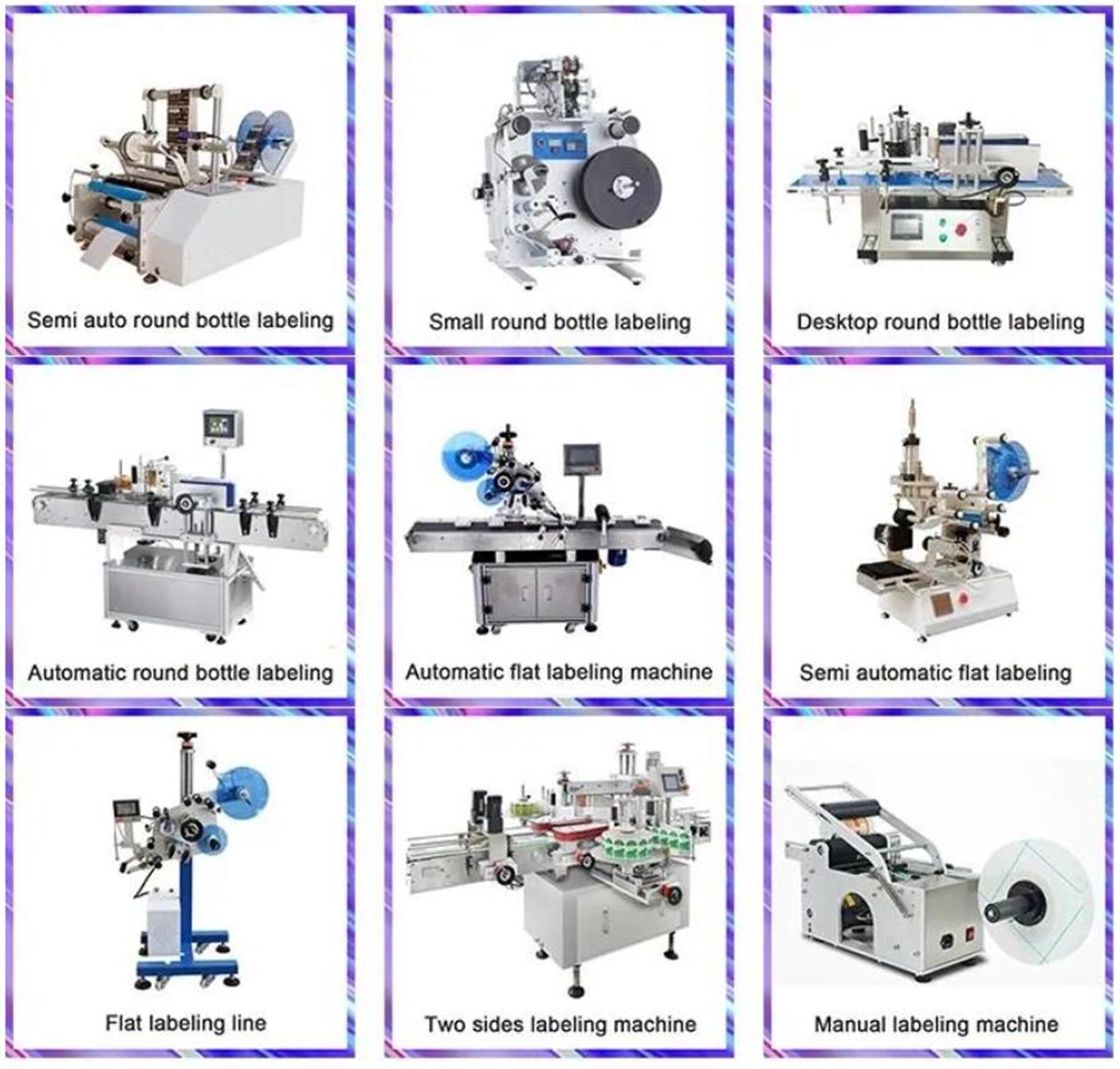
Improving Packaging Efficiency: Applications and Advantages of Fully Automatic Labeling Machines in Production Lines

Understanding Servo Capping Machines: The Core Logic of Precise Capping – Understand the Entire Working Process in Seconds
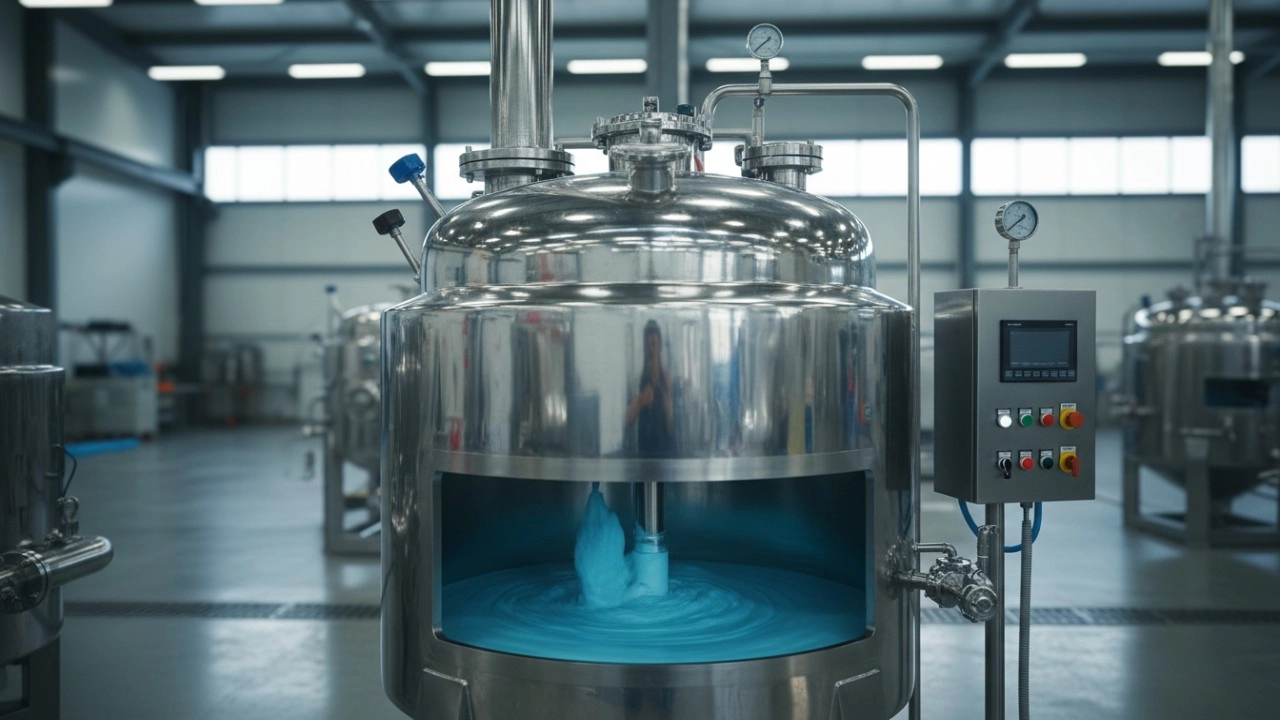
The Future of Industrial Agitation: 5 Smart Mixing Tank Technologies Changing the Game
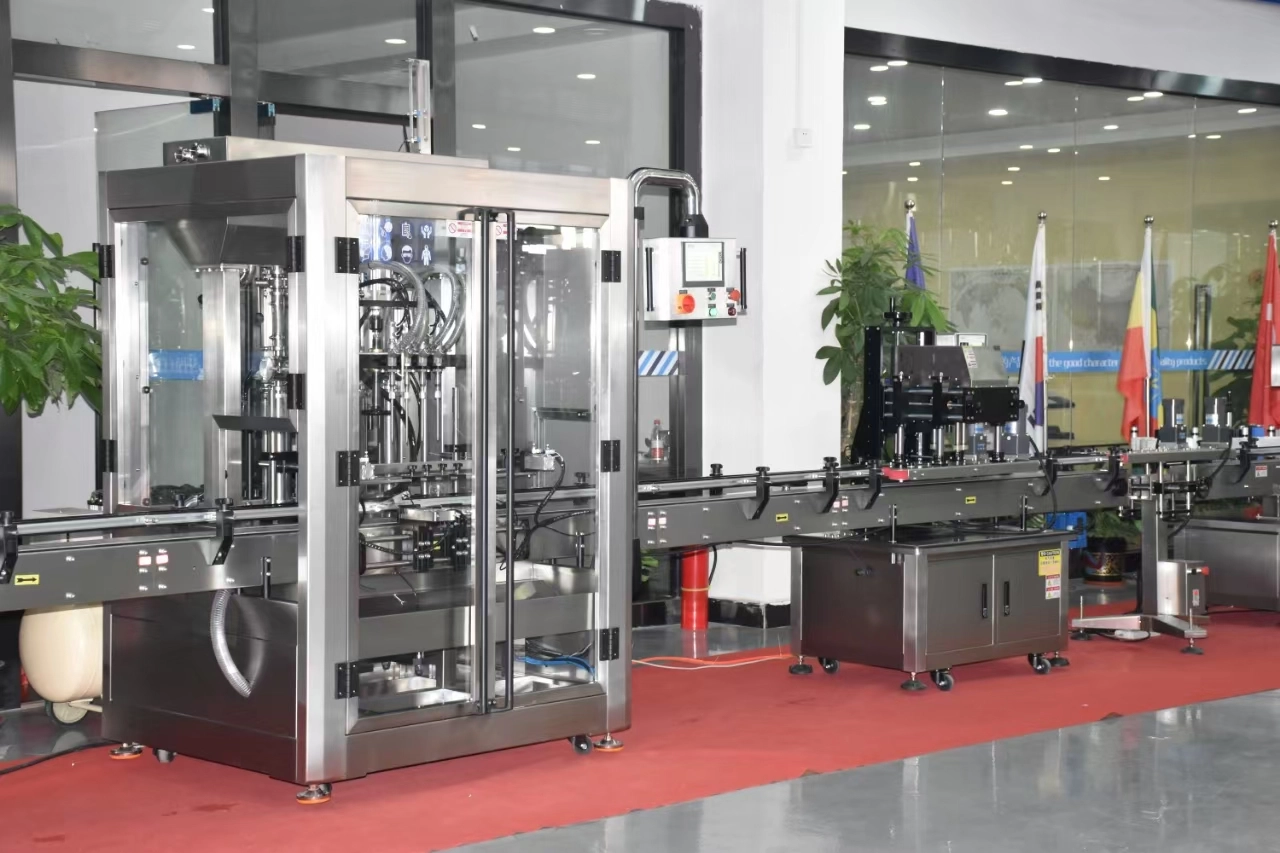
Gear pump filling machine vs. piston filling machine: Key differences broken down to avoid pitfalls in selection.
Vacuum Emulsifying Machine
What can you buy from us?
RO Water Treatment、Vacuum Emulsifying Machine、Homogenizer Mixing Tank、Filling and Capping、labeling Machine、Packing Machine、Storage Tank,etc.
Who are we?
Our headquarters is located in Guangzhou, Guangdong, China, and our factory is located in Yangzhou, Jiangsu. Our products are sold all over the world. We have approximately 50 employees in our company and factory.
Storage Tank
Can you make a design for us?
Yes, we can, we provide not only products, but also solutions and designs.
RO Water Treatment
What is RO water treatment? What is the core function of RO membranes?
RO water treatment, or reverse osmosis water treatment technology, utilizes the selective permeability of reverse osmosis membranes (RO membranes). Under external pressure, water molecules are forced through the membrane while impurities (such as salt, heavy metals, organic matter, and microorganisms) are retained, thereby purifying the water.The core function of RO membranes is high-precision filtration. With a pore size of only approximately 0.1 nanometers, they can effectively remove over 99% of dissolved solids (such as calcium and magnesium ions), heavy metals (such as lead and arsenic), bacteria, viruses, and organic matter from water, producing extremely pure water.
Automatic Filling Machine
Can you customize the machine?
Of course, we provide customized services according to customer needs.
Get in touch with FULUKE
If you have any comments or good suggestions, please leave us a message, later our professional staff will contact you as soon as possible.
You May Also Like
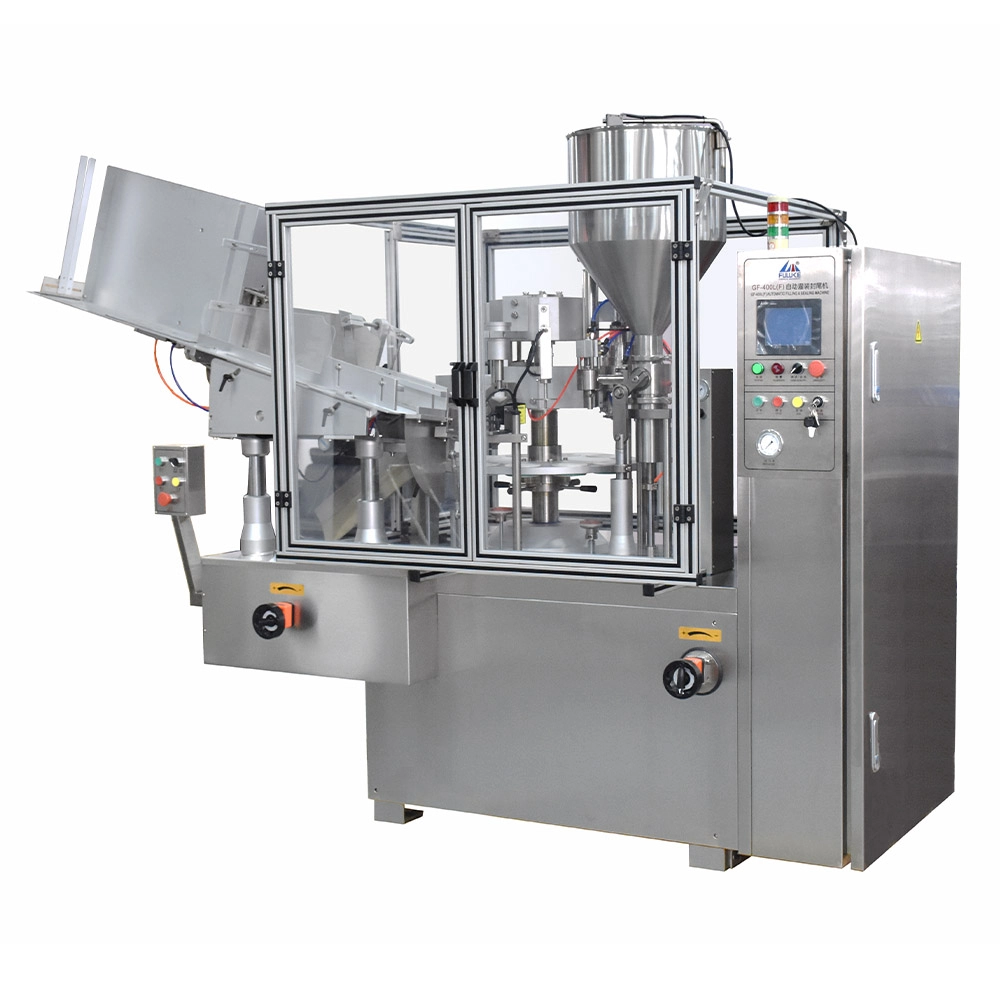
Automatic Tube Filling and Sealing Machine Toothpaste Sunscreen and Facial Cleanser Filling and Sealing Machine for Plastic and Aluminum-plastic Tube
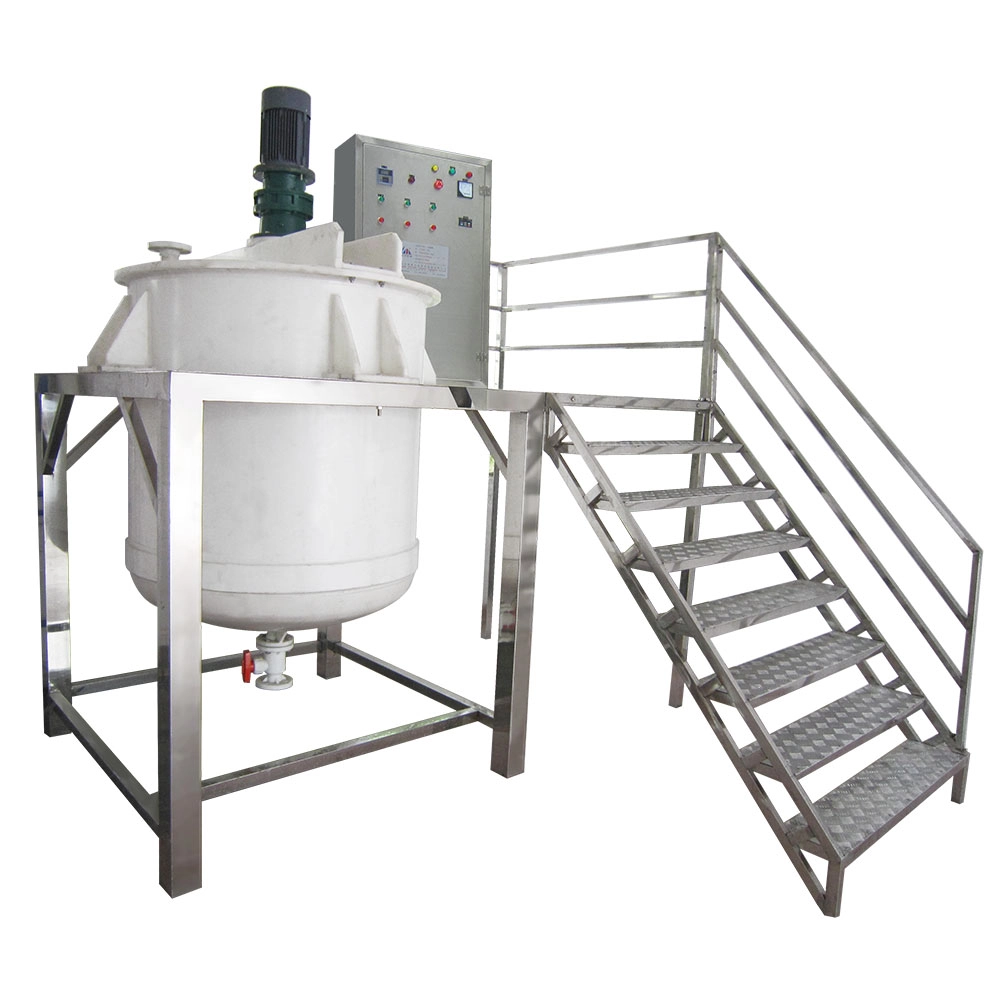
Polypropylene PP Mixing Tank Anti-Corrosion Mixer Reaction Kettle with Agitator Chemical Mixing Vessel
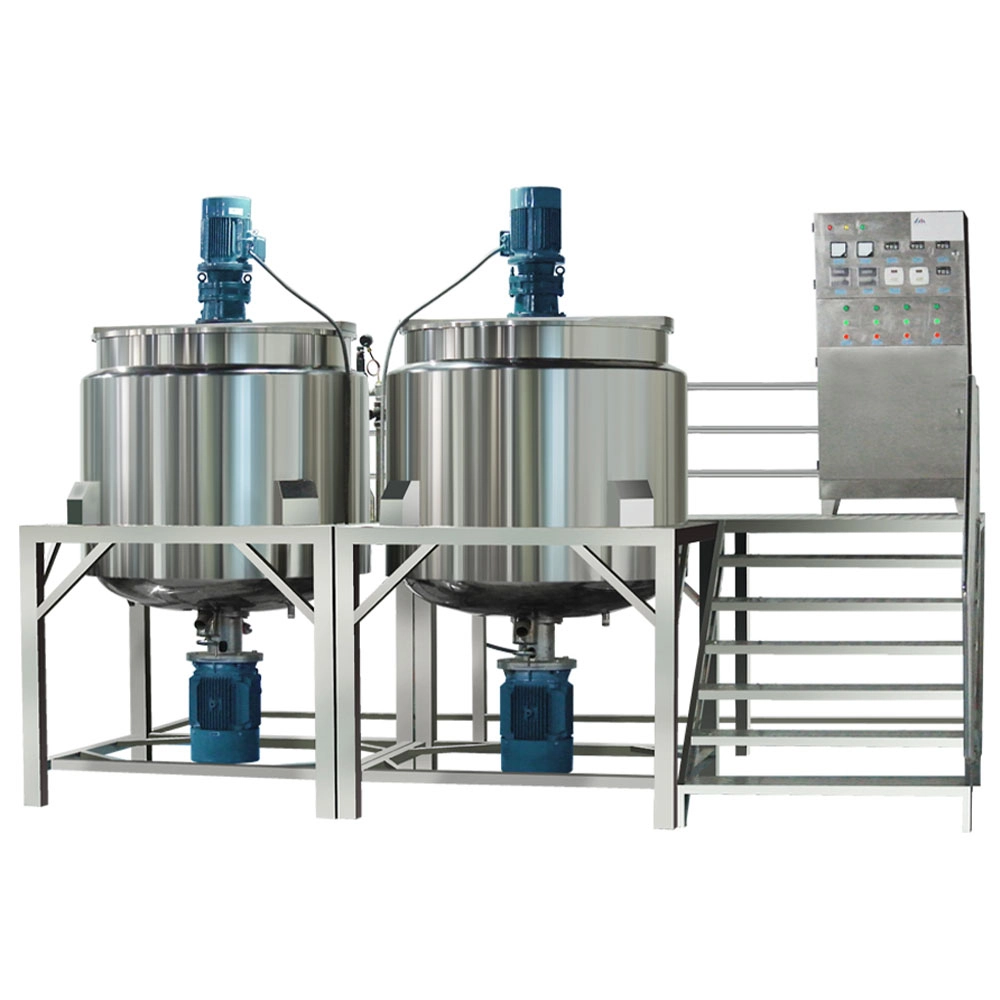
Flip Cover Multi-function Liquid Wash Mixing Tank Blender Liquid Detergent Mixer Homogenization Stirring Tank
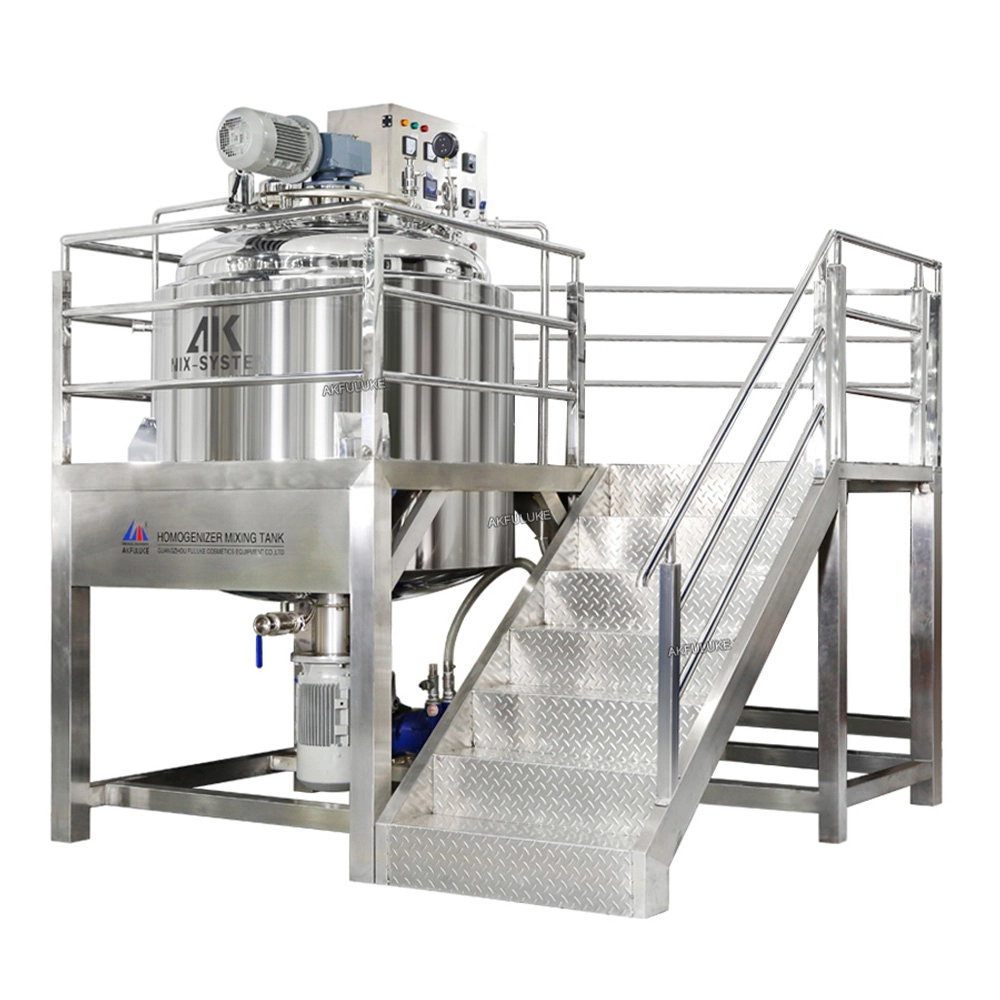
Stainless Steel Mixer Liquid Mixing tank with Agitator Homogenizing Mixing tank Vacuum Sealed Mixer Machine

A leading manufacturer specializing in advanced machinery and complete production lines for the cosmetics, food, pharmaceutical, and chemical industries worldwide.
Contact FULUKE
Facebook
Instagram
YouTube