
How do filling machines handle foam-prone formulas?
- 1) Which fill-head and nozzle geometry prevents foam for surfactant-rich shampoos at 40–80 bottles/min without compromising accuracy?
- 2) How should I set stroke, valve timing and vacuum/pressure when filling viscous emulsions (creams/lotions) to minimize foam yet maintain ±0.5% accuracy?
- 3) How can I modify an existing rotary filling line to handle suspensions (glitters, beads) without foam or nozzle blockages?
- 4) How do I validate foam-related underfills in QC and set actionable control limits for automated rejection?
- 5) How can I retrofit antifoam dosing and a vacuum deaerator to an existing line with minimal downtime?
- 6) How do I calculate ROI when upgrading to a foam-control capable automatic bottle filling machine for a mid-size cosmetic brand (20 SKUs, ~5,000 bottles/day)?
- Concluding paragraph: Advantages of choosing the right foam-control bottle filling machine
Bottle Filling Machine: How Do Filling Machines Handle Foam-Prone Formulas?
When buying a bottle filling machine for cosmetic liquids and emulsions, foam is one of the most common production pain points. This article answers six high-value, specific beginner questions that rarely have up-to-date, operationally actionable answers online. Each answer gives equipment choices, parameter targets, validation steps and retrofit tips for cosmetic bottle filling lines, drawing on industry-standard methods used with servo-driven piston fillers, peristaltic pumps, overflow fillers, and inline deaeration/antifoam systems.
1) Which fill-head and nozzle geometry prevents foam for surfactant-rich shampoos at 40–80 bottles/min without compromising accuracy?
Problem: Surfactant-rich shampoos trap air and foam rapidly when filled from the top, causing underfills and overflow. Solutions combine the right filler type, nozzle design and filling sequence.
Recommended equipment and configuration:
- Choose a servo-driven piston filler or an overflow (constant-level) filler. Piston (positive displacement) fillers give the best volumetric accuracy for viscous and foamy liquids; overflow is preferable for thin, low-viscosity but foam-prone formulas where a laminar surface finish is needed.
- Use bottom-up (dip tube) nozzles or long tubular nozzles that reach close to the bottle base. This displaces air and preserves laminar flow, dramatically reducing foam formation.
- Nozzle geometry: internal smooth bore 6–10 mm ID for shampoos (adjust by particle/load), tapered exit to match bottle opening. A vented/valved nozzle with a slow final phase limits splashing and foam.
- Two-stage filling: bulk at 60–80% target volume at 60–80% max speed, then a slow finishing stroke at 10–20% speed for the final 20–40% of volume to allow bubbles to escape. Typical finish delay: 100–400 ms before nozzle retraction.
- Bulk fill speed: set to maintain laminar flow—often 30–60 cm/s internal nozzle velocity. If foam appears, reduce by 10–20% increments.
- Nozzle insertion depth: 5–10 mm from bottle bottom for most shampoo bottles; avoid touching the bottle to prevent damage.
- Use a return vent or degassing headspace where possible to avoid overpressure inside the bottle that propagates foam.
- Use wide-bore tubing and minimize sharp bends on the supply side to reduce shear and entrained air.
- Servo-driven piston filler with programmable multi-step strokes; or progressive cavity pump with low-shear stator/rotor for highly shear-sensitive serums .
- Large-bore valves/nozzles (12–20 mm ID) to reduce shear and avoid clogging with thixotropic creams.
- Gross stroke: deliver 70–85% of volume at moderate speed (40–60% of max) to avoid splash.
- Slow finishing stroke: final 15–30% at 10–25% of max speed with a 200–500 ms dwell before nozzle retraction to let bubbles rise.
- Minimum backpressure: avoid sudden pressure spikes in the nozzle; smooth pump acceleration and soft-start reduce cavitation and foaming.
- Vacuum deaeration upstream: install an inline vacuum deaerator or a tray deaerator that reduces dissolved/entrained air to <1–2% vol prior to filling for best results.
- Perform a 10-bottle baseline: weigh each filled bottle and calculate mean, standard deviation and bias. Adjust piston displacement (or pump pulses) to remove bias.
- Set control tolerance: for cosmetic lotions set in-line checkweigher alarm at ±1% and final QA limit at ±2% (adjust to regulatory and customer specs).
- Re-validate after process changes (viscosity, temperature, antifoam dosing).
- Increase nozzle bore size and use short, straight passages—larger ID reduces clogging and shear stress on particles.
- Switch to bottom-up filling or install a skirted long-tube nozzle to fill below the fluid surface and avoid entraining air around particulates.
- Use a low-shear feed pump and gentle hopper agitation—paddle speeds that keep particles in suspension without whipping in air; avoid high-speed recirculation pumps.
- Install a magnetic or mesh trap upstream of the fill heads to capture oversized clumps (but size it for the intended particle distribution to avoid false blockages).
- Enable periodic back-flush cycles in the CIP program to clear nozzle tips and short blockages without line removal.
- Add optical or pressure-differential sensors on each fill channel to detect partial blockages early and pull the affected station out of rotation for cleaning.
- Program the PLC to reduce speed automatically when particle-laden SKUs are selected to minimize foam.
- Worst-case sampling: select the most foam-prone SKU and run a full production batch under nominal line conditions.
- Collect at least 30–100 samples across the run (per SPC best practice). Measure gross weight (filled bottle minus empty bottle tare) to determine true fill weight distribution.
- Calculate mean, standard deviation and capability indices (Cp, Cpk) for the filling process against spec limits.
- Install and configure an in-line checkweigher set to the action limit (example: set alarm reject at mean − 3 sigma or at the lower spec limit, whichever is higher). This avoids allowing underfilled bottles while limiting false rejects.
- Complement weight checks with foam sensors where foam layers obscure liquid level detection: capacitance sensors, ultrasonic level sensors or machine vision (contrast-based) can detect a foam layer and trigger a slower re-fill or rejection path.
- Use Xbar-R charts to track process drift. Investigate any out-of-control signals (runs, trends or points outside 3-sigma).
- Define a corrective action matrix: e.g., 1) automatic slow-speed re-fill for single-station foam alarms; 2) divert to rework for checkweigher fails; 3) stop-and-inspect for repeated station failures.
- Pre-assessment: map current line piping, pump types, space, and PLC I/O. Measure typical flow rates, viscosities and cycle times for the most common SKUs.
- Select modular skid systems: choose a small-footprint metering skid for antifoam (motor-driven diaphragm or peristaltic metering pump) and a plug-and-play vacuum deaerator skid sized for peak flow. Skid-mounted units reduce on-site installation time.
- Plumbing: install deaerator upstream of the main product pump (to avoid cavitation) and install antifoam dosing point either before deaeration (if compatible) or after (if deaeration may strip additive). Use tri-clamp sanitary fittings for quick connections and minimal line cutting.
- PLC and HMI integration: add I/O module for dosing pump and deaerator controls; implement SKU recipes to enable/disable dosing and set ppm rates automatically. Pre-configure software off-site and test in a dry-run before physical hookup.
- Commissioning: schedule a planned weekend or night shift changeover. Typical hardware fit and hookup for a modular skid can often be completed in a day; end-to-end validation (including CIP cycles) usually requires an additional day.
- Start with conservative antifoam dosing: many antifoam concentrates are effective in the low double-digit to low triple-digit ppm range (e.g., 10–200 ppm) depending on product and concentrate strength. Always trial progressively and test impact on product aesthetics and stability.
- Validate by measuring foam height in a standardized cylinder test and by running a short production trial to confirm reject rates fall within targets.
- Identify baseline losses and costs:
- Current reject rate (foam-related) %R_current (example: 3%).
- Unit production cost (material + direct labor + packaging) C_unit (example: $1.50 per filled bottle).
- Labor and changeover costs saved per day L_savings (e.g., fewer operators or faster SKU changeovers).
- Estimate post-upgrade performance: expected reject rate %R_new (e.g., 0.5%) and increased throughput or SKU flexibility.
- Annualized savings (simplified):
Daily saved bottles = (R_current - R_new) * daily outputDaily material saving = Daily saved bottles * C_unitAnnual material saving = Daily material saving * operating days per yearAdd labor savings and reduced rework costs
- ROI = (Annual savings) / (Capital cost + installation & commissioning).
- Daily output: 5,000 bottles/day.
- R_current = 3% → 150 bottles/day wasted. R_new = 0.5% → 25 bottles/day wasted. Reduction = 125 bottles/day.
- Unit cost C_unit = $1.50 → daily material savings = 125 * $1.50 = $187.50. Annualized (300 operating days) = $56,250.
- Assume labor and rework savings = $150/day → $45,000/year. Total annual savings ≈ $101,250.
- If upgrade + installation cost = $150,000, payback ~1.5 years. (Adjust assumptions with your exact data.)
- Include intangible benefits: fewer customer complaints, fewer product returns, higher line uptime and faster SKU changeovers (important with 20 SKUs).
- Factor in maintenance and consumables (antifoam, spare seals), but weigh these against reduced rework and scrap.
Operational parameters and tips:
Why this works: Bottom-up filling and two-stage dosing reduce shear at the air-liquid interface and give trapped gas time to escape before nozzle withdrawal. Servo control gives repeatable stroke profiles for ±0.5–1% volumetric accuracy depending on formulation and machine class.
2) How should I set stroke, valve timing and vacuum/pressure when filling viscous emulsions (creams/lotions) to minimize foam yet maintain ±0.5% accuracy?
Problem: Viscous emulsions can both shear (creating foam) and trap microbubbles from mixing. The filling approach must be gentle but precise.
Recommended machine choices:
Parameter settings and sequence:
Calibration and accuracy maintenance:
3) How can I modify an existing rotary filling line to handle suspensions (glitters, beads) without foam or nozzle blockages?
Problem: Suspended solids increase turbulence, trap air pockets and can clog small nozzles. Modifications must preserve product integrity (no particle breakage) while preventing foam.
Practical retrofit steps:
Control and detection:
4) How do I validate foam-related underfills in QC and set actionable control limits for automated rejection?
Problem: Foam can create apparent fill levels that mask underfilling. QC must detect true volume/weight deficits and reliably reject defective bottles without excessive false rejects.
Validation protocol (step-by-step):
SPC and corrective action:
5) How can I retrofit antifoam dosing and a vacuum deaerator to an existing line with minimal downtime?
Problem: Adding antifoam and deaeration usually requires piping changes and PLC integration. The goal is to minimize production downtime and preserve sanitary design.
Practical retrofit plan:
Dosing guidance and verification:
6) How do I calculate ROI when upgrading to a foam-control capable automatic bottle filling machine for a mid-size cosmetic brand (20 SKUs, ~5,000 bottles/day)?
Problem: Buyers need a defensible ROI model that includes reject reduction, labor savings, and faster SKU changeovers.
ROI framework (use real factory numbers for final decision):
Example scenario (conservative illustrative numbers):
Key considerations when building your model:
Concluding paragraph: Advantages of choosing the right foam-control bottle filling machine
Choosing a bottle filling machine configured for foam-prone cosmetic formulas (servo-driven piston or overflow fillers, bottom-up/nozzle geometry, integrated vacuum deaeration and antifoam metering, CIP-capable sanitary design) delivers tangible benefits: lower rejects and material waste, consistent fill accuracy, improved line uptime, faster SKU changeovers, and simpler regulatory compliance. Investing in the correct combination of low-shear pumps, adjustable fill profiles, and inline QC (checkweighers, foam sensors) typically pays back through reduced rework, labor savings and improved product quality.
For a customized specification, ROI calculation, or retrofit quote tailored to your SKUs and line layout, contact us for a quote at www.fulukemix.com or email flk09@gzflk.com.

Understanding Servo Capping Machines: The Core Logic of Precise Capping – Understand the Entire Working Process in Seconds
The Future of Industrial Agitation: 5 Smart Mixing Tank Technologies Changing the Game
Gear pump filling machine vs. piston filling machine: Key differences broken down to avoid pitfalls in selection.
Understand the working principle of a servo gear pump filling machine!
Storage Tank
How can I extend the life of my storage tank?
Avoid storing media that are incompatible with the material to prevent corrosion.
Perform maintenance according to specifications and promptly repair damaged anti-corrosion coatings or seals.
When the tank is idle for an extended period, empty the media and protect it from moisture and dust.
Film Packaging Machine
Can you customize the machine?
Of course, we provide customized services according to customer needs.
FAQs
Where is FULUKE headquartered?
Polypropylene PP Mixing Tank
Can you customize the machine?
Of course, we provide customized services according to customer needs.
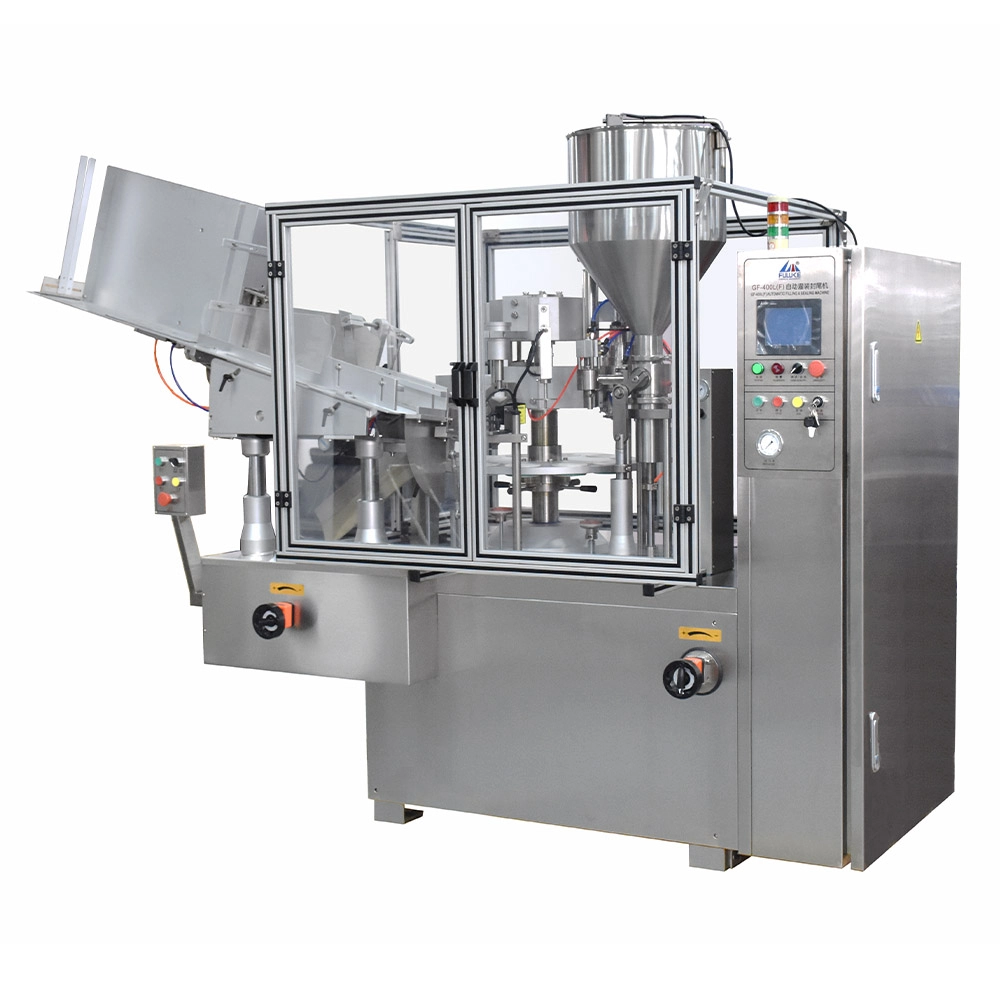
Automatic Tube Filling and Sealing Machine
Can the device accommodate tubes of different materials and specifications?
Yes. The device supports plastic (PE, PP) and aluminum-plastic composite hoses. The compatible hose diameter range is typically Φ10-Φ60mm (customizable to user specifications), and the capacity range is 2.5ml-400ml. By replacing specialized molds (such as cylinders and filling heads), the device can be adapted to meet different filling volumes, providing flexible adaptability.
Get in touch with FULUKE
If you have any comments or good suggestions, please leave us a message, later our professional staff will contact you as soon as possible.
You May Also Like
Automatic Tube Filling and Sealing Machine Toothpaste Sunscreen and Facial Cleanser Filling and Sealing Machine for Plastic and Aluminum-plastic Tube
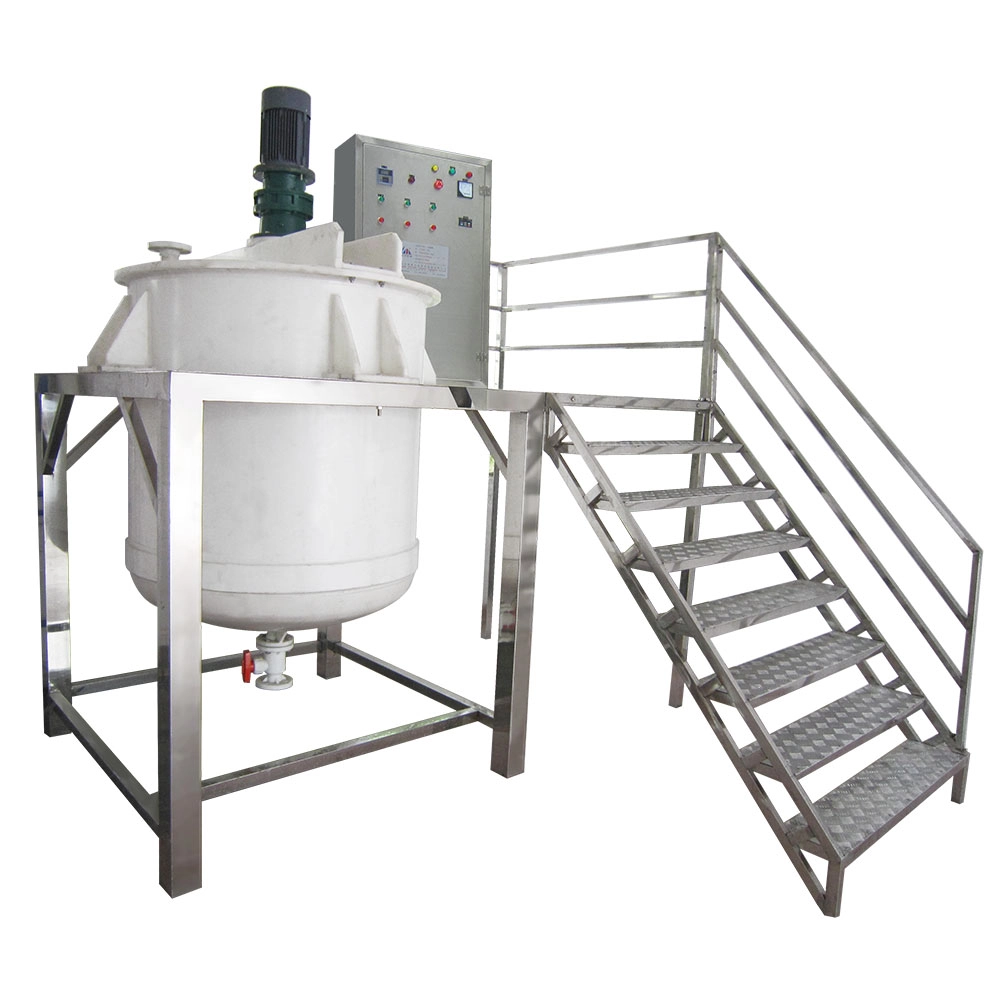
Polypropylene PP Mixing Tank Anti-Corrosion Mixer Reaction Kettle with Agitator Chemical Mixing Vessel
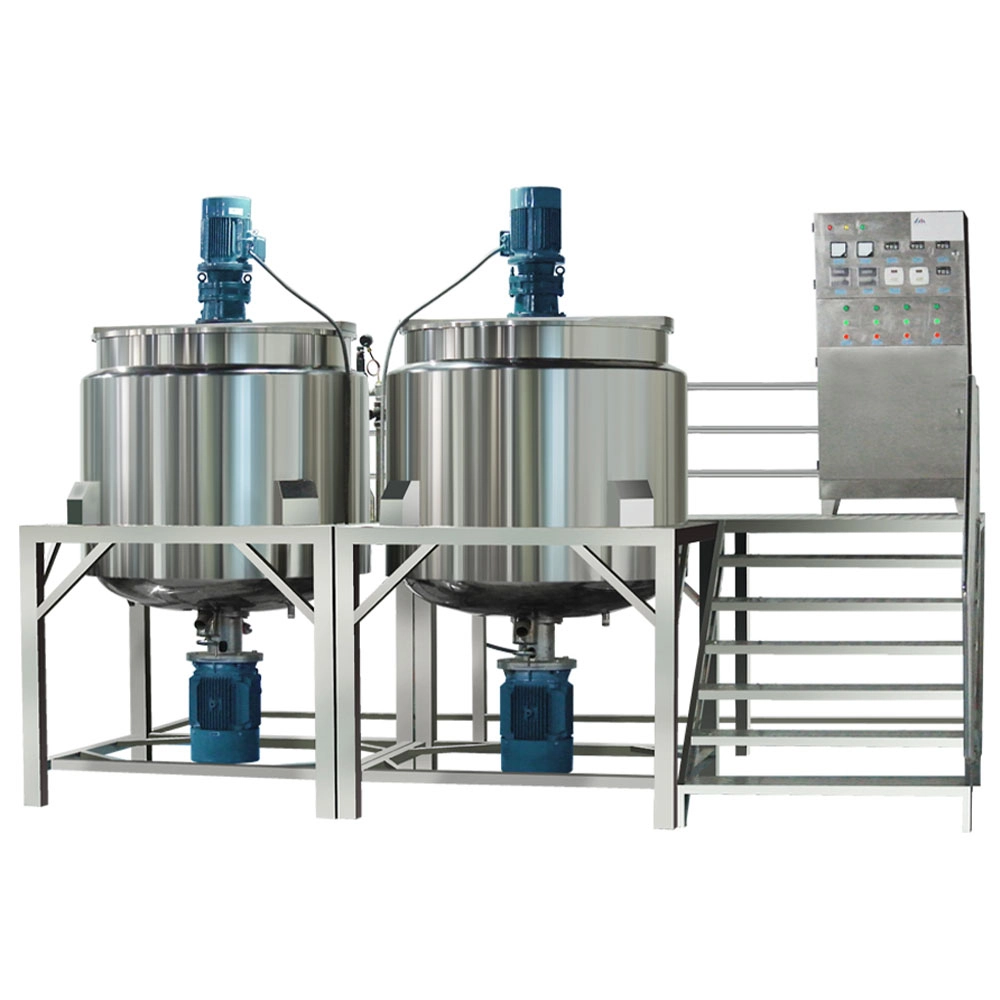
Flip Cover Multi-function Liquid Wash Mixing Tank Blender Liquid Detergent Mixer Homogenization Stirring Tank
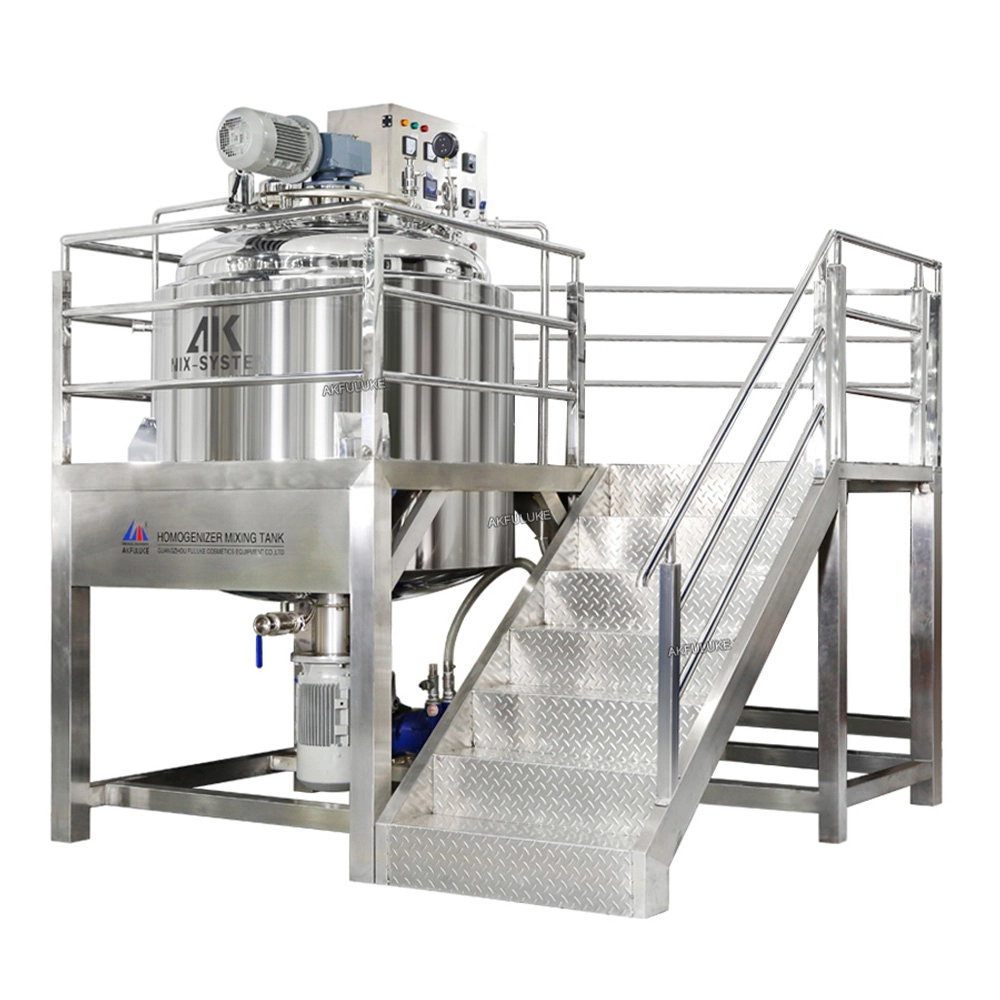
Stainless Steel Mixer Liquid Mixing tank with Agitator Homogenizing Mixing tank Vacuum Sealed Mixer Machine

A leading manufacturer specializing in advanced machinery and complete production lines for the cosmetics, food, pharmaceutical, and chemical industries worldwide.
Contact FULUKE
Facebook
Instagram
YouTube