
What maintenance schedule optimizes uptime?
- 1. How often should I recalibrate volumetric or piston filler nozzles to hold ±1–2% fill accuracy on small cosmetic bottles?
- 2. What preventive parts and spare-kit inventory guarantees multi-shift uptime for piston-based bottle filling machines?
- 3. What CIP cycle and detergents stop cross-contamination when switching fragrance- or pigment-loaded cosmetic formulas?
- 4. How do I add predictive maintenance (vibration, thermography) to a rotary filling turret without interrupting daily production?
- 5. Which changeover and SMED best practices cut cosmetic bottle changeover time from 45 to under 15 minutes?
- 6. What maintenance KPIs and OEE targets should I set when buying a new automatic filling line for cosmetic creams?
- Concluding summary
Bottle Filling Machine: Maintenance Schedule That Optimizes Uptime
This guide answers six specific, often under-documented questions beginners ask when buying or operating a cosmetic bottle filling machine. Each section includes actionable checklists, real-world best practices for piston, volumetric and rotary filling machines, and how to tie preventive and predictive maintenance into a single uptime-optimizing schedule.
1. How often should I recalibrate volumetric or piston filler nozzles to hold ±1–2% fill accuracy on small cosmetic bottles?
Why this matters: Cosmetic serums and lotions sold in small bottles amplify volumetric error. Frequent under- or over-fill raises cost, regulatory risk, and consumer complaints.
Recommended schedule:
- Daily: Quick gravimetric spot-check on the production line at start-of-shift for the first 30 bottles (use a calibrated bench scale). If average fill deviates beyond your target tolerance, stop and correct.
- Weekly: Full nozzle-by-nozzle gravimetric validation (3–5 samples per nozzle). Log results in a maintenance record or CMMS. Adjust piston stroke or volumetric settings where out of tolerance.
- Monthly: Complete system calibration including pump drive verification, encoder/pulse checks, and inspection of nozzle seals and valves. Replace worn piston cups or dosing diaphragms if they show wear.
- After every product changeover or viscosity shift: Re-check gravimetrically before resuming full production. Different viscosities (serums vs. creams) change fill dynamics.
Best practices and tools:
- Use traceable calibrated scales (ISO/IEC 17025 or local equivalent) and keep calibration certificates on file.
- Target tolerance: cosmetic manufacturers commonly aim for ±1–2% on High Quality products. Set alarm thresholds in the HMI/PLC for automatic stoppage if averages drift.
- Document a calibration procedure (SOP) with step-by-step settings, and a control chart to detect drift before it breaches limits.
2. What preventive parts and spare-kit inventory guarantees multi-shift uptime for piston-based bottle filling machines?
Why this matters: A missing small part can stop a three-shift line for hours. Beginners often understock the few components that most commonly fail.
Critical spare parts kit (minimum on site for a 24/7 three-shift operation):
- Seals and O-rings (piston cups, nozzle seals) – keep 3–5 sets per machine.
- Piston cups/dosing diaphragms – 2–3 spares each.
- Valve seats and check valves – 2 spares each.
- Nozzles and nozzle gaskets – 2 spares per nozzle type (quick-change nozzles if fitted).
- Drive belts, timing belts, and servo coupling spares – 1–2 each.
- Sensors: proximity switches, photoeyes, pressure transducers – 1 spare each critical model.
- PLC/drive fuses and a spare HMI touchscreen (or a fallback HMI) – 1 set.
- Lubricants (food/skin-safe where needed, e.g., NSF H1) and grease cartridges for gearboxes.
- Filters and strainers for pumps and vacuum systems – replaceable elements in stock.
Inventory rules and reorder strategy:
- Classify spares as Critical / Important / Optional. Maintain a minimum on-hand level for Critical items sufficient for the longest typical repair time plus lead time for replacements.
- Set reorder points and safety stock in your ERP/CMMS (e.g., reorder when quantity <= 1 for single-supplier critical items).
- Use Pareto analysis of past downtime events to adjust stock levels—most lines find that 10–20 part types cause 80% of stoppages.
3. What CIP cycle and detergents stop cross-contamination when switching fragrance- or pigment-loaded cosmetic formulas?
Why this matters: Cosmetic lines often handle fragrant, colored, and oil-based formulas. Inadequate cleaning leads to visible contamination, off-odors, and regulatory failure.
Core CIP strategy (3-stage approach):
- Pre-rinse: Cold or warm rinse to remove product residue and reduce organic load.
- Active wash: Use an appropriate cleaning agent based on product chemistry:
- Water-soluble lotions/serums: alkaline (low-foam) detergents with chelating agents to remove proteins/polymers.
- Oil-rich or silicone-containing formulas: use an emulsifying detergent or a solvent-compatible cleaning step (ensure equipment metallurgy and seals are compatible).
- Acid rinse: where mineral scale or salts are present, follow with a mild acid rinse (citric or dilute nitric/phosphoric where approved).
- Final rinse and verification: Multiple DI or potable water rinses until conductivity and TOC are within validated limits.
Validation & verification:
- Validate cleaning cycles using swab tests, TOC (total organic carbon), or conductivity measurements. Create acceptance criteria in the SOP.
- Record CIP cycle parameters (temperature, flow, chemical concentration, time) in the control system for audit and traceability.
- Material compatibility: Verify all wetted parts are stainless-steel 316L or approved coatings compatible with cleaning chemistries.
4. How do I add predictive maintenance (vibration, thermography) to a rotary filling turret without interrupting daily production?
Why this matters: Predictive techniques detect bearing wear, imbalance, and electrical heat before catastrophic failure. Beginners fear installation and perceived downtime to implement sensors.
Stepwise integration without major disruptions:
- Baseline and risk assessment: Run an initial audit during planned downtime to capture baseline vibration spectra, bearing temperatures, and electrical panel thermal images.
- Start small: Install a few wireless vibration or temperature sensors on critical bearings and gearbox housings. Modern wireless sensors clamp on and do not require wiring downtime.
- Non-intrusive scanning schedule: Perform handheld thermography and vibration scans during planned line stops or at shift changes to avoid impacting production. Many teams scan weekly or bi-weekly initially.
- Set thresholds and alarms: Use trend-based thresholds rather than single-value limits (e.g., rising RMS vibration over N readings). Integrate alerts into your CMMS or plant messaging for immediate action.
- Continuous improvement: After initial 3–6 months of trending you can expand sensor coverage and reduce manual inspections. Keep a record of findings and correlating repairs to quantify ROI.
Tools and expected outcomes:
- Use ISO 10816/20816 vibration standards as references for machine condition thresholds.
- Benefits: early bearing replacements during planned downtime, avoidance of secondary damage (gear wear), and reduced emergency repairs.
5. Which changeover and SMED best practices cut cosmetic bottle changeover time from 45 to under 15 minutes?
Why this matters: Cosmetic product variety (sizes, closures, labels) drives frequent changeovers—long changeovers kill throughput and increase per-unit cost.
SMED-adapted checklist for fillers:
- Externalize tasks: Pre-stage bottles, caps, and change parts beside the machine before stopping. Construct a changeover cart with all tooling (nozzles, nests, conveyors) labeled and ready.
- Standardize tooling: Use quick-release clamps, standardized nozzle carriers, and adjustable nests that require minimal adjustment.
- Recipe-driven automation: Store fill volumes, speeds, and servo positions in machine recipes and load them via HMI to avoid manual tweaks.
- Use a two-teams approach: While operators finish the last run, a second prepared team swaps parts immediately when the line stops.
- Checklists & training: Use a laminated SOP checklist at the machine and cross-train operators to perform the fastest swap consistently.
- Continuous measurement: Time changeovers and break down the steps; target the largest time consumers for engineering fixes (e.g., retrofit for quick-disconnect piping).
6. What maintenance KPIs and OEE targets should I set when buying a new automatic filling line for cosmetic creams?
Why this matters: Buyers need realistic performance expectations and KPIs to measure vendor performance and internal maintenance effectiveness.
Recommended KPIs:
- Overall Equipment Effectiveness (OEE): Track availability × performance × quality. For new lines, expect a ramp from 55–70% OEE to 75–85% within 6–12 months. World-class lines target ≥85%.
- Availability (uptime): Target 92–98% for mature cosmetic lines depending on product complexity. New installations often start lower during commissioning.
- Mean Time Between Failures (MTBF): Track at component and system level to spot chronic issues (e.g., MTBF for dosing pumps).
- Mean Time To Repair (MTTR): Aim to minimize MTTR via spares and trained crews; track average repair time by failure mode.
- Planned Maintenance Percentage: Ratio of planned maintenance hours to total maintenance hours. Higher planned percentages correlate with fewer emergency repairs; target 70–85% planned work.
How to use these KPIs in procurement and operations:
- Include OEE and MTTR targets in RFQs and acceptance criteria for new equipment. Hold vendors to documented performance during FAT and SAT.
- Instrument machines with runtime, reject, and downtime logging (PLC tags to historian). Use a CMMS to connect work orders and failure codes to the KPI dashboard.
- Create monthly OEE reviews that include root-cause actions for losses greater than defined thresholds.
Example OEE calculation (for clarity): OEE = Availability (%) × Performance (%) × Quality (%). Track each component separately for targeted improvements.
Concluding summary
Adopting a layered maintenance schedule—daily spot checks, weekly calibrations, monthly system checks, and quarterly predictive inspections—minimizes unplanned downtime and maintains fill accuracy and product quality for cosmetic bottle filling machines. Stocking a focused spare parts kit, validating CIP for colorants and fragrances, applying SMED for changeovers, and tracking OEE/MTBF/MTTR with a CMMS are proven ways to raise uptime, lower emergency repair costs, and speed new-product changeovers. This integrated approach improves line availability, reduces product waste, and supports regulatory traceability.
For a customized preventive and predictive maintenance plan or a spare-parts kit tailored to your piston, volumetric, or rotary filling machine, contact us for a quote at www.fulukemix.com or email flk09@gzflk.com.

Understanding Servo Capping Machines: The Core Logic of Precise Capping – Understand the Entire Working Process in Seconds
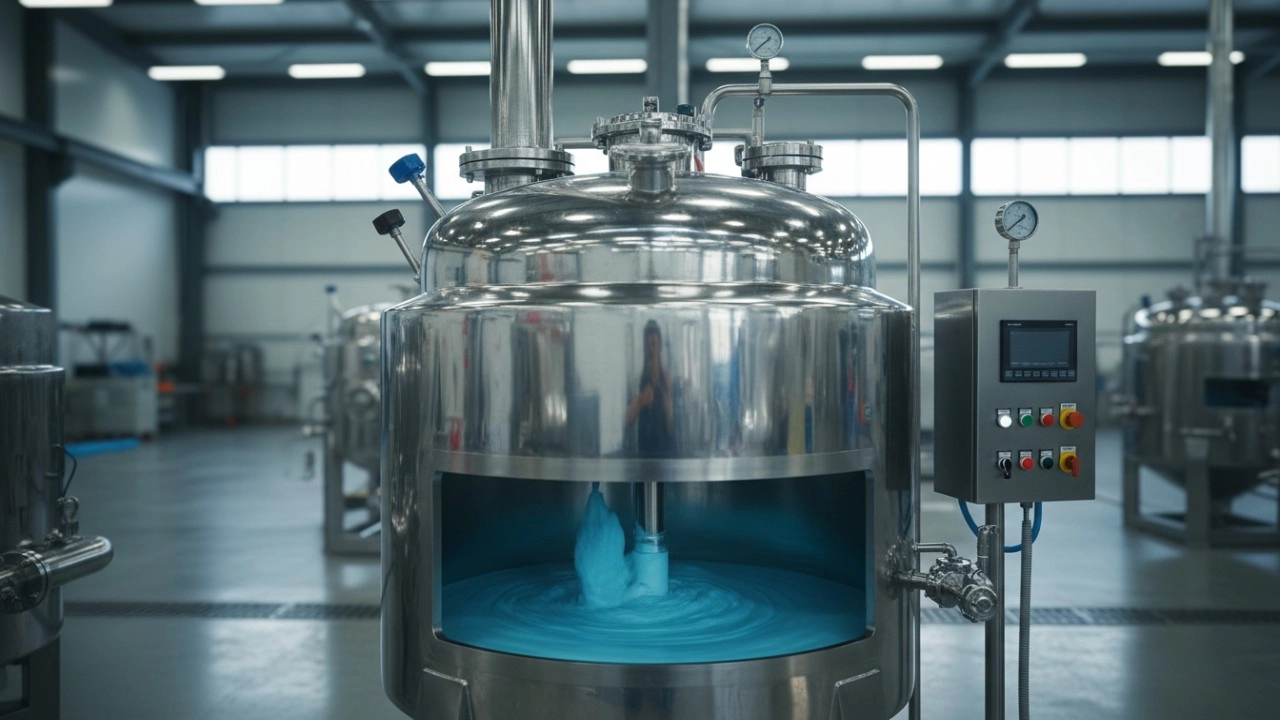
The Future of Industrial Agitation: 5 Smart Mixing Tank Technologies Changing the Game
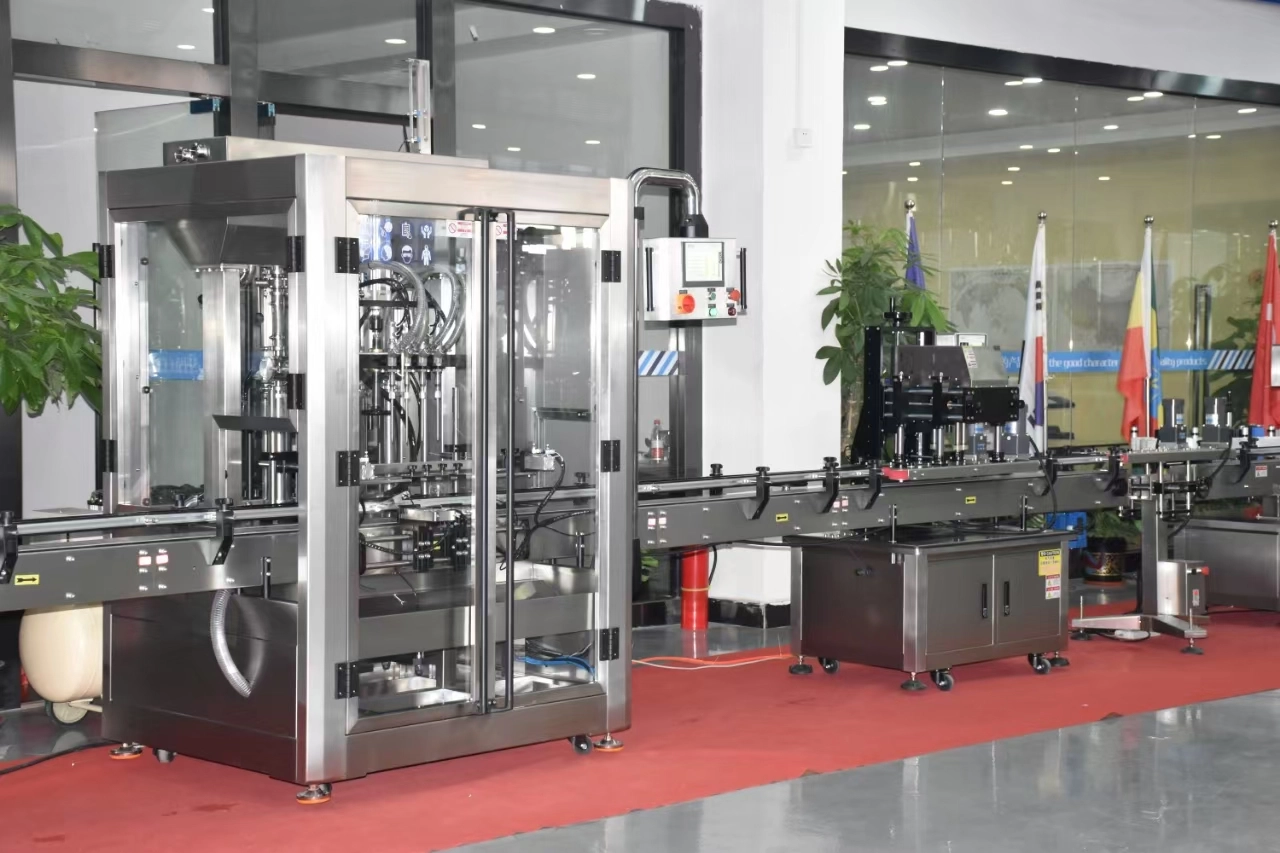
Gear pump filling machine vs. piston filling machine: Key differences broken down to avoid pitfalls in selection.
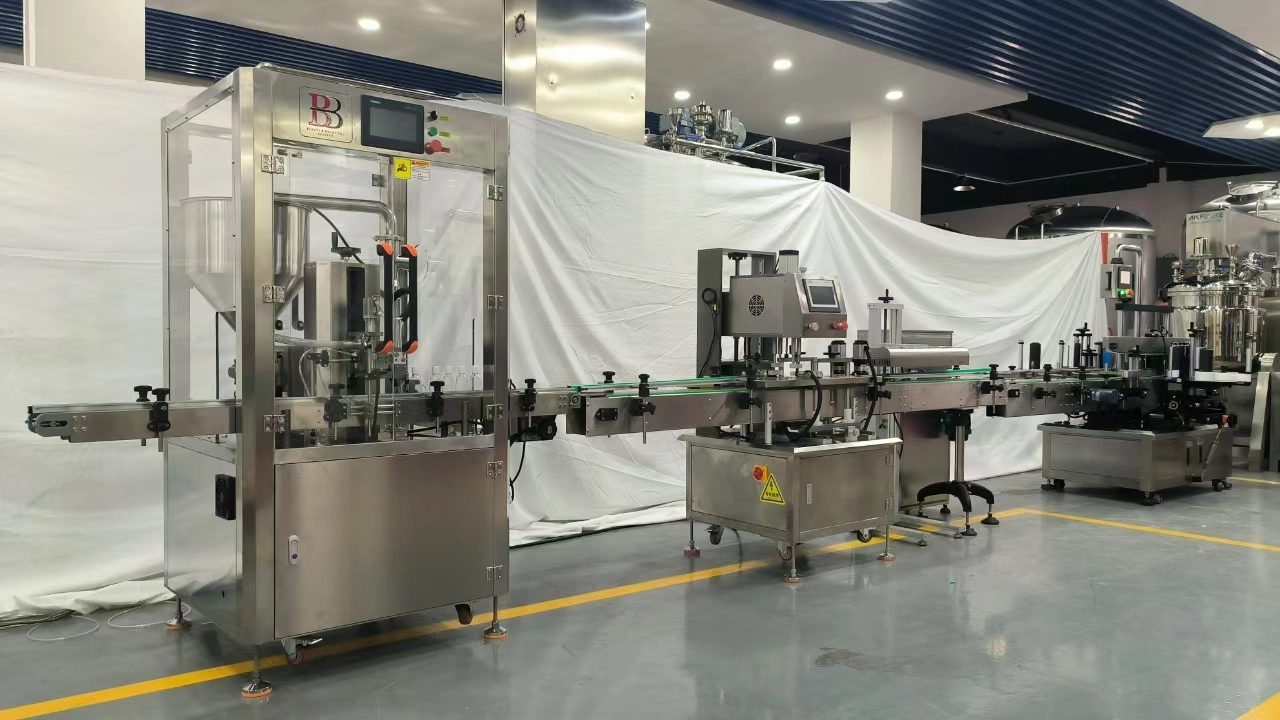
Understand the working principle of a servo gear pump filling machine!
Automatic Filling Machine
Who are we?
Our headquarters is located in Guangzhou, Guangdong, China, and our factory is located in Yangzhou, Jiangsu. Our products are sold all over the world. We have approximately 50 employees in our company and factory.
Sealed Homogenizing Mixing Tank
Can you make a design for us?
Yes, we can, we provide not only products, but also solutions and designs.
The Flip Cover Liquid Wash Mixing Homogenizing Tank
Can flip cover homogenizing mixing tank ensure hygienic safety when handling materials such as food and cosmetics?
Material Compliance: The equipment's pot, agitator, homogenizer, and other material-contacting components are all made of 316L stainless steel, which is corrosion-resistant and easy to clean, meeting food-grade and cosmetic-grade hygiene requirements.
Easy Cleaning: The open-top design allows direct access to corners within the pot, allowing for thorough cleaning by hand or with tools.
Operational Specifications: The equipment can be disinfected before use (e.g., hot water for food processing). After use, cleanup any remaining material promptly to avoid cross-contamination.
Perfume Freezing Filter Making Machine
Why does perfume require freeze filtration? Is traditional filtration an alternative?
Traditional filtration only removes visible solid impurities. Soluble organic matter, colloids, and trace microorganisms in perfume are difficult to separate at room temperature, easily leading to turbidity, precipitation, and aroma deterioration after storage. Freeze filtration uses a low-temperature environment of -5°C to -15°C (depending on the formulation) to condense these hidden impurities into solid particles. These particles are then thoroughly trapped through precision filtration, while simultaneously allowing the fragrance components to fully blend. This is a core process that ensures the stability of high-end perfumes.
Film Packaging Machine
What industries is this film packaging machine suitable for?
This machine is widely used for packaging a variety of items in large single boxes or multiple small boxes (with gold drawstring) in industries such as pharmaceuticals, health products, food, cosmetics, stationery, and audio-visual products.
Get in touch with FULUKE
If you have any comments or good suggestions, please leave us a message, later our professional staff will contact you as soon as possible.
You May Also Like
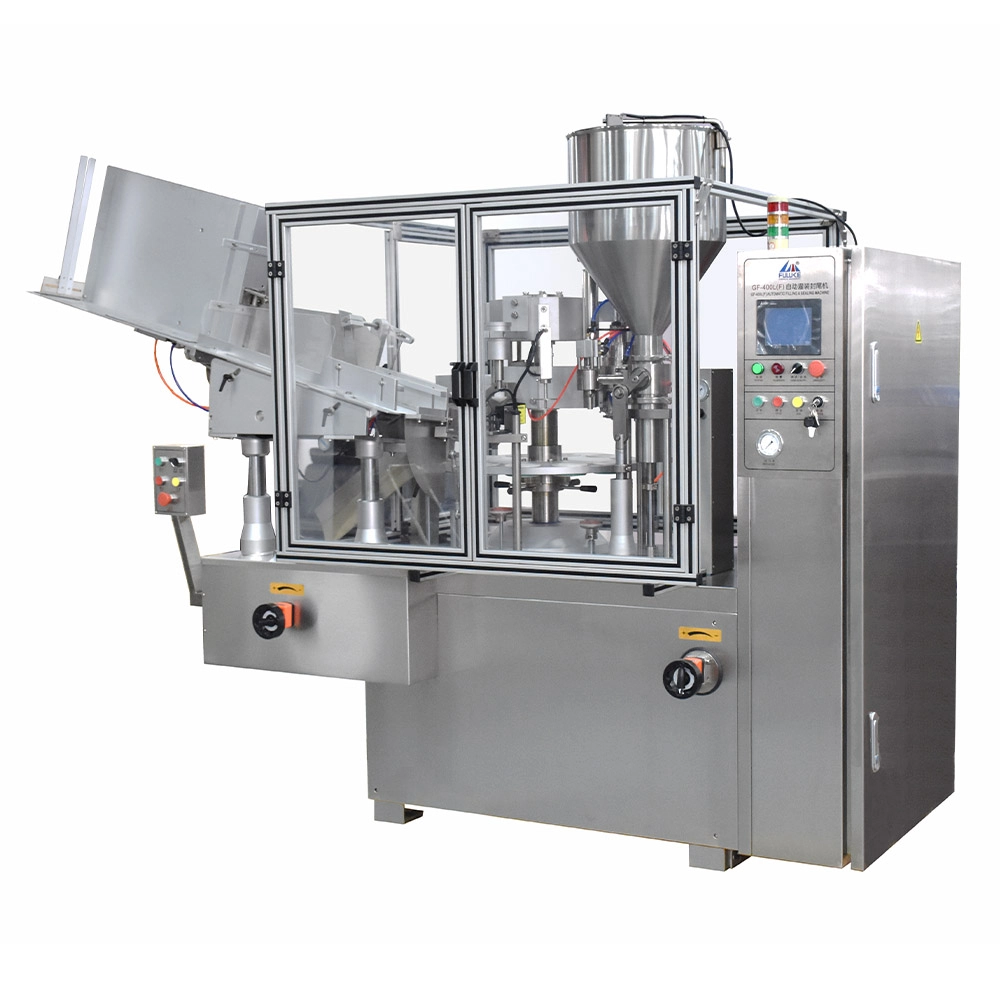
Automatic Tube Filling and Sealing Machine Toothpaste Sunscreen and Facial Cleanser Filling and Sealing Machine for Plastic and Aluminum-plastic Tube
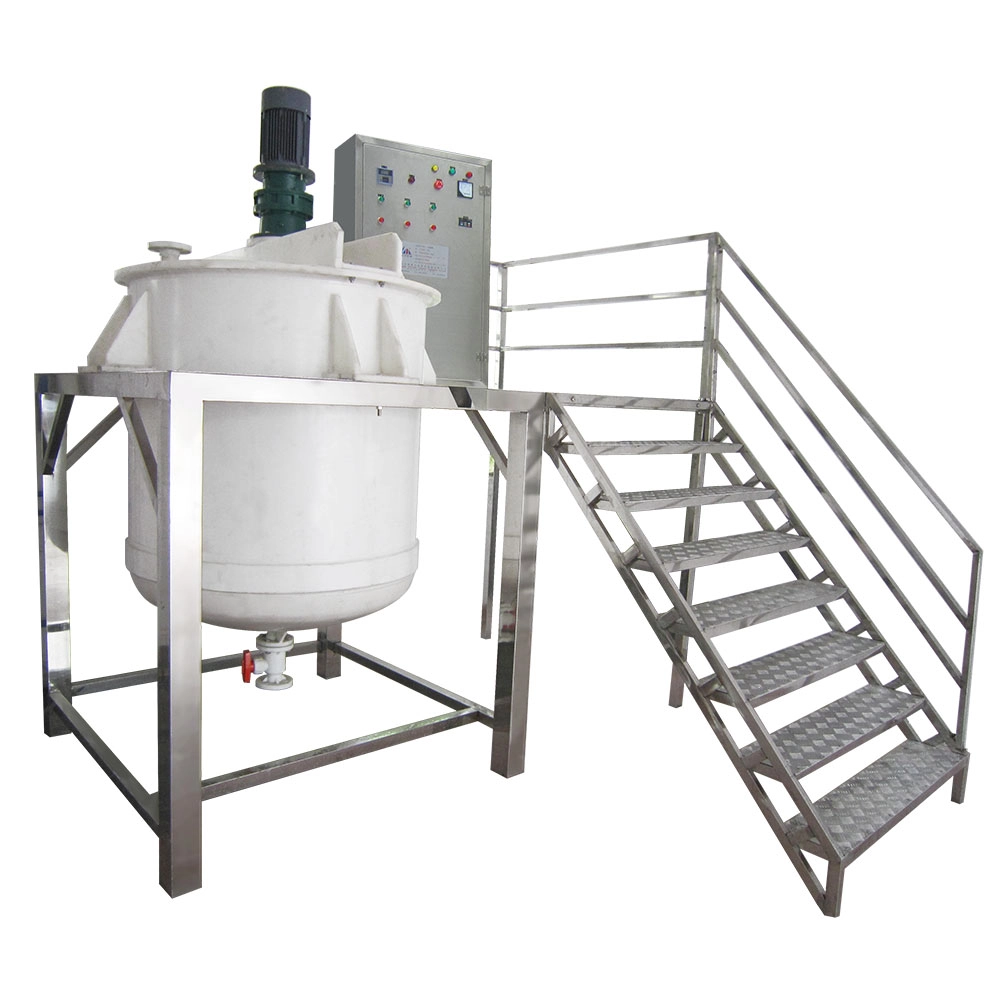
Polypropylene PP Mixing Tank Anti-Corrosion Mixer Reaction Kettle with Agitator Chemical Mixing Vessel
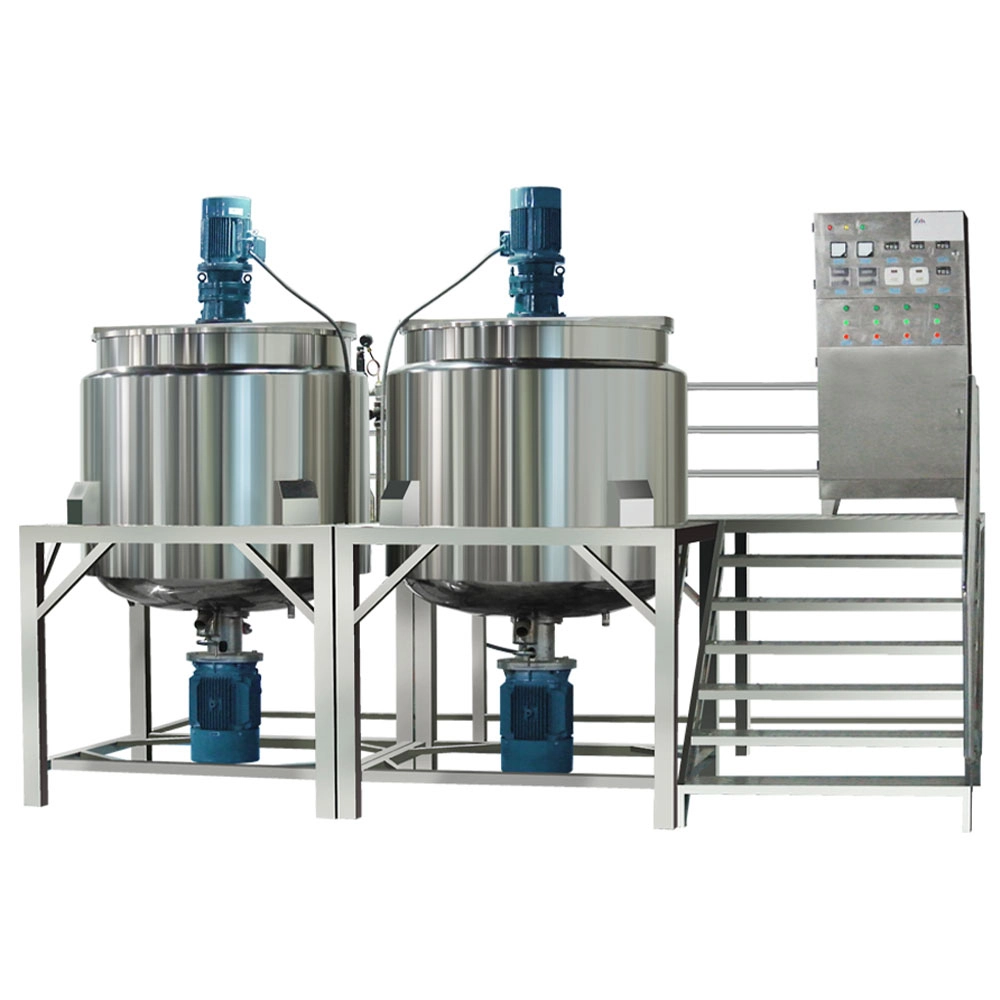
Flip Cover Multi-function Liquid Wash Mixing Tank Blender Liquid Detergent Mixer Homogenization Stirring Tank
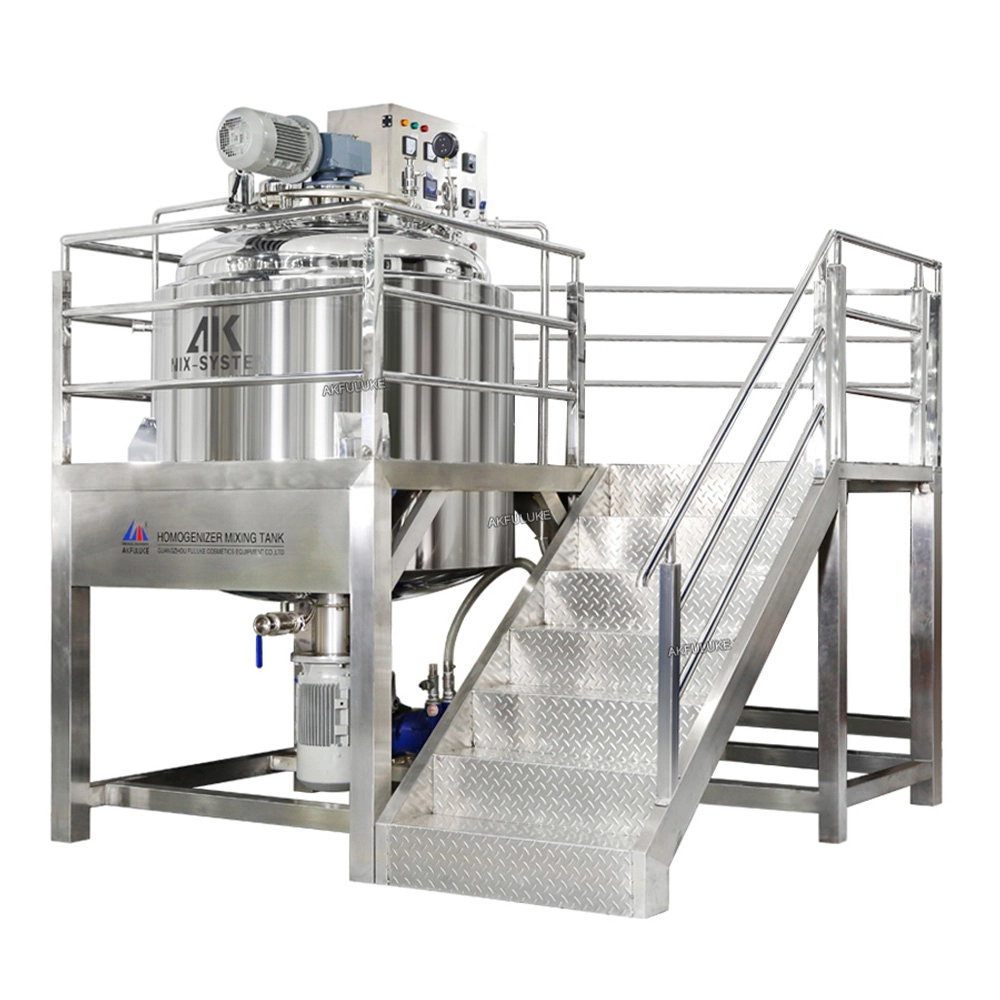
Stainless Steel Mixer Liquid Mixing tank with Agitator Homogenizing Mixing tank Vacuum Sealed Mixer Machine

A leading manufacturer specializing in advanced machinery and complete production lines for the cosmetics, food, pharmaceutical, and chemical industries worldwide.
Contact FULUKE
Facebook
Instagram
YouTube