
How to choose between piston and pump fillers?
- 1) How do I size a bottle filling machine for mixed-product runs (many SKUs) while minimizing changeover time?
- 2) My formulation contains suspended beads (scrubs) and thickeners—which filler handles particulates and shear-sensitive actives better?
- 3) Which machine type is easier to validate for hygienic cleaning and compliance with ISO 22716 (cosmetic GMP)?
- 4) How do I compare total cost of ownership (TCO) between piston and pump fillers for cosmetic serums (low volumes but expensive actives)?
- 5) My lotion foams when pumped — which filler reduces entrained air and gives consistent fills?
- 6) For low-volume vials and samples (1–10 mL), is a miniature piston filler better than a micro-pump system for accuracy and repeatability?
- Concluding summary: advantages of piston vs pump fillers for cosmetic bottle filling machines
How to choose between piston and pump fillers? A bottle filling machine guide for cosmetic manufacturers
Choosing the right bottle filling machine for cosmetic products is rarely just about price. Formulation viscosity, particulate content, shear sensitivity, production rate, cleaning validation and total cost of ownership (TCO) all change which technology—piston or pump—is the correct fit. Below are six specific long-tail questions beginners and purchasing teams still find incomplete answers to online, with practical, field-proven detail to support buying decisions for cosmetic filling lines.
1) How do I size a bottle filling machine for mixed-product runs (many SKUs) while minimizing changeover time?
Why this matters: Cosmetics manufacturers increasingly run many SKUs in small batches. A filler that performs well at 10,000 bottles/day for one SKU may cause unacceptable downtime when switched 6–8 times per day.
Detailed answer: Start by mapping your product-family matrix: typical bottle sizes, fill volumes, container neck diameters, viscosities and expected SKU-change frequency. For mixed runs, prioritize fast mechanical changeover and modular tooling:
- Choose machines with quick-change nozzles and adjustable filling heads engineered for tool-less swaps (under 10–15 minutes for nozzle and head changes is a practical target).
- Servo-driven piston fillers or servo pump systems provide recipe-driven changeovers. Store parameters (stroke length, speed, fill time) per SKU so software can reconfigure dosing immediately.
- If many container shapes are used, consider a rotary filling platform with modular infeed and star wheels—these keep dwell times consistent across sizes and reduce mechanical adjustments.
- Line-side fixtures: a single filling machine designed for a broad volume range (e.g., 5–500 mL) that uses programmable fills is preferable to several dedicated machines when floor space or capital is constrained.
- Operational policy: plan production sequencing by similar-viscosity products back-to-back to minimize purge/CIP needs and reduce product loss during changeover.
Result: For high-SKU mixes, a servo-assisted piston or positive-displacement pump with recipe memory and quick-change sanitary parts typically gives the best balance of throughput and minimal changeover downtime.
2) My formulation contains suspended beads (scrubs) and thickeners—which filler handles particulates and shear-sensitive actives better?
Why this matters: Particulates and sensitive actives can clog nozzles, shear-break particles, or settle during fill, leading to inconsistent product quality and wastage.
Detailed answer: The two main considerations are particle size and shear sensitivity.
- Particle size and clearance: Piston fillers generally have larger bore and can be fitted with oversized valves and large-diameter nozzles to pass particulates (typical design allows up to several mm sized beads depending on nozzle). Positive-displacement pumps (gear/rotary lobe) can also handle particulates if pumps and piping are sized appropriately, but some pump types (e.g., gear pumps) generate internal shear and can damage fragile beads.
- Shear sensitivity: Peristaltic and progressive cavity (moineau) pumps are low-shear options; they gently move product and preserve fragile structures but require correct hose or stator materials and may have wear considerations with abrasive particulates.
- Settling and agitation: Use hopper agitators and short product pathways. A piston filler with a gravity-fed hopper and gentle internal agitation keeps beads in suspension. Pumps with recirculation capability allow constant flow through a mixing loop to maintain homogeneity.
- Sanitary design: Specify 45–60° slopes in hoppers, wide port lids and tri-clamp access to avoid dead zones where beads accumulate.
Recommendation: For coarse particulates or scrubs, choose a piston filler sized for particulate clearance or a progressive cavity/rotary lobe pump designed with large ports and low-shear stators. Validate with a trial run using production concentrate (not a dilution) and inspect bead integrity post-fill.
3) Which machine type is easier to validate for hygienic cleaning and compliance with ISO 22716 (cosmetic GMP)?
Why this matters: Cosmetic GMP (ISO 22716) requires cleaning validation, material traceability and sanitary design. Choosing equipment that supports CIP, quick disassembly and documentation reduces validation time and regulatory exposure.
Detailed answer: Consider design features that directly impact cleaning validation:
- Material and finish: 316L stainless with electropolished surfaces and Ra values appropriate for your product (ask vendors for Ra specifications). Avoid crevices and use tri-clamp fittings for fast disassembly.
- CIP compatibility: Many rotary lobe, progressive cavity and certain pump families can be integrated into a CIP loop; piston fillers are more challenging to fully CIP because of piston/valve geometries unless specifically engineered for CIP (e.g., all-wetted piston assemblies, automated valve cycles). If CIP is required to meet your sanitation SOPs, confirm the filler supports automated CIP cycles with documented flow rates, temperatures and contact times.
- Cleanability of product-contact parts: Peristaltic systems simplify validation because the hose is single-use or easily replaceable; the pump body does not contact product. For piston systems, look for detachable piston cartridges and quick-release seals with available spare parts lists.
- Documentation and traceability: Request vendor-provided material certificates (MTRs), weld maps, and FAT/SAT test records. Vendors that supply IQ/OQ templates and CIP validation protocols reduce internal engineering time.
Conclusion: If your cosmetic operation mandates regular CIP with validated parameters, choose pumps and fillers advertised explicitly as CIP-capable (and request validation documentation). If you rely on manual cleandowns and frequent part replacement, a design with quick-disassembly piston assemblies or peristaltic hoses may be preferable.
4) How do I compare total cost of ownership (TCO) between piston and pump fillers for cosmetic serums (low volumes but expensive actives)?
Why this matters: For high-value actives, dosing accuracy, product loss, and maintenance costs outweigh headline purchase price.
Detailed answer: Build a simple TCO model comparing these cost centers over a typical equipment life (5 years is common):
- Capital cost: initial purchase price and installation.
- Fill accuracy and product loss: calculate expected product loss per shift from overfills and purging. A machine achieving ±0.2% accuracy will save more on expensive serums than one at ±1% accuracy.
- Throughput and labor: cycle time per bottle, unscheduled downtime and ease of operator training.
- Maintenance and consumables: piston rod seals, peristaltic hoses, pump seals and bearings. Peristaltic hoses are consumable but quick to change; pistons require seal kits and periodic calibration.
- Cleaning/validation cost: frequency of CIP/manual cleaning, validation labor hours and cleaning solution usage.
- Spare parts inventory and mean time to repair (MTTR): evaluate vendor service agreement costs and spare parts lead times.
Practical guidance: For expensive low-volume serums, prioritize dosing accuracy and low product loss. Servo-driven piston fillers or high-precision volumetric gear pumps with electronic control often deliver the best accuracy. Although piston machines may have slightly higher maintenance on seals, the payback from reduced product giveaway usually offsets that for pricey formulations. Run a 12–24 month payback calculation using your product cost per mL and expected savings from improved accuracy.
5) My lotion foams when pumped — which filler reduces entrained air and gives consistent fills?
Why this matters: Foam in the fill stream causes inaccurate volumes, air pockets, and customer complaints for cosmetics where appearance matters.
Detailed answer: Foam-prone products require gentle, bottom-up filling and pressure-control strategies:
- Bottom-up filling: Use fill tubes that enter near the base of the bottle and fill upwards to expel air slowly; both piston and pump fillers can be equipped with bottom-fill nozzles.
- Low-shear pumping: Peristaltic and progressive cavity pumps introduce less shear and typically create less foam than high-speed centrifugal or gear pumps.
- Vacuum or deaeration upstream: Install deaeration tanks or vacuum degassers in line to remove entrained air prior to filling for highly foaming formulations.
- Nozzle design: Anti-drip, anti-foam nozzles with internal baffles and vent ports reduce splashing. Dwell-fill (slow approach to final volume) reduces turbulence during the last 10% of the fill.
Recommendation: For foam-prone lotions, a progressive cavity pump or servo piston with bottom-up nozzles and adjustable fill profiles works best. Validate by running production-speed fills while measuring headspace and visual quality—don’t rely on bench tests alone.
6) For low-volume vials and samples (1–10 mL), is a miniature piston filler better than a micro-pump system for accuracy and repeatability?
Why this matters: Small fills magnify dosing error as a percentage; high-value actives and regulatory claims demand tight tolerances.
Detailed answer: Small-volume fills require precise volumetric control and often higher-resolution dispensing hardware:
- Piston fillers excel at repeatable, servo-controlled small strokes and can achieve excellent accuracy (typical achievable accuracy ranges are in the ±0.2%–±0.5% band when properly calibrated and with temperature-stable formulations).
- Micro peristaltic pumps and syringe pumps provide very fine control for tiny volumes and are preferred for micropipette-like dosing, biocide-sensitive actives or aseptic fills where the pump body must remain separate from product-contact components.
- Minimize dead volume: Micro-syringe or micro-piston dispensers have the advantage of very low residual volume, reducing waste when using expensive serums.
- Environmental controls: At small volumes, viscosity changes due to temperature significantly affect accuracy. Use temperature-controlled hoppers or inline heaters/coolers if your active or carrier oil is temperature-sensitive.
Recommendation: For standard small cosmetics (1–10 mL) where throughput matters, choose a miniature servo piston filler. For ultra-precise dispensing (microdosing of actives) or aseptic processes, consider syringe or micro-peristaltic pumps and ensure process validation under production conditions.
Concluding summary: advantages of piston vs pump fillers for cosmetic bottle filling machines
Piston fillers: best when high fill accuracy, larger particulate handling, and wide viscosity ranges are priorities. They are typically easier to program (servo control), excel at small-volume precision, and—when built with sanitary materials—suitable for many cosmetic lines. Pumps: positive-displacement pumps (progressive cavity, rotary lobe) and peristaltic options are preferable for low-shear handling, CIP integration (when designed for it), and continuous-flow processes. Pumps can be gentler on sensitive actives and offer low maintenance in some configurations (e.g., peristaltic hoses as single-use wetted parts).
Final decision checklist for buyers: match product viscosity and particles to pump/piston physical tolerances, demand vendor CIP/IQ/OQ documentation, validate dosing accuracy with production concentrate, and run a short-term TCO analysis focusing on product loss. For mixed-SKU cosmetic lines, favor servo-driven systems with recipe memory and modular nozzles to minimize changeover.
If you want a site-specific recommendation or a quote for a bottle filling machine tailored to your cosmetic formulations and line layout, contact us for a free assessment at www.fulukemix.com or email flk09@gzflk.com.
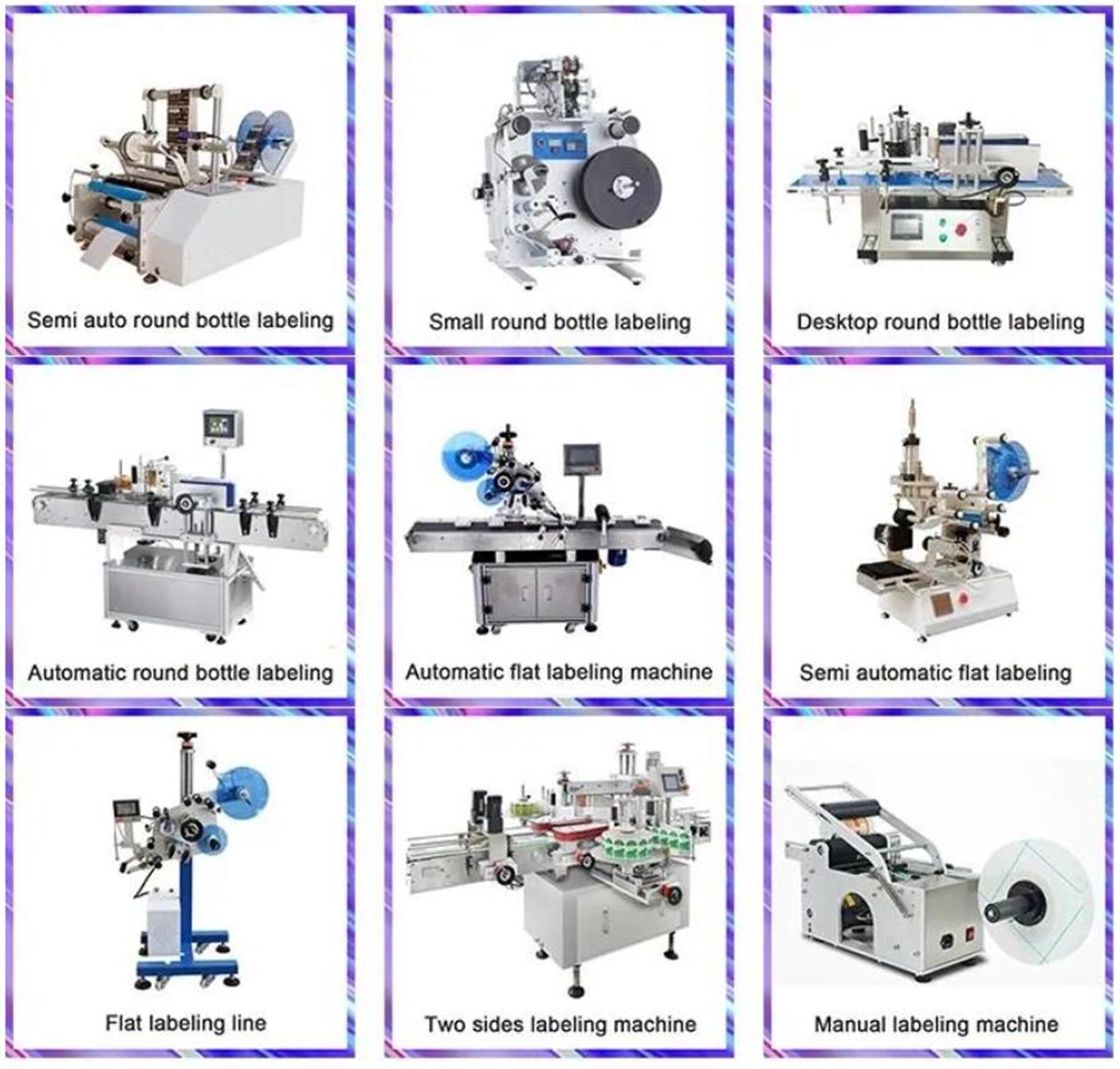
Improving Packaging Efficiency: Applications and Advantages of Fully Automatic Labeling Machines in Production Lines

Understanding Servo Capping Machines: The Core Logic of Precise Capping – Understand the Entire Working Process in Seconds
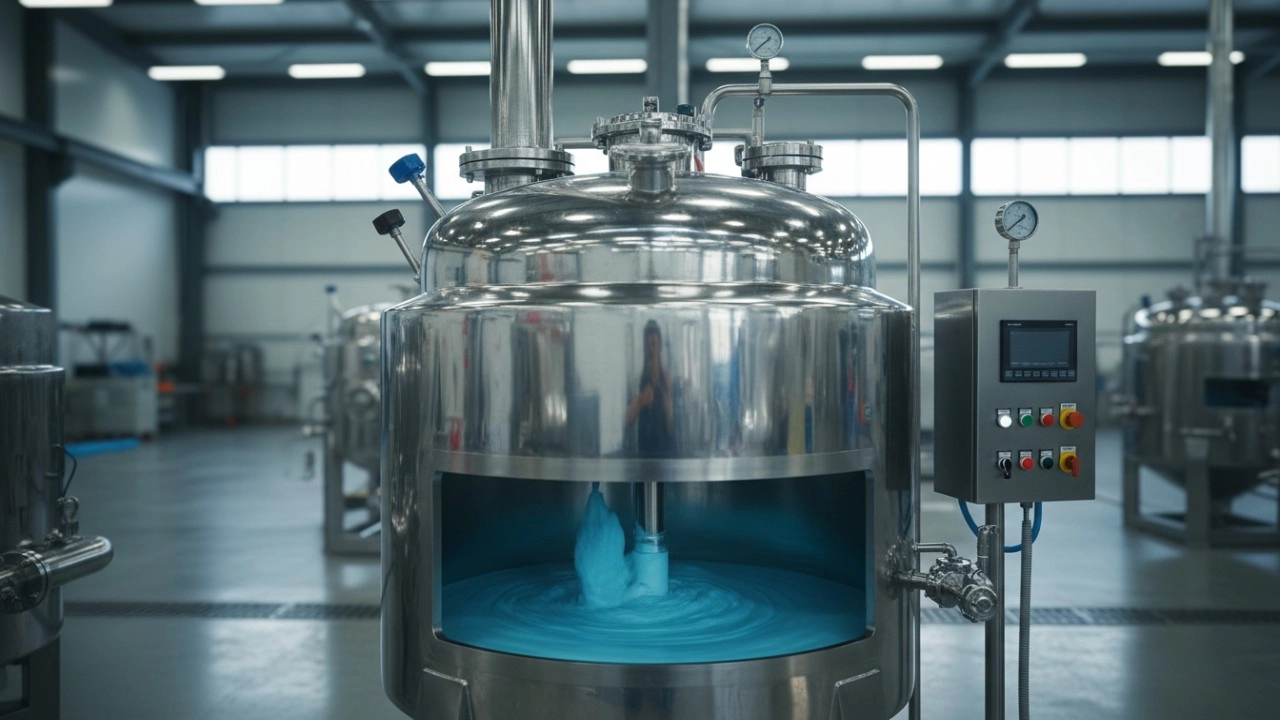
The Future of Industrial Agitation: 5 Smart Mixing Tank Technologies Changing the Game
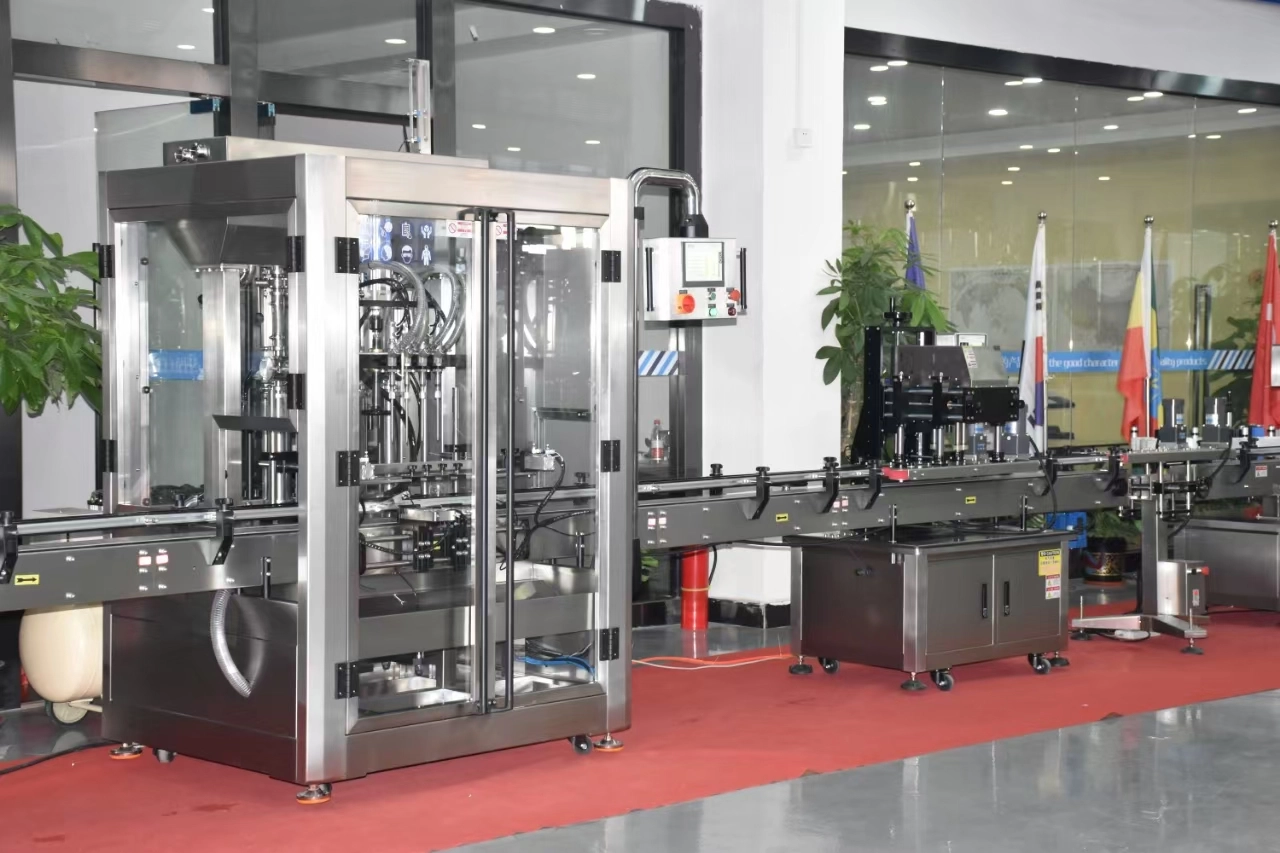
Gear pump filling machine vs. piston filling machine: Key differences broken down to avoid pitfalls in selection.
The Flip Cover Liquid Wash Mixing Homogenizing Tank
Is it possible to not have a heating function?
Of course, if your product's production process doesn't require heating and cooling functions, then you can just make it a single-layer pot.
Automatic Labeling Machine
Who are we?
Our headquarters is located in Guangzhou, Guangdong, China, and our factory is located in Yangzhou, Jiangsu. Our products are sold all over the world. We have approximately 50 employees in our company and factory.
Vacuum Emulsifying Machine
How does the vacuum homogenizer work?
The vacuum homogenizer's operating process revolves around four core steps: vacuum degassing, high-speed homogenization and emulsification, stirring and mixing, and temperature control. Through the coordinated operation of multiple systems, it achieves refined material processing. The following is its specific operating principle and process:
1. Pretreatment: Material feeding and vacuum environment establishment
Material preparation: First, add the basic materials, such as the oil phase (such as oils and waxes) and the aqueous phase (such as water and water-soluble ingredients), to their corresponding batching tanks or directly into the main emulsifier in sequence.
Evacuation: Activate the vacuum system (consisting of a vacuum pump, vacuum valve, etc.) to evacuate the interior of the emulsifier, creating a negative pressure environment (typically up to -0.09 MPa).
2. Core Process: Temperature Control (Heating/Cooling)
3. Core Process: Agitation and Mixing
Agitation Structure: Typically uses a "frame agitator + scraper" combination (for high-viscosity materials):
Through shearing, folding, and convection, the different materials are initially mixed and their stratification is broken down.
The PTFE scraper rotates closely against the pot wall, thoroughly scraping away any sticky material adhering to the pot wall, preventing localized overheating and residue, and ensuring zero dead zones.
4. Core Process: High-Speed Homogenization and Emulsification
Homogenizer Structure: A high-speed rotating homogenizer is installed at the bottom (or side) of the emulsifier, consisting of a rotor (with sharp teeth) and a stator (with fixed teeth). Working Principle: The rotor rotates at an extremely high speed, generating a strong centrifugal force that draws the material into the gap between the rotor and the stator. In this gap, the material is subjected to the triple effects of shear force, impact force, and turbulent force. The teeth of the rotor and stator quickly cut the material and generate high-frequency vibrations.
Film Packaging Machine
What can you buy from us?
RO Water Treatment、Vacuum Emulsifying Machine、Homogenizer Mixing Tank、Filling and Capping、labeling Machine、Packing Machine、Storage Tank,etc.
Automatic Capping Machine
What causes leakage or loose caps after capping?
Most likely, the capping torque parameters do not match the product characteristics. You can recalibrate the torque through the touch screen. If the problem persists, check whether the bottle clamp is too loose or whether there is any dimensional deviation in the cap.
Get in touch with FULUKE
If you have any comments or good suggestions, please leave us a message, later our professional staff will contact you as soon as possible.
You May Also Like
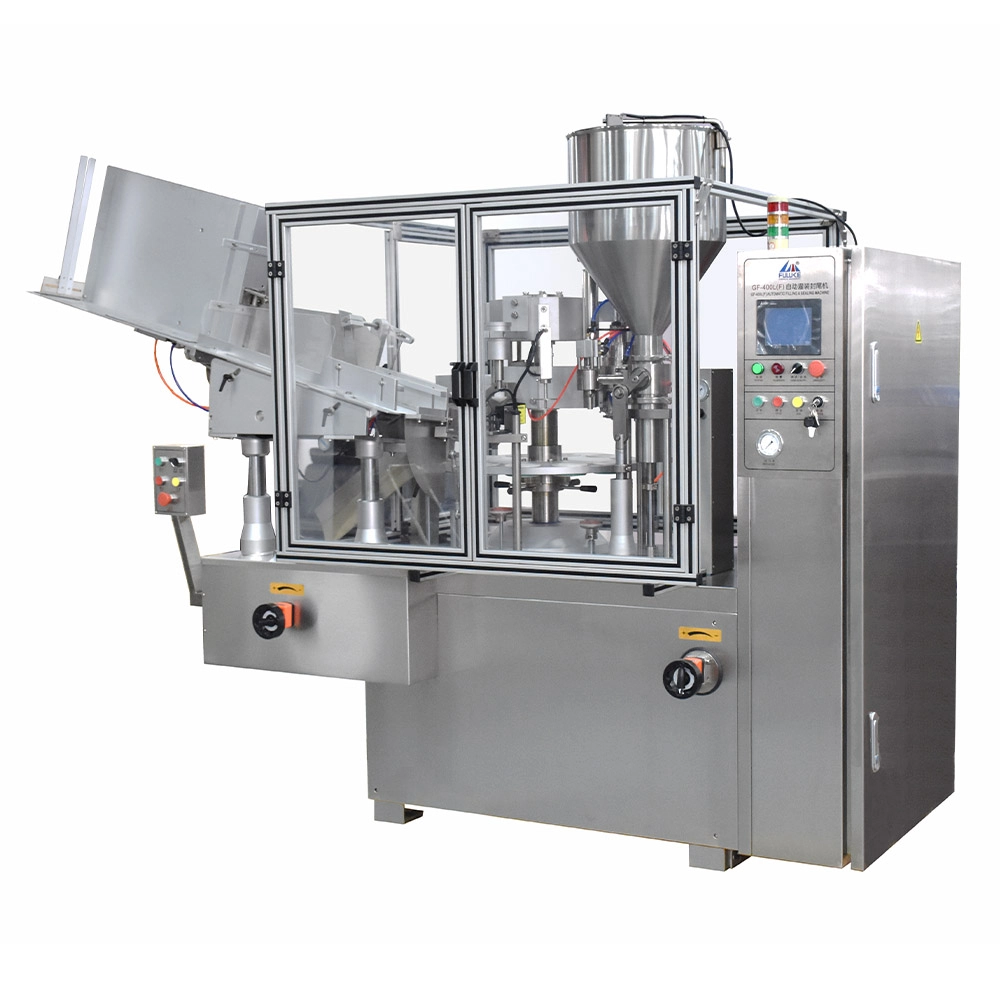
Automatic Tube Filling and Sealing Machine Toothpaste Sunscreen and Facial Cleanser Filling and Sealing Machine for Plastic and Aluminum-plastic Tube
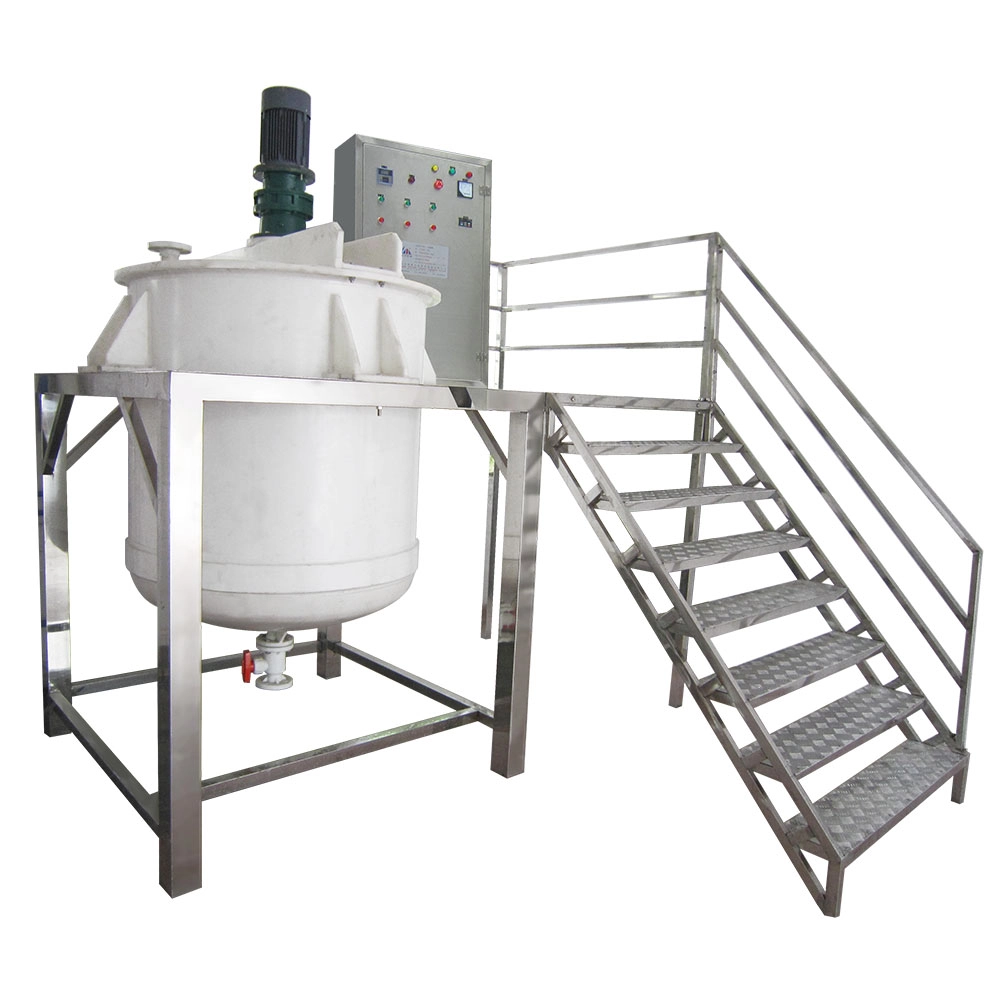
Polypropylene PP Mixing Tank Anti-Corrosion Mixer Reaction Kettle with Agitator Chemical Mixing Vessel
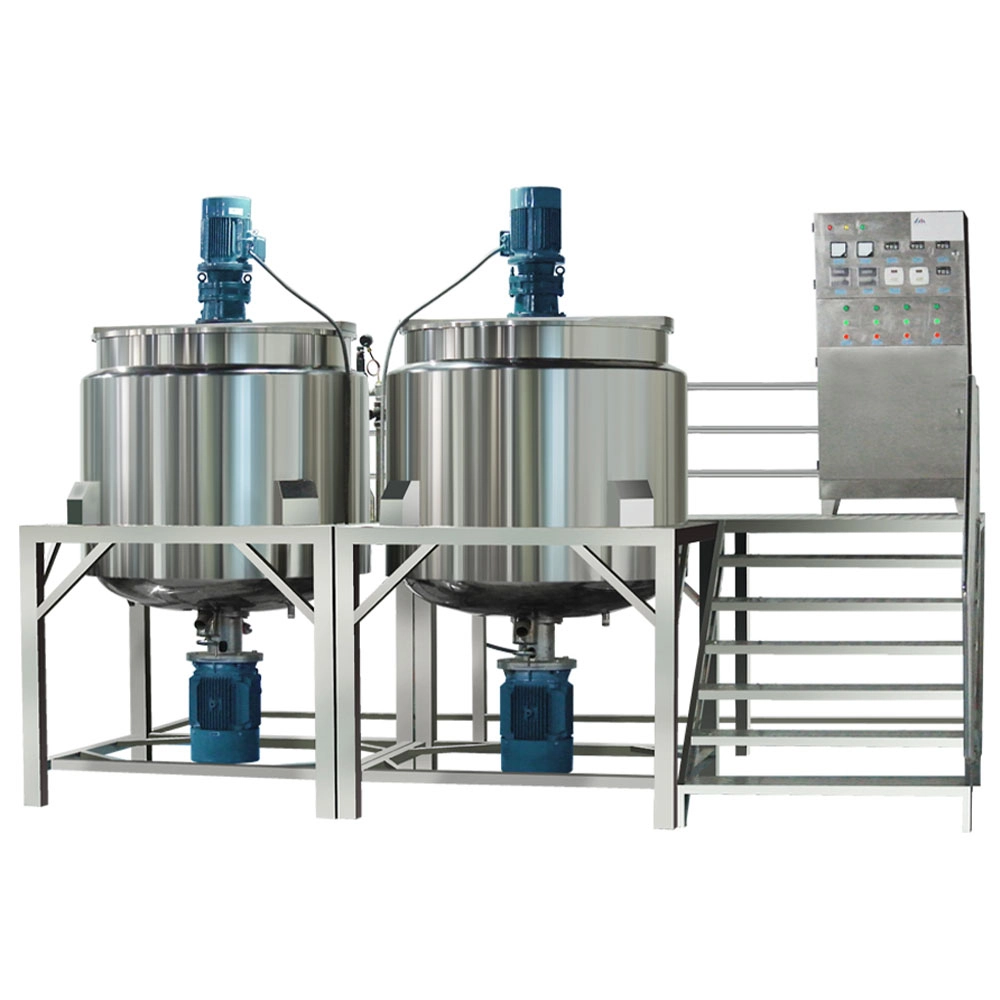
Flip Cover Multi-function Liquid Wash Mixing Tank Blender Liquid Detergent Mixer Homogenization Stirring Tank
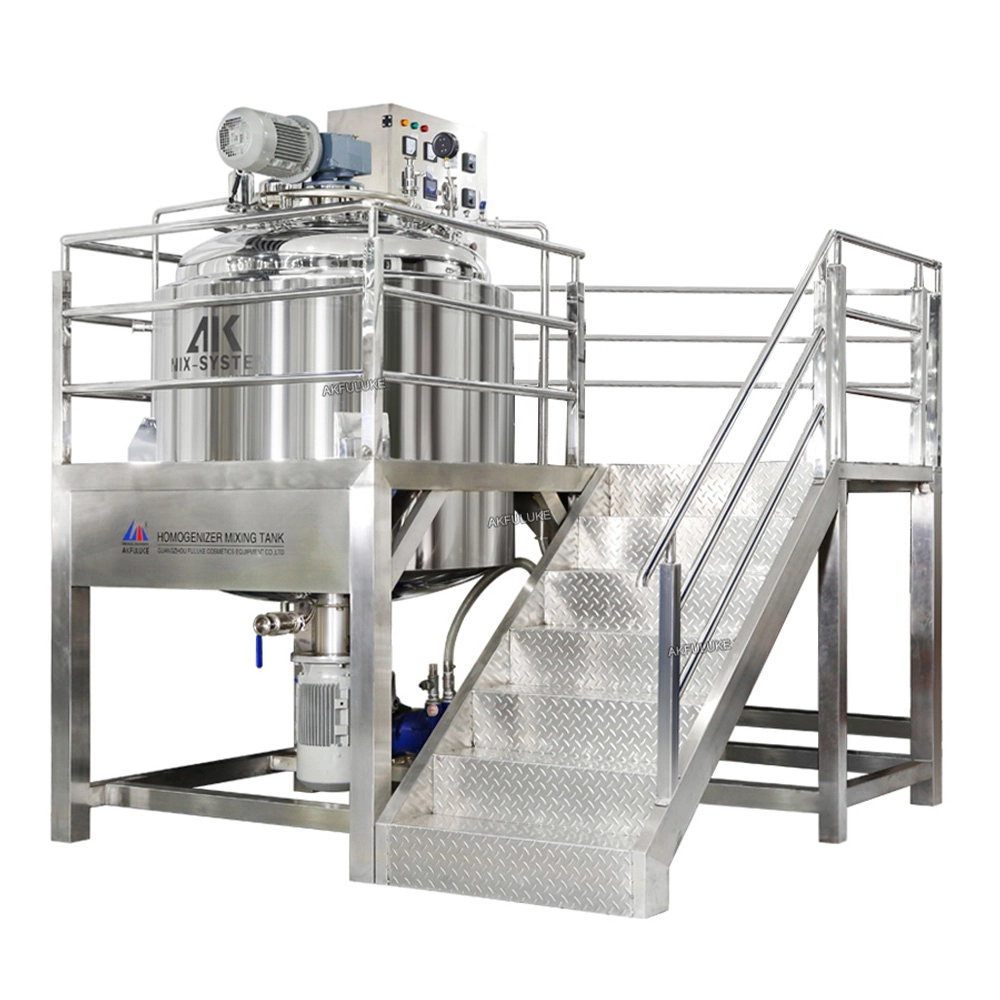
Stainless Steel Mixer Liquid Mixing tank with Agitator Homogenizing Mixing tank Vacuum Sealed Mixer Machine

A leading manufacturer specializing in advanced machinery and complete production lines for the cosmetics, food, pharmaceutical, and chemical industries worldwide.
Contact FULUKE
Facebook
Instagram
YouTube