
What quality checks are essential after filling?
- 1. How can I verify volumetric accuracy for low‑viscosity serums on a high‑speed rotary bottle filling machine without slowing the line?
- 2. What are the most reliable in‑line leak and seal integrity tests for aerosol cans, pump bottles, and pressurized cosmetic dispensers?
- 3. How do I detect and prevent particulate contamination and phase separation when filling emulsions (creams & lotions) on my cosmetic filling line?
- 4. Which cap torque and closure integrity controls should I apply after capping cosmetic jars and bottles to prevent leaks without damaging child‑resistant or tamper features?
- 5. When switching dispensers (pump to spray) or product families on the same cosmetic filling line, what changeover validation and cleaning checks prevent cross‑contamination?
- 6. Which in‑line visual inspection and camera systems best detect fill level, color shifts, and cap alignment for colored serums in dark glass bottles?
1. How can I verify volumetric accuracy for low‑viscosity serums on a high‑speed rotary bottle filling machine without slowing the line?
Problem: Low‑viscosity serums run fast and can mask subtle underfills/overfills at speed, causing regulatory noncompliance, customer complaints, and lost margin.
Actionable solution: Combine a servo‑driven volumetric filler with in‑line gravimetric verification. Use the rotary bottle filler’s servo dosing for repeatable volume control and pair it to an in‑line checkweigher or an in‑line mass/flow meter for 100% or high‑frequency sampling. For cosmetic serums, set a layered control strategy:
- Process control: use a servo or gear pump filler with closed‑loop feedback to maintain consistent stroke/flow under varying line loads and head pressures.
- In‑line verification: install a gravimetric checkweigher immediately after the filler. Gravimetric systems measure mass, not volume, so they automatically compensate for temperature and density shifts common with serums.
- Sampling plan & alarms: for very high speeds, use 100% checkweighing if budget permits; otherwise implement statistically driven sampling (e.g., sampling every nth bottle) with automatic line stop/reject when faults exceed a preset run length or rate of out‑of‑tolerance fills.
- Acceptance criteria: define fill tolerance in grams or milliliters based on product label claim and regulatory requirements (for many cosmetic fills a ±2–5% tolerance is a commercial norm, but set this according to your product and local regulations). Maintain calibration records per ISO 22716 (cosmetic GMP) or your internal SOPs.
Why this works: Gravimetric verification is robust against changes in viscosity and temperature that affect volumetric metering. Integrating the automatic filling machine, checkweigher, and SPC (statistical process control) dashboard keeps line speed and quality aligned.
2. What are the most reliable in‑line leak and seal integrity tests for aerosol cans, pump bottles, and pressurized cosmetic dispensers?
Problem: Cosmetic aerosols and pump dispensers can leak during transport or use. Traditional manual sample checks miss intermittent defects.
Recommended tests and how to apply them:
- Pressure/vacuum decay testing: For aerosol cans and pressurized containers, automated pressure decay systems detect micro‑leaks quickly on a conveyor. They are industry‑standard for packaging integrity because they’re non‑destructive and fast.
- Burst/overpressure testing: Useful on samples for design verification and to set safety margins, especially for aerosols.
- Vacuum chamber / bubble leak test: For pump bottles and sealed jars, a vacuum or partial‑pressure bubble test (machine immerses container or applies vacuum) reveals through‑seal leaks. This can be destructive for sampling; used primarily for validation and periodic checks.
- Torque & cap seal verification: Combine torque testers (inline or offline) with seal integrity tests to identify caps that are under‑ or over‑torqued causing leaks.
- Helium or tracer gas leak testing: For ultra‑sensitive applications (rare in cosmetics but used in high‑value products), tracer gas leak detection offers the highest sensitivity in lab validation.
Implementation tip: Use a layered approach—100% non‑destructive checks (pressure/vacuum decay) at line speed plus periodic destructive tests (burst, helium) as validation. Log results and link them to batch numbers for traceability in line with GMP guidance (ISO 22716 / EU Regulation 1223/2009).
3. How do I detect and prevent particulate contamination and phase separation when filling emulsions (creams & lotions) on my cosmetic filling line?
Problem: Particulates and phase separation ruin product aesthetics and stability. They often originate before filling (raw materials) or appear during filling from poor temperature control or mechanical agitation.
Prevention and detection strategy:
- Upstream controls: confirm raw material filtration and inline strainers before the pump or filler to remove unmixed solids. Regular particle monitoring of incoming raw batches (particle counters or microscopy) is vital for new suppliers.
- Process controls: hold emulsions at controlled temperatures and shear to maintain stability. In‑line homogenizers and proper shear profiles reduce droplet size and reduce separation risks.
- In‑line particle detection: install laser diffraction or light scattering particle detectors and high‑resolution camera inspection immediately after the filler. Vision systems can detect macro particles and color anomalies; laser sensors detect microdebris beyond human sight.
- Deaeration / vacuum tanks: remove entrained air before filling to reduce foaming and oxidation which contribute to instability.
- Sampling & stability testing: implement accelerated and real‑time stability tests (centrifuge tests, freeze/thaw cycles) during product development; on‑line, take periodic microbiological and physical stability samples per ISO 21149/ISO 17516 guidance for cosmetics.
Note: Always coordinate particulate limits with preservative efficacy and microbiological controls per ISO 22716 and internal quality standards.
4. Which cap torque and closure integrity controls should I apply after capping cosmetic jars and bottles to prevent leaks without damaging child‑resistant or tamper features?
Problem: Improper torque causes leaks, broken closures, or failed tamper evidence. Torque specs vary by closure type, liner, and container material.
Practical controls:
- Define torque targets during packaging validation: Test representative batches to establish minimum and maximum torque that guarantees seal integrity while preserving tamper and child‑resistant features.
- Use automated torque monitoring: Inline torque heads with closed‑loop feedback give consistent torque and record values per bottle. For high‑value cosmetics, 100% torque measurement is advised.
- Torque distribution and SPC: Monitor torque distribution rather than average torque—track skew, outliers, and trends. Implement alarms for drift and automatic diversion of off‑spec units.
- Compatibility and liner checks: Confirm the liner material and sealing surface are matched. Use peel tests and seal integrity checks during validation to confirm the liner compresses correctly at the target torque.
- Consider non‑mechanical sealing methods for fragile closures: ultrasonic welding, induction sealing (where compatible), or tamper bands can provide redundancy for leak prevention without excessive torque.
Regulatory note: Record torque and closure test results in batch records per ISO 22716 to maintain traceability and to support customer or regulatory inquiries.
5. When switching dispensers (pump to spray) or product families on the same cosmetic filling line, what changeover validation and cleaning checks prevent cross‑contamination?
Problem: Shared fillers and piping risk cross‑contamination between products with different actives, fragrances, or colorants. Inadequate changeover can lead to off‑spec batches and product recalls.
Validated changeover sequence:
- Standardized changeover SOP: document step‑by‑step disassembly, flush sequence, and reassembly procedures. Include expected time, responsible personnel, and required tools.
- Cleaning regimen: use a defined CIP (clean‑in‑place) program where possible; otherwise use manual cleaning with documented detergents and contact times. For fragrances and oils, use solvent or surfactant phases followed by water rinse/CIP until residues are removed.
- Cleaning verification: use ATP swabs, TOC (total organic carbon) measurements, or analytical HPLC checks for critical actives/colorants to verify residuals are below preset limits. Microbial swabs are necessary when microbiological risk exists.
- Flush validation: perform “blank” fills (flush bottles) and analyze first N bottles by sensory (odor, color) and analytical methods. Define acceptance limits and record results.
- Rinse & hold times: after cleaning, implement a short hold/run of clear product or solvent to ensure the line is free of residuals before running production product.
Why validation matters: For cosmetics, cross‑contamination can cause allergic reactions or brand damage. Maintain records and acceptance criteria to comply with GMP expectations (ISO 22716).
6. Which in‑line visual inspection and camera systems best detect fill level, color shifts, and cap alignment for colored serums in dark glass bottles?
Problem: Dark glass reduces contrast and masks fill level and color variations. Colored serums with subtle hue differences are especially challenging.
Solutions and configuration tips:
- Lighting strategy: use backlighting for transparent containers; for dark glass use coaxial lighting or ring lights with high intensity to highlight liquid meniscus and cap alignment. Multi‑angle lighting reduces false rejects.
- Multispectral imaging: cameras that capture visible plus near‑infrared bands can reveal color differences and fill level contrasts that RGB cameras miss. This is particularly useful for dark or tinted containers.
- High‑resolution, high‑speed cameras with line scan options: line‑scan cameras give continuous profile data at high speeds on rotary bottle filler lines, improving detection of fill level and cap tilt.
- AI‑based vision inspection: deploy trained convolutional neural networks (CNNs) to learn acceptable variance for fill level, color hue, and cap placement. AI systems reduce false rejects by learning real factory variability, but require a robust training dataset that includes lighting and product variation.
- Integration with reject and traceability systems: link camera output to the line PLC and MES for immediate rejection and batch trace records. Store images for nonconforming product investigations per GMP practice.
Practical note: Validate camera systems under production speed and normal lighting. Perform a false‑reject/fail analysis during commissioning and tune models/thresholds to balance yield and risk.
Concluding summary — advantages of these post‑fill quality checks and choosing the right bottle filling machine and inspection systems:
Implementing these six targeted post‑fill checks—gravimetric fill verification, pressure/vacuum leak testing, particle control and stability monitoring, torque and closure integrity controls, validated changeover/CIP programs, and advanced vision inspection—delivers measurable benefits: reduced product loss and recalls, improved first‑pass yield, regulatory compliance with ISO 22716 and regional cosmetic regulations (EU Regulation 1223/2009, applicable FDA guidance), stronger brand protection, and clearer batch traceability. Selecting the correct bottle filling machine technology (servo‑driven piston or peristaltic pump, rotary filler, automatic filling machine) and integrating checkweighers, leak detectors, and AI vision systems is essential to convert these checks into reliable daily practice.
For practical line audits, equipment matching (piston vs peristaltic vs gravimetric filler), or a customized quote for a complete cosmetic filling line (filler, checkweigher, capping machine, and in‑line inspection), contact us for a detailed consultation and quote: www.fulukemix.com or email flk09@gzflk.com.

Understanding Servo Capping Machines: The Core Logic of Precise Capping – Understand the Entire Working Process in Seconds
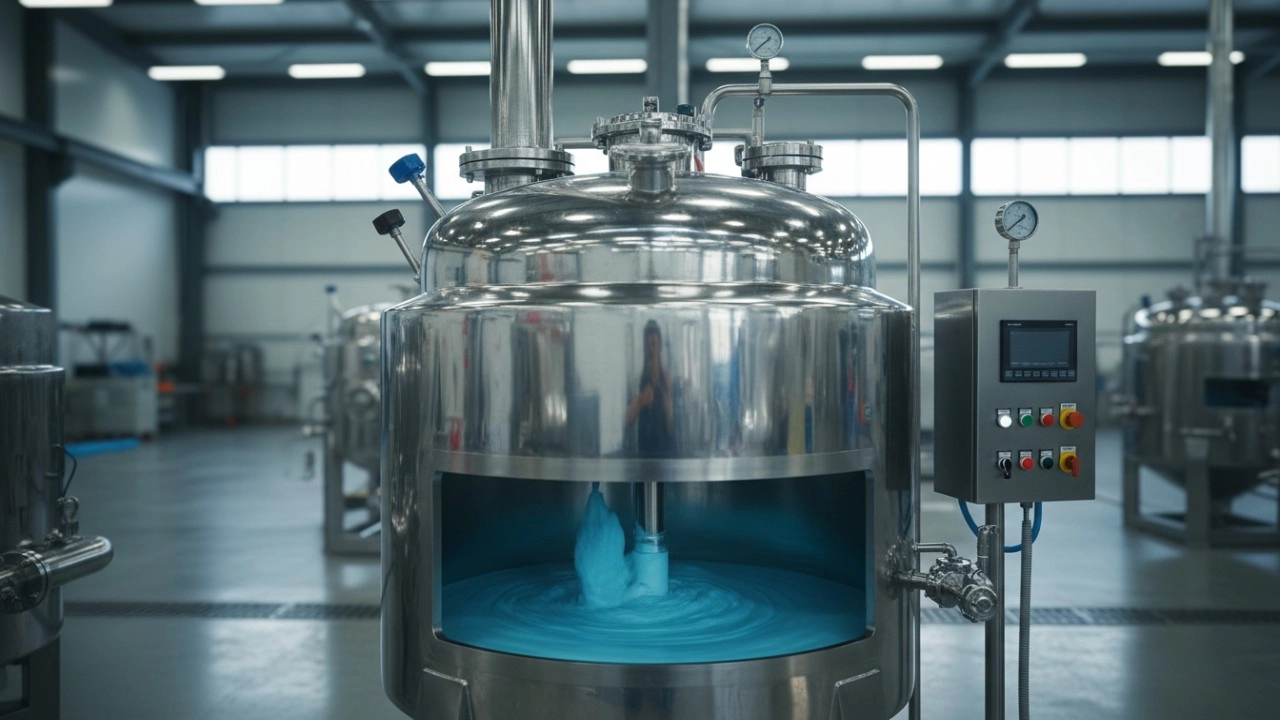
The Future of Industrial Agitation: 5 Smart Mixing Tank Technologies Changing the Game
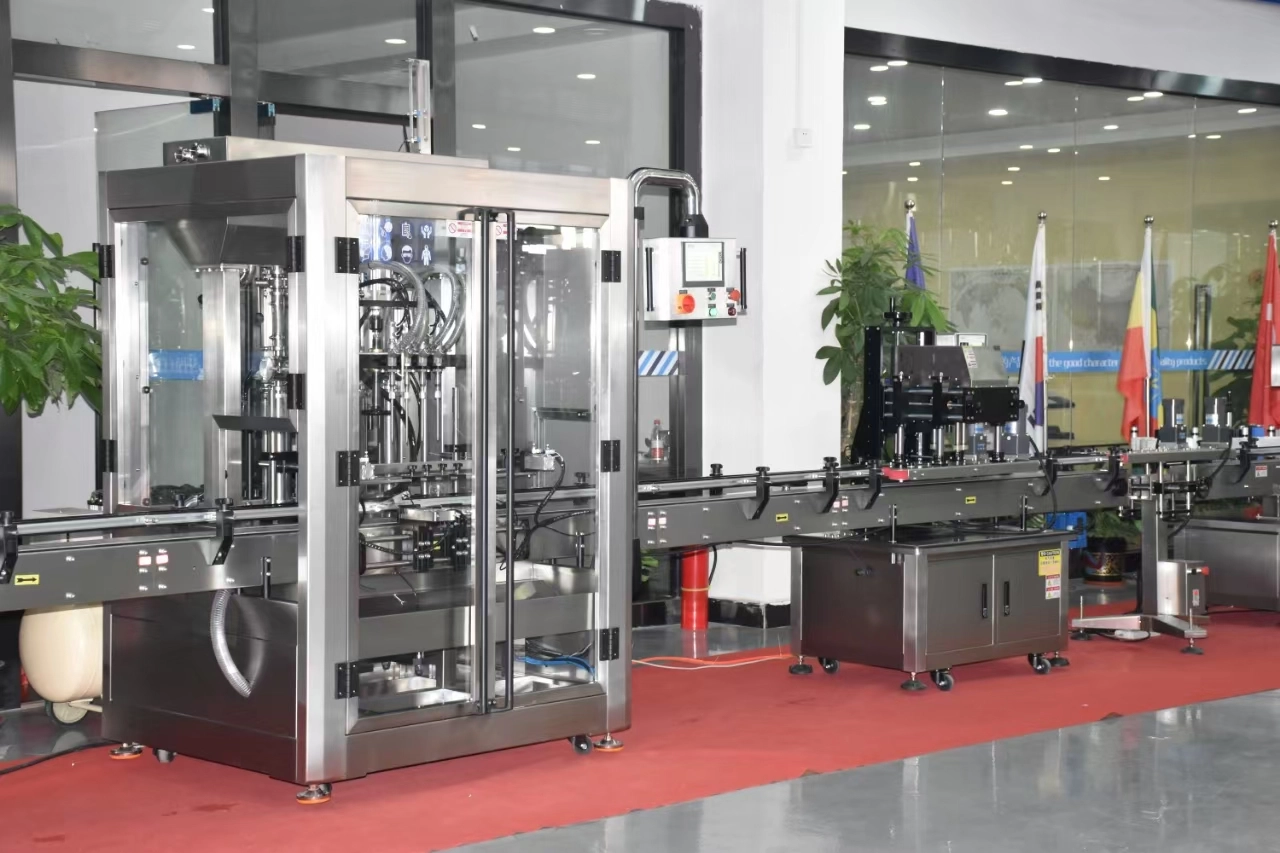
Gear pump filling machine vs. piston filling machine: Key differences broken down to avoid pitfalls in selection.
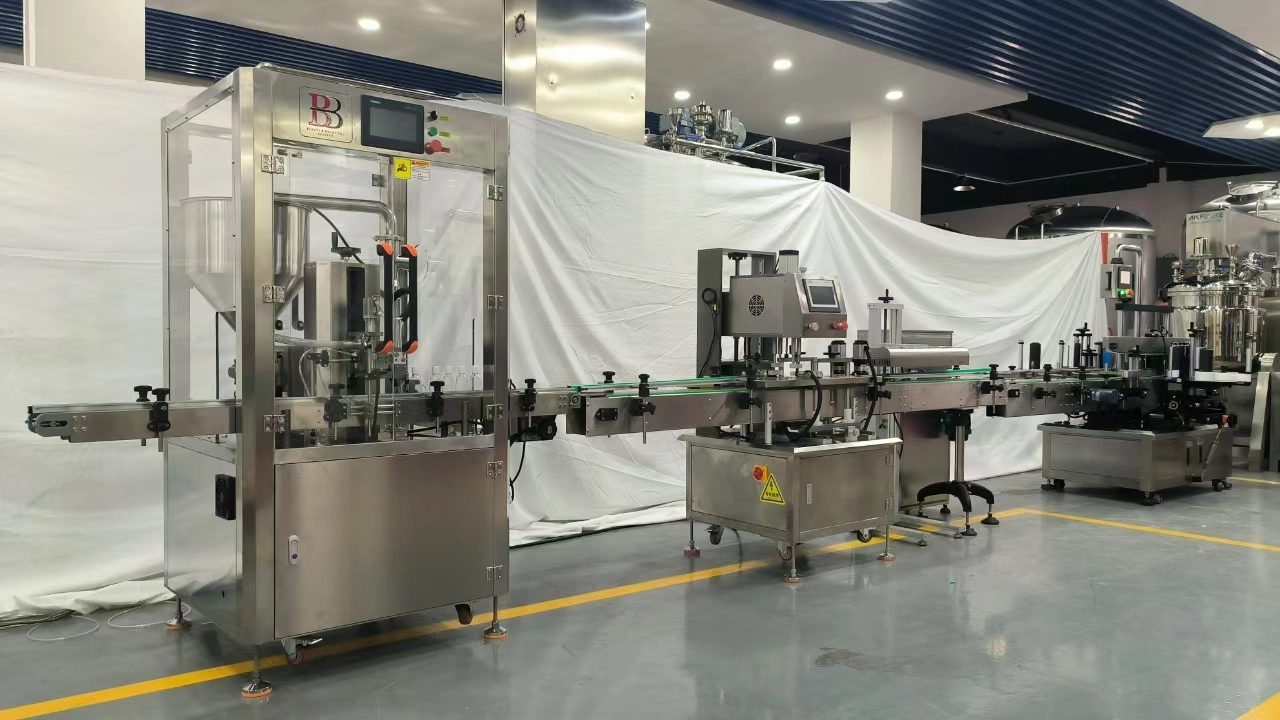
Understand the working principle of a servo gear pump filling machine!
Inkjet Printing Machine
Who are we?
Our headquarters is located in Guangzhou, Guangdong, China, and our factory is located in Yangzhou, Jiangsu. Our products are sold all over the world. We have approximately 50 employees in our company and factory.
FAQs
Which industries does FULUKE serve besides cosmetics?
The Flip Cover Liquid Wash Mixing Homogenizing Tank
Flip cover homogenizing mixing tank lacks a vacuum system. How should bubbles generated during mixing be handled?
Open mixing tank certainly can't remove air through vacuum like sealed equipment. However, if bubbles are affecting product quality, the following methods can be used to improve the process:
Process Adjustment: Reduce the mixing speed to prevent excessive air from being drawn into the material by high-speed turbulence. If homogenization is required, proceed in stages to reduce bubbles generated by a single shearing operation.
Assisted Degassing: For materials that can be heated, increase the temperature appropriately to reduce viscosity and promote bubble bubbling. Alternatively, allow the material to rest for a period of time after mixing to allow bubbles to dissipate naturally before proceeding to the next step.
Suitable Applications: This equipment is more suitable for products that are not sensitive to bubbles. For precision products requiring bubble-free production, a model with a vacuum function is recommended.
Automatic Tube Filling and Sealing Machine
Can you customize the machine?
Of course, we provide customized services according to customer needs.
RO Water Treatment
Who are we?
Our headquarters is located in Guangzhou, Guangdong, China, and our factory is located in Yangzhou, Jiangsu. Our products are sold all over the world. We have approximately 50 employees in our company and factory.
Get in touch with FULUKE
If you have any comments or good suggestions, please leave us a message, later our professional staff will contact you as soon as possible.
You May Also Like
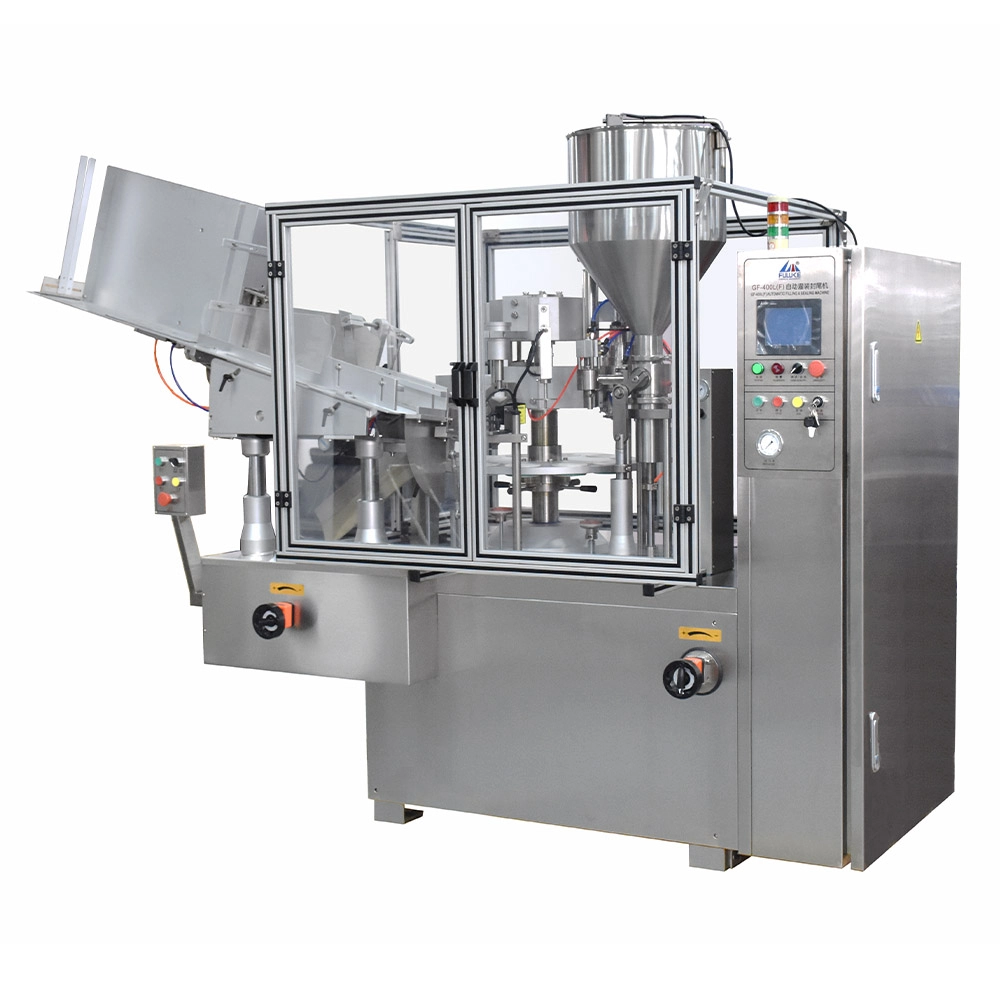
Automatic Tube Filling and Sealing Machine Toothpaste Sunscreen and Facial Cleanser Filling and Sealing Machine for Plastic and Aluminum-plastic Tube
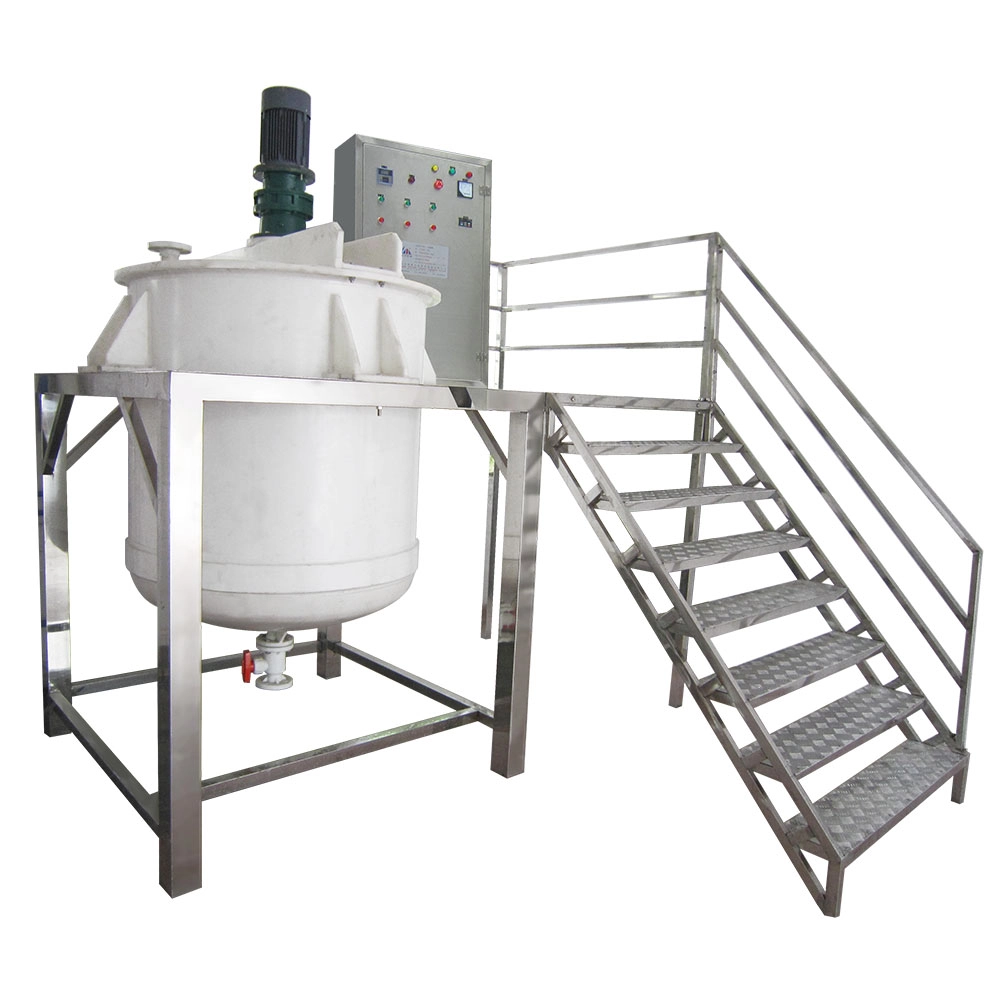
Polypropylene PP Mixing Tank Anti-Corrosion Mixer Reaction Kettle with Agitator Chemical Mixing Vessel
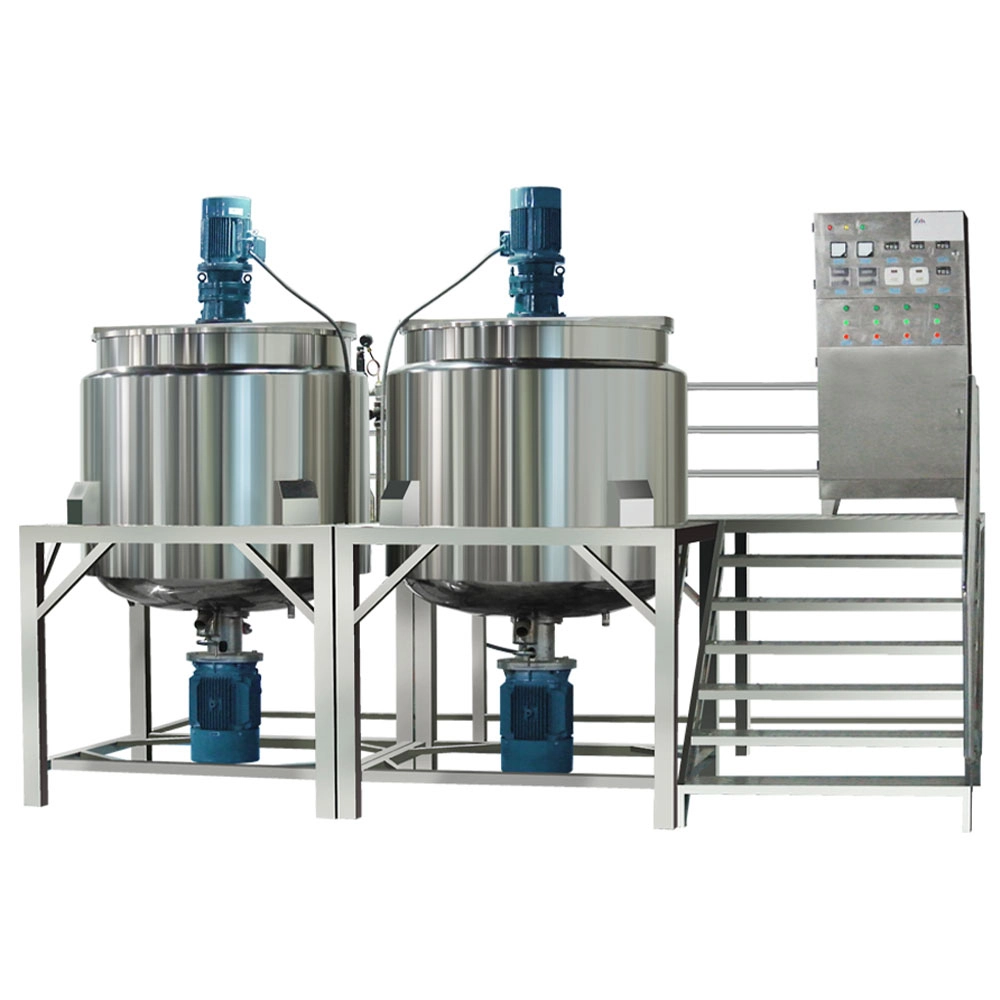
Flip Cover Multi-function Liquid Wash Mixing Tank Blender Liquid Detergent Mixer Homogenization Stirring Tank
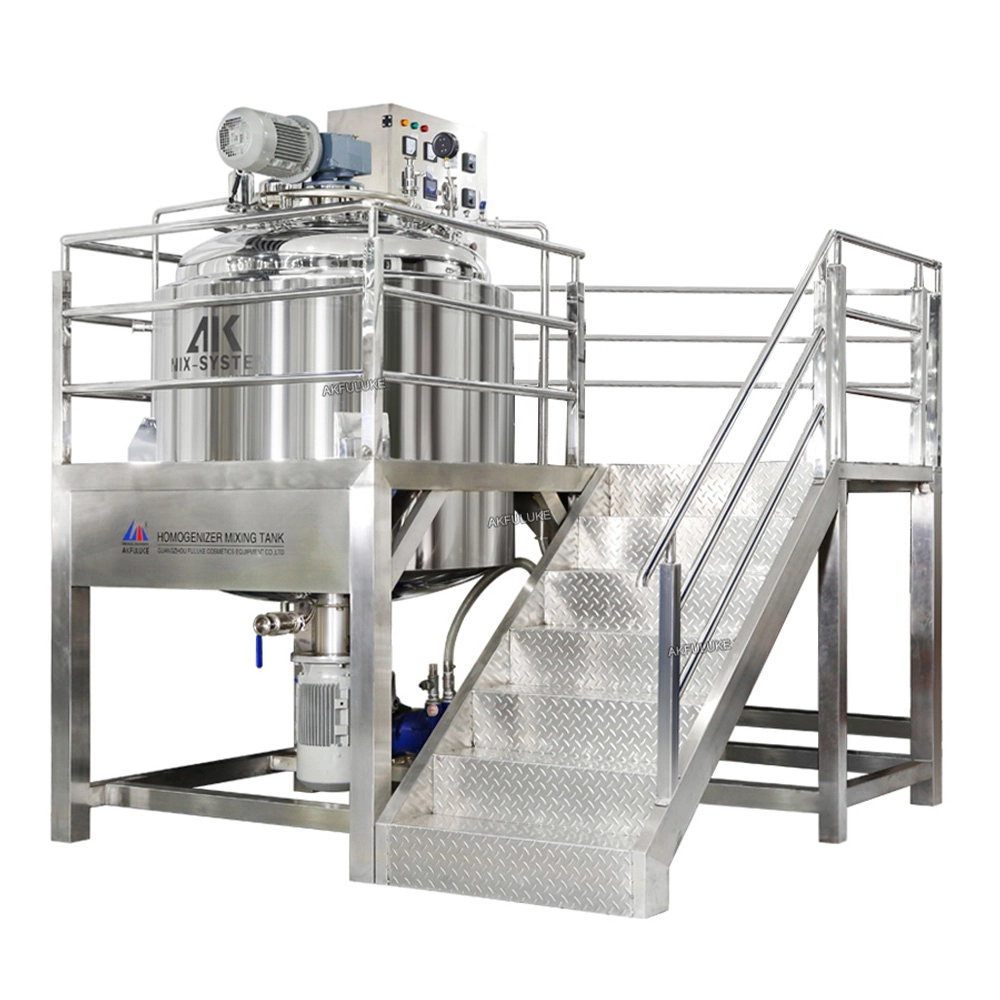
Stainless Steel Mixer Liquid Mixing tank with Agitator Homogenizing Mixing tank Vacuum Sealed Mixer Machine

A leading manufacturer specializing in advanced machinery and complete production lines for the cosmetics, food, pharmaceutical, and chemical industries worldwide.
Contact FULUKE
Facebook
Instagram
YouTube