
How to estimate ROI for a bottle filling machine?
- 1) How do I calculate a realistic ROI for a bottle filling machine that handles viscous creams and serums (include sample calculation)?
- 2) How should I include Total Cost of Ownership (TCO) — spare parts, service, consumables and quality costs — rather than only comparing purchase price?
- 3) For cosmetics with variable viscosities and shear-sensitive actives, which filling technologies reliably minimize product damage and ensure accuracy?
- 4) How do I quantify changeover and SKU flexibility costs — and what are realistic changeover times to expect for cosmetic bottles (including capping)?
- 5) What validation, documentation and GMP requirements (ISO 22716) should be included in the purchase so the machine is audit-ready for cosmetics?
- 6) What financing, leasing or tax strategies reliably improve payback on filling equipment purchases for small cosmetic brands?
- Concluding summary: advantages of investing in a modern bottle filling machine for cosmetics
Buying a bottle filling machine for cosmetic production demands more than comparing quotes. Buyers need a reproducible ROI method, realistic throughput and quality numbers, and compliance checks for ISO 22716 GMP. Below are six specific, frequently asked long-tail questions that lack in-depth answers online, followed by detailed professional answers you can apply to your plant.
1) How do I calculate a realistic ROI for a bottle filling machine that handles viscous creams and serums (include sample calculation)?
Why this matters: Many cosmetic lines switch from semi-manual filling to automated piston or gear pumps for viscous and shear-sensitive products. Vendors often show best-case ROI. You need a reproducible method that separates guaranteed cost-savings from potential revenue upside.
Step-by-step ROI framework (usable for any filling technology—rotary, linear, piston, volumetric):
- Define firm baseline metrics for your current operation (12 months): annual production volume (bottles/year), current labor cost allocated to filling, product giveaway (%) and scrap, average downtime (hours/year), changeover time per SKU (minutes), rejection rate, packaging and cap costs, and current fill accuracy (mL tolerance).
- Estimate machine performance from vendor data and factory trials: validated throughput (bottles/hour), expected fill accuracy (% or mL variance), target reduction in giveaway, typical changeover time for your bottle/cap family, CIP time (if required), and required utilities.
- Compute annual cash benefits: labor savings + reduced product giveaway cost + reduced rejects & rework + lower packaging waste + incremental throughput enabling additional sales (only if you have confirmed demand).
- Compute annual incremental costs: depreciation (or lease), annual service & spare parts, validation / qualification cost (IQ/OQ/PQ for cosmetics if needed), utility increases, and consumables (pump seals, tubing).
- ROI formula: Annual Net Benefit = Annual Cash Benefits - Annual Incremental Costs. ROI (%) = Annual Net Benefit / Total Investment Cost * 100. Payback Period (yrs) = Total Investment / Annual Net Benefit.
Sample conservative calculation (realistic assumptions for small-to-mid cosmetic contract manufacturer):
- Annual production: 1,000,000 bottles/year
- Current filling labor: 6 operators at $18,000/year = $108,000/year
- Current product giveaway & scrap: 2.0% (20,000 bottles/year). Product cost per bottle (formulation only): $1.50
- Chosen equipment: automatic piston filler (linear) with expected reduction in operators to 2 and giveaway to 0.5%
- Machine capex: $120,000 (mid-range piston/linear filler for viscous cosmetics). Annual service & spares: 8% of capex = $9,600. Extra utilities & consumables: $3,000/year. Validation & changeover optimization first year: $5,000 one-time.
Compute savings and costs:
- Labor savings: reduce from 6 to 2 operators => 4 operators saved => 4 * $18,000 = $72,000/year
- Product giveaway reduction: from 2.0% to 0.5% => net 1.5% improvement => 15,000 bottles saved/year * $1.50 = $22,500/year
- Reduced rework/quality costs (conservative): $8,000/year
- Total annual benefits = $72,000 + $22,500 + $8,000 = $102,500
- Annual incremental costs = service $9,600 + utilities $3,000 = $12,600 (exclude one-time validation)
- Annual Net Benefit = $102,500 - $12,600 = $89,900
- ROI = $89,900 / $120,000 = 74.9% (annual); Payback ≈ 1.34 years
Notes and sensitivity checks:
- Exclude speculative sales uplift unless you have confirmed orders or validated demand.
- Perform a sensitivity table for ±20% in labor savings, giveaway reduction and capex to see payback range (common industry practice).
- Include tax depreciation and financing cost: if you lease or finance, include interest & lease payments in incremental costs; tax depreciation will change net cash benefit after-tax.
2) How should I include Total Cost of Ownership (TCO) — spare parts, service, consumables and quality costs — rather than only comparing purchase price?
Why this matters: Many buyers focus on purchase price but long-term TCO frequently doubles small-capex advantages. Cosmetic formulations (viscous creams, oils, suspensions) accelerate wear on seals, pumps and valves and increase cleaning costs.
p>Essential TCO line items to quantify (annualized):
- CapEx amortized (straight-line over expected useful life, typically 7–10 years for filling equipment in cosmetics).
- Planned maintenance & service contracts (typical service contracts are 5–10% of capex per year for medium-complexity machinery; high-speed rotary lines may be higher).
- Unplanned maintenance and spare parts (estimate based on vendor MTBF or similar lines in your factory; for viscous products expect higher wear on seals and pump diaphragms—budget higher frequency).
- Cleaning & validation costs: operator time and CIP cycles (if CIP is implemented) and chemicals. For cosmetic non-sterile lines, ISO 22716 GMP-compatible clean regimes are needed; budget validation (IQ/OQ/PQ) costs in Year 1.
- Consumables: gaskets, nozzles, tubing, PLC batteries, filtration cartridges (if present).
- Utilities: compressed air, power, steam (if used), and water for CIP.
- Quality and regulatory costs: incoming inspection, batch records, and rework/rejects reduction benefits—offset against costs.
How to apply: ask vendors for realistic mean time between failures (MTBF) and cost examples for common wear parts. Insist on a 12-month spare parts list with prices. Convert downtime risk into lost production cost: (line throughput bph × selling margin per bottle × expected downtime hours/year) to capture risk-adjusted TCO.
3) For cosmetics with variable viscosities and shear-sensitive actives, which filling technologies reliably minimize product damage and ensure accuracy?
Why this matters: Many cosmetic serums and creams contain shear-sensitive active ingredients or suspended particles; the wrong pump can shear actives, separate emulsions or cause air entrainment.
Technology guidance (practical):
- Piston/pump fillers (positive displacement) — best for high-viscosity creams, lotions and shear-sensitive formulas because they handle thicker fluids with low shear and provide excellent volumetric accuracy (typical accuracy ±0.5–1.5% by volume depending on setup).
- Gear or progressive cavity pumps — good for medium- to high-viscosity products with suspended solids; lower shear than some centrifugal pumps but ensure pump materials (SS316, food-grade seals) compatible with cosmetics and actives.
- Peristaltic pumps — excellent for shear-sensitive serums and low-to-medium viscosity liquids with minimal contamination risk; tubing wear and cost must be considered (higher consumable replacement frequency).
- Volumetric flow meters and mass flow (Coriolis) control — for precise dosing and recipe control on multi-formula lines; Coriolis meters give weight-based accuracy and compensate for density variation (useful for concentrates or temperature-sensitive formulas).
- Specialized nozzle design and gentle filling strategies — submerged or low-drop filling heads, anti-foam venting, and adjustable fill speeds to minimize turbulence.
Practical checks at factory acceptance testing (FAT): request a process demonstration using your actual formulations and bottles. FAT must include a run of at least 15–30 minutes at target speed, validation of fill accuracy, and sampling for product integrity (no air bubbles, no separation). Document nozzle splash, foam formation, and sample weights.
4) How do I quantify changeover and SKU flexibility costs — and what are realistic changeover times to expect for cosmetic bottles (including capping)?
Why this matters: Cosmetic brands often run small batches and many SKUs. Changeover time is a direct productivity drain and increases per-unit cost for short runs.
Breakdown of changeover cost per SKU:
- Direct labor for changeover (number of technicians × hourly wage × changeover minutes).
- Downtime opportunity cost = lost production during changeover (bottles/hour × margin per bottle × downtime hours).
- Material scrap from initial purge or setup runs (bottles or fill discarded to waste during stabilization).
- Cleaning and re-validation time (if the new SKU requires different product contact parts or emulsions must be flushed).
Typical industry benchmarks (cosmetics lines):
- Quick-change linear fillers with modular nozzles and stored recipes: changeover often 10–30 minutes for nozzle & recipe change (excluding cleaning).
- Rotary high-speed lines with tool-less change parts: 30–90 minutes including capping turret change and minor mechanical adjustments; full format changeover including turret inserts may take 2–4 hours.
- If CIP is required for full formula change (e.g., oil-based to water-based): CIP + validation can be several hours to a day depending on complexity.
How to quantify: measure your current average SKU run length (bottles) and the frequency of changeovers/month. Compute current changeover cost per month and compare with expected machine times. Example formula:
Changeover Cost = (Changeover Time in hrs × Line Throughput bph × Margin per bottle) + (Labor cost for changeover) + (Average purge scrap cost).
When requesting quotes, demand cycle-time breakdowns: time to remove/insert format parts, time to change recipe in PLC, and number of operators required. Negotiate inclusion of quick-change kits or modular chucks in the purchase price to lower TCO.
5) What validation, documentation and GMP requirements (ISO 22716) should be included in the purchase so the machine is audit-ready for cosmetics?
Why this matters: Cosmetic manufacturing often must follow ISO 22716 Good Manufacturing Practices (GMP for cosmetics) for quality and regulatory traceability. Machines must support documented batch records, cleanability and traceability.
Minimum documentation and validation items to demand from the vendor:
- Design & materials declaration (contact parts: SS316L or equivalent, FDA/USP-class seals).
- IQ/OQ/PQ templates (Installation Qualification, Operational Qualification, Performance Qualification) specific to your process and formulations. Suppliers should provide configurable protocols that reference acceptance criteria for accuracy (±X mL or ±X%), throughput, and cleaning effectiveness.
- Electrical & software documentation: PLC I/O list, HMI recipe backup and user access controls, and data logging options for batch records (timestamped, operator ID).
- Cleaning & CIP validation support: recommended cleaning agents, cycle parameters, and residue limits if applicable. Provide documented results or reports if CIP systems were validated on similar products.
- Spares list & recommended stock levels for critical wear parts to support ISO 22716 requirements for continuity of supply.
Include acceptance criteria in the purchase contract: a FAT with your product, documented IQ/OQ/PQ completion at site, and a warranty period covering process failure caused by equipment defects. If you plan to produce regulated or High Quality products, insist on Coriolis mass flow meters or in-line checkweighers to auto-document fill weight for batch records.
6) What financing, leasing or tax strategies reliably improve payback on filling equipment purchases for small cosmetic brands?
Why this matters: Upfront capex can strain cashflow, and different financing options materially change after-tax ROI and payback.
Practical options and their effect:
- Operating lease (Opex treatment): lower upfront cash, monthly payments; often keeps balance sheet lighter but increases total cash outflow. Good if you need rapid capacity without tying capital.
- Capital lease or purchase (CapEx): higher initial outlay but allows tax depreciation (accelerated depreciation benefits in some jurisdictions) and potential investment tax credits—improves after-tax ROI. Consult your tax advisor for local incentives (R&D credits, equipment investment credits may apply in some regions).
- Vendor financing: many vendors offer in-house financing with deferred payments or step payments aligning with ramp-up; sometimes bundled with service/extended warranty.
- Grants and SME equipment financing: local government industrial support programs sometimes subsidize productivity-enhancing equipment—check national or regional SME grants (common in EU and some APAC regions).
How to include financing in ROI: replace simple CapEx with annualized payments (lease or loan payments including interest). Calculate net present value (NPV) of payments vs. expected annual benefits for multi-year ROI. Always run after-tax scenarios since depreciation and tax treatment materially change the net benefit.
Example: if $120,000 machine is financed at 6% over 5 years, annual payment ≈ $27,968. Compare annual net benefit in the earlier sample ($89,900) against annual payments plus operating costs to compute net yearly cash advantage and payback over the financed term.
Concluding summary: advantages of investing in a modern bottle filling machine for cosmetics
Investing in an appropriate bottle filling machine (piston, gear, peristaltic, or rotary depending on scale) brings measurable advantages: faster and more predictable throughput, reduced labor and giveaway, improved fill accuracy and batch traceability, and better compliance with ISO 22716 GMP. When you quantify Total Cost of Ownership — including spare parts, service contracts, cleaning, and validation — and use a conservative ROI framework (labor savings + product savings - incremental costs), payback periods for many small-to-mid cosmetic lines commonly fall between 1–3 years. Always demand FAT with your formulations, validated IQ/OQ/PQ protocols, vendor-provided MTBF/spares data, and include financing or leasing scenarios in your ROI modelling to find the best cashflow fit.
For a customized ROI worksheet, real-world production trials with your serums and creams, or a formal quote and factory acceptance test, contact us for a quote at www.fulukemix.com or email flk09@gzflk.com.
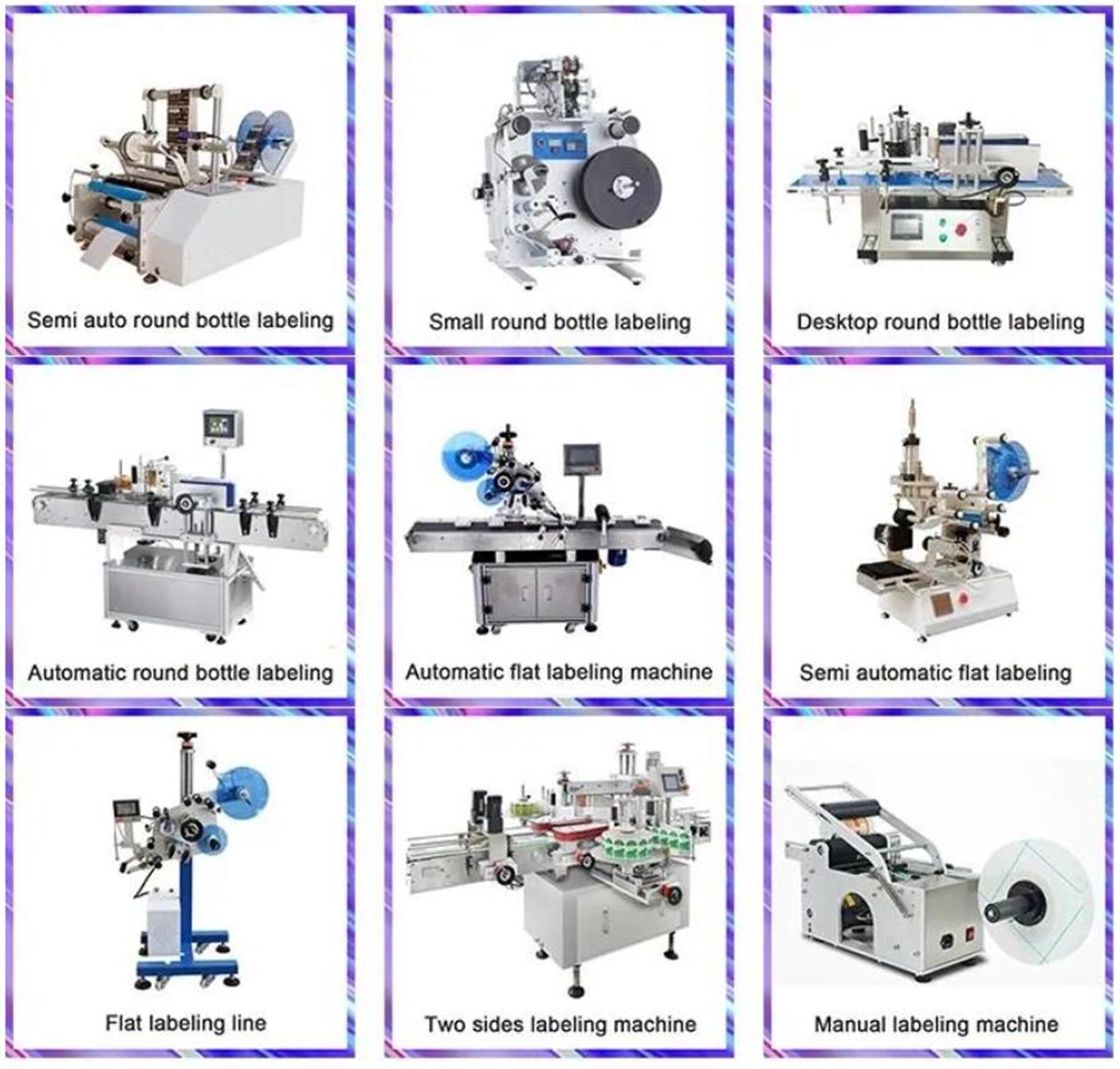
Improving Packaging Efficiency: Applications and Advantages of Fully Automatic Labeling Machines in Production Lines

Understanding Servo Capping Machines: The Core Logic of Precise Capping – Understand the Entire Working Process in Seconds
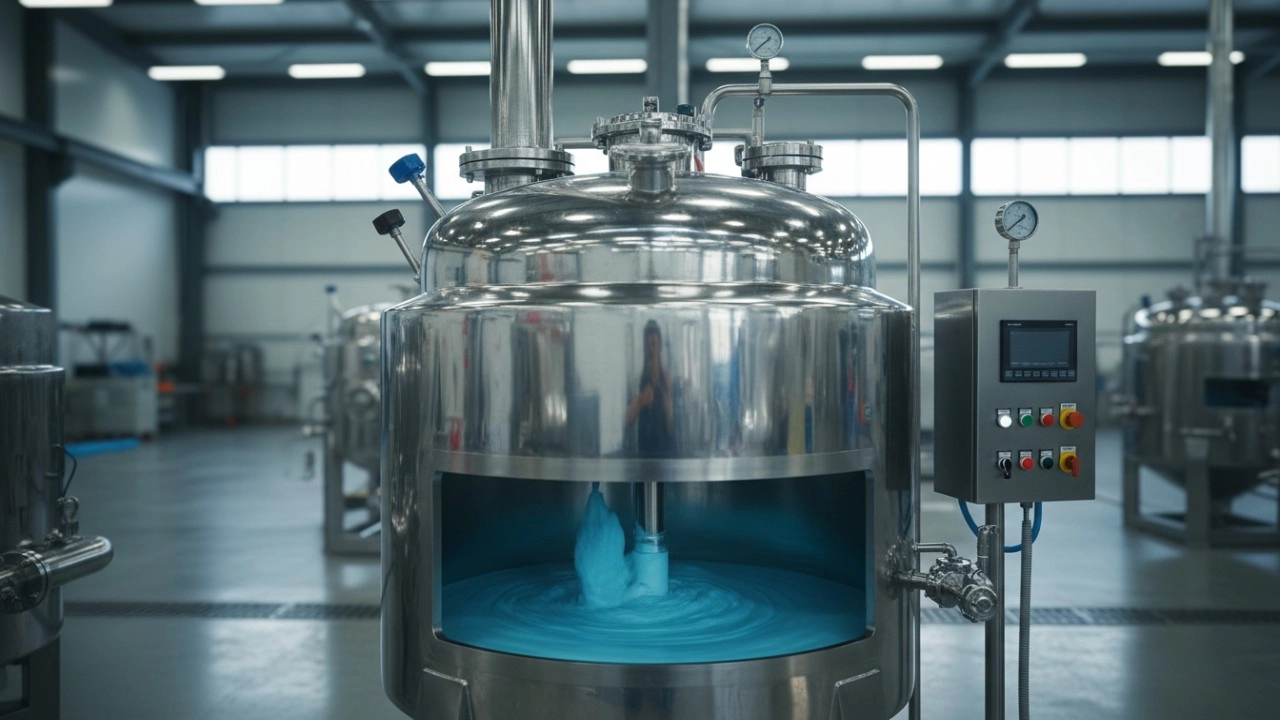
The Future of Industrial Agitation: 5 Smart Mixing Tank Technologies Changing the Game
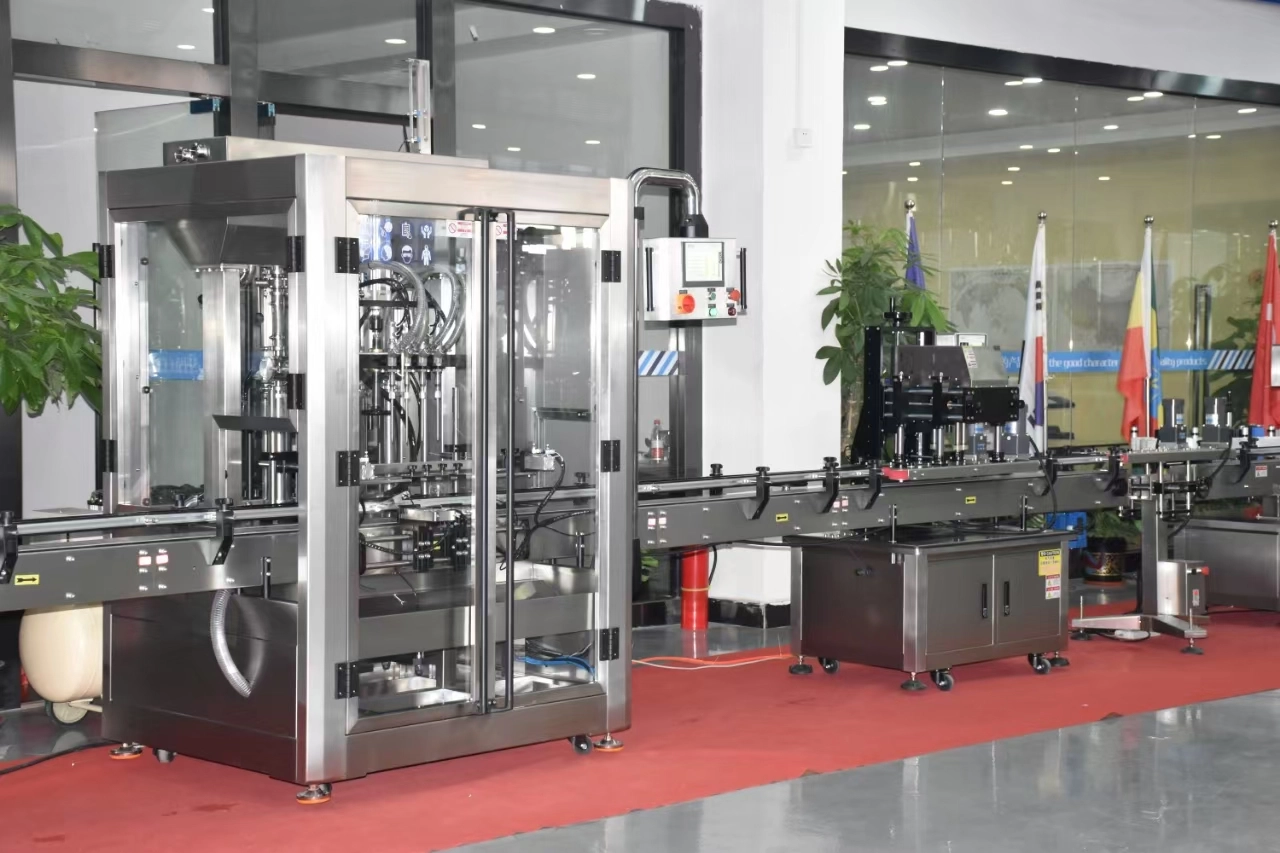
Gear pump filling machine vs. piston filling machine: Key differences broken down to avoid pitfalls in selection.
Polypropylene PP Mixing Tank
What is the structure of an agitator?
The agitator usually consists of enamel anchor agitator.
Perfume Freezing Filter Making Machine
Does the filtration process cause loss of fragrance components?
High-quality equipment uses a gradient filtration design (such as a 0.22μm precision filter membrane) to capture only condensed impurities and avoid adsorbing active fragrance molecules.
RO Water Treatment
Who are we?
Our headquarters is located in Guangzhou, Guangdong, China, and our factory is located in Yangzhou, Jiangsu. Our products are sold all over the world. We have approximately 50 employees in our company and factory.
Perfume Filling Machine
What can you buy from us?
RO Water Treatment、Vacuum Emulsifying Machine、Homogenizer Mixing Tank、Filling and Capping、labeling Machine、Packing Machine、Storage Tank,etc.
FAQs
Where is FULUKE headquartered?
Get in touch with FULUKE
If you have any comments or good suggestions, please leave us a message, later our professional staff will contact you as soon as possible.
You May Also Like
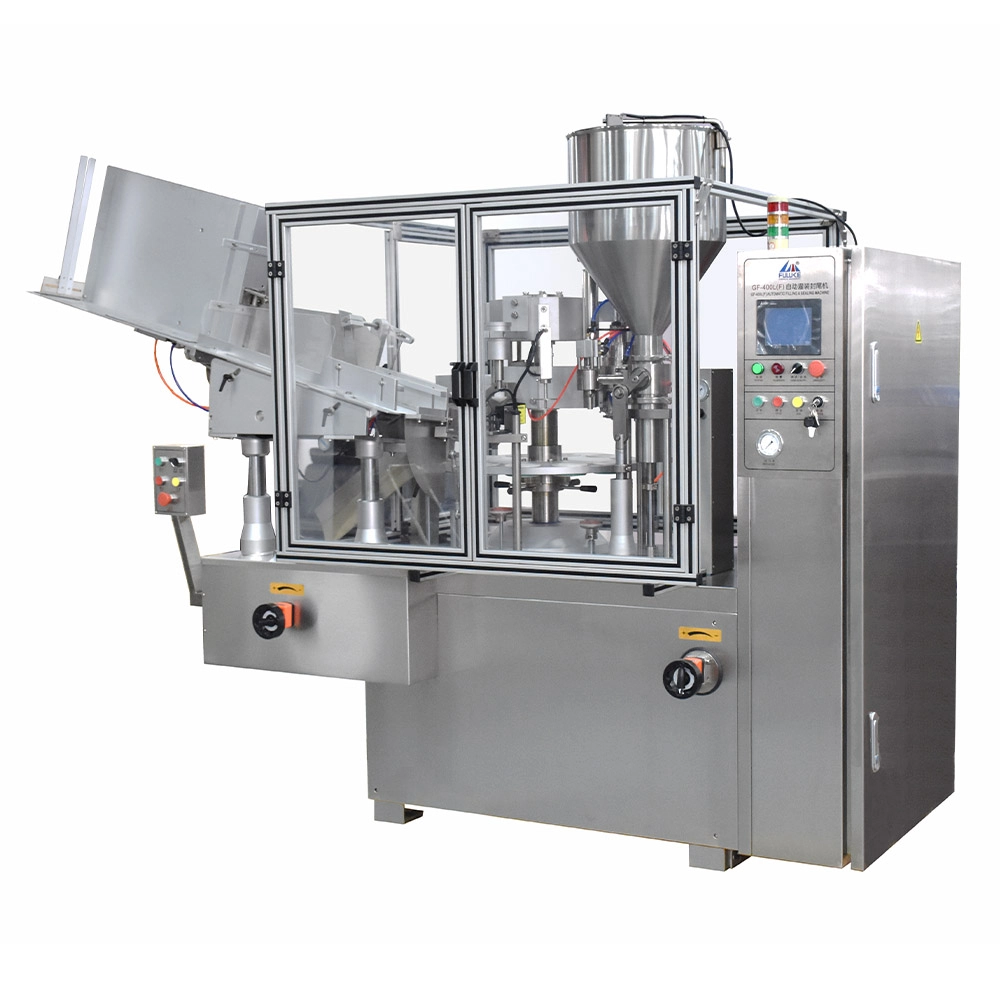
Automatic Tube Filling and Sealing Machine Toothpaste Sunscreen and Facial Cleanser Filling and Sealing Machine for Plastic and Aluminum-plastic Tube
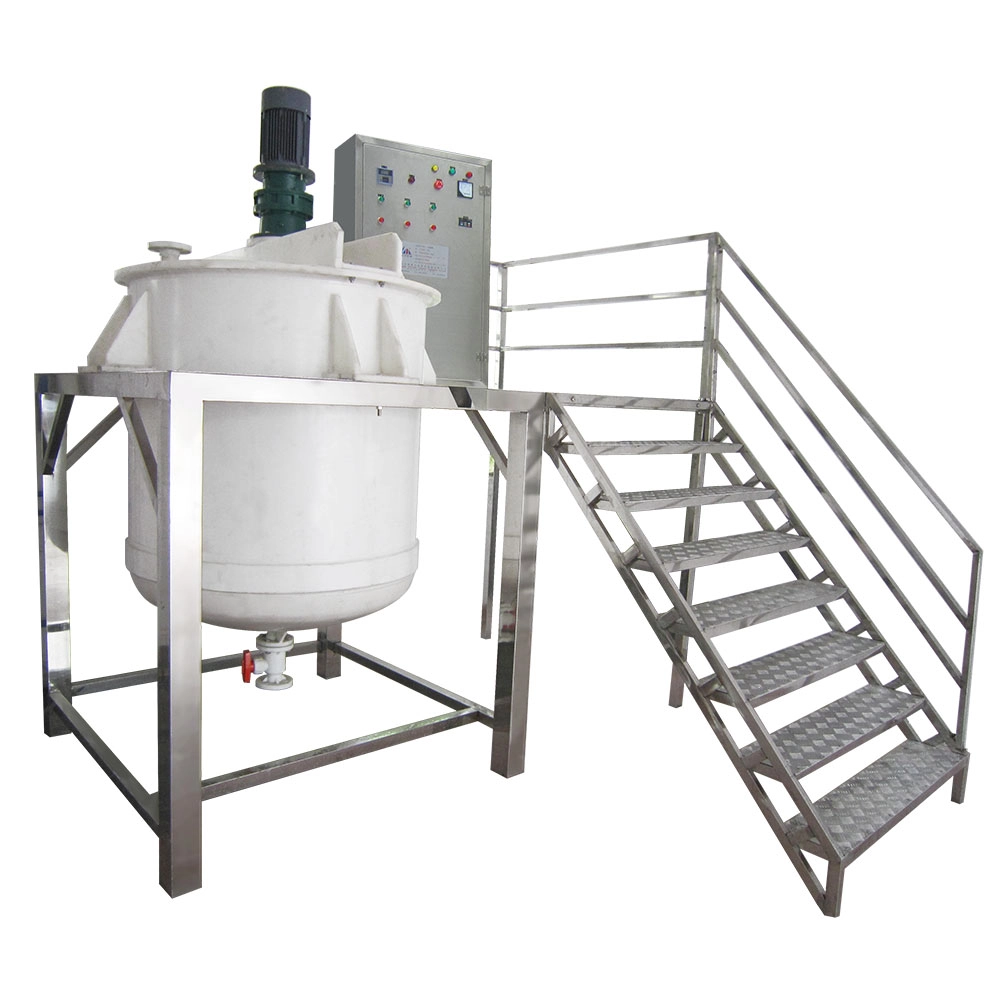
Polypropylene PP Mixing Tank Anti-Corrosion Mixer Reaction Kettle with Agitator Chemical Mixing Vessel
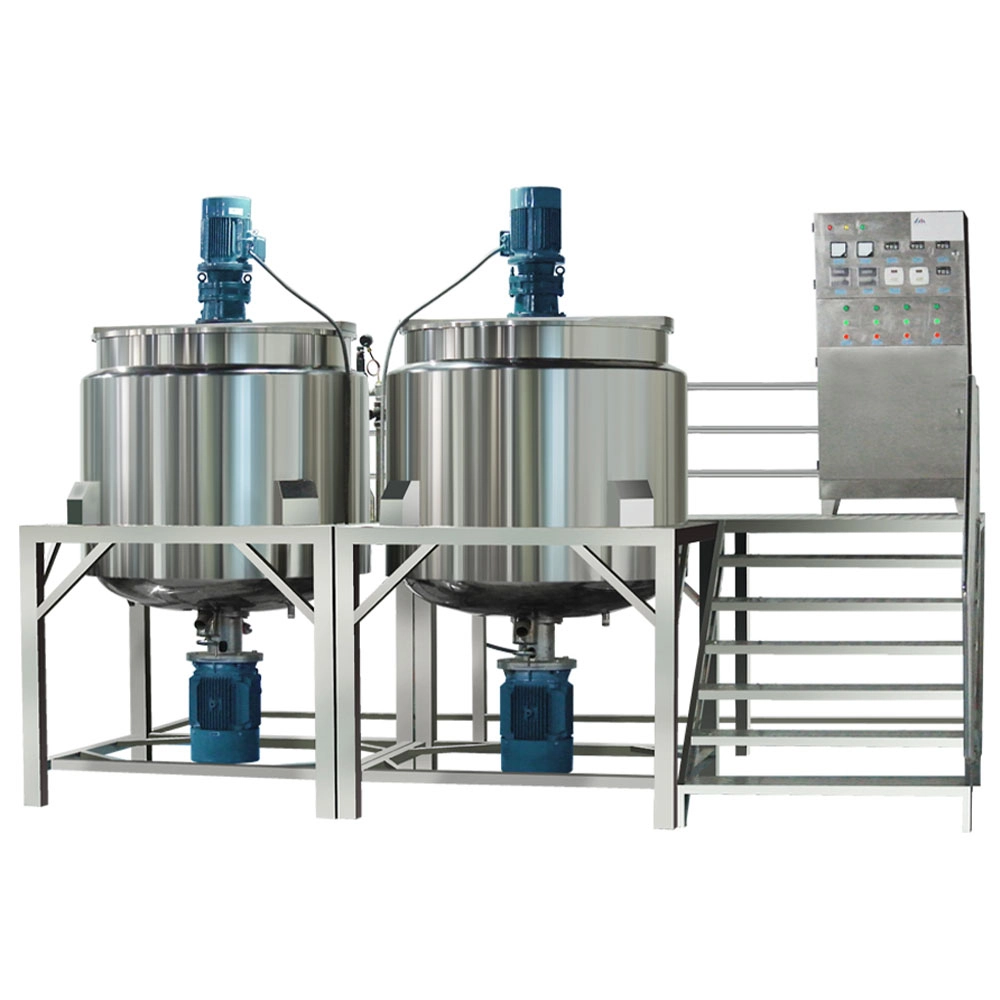
Flip Cover Multi-function Liquid Wash Mixing Tank Blender Liquid Detergent Mixer Homogenization Stirring Tank
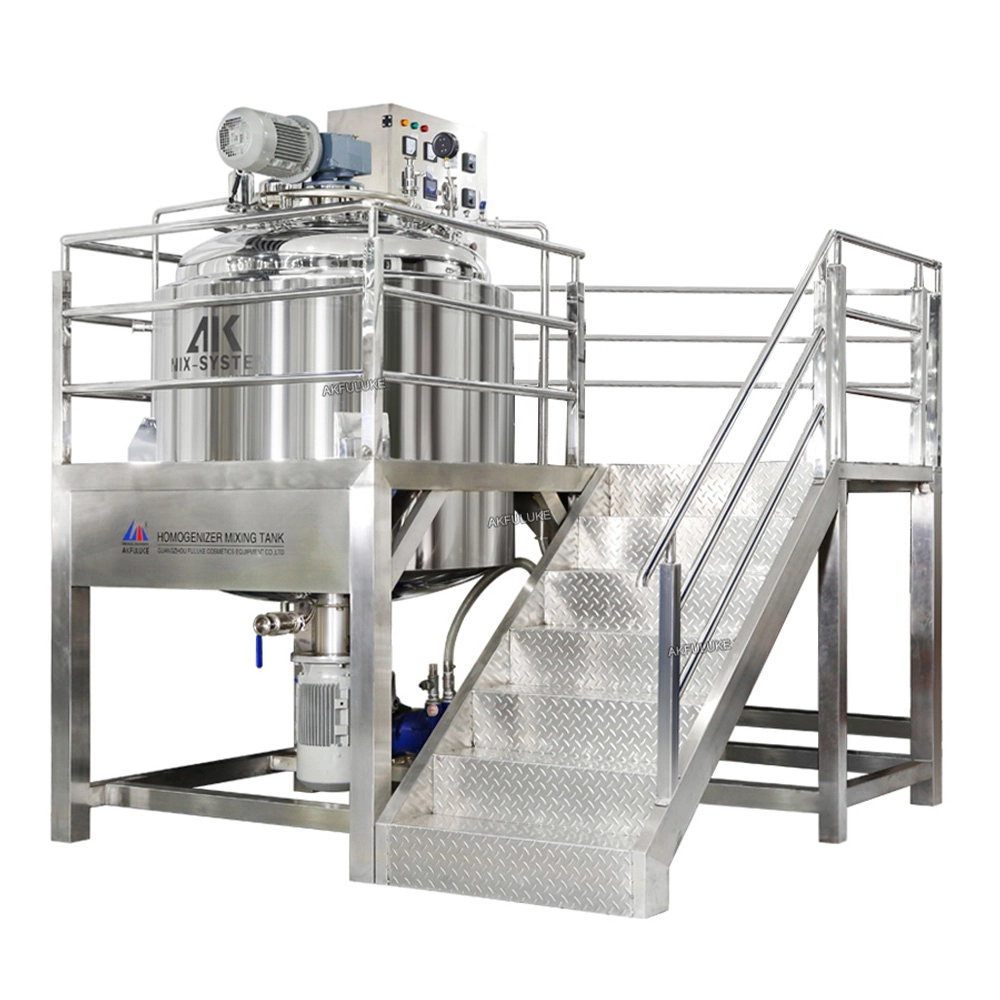
Stainless Steel Mixer Liquid Mixing tank with Agitator Homogenizing Mixing tank Vacuum Sealed Mixer Machine

A leading manufacturer specializing in advanced machinery and complete production lines for the cosmetics, food, pharmaceutical, and chemical industries worldwide.
Contact FULUKE
Facebook
Instagram
YouTube