
How to select a filling machine for viscous products?
- 1) How do I calculate the required pump displacement, motor torque and cycle time for a piston/gear/progressive-cavity filler when filling viscous 50 g creams at 40 cpm?
- 2) How can I eliminate stringing, dribble and surface defects when filling viscous serums and emollient creams into small-neck bottles and jars?
- 3) For shear-thinning, non-Newtonian gels how do I ensure consistent fill accuracy across ambient temperature swings?
- 4) What are the proven CIP/SIP strategies for sticky, oil-rich cosmetic creams and how do I validate cleaning to meet ISO 22716/cGMP expectations?
- 5) Should I choose a piston filler, gear pump, peristaltic or progressive cavity pump for a product that's viscous, shear-sensitive and has particulates (e.g., floral petals)?
- 6) What operational issues do manufacturers miss when scaling a viscous-product line from pilot (10–30 cpm) to production (60–120 cpm)?
1) How do I calculate the required pump displacement, motor torque and cycle time for a piston/gear/progressive-cavity filler when filling viscous 50 g creams at 40 cpm?
Begin with throughput math, then convert to pump displacement and power. Use these steps rather than vendor guesswork:
- Throughput target: fill_volume (g) × cpm = g/min. Example: 50 g × 40 cpm = 2,000 g/min = 2 kg/min = 120 kg/hr.
- Convert to volumetric flow if you know product density (ρ in g/mL). If density ≈ 1.02 g/mL, volumetric flow = mass_flow / density = 2,000 g/min ÷ 1.02 g/mL ≈ 1,961 mL/min ≈ 1.96 L/min.
- Pump displacement per cycle = volumetric_flow_per_min ÷ cpm. Example: 1,961 mL/min ÷ 40 cpm ≈ 49 mL per cycle — essentially one 50 mL piston stroke.
- Motor and torque: torque is a function of pump displacement, pressure drop and fluid viscosity. For positive-displacement units (piston or progressive cavity) calculate hydraulic power as P = (Δp × Q) / η, where Δp is pressure rise (Pa), Q is m3/s, η is pump efficiency. In practice for viscous cosmetics, vendors recommend a safety factor of 1.5–2× against nominal power to account for startup, higher viscosity batches and shear-thickening behavior.
Practical recommendations:
- Specify a servo-driven piston filler or a progressive-cavity (Moineau) pump sized to ~50 mL per stroke. Servo systems give repeatable stroke control and fast changeover; progressive cavity pumps handle very high viscosity and shear-sensitive formulas.
- Ask vendors for torque curves at your product’s measured viscosity (see question 3 on rheology). Confirm motor has VFD or servo control and a 1.5–2× safety margin.
- Validate with a pilot run using real product to verify fill accuracy and motor load — numbers from calculations are guidelines, not substitutes for test runs.
2) How can I eliminate stringing, dribble and surface defects when filling viscous serums and emollient creams into small-neck bottles and jars?
Stringing and dribble are common with high-viscosity, tacky cosmetics. Focus on nozzle design, cut-off mechanics, back-pressure control and thermal management.
- Nozzle types: use anti-drip nozzles with a built-in shut-off needle or a pinch-valve arrangement. Low-flow, tapered orifice nozzles with lip geometry reduce capillary stringing.
- Cut-off method: mechanical cut-off (needle/slide valve) or fast pneumatic ball valves provide cleaner finishes than time- or gravity-based cut-offs. Servo-controlled piston fillers can perform micro-retractions (a 0.5–1.5 mm reverse stroke) immediately before cut-off to relieve residual pressure.
- Dip/nozzle immersion: dip-fill (inserting nozzle into the bottle) prevents air entrapment and stringing but requires robust sanitation design. For dropper bottles, hold the nozzle just below the neck and retract slowly after cut-off.
- Back-pressure/vacuum assist: small negative back-pressure at the filling point or a micro vacuum at the nozzle tip can help remove trailing strings. This must be tuned to avoid foam or suction of air.
- Temperature and viscosity control: slightly warming product (2–8 °C above batch temp) reduces viscosity and stringing without harming formulation; use PID heated hoppers or jacketed pumps. Always validate stability with the formulation supplier.
Implement nozzle testing during pilot runs and document optimal nozzle geometry, dwell times and reverse-stroke parameters for your SKU set.
3) For shear-thinning, non-Newtonian gels how do I ensure consistent fill accuracy across ambient temperature swings?
Non-Newtonian materials change apparent viscosity with shear rate and temperature. Relying on time-based fillers alone risks under/over-fills when ambient conditions or batch rheology vary.
- Rheology baseline: have a QC lab measure the product’s flow curve (viscosity vs shear rate) at expected ambient and production temperatures (e.g., 15 °C, 25 °C, 35 °C). This data lets you predict pump behavior under real shear rates.
- Meter by weight when possible: servo piston fillers with load-cell verification or gravimetric check-weighers detect fill mass in real time. Aim for ±0.5–1% accuracy for High Quality cosmetics; ±1–2% may be acceptable for high-viscosity lines.
- Pump choice: progressive cavity pumps and servo-driven piston fillers introduce consistent volumetric displacement independent of viscosity, while gear pumps can slip under low shear and high viscosity. For shear-sensitive gels, choose low-shear pumps to avoid structure breakdown.
- Temperature control: jacketed hoppers and heated pump housings with PID control keep product within a narrow temperature band. Use in-line viscosity or torque sensors (where available) to provide feedback to the HMI/PLC and trigger alerts or recipe adjustments.
- Recipe management: store per-SKU fill parameters (stroke length, pump speed, nozzle dwell, temperature setpoint) on the PLC/HMI to quickly swap regimes and maintain consistency across shifts and seasons.
4) What are the proven CIP/SIP strategies for sticky, oil-rich cosmetic creams and how do I validate cleaning to meet ISO 22716/cGMP expectations?
Sticky emollient creams are a cleaning challenge. Design decisions early — hygienic materials, sloped hoppers, removable wetting parts — reduce cleaning time and validation burden.
- Equipment design: specify AISI 316L stainless steel product-contact parts, tri-clamp connections, drainable geometries, polished surfaces (Ra ≤ 0.8 μm for wet surfaces). Removable cylinders, nozzles and wear components speed manual cleaning if CIP is ineffective.
- CIP strategy: a multi-step CIP sequence typically includes warm water pre-rinse (to remove bulk product), alkaline wash with circulation and temperature (surfactant/NaOH solutions as recommended by detergents supplier), heated rinse, and an acid passivate if needed. For oil-rich products add a solvent-compatible detergent step or enzymatic cleaners where safe and validated.
- SIP considerations: steam-in-place can sanitize the system if all parts are steam-rated and validated. Many plastics and seals are not suitable for SIP; choose materials accordingly.
- Validation: use visual inspection, TOC (total organic carbon) measurements, ATP swabs and microbiological testing per manufacturer and regulatory expectations. Document acceptance criteria and run periodic re-validation. ISO 22716 gives GMP guidance for cosmetics; follow it for documentation, personnel training and traceability.
- Practical tip: design for easy part removal and quick-change nozzles. For high-value SKU runs, plan scheduled manual cleaning plus targeted CIP to reduce downtime and cross-contamination risk.
5) Should I choose a piston filler, gear pump, peristaltic or progressive cavity pump for a product that's viscous, shear-sensitive and has particulates (e.g., floral petals)?
Compare technologies against four factors: viscosity range, shear sensitivity, particulate handling and accuracy. Here’s a decision matrix distilled into practical guidance.
- Piston (servo) fillers: Excellent accuracy, low shear for many creams, fast changeover and good for free-flowing viscous products and particulate inclusion up to small sizes. Best when you need ±0.5–1% accuracy and recipe flexibility.
- Progressive cavity (PC) pumps: Handle very high viscosity (hundreds of thousands mPa·s), gentle on shear-sensitive formulas and can pass soft particulates. They are slower to changeover and require bearing maintenance but are ideal for heavy creams with dispersed particles.
- Peristaltic pumps: Very hygienic and easy to maintain (only tubing contacts product), low shear but limited to moderate viscosities and lower throughputs. Good for samples, serums or products with sensitive actives but less suited for very thick creams.
- Gear pumps: High-speed and compact but can generate shear and struggle with large particulates. Use for lower-viscosity lotions and many anhydrous oils when constant flow is needed.
Recommendation: for viscous, shear-sensitive creams with occasional soft particulates, prioritize progressive cavity pumps or servo-driven piston fillers with removable valve/nozzle assemblies. Run a pilot to confirm particulate passage and verify maintenance intervals.
6) What operational issues do manufacturers miss when scaling a viscous-product line from pilot (10–30 cpm) to production (60–120 cpm)?
Scaling isn’t only a speed increase — it reveals problems in supply, feed mechanics, thermal control and sanitation that are invisible at pilot scale.
- Product feed and hopper sizing: higher cpm requires larger buffer hoppers or continuous metering systems. Inadequate hopper agitation causes de-aeration, settling or phase separation at high speeds.
- Shear and heat build-up: pumps and high-speed metering can heat product, altering rheology and stability. Add temperature monitoring and cooling/heating jackets to maintain consistency.
- Changeover and cleaning time: at higher throughput, changeovers become more frequent and costly if tooling isn’t designed for rapid swap. Minimize SKU-specific parts and optimize quick-release fittings.
- Quality control bottlenecks: fill verification (in-line weighers, vision checks for fill level and surface defects) must match line speed; otherwise rejects accumulate faster than QC can inspect them.
- OEE and spare parts planning: downtime for seals, rotor/stator wear in PC pumps, and valve leakage increase at volume. Plan a spares strategy and preventive maintenance intervals based on pilot wear data scaled by expected runtime.
Before scaling, run an endurance test of several hours at target speed, measure yield, check torque and temperature trends, and validate cleaning cycles at production pace.
Concluding summary — advantages of choosing the right bottle filling machine for viscous cosmetics
Selecting the correct bottle filling machine (servo piston, progressive cavity or other volumetric/positive-displacement systems) tailored to your viscosity, rheology and container type delivers higher fill accuracy, reduced waste, cleaner finishes, easier cleaning validation and lower downtime. The right design reduces product degradation, minimizes rejects and improves OEE, while compliance with hygienic materials (AISI 316L), ISO 22716-aligned procedures and CIP/SIP capabilities ensures consistent quality and regulatory readiness.
For a detailed assessment, pilot testing and a formal quotation to match your SKU portfolio and throughput goals, contact us at www.fulukemix.com or email flk09@gzflk.com — we’ll size pumps, propose nozzle geometry and produce a cleaning/validation plan tailored to your formulas.

Understanding Servo Capping Machines: The Core Logic of Precise Capping – Understand the Entire Working Process in Seconds
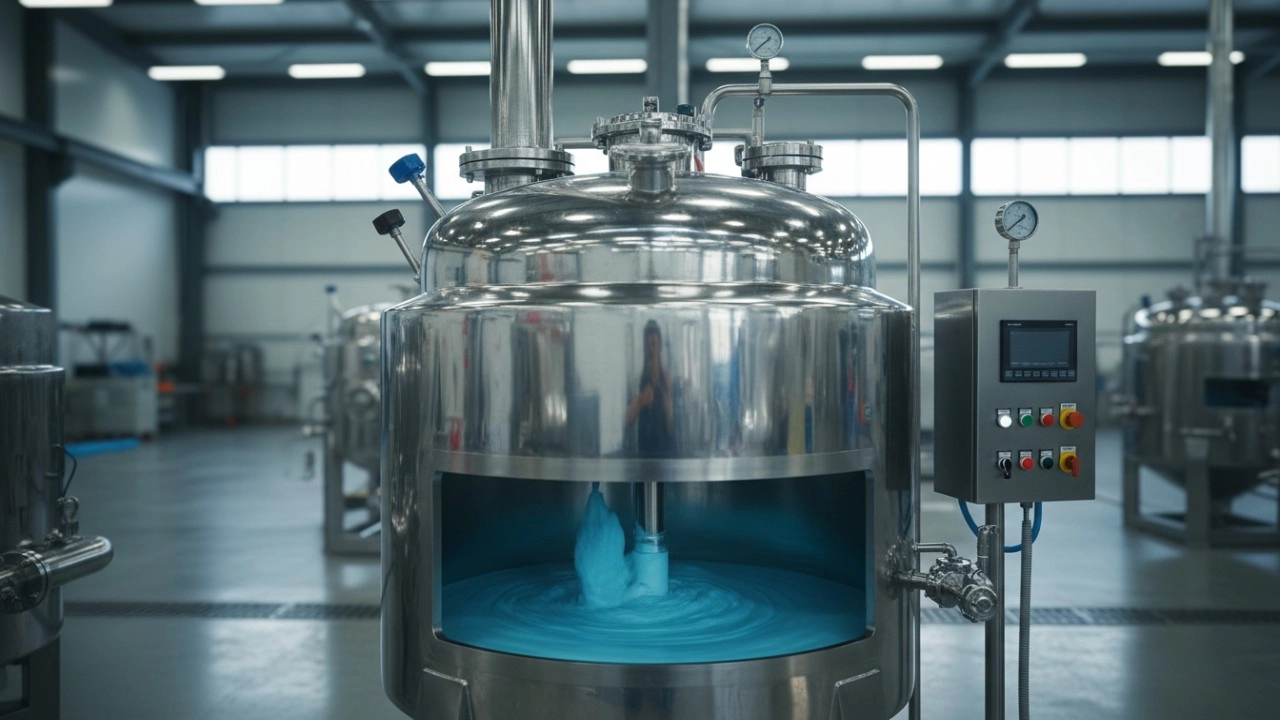
The Future of Industrial Agitation: 5 Smart Mixing Tank Technologies Changing the Game
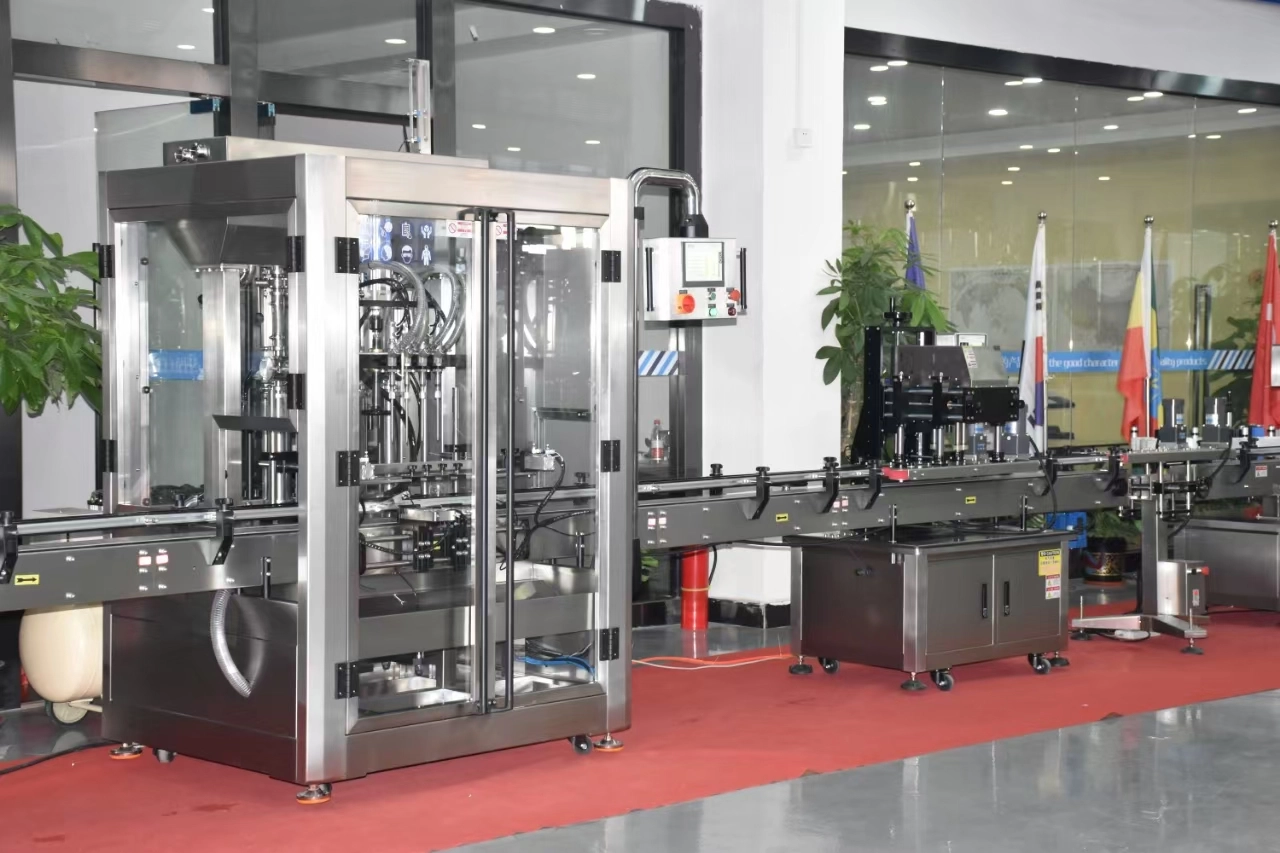
Gear pump filling machine vs. piston filling machine: Key differences broken down to avoid pitfalls in selection.
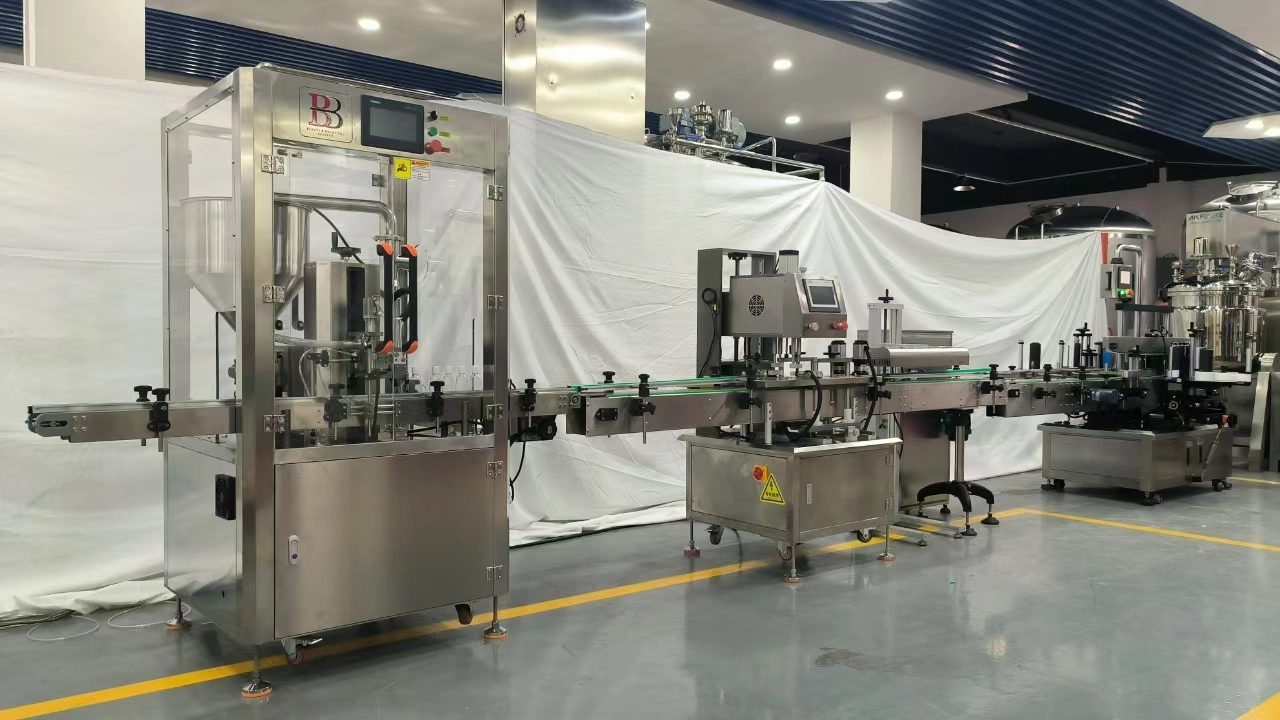
Understand the working principle of a servo gear pump filling machine!
Automatic Filling Machine
What can you buy from us?
RO Water Treatment、Vacuum Emulsifying Machine、Homogenizer Mixing Tank、Filling and Capping、labeling Machine、Packing Machine、Storage Tank,etc.
Can we add heating, constant temperature, and stirring functions?
Of course, we can add heating, constant temperature, and stirring functions based on your material characteristics.
Film Packaging Machine
Can you make a design for us?
Yes, we can, we provide not only products, but also solutions and designs.
Inkjet Printing Machine
Can you customize the machine?
Of course, we provide customized services according to customer needs.
Polypropylene PP Mixing Tank
The sticky material on the inner wall of a mixing pot is difficult to clean after use. What are some effective cleaning methods?
The inner wall of a PP mixing pot is smooth and rust-free. Cleaning the sticky material can be done based on the material characteristics and the type of material:
General cleaning (water-soluble/low-viscosity sticky materials): Use a high-pressure water jet to directly flush the inner wall, and use a soft-bristled brush (to avoid scratching the PP surface) to scrub any hard corners. If there is dried-on material, soak it in warm water (≤60°C) for 10-30 minutes to soften it before rinsing.
Stubborn sticky material (oily/high-viscosity materials): Use a neutral detergent (such as dishwashing liquid) or a suitable weak solvent (such as ethanol; verify compatibility between the material and the solvent) to wipe it clean, then rinse with clean water. Avoid using strong acid or alkaline cleaning agents (although PP is corrosion-resistant, they may react with residual material to produce harmful substances).
Long-term maintenance: Clean the pot promptly after each use to prevent material from drying out. After cleaning, wipe the inner wall dry to prevent microbial growth in a humid environment.
Get in touch with FULUKE
If you have any comments or good suggestions, please leave us a message, later our professional staff will contact you as soon as possible.
You May Also Like
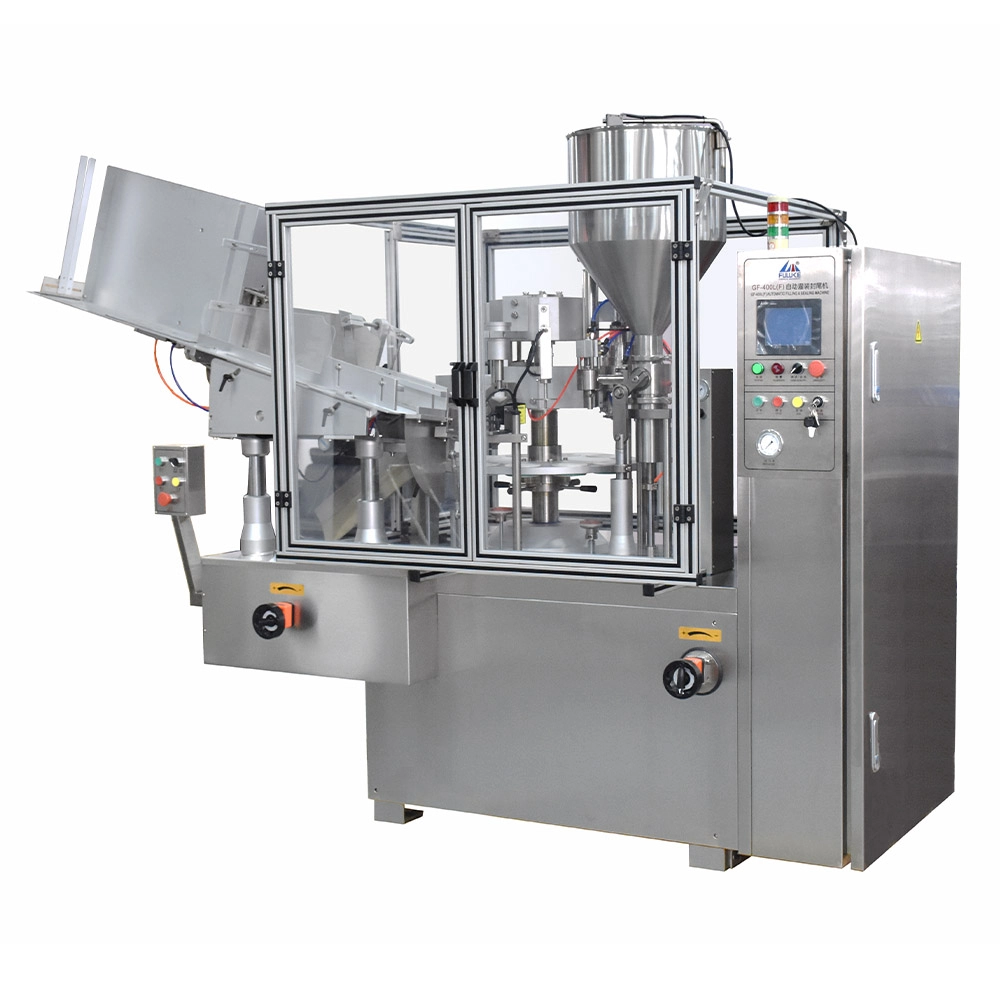
Automatic Tube Filling and Sealing Machine Toothpaste Sunscreen and Facial Cleanser Filling and Sealing Machine for Plastic and Aluminum-plastic Tube
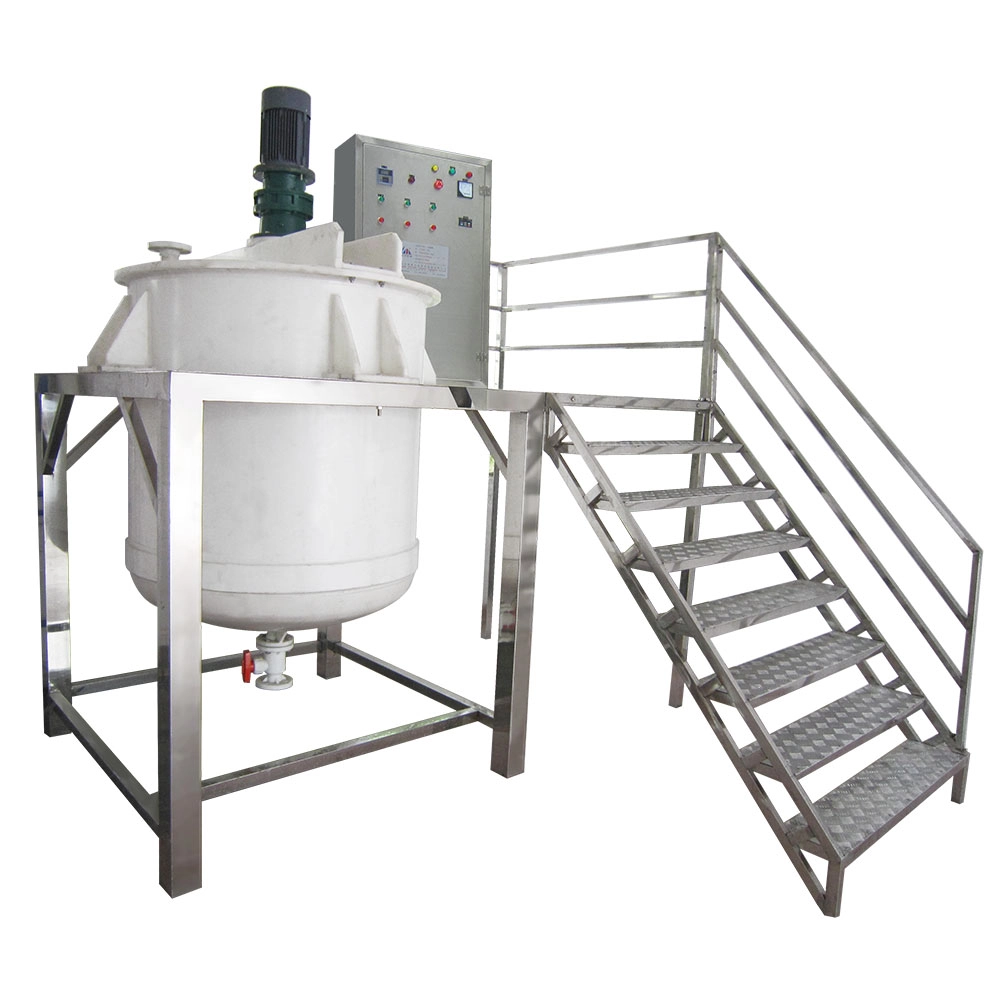
Polypropylene PP Mixing Tank Anti-Corrosion Mixer Reaction Kettle with Agitator Chemical Mixing Vessel
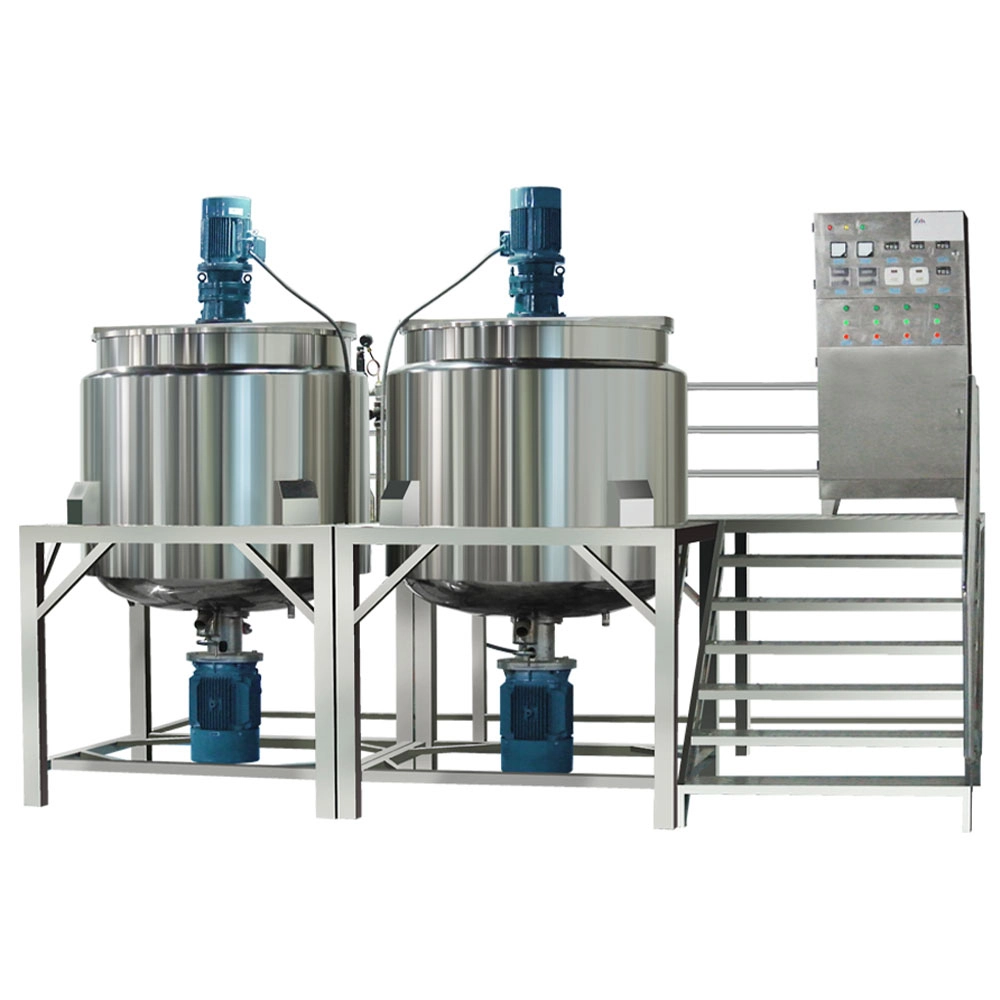
Flip Cover Multi-function Liquid Wash Mixing Tank Blender Liquid Detergent Mixer Homogenization Stirring Tank
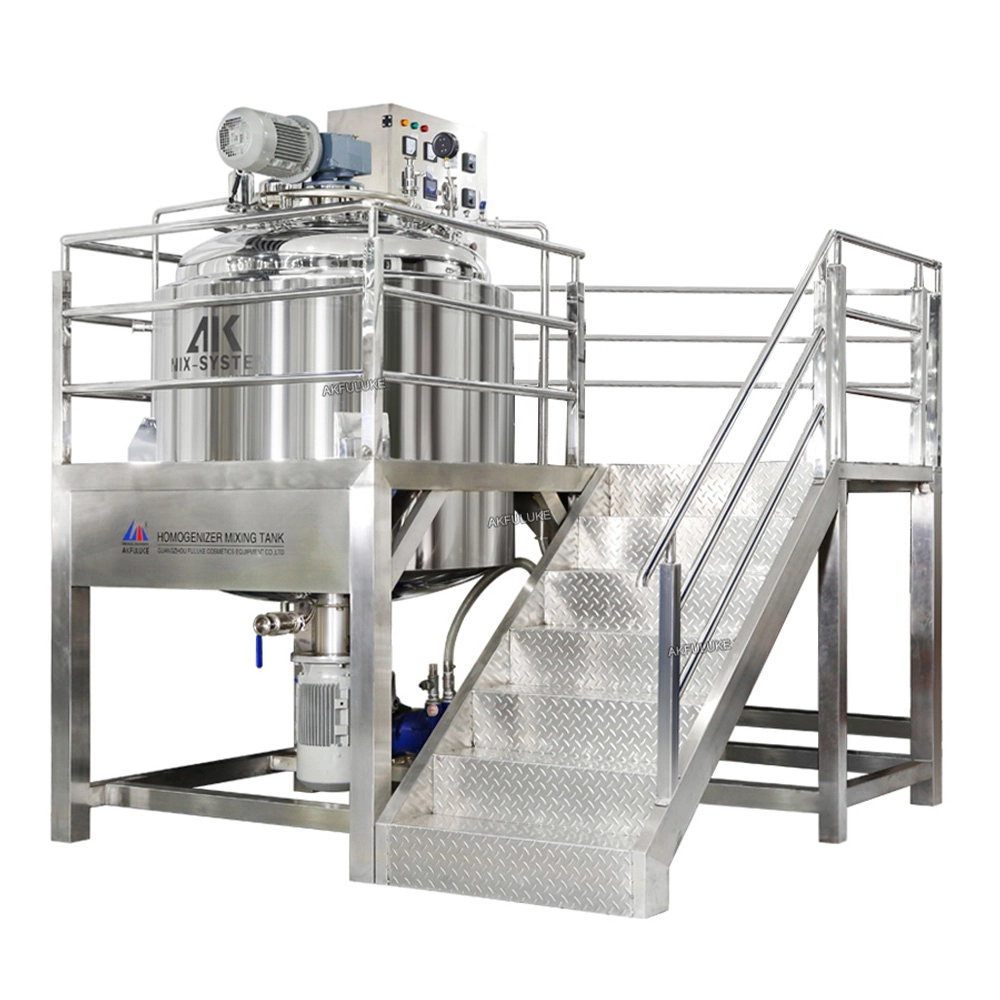
Stainless Steel Mixer Liquid Mixing tank with Agitator Homogenizing Mixing tank Vacuum Sealed Mixer Machine

A leading manufacturer specializing in advanced machinery and complete production lines for the cosmetics, food, pharmaceutical, and chemical industries worldwide.
Contact FULUKE
Facebook
Instagram
YouTube