
What role does temperature control play in filling?
- 1. How does temperature variation during filling cause measurable underfills or overfills on a high-speed bottle filling machine, and how can I quantify and correct it?
- 2. For heat-sensitive cosmetic serums and emulsions, what temperature window should I maintain during transfer and filling to avoid phase separation or active degradation?
- 3. When switching products on the same bottle filling line, how should temperature control and CIP parameters change to prevent cross-contamination and ensure quick changeovers?
- 4. How do I size and specify a jacketed mixing tank and in-line chiller/heater for a viscous cosmetic filling line (cream/gel) to ensure consistent fill weight?
- 5. What temperature control tolerances and sensor placements are required to meet regulatory fill accuracy and validation expectations for cosmetic bottle filling machines?
- 6. Can temperature control reduce foaming and air entrapment during high-speed filling of low-surface-tension cosmetic liquids, and what hardware changes help?
Choosing the right bottle filling machine and specifying temperature control is critical for cosmetic lines (serums, creams, gels, lotions). Below are six specific long-tail questions beginners often ask—each with practical, engineering-oriented answers informed by industry practice, sanitary equipment design and validation steps for cosmetic filling lines.
1. How does temperature variation during filling cause measurable underfills or overfills on a high-speed bottle filling machine, and how can I quantify and correct it?
Why it matters: Liquid volume changes with temperature and viscosity shifts change flow dynamics through pumps and nozzles. On high-speed automatic bottle filler lines small volume errors amplify across lots and lead to out-of-spec fills and lost margin.
Root causes and effects:
- Thermal expansion/contraction of the product and plastic bottles changes delivered volumes versus calibration conditions, especially for precision fills where tolerance is ±1–2%.
- Viscosity falls as temperature rises (and vice versa), altering pump stroke behavior, valve timing, and laminar vs turbulent flow—this affects gravimetric and volumetric pumps differently.
- Pneumatic and servo systems respond differently with temperature-driven air density and lubricant viscosity changes affecting actuation timing.
How to quantify:
- Run a design-of-experiment (DoE): measure fill weights at incremental set temperatures (e.g., −2°C, 0°C, +2°C relative to process setpoint). Plot fill error vs. temperature.
- Use statistical process control (SPC) to correlate ambient/tank temperature logs (RTD data) to fill weight drift; calculate sensitivity (g/°C) for your product and line speed.
How to correct:
- Implement closed-loop temperature feedback (RTD/PT100) at the tank and, if needed, near the filler manifold. Integrate with PLC/PID so temperature offsets automatically adjust piston stroke, valve dwell or fill timing.
- Choose filler tech suited to thermal sensitivity: piston and servo volumetric fillers offer easier electronic compensation than simple time-pressure fillers at high speeds.
- Stabilize product temperature upstream (jacketed mixing tanks, in-line heat exchangers, chillers) so the fluid entering the filler is at a controlled setpoint.
- Create a correction table inside the HMI/PLC: for each ±°C off nominal, apply pre-tested adjustment to dispense volume or pump parameters.
2. For heat-sensitive cosmetic serums and emulsions, what temperature window should I maintain during transfer and filling to avoid phase separation or active degradation?
Why it matters: Many cosmetic actives, emulsions, and natural extracts respond to thermal stress—phase separation, droplet coalescence, or active denaturation reduce product efficacy and shelf life.
Guidance (practical, not prescriptive):
- Do ingredient thermal profiling: review suppliers’ stability data. If none exist, run thermal stress tests (holding samples at incremental temps for accelerated stability) to find the upper safe temperature.
- In many formulations, critical phenomena start to appear above ~40°C, but exact thresholds vary—establish your product-specific window and document it in the product file.
- Maintain transfer and in-line mixing temperatures within the validated window. Use jacketed tanks with both heating and cooling capability to maintain that window prior to filling.
- Minimize shear and pump cavitation during transfer—use low-shear gear or progressive cavity pumps or correctly sized peristaltic pumps to protect emulsion integrity.
Validation steps:
- IQ/OQ/PQ the temperature control system (sensors, PID loop) and include batch records with temperature logs during fill.
- Run a stability sample after filling and after accelerated storage to verify no separation or active loss occurred due to process temperatures.
3. When switching products on the same bottle filling line, how should temperature control and CIP parameters change to prevent cross-contamination and ensure quick changeovers?
Why it matters: Changeovers are frequent in contract filling and small-batch cosmetics. Temperature affects cleaning efficacy, product viscosity during purge, and time to get the next SKU into controlled range.
Best practices:
- Define product families by temperature and formulation type (watery lotions, emulsions, gels). Group SKUs to minimize heating/cooling swing between consecutive runs.
- Adjust CIP temperatures according to soil and detergent chemistry. Higher CIP temps (when formulation tolerates) improve detergent performance, reduce cycle time, and aid removal of viscous residues.
- After CIP, condition the line to next product temperature before production—use recirculating chillers/heaters and verify with RTDs placed at the filler inlet.
- For short changeovers, use targeted flush sequences (breakout flush, recirculation, purge) rather than full disassembly. Consider using a skid-mounted changeover pack that pre-heats/cools the next batch.
Controls and verification:
- Track CIP cycle parameters (temp, conductivity, flow, time) with automated logs to prove cleaning efficacy and for audits.
- Perform a visual/gravimetric verification sample after changeover and before full release.
4. How do I size and specify a jacketed mixing tank and in-line chiller/heater for a viscous cosmetic filling line (cream/gel) to ensure consistent fill weight?
Design considerations (practical checklist):
- Batch size & production rate: determine the required heat-up/cool-down time to get from ingredient temperature to fill temperature between batches. This sets heating/cooling capacity.
- Target temperature delta and allowable ramp rate: viscous materials need slower, uniform heating to avoid hotspots. Specify an all-around jacket (or dimple jacket) and agitator that provides uniform temperature.
- Heat transfer needs: viscous fluids have lower convective coefficients; specify oversized heat transfer area or use scraped-surface or coil agitation for stiffer creams.
- Chiller/heater sizing: consult vendor charts but estimate required thermal power = (mass × specific heat × deltaT) / desired time, then add a margin for viscous inefficiencies. Use variable-capacity chillers for fine control at steady state.
- Pump selection: pick a pump that can handle target viscosity at the fill temperature (progressive cavity, positive displacement piston) and that is compatible with jacketed piping if inline heating is needed.
Practical specs to include in purchase order:
- Tank jacket type, insulated exterior, agitation type and speed range, CIP ports, sanitary tri-clamp connections, PT100/RTD sensor ports.
- Chiller/heater with PID control, +/- control tolerance documented, and ability to operate close to ambient to avoid overshoot.
- Documentation: thermal performance curves, OQ test procedures, FAT data and piping instrumentation diagrams (P&ID).
5. What temperature control tolerances and sensor placements are required to meet regulatory fill accuracy and validation expectations for cosmetic bottle filling machines?
Regulatory context: Cosmetics are regulated for safety and truthful labeling; manufacturers are expected to validate processes that affect product identity and quality. Temperature control is part of process control and must be demonstrable under IQ/OQ/PQ.
pRecommended practice:
- Set control tolerances based on product sensitivity established during development—commonly tighter tolerances (±0.5–1.5°C) are used for thermally sensitive emulsions; less-sensitive watery lotions may accept wider bands.
- Sensor placement: install at least two sensors—one in the jacketed tank near the bulk and one upstream at the filler inlet manifold. For long lines add sensors after in-line heat exchangers and near the nozzle to detect drop across piping.
- Use calibrated RTDs (PT100) or thermocouples with documented calibration certificates; schedule re-calibration as part of preventive maintenance.
- Document the IQ/OQ/PQ acceptance criteria (including temperature logs correlated to fill weight) and retain electronic records for audits. Include temperature alarm setpoints and action responses in your SOPs.
6. Can temperature control reduce foaming and air entrapment during high-speed filling of low-surface-tension cosmetic liquids, and what hardware changes help?
Foam and entrained air increase rejects, cause splashes during capping, and can change apparent fill weight. Temperature control is one lever but must be combined with mechanical and formulation controls.
How temperature helps:
- Raising temperature generally reduces viscosity, sometimes allowing trapped air to escape more easily—but it can also increase foaming propensity for surfactant-rich formulas. The effect is formulation-dependent.
Practical hardware and process mitigations:
- Use bottom-up or closed-fill nozzles that introduce product with minimal fall height.
- Install vacuum deaeration or inline degassing units upstream of the filler for highly foamy products.
- Use laminar flow fillers, tapered nozzles, or anti-foam dosing in controlled amounts (validate for sensory impact) instead of relying solely on temperature shifts.
- Optimize fill speed vs nozzle diameter and implement cascade/nozzle timing adjustments in the PLC to reduce turbulence at the fill point.
Validation: document headspace, bubble counts (visual), and cap integrity post-fill across temperature setpoints to choose the optimal operating point.
Conclusion: Advantages of correct temperature control in cosmetic bottle filling
Implementing robust temperature control (jacketed tanks, PID-controlled chillers/heaters, properly placed RTDs and integration with the filler PLC) yields measurable benefits: improved fill accuracy and reduced rejects, stabilized emulsion integrity and shelf life, faster and cleaner changeovers, better capping and sealing performance, and demonstrable process control for audits and validation. Combined with the right filler type (piston, peristaltic, rotary) and sanitization strategy (CIP), temperature control delivers both product quality and line efficiency.
If you need help specifying a temperature-controlled cosmetic bottle filling machine, selecting a jacketed mixing tank or sizing a chiller/heater, contact us for a quote at www.fulukemix.com or email flk09@gzflk.com.
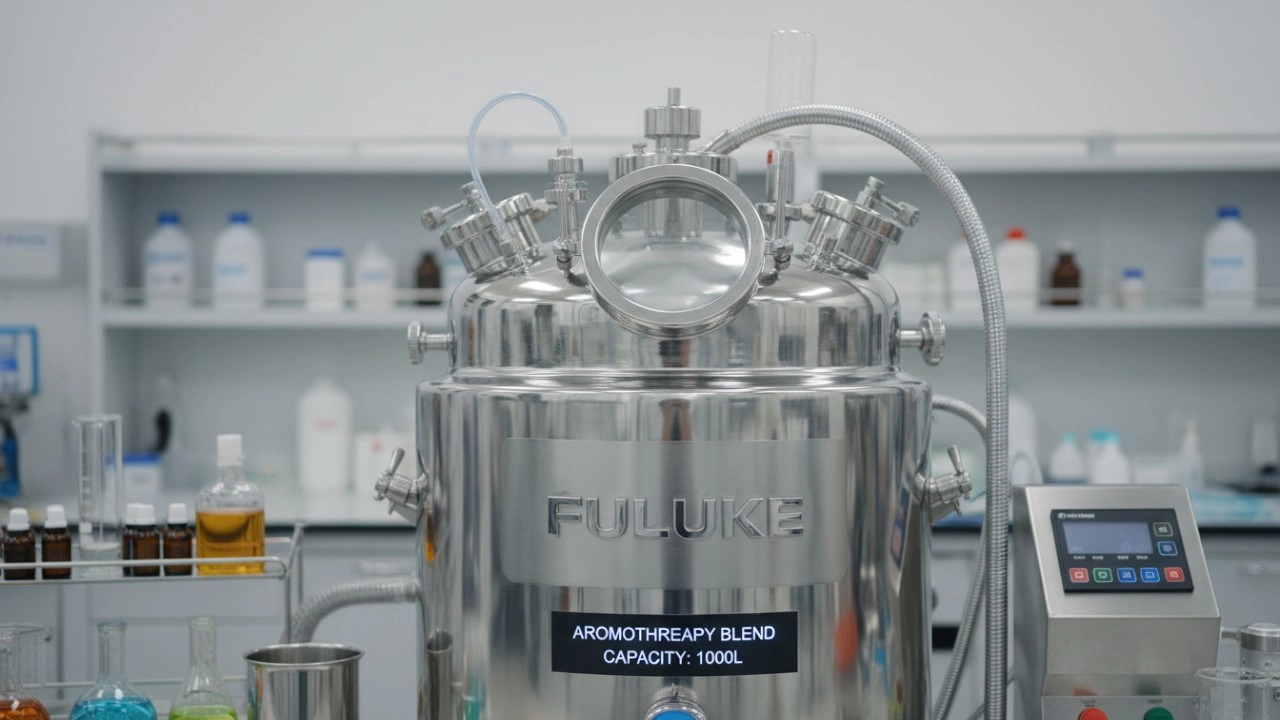
How Mixing Tanks Are Used in Aromatherapy & Cosmetics: The 2026 Guide
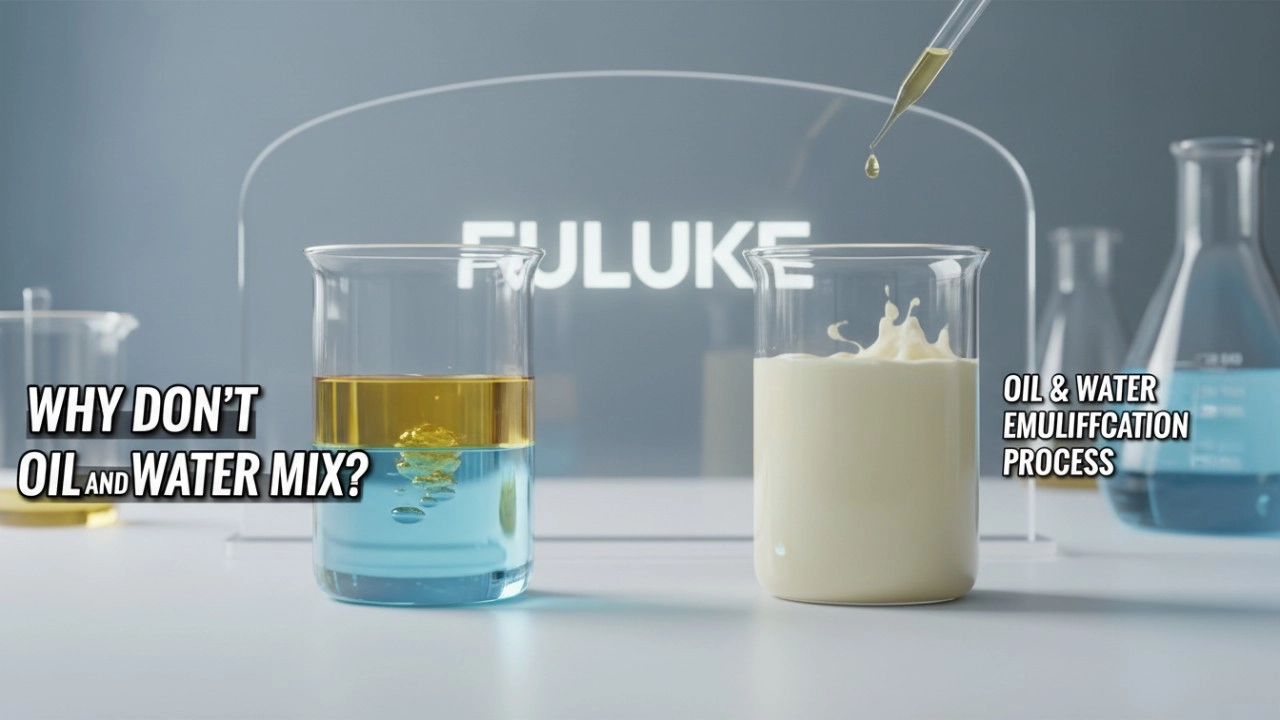
5 Revolutionary Methods to Mix Oil and Water: A Deep Dive into Advanced Emulsification (2026 Guide)
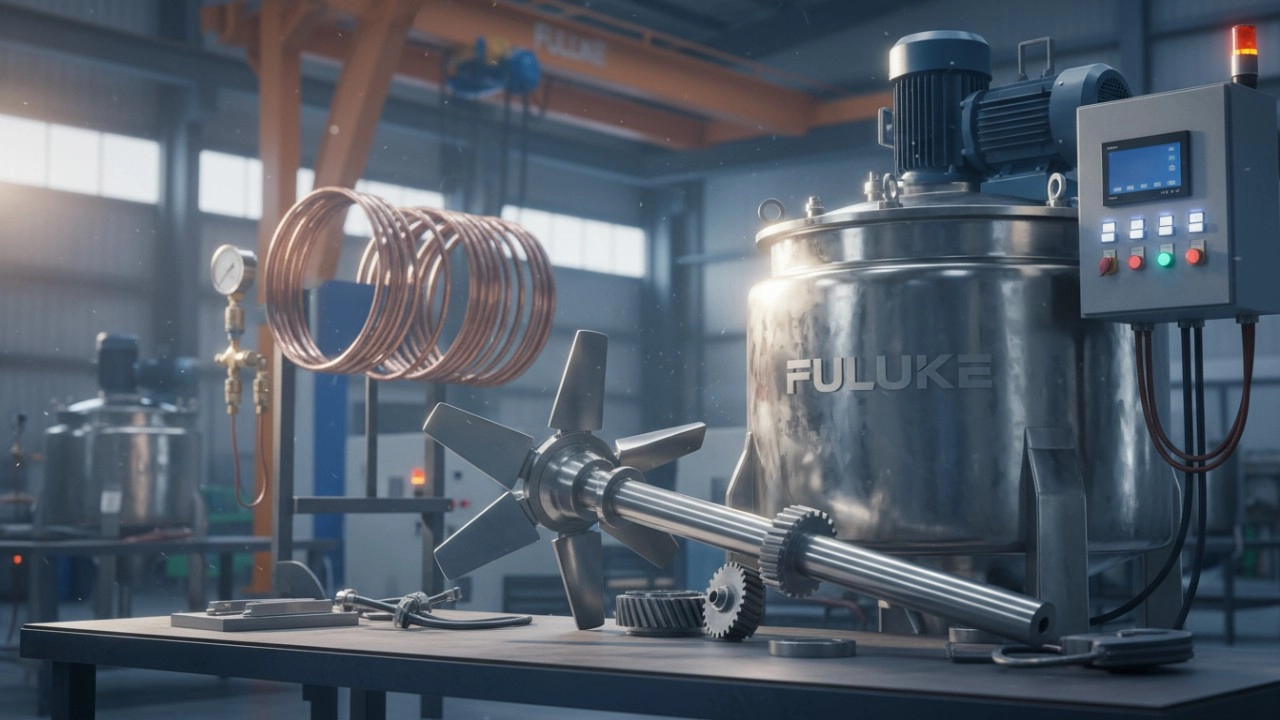
Top 7 Mixing Tank Component Failures (And How to Prevent Costly Downtime) in 2026
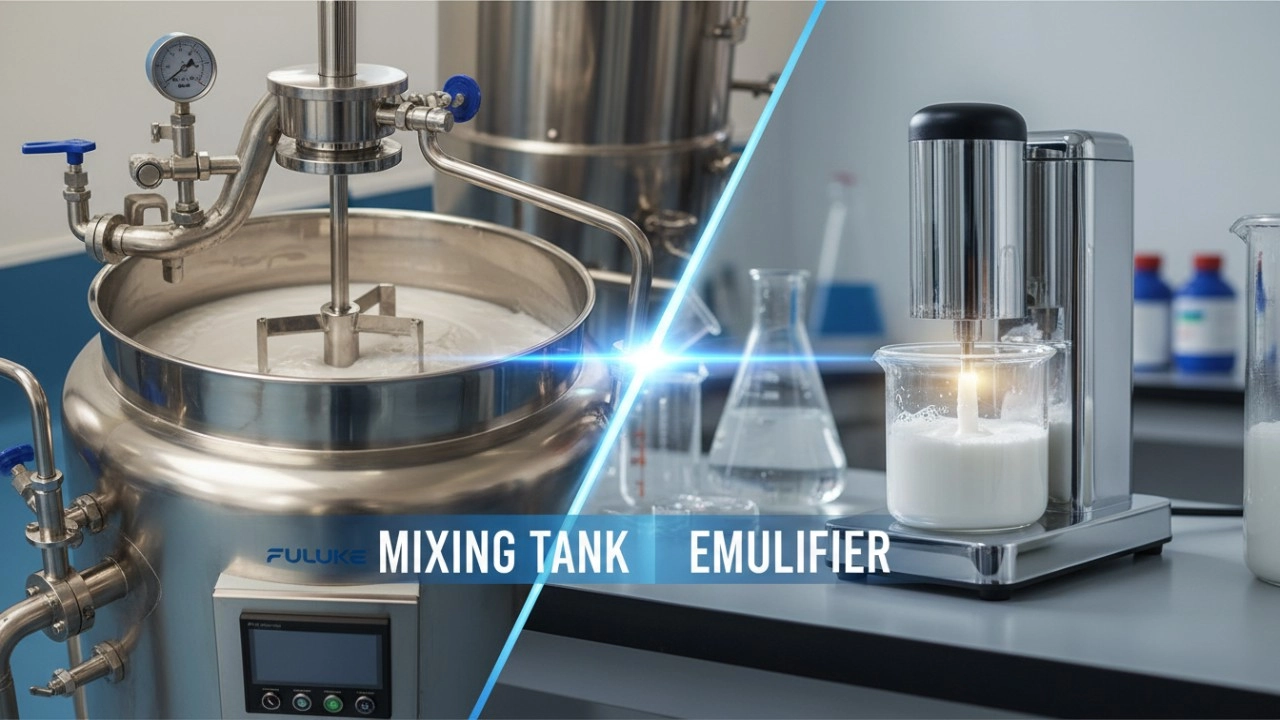
High-Shear Emulsifier vs. Standard Mixing Tank: A Deep Dive into Process Efficiency
Automatic Capping Machine
What types of bottle caps and bottles does the automatic capping machine support?
Mainstream models are compatible with screw caps, duckbill caps, pump caps, spray caps, and other threaded caps. They are also suitable for round, square, and oval bottles made of glass, PET, and HDPE.
Automatic Glass Bottle Washing Machine
What to do if the sprinkler head is clogged? How to prevent it?
If clogged, turn off the power to the equipment, remove the sprinkler head, and flush it with high-pressure water or soak it in a weak acid solution for 10-15 minutes to clear the blockage. Prevention methods: Clean the water circulation filter regularly to prevent impurities from entering the sprinkler head; use standard clean water (free from large amounts of sediment and impurities) to avoid long-term use of hard water that can cause scale buildup.
Perfume Filling Machine
What are the key differences between semi-automatic and fully automatic models? How should I choose?
Semi-automatic: Semi-automatic perfume filling machines only perform the core filling process and require manual assistance for bottle loading and capping. Filling speed: 10-20 bottles/minute, suitable for small-batch production. One or two people are required for assistance.
Fully automatic: Automatic perfume filling machines integrate the entire filling, capping, capping, and inspection process.
Filling speed: 30-50 bottles/minute, suitable for large-scale production. The entire process is unmanned, requiring only regular inspections.
The Flip Cover Liquid Wash Mixing Homogenizing Tank
Flip cover homogenizing mixing tank lacks a vacuum system. How should bubbles generated during mixing be handled?
Open mixing tank certainly can't remove air through vacuum like sealed equipment. However, if bubbles are affecting product quality, the following methods can be used to improve the process:
Process Adjustment: Reduce the mixing speed to prevent excessive air from being drawn into the material by high-speed turbulence. If homogenization is required, proceed in stages to reduce bubbles generated by a single shearing operation.
Assisted Degassing: For materials that can be heated, increase the temperature appropriately to reduce viscosity and promote bubble bubbling. Alternatively, allow the material to rest for a period of time after mixing to allow bubbles to dissipate naturally before proceeding to the next step.
Suitable Applications: This equipment is more suitable for products that are not sensitive to bubbles. For precision products requiring bubble-free production, a model with a vacuum function is recommended.
Perfume Freezing Filter Making Machine
Does the filtration process cause loss of fragrance components?
High-quality equipment uses a gradient filtration design (such as a 0.22μm precision filter membrane) to capture only condensed impurities and avoid adsorbing active fragrance molecules.
Get in touch with FULUKE
If you have any comments or good suggestions, please leave us a message, later our professional staff will contact you as soon as possible.
You May Also Like
Automatic Tube Filling and Sealing Machine Toothpaste Sunscreen and Facial Cleanser Filling and Sealing Machine for Plastic and Aluminum-plastic Tube
Over for Bottles High Temperature Sterilizer Tray Dryer Large Hot Air Circle Drying Oven for Glass Bottle Jar Cup Can
Automatic Glass Bottle Washing Machine High Quality Glass Bottle Cleaning Washer
Three-side/four-side sealing bag packaging machine Liquid Paste Jam Cream Sachet Vertical Filling Pouch Packing Machine

A leading manufacturer specializing in advanced machinery and complete production lines for the cosmetics, food, pharmaceutical, and chemical industries worldwide.
Contact FULUKE
Facebook
Instagram
YouTube