
How to choose a tank shape for optimal mixing performance?
- Choosing the Right Mixing Tank with Agitator for Cosmetic Equipment: A Comprehensive Guide
- 1. What are the different types of agitators used in mixing tanks?
- 2. How does tank shape influence mixing efficiency?
- 3. What materials are recommended for constructing mixing tanks in the cosmetic industry?
- 4. How do heating and cooling systems impact mixing processes?
- 5. What maintenance considerations should be taken into account?
- 6. How do I scale up a mixing process reliably?
- 7. What certifications should I look for in mixing equipment?
- 8. How do I choose the right tank size for my production needs?
- Conclusion: Why Choose FULUKE for Your Mixing Tank Needs?
Choosing the Right Mixing Tank with Agitator for Cosmetic Equipment: A Comprehensive Guide
When selecting a mixing tank with agitator for cosmetic equipment, it's crucial to consider various factors to ensure optimal mixing performance and product quality. Below are some common questions and their answers to guide you in making an informed decision.
1. What are the different types of agitators used in mixing tanks?
Agitators are essential components that facilitate the mixing process. Common types include:
Top-Mounted Agitators: Mounted at the top center of the tank, suitable for low to medium viscosity fluids. They can vary from simple propellers to complex impellers to achieve the desired mixing intensity.
Side-Mounted Agitators: Positioned on the side, these agitators handle high-viscosity fluids and provide high shear mixing needed for thick or sticky materials.
Bottom-Mounted Magnetic Mixers: Utilize magnetic coupling to rotate the impeller without penetration through the tank wall, ideal for closed systems to avoid contamination. They generally provide gentler agitation suitable for shear-sensitive products.
High-Shear Mixers: Employed when the formulation requires emulsion or homogenization, common in creams, lotions, and suspensions.
Anchor and Paddle Agitators: Anchor agitators move fluid from the tank walls inward, preventing material buildup; paddle agitators provide a radial flow and are effective for medium to high viscosity products.
2. How does tank shape influence mixing efficiency?
The shape of the tank significantly affects mixing performance:
Vertical Cylindrical Tanks: Commonly used, but require baffles to prevent swirling and ensure efficient mixing. Baffles are typically mounted 1/72 of the tank diameter off the wall and are 1/12 of the tank diameter in width. Four baffles are standard, but three can suffice for most applications.
Rectangular Tanks: Self-baffling, but not recommended for solid suspension due to potential dead spots in the corners.
Cone or Round Bottom Tanks: Ideal for solids suspension as there are no sharp angles, eliminating dead spots. For deep cone or round bottom tanks, baffles can be installed to promote axial mixing and prevent swirling.
3. What materials are recommended for constructing mixing tanks in the cosmetic industry?
Material selection is vital for durability and product safety:
Stainless Steel: Preferred due to its corrosion resistance, strength, and ease of cleaning. It's compatible with a wide range of chemicals and is commonly used in the cosmetic industry.
Glass-Lined Steel: Used in sensitive situations where non-reactivity is essential, such as with acidic or chemically reactive substances.
Plastic Tanks: Suitable for certain chemicals but may not withstand high temperatures. Not typically recommended for cosmetic applications due to potential leaching and durability concerns.
4. How do heating and cooling systems impact mixing processes?
Temperature control is crucial for certain cosmetic formulations:
- Jacketed Tanks: Equipped with heating or cooling jackets that allow precise temperature control, which is essential during emulsification processes. This feature can reduce mixing time by 25-40% and prevent ingredient degradation in heat-sensitive formulations.
5. What maintenance considerations should be taken into account?
Regular maintenance ensures longevity and optimal performance:
Seal Replacements: Budget approximately $200-$800 annually.
Impeller Balancing: Estimated at $150-$450 per year.
Sensor Calibrations: Around $300-$600 annually.
Preventive Cleaning (CIP) Servicing: Approximately $500+ per year.
6. How do I scale up a mixing process reliably?
Scaling up requires careful planning:
Process Validation: Ensure that the mixing process is validated for larger volumes to maintain product consistency.
Equipment Selection: Choose equipment that can handle increased volumes without compromising mixing efficiency.
Supplier Documentation: Ensure that the supplier provides comprehensive documentation, including process validation reports and equipment specifications.
7. What certifications should I look for in mixing equipment?
Certifications ensure compliance with industry standards:
FDA 21 CFR Part 11: Ensures electronic records and signatures are trustworthy and equivalent to paper records.
ISO 22716: Provides guidelines for good manufacturing practices in cosmetics.
EHEDG Compliance: Ensures equipment design is hygienic and suitable for the food and beverage industry.
CE/PED Certifications: Required for export to the European Union, indicating compliance with European safety standards.
8. How do I choose the right tank size for my production needs?
Selecting the appropriate tank size involves:
Assessing Production Volume: Match the tank size to your production volume to avoid inefficiencies.
Considering Batch Size: Small batches mix faster and need less energy, while large batches may require stronger mixing.
Evaluating Space Constraints: Ensure the tank fits within your facility's space limitations.
Conclusion: Why Choose FULUKE for Your Mixing Tank Needs?
FULUKE offers a range of mixing tanks with agitators tailored for the cosmetic industry. Our products are designed with precision, ensuring optimal mixing performance and product quality. With a focus on durability, efficiency, and compliance with industry standards, FULUKE is your trusted partner in mixing solutions.
For more information, visit our website or contact our sales team.
References:
(https://sdchenma.com/blog/choosing-chemical-mix-tanks-buyers-guide/)
(https://sdchenma.com/blog/chemical-mixing-tank-design-key-factors-for-safety-and-efficiency/)
(https://www.mixing-tank.com/blog/mixing-tank-design-key-considerations-for-optimal-performance/)
(https://www.fulukemix.com/article/choosing-mixing-tank-with-agitator/)
(https://sdchenma.com/blog/key-factors-mixer-tank-chemical/)
(https://sdchenma.com/blog/chemical-mixing-tank-design-material-selection/)

Understanding Servo Capping Machines: The Core Logic of Precise Capping – Understand the Entire Working Process in Seconds
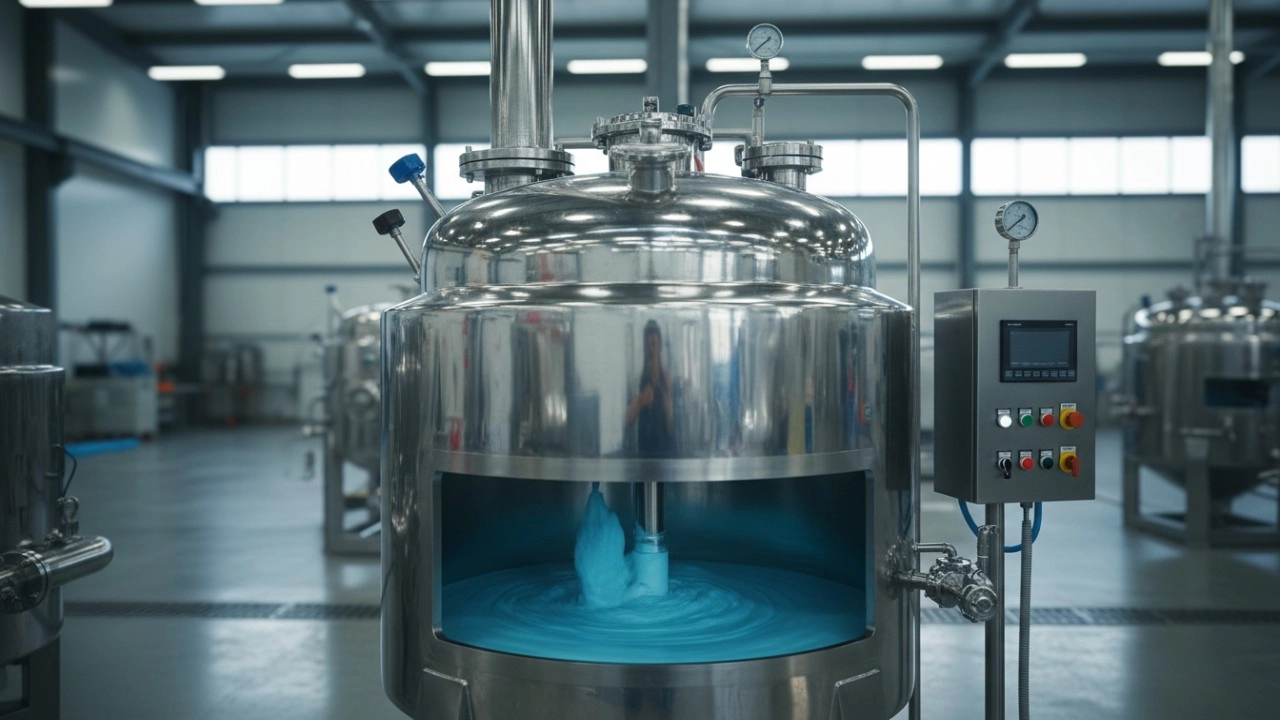
The Future of Industrial Agitation: 5 Smart Mixing Tank Technologies Changing the Game
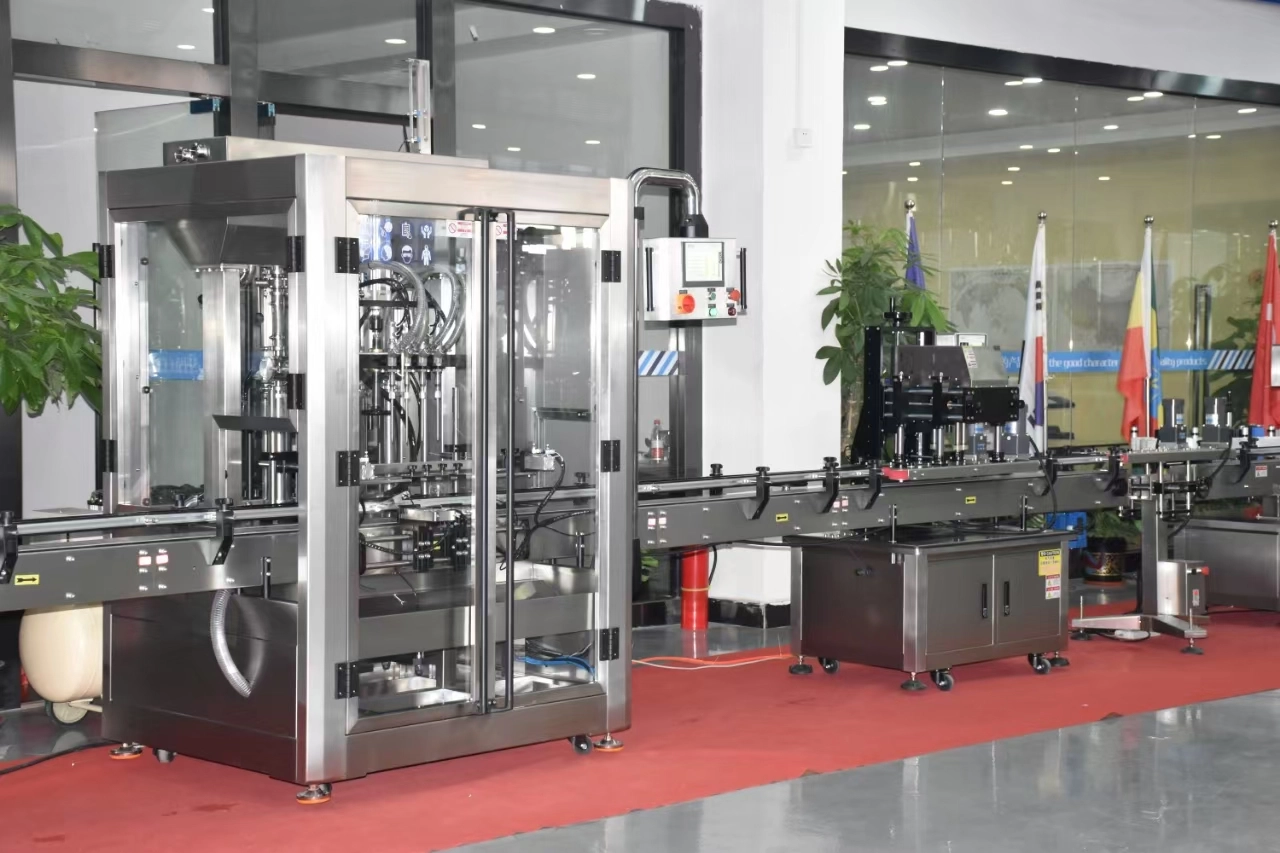
Gear pump filling machine vs. piston filling machine: Key differences broken down to avoid pitfalls in selection.
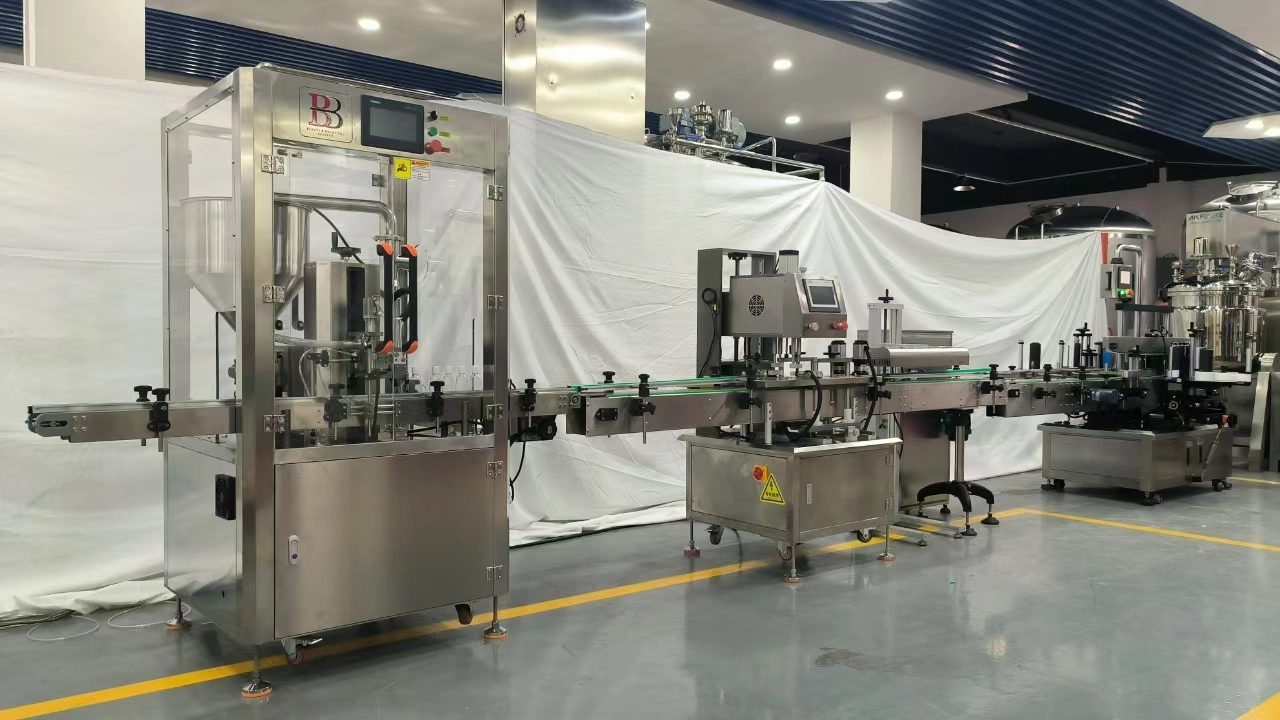
Understand the working principle of a servo gear pump filling machine!
Inkjet Printing Machine
What products can inkjet printers be used for?
It can be used for products such as carton, plastic, metal, boarding, pipe, stone, cable, glass, electronic components, auto parts, industrial chemical packaging, and medical/food/gift boxes.
The Flip Cover Liquid Wash Mixing Homogenizing Tank
Who are we?
Our headquarters is located in Guangzhou, Guangdong, China, and our factory is located in Yangzhou, Jiangsu. Our products are sold all over the world. We have approximately 50 employees in our company and factory.
Automatic Labeling Machine
Who are we?
Our headquarters is located in Guangzhou, Guangdong, China, and our factory is located in Yangzhou, Jiangsu. Our products are sold all over the world. We have approximately 50 employees in our company and factory.
Polypropylene PP Mixing Tank
Which mixing pot should I choose between a PP and a stainless steel mixing pot?
When the material is corrosive, a PP mixing pot is more advantageous. Stainless steel (such as 304) has poor resistance to acids and alkalis (easily corroded by hydrochloric acid and sodium hydroxide). For corrosion protection, upgrading to 316L stainless steel is necessary, which costs 2-3 times more than PP. PP, on the other hand, can withstand low- to medium-concentration corrosive media and offers low maintenance (no rust removal required, and low scaling).
When the material is non-corrosive, a stainless steel mixing pot is more advantageous. Stainless steel offers higher temperature resistance (up to 200°C), greater strength (suitable for high-viscosity materials), and a higher hygienic grade (easy to clean aseptically), making it suitable for non-corrosive but demanding applications such as food and pharmaceuticals.
What can you buy from us?
RO Water Treatment、Vacuum Emulsifying Machine、Homogenizer Mixing Tank、Filling and Capping、labeling Machine、Packing Machine、Storage Tank,etc.
Get in touch with FULUKE
If you have any comments or good suggestions, please leave us a message, later our professional staff will contact you as soon as possible.
You May Also Like
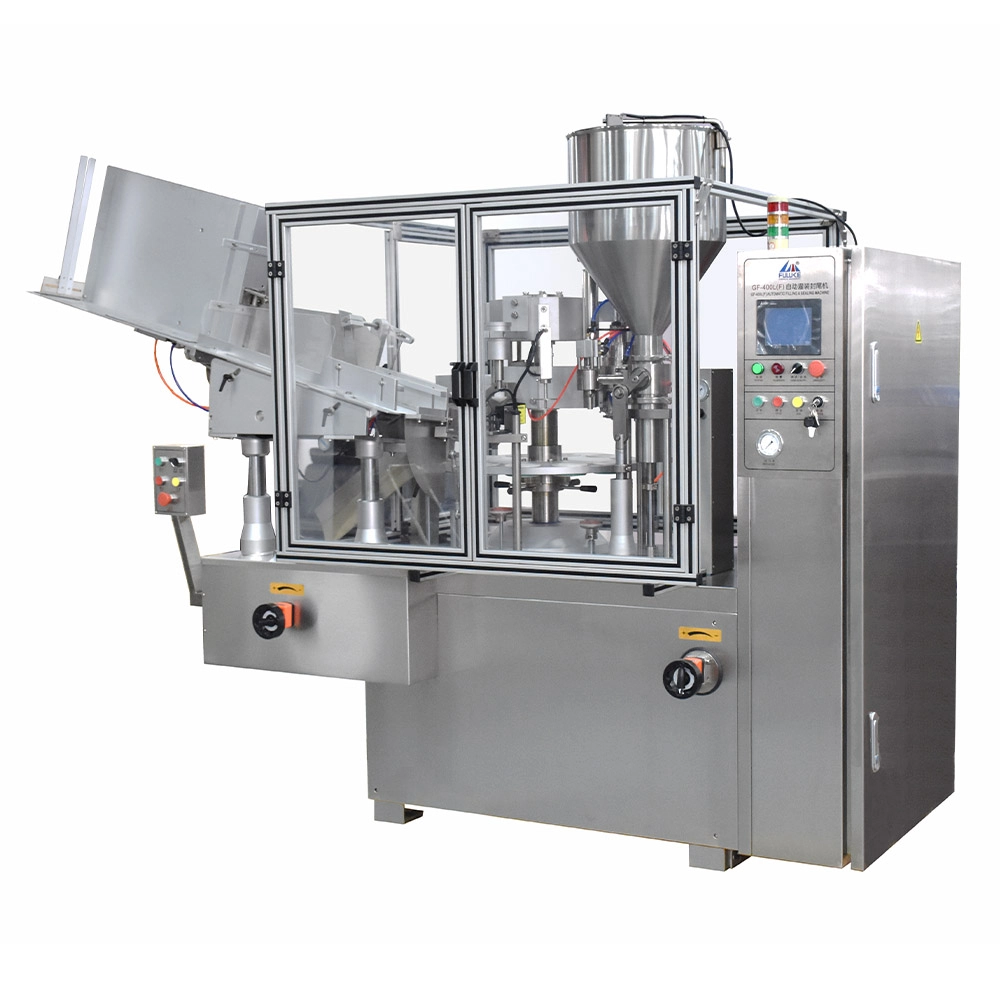
Automatic Tube Filling and Sealing Machine Toothpaste Sunscreen and Facial Cleanser Filling and Sealing Machine for Plastic and Aluminum-plastic Tube
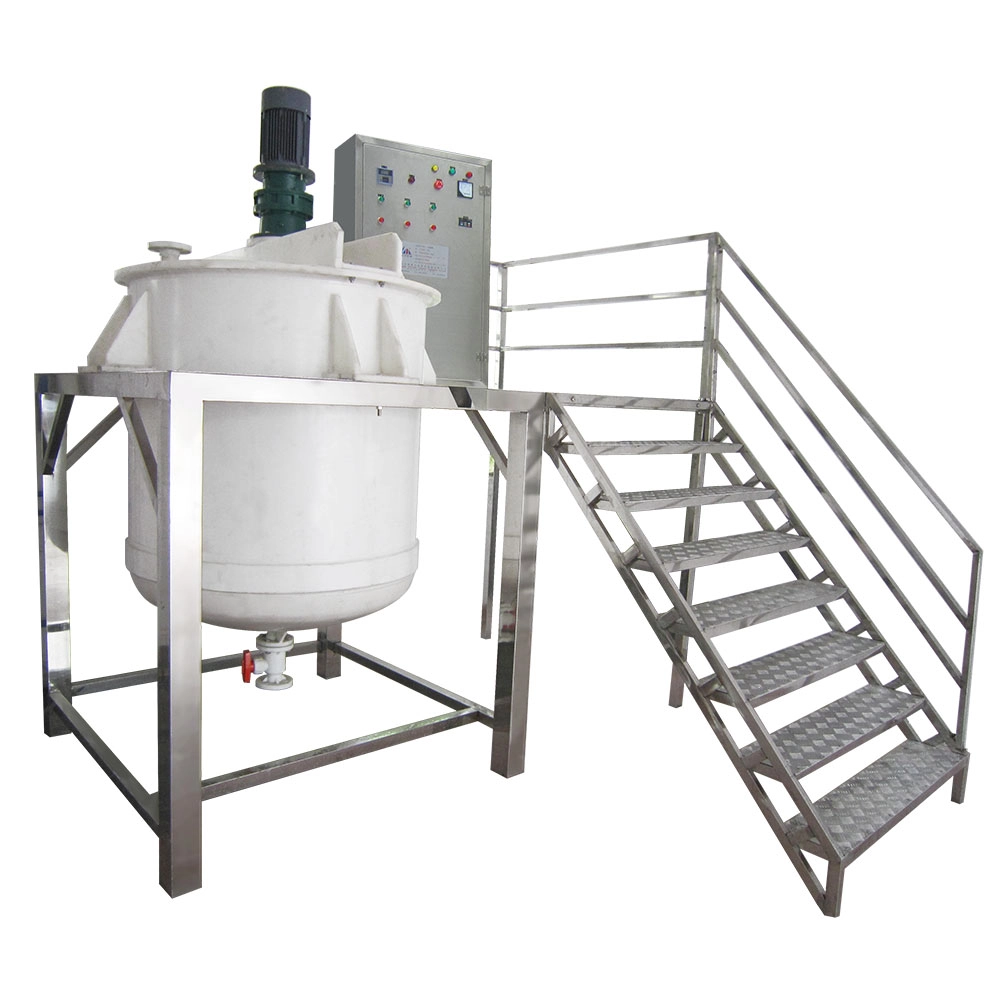
Polypropylene PP Mixing Tank Anti-Corrosion Mixer Reaction Kettle with Agitator Chemical Mixing Vessel
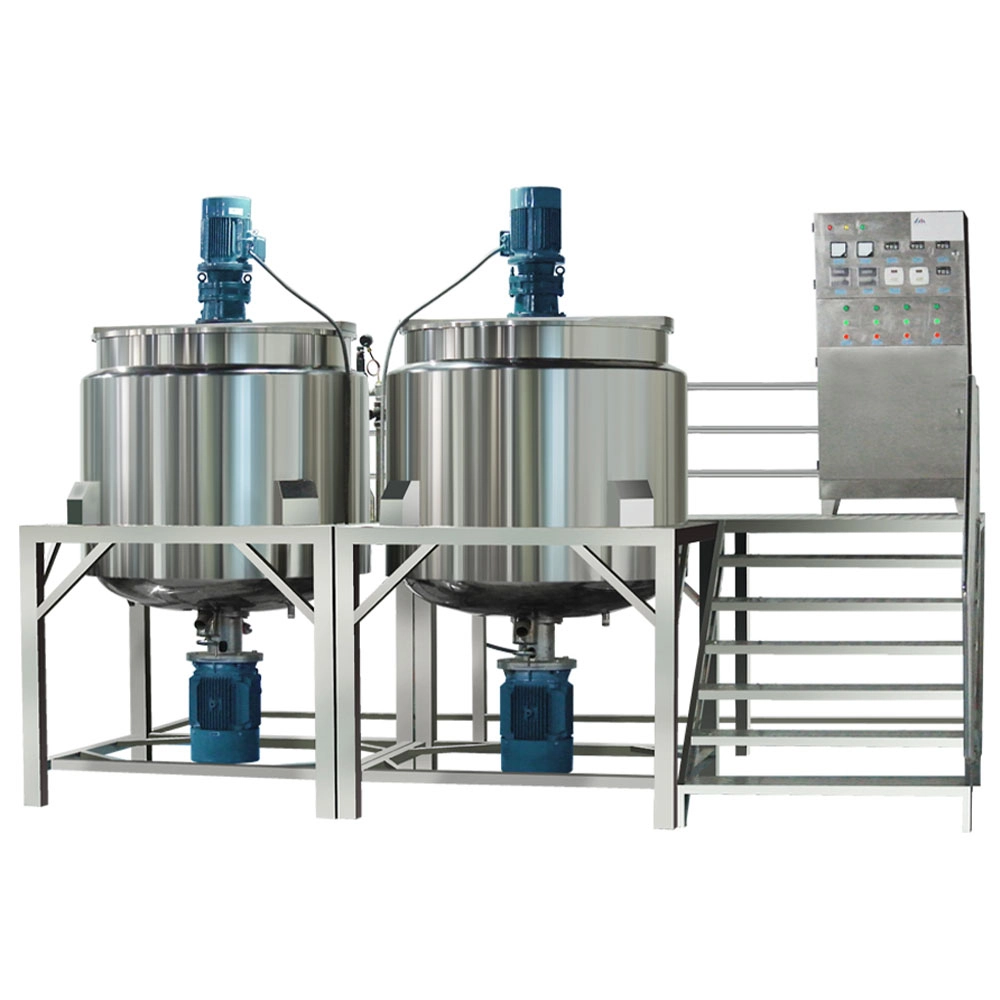
Flip Cover Multi-function Liquid Wash Mixing Tank Blender Liquid Detergent Mixer Homogenization Stirring Tank
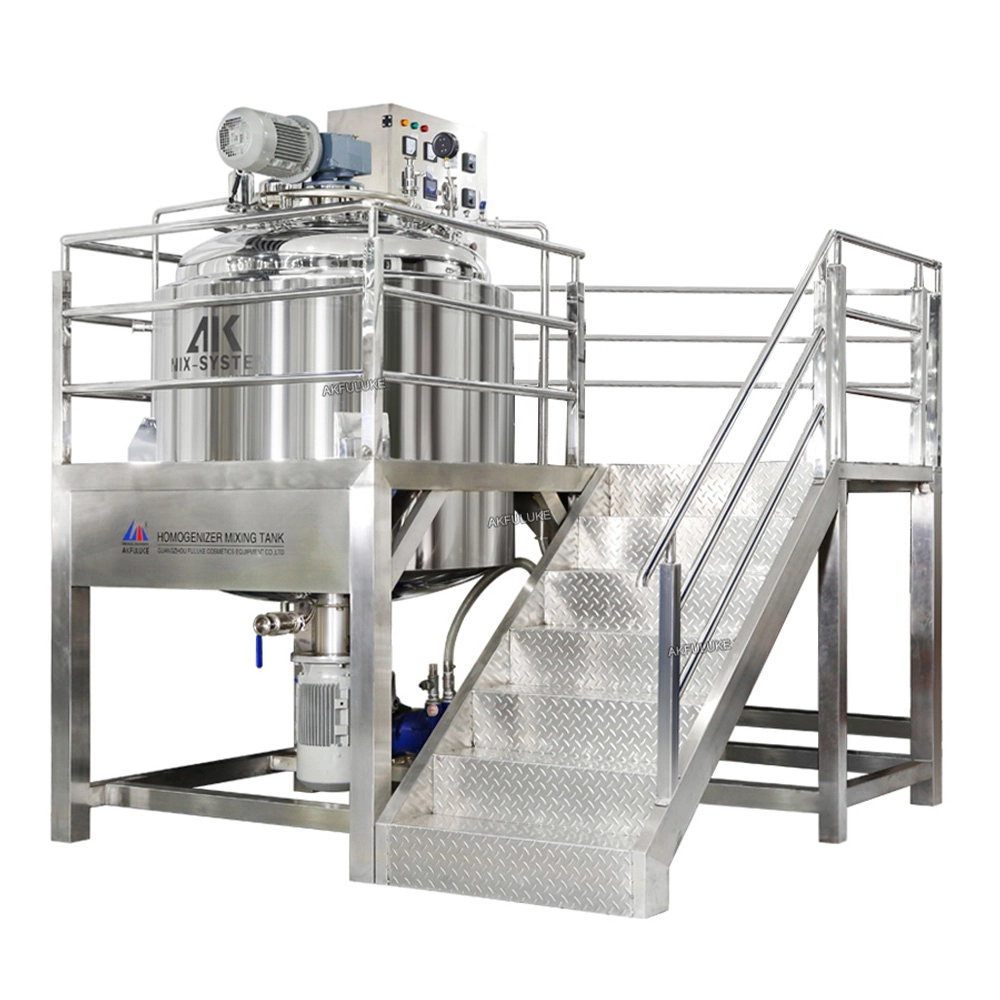
Stainless Steel Mixer Liquid Mixing tank with Agitator Homogenizing Mixing tank Vacuum Sealed Mixer Machine

A leading manufacturer specializing in advanced machinery and complete production lines for the cosmetics, food, pharmaceutical, and chemical industries worldwide.
Contact FULUKE
Facebook
Instagram
YouTube