
How to integrate filling machines into a production line?
- 1. What conveyor speed, synchronization method and encoder settings ensure a rotary bottle filling machine integrates smoothly without causing starves or jams?
- 2. How to prevent foaming, splashing and inconsistent fills when integrating high-speed filling for viscous serums and lotions?
- 3. How to accurately calculate real-world throughput when selecting a bottle filling machine (including changeovers, CIP, downtime and rejects)?
- 4. When retrofitting a semi-automatic piston filler into an automated cosmetic line, how to meet GMP (ISO 22716) hygiene standards and avoid contamination risks?
- 5. Which PLC communication protocols, I/O signals, and MES interfaces best support reliable integration of filling machines (and how to implement them)?
- 6. How to design quick-change tooling so you can switch between 3–5 bottle sizes within 10 minutes while keeping fill accuracy to ±1%?
1. What conveyor speed, synchronization method and encoder settings ensure a rotary bottle filling machine integrates smoothly without causing starves or jams?
Problem: Many beginners connect a rotary or inline filling machine to an existing conveyor and see intermittent bottle gaps, misfeeds or over-speeding that trigger rejects. The root cause is mismatch between conveyor pitch, encoder feedback and filler index timing.
Step-by-step solution:
- Measure existing conveyor pitch and bottle pitch (mm between bottle centers). If conveyors use slat or chain, confirm pitch tolerance ±0.5 mm at production speed.
- Select a single master encoder strategy: use a high-resolution (>= 2048 PPR) encoder on the upstream conveyor or a shaft encoder on the filler in single-master mode. This prevents cumulative timing drift between machines.
- Use closed-loop servo-driven infeed starwheels or servo lanes on the filler. Configure the servo to reference encoder pulses so the filler’s starwheel index aligns within ±1° angular tolerance. Servo-driven systems give repeatable positioning at high speeds.
- Match conveyor and filler nominal speeds: set conveyor speed so bottle pitch = filler pocket pitch. If the filler pockets are adjustable, set pocket centers to match bottle center-to-center distance to within ±1 mm.
- Configure acceleration/deceleration ramps on conveyors and filler to avoid jerks—typical ramp times 0.5–2 s depending on mass and speed. Sudden speed changes cause bottles to tip or bounce.
- Enable line feedback signals: 24 VDC PNP/NPN sensors or photobeams that report bottle present, jam, low-bottle. Implement a 3-stage look-ahead sensor layout: detect three bottles upstream, two bottles, then the pocket entry. Use these for small automatic speed adjustments or controlled stops.
Acceptance criteria: continuous run for 60 minutes at target speed with <1% misfeed and no mechanical jams. Log encoder vs. servo position error; maintain error <0.5% of pocket pitch.
2. How to prevent foaming, splashing and inconsistent fills when integrating high-speed filling for viscous serums and lotions?
Problem: Cosmetic serums and lotions often foam, shear-sensitive, or create drag lines that ruin aesthetics and waste product when pushed into bottles at speed.
Practical controls and design choices:
- Choose the right dosing technology: for low- to medium-viscosity serums, use servo-driven piston fillers or precision peristaltic pumps (peristaltic for shear-sensitive). For higher viscosity creams, progressive cavity or gear pumps with low shear are recommended.
- Nozzle selection and immersion technique: use anti-drip, bottom-up nozzles or dipping nozzles that insert into the bottle to the correct depth and withdraw slowly to reduce drag-lines and foam. A controlled dwell at the end of dosing reduces headspace turbulence.
- Adjust fill profile with multi-stage dosing: pre-fill slow (10–30% flow), then ramp to full flow, then taper to a slow finish. Servo-driven valves or proportional pumps can precisely shape this profile.
- Use vacuum deaeration upstream or inline degassing for particularly foamy formulations. Inline static mixers and degassing tanks with controlled residence time (minutes depending on formulation) reduce entrained air.
- Temperature control: slightly warming (2–10 °C, depending on ingredient stability) lowers viscosity and reduces splashing. Verify product stability and shelf-life before heating.
- Install drip trays, splash guards and overflow detection (level sensors) where necessary. Combine with CNC-controlled nozzle height and anti-drip solenoid valves for clean separation.
Validation checklist: run ASTM-like fill consistency test over 500 cycles; measure weight variance (target CV <1% for High Quality cosmetics) and visually inspect for foam and tails on 100 random samples.
3. How to accurately calculate real-world throughput when selecting a bottle filling machine (including changeovers, CIP, downtime and rejects)?
Problem: Supplier nominal speeds are optimistic; buyers need to calculate effective throughput to size machines correctly and avoid under- or over-investment.
Formula and method:
Effective throughput (bottles/hour) = Nominal speed (bph) × Availability × Performance × Quality
Where:
- Availability = (Planned production time – Unplanned downtime) / Planned production time
- Performance = Actual run speed / Nominal speed (accounts for speed reductions due to product handling)
- Quality = (Good bottles produced) / (Total bottles started) = 1 − Reject rate
Example calculation (realistic):
- Nominal speed = 3,600 bph (60 bpm)
- Planned production time per shift = 8 hours = 28,800 seconds
- Planned downtime: scheduled breaks, changeover and CIP = 90 min/day → Availability = (8 hrs − 1.5 hrs)/8 hrs = 81.25%
- Performance: due to gentle fills for viscous product, you run at 85% of nominal → Performance = 0.85
- Quality: initial reject rate (first run) 3% → Quality = 0.97
- Effective throughput = 3,600 × 0.8125 × 0.85 × 0.97 ≈ 2,434 bph
Implication: a machine advertised at 3,600 bph may produce ~2,400 bph in real conditions. Use the formula to estimate ROI and decide whether to buy a higher-capacity rotary filler or add parallel lines. Track real OEE (Overall Equipment Effectiveness) using PLC/MES data to refine estimates.
4. When retrofitting a semi-automatic piston filler into an automated cosmetic line, how to meet GMP (ISO 22716) hygiene standards and avoid contamination risks?
Problem: Small shops retrofit semi-auto fillers but overlook sanitary finishes, cleaning access and materials—leading to contamination risks and failed audits.
Clear retrofit checklist:
- Material selection: use 316L stainless steel contact parts. Avoid brass or mixed metals that can leach. Ensure seals are FDA/USP class silicone or EPDM compatible with product chemistry.
- Surface finish: polish wetted surfaces to Ra ≤ 0.8 µm (preferably ≤ 0.6 µm) to reduce microbial harborage. Smooth finishes also improve CIP effectiveness.
- Design for disassembly: create quick-release clamps and tool-less removal for nozzles, manifolds and product lines. This reduces manual handling time during cleaning and lowers contamination risk.
- CIP/SIP readiness: if integrating into automated line, provide a CIP loop with pump, heated detergent and rinse circuits. For cosmetics, typical CIP temperatures are 60–80 °C depending on ingredients; validate chemical compatibility first.
- Air quality and environment: comply with ISO 14644 cleanliness where needed; at minimum implement positive-pressure filtered air (HEPA) in filling rooms and local laminar flow where open filling occurs.
- Validation and documentation: create cleaning validation protocols (swab testing, TOC or ATP assays) and keep batch records in MES. Track product changeover logs and allergen control if applicable.
Implementation tip: when retrofitting, add an interlocked safety and hygiene hood with UV or HEPA filtration for open nozzle operations and ensure the machine integrates with your QA sampling points.
5. Which PLC communication protocols, I/O signals, and MES interfaces best support reliable integration of filling machines (and how to implement them)?
Problem: Integration fails or is brittle because suppliers provide proprietary communications or only basic I/O. Modern lines demand MES/SCADA integration, recipe download, and traceability.
Best practices:
- Preferred fieldbuses and protocols: EtherNet/IP and PROFINET are industry-standard for high-speed deterministic control and are widely supported by PLC vendors (Allen-Bradley, Siemens). Modbus TCP is easier but less feature-rich. OPC UA is recommended for secure MES/SCADA connectivity and semantic data transfer.
- Required I/O and signals: provide digital signals for START/STOP, RUN/FAULT, PEEL/SEAL, BOTTLE_PRESENT, LOW_PRODUCT, and encoder pulses. Use standardized 24 VDC PNP outputs and sinking inputs where possible.
- Recipe and batch transfer: implement file-based recipe transfer (JSON or XML) via SMB or use OPC UA methods so MES can push recipe sets, operator ID, lot number and formulation data to the filler at changeover.
- Time sync and traceability: use NTP for time stamps and ensure each batch has immutable UID. Provide event logs accessible through OPC UA history or MES API for audits.
- Cybersecurity: follow IEC 62443 guidelines—segmented networks, VPN for remote vendor access, and role-based operator accounts. Avoid open Telnet or unsecured FTP.
Implementation example: choose a filler with EtherNet/IP and OPC UA; configure PLC tags for key KPIs (speed, fills, rejects, CIP cycles). In MES, map those tags to production orders and automate lot creation when the filler receives a new recipe.
6. How to design quick-change tooling so you can switch between 3–5 bottle sizes within 10 minutes while keeping fill accuracy to ±1%?
Problem: Long changeover times hurt small-batch cosmetic runs; yet sloppy tool changes cause leaks or weight variance.
Engineering and operational approach:
- Modular quick-change plates: use dovetail or tapered dowel + clamp systems for neck guides, bottle pockets and grippers. Color-code plates for each format and provide kitting trays for fast operator verification.
- Pre-calibrated nozzle kits: provide nozzle assemblies pre-adjusted and serialized for each bottle size. Include mechanical stoppers for immersion depth so operators can swap without re-measuring.
- Adjustable servo lanes and recipe offsets: store servo position profiles per bottle size in the PLC. On recipe load, the machine moves to saved positions eliminating manual adjustment steps.
- Tooling set checklist & sign-off: require a two-person verification (operator + QA) with a digital sign-off in MES; this reduces setup errors and documents traceability.
- Validation run: after changeover, run a 20-bottle fill verification to check weight and visual quality. Automate weight checks using an in-line checkweigher and set automatic acceptance thresholds (e.g., ±1%).
- Spare parts and spares management: keep at least one full spare tooling kit per format and maintain a maintenance log for wear parts. Use RFID tags on tooling to track cycles and recommend replacement after defined cycles.
Operational target: aim for 8–10 minute cumulative changeover: 3–4 minutes mechanical swap, 1 minute recipe load and auto-positioning, 2–3 minutes QA checks and 1 minute for resolving small issues. Track average changeover with MES for continuous improvement.
Concluding paragraph — Advantages of integrating filling machines into a production line
Integrating bottle filling machines into a production line delivers predictable throughput, improved product hygiene, repeatable fill accuracy, and full digital traceability. Proper synchronization, PLC/MES connectivity, sanitary design (316L stainless, RA ≤ 0.8 μm), CIP readiness and modular quick-change tooling minimize waste, speed changeovers and support regulatory compliance such as ISO 22716 and EC No. 1223/2009. For cosmetic manufacturers that prioritize flexibility and quality, a fully integrated rotary or inline liquid filling machine with servo control, in-line checkweigher and capping station increases OEE, reduces labor costs and improves batch traceability.
Contact us for a quote: www.fulukemix.com or email flk09@gzflk.com.

Understanding Servo Capping Machines: The Core Logic of Precise Capping – Understand the Entire Working Process in Seconds
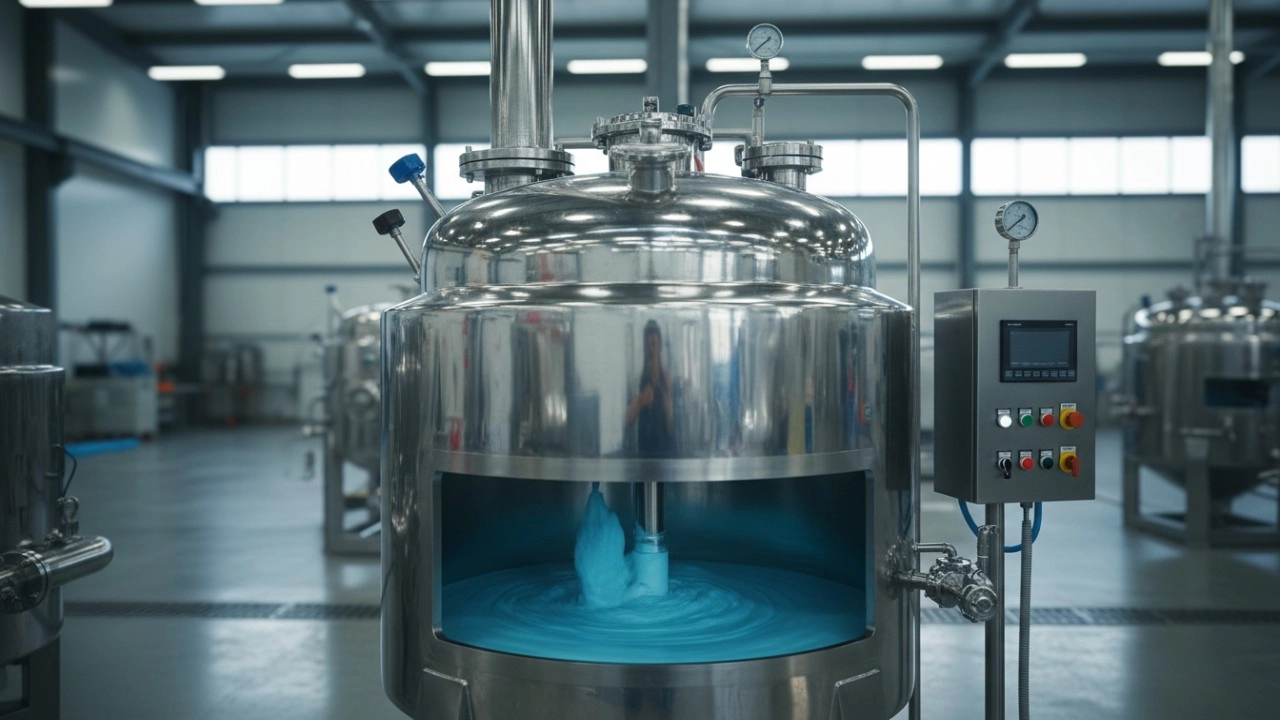
The Future of Industrial Agitation: 5 Smart Mixing Tank Technologies Changing the Game
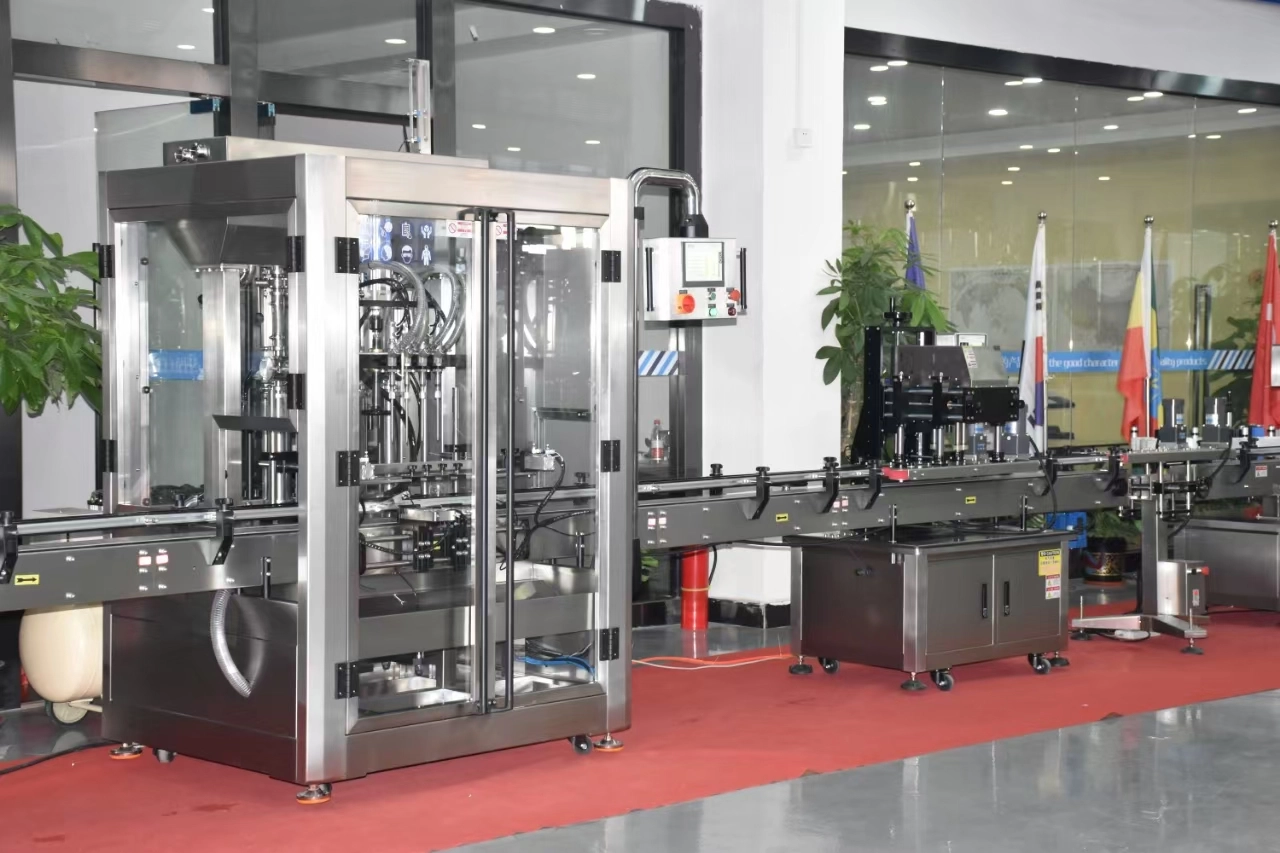
Gear pump filling machine vs. piston filling machine: Key differences broken down to avoid pitfalls in selection.
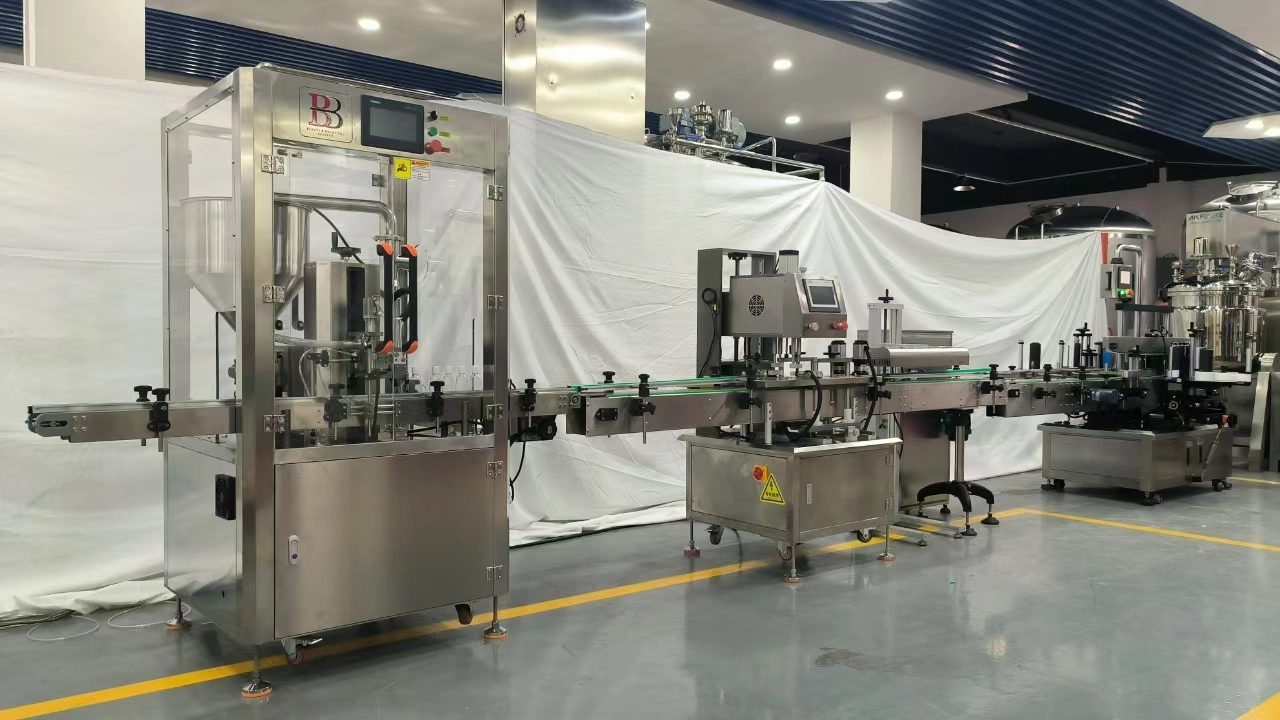
Understand the working principle of a servo gear pump filling machine!
Vacuum Emulsifying Machine
What can you buy from us?
RO Water Treatment、Vacuum Emulsifying Machine、Homogenizer Mixing Tank、Filling and Capping、labeling Machine、Packing Machine、Storage Tank,etc.
Automatic Labeling Machine
What types of bottles can this automatic labeling machine label?
It can label flat, round, and square bottles on one side, two sides, or even all around.
Can you customize the machine?
Of course, we provide customized services according to customer needs.
Automatic Facial Mask Filling Machine
We want to fill products in multiple volumes (e.g., 5ml, 20ml, 50ml). Do we need to purchase multiple filling machines?
No, most facial mask filling machines support multiple volume adjustments. When purchasing, please confirm the machine's "volume adjustment range" (e.g., 5ml-50ml) to ensure it covers your desired specifications. Changing volumes simply requires modifying the fill volume parameters on the touchscreen.
Lift-type Homogenizing Disperser
What precautions should be taken before and during equipment startup?
Before startup: Check that the disperser disc is securely installed, the container is clamped securely, and the lifting mechanism is flexible. Also, verify the material level (it must be submerged above the disperser disc to prevent damage from idling or material splashing).During operation: Start at a low speed and gradually increase to the target speed. Manually adjusting the lifting height during operation is prohibited; always stop the machine to avoid hand entanglement.
Get in touch with FULUKE
If you have any comments or good suggestions, please leave us a message, later our professional staff will contact you as soon as possible.
You May Also Like
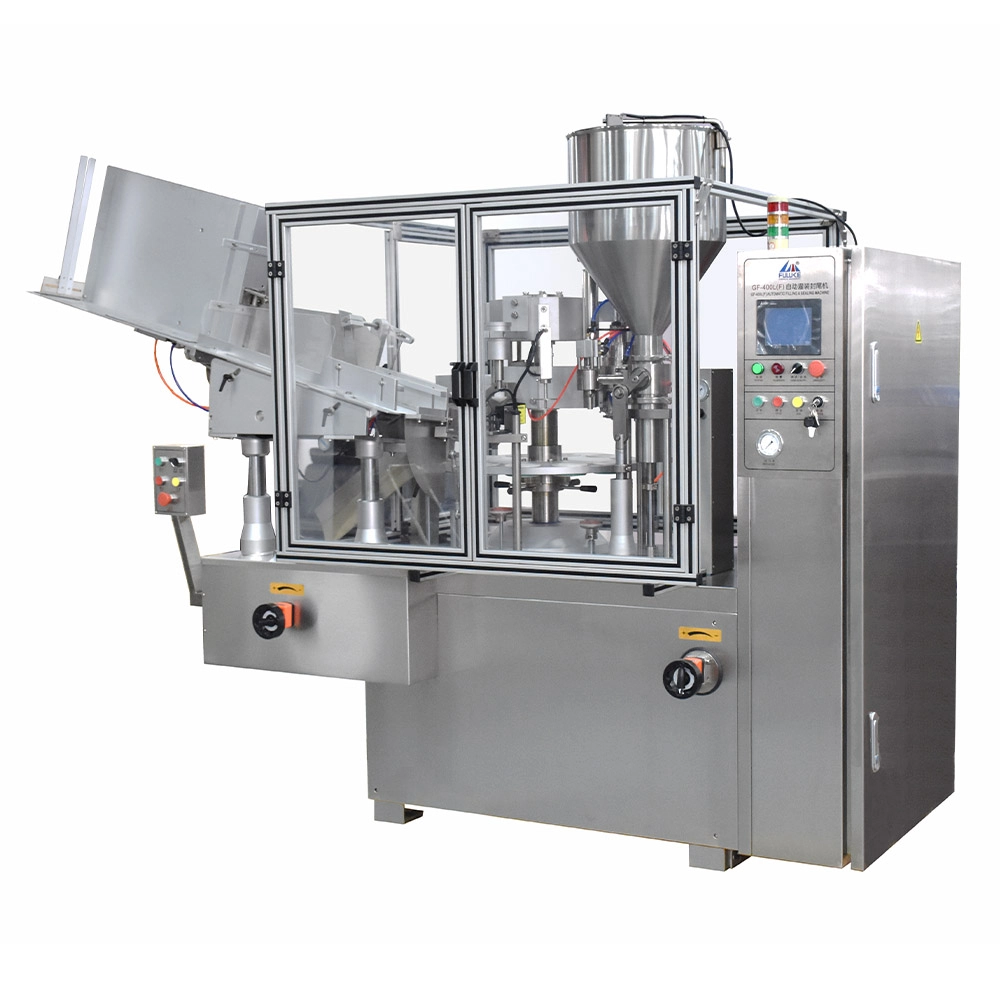
Automatic Tube Filling and Sealing Machine Toothpaste Sunscreen and Facial Cleanser Filling and Sealing Machine for Plastic and Aluminum-plastic Tube
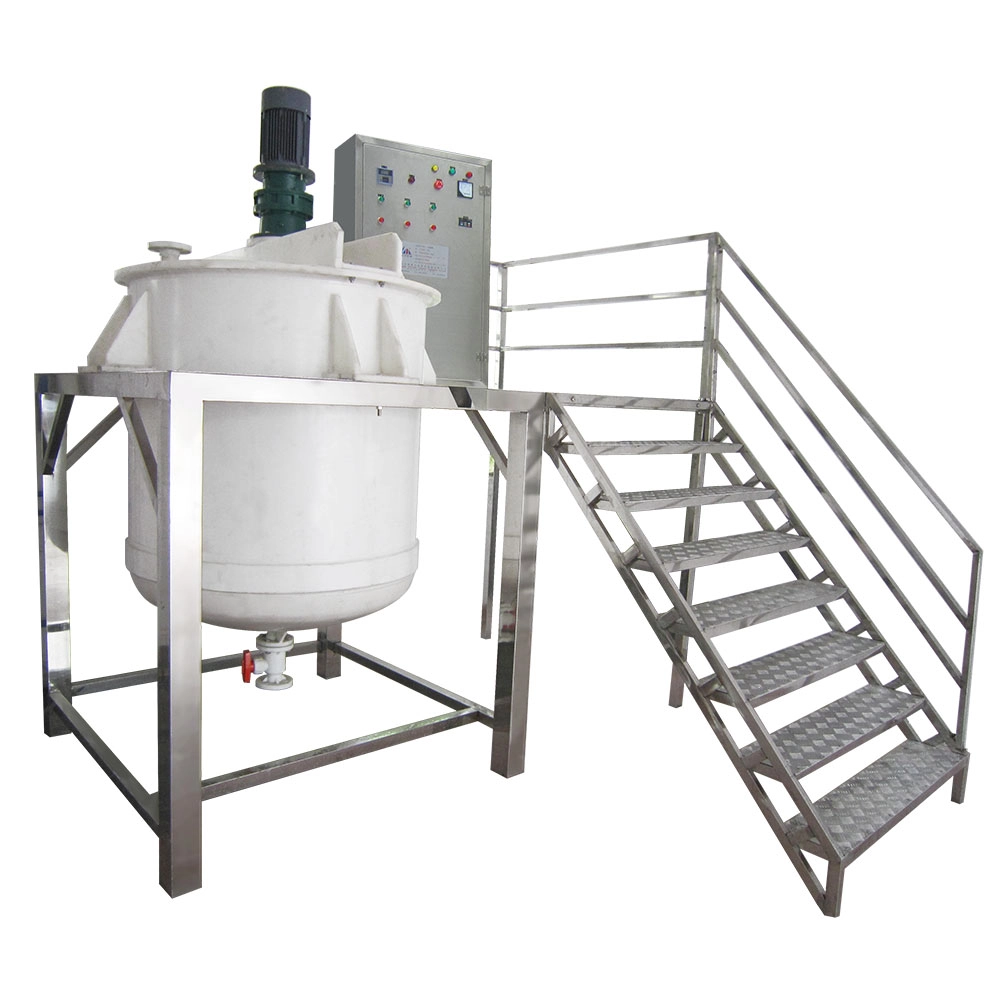
Polypropylene PP Mixing Tank Anti-Corrosion Mixer Reaction Kettle with Agitator Chemical Mixing Vessel
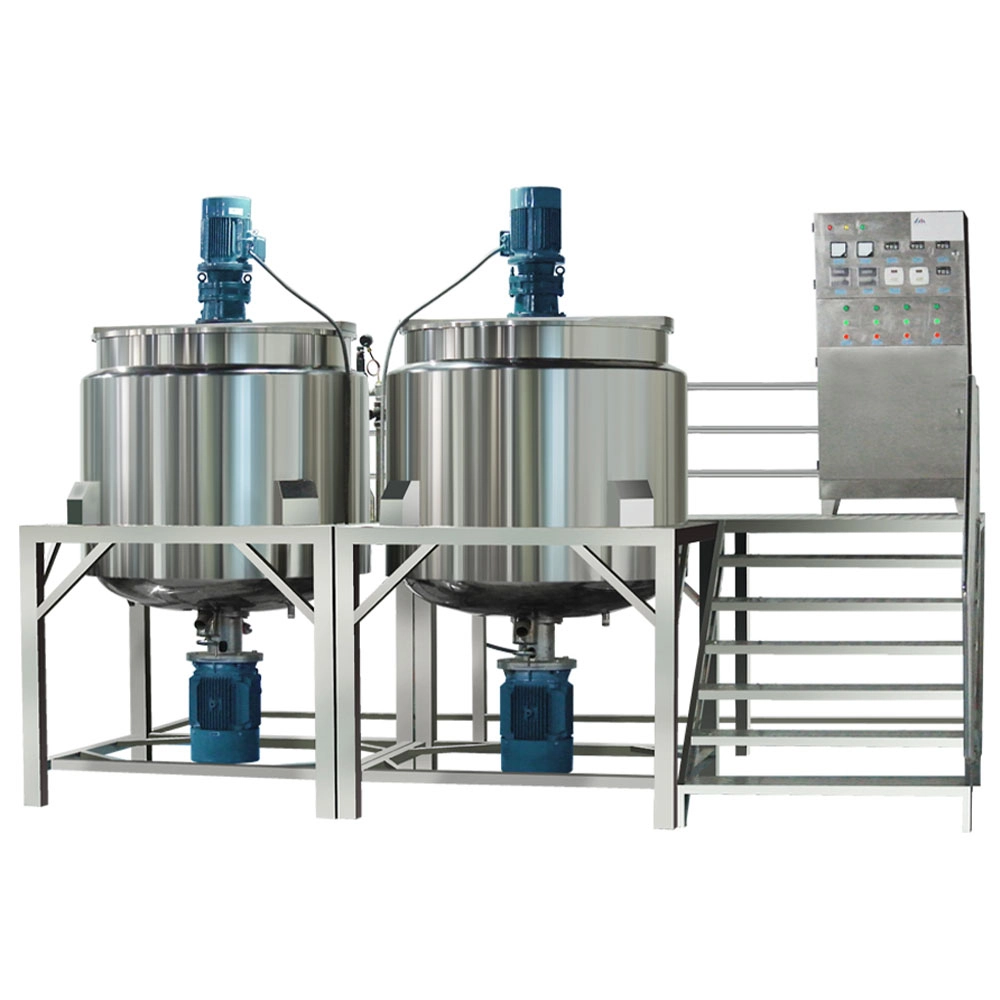
Flip Cover Multi-function Liquid Wash Mixing Tank Blender Liquid Detergent Mixer Homogenization Stirring Tank
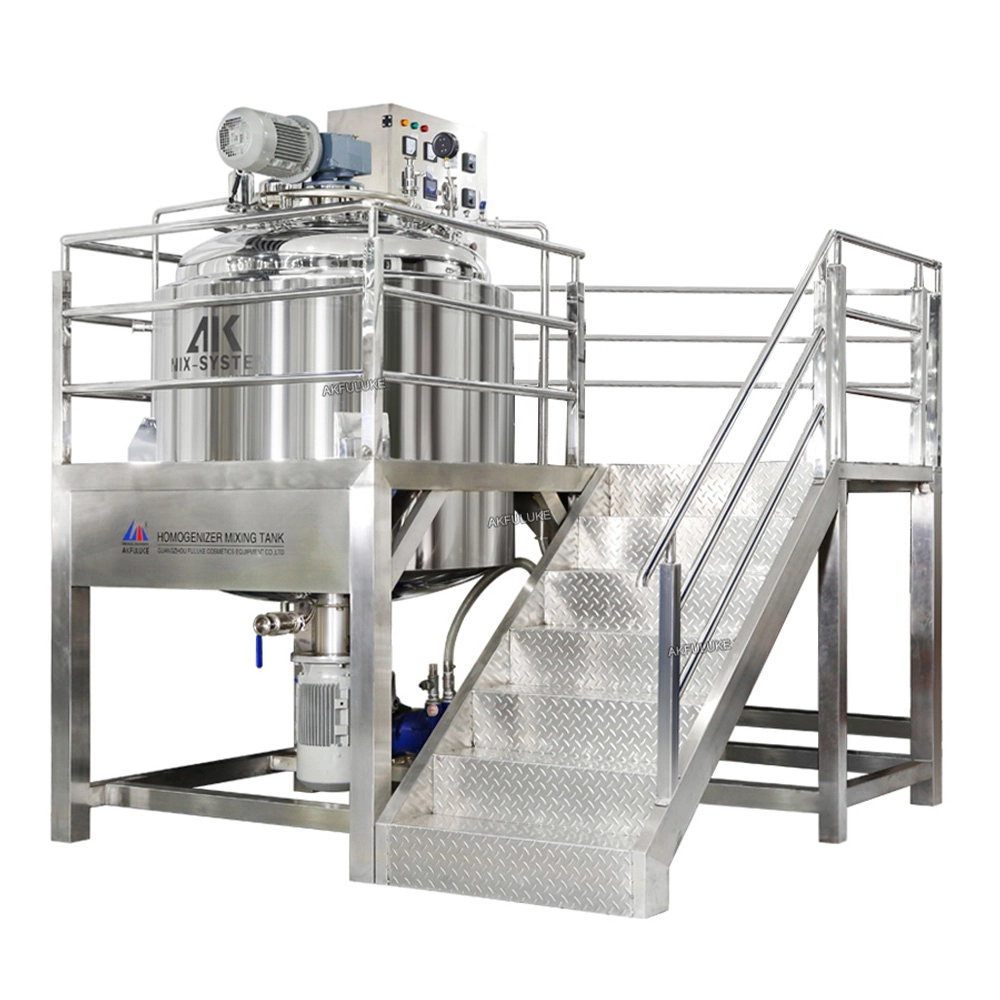
Stainless Steel Mixer Liquid Mixing tank with Agitator Homogenizing Mixing tank Vacuum Sealed Mixer Machine

A leading manufacturer specializing in advanced machinery and complete production lines for the cosmetics, food, pharmaceutical, and chemical industries worldwide.
Contact FULUKE
Facebook
Instagram
YouTube