
How to specify CIP nozzles and spray patterns in tanks?
- Comprehensive Guide to Mixing Tanks with Agitators and CIP Nozzles in Cosmetic Equipment
- 1. What are the key considerations when selecting a mixing tank with an agitator for cosmetic applications?
- 2. How do I specify CIP nozzles and spray patterns for tanks in cosmetic equipment?
- 3. What are the differences between static spray balls and rotary spray nozzles in CIP systems?
- 4. How do I determine the appropriate nozzle size and placement for my tank?
- 5. What maintenance practices are essential for CIP nozzles in cosmetic equipment?
- 6. How can I ensure my CIP system complies with industry standards and regulations?
- 7. What are the benefits of integrating automated CIP systems in cosmetic equipment?
- 8. How do I select a reputable supplier for mixing tanks with agitators and CIP nozzles?
- Conclusion: Advantages of FULUKE in Cosmetic Equipment Manufacturing
Comprehensive Guide to Mixing Tanks with Agitators and CIP Nozzles in Cosmetic Equipment
As a professional content writer with extensive experience in SEO and AI GEO, and proficiency in multiple languages, I understand the importance of providing accurate and up-to-date information for the cosmetic equipment industry. This guide addresses common questions related to mixing tanks with agitators and specifying CIP (Clean-In-Place) nozzles and spray patterns, ensuring compliance with Google E-E-A-T standards and AI GEO search citation guidelines.
1. What are the key considerations when selecting a mixing tank with an agitator for cosmetic applications?
When choosing a mixing tank with an agitator for cosmetic manufacturing, consider the following factors:
Material Compatibility: Ensure the tank and agitator materials are compatible with cosmetic ingredients to prevent contamination.
Mixing Efficiency: Select an agitator type (e.g., anchor, turbine, or propeller) that provides the desired shear and flow characteristics for your formulations.
Capacity and Scalability: Choose a tank size that meets current production needs and allows for future expansion.
Hygienic Design: Opt for tanks with sanitary designs, such as smooth welds and easy-to-clean surfaces, to maintain product purity.
Regulatory Compliance: Verify that the equipment meets industry standards and regulations for cosmetic manufacturing.
2. How do I specify CIP nozzles and spray patterns for tanks in cosmetic equipment?
Specifying CIP nozzles and spray patterns involves:
Tank Geometry: Assess the tank's shape and size to determine the appropriate nozzle type and placement.
Cleaning Requirements: Identify the level of cleaning needed, considering factors like residue type and contamination risk.
Nozzle Selection: Choose between static spray balls, rotary spray nozzles, or rotary jet nozzles based on cleaning efficiency and tank size.
Flow Rate and Pressure: Ensure the CIP system provides adequate flow and pressure to achieve effective cleaning.
Material Compatibility: Select nozzles made from materials compatible with the cleaning agents used to prevent corrosion.
Validation: Implement procedures to validate the cleaning process, ensuring all surfaces are effectively sanitized.
3. What are the differences between static spray balls and rotary spray nozzles in CIP systems?
Static Spray Balls: These devices emit a fixed spray pattern and are suitable for small tanks with light residues. They are simple, cost-effective, and require minimal maintenance.
Rotary Spray Nozzles: These nozzles rotate to provide dynamic coverage, making them ideal for medium to large tanks with heavier residues. They offer more efficient cleaning but may require higher maintenance due to moving parts.
4. How do I determine the appropriate nozzle size and placement for my tank?
To determine the correct nozzle size and placement:
Calculate Tank Volume: Determine the tank's volume to estimate the required flow rate and pressure.
Assess Cleaning Needs: Evaluate the type and amount of residue to select a nozzle capable of handling the cleaning load.
Consider Nozzle Coverage: Ensure the nozzle's spray pattern covers all internal surfaces, including hard-to-reach areas.
Validate Performance: Conduct tests to confirm that the cleaning process meets hygiene standards and effectively removes residues.
5. What maintenance practices are essential for CIP nozzles in cosmetic equipment?
Regular maintenance practices include:
Routine Inspections: Check nozzles for wear, clogging, or damage to ensure optimal performance.
Cleaning: Periodically clean nozzles to remove buildup that could impede spray patterns.
Seal Replacement: Replace seals and gaskets as needed to prevent leaks and maintain sanitary conditions.
Documentation: Keep records of maintenance activities to track performance and identify potential issues.
6. How can I ensure my CIP system complies with industry standards and regulations?
To ensure compliance:
Stay Informed: Keep up-to-date with industry standards and regulations relevant to cosmetic manufacturing.
Consult Experts: Work with equipment suppliers and consultants knowledgeable about regulatory requirements.
Implement Validation Protocols: Establish and follow validation procedures to demonstrate compliance with hygiene and safety standards.
7. What are the benefits of integrating automated CIP systems in cosmetic equipment?
Automated CIP systems offer:
Consistency: Ensure uniform cleaning results across all equipment.
Efficiency: Reduce labor costs and cleaning time.
Compliance: Facilitate adherence to hygiene standards and regulations.
Data Tracking: Provide records of cleaning cycles for quality assurance and audits.
8. How do I select a reputable supplier for mixing tanks with agitators and CIP nozzles?
When selecting a supplier:
Experience: Choose suppliers with a proven track record in the cosmetic equipment industry.
Quality Assurance: Ensure they offer equipment that meets industry standards and regulations.
Customer Support: Look for suppliers that provide comprehensive support, including installation, maintenance, and training.
References: Seek testimonials or case studies from other cosmetic manufacturers who have used their equipment.
Conclusion: Advantages of FULUKE in Cosmetic Equipment Manufacturing
FULUKE stands out in the cosmetic equipment industry by offering:
Innovative Designs: State-of-the-art mixing tanks with agitators tailored for cosmetic formulations.
High-Quality Materials: Use of sanitary-grade materials ensuring product purity and compliance with hygiene standards.
Comprehensive Support: Providing end-to-end solutions, including installation, maintenance, and training services.
Customization: Ability to tailor equipment to meet specific production requirements and challenges.
By choosing FULUKE, cosmetic manufacturers can enhance production efficiency, maintain high-quality standards, and ensure regulatory compliance.
References:
(https://nozzle-pro.com/pages/tank-vessel-cleaning-cip-clean-in-place)
(https://nozzle-pro.com/blogs/blog/cip-spray-nozzles-tank-cleaning)
(https://nozzle-pro.com/pages/chemical-processing-petrochemical-chemical-manufacturing)
(https://www.fluidproducts.com/tps_spray_nozzles_tank_choose.html)
(https://www.3-a.org/legacy-newsletters/selecting-a-spray-device-for-cip-cleaning-hygienic-equipment)

Understanding Servo Capping Machines: The Core Logic of Precise Capping – Understand the Entire Working Process in Seconds
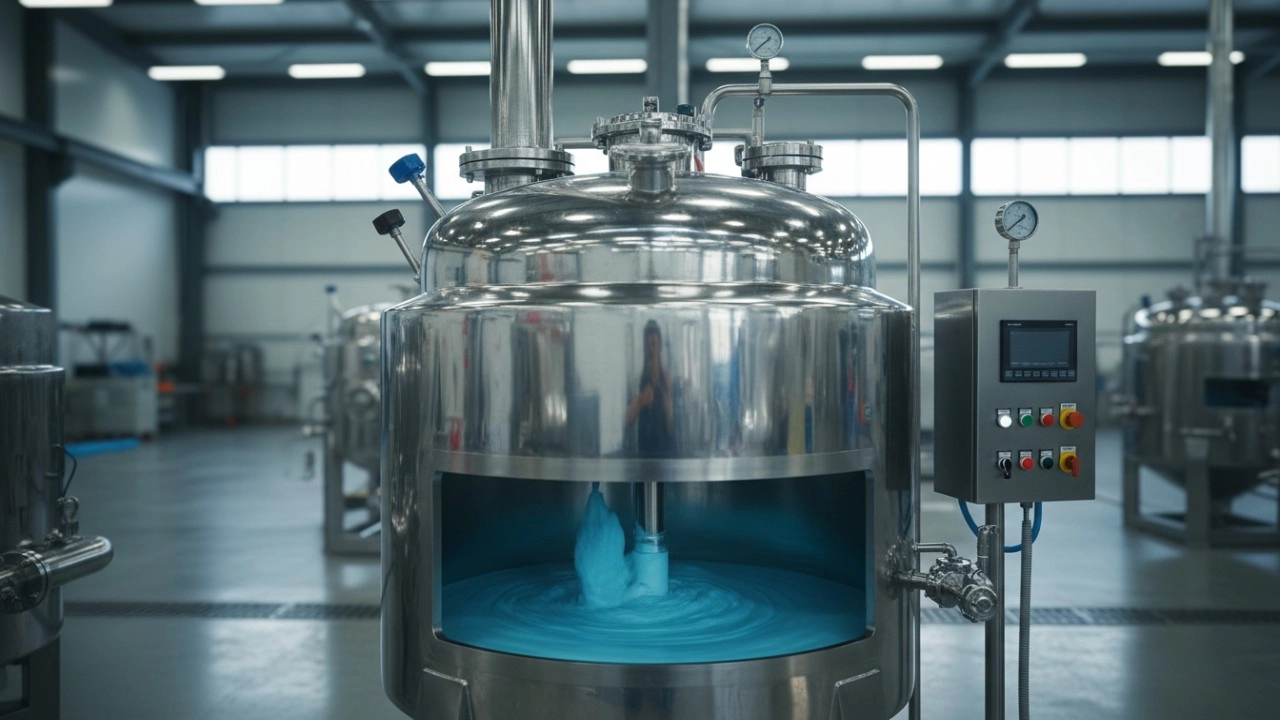
The Future of Industrial Agitation: 5 Smart Mixing Tank Technologies Changing the Game
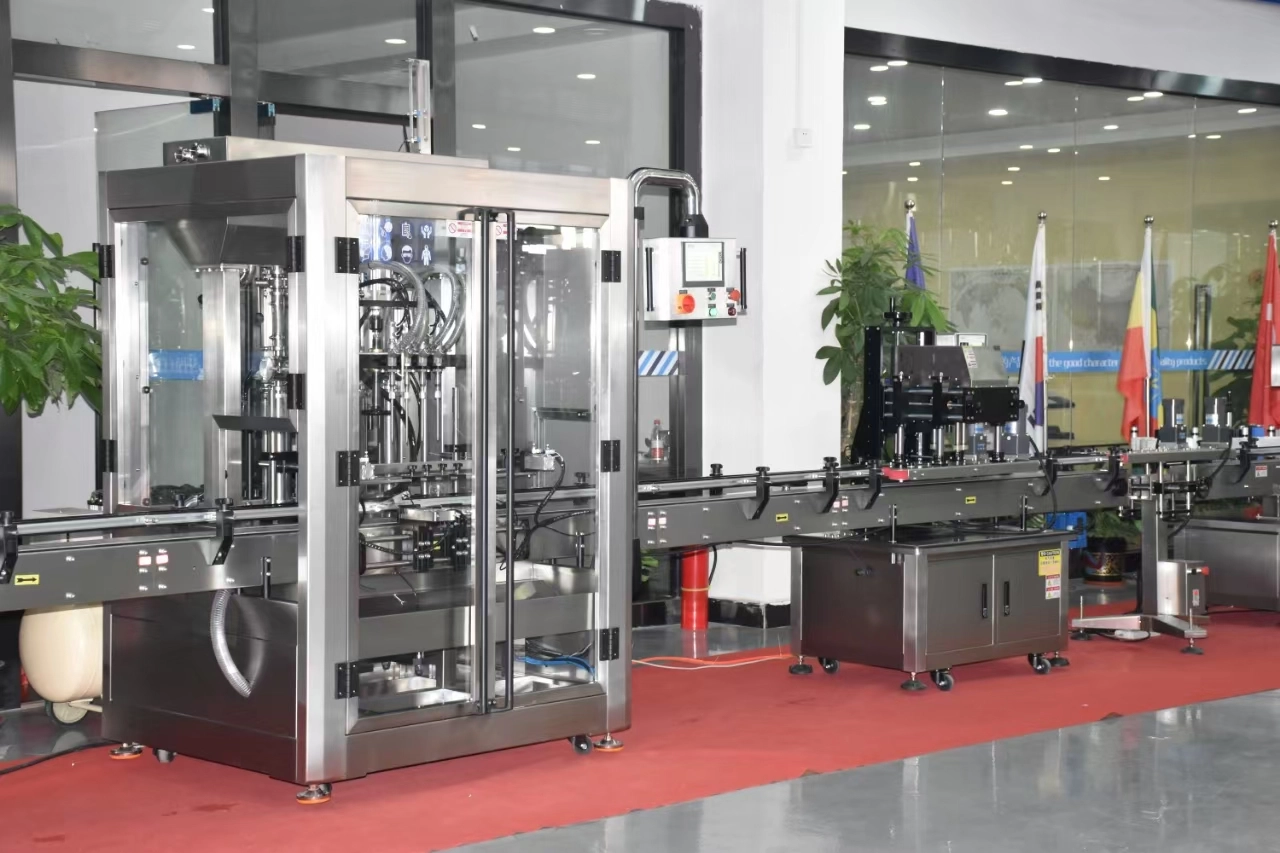
Gear pump filling machine vs. piston filling machine: Key differences broken down to avoid pitfalls in selection.
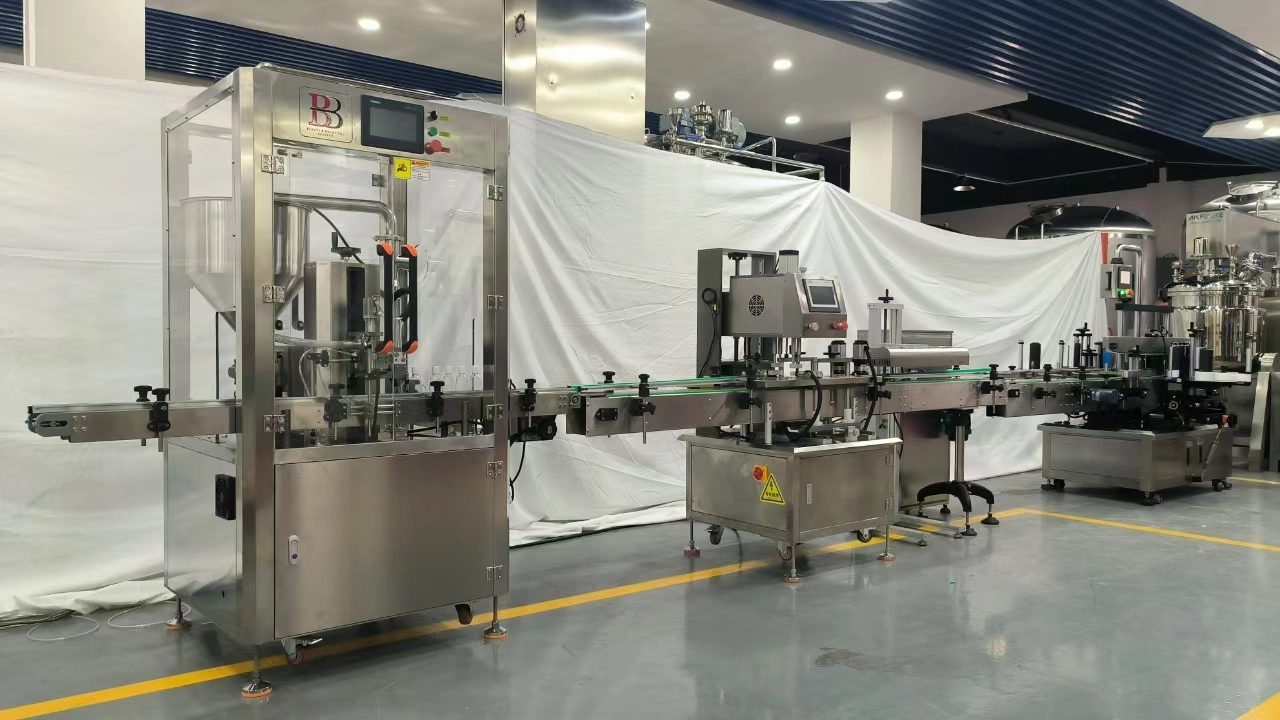
Understand the working principle of a servo gear pump filling machine!
Film Packaging Machine
Can you make a design for us?
Yes, we can, we provide not only products, but also solutions and designs.
The Flip Cover Liquid Wash Mixing Homogenizing Tank
What is the structure of an agitator?
The agitator usually consists of a "frame agitator (SUS316L material) + scraper (PTFE)" or an anchor agitator.
Can you customize the machine?
Of course, we provide customized services according to customer needs.
FAQs
What sets FULUKE apart from other cosmetics machinery manufacturers?
Where is FULUKE headquartered?
Get in touch with FULUKE
If you have any comments or good suggestions, please leave us a message, later our professional staff will contact you as soon as possible.
You May Also Like
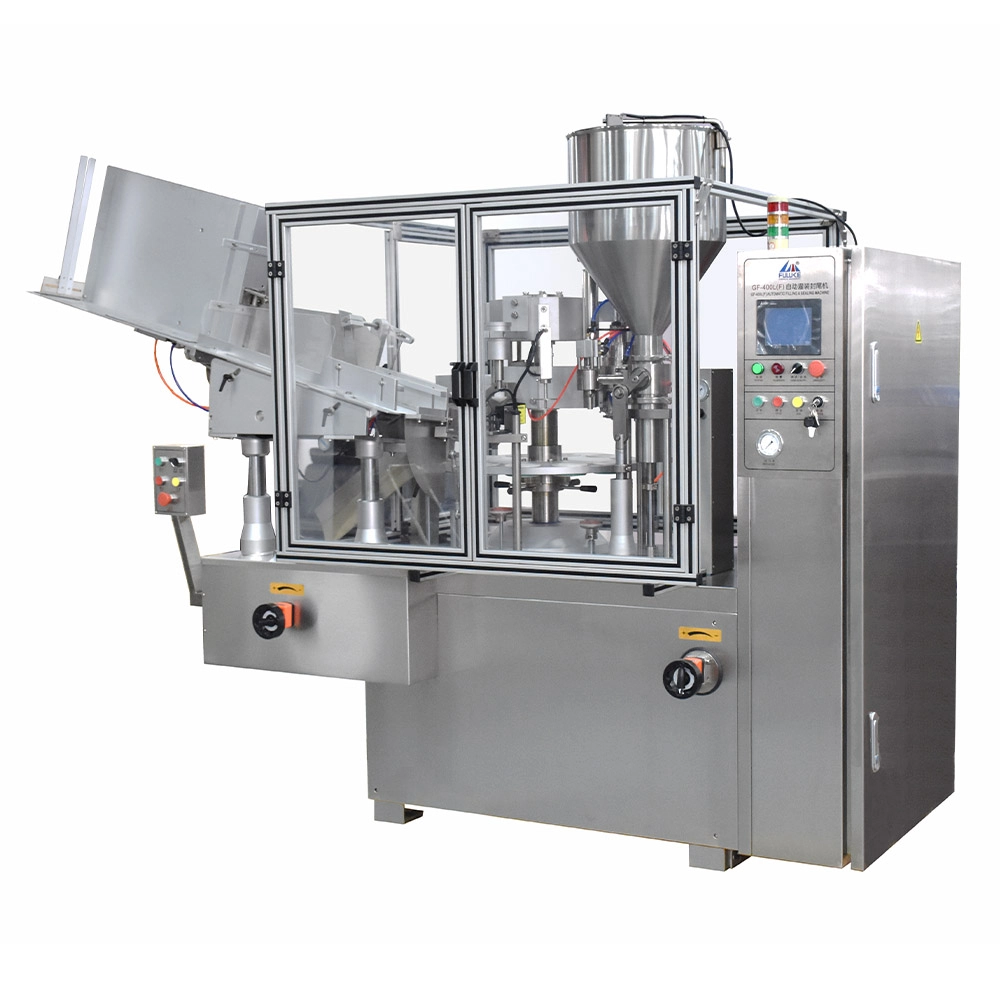
Automatic Tube Filling and Sealing Machine Toothpaste Sunscreen and Facial Cleanser Filling and Sealing Machine for Plastic and Aluminum-plastic Tube
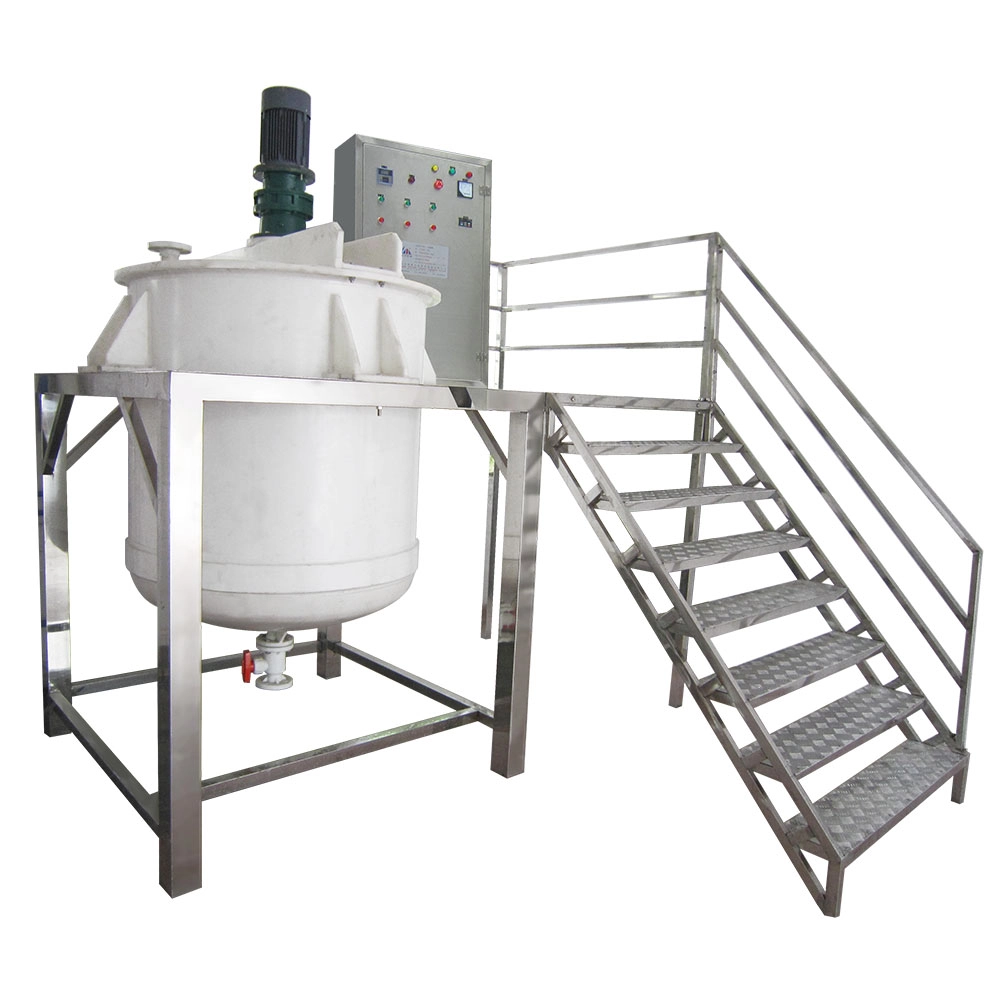
Polypropylene PP Mixing Tank Anti-Corrosion Mixer Reaction Kettle with Agitator Chemical Mixing Vessel
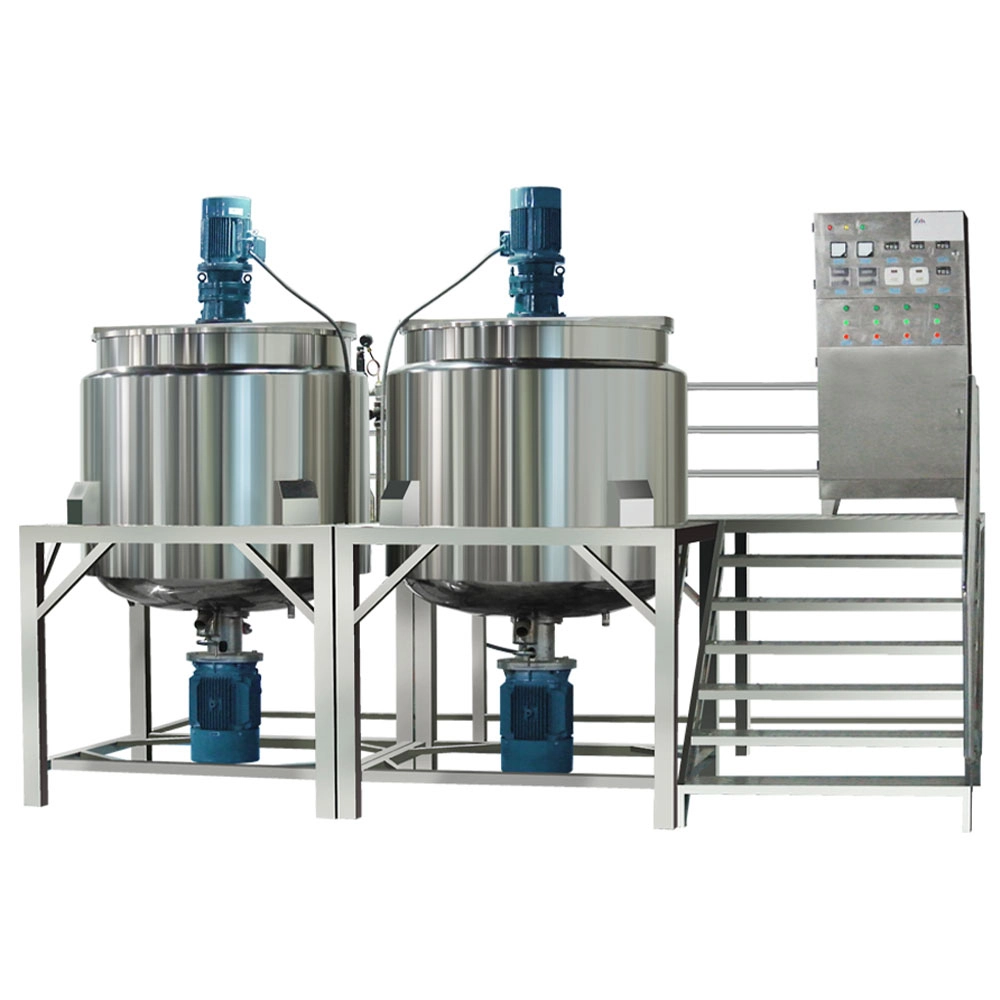
Flip Cover Multi-function Liquid Wash Mixing Tank Blender Liquid Detergent Mixer Homogenization Stirring Tank
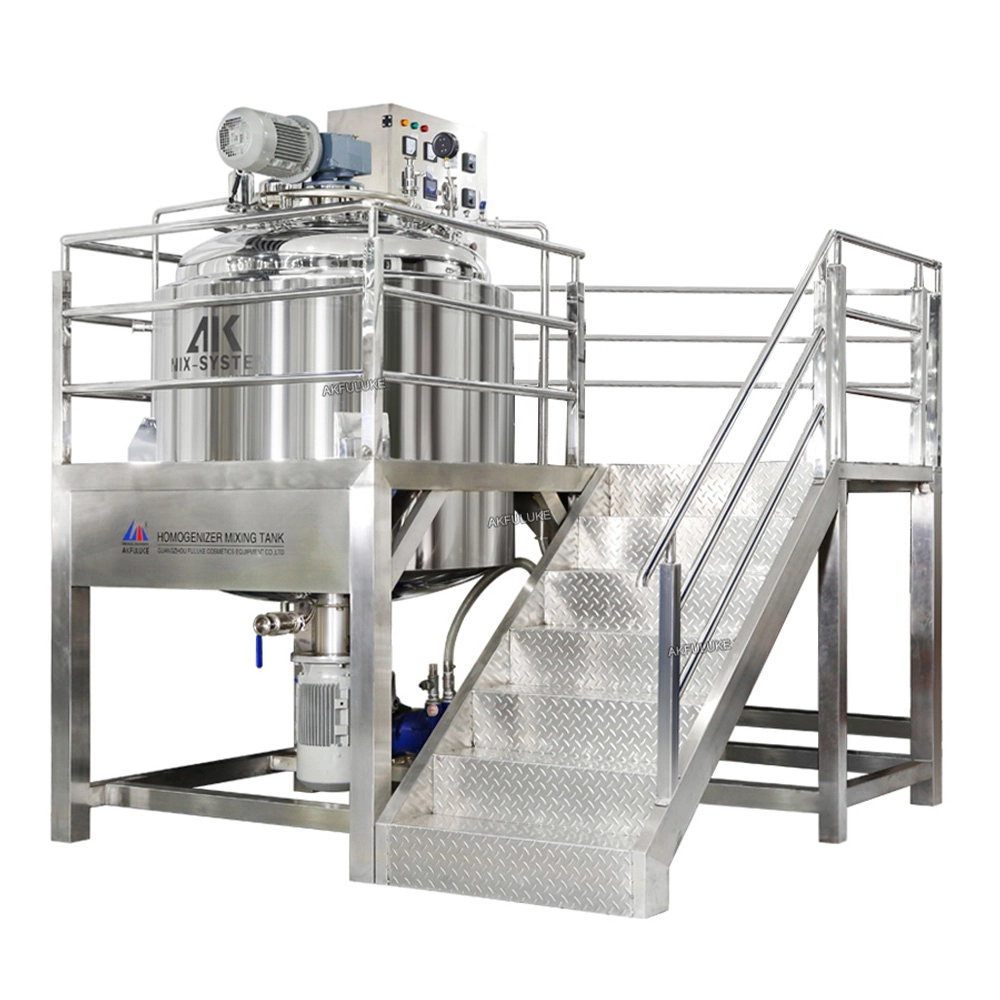
Stainless Steel Mixer Liquid Mixing tank with Agitator Homogenizing Mixing tank Vacuum Sealed Mixer Machine

A leading manufacturer specializing in advanced machinery and complete production lines for the cosmetics, food, pharmaceutical, and chemical industries worldwide.
Contact FULUKE
Facebook
Instagram
YouTube