
What PLC features matter for integration and control?
- 1) For a cosmetic rotary bottle filling machine handling viscous creams at ~6,000 BPH, what PLC scan time, I/O count, and motion control features are minimally required for stable dosing accuracy?
- 2) How should recipe management, batch traceability, and GMP-style data logging be implemented in the PLC/HMI for cosmetic bottling lines to satisfy audits?
- 3) Which industrial communication protocols and real-time networking features ensure seamless integration between a filling machine's servo drives, weigh fillers, and SCADA in mixed-brand lines?
- 4) What safety PLC and functional-safety features (SIL/PLe) are necessary for interlocks, emergency stops, and guarding on automated bottle filling and capping machines?
- 5) How to implement accurate level control and CIP cycles in sanitary volumetric/piston fillers using PLC analog I/O, PID loops, and valve control?
- 6) When retrofitting an older cosmetic bottle filling machine, which PLC features and I/O expansion options prevent downtime and allow future upgrades (remote I/O, edge computing, OPC UA)?
What PLC Features Matter for Integration and Control of a Bottle Filling Machine?
This article answers six specific, frequently asked but under-documented questions cosmetic manufacturers ask when buying or upgrading a bottle filling machine. It focuses on PLC selection and configuration for accurate dosing, sanitary CIP cycles, recipe and batch traceability, multi-vendor line integration, safety, and retrofit strategies.
1) For a cosmetic rotary bottle filling machine handling viscous creams at ~6,000 BPH, what PLC scan time, I/O count, and motion control features are minimally required for stable dosing accuracy?
Practical baseline: 6,000 BPH equals ~100 bottles/min. Viscous creams require synchronized motion (servo-driven piston or positive-displacement pumps) and closed-loop control. Key PLC & control feature requirements:
- Deterministic motion handling: use a PLC with integrated motion or pair a PLC with a motion controller/servo bus (EtherCAT or dedicated motionbus). For synchronized indexing and piston stroke timing, motion coordination should be handled at the drive/controller layer; the PLC orchestrates recipes and IO.
- Scan time: aim for an effective control loop latency (PLC scan + network + drive update) under 5 ms for IO and under 1–2 ms for critical motion feedback where the drive supports it. In practice, high-speed encoders and servo drives on EtherCAT/EtherNet/IP achieve deterministic timing that reduces the required PLC scan burden.
- I/O sizing: typical rotary filling machines require 150–350 digital I/O (sensors, presence detectors, solenoids, diverters) and 8–32 analog channels (flowmeters, level sensors, temperature). Use distributed remote I/O under the same real-time network to keep local PLC footprint manageable.
- Encoder/position interface: hardware encoder inputs (differential TTL/RS422) for indexing, plus pulse train outputs for step/dir or SSI support. This is essential for consistent dosing and starwheel sync.
- Closed-loop dosing: use servo-driven piston fillers or positive displacement with encoder feedback and optional in-line weighing. Implement feed-forward compensation for viscosity changes and temperature-dependent offsets saved per recipe.
- High-resolution timer/counter modules and synchronized timestamping: required for diagnosing dribble, overfill, and bottle-to-bottle variation.
2) How should recipe management, batch traceability, and GMP-style data logging be implemented in the PLC/HMI for cosmetic bottling lines to satisfy audits?
Cosmetic manufacturers must provide consistent product quality and traceability even though regulatory regimes differ. Implement these functions as follows:
- Recipe storage: keep active recipes in the PLC or in an HMI/SCADA that interfaces via OPC UA/MQTT. Use checksum/versioning and role-based access (operator/engineer/admin) to prevent unauthorized changes. Store read-only archive copies for each production run.
- Batch record capture: log start/end timestamps, recipe ID, operator ID, lot numbers for raw materials, actual fill weights, rejection counts, and CIP cycles. Use a secure timestamp (NTP/PTP) and persist records to local SQL or SCADA historian and replicate to a MES/cloud endpoint where appropriate.
- Audit trail and user management: implement user authentication, tamper-evident logs, and change history for recipe edits. For higher-assurance environments, integrate with single sign-on or LDAP/AD and maintain encrypted logs accessible during audits.
- Data retention & export: support CSV/XML export of batch reports and automated archival to network storage. Include process parameter snapshots (temperatures, pressures, motor currents) for defect investigation.
- GMP practices: while cosmetics may not require 21 CFR Part 11 in many jurisdictions, applying similar controls—electronic signatures, controlled access, and immutable logs—reduces risk and eases cross-border quality assurance.
3) Which industrial communication protocols and real-time networking features ensure seamless integration between a filling machine's servo drives, weigh fillers, and SCADA in mixed-brand lines?
Interoperability is a top pain point on mixed-brand bottling lines. Recommended architecture and protocols:
- Real-time motion & drives: EtherCAT is the most widely used for high-performance servo motion. EtherNet/IP (Rockwell) and PROFINET (Siemens) are common in OEM ecosystems. If drives support multiple stacks, choose the network matching your primary PLC/drive vendor.
- Supervisory & vertical integration: use OPC UA for secure, standardized data exchange to SCADA/MES. OPC UA PubSub and MQTT enable cloud/IIoT replication for analytics.
- Legacy bridging: Modbus TCP/RTU remains common on weigh scales, load cells, and older instruments—use protocol gateways to unify data models if the primary network is EtherCAT/PROFINET.
- Time synchronization: use NTP or IEEE 1588 PTP where tight event correlation is needed (batch traceability, fault correlation across devices).
- Network resilience: industrial managed switches, VLANs, and ring/topology redundancy (PRP/HRP or vendor-specific redundancy) reduce downtime. Segregate control traffic from office networks for security and determinism.
- Unified I/O models: adopt an MQTT/OPC UA schema for recipe, alarm, and KPI exchange so that weigh fillers, vision rejectors, and palletizers can be monitored and controlled centrally without custom point-to-point coding.
4) What safety PLC and functional-safety features (SIL/PLe) are necessary for interlocks, emergency stops, and guarding on automated bottle filling and capping machines?
Safety is non-negotiable. Required features and practices for cosmetic bottling equipment:
- Standards: design per ISO 13849-1 (Performance Level - PL) and IEC 62061 (SIL). Many automated filling/capping machines should target PL d/PL e or SIL2 depending on risk assessment.
- Safety PLCs & modules: use safety-rated controllers or safety CPUs (e.g., Siemens S7-1500F, Allen-Bradley GuardLogix, Pilz PNOZmulti). They provide certified safety functions and safe I/O modules.
- Essential safe functions: Safe Torque Off (STO) on drives, Safe Stop 1/2 (SS1/SS2), safe limited speed (SLS), safe direction (SDI), and safety-related input gating for sensors and light curtains. Implement interlocking for guards, doors, and access hatches.
- Emergency stops & muting: design E-stops to meet required PL and ensure correct muting logic for product handling zones (e.g., allow product through sensor zone briefly during line start-up but stop if no bottles detected). Use certified safety devices and avoid relying on regular I/O for E-stop circuits.
- Diagnostics & proof testing: include self-test, redundant sensors where required, and schedule proof-testing intervals per manufacturer guidance and risk analysis.
5) How to implement accurate level control and CIP cycles in sanitary volumetric/piston fillers using PLC analog I/O, PID loops, and valve control?
CIP and level control are core to cosmetic manufacturing hygiene. Implementation guidance:
- Sensors and signals: use hygienic level transmitters (guided wave radar or capacitance) and 4–20 mA outputs, combined with magnetic flowmeters or Coriolis meters for product flow verification when possible.
- PIDs & cascaded loops: implement PID control for tank level and cascade a flow-rate loop for dosing. Anti-windup and bumpless transfer when switching between manual/auto modes reduces overshoot for viscous products.
- Valve control & sequencing: control hygienic diaphragm or pneumatically actuated ball valves via discrete outputs with solenoid drivers. Use proportional control only where sanitary valves with analog actuation are specified.
- CIP recipes: implement dedicated CIP recipes in the PLC/HMI with steps for pre-rinse, detergent circulation, caustic/acid dosing, thermal cycle, and final rinse. Include interlock checks (no open ports, correct tank isolation) and logged verification (temperature, conductivity, time) for each stage.
- Material compatibility & temperature: choose sensors and valve seals rated for cleaning chemistries and typical CIP temperatures (many cosmetic CIP operations use 40–80°C depending on product and detergent). Record temperature and conductivity during CIP to prove efficacy.
- Sanitary design: PLC inputs for door/cover proximity, pressure transducers to detect leaks, and automated drain sequences reduce manual intervention and contamination risk.
6) When retrofitting an older cosmetic bottle filling machine, which PLC features and I/O expansion options prevent downtime and allow future upgrades (remote I/O, edge computing, OPC UA)?
Retrofitting is cost-effective but fraught with integration pitfalls. Recommended PLC features to prioritize:
- Modular architecture & remote I/O: choose a modern modular PLC that supports remote I/O nodes (ProfiNet, EtherNet/IP, EtherCAT I/O) so you can phase in new I/O without rewiring the entire control cabinet. Some remote I/O systems support hot-swap which reduces downtime—verify per vendor.
- Protocol flexibility: ensure the PLC supports multiple field protocols (Modbus RTU/TCP, Modbus ASCII, PROFIBUS, PROFINET, EtherNet/IP) or include protocol gateways. This eases connecting legacy scales, photoeyes, and motors.
- Edge computing & data export: integrate an IIoT gateway or PLC with native OPC UA/MQTT to stream process data for condition monitoring and predictive maintenance without impacting deterministic control networks.
- Signal conditioning & retrofit adapters: use signal conditioners to adapt legacy 4–20 mA or pulse outputs to modern analog/encoder inputs. For motors, consider replacing old VFDs with drives that support modern drive networks to enable closed-loop control later.
- Testing & parallel commissioning: set up an offline PLC rack or mirror I/O bench to validate code and recipes before switching. This reduces plant downtime and provides a rollback path.
- Documentation & spare strategy: keep updated wiring diagrams, spare I/O modules, and a version-controlled PLC project to accelerate troubleshooting and future upgrades.
Compliance with E‑E‑A‑T and search standards: the recommendations above align with recognized industry standards (ISO 13849, IEC 62061), common network stacks (EtherCAT, PROFINET, EtherNet/IP, Modbus, OPC UA) and established good manufacturing practices for cosmetic production. For audit-grade traceability, implement immutable batch logs, user role controls, and secure time-synced exports to a quality system or MES.
Concluding summary of advantages: selecting the right PLC features—deterministic motion support, appropriate scan times, modular I/O, certified safety functions, robust industrial communications (EtherCAT/PROFINET/OPC UA), and CIP-aware control—translates to higher dosing accuracy, faster changeovers, full batch traceability, safer operation, simplified multi-vendor integration, and lower retrofit downtime. These advantages directly improve yield, reduce waste, and maintain cosmetic product quality across production runs.
Contact us for a quote: www.fulukemix.com — flk09@gzflk.com
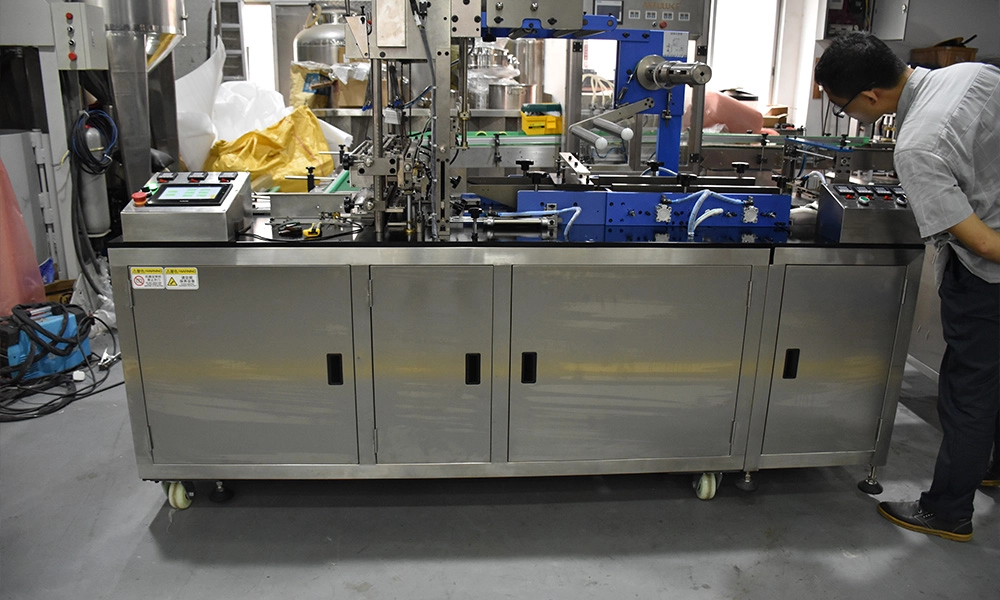
Beyond tobacco! 3D cigarette packaging machine applications in transparent film packaging for pharmaceuticals, cosmetics, and food.
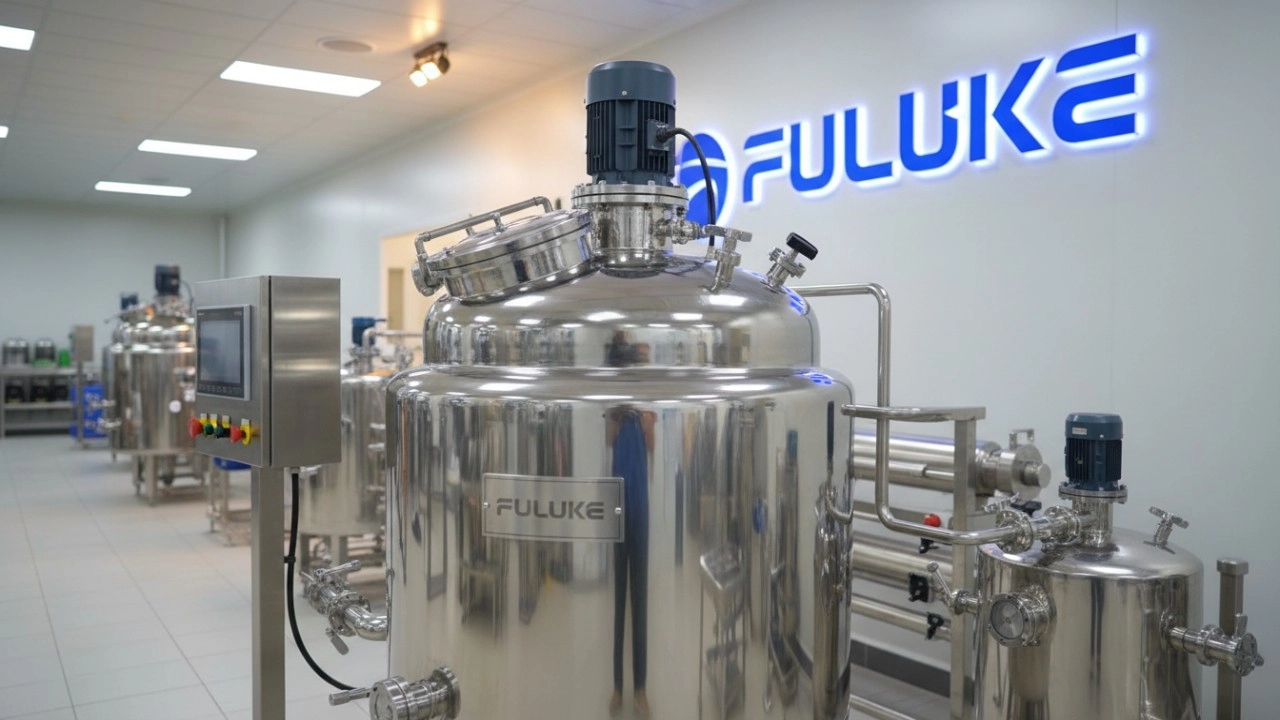
The Ultimate Guide to Multifunctional Mixing Tanks: Maximize ROI and Efficiency [2026 Edition]
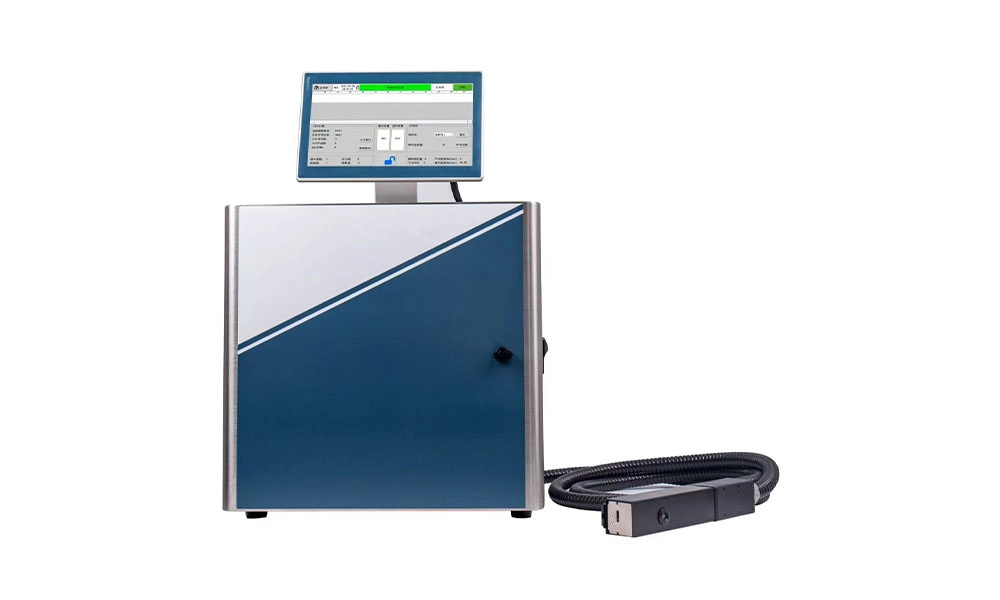
How to quickly resolve issues such as blurry text, broken lines, scattered dots, and non-printing of ink?
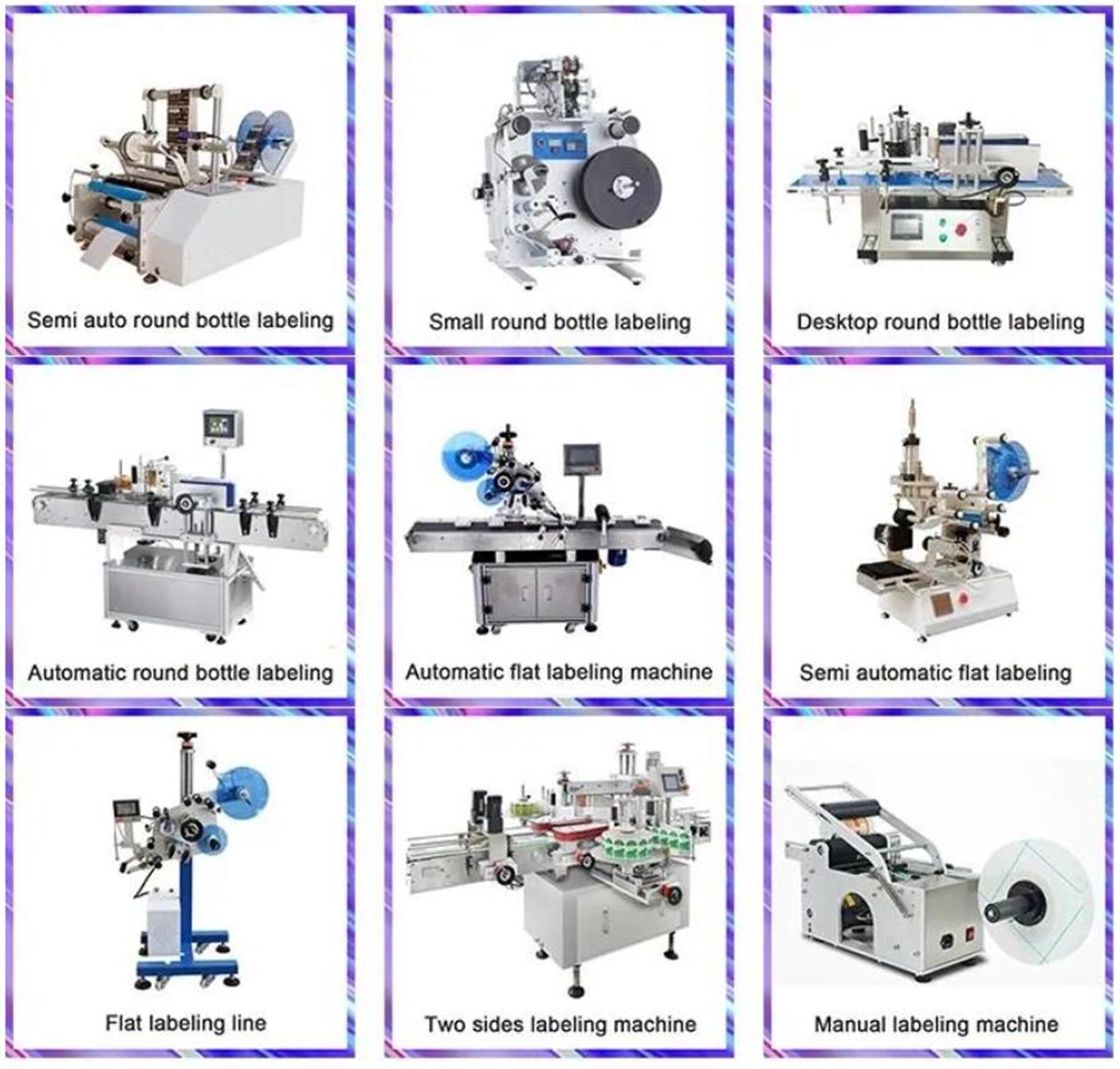
Improving Packaging Efficiency: Applications and Advantages of Fully Automatic Labeling Machines in Production Lines
Storage Tank
Do special operating conditions (such as high temperature or high pressure) require special customization?
Yes. High-temperature applications require the use of heat-resistant materials and additional insulation. High-pressure applications require enhanced tank wall thickness and sealing structures. Both require individual designs according to corresponding industry standards.
Automatic Facial Mask Filling Machine
After purchasing the equipment, what after-sales services does the supplier typically provide?
General services include on-site installation and commissioning (including workshop layout planning), operator training (theoretical and practical training to ensure workers can operate independently), a one-year full machine warranty, and lifetime technical support (24-hour telephone and video troubleshooting).
How many filling nozzles does your facial mask filling machine have?
We have dual-, six-, eight-, and ten-head facial mask filling machines. We can customize the number of filling nozzles to meet your needs.
Inkjet Printing Machine
Can you customize the machine?
Of course, we provide customized services according to customer needs.
The Flip Cover Liquid Wash Mixing Homogenizing Tank
Can you make a design for us?
Yes, we can, we provide not only products, but also solutions and designs.
Get in touch with FULUKE
If you have any comments or good suggestions, please leave us a message, later our professional staff will contact you as soon as possible.
You May Also Like
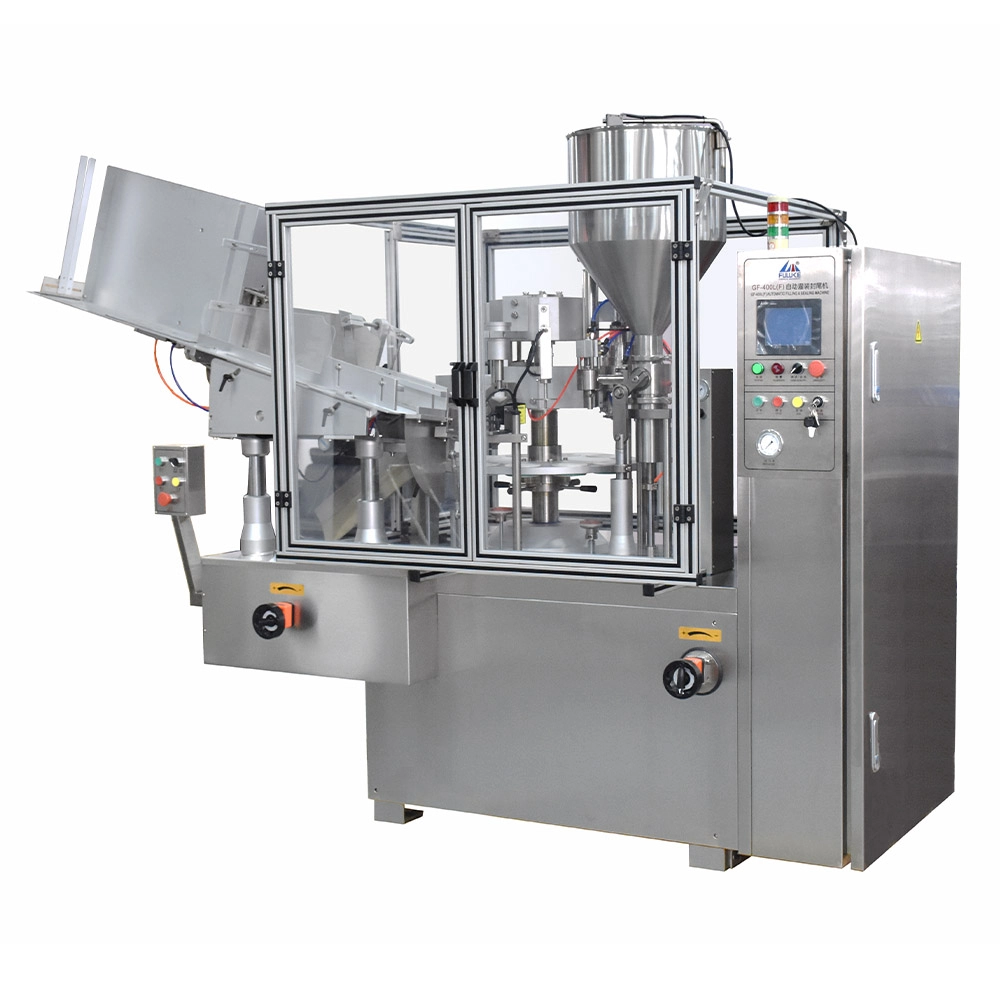
Automatic Tube Filling and Sealing Machine Toothpaste Sunscreen and Facial Cleanser Filling and Sealing Machine for Plastic and Aluminum-plastic Tube

Automatic Glass Bottle Washing Machine High Quality Glass Bottle Cleaning Washer
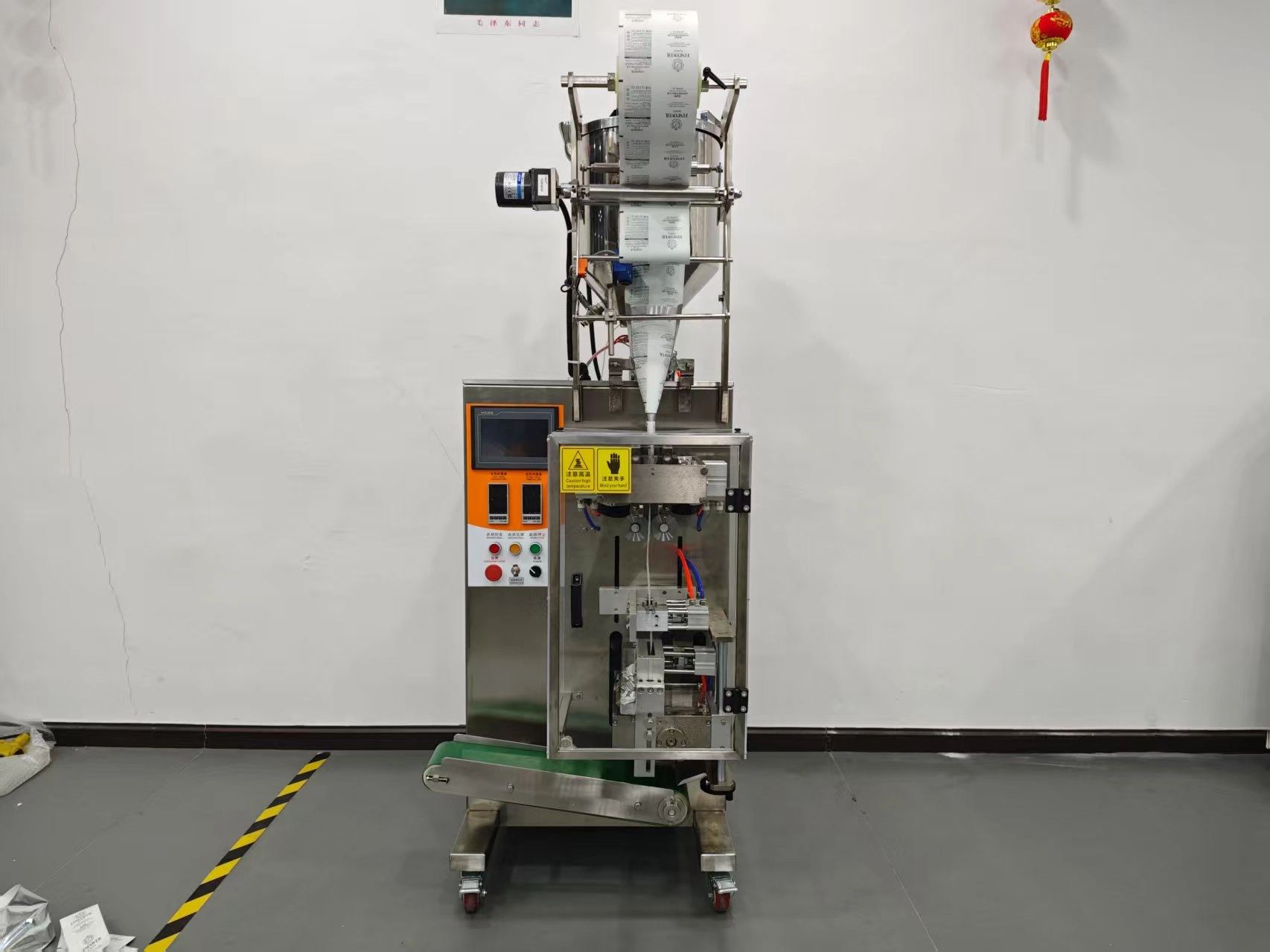
Three-side/four-side sealing bag packaging machine Liquid Paste Jam Cream Sachet Vertical Filling Pouch Packing Machine
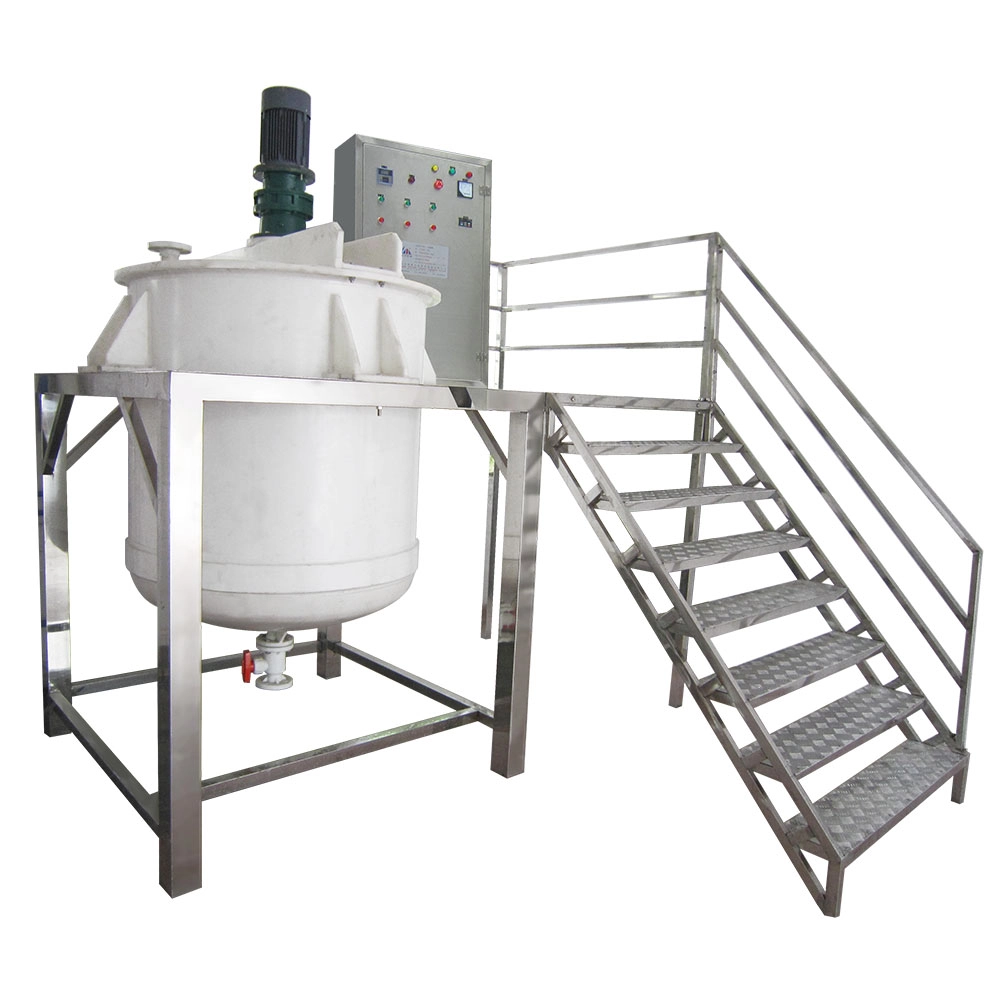
Polypropylene PP Mixing Tank Anti-Corrosion Mixer Reaction Kettle with Agitator Chemical Mixing Vessel

A leading manufacturer specializing in advanced machinery and complete production lines for the cosmetics, food, pharmaceutical, and chemical industries worldwide.
Contact FULUKE
Facebook
Instagram
YouTube