
How to validate filling processes for cosmetics?
- 1. How do I build an IQ/OQ/PQ protocol for an inline rotary bottle filling machine handling high-viscosity creams?
- 2. What statistically valid sampling plans and acceptance criteria should I use to validate fill weight for small-batch luxury cosmetics?
- 3. How should I validate filling accuracy across viscosity and temperature variations for emulsions—peristaltic vs gravimetric systems?
- 4. How can I validate cleaning and cross-contamination controls for multi-product cosmetic lines using CIP and quick-change manifolds?
- 5. How do I perform machine capability (Cp/Cpk) studies and set preventive maintenance to keep my bottling line within fill tolerances long-term?
- 6. How can I create a risk-based PQ that includes packaging variability (neck finish, bottle weight, glass vs. PET) for automated filling and capping of glass bottles?
1. How do I build an IQ/OQ/PQ protocol for an inline rotary bottle filling machine handling high-viscosity creams?
What fails most often in validation is treating a high-speed inline rotary filler the same way as a benchtop piston pump. For high-viscosity creams, your IQ/OQ/PQ must be product- and machine-specific and anchored to documented acceptance criteria (traceable calibration certificates, materials of construction, and GMP guidance such as ISO 22716).
Practical steps:
- IQ (Installation Qualification): Verify mechanical installation, utility hookups (air, electricity, chilled/heated feed), material contact parts (316L stainless or approved polymers), drive alignment, and conveyor integration. Record serial numbers, firmware versions, and calibration certificates for load cells and encoders (laboratory calibration traceable to national standards such as NIST or ISO/IEC 17025).
- OQ (Operational Qualification): Define operational parameters and worst-case conditions: maximum line speed, lowest and highest product viscosities, ambient temperature range, and full/empty hopper conditions. Execute test matrix across these parameters verifying setpoint control, repeatability, dosing stroke consistency, pump backlash, valve timing, and no-drip functionality. Use a calibrated laboratory balance (appropriate readability; e.g., 0.01 g for small fill volumes) to measure fill mass and compute short-term repeatability (standard deviation) and bias.
- PQ (Performance Qualification): Run three consecutive production-equivalent runs using finished packaging, the target viscosity (or a worst-case viscosity), and normal changeover procedures. For each run collect at least 30 samples per critical SKU/condition for statistical analysis (30 is a commonly accepted minimum to estimate process variability). Document start-up procedures, cleaning, and operator changeovers.
Acceptance criteria & documentation:
- Define fill tolerance by risk assessment—typical industry practice for High Quality cosmetics aims for narrow weight tolerances (often ±1–2% of label fill) but set values based on product risk and market expectations.
- Specify traceable calibration of balances and instruments (ISO/IEC 17025). Target process capability Cpk ≥ 1.33 for routine production; aim ≥ 1.67 for critical High Quality SKUs.
- Deliver a signed IQ/OQ/PQ report that includes raw data, statistical analysis (mean, sigma, Cp/Cpk), deviation logs, and approved corrective actions.
2. What statistically valid sampling plans and acceptance criteria should I use to validate fill weight for small-batch luxury cosmetics?
Small-batch luxury brands often have low tolerance for underfill and high sensitivity to visual variation. Generic online guidance is often too high-level; use a statistically defensible plan tied to product value and batch size.
Recommended approach:
- Sampling method: For statistical inference use random sampling. For small batches (e.g., <1,000 units) consider 100% weight verification for the first commercial run; for routine production use a combined approach—100% automated in-line check-weigher rejection of gross outliers and a statistical sample for documentation.
- Sample size: For capability studies and PQ use ≥30 samples per condition (per SKU/viscosity/temperature). For ongoing lot release a sampling plan based on ISO 2859-1 / ANSI/ASQ Z1.4 is industry-standard; select an AQL consistent with product risk (AQL 1.5 is common for packaged consumer products; for high-value luxury items consider AQL 0.65–1.0 or tighter).
- Acceptance criteria: Establish both product limits (e.g., −x% to +y% of nominal fill by weight) and statistical metrics (mean within spec and Cpk ≥ 1.33). Define clear rework/reject rules. For small-batch luxury cosmetics, set a tighter tolerance, documented in the product specification, and validate that the automatic bottle filling machine and check-weigher can enforce it.
Measurement controls:
- Use calibrated balances with appropriate readability and report measurement uncertainty on results.
- Maintain chain-of-custody and retention samples when necessary. Document sample randomization method.
3. How should I validate filling accuracy across viscosity and temperature variations for emulsions—peristaltic vs gravimetric systems?
Online resources often compare pump types superficially. Validation must quantify how viscosity and temperature changes shift delivered mass and variability.
Validation points:
- Characterize rheology: Measure product viscosity at shear rates relevant to the filling pump and at process temperatures. For emulsions, viscosity can change nonlinearly with temperature—capture at least three temperature points (low, nominal, high) that represent plant conditions.
- Pump selection & validation strategy:
- Peristaltic pump fillers: Better for shear-sensitive formulas and small batches. Validate hose wear and pulsation effects—run time-based durability tests and measure drift. Expect slightly higher variance; quantify with repeated runs.
- Gravimetric (weight-based) filling control: Best for accuracy across viscosity changes because dosing is closed-loop to weight. When combined with a volumetric pump (gear or piston), run gravimetric confirmation checks during OQ/PQ to correct for density changes.
- Piston or progressive cavity pumps: Preferred for high-viscosity creams. Validate piston seal wear and backflow at different speeds; perform leakback and volumetric efficiency tests.
- Test matrix to run during OQ/PQ:
- For each pump type, test at low/nominal/high temperature and at low/nominal/high viscosity (if product aging or seasonal variation exists).
- Collect ≥30 samples per condition and compute bias and variability. Use control charts to confirm stability.
Actionable acceptance criteria: gravimetric control should show no systematic bias beyond your product tolerance and maintain Cpk targets. If peristaltic or volumetric systems show temperature/viscosity sensitivity beyond tolerance, either implement active compensation (density or viscosity feedback) or switch to a gravimetric servo-driven solution for the SKU.
4. How can I validate cleaning and cross-contamination controls for multi-product cosmetic lines using CIP and quick-change manifolds?
Cosmetic equipment manufacturers and brand owners often under-document cross-contamination risk and cleaning validation. Cosmetics can include allergens and colorants that compromise subsequent batches.
Validation framework:
- Risk assessment: Identify cross-contamination hazards (allergenic actives, pigments, preservatives) and classify products by risk. Higher-risk products require more stringent cleaning verification.
- Cleaning procedure design: Define CIP/SIP parameters (temperature, chemical concentration, contact time, flow rates) and quick-change mechanical designs that minimize dead legs. Use 316L stainless and sanitary tri-clamp fittings where possible to support hygienic cleaning.
- Cleaning verification methods:
- Visual inspection for residues and colorant stains (first step).
- Swab or rinse sampling for chemical and microbiological residues—use validated analytical methods with known LOD/LOQ for target contaminants.
- ATP bioluminescence for rapid monitoring (useful for process control but not as sole evidence of chemical cleanliness).
- Acceptance criteria and documentation: Set residue limits based on toxicological risk (e.g., ppm limits for actives), and document analytical method validation (specificity, recovery). For multi-product lines, perform a bracketing approach: worst-case contaminant challenge and subsequent clean runs to show no carryover above the action limit.
- Ongoing control: Include swab/rinse results in batch records, implement color-change indicators where applicable, and document re-clean cycles. For automated rapid changeovers, validate the manufacturer's quick-disconnect manifolds and gaskets for repeatable zero-residue performance.
5. How do I perform machine capability (Cp/Cpk) studies and set preventive maintenance to keep my bottling line within fill tolerances long-term?
Many manufacturers deliver short-term accuracy data but omit long-term capability and maintenance planning, which causes drift and recalls.
Capability study steps:
- Collect stable-process data: After OQ/PQ, run the machine under normal production for a learning period (several hundred to a few thousand units depending on line speed) with in-line check-weighing. Remove initial transient runs.
- Statistical analysis: Use the stable data set to calculate process mean, standard deviation, Cp, and Cpk relative to your specification limits. Aim for Cpk ≥ 1.33 as minimum; ≥ 1.67 for conservative assurance. If Cpk is low, identify sources (mechanical wear, pump degradation, temperature drift) and correct.
- SPC and control charts: Implement real-time control charts (X-bar and R or I-MR) on the in-line check-weigher. Configure automated alarms for trend and shift detection to trigger corrective action before out-of-spec production accumulates.
Preventive maintenance (PM) program:
- Define PM intervals based on supplier recommendations, historical failure modes, and OEE data. Replace wear parts (seals, hoses, pumps, nozzles) on a life-based schedule rather than run-time alone if contamination or drift is observed.
- Include calibration schedule for balances, temperature sensors, and flow meters; keep certificates on file. Use a spare-parts kit for rapid repairs to minimize downtime and preserve validation status.
- Document all PM and repairs in the equipment log and perform re-checks (spot weight tests) after significant interventions. If repairs affect the dosing system, run a mini-OQ (e.g., 30 samples) to reconfirm capability.
6. How can I create a risk-based PQ that includes packaging variability (neck finish, bottle weight, glass vs. PET) for automated filling and capping of glass bottles?
Packaging variability is frequently underestimated. Neck finish, bottle mass, and glass wall thickness influence fill height, vacuum capping torque, and detection on in-line vision systems.
Risk-based PQ elements:
- Bracketing and worst-case selection: Identify the packaging parameters with the highest potential impact (e.g., smallest neck ID, heaviest bottle causing conveyor inertia, or highest propensity to tip). Validate using worst-case containers plus nominal ones.
- Functional tests during PQ:
- Fill accuracy and foaming: For glass bottles, measure headspace and fill level variability; some formulas foam more when contacting glass—document degassing steps.
- Capping torque & seal integrity: Validate cap applicator setpoints across bottle wall thickness and neck finish tolerances; perform torque tests and vacuum/leak tests.
- Vision and labeling: Confirm vision sensors detect fill level and cap presence across reflective glass and colored bottles; adjust illumination and algorithms.
- Statistical coverage: For each SKU and packaging family perform at least three production-equivalent runs with ≥30 samples per run covering the packaging tolerance envelope. Use ANOVA if multiple factors (bottle weight, cap type, fill temp) interact.
- Acceptance and corrective actions: Define limits for fill weight, headspace, cap torque, and visual defects. If packaging variability causes out-of-spec results, document corrective actions: tooling change, conveyor speed adjustment, or supplier specification tightening.
Final note: Keep a packaging qualification file that references supplier certificates (neck finish tolerances, dimensional drawings) and include incoming inspection checks in your batch-release criteria.
Choosing the right automatic bottle filling machine with appropriate hygienic design, a gravimetric or closed-loop dosing system, integrated check-weigher and vision systems, and robust CIP capability significantly reduces validation burden and long-term risk.
For professional quotes and to discuss machine selection or validation services, contact us at www.fulukemix.com or flk09@gzflk.com.
Concluding summary — Advantages of validated filling processes and choosing the right bottle filling machine
Validated filling processes, combined with the correct bottle filling machine (in-line rotary or gravimetric filler for high accuracy, piston or progressive cavity pumps for viscous creams, peristaltic for shear-sensitive formulas), yield predictable fill accuracy, lower product loss, reduced recalls, defensible documentation for audits (ISO 22716/GMP), and improved OEE. Investing in robust IQ/OQ/PQ, statistically sound sampling, cleaning validation, and an SPC-based maintenance program protects brand reputation and long-term margin.
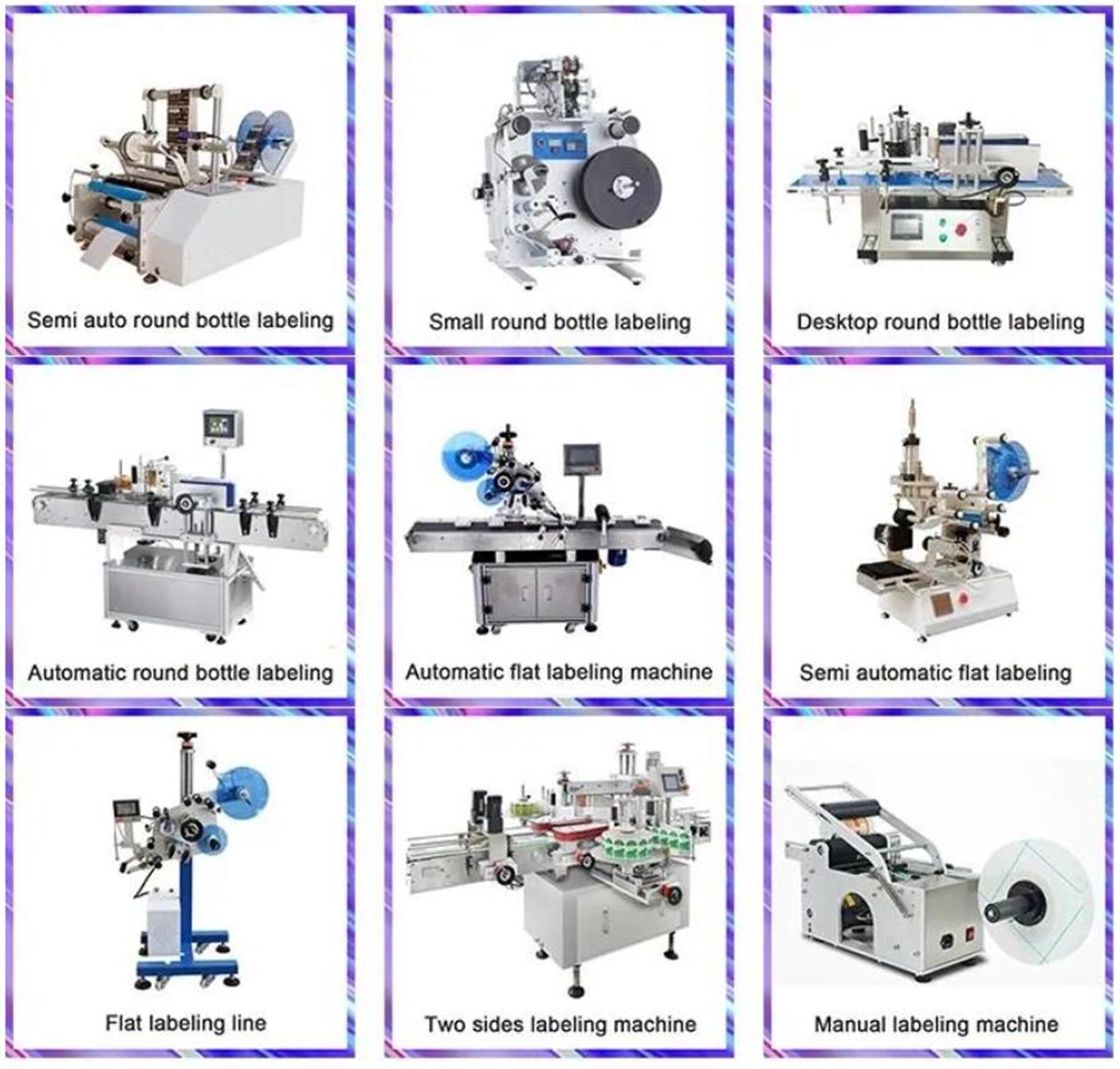
Improving Packaging Efficiency: Applications and Advantages of Fully Automatic Labeling Machines in Production Lines

Understanding Servo Capping Machines: The Core Logic of Precise Capping – Understand the Entire Working Process in Seconds
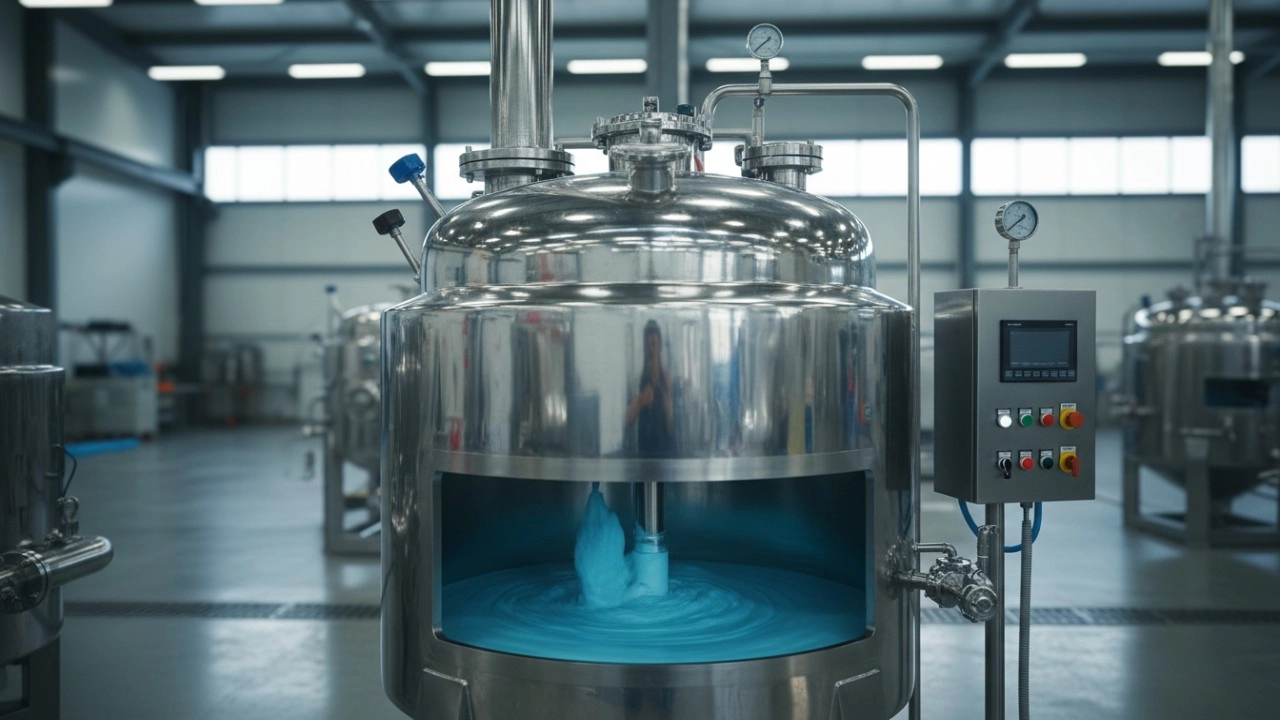
The Future of Industrial Agitation: 5 Smart Mixing Tank Technologies Changing the Game
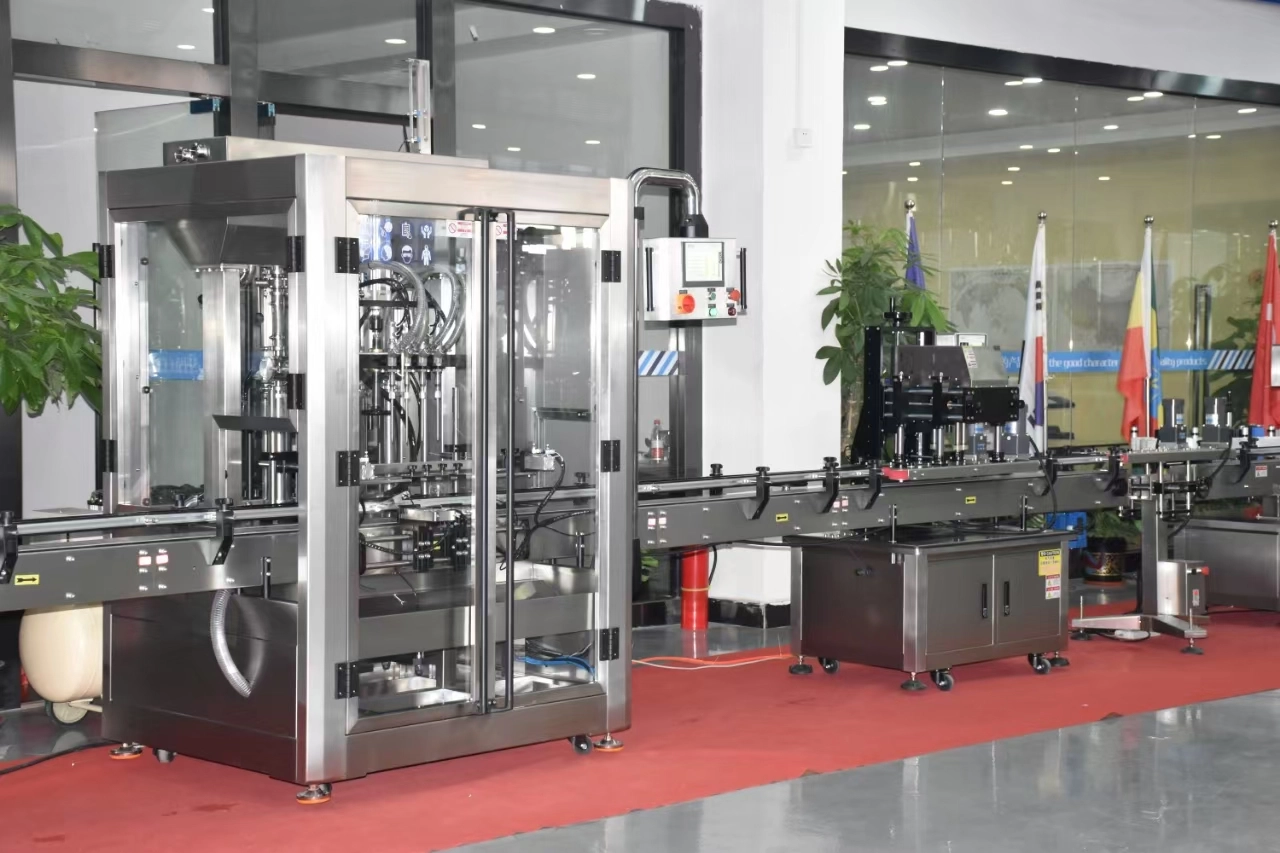
Gear pump filling machine vs. piston filling machine: Key differences broken down to avoid pitfalls in selection.
Film Packaging Machine
What packaging materials are suitable for this equipment?
It is suitable for transparent paper, BOPP film, and PVC materials.
RO Water Treatment
Can you make a design for us?
Yes, we can, we provide not only products, but also solutions and designs.
Perfume Freezing Filter Making Machine
Does the filtration process cause loss of fragrance components?
High-quality equipment uses a gradient filtration design (such as a 0.22μm precision filter membrane) to capture only condensed impurities and avoid adsorbing active fragrance molecules.
Automatic Tube Filling and Sealing Machine
Can the device accommodate tubes of different materials and specifications?
Yes. The device supports plastic (PE, PP) and aluminum-plastic composite hoses. The compatible hose diameter range is typically Φ10-Φ60mm (customizable to user specifications), and the capacity range is 2.5ml-400ml. By replacing specialized molds (such as cylinders and filling heads), the device can be adapted to meet different filling volumes, providing flexible adaptability.
FAQs
How can customers contact FULUKE for inquiries or support?
Get in touch with FULUKE
If you have any comments or good suggestions, please leave us a message, later our professional staff will contact you as soon as possible.
You May Also Like
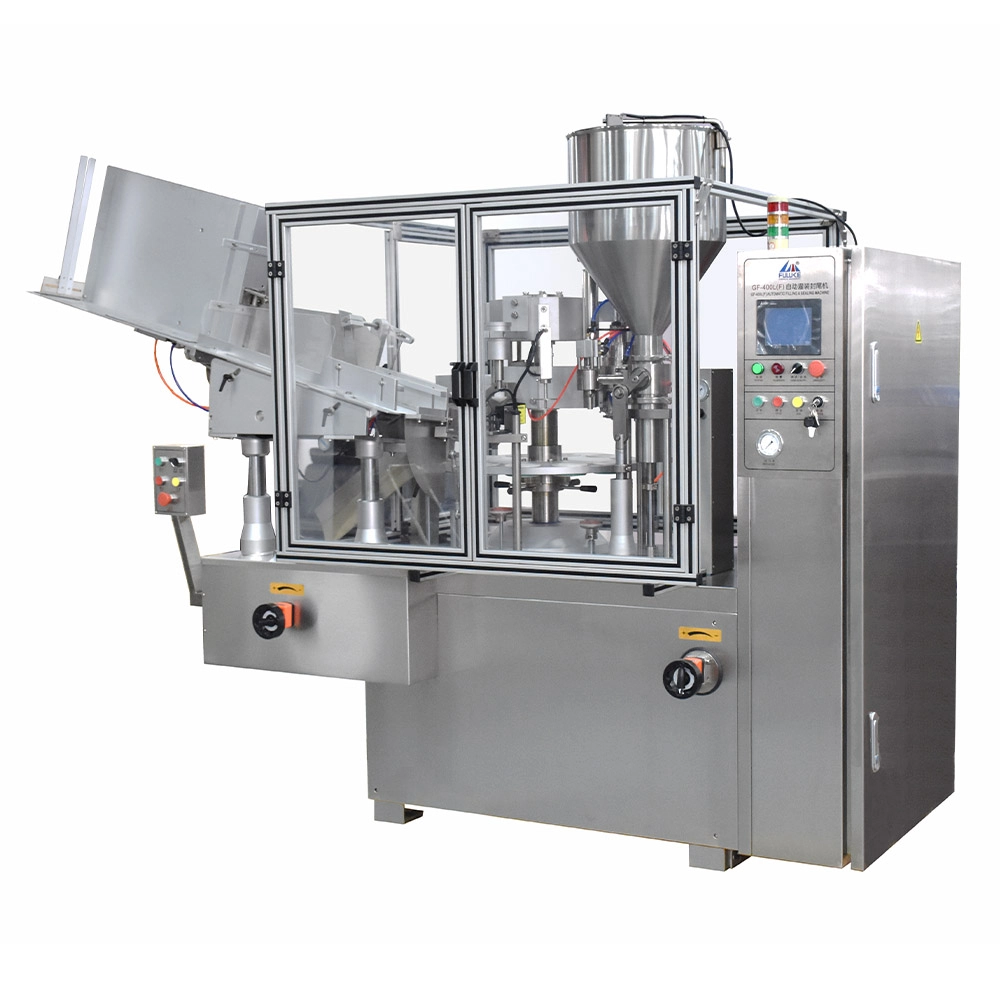
Automatic Tube Filling and Sealing Machine Toothpaste Sunscreen and Facial Cleanser Filling and Sealing Machine for Plastic and Aluminum-plastic Tube
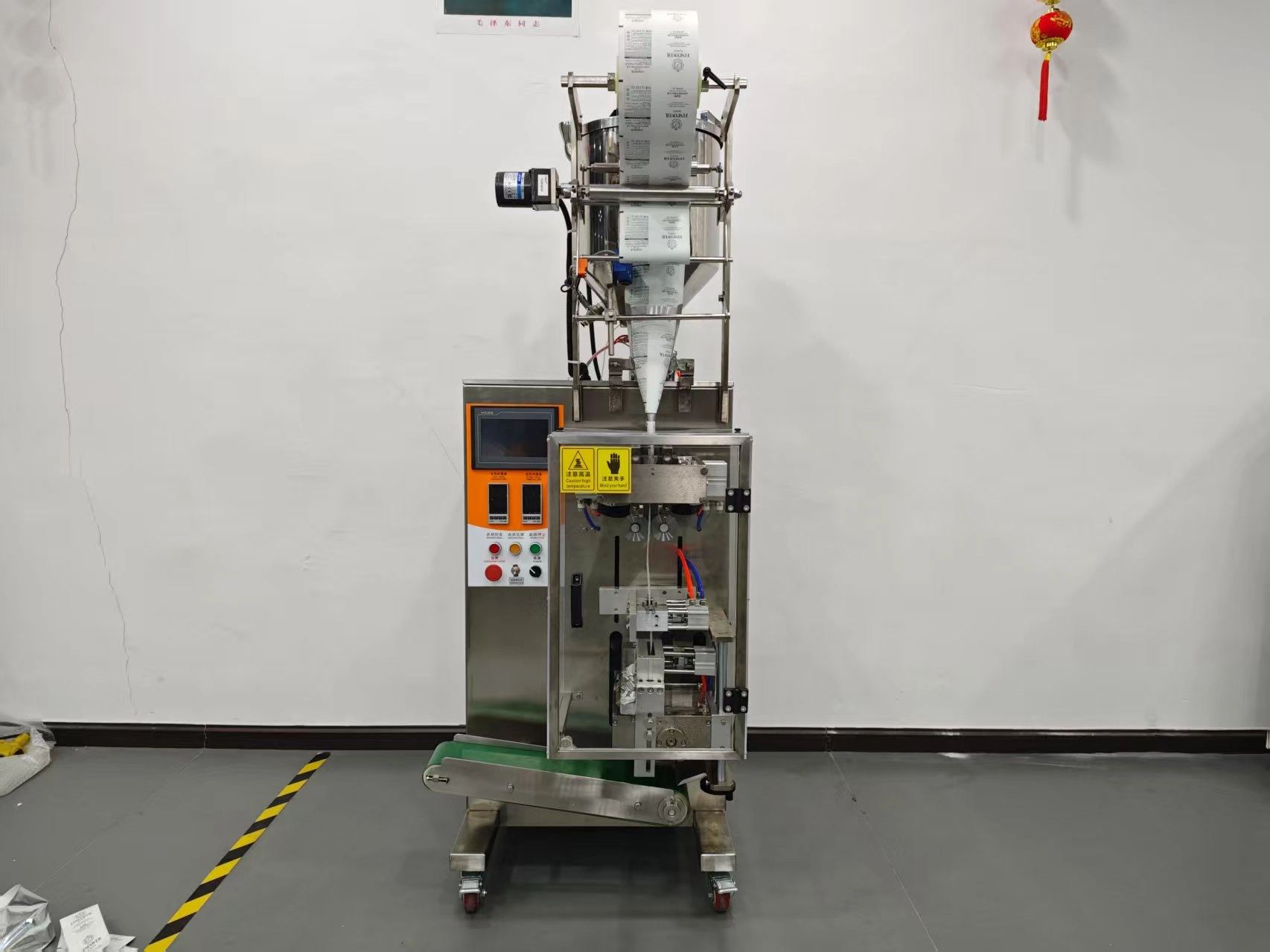
Three-side/four-side sealing bag packaging machine Liquid Paste Jam Cream Sachet Vertical Filling Pouch Packing Machine
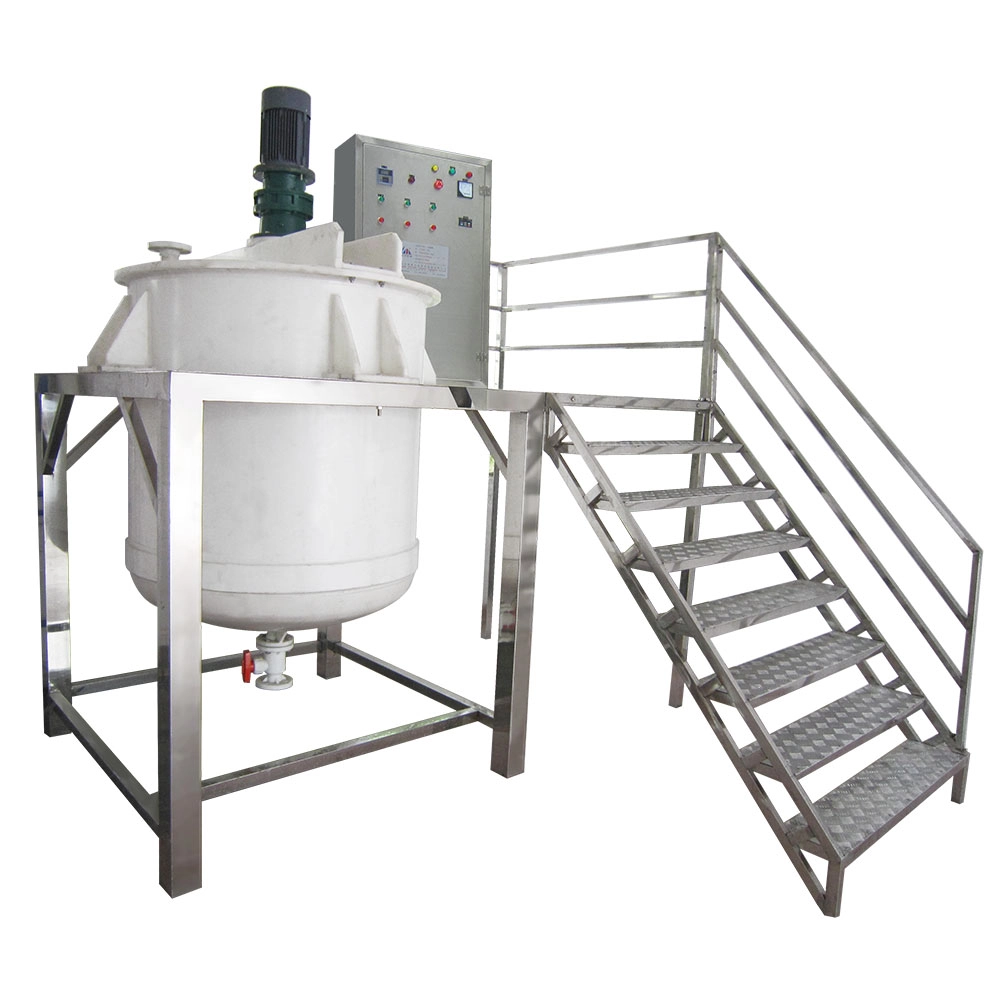
Polypropylene PP Mixing Tank Anti-Corrosion Mixer Reaction Kettle with Agitator Chemical Mixing Vessel
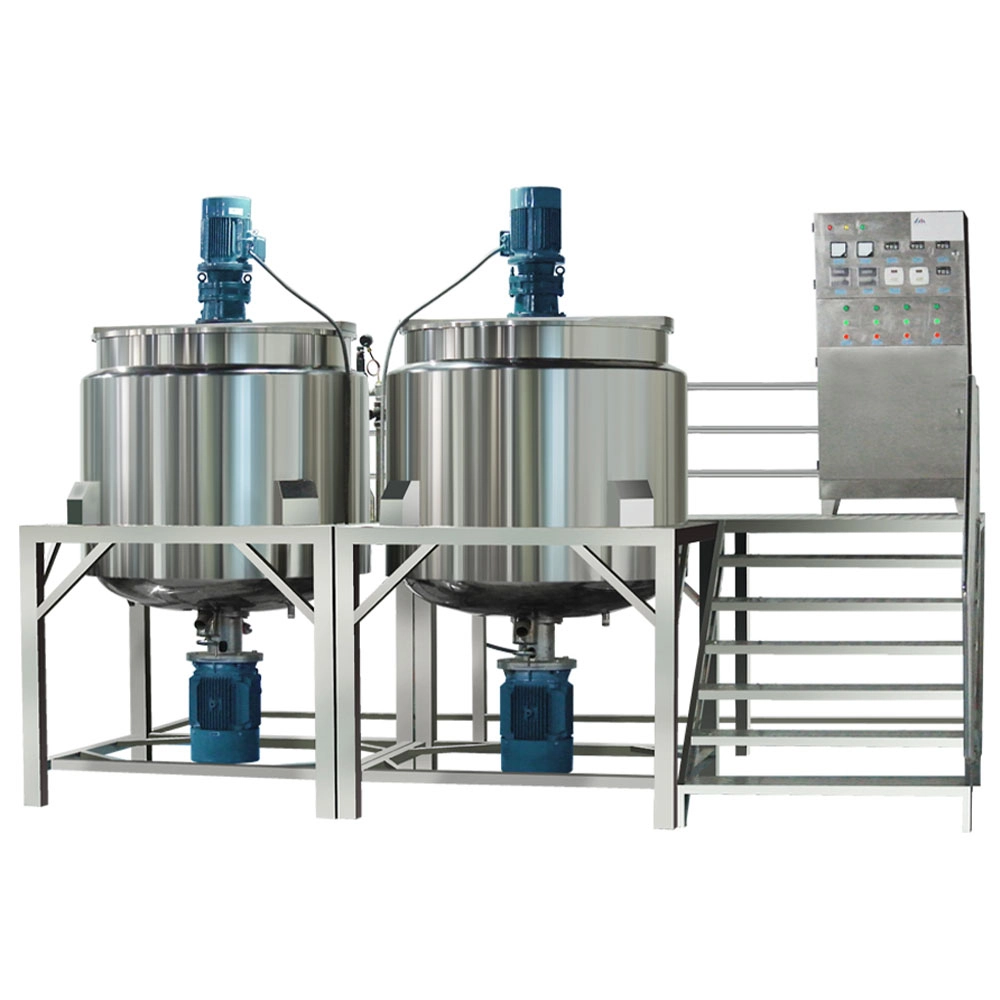
Flip Cover Multi-function Liquid Wash Mixing Tank Blender Liquid Detergent Mixer Homogenization Stirring Tank

A leading manufacturer specializing in advanced machinery and complete production lines for the cosmetics, food, pharmaceutical, and chemical industries worldwide.
Contact FULUKE
Facebook
Instagram
YouTube