
What are industry trends in cosmetic filling machines?
- 1. How do I choose a bottle filling machine that prevents foam and product loss when filling high-shear emulsions and foamy serums?
- 2. For viscous creams and serums (30–10,000 mPa·s), what are realistic throughput and accuracy trade-offs when choosing a cosmetic filling machine?
- 3. What practical steps reduce changeover time and per-SKU costs when running multi-size cosmetic bottles on a single filling line?
- 4. For volatile perfumes and essences, should I use net-weight (weigh) filling or volumetric filling for accuracy and regulatory compliance, and how does that impact ROI?
- 5. Should a small cosmetics startup buy a rotary filling machine or an inline filling machine if expected volumes are 1,000–10,000 units/month?
- 6. What sanitary materials, surface finish and certifications must I insist upon for a cosmetic filling machine to meet GMP and allergen-free production needs?
As experienced cosmetic equipment specialists at FULUKEMIX, we compiled six long-tail, pain-point questions beginners frequently search for but rarely find deep, practical answers to. This guide addresses product-specific variables (viscosity, shear, volatility), machine classes (rotary, inline, piston, peristaltic, net-weight), sanitary design, changeover costs, and ROI considerations for selecting a bottle filling machine and cosmetic filling machine line that actually works for your SKUs.
1. How do I choose a bottle filling machine that prevents foam and product loss when filling high-shear emulsions and foamy serums?
Problem: Many cosmetic emulsions, serums and surfactant-rich formulas foam when dispensed, causing inaccurate fills, overflow and rejects. Generic online advice (use slow speed) is incomplete. You need a machine and a process plan.
Practical solution:
- Pick the right pump type. Low-shear dosing options include peristaltic pumps (good for delicate shear-sensitive serums), gear pumps with gentle gearing, and positive-displacement piston/diaphragm systems configured for low re-circulation. Avoid high-speed centrifugal metering pumps for foamy emulsions.
- Use bottom-up or submerged nozzles. Bottom-up filling or submerged nozzle designs reduce air entrainment. Anti-foam/vented nozzles with a small weep channel allow trapped air to escape without dribbling product.
- Control flow profile with servo-driven dosing. Servo-driven piston or servo pump fillers allow configurable fill ramps (slow start, steady fill, slow finish) which reduce turbulence and foaming compared with bang-bang valve fills.
- Incorporate deaeration and vacuum degassing upstream. A process degasser or gentle vacuum recirculation before the filler reduces dissolved and entrained air in emulsions, reducing foam at the nozzle.
- Tune filling sequence and headspace. Slower finish speeds and controlled headspace setpoints avoid overflowing viscous emulsions that relax and expand.
- Validate with trials. Bring representative product batches and bottles for on-site FAT or supplier-run trials. Measure fill weight variance and visual foam percentage (target <1%) across production speeds.
- Cleaning considerations. Choose nozzle geometries compatible with CIP or manual clean-out depending on product tackiness to avoid residue that worsens foaming.
Outcome: Combining low-shear pumps, anti-foam nozzle geometry, and servo flow profiles typically reduces foam-related rejects from double-digit to single-digit percentages. Always validate on your product and container combination before purchase.
2. For viscous creams and serums (30–10,000 mPa·s), what are realistic throughput and accuracy trade-offs when choosing a cosmetic filling machine?
Problem: Suppliers quote top-line throughput and accuracy, but viscosity dramatically changes delivered speed and repeatability. Beginners often assume advertised numbers apply to all viscosities.
Key points and guidance:
- Viscosity matters. Thin serums (<100 mPa·s) are compatible with high-speed rotary or inline volumetric fillers. Medium to high-viscosity creams (1,000–10,000 mPa·s) usually require piston or progressive cavity (screw) pumps designed for heavy products.
- Typical industry ranges (for planning): a small servo-driven rotary filling machine handling 30–100 ml bottles can nominally do 600–2,400 bottles/hour for low-viscosity fluids; for heavy creams the same machine may be limited to 120–600 bottles/hour depending on pump choice and nozzle size. Inline single-head systems may achieve 50–600 bph depending on viscosity.
- Accuracy expectations: volumetric and piston systems can reach industry-typical filling accuracy of roughly ±0.5%–1.5% for liquids; for very viscous, non-Newtonian creams expect wider variation unless cleaned, warmed, and degassed. Net-weight (weigh) fillers or in-line checkweighers can correct for variability but add cycle time.
- Temperature and shear control: warming product slightly (within formula limits) lowers viscosity and speeds filling. Beware of thermal sensitivity of actives and fragrances. Maintain shear controls to avoid destabilizing emulsions.
- Production planning: choose modular machines that let you scale pump types and nozzle sizes. If you expect SKU expansion, prioritize servo-driven platforms for flexible R&D-to-production scaling.
- Validation: require supplier FAT/PAT with your materials and bottles. Record throughput, average fill weight, standard deviation, and reject rates at target production speed.
Outcome: Define worst-case viscosity in your spec and require supplier performance data at that viscosity. This prevents selecting an underpowered bottle filling machine that only meets specs on thin samples.
3. What practical steps reduce changeover time and per-SKU costs when running multi-size cosmetic bottles on a single filling line?
Problem: Manual changeovers and custom tooling drive downtime and labor costs. General advice to buy quick-change parts is vague without specifics.
Actionable measures:
- Modular tool carriages and quick-mount nozzles. Require tooling that can be swapped using clamps and kinematic locating pins—no custom bolts requiring timed torque steps. Tool cassettes should be pre-built for common bottle families.
- Recipe-driven PLC/HMI. Store fill profiles, nozzle positions, pump parameters and capper settings per SKU to reduce manual setup to selection plus verification.
- Universal handling options. Use adjustable star wheels, servo-indexed conveyors and adaptable grippers that accommodate a range of diameters and heights with minimal parts change.
- Design for tool-less minor adjustments. Tensioners, handwheels and quick-lock clamps cut mechanical changeover times from hours to minutes.
- Pre-validated changeover templates. Maintain a documented validation checklist (IQ/OQ/PQ) for each SKU. This reduces rework during regulatory audits and speeds qualification for new SKUs.
- Training and spares. Keep a changeover kit (tools, spare seals, pre-set cassettes) and train a core team to consistently achieve target changeover times (industry target: under 30 minutes for cosmetic medium complexity lines; under 10 minutes for highly modular lines).
Outcome: Combining mechanical modularity with digital recipes typically reduces changeover labor by 50% or more and lowers SKU-cost-per-run significantly. Ask suppliers to demonstrate timed changeovers during FAT.
4. For volatile perfumes and essences, should I use net-weight (weigh) filling or volumetric filling for accuracy and regulatory compliance, and how does that impact ROI?
Problem: Volatile liquids lose mass through evaporation; volumetric fills don’t compensate for mass loss, creating compliance issues for high-value fragrances. Many online articles don’t quantify trade-offs or ROI.
Comparison and ROI points:
- Volumetric filling (volume-based) is simpler and faster. It controls dispensed volume (ml) but not mass; evaporation or trapped air can cause under/over-fills by weight.
- Net-weight (gravimetric) filling measures the product by weight during filling and adjusts dosing in real time. For volatile perfumes, net-weight minimizes giveaway and ensures regulatory compliance where net content by weight is required.
- Accuracy and rejects: net-weight systems typically provide the tightest compliance for volatile, high-cost formulations. They also integrate well with in-line checkweighers and process feedback loops to adjust per-bottle dosages.
- Cycle time and capital cost: net-weight solutions (loss-in-weight feeders or in-line weighing) add cycle time and CAPEX compared with simple volumetric pumps. However, for high-value perfumery where product cost per bottle is significant, savings from reduced giveaway and lower rejects often justify the investment within months to a few years depending on volumes and margin.
- Use-case rule of thumb: if product cost per bottle is high (luxury fragrances, concentrated essences) and you run medium-to-high volumes, gravimetric filling pays back faster. For low-cost carrier oils or diluted solutions, volumetric filling is usually adequate.
- Implementation tip: consider hybrid approaches—use volumetric dosing upstream and an in-line checkweigher with automatic reject and feed-forward correction to combine speed with mass control.
Outcome: Specify whether your product is declared by weight or volume and model ROI using your product cost and throughput. Request supplier case studies showing payback times for gravimetric systems with similar products.
5. Should a small cosmetics startup buy a rotary filling machine or an inline filling machine if expected volumes are 1,000–10,000 units/month?
Problem: Startups are often told buy rotary for scale, but initial volumes and SKUs matter. The decision affects CAPEX, footprint, and flexibility.
Guidance:
- Understand monthly throughput needs. 1,000–10,000 units/month equals roughly 33–333 bottles/day. For that range, modular inline fillers or bench-top servo piston fillers are often the most cost-effective initial investment.
- Inline filler benefits: lower CAPEX, smaller footprint, simpler changeovers, and good flexibility for small batches and many SKUs. Typical inline systems handle 50–600 bph depending on head count and product viscosity.
- Rotary filler benefits: higher throughput, lower per-unit labor, and better consistency at scale. Rotary filling machines and rotary cappers excel when daily volumes exceed several thousand bottles or when high-speed automated downstream processes are needed.
- Scalability path: consider a modular rotary-ready platform—start with an inline or low-head-count rotary and ensure your supplier provides upgrade kits (add heads, change star wheels) to scale without full replacement.
- Other factors: budget, footprint limits, regulatory environment (cleanroom needs), and expected SKU growth. Factor in packaging suppliers and future automation (labelers, cartoners).
Outcome: For 1,000–10,000 units/month startups, an inline or low-head-count servo piston bottle filling machine is typically the best balance of cost, flexibility, and speed. Plan purchases with upgrade paths to rotary machines when volumes justify the higher CAPEX.
6. What sanitary materials, surface finish and certifications must I insist upon for a cosmetic filling machine to meet GMP and allergen-free production needs?
Problem: Cosmetic buyers sometimes accept vague promises of sanitary design without precise material and finish specs—this causes problems during audits and allergen control.
Minimum technical and documentation checklist:
- Materials: food/cosmetic-grade 316L stainless steel contact parts are industry standard for corrosion resistance and cleanability; 304 SS may be acceptable for non-contact structure but specify 316L for product contact.
- Surface finish: product-contact welds finished and passivated; typical target Ra values are ≤0.8 µm (32 µin) for general cosmetic product contact. For ultra-sensitive emulsions or microbial-risk products, specify better finishes and electropolishing where needed.
- Seals and elastomers: PTFE, FDA/USP Class VI approved elastomers or EPDM depending on chemical compatibility with solvents and fragrances. Get supplier compatibility matrices for your ingredients (alcohol, esters, essential oils).
- CIP and SIP readiness: design that supports Clean-In-Place and/or Steam-In-Place where sanitation/sterility is required. Ensure manifolds, valves, and sprayballs are positioned to get complete coverage during CIP cycles.
- Standards and documentation: require compliance to Good Manufacturing Practice (GMP) design principles, CE marking for European markets, and supplier quality systems (ISO 9001). For hygienic design guidance reference EHEDG recommendations. Ask for material certificates (MTC), weld traceability, and test reports.
- Traceability and validation: ask for IQ/OQ documentation, FAT/PAT records, and spare-part lists. Maintain an approved-parts list and cleaning validation protocols for each SKU.
- Allergen control: segregated tooling or dedicated lines for allergen-prone products; color-coded change parts and validated cleaning cycles to prevent cross-contact.
Outcome: Insist on 316L product contact, defined Ra surface finish, CIP/SIP capability where required, and full material and validation documentation in your purchase contract. This prevents costly rework during regulatory audits and product recalls.
Concluding summary — Advantages of FULUKEMIX cosmetic filling machines
FULUKEMIX bottle filling machines and cosmetic filling machine platforms combine modular rotary and inline architectures, servo-driven precision dosing, low-shear pump options, CIP-ready sanitary designs (316L contact parts, passivated finishes), and recipe-driven PLC/HMI controls. These features deliver accurate dosing across viscosity ranges, faster changeovers, reduced giveaway for high-value essences via gravimetric options, and scalable upgrade paths from startup volumes to high-speed production. Our machines are engineered for GMP-friendly cleanability and include documented validation support to ease regulatory qualification.
If you'd like a customized quote or want to schedule trials with your formulas and containers, contact us at www.fulukemix.com or email flk09@gzflk.com to request a quote and FAT.
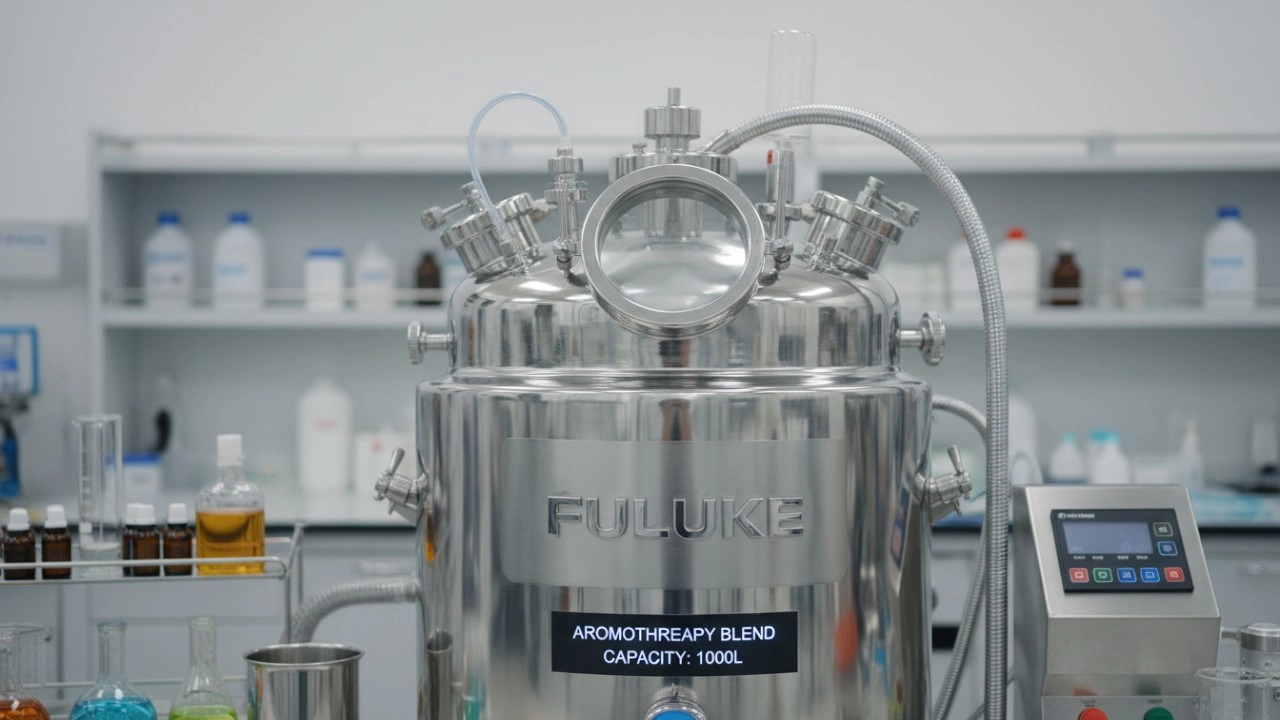
How Mixing Tanks Are Used in Aromatherapy & Cosmetics: The 2026 Guide
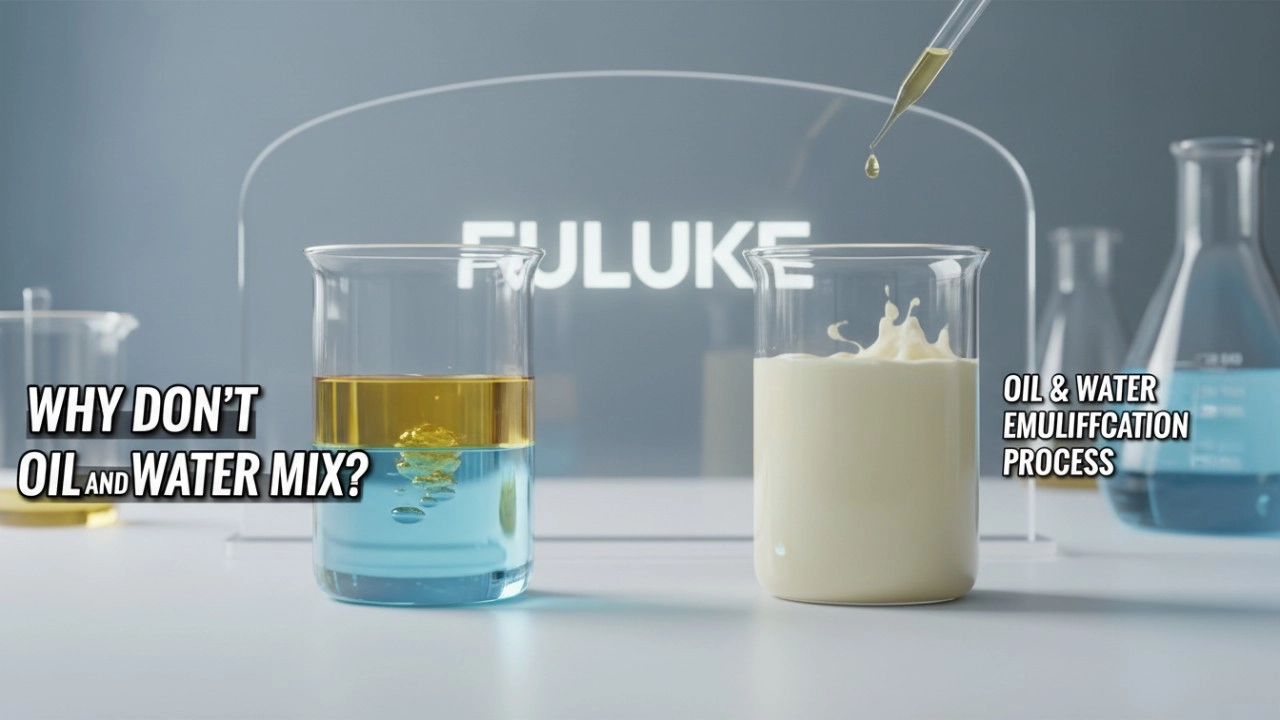
5 Revolutionary Methods to Mix Oil and Water: A Deep Dive into Advanced Emulsification (2026 Guide)
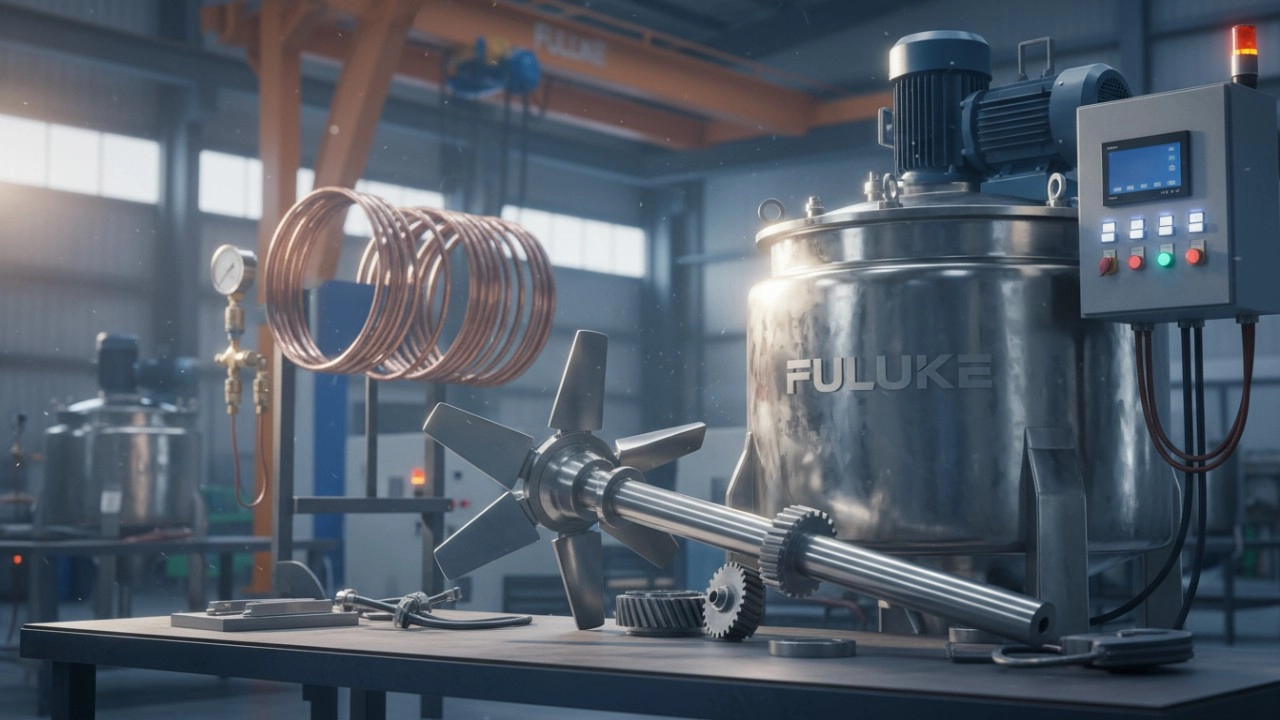
Top 7 Mixing Tank Component Failures (And How to Prevent Costly Downtime) in 2026
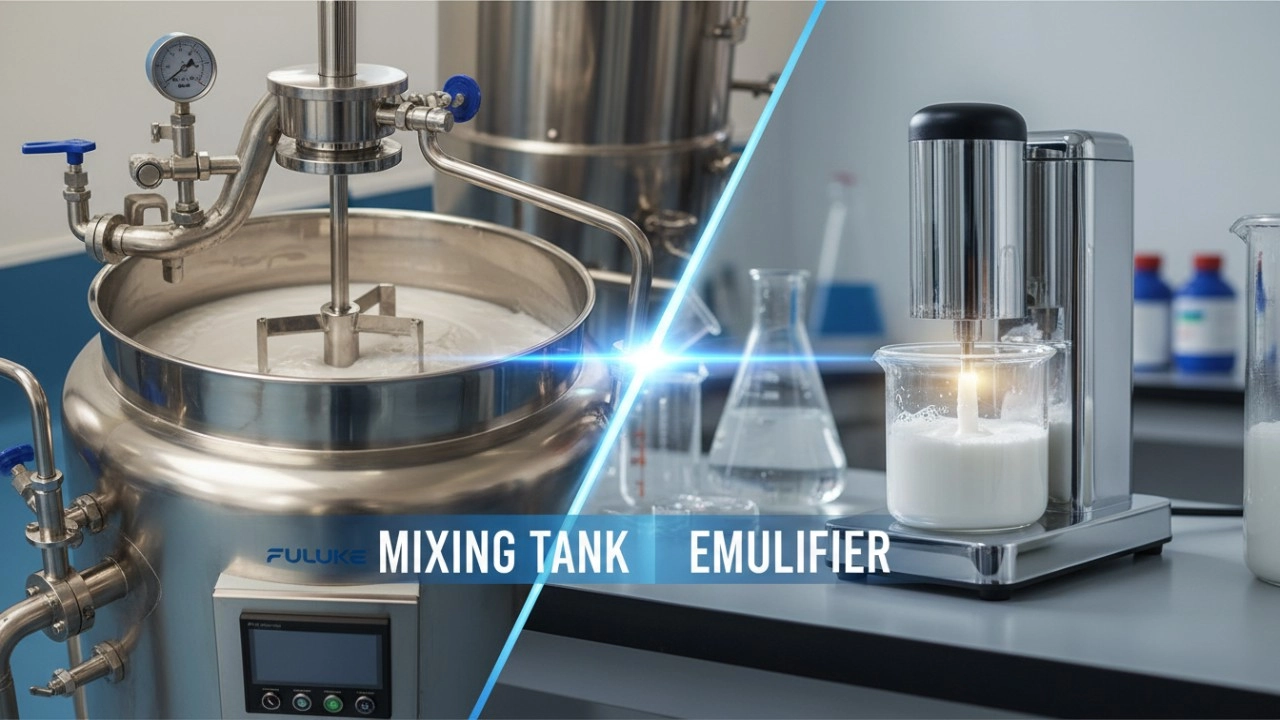
High-Shear Emulsifier vs. Standard Mixing Tank: A Deep Dive into Process Efficiency
Automatic Filling Machine
What special safety features are required for equipment used to fill medical disinfectants (containing alcohol)?
An explosion-proof automatic filling machine is essential. Key safety features include: ① The motor and electrical components must be explosion-proof to prevent sparks from igniting alcohol vapors; ② The tanks and piping must be made of anti-static materials and grounded to prevent static electricity accumulation; The workshop must also be well-ventilated and equipped with an explosion-proof exhaust system.
Inkjet Printing Machine
Can you make a design for us?
Yes, we can, we provide not only products, but also solutions and designs.
Automatic Labeling Machine
What can you buy from us?
RO Water Treatment、Vacuum Emulsifying Machine、Homogenizer Mixing Tank、Filling and Capping、labeling Machine、Packing Machine、Storage Tank,etc.
Automatic Tube Filling and Sealing Machine
Can you make a design for us?
Yes, we can, we provide not only products, but also solutions and designs.
Automatic Glass Bottle Washing Machine
Can the equipment clean glass bottles with stubborn stains (such as label residue, oil, and medicine stains)?
Yes. The equipment integrates high-pressure spraying, multiple internal and external rinsing, and drying multi-stage composite cleaning technology, which can remove tiny stains and break down oil stains. For stubborn stains, the cleaning time can be adjusted to ensure that the cleaning meets the standards.
Get in touch with FULUKE
If you have any comments or good suggestions, please leave us a message, later our professional staff will contact you as soon as possible.
You May Also Like
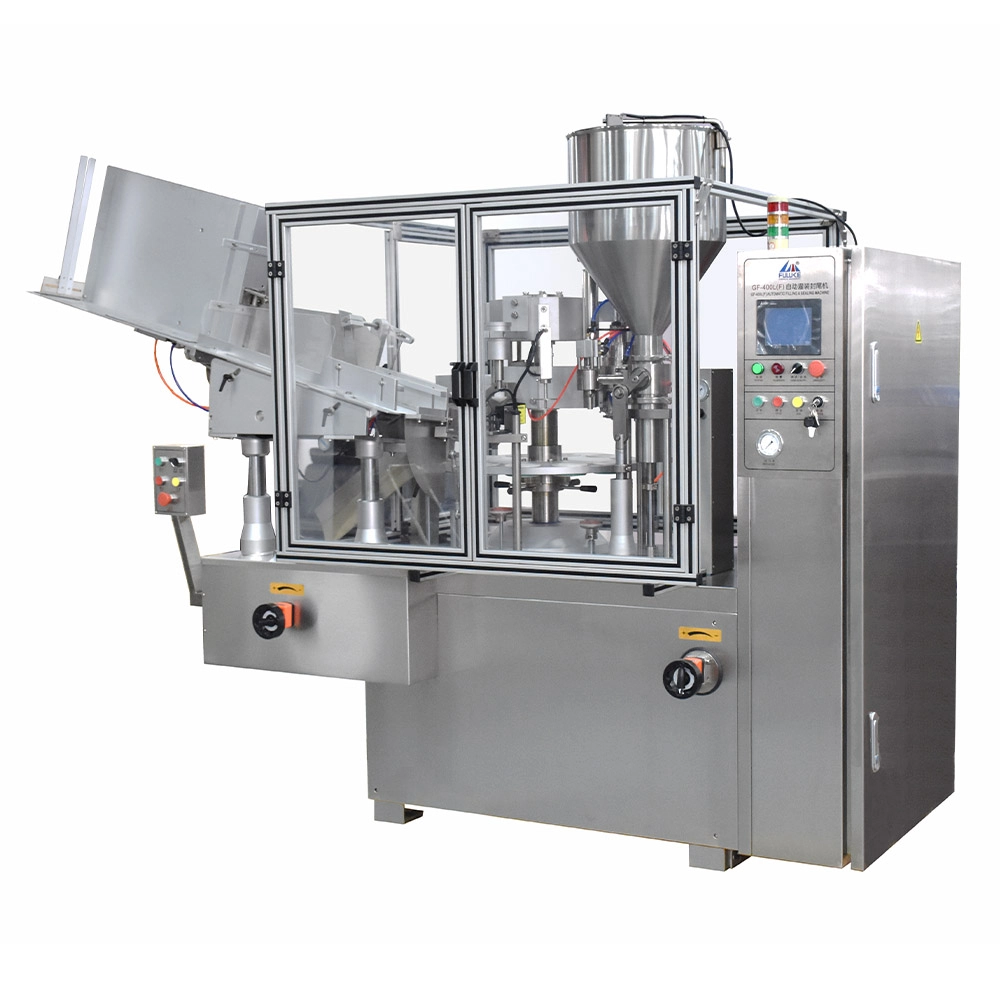
Automatic Tube Filling and Sealing Machine Toothpaste Sunscreen and Facial Cleanser Filling and Sealing Machine for Plastic and Aluminum-plastic Tube
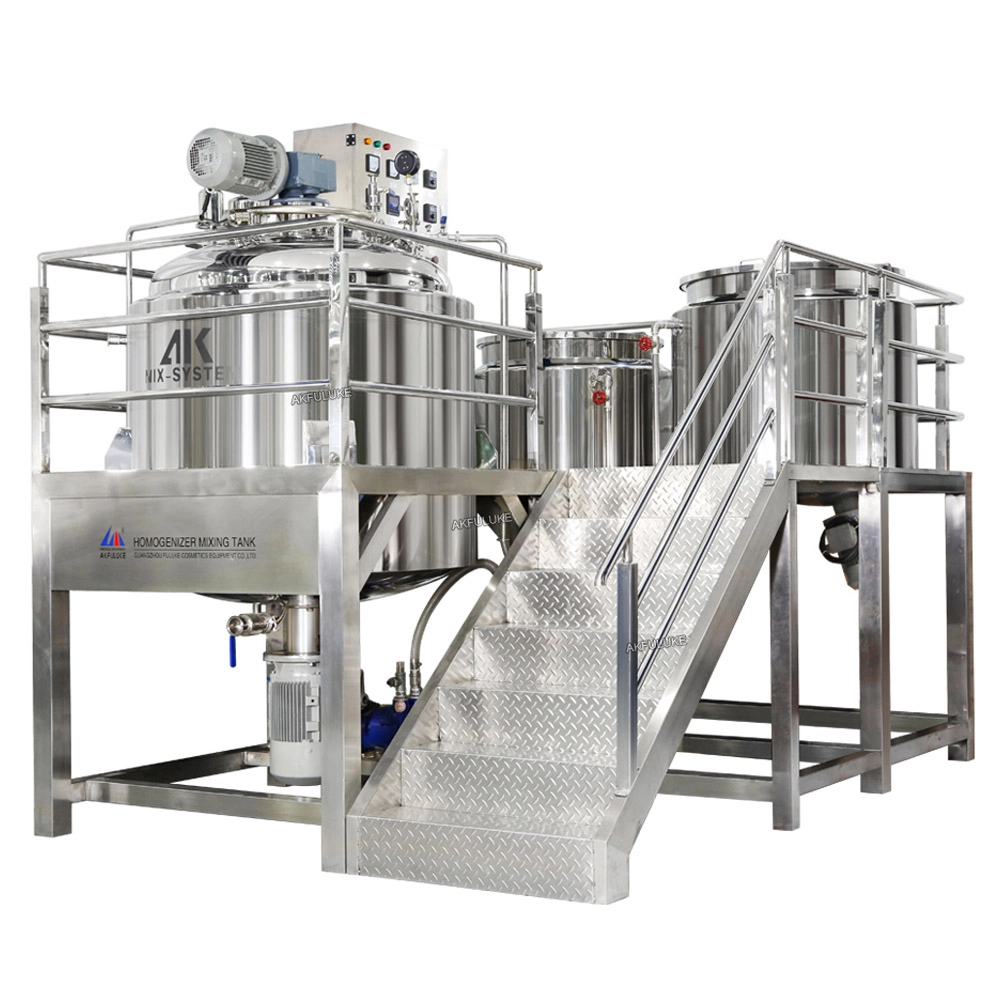
Fixed Type Vacuum Mixing Emulsifying Equipment for Cosmetic Cream Ointment Lotion Vacuum Homogenizer Mixer
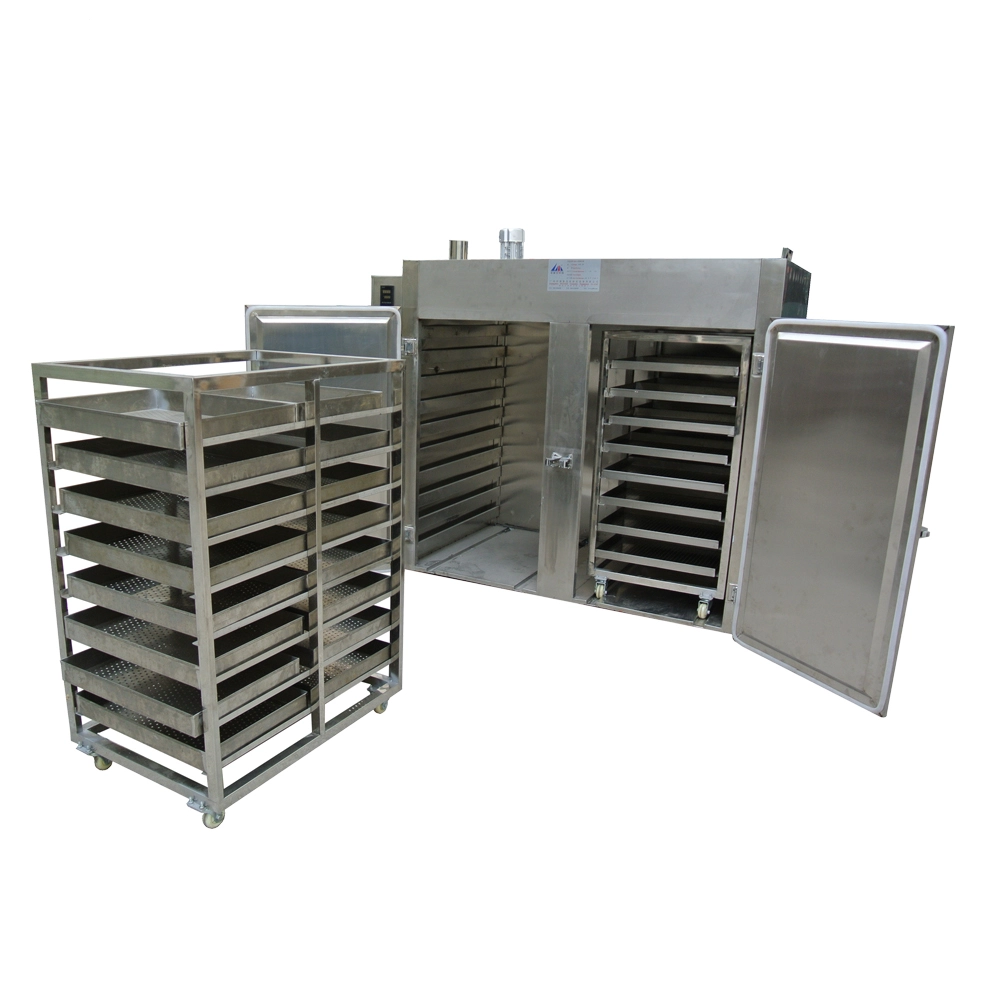
Over for Bottles High Temperature Sterilizer Tray Dryer Large Hot Air Circle Drying Oven for Glass Bottle Jar Cup Can

Automatic Glass Bottle Washing Machine High Quality Glass Bottle Cleaning Washer

A leading manufacturer specializing in advanced machinery and complete production lines for the cosmetics, food, pharmaceutical, and chemical industries worldwide.
Contact FULUKE
Facebook
Instagram
YouTube